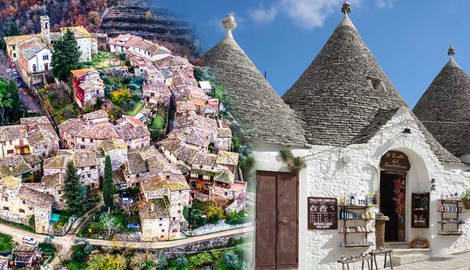
While Italy’s famous historic towns are certainly worthy of praise, there are countless lesser-known “cousins” offering equally rewarding experiences. There is something special about discovering extraordinary places few have heard of—even more so when their history is illustrious. Greek, Roman, Etruscan, and Norman stories abound here—whether wandering through the ancient streets of Matera, exploring the medieval lanes of Spello, or tasting the world-renowned wines of Montalcino.
Here are 10 delightful historic towns to pin on your map.
1. Matera, Basilicata
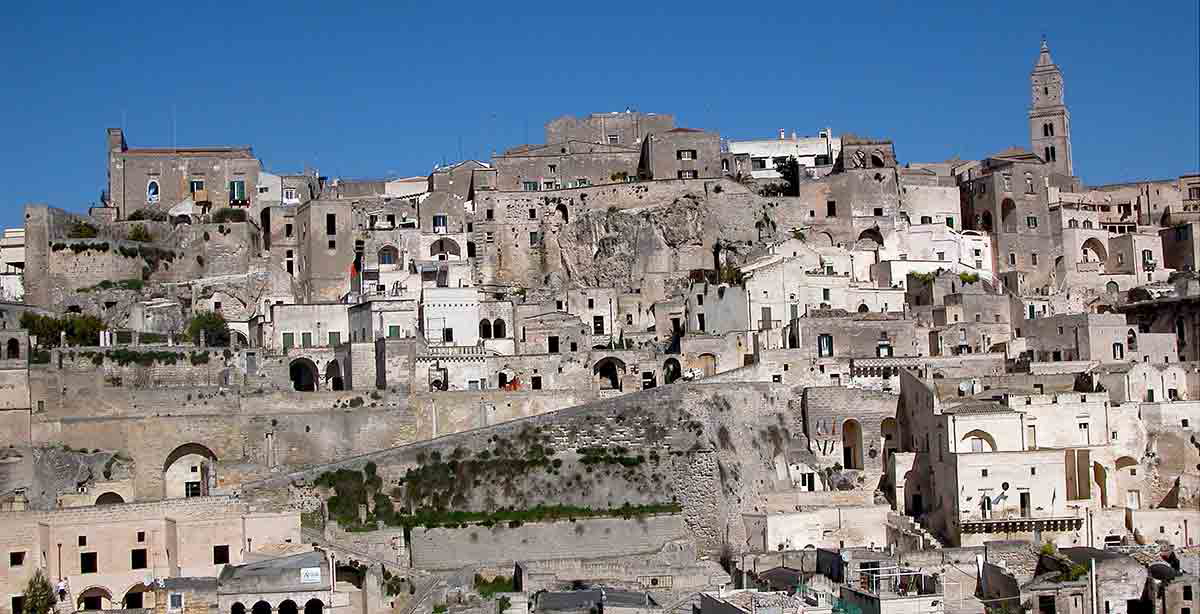
Matera is home to Italy’s Cappadocia-style cave dwellings, although they are much, much older than those in Turkey. In fact, they are believed to be among the oldest continuously inhabited places on earth. For thousands of years, residents lived in these carved-out homes, collectively known as Sassi di Matera, creating an almost mystical cityscape of stone labyrinths. The complex of caves was carved into limestone cliffs in prehistoric times and used continuously throughout the Roman, Medieval, and Renaissance periods. Sassi reflects a unique adaptation of human habitation in Europe and comprises winding alleys, staircases, and churches.
First settled by the Samnites in the 3rd century BCE and later absorbed into the Roman Empire, Matera became a key religious and cultural center when countless churches and monasteries were constructed. The town’s enviable location on the border between the fertile plains of Puglia and the mountainous region of Basilicata ensured competing civilizations would fight over it for centuries. Life in Matera continued until around the mid-20th century, and the end of WWII. The city—as in almost all of Italy—fell into decline and disrepair. The Sassi neighborhoods became overcrowded and unsanitary, and the government forcibly relocated thousands of inhabitants to modern housing in the (relatively newer) part of Matera.
Despite these challenges, Matera’s ancient dwellings were rediscovered and revitalized in the late 1980s. This period of three to four decades was the only time the caves had been left uninhabited in millennia. Their revival has been a success—join a Matera Underground Tour for in-depth explorations.
2. Civita di Bagnoregio, Lazio
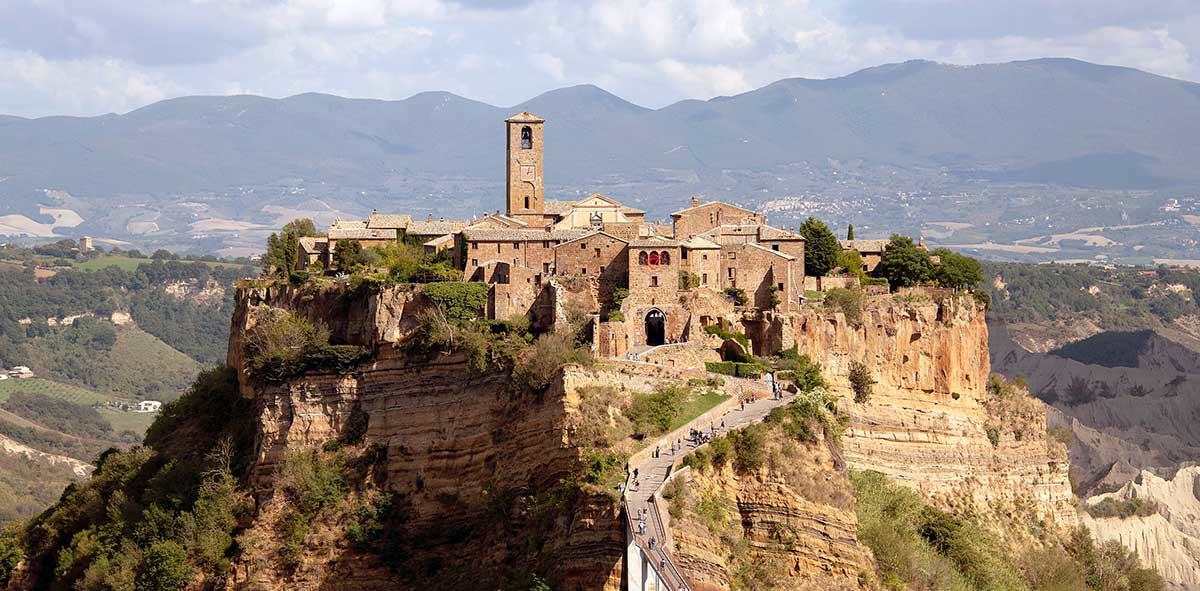
Perched high above a valley in the country’s capital region, Civita di Bagnoregio is an ethereal sight. It was founded some 2,500 years ago by the Etruscans, yet due to its precarious location and numerous earthquakes, was left to erode over the centuries. Fewer than a dozen people live here permanently. Since the mid-1960s, it has only been accessible by a long footbridge.
As you approach Civita, the dramatic skyline comes into view, rising above the canyons as if suspended in place and time. The town is minuscule, and its narrow streets are peacefully devoid of crowds, although you’ll find a handful of charming artisan shops trying to keep local history and culture alive. Civita’s main highlight is the Church of San Donato, which houses a wooden crucifix believed to have been carved by Donatello.
3. Orvieto, Umbria
You are probably starting to get the gist: some of the best-kept historic secrets in Italy are all perched atop some ridiculously steep rocks. These are places big tourist coaches either can’t get to or are too bothersome to reach, so they are left blissfully devoid of crowds.
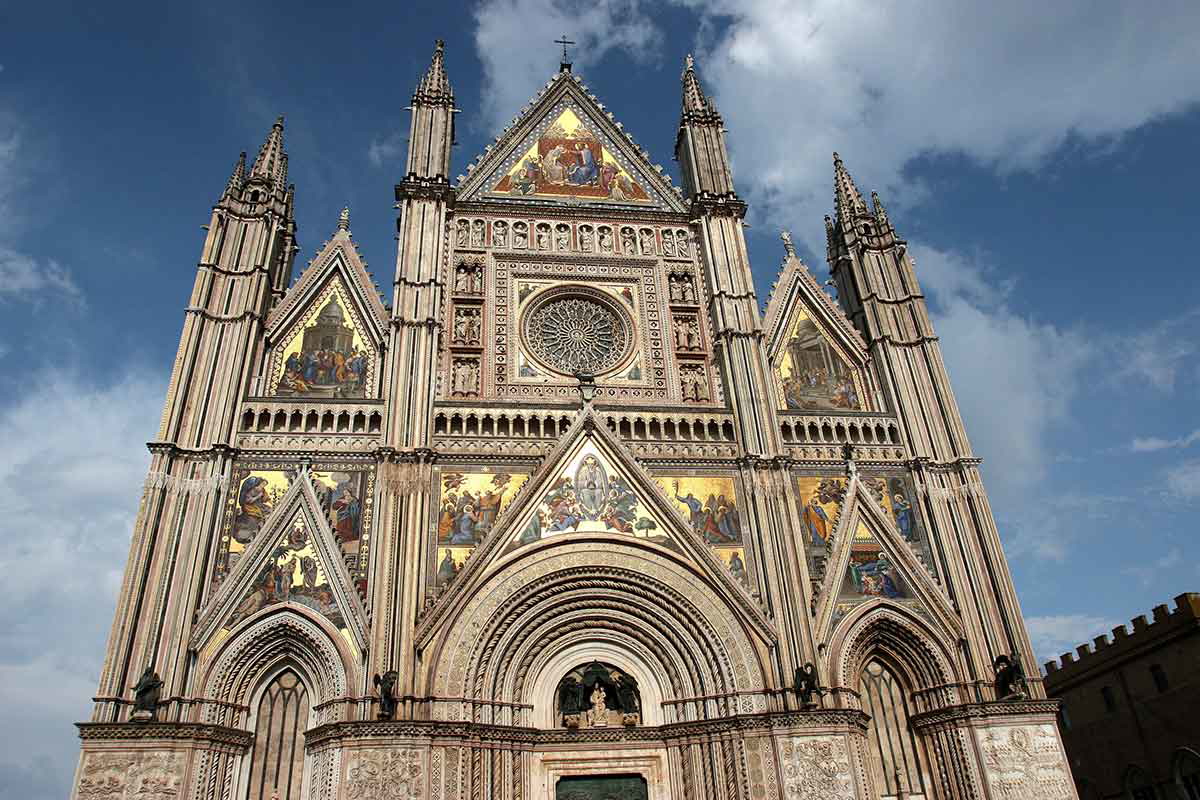
A visit to Orvieto is all about admiring its stunning Duomo, with its intricate façade made of colorful mosaics and carvings. Walk in, and you’ll see Luca Signorelli’s frescoes vividly depicting the Last Judgment. Orvieto’s enticements go well beyond the surface—the town sits above an underground network of tunnels and caves, once used for storage and defense, dating back to the ancient Etruscans. Orvieto underground tours reveal ancient wells, olive presses, and sneaky escape routes. A must!
4. Alberobello, Puglia
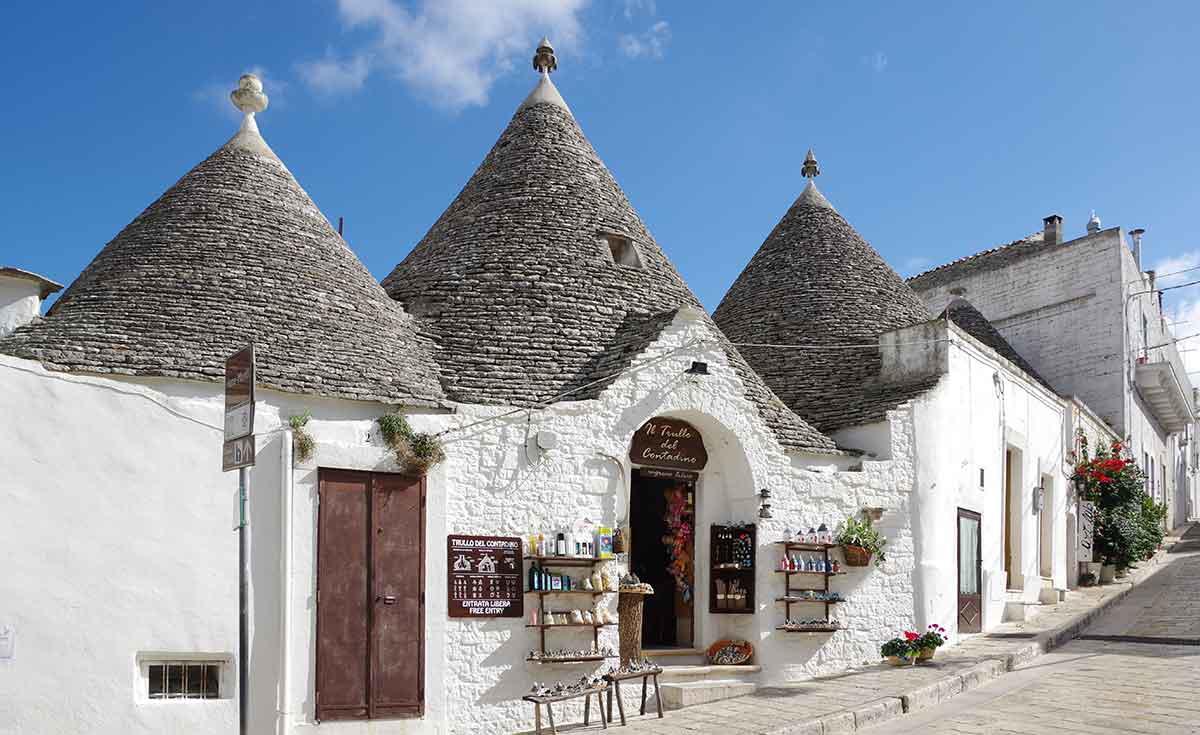
Alberobello is not nearly as off the beaten path as it once was, yet it is still not a household name. This is a storybook village boasting some of Italy’s most distinctive historical dwellings. The unique buildings date back to the 14th century and were initially built by farmers who needed temporary shelters that could be quickly taken down as a means to avoid paying property taxes. The houses were built with mortar, using dry-stone techniques, similar to thatched-roof huts in Africa.
The town and its trulli were recognized as a UNESCO World Heritage site in 1996 and have become increasingly popular. The small town can get overcrowded on Sundays or during the Italian school vacation. The wonderful thing is that although the trulli and Alberobello are now synonymous, this is not the only town that boasts so many—but rather the one town with the highest concentration of the best-preserved abodes. Nevertheless, the conical-roofed ancient homes are seen all over the Itria Valley and can also be admired in Ostuni, Cisternino, and Locorotondo, among many other towns.
5. Spello, Umbria
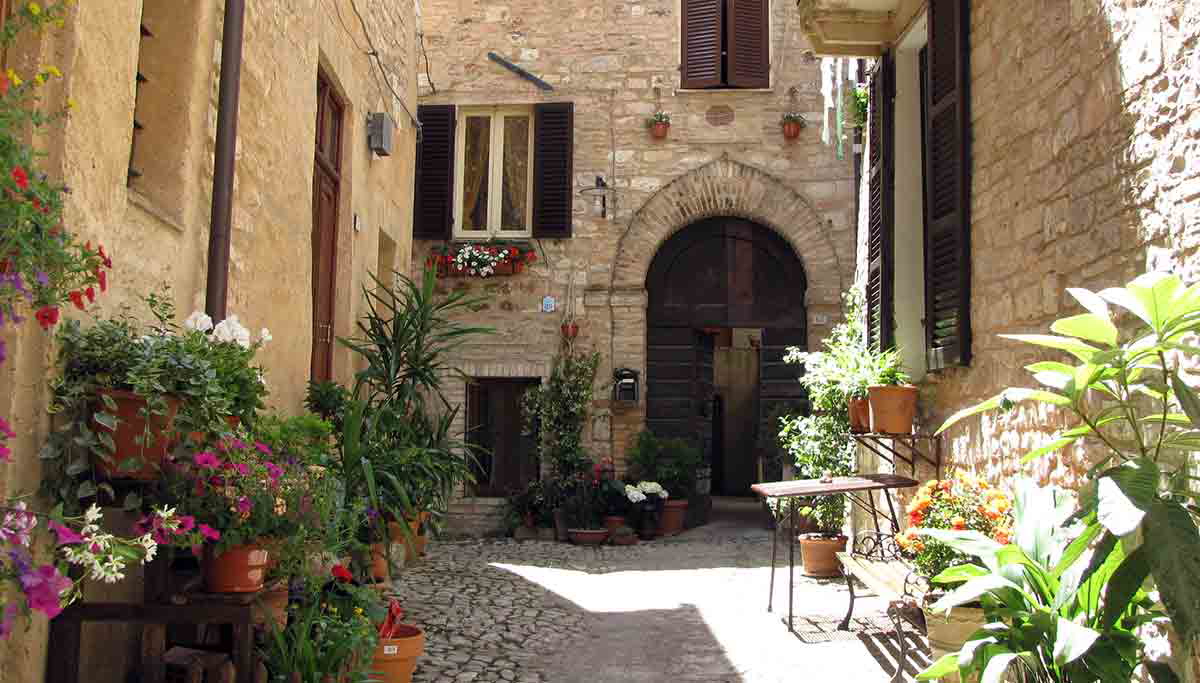
Known as Julia Hispellum in antiquity (founded in 41 BCE), Spello was a significant Roman settlement, and many remnants of its past are still visible today. The town boasts ancient Roman gates, such as Porta Venere, and beautifully preserved frescoes by Pinturicchio in the Chiesa di Santa Maria Maggiore. There are even the remains of a Roman amphitheater.
Spello’s historical significance deepened during Medieval times, as it became part of the Papal States. The town thrived most under Byzantine rule and later the Kingdoms of Lombardy—all of which greatly contributed to the town’s astonishing architecture. A visit here feels like a meander through an open-air museum. Olive groves and vineyards surround the town, and local eateries serve delicious Umbrian fare.
Spello’s charm is subtle and enduring—from its historical ruins to its labyrinth of stone alleyways and homes and its abundance of flower-filled pots on every balcony. This is the historic town Italians want to explore on vacation when they wish to escape it all.
6. Pitigliano, Tuscany
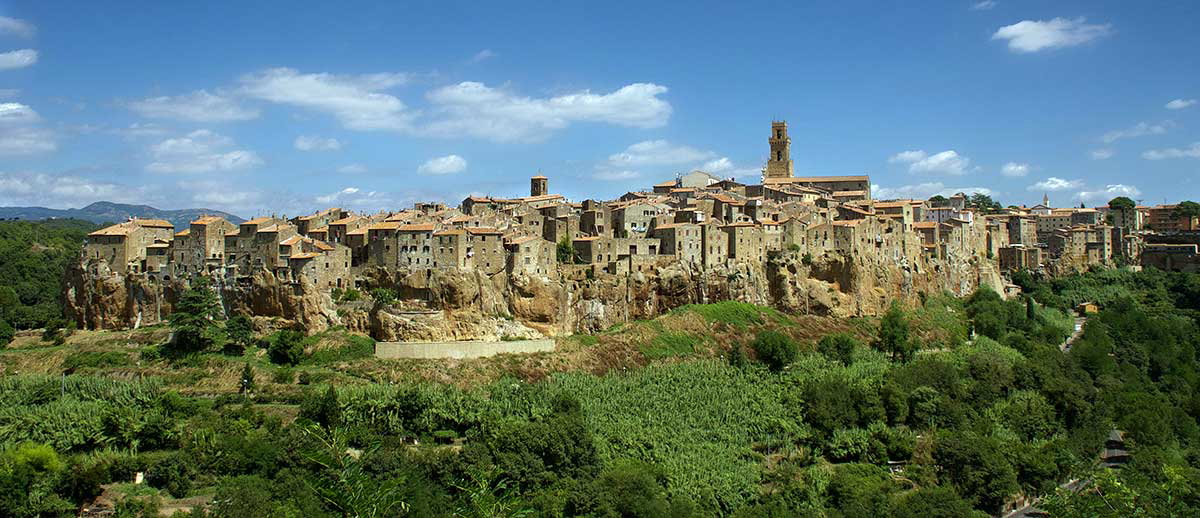
Pitigliano’s history dates back to prehistoric times, with ancient settlements, Etruscan tombs, and old walls showcasing its tumultuous past. The town’s name is believed to have Latin origins, probably derived from “Pictilium” or “Pitillum,” meaning small settlement or fortification. The Romans had a significant presence in the area, with archaeological finds such as roads and inscriptions suggesting the region was highly prized for defense and trade.
Pitigliano flourished under the rule of the Alobrandeschi family for nearly 500 years. During the Renaissance, the Orsini family brought prosperity and urban development. After a brief period of Sienese control, the Medici and Lorraine families further shaped the town into what it is today. The artisan shops in Pitigliano are known locally as some of the best in the region.
The most sought-after highlight here is the Jewish Quarter, established in the 16th century as Jews fled persecution in the Papal States. They sought refuge in Pitigliano (among other towns nearby) and built a synagogue and maze of underground passages and dwellings. A fantastic museum retraces this side of the town’s history.
7. Montefioralle, Tuscany

Montefioralle sits at the heart of the Chianti region and is so small that visitors often overlook it in favor of larger towns. Yet the town is ideally tranquil; it has a delightful center brimming with winding lanes and stone houses and is surrounded by scenic olive groves—it is perfect for a contemplative, historical retreat.
The town has a long history of viticulture that dates back to the ancient Romans. While not the only source of income, wine production was a significant part of the town’s economy, alongside the cultivation of olives. Wine-making flourished during the Medieval Period and remains steadfast to this day.
Montefioralle claims to be the birthplace of Amerigo Vespucci, the merchant after whom America is named. While Vespucci was officially born in Florence in 1454, historical records suggest his family had strong ties to Montefioralle, owning a large estate there. Some historians believe he may have spent a good portion of his early childhood here. At the time, many wealthy Florentine families had homes in the surrounding countryside. Over time, the town wholeheartedly embraced this somewhat wishy-washy connection. The last Vespucci was buried in a local cemetery in the 1950s, further adding credo to the claim. Nevertheless, it is quite clear the town played a role in the young Italian explorer’s life.
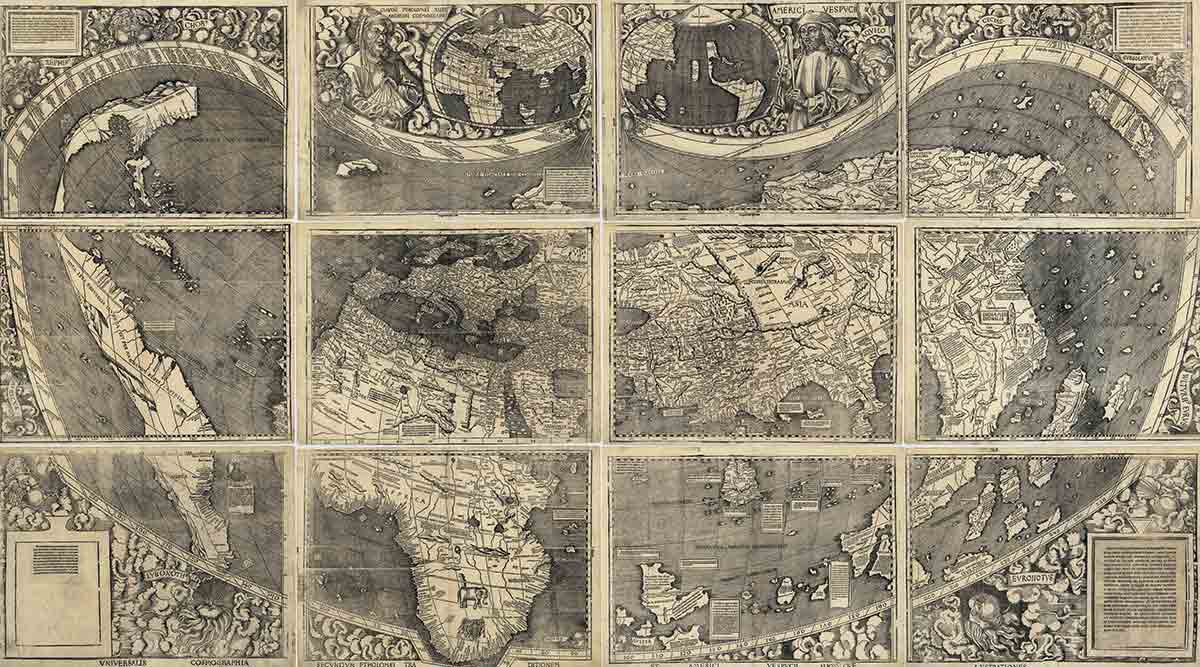
Fun fact: Amerigo Vespucci may not have been the one to “discover” the Americas in the 15th century but he was recognized as the first to suggest that these new lands—initially believed to be the eastern edges of Asia—were another continent altogether. In 1507, a German cartographer named Martin Waldseemüller published the first world map that included the new continent, naming it “America” in honor of Amerigo.
8. Castiglione di Sicilia, Sicily
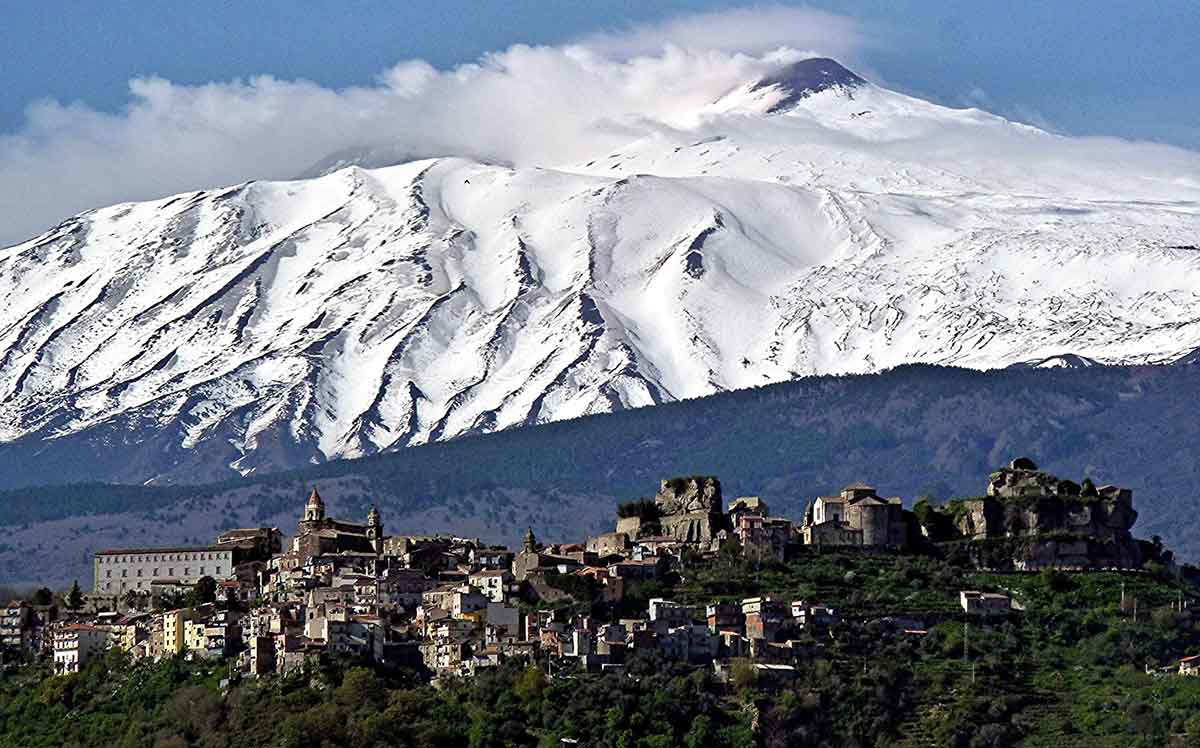
Castiglione is undoubtedly one of the most spectacular towns in Sicily, one that perfectly embodies the island’s historic fusion of Greek, Roman, Byzantine, and Norman influences. It sits on the slopes of the ever-bubbling Mount Etna and is a Medieval splendor, with narrow streets and ancient churches. The Alcantar Valley below is blanketed by some of the region’s most esteemed vineyards. It was the idyllic location that garnered the town its attention over the centuries.
Founded by the Greeks in the 5th century BCE, Castiglione is one of the oldest settlements in Sicily. The area’s rich volcanic soil is perfect for growing grapes, olives, and cereals, which are important for the local economy and have been since time immemorial. Its location also made it a key stop on a trade and military route, resulting in a hard-fought history of conquests. In the 11th century, the Normans built fortifications, including the Norman castle, which offers sensational views of Mount Etna. Before you leave, don’t forget to try a glass of Etna Rosso wine, one of Italy’s best reds.
9. Brisighella, Emilia Romagna
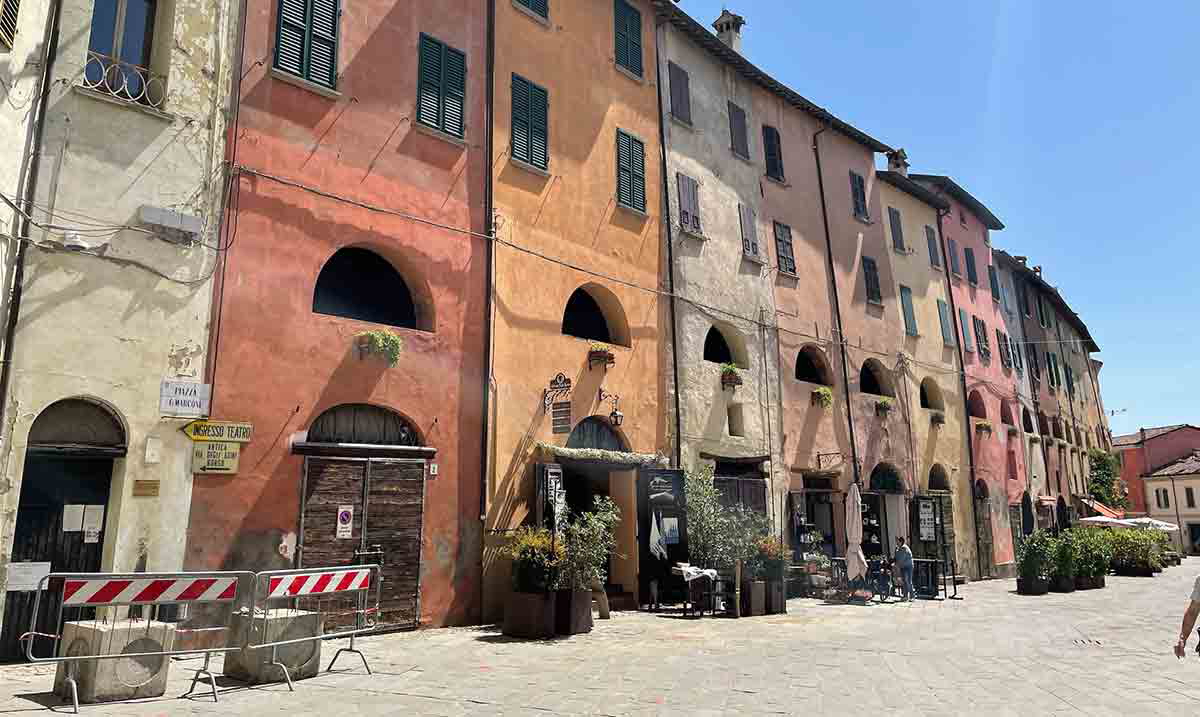
Brisighella is one of the many picturesque historic towns in Emilia Romagna, a northern Italian province best known for producing some of the country’s most iconic foods—including lasagna, parmesan cheese, prosciutto, and balsamic vinegar. Its three most famous cities are Bologna, Ravenna, and Modena, leaving many others—including Brisighella—in relative obscurity.
Brisighella is immensely pretty, with its clock tower, fortress, and Monticino Sanctuary rising sharply above its terracotta rooftops. The town was founded in the 13th century by feudal lord Maghinardo Pagani. He was after a town that linked other important trade stop-overs between Florence and Ravenna.
Nowadays, Brisighella is primarily renowned for its olive oil production, derived from rare olive varieties that thrive in the region’s unique microclimate. Explore the antique converted walkway known as Via degli Asini (a nod to the donkey carts that used to ply the route) or relax in one of its many thermal baths, a delightful legacy of the Roman occupation.
10. Sperlonga, Lazio
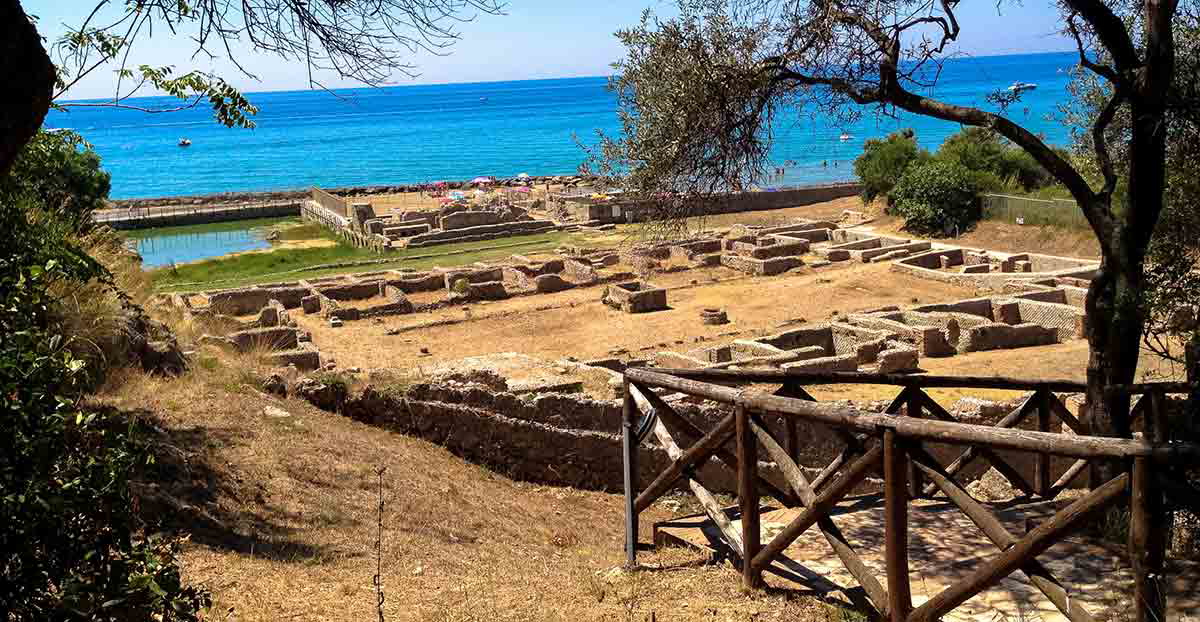
Sperlonga is a quaint town set on a cliff overlooking the Tyrrhenian Sea. It boasts a rich history dating back to ancient Rome yet is mostly only known to locals. Initially nothing more than a small fishing village, Sperlonga’s eye-popping location along the coast soon caught the eye of ancient Rome’s elite, who hurried to build their holiday estates here. The most famous is the Villa of Tiberius, a grand holiday estate built by Emperor Tiberius in the 1st century CE. The estate featured a cave decorated with Greek mythological sculptures, many of which are now on display in the archaeological museum.
Throughout the Middle Ages, Sperlonga developed into a bigger fortified town, with Norman and medieval influences adding further sections. Yet, given that its leading economy was based on fishing and tourism and its expansion was restricted by its remote location, it never really developed into a major city of any prominence. Over the centuries, Sperlonga has remained a relatively quiet resort town. It remains a summertime hot spot for Romans, as are all the cities along the 30-mile stretch of Lesser Lazio between Latina and Gaeta.