Summary
- The “Dark Ages” were not backward; the Islamic world preserved Greek philosophy, which was essential for thinkers like Aquinas.
- Aquinas heavily adopted Aristotle’s concepts of nature and his four causes for his own proofs for the existence of God.
- Aquinas and Plato agreed that the human soul is immortal and the seat of reason, though they differed on its relation to the body.
- Like Averroes, Aquinas argued the universe’s fine-tuned order points to a perfect, intelligent Creator rather than random chance.
- Islamic thinkers like Avicenna influenced Aquinas’s views on divine simplicity, the idea that God is a single, unified being.
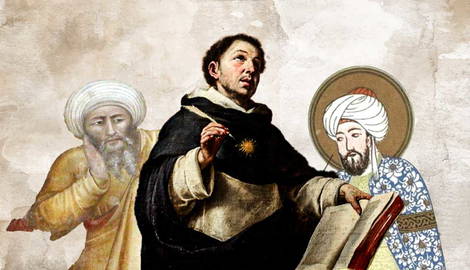
Born ca. 1225 AD, Thomas Aquinas is revered in some circles as highly as the ancient Greek and later Enlightenment-era thinkers. While the medieval philosopher’s works are still studied in many universities, ethicists and academics try to further interpret Thomistic thought, applying it to the issues of our day. Let’s dig into the philosopher’s own life and times before exploring the ideas from pagan philosophers with which he most agreed.
The Times in Which Aquinas Lived
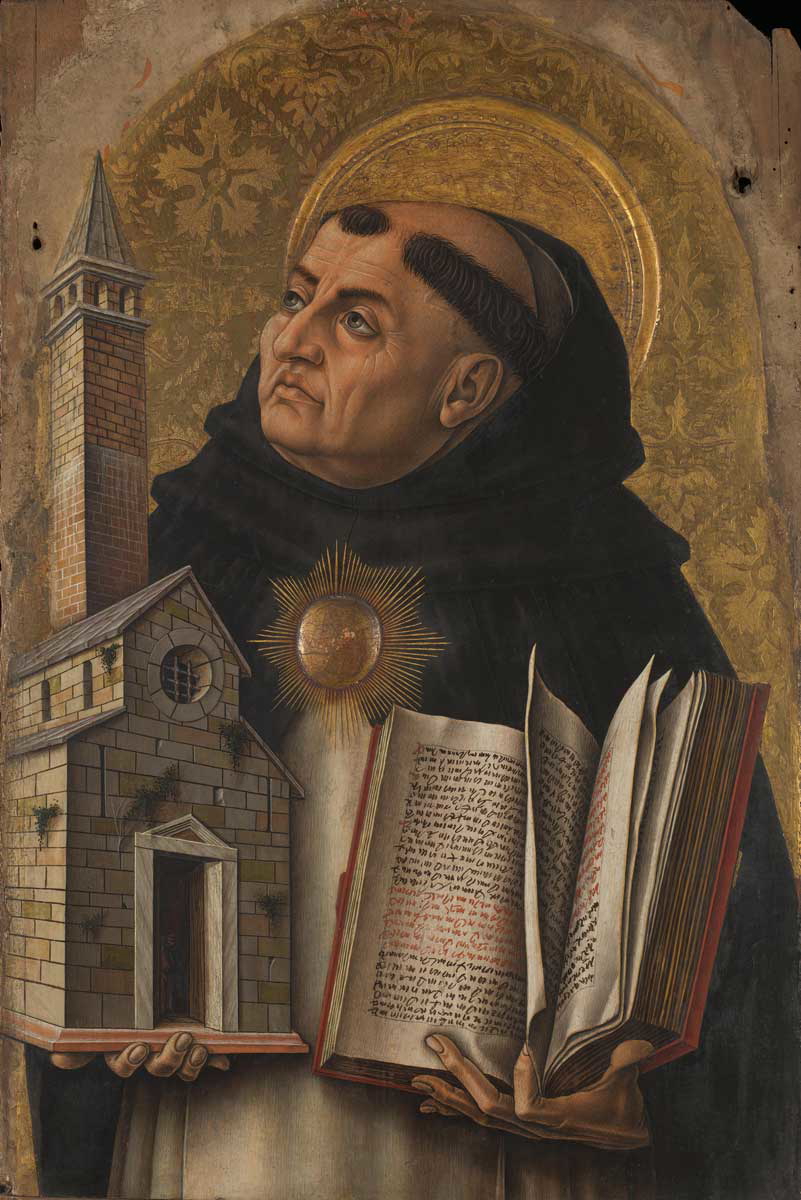
The life and prolific career of this Italian university lecturer occurred late in what is commonly referred to as the “Dark Ages” (spanning 500-1500 AD). Unfortunately, from the very name itself, the Dark Ages appear to many modern people as a period of superstition and stifling of the sciences. On the contrary, argues Cambridge historian Seb Falk, these medieval ages witnessed great scientific advances. In the literary world, people cultivated new ideas and safeguarded the philosophies of centuries past.
The worlds of Christianity and Islam, while theologically opposed in some respects, provided the main thinking hubs of their day. The Arab scientist Ibn al-Haytham, a faithful Muslim who held that studying nature brought him closer to its Creator, gave the world the camera obscura—the forerunner of the modern camera—in the 11th century. Modern scholars also pinpoint Ibn al-Haytham as one of the first to use the scientific method. And as Falk points out, the Catholic Church established universities; monks copied manuscripts and developed mechanical clocks. “The most advanced scientific knowledge for most of the European Middle Ages,” he says, “came from the Islamic world.”
“Muslim and Jewish scholars were building on the work of earlier thinkers from Greece or India,” Falk points out. What is more, Arab culture helped protect and preserve the philosophy of the ancient Greeks. Between 750 and 950, a translation movement was sustained in Baghdad that kept the works of Aristotle and other classics alive while these same writings lost precedence in the West. This is important to note since much of Aquinas’ own philosophy draws from Aristotle. Just as Thomas would later do, the Arab thinkers began to weave Greek ideas into their philosophy. The “Angelic Doctor” would himself flirt with ideas from the Arab philosophers in his own writings. The Middle Ages were not so backward in the ways of science and learning after all.
Aquinas and Academics
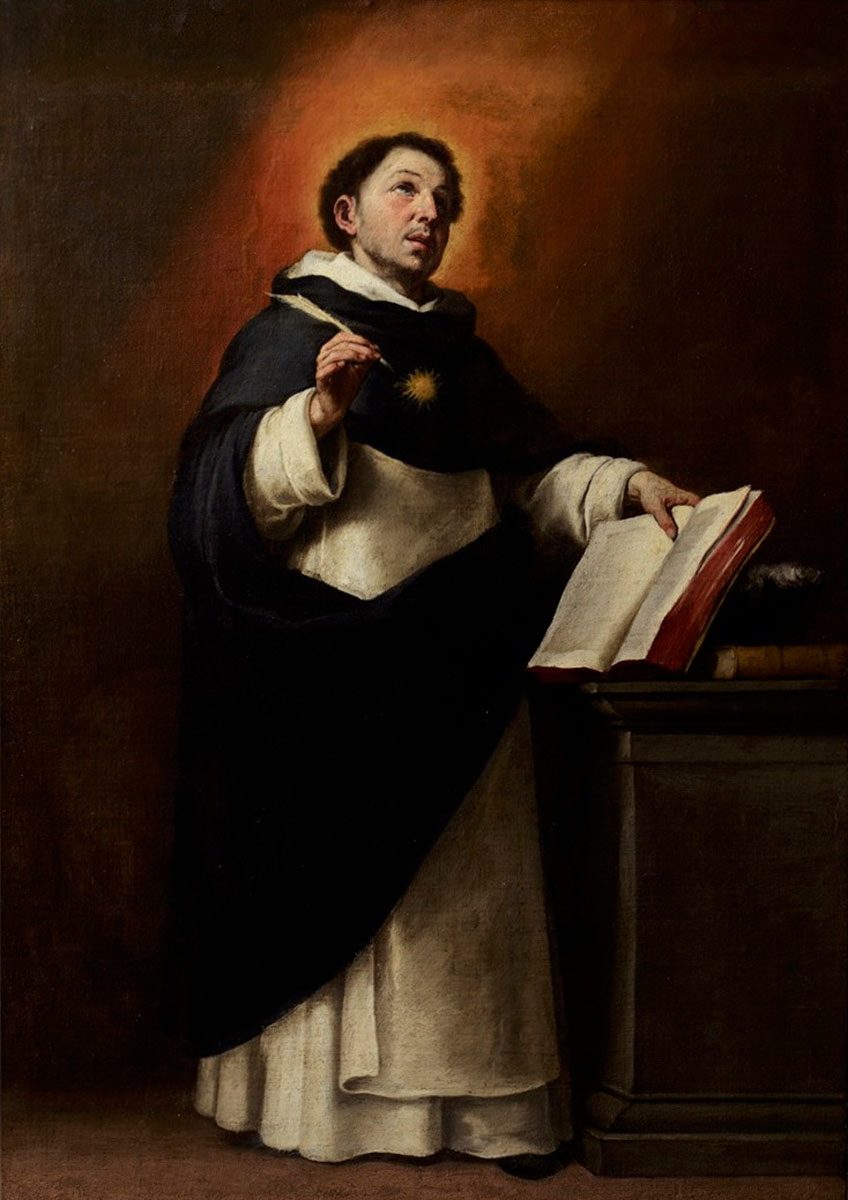
St. Albertus Magnus (Albert the Great) educated the young Thomas. He would eventually teach at the University of Paris, which had its beginnings in the mid-12th century, so it was pretty new when Thomas came on the scene.
Aquinas wrote poetic hymns that are still sung in Catholic liturgies today, such as “O Salutaris Hostia” and the “Tantum Ergo.” He appears among the Church Triumphant in Dante Alighieri’s Paradiso and speaks to the Pilgrim (Dante thoroughly studied Aquinas). Hailed as a saint by the Roman Catholic Church, Thomas belonged to the religious order known as the Dominicans and lived his life according to Christian morals. His philosophy infuses his theology, just as his theology informs his philosophy. Like Ibn al-Haytham and others of Abrahamic beliefs in this era, he was a genius who saw no contention between knowing God and knowing about the natural world.
In his texts, most famous of which is the Summa Theologica, he posited his theses and the counter-theses (objections) of opponents, real or imagined, proofs and counter-proofs. He referenced numerous pagan thinkers, most notably the ancient Greeks, as well as his contemporaries, the Islamic scholars. Just as not all retweets equal endorsements, Aquinas’ quoting another philosopher did not constitute agreement, nor did it guarantee opposition.
Sometimes he interjected the ideas of Muslim thinkers so as to offer a counterpoint to his own; other times, he furthered his own propositions by reinforcing them with agreements from these philosophers. The latter example did not trouble his Christian conscience, since taking wisdom from any created source is reconciled with the biblical understanding that all wisdom is from God (see Proverbs 2:6). Aquinas went so far as to hold that to “scorn the dictate of reason is to scorn the commandment of God.”
| Thinker | Core Philosophy | Impact on Aquinas |
| Aristotle | Classified nature through “four causes”; defined humans as rational animals. | Provided the logical framework for Aquinas’s proofs of God; initially controversial in the Church. |
| Plato | Viewed the body as a hindrance; saw the soul as the primary seat of reason. | Aquinas adopted the soul’s immortality but replaced Plato’s “disembodied bliss” with a body-soul unity. |
| Al-Ghazzālī | Sufi mystic who taught that human perfection depends entirely on divine grace. | Influenced Aquinas’s view of Grace as the necessary life of the soul to avoid sin and attain heaven. |
| Ibn Rushd (Averroes) | Argued the universe’s fine-tuned order proves a Creator; saw God as pure being. | Bolstered Aquinas’s thesis that God’s essence and existence are one and that God is total perfection. |
| Ibn Sina (Avicenna) | Championed Divine Simplicity: the idea that God is a unique, non-composite being. | Cited 17 times by Aquinas; both sought to reconcile sacred revelation (Bible/Qur’an) with metaphysics. |
1. Aristotle and the Power of Reason
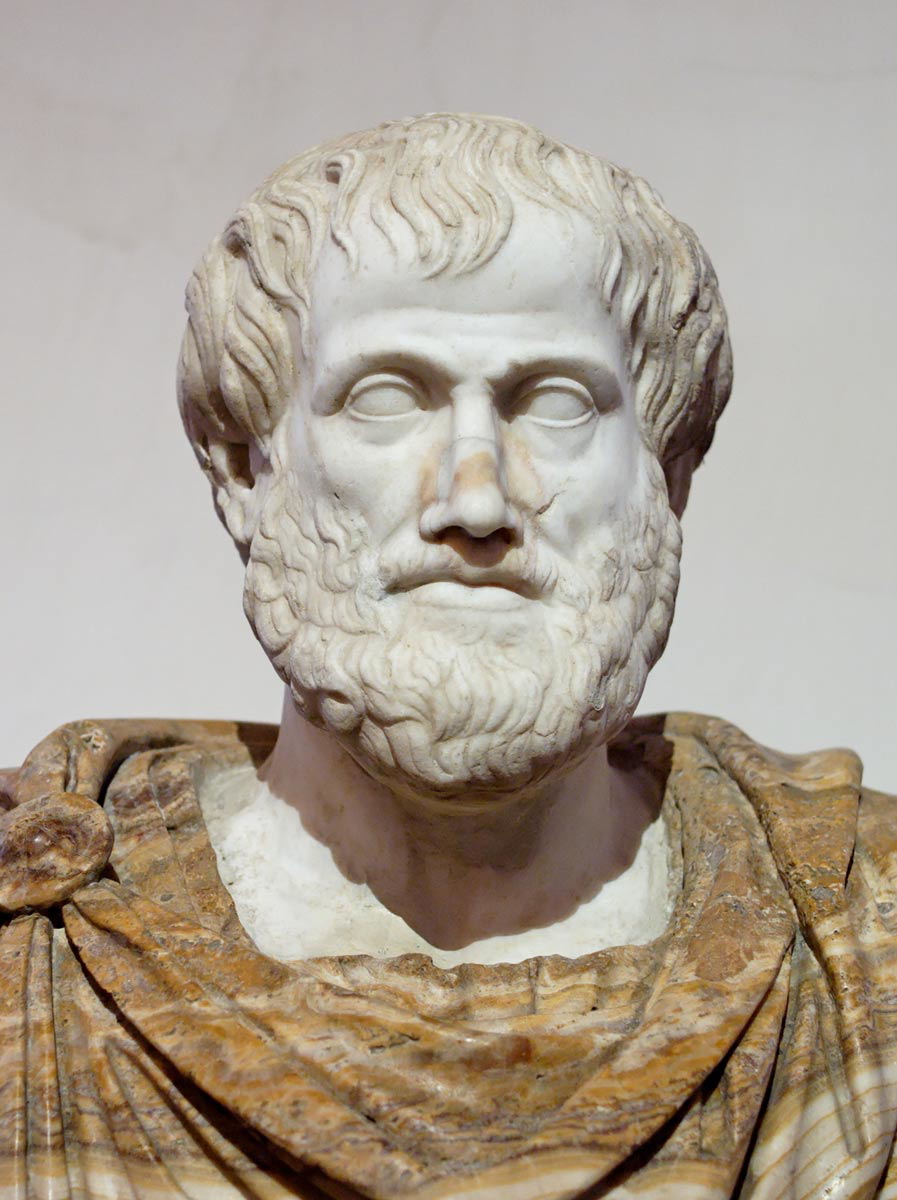
Aristotle (384-322 BC) was the veritable cornerstone of philosophy in the pre-Christian world and had a huge influence on Aquinas. He believed that humans have souls and that their ability to rationalize sets them apart from other living things.
Aristotle sought to understand more deeply the common everyday experiences of life. The quality that distinguished his philosophical methodology from those of many of his predecessors was the classification of his findings. He observed things, their characteristics, and functions, and classified them accordingly. In a hierarchy of being, he placed humans at the summit since we are rational animals, “questioning and thinking animals, able to engage in philosophical thought,” as writer Mortimer Adler puts it. Aristotle believed that everything has a nature, that is, a set of unique qualities that distinguishes it from all other kinds of things.
Aquinas admired much of Aristotle’s work, assimilating the ancient philosopher’s thinking into his own. Aristotle’s concept of nature is one that Aquinas also uses. So too are Aristotle’s four causes, which the later scholastic philosopher adopted. These added to his understanding of efficient causality, which undergirded the second of his five proofs for the existence of God.
Even so, the Dumb Ox’s acceptance of Aristotle was initially controversial. Early on, Church authorities cautioned the faithful against Aristotelianism. But eventually, Thomas delivered public lectures on Aristotle, which drew opposition. In 1273, his colleague St. Bonaventure also endeavored on a number of conferences in which he instead opposed Aristotelian views, “including the teachings of Thomas.” Nevertheless, Aquinas’s approval was endorsed by the Church in the long run.
Yet, Aquinas did not blindly accept all of Aristotle’s propositions. According to Butler’s Lives of the Saints, “During his captivity [when his family imprisoned him] Thomas… is said to have written a treatise on the fallacies of Aristotle.” Despite his appreciation of Aristotle, it did not stop Aquinas from trying to think clearly.
2. Plato and the Human Soul
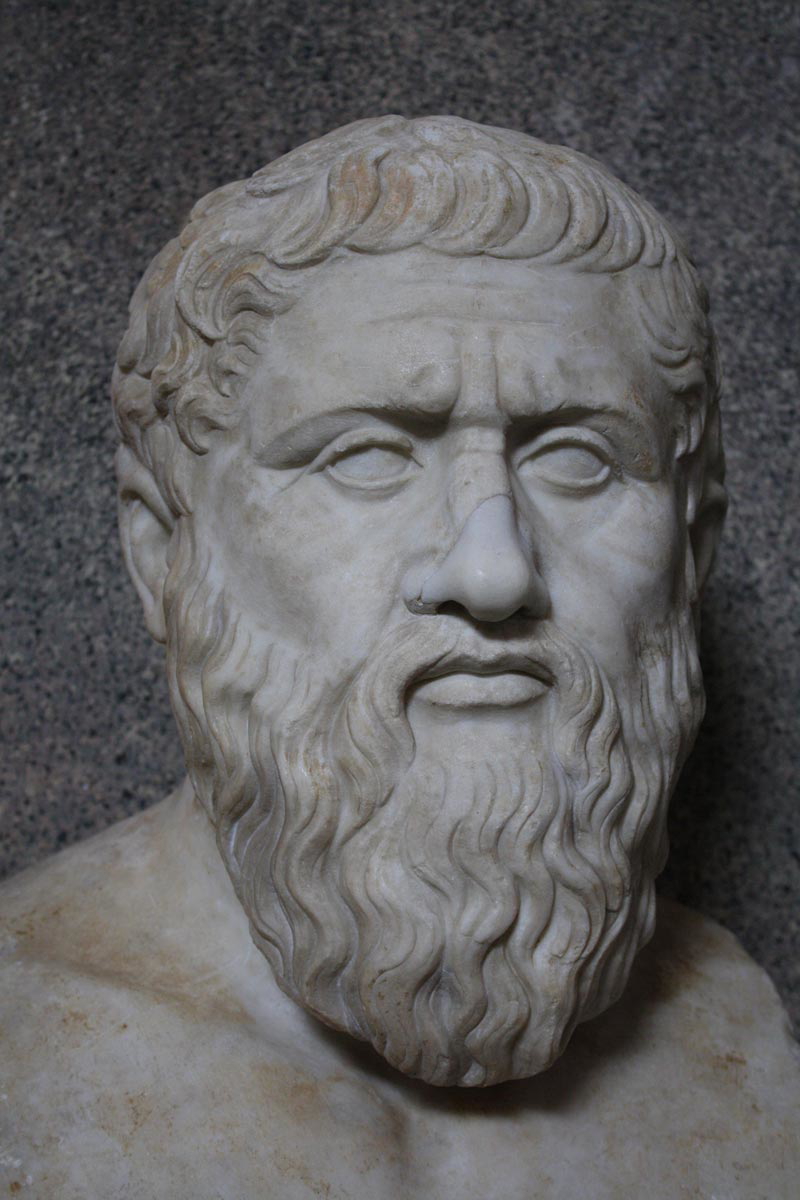
The senior contemporary of Aristotle (not to mention his teacher), Plato deeply impacted ancient Greek philosophy and thus the trajectory of education in Western civilization. Plato (ca. 428-ca. 347 BC) influenced not only Aristotle but other sources that would shape Aquinas’ beliefs, such as those of St. Augustine of Hippo. That said, Aquinas’ views fell more in line with Aristotle’s, whose vision of reality deviates in several major ways from Plato’s.
For Plato, the body is an external hindrance to the soul, and the outcome of a good life entails dying and attaining disembodied bliss. For a devout Christian who believes in bodily resurrection in the hereafter, such a platonic disentangling of body and soul simply did not fly. So Aquinas’ perception of the human soul contrasts with that of Plato.
Plato’s overemphasis on the soul and his belief that it provides the faculty of reason could be said to influence, or at least align with, the beliefs Thomas held. He too thought that in the soul was seated the intellect. Aquinas saw the soul as superior in some sense to the body, while at the same time, one with the body. To this day, Christian theologians believe that men and women are made imago Dei, in the image and likeness of God. Many would also say that this resemblance to God resides chiefly in the soul, from which spring one’s rational faculties.
Plato and Aquinas both saw the soul as something spiritual—immaterial. They both saw the soul as immortal—existing without end since its genesis. But again, they differed in that Plato viewed the person primarily as a soul; that was the important part to him anyway. Aquinas, however, spoke of the Christian belief that the human person is a body-soul composite, or unity.
3. Grace in Al-Ghazzālī
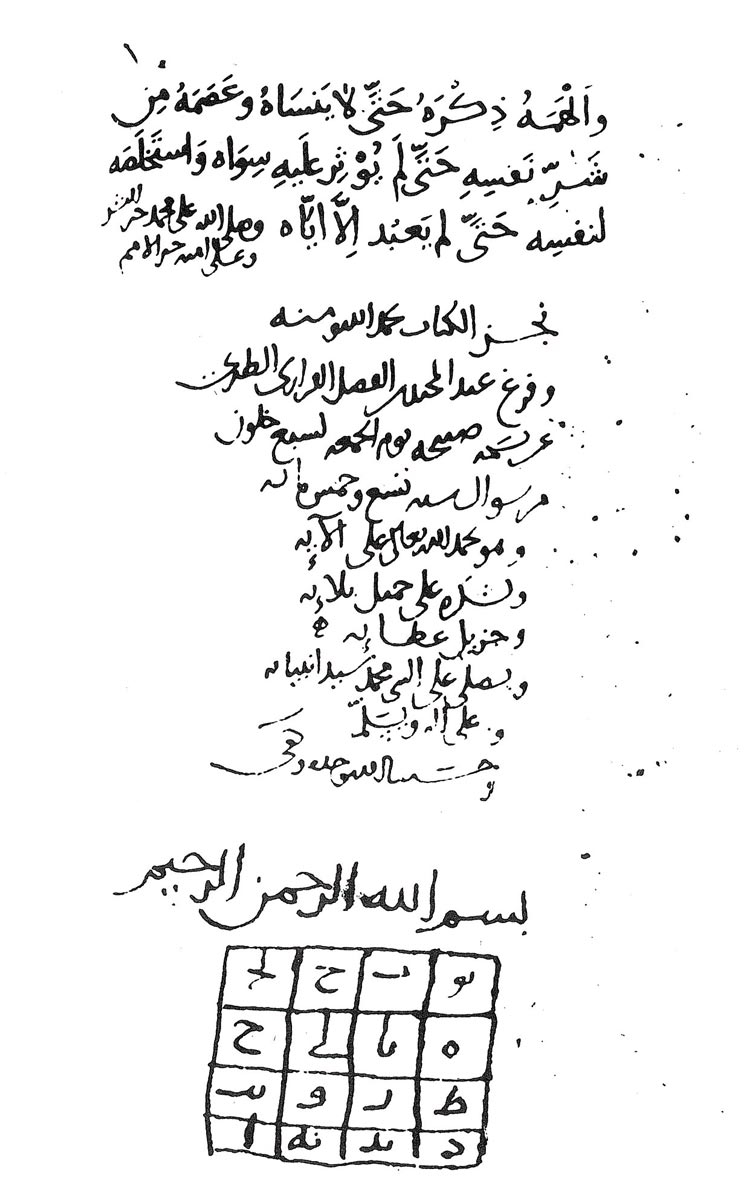
Abu Hamid Muhammad al-Ghazzālī (1058-1111) was a Muslim theologian who adopted a simplistic way of life. He lectured on various topics at Nizamiyah College in Baghdad (modern Iraq). He was a Sufi, a Muslim mystic, who sought experiential knowledge of God. His book The Doctrines of the Philosophers, translated into Latin posthumously, was accessible to and quoted by both Albert and his pupil Thomas. R.E.A. Shanab says that Aquinas “studied the works of the Islamic philosophers, especially Ghazali’s, at the University of Naples.” Shanab believes the mystic’s thoughts heavily influenced the Dominican.
Certainly, in the framing of the relationship between the Creator and humanity, al-Ghazzālī and Aquinas might see eye-to-eye. In The Alchemy of Happiness, al-Ghazzālī addresses the goal of the believer in relation to the Creator. The aim of the spiritual life, he says, is love of God. Spiritual dangers, then, are those that “hinder the love of God in a man’s heart.” Achieving such a lofty goal requires God’s help. “Man’s preservation and eventual attainment to perfection are also entirely dependent upon the grace of God.”
Such an ideal echoes the Christian concept of grace, which is God’s life in the human soul, animating it and allowing the person to do good works. It is necessary to cooperate with grace to gain salvation. In Aquinas’ words, once Adam and Eve sinned, human beings “needed grace’s help to avoid falls” and “to deserve heaven.” While this likely is not a direct influence from al-Ghazzālī, the idea of grace is an example of common ground between Christian and Muslim thought.
4. Ibn Rushd (Averroes) and the Existence and Perfection of God
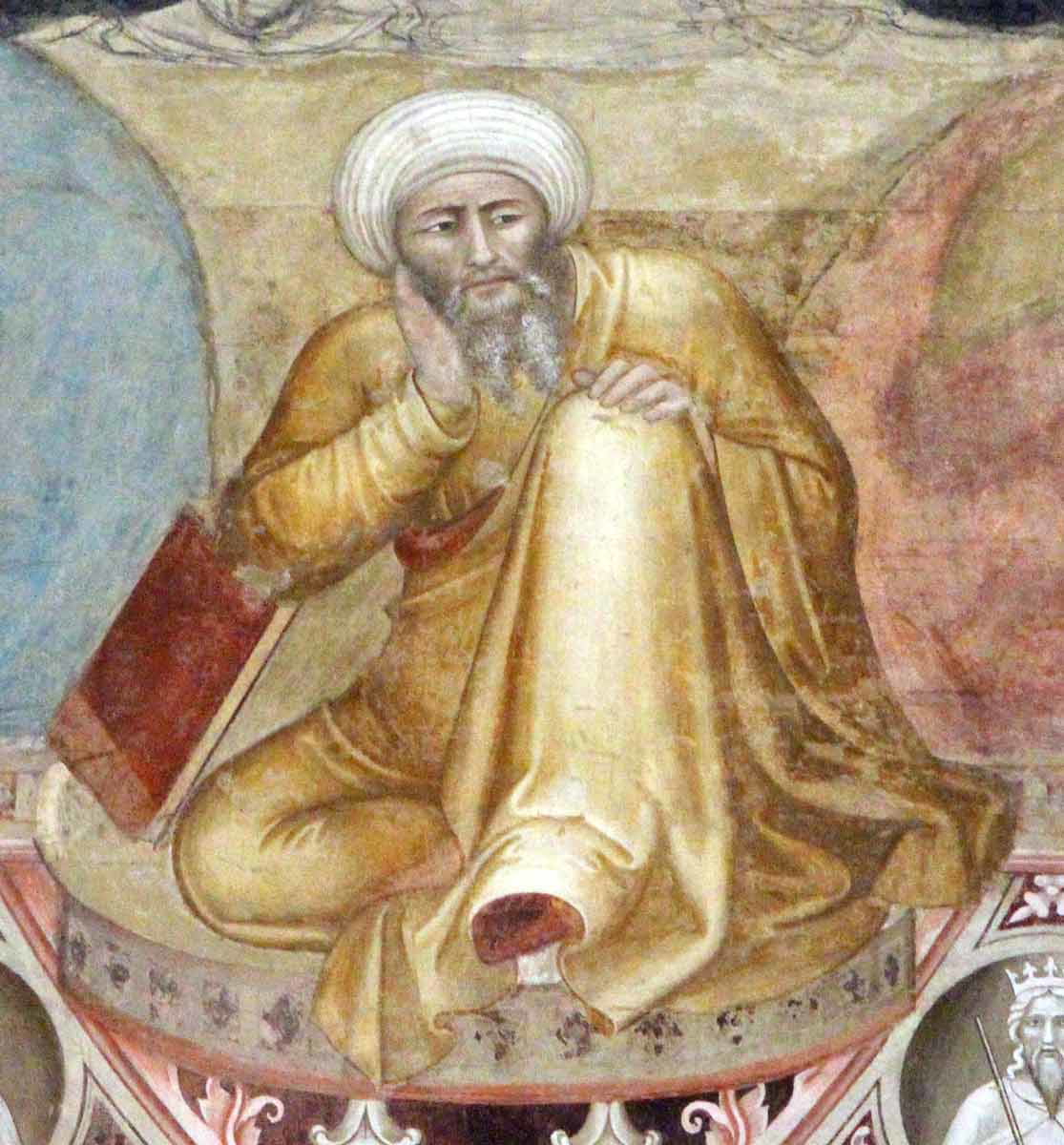
Even before Aquinas’ time, Aristotle’s teachings already enjoyed a renaissance in the East among the Islamic philosophers. One such thinker was Ibn Rushd, better known by the Latinized rendering of his name, Averroes (1126-1198).
Ibn Rushd sought to examine religion with a critical eye, but he also thought the Muslim faith should be adhered to when any one philosopher’s claim did not harmonize with the basic principles of his religion. Ibn Rushd believed that the universe had to be contrived by the mind of another, and he observed that all in existence was “finely-tuned,” precise, and well-ordered. To him, this served as proof of the divine. Similarly, surveying the structure of the universe, Aquinas said such organization could not happen by chance. Like Averroes, he posited that this order argued in favor of a Creator.
The correlation between the theology of Aquinas and Averroes goes further. In De Ente et Essentia, his treatise on being and essence, the Dominican philosopher distinguishes between the essence (the whatness or that which makes a thing what it is) and the existence (or being) of things. He cites past philosophers, including Averroes and Avicenna. He points out where they are wrong, but he also credits them where he believes they spoke truth.
Aquinas also says that such is not the case when it comes to God. He writes: “God’s essence is identified with his own very existence… he hasn’t essence distinct from his existence.” He expounds on God’s perfection and says that God is pure being, calling upon a few familiar characters to bolster his thesis: Aristotle and Ibn Rushd.
Aquinas believed there is no gradation of quality in God, that he is perfect and also changeless. For both Aquinas and Averroes, if God is truly God, he is total perfection.
5. Ibn Sina (Avicenna) and Reflecting on Divine Revelation
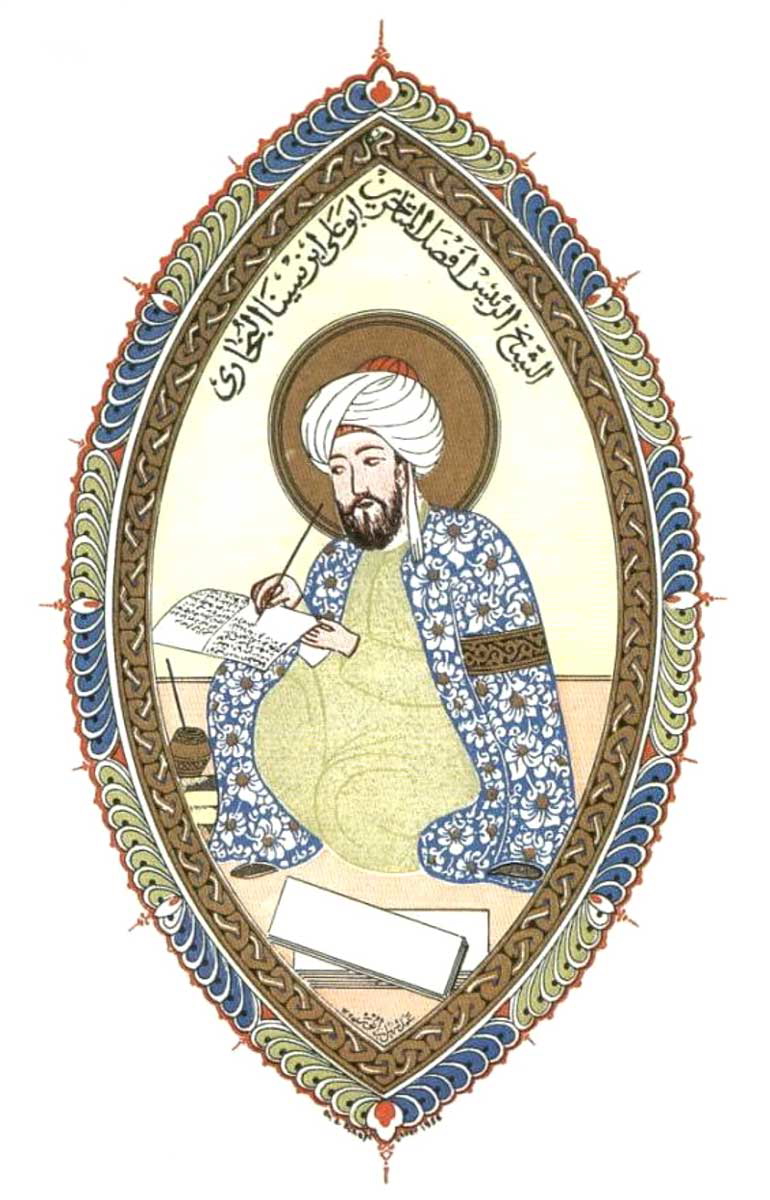
Avicenna is the Westernized version of the name belonging to the Muslim philosopher Abu ‘Ali al-Husayn ibn Sina. Avicenna (980-1037) pondered metaphysical questions and wrote commentaries on verses of the Qur’an. In his Summa contra Gentiles, Thomas Aquinas cites Avicenna 17 times, underscoring the importance of this Quranic scholar.
Avicenna retained Aristotelian influences. As a monotheist, he also found himself among a philosophical lineage made up of the so-called “classical theists.” The classical theists are thinkers who adhere to the notion of divine simplicity: the idea that God is one, unique, and unified being. Divine simplicity states that there can only be one God, that he is not one among many representatives of a species of entities but is his own being, and that he is noncomposite—not made up of multiple parts. For a classical theist, God cannot be parsed out; there are no elements to God that are separate and distinct from others. As Aquinas believed, God’s essence and existence are one. The ancient Christian writer Tertullian said, “The supreme being must be unique, without equal… If God is not one, he is not God.” This same belief has been upheld by Catholicism as well as by Protestant thinkers like Martin Luther and John Calvin.
Divine simplicity is communicated in the Bible. God’s oneness in nature is also made clear in the Qur’an. Both Aquinas and Avicenna believed in divine simplicity since both were deeply in tune with the tenets of their respective creeds. Both belonged to Abrahamic religions that emphasize the Creator’s divine revelation. Steeped in that kind of emphasis, both Avicenna and Aquinas labored to interpret what they considered sacred writings: Avicenna reflected on verses of the Qur’an; Aquinas, on verses of Scripture. They both sought to understand God more deeply.
Further Reading:
If you enjoyed learning about St. Thomas Aquinas, his life, or the philosophical debates he found himself in, you may enjoy reading any of the following works.
- Adler, M.J. (1991). Aristotle for Everybody: Difficult Thought Made Easy. Collier Books.
- Chesterton, G.K. (1986). The Collected Works of G.K. Chesterton II: St. Francis of Assisi, The Everlasting Man, St. Thomas Aquinas. Ignatius Press.
- Feser, Edward. (2017). Five Proofs of the Existence of God. Ignatius Press.
- Kreeft, P. (2014). Practical Theology: Spiritual Direction from Saint Thomas Aquinas. Ignatius Press.
- McDermott, T. (editor). (2008). Aquinas: Selected Philosophical Writings. Oxford University Press.
- Piper, J. (1991). Guide to Thomas Aquinas. Ignatius Press.
- Rogers, P.M. (editor). (2008). Aspects of Western Civilization: Problems and Sources in History. Pearson Education, Inc.
- Walsh, M. (editor). (1991). Butler’s Lives of the Saints. HarperOne/HarperCollins Publishers.