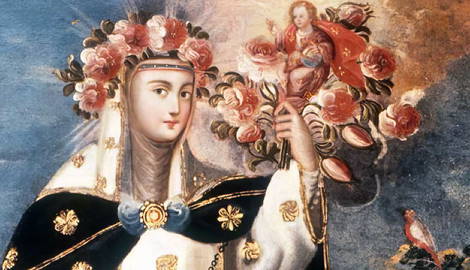
St. Rose of Lima, born Isabel Flores de Oliva in Lima, Peru, was the first person from the Americas to be venerated as a Saint. She is best known for her emulation of Saint Catherine of Siena through fasting, dedicated prayer, and even self-inflicted pain. Though her life began in Peru, tales of her allegiance to her faith spread throughout the world, in some cases inspiring religious cults.
Origins of the Rose
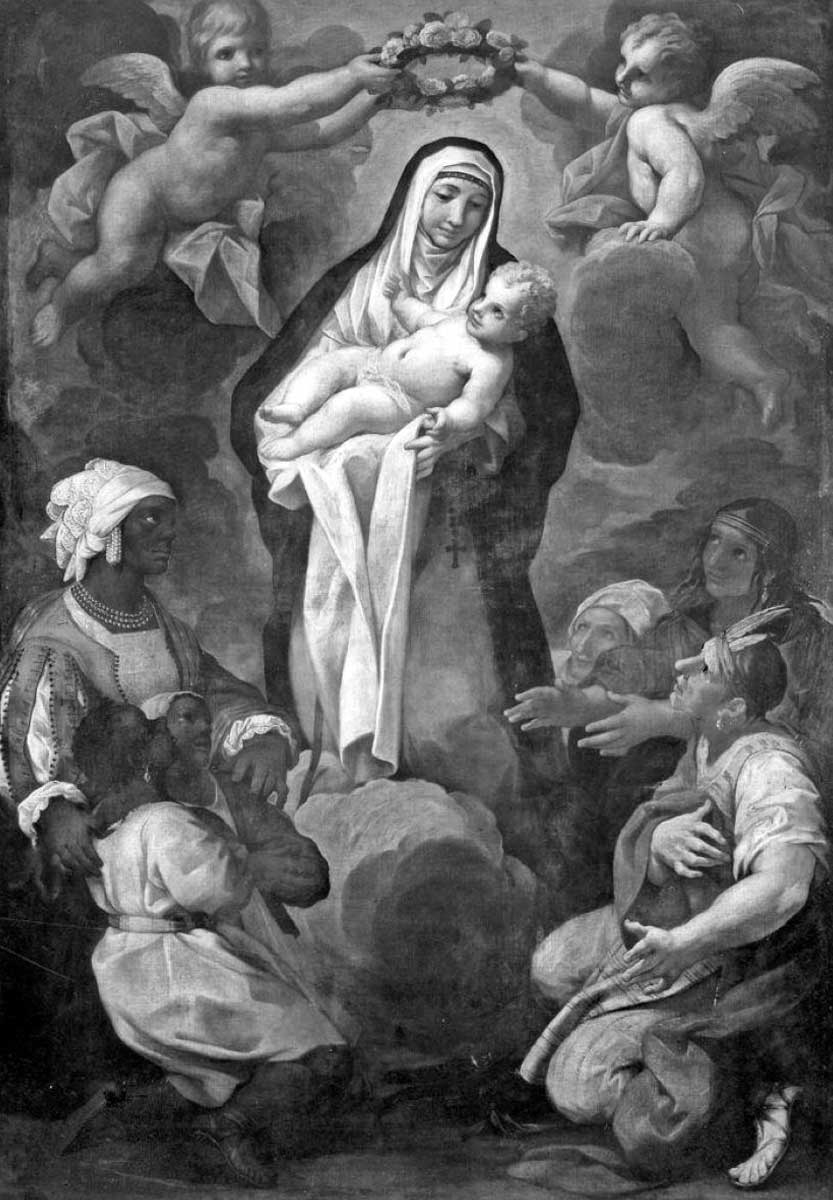
Saint Rose of Lima was born Isabel Flores de Oliva in Lima, Peru, on April 22, 1586. She was the daughter of a Spanish cavalryman, Gaspar Flores, and a mixed Native woman, Maria de Oliva y Herrera. Isabel was just one of 10 other children born to Gaspar and Maria. Some sources claim that the name Isabel came from her grandmother, while others claim that it came from her aunt and godmother. Whatever the case, Isabel was soon dubbed Rosa by her mother and some servants of the household. The stories surrounding the introduction of this nickname vary greatly. One source claims that through some holy miracle, Isabel’s face was temporarily transformed into the image of a rose. Another simply states that Isabel was beautiful, like a rose, which earned her the name. Isabel formally took on the name Rosa after her confirmation in 1597.
From an early age, Rosa looked up to Saint Catherine of Siena and often undertook long periods of fasting and prayer in an attempt to emulate her. When she came of age, Rosa took a vow of virginity, pledging herself only to God and Jesus. This was to the dismay of her parents, who had hoped to marry her to a wealthy young man. In response to receiving the attention of young men, Rosa reportedly cut off her hair and rubbed chili peppers on her face to drive them away. This would only be the beginning of a short life of dedication to God and her faith.
Rosa’s Life of Dedication
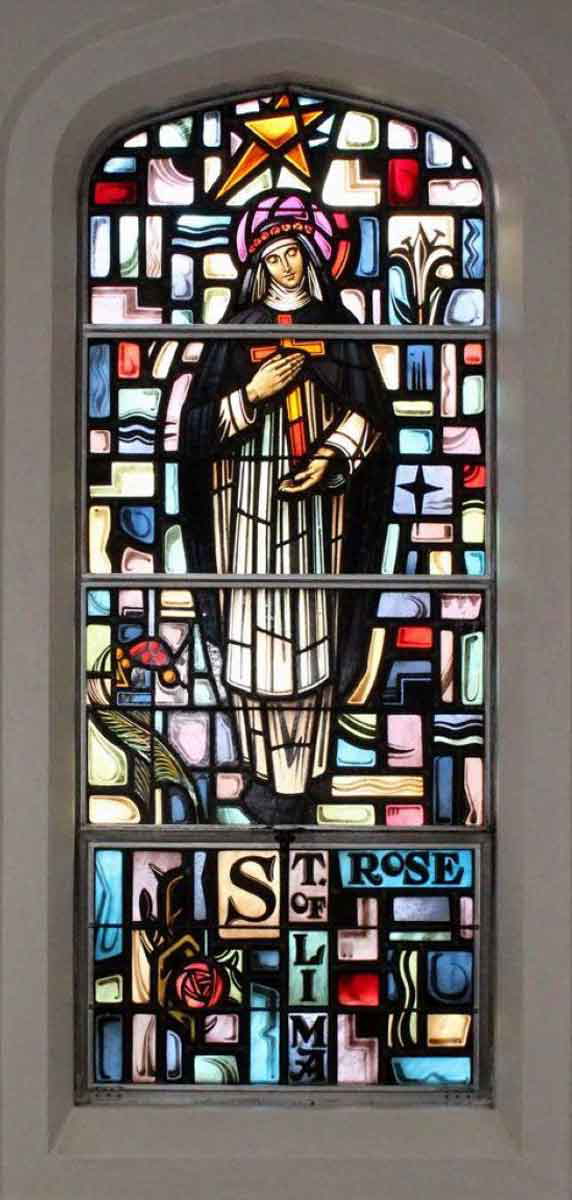
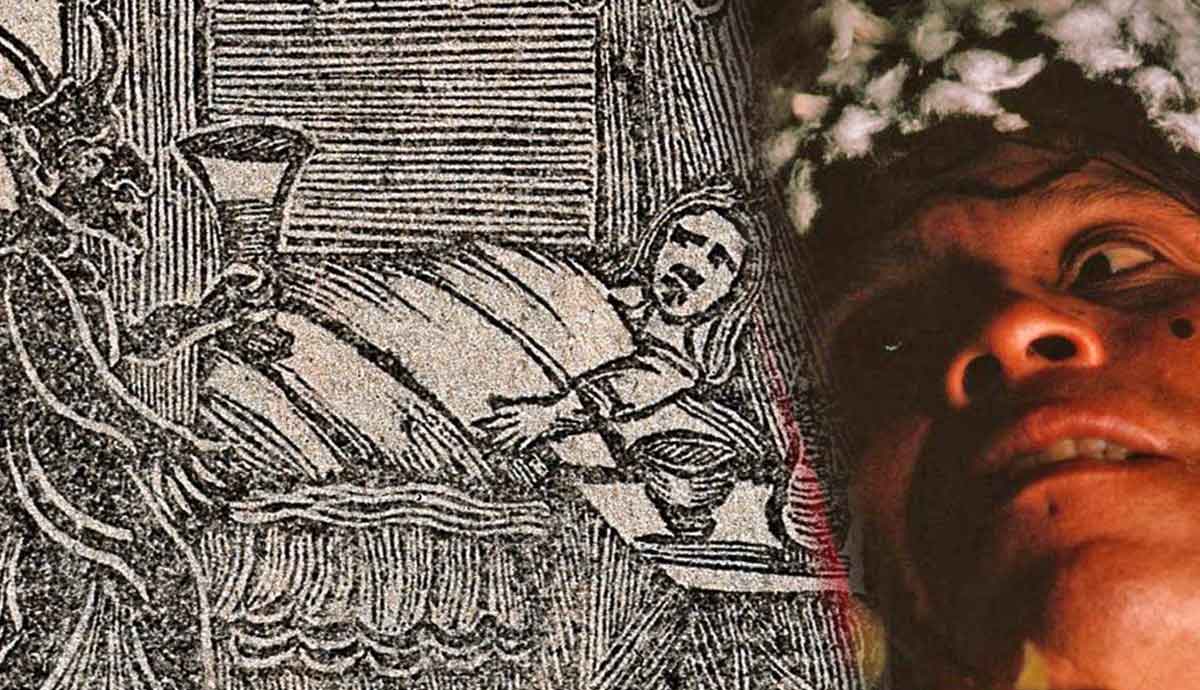
Despite Rosa’s fervent wishes, her parents did not allow her to enter the convent once she became an adult. Instead, Rosa became a tertiary in the Third Order of Saint Dominic. The position of tertiary allowed her to lead a deeply religious life but remain within the public as her family wished. She had a hut built behind her parents’ house, which can still be visited today, where she could pray in silence. It was during this period that Rosa took on extreme forms of devotion to her beliefs. It was reported that she regularly engaged in long fasts, denied herself sleep, and even inflicted wounds on her body. Rosa felt that she deserved the pain that she experienced from these things for the sins that she had committed. Later, Rosa stated that the Christ Child had come to her bearing a ring and asking her to marry him. The idea of being “married” to Christ was far from unusual among nuns and other religious women of the period.
Rosa was also recognized for her good deeds. In the time that she wasn’t praying, she would practice her embroidery and gardening. The results of her work would be sold at the market to provide money for her family and for the less fortunate. Her mother also remarked that when Rosa encountered enslaved Black people in the streets, she would bring them in to care for them. Her selfless actions, along with the suffering that she purposefully inflicted on herself, were enough to bring a wave of international popularity her way.
Death and Beatification
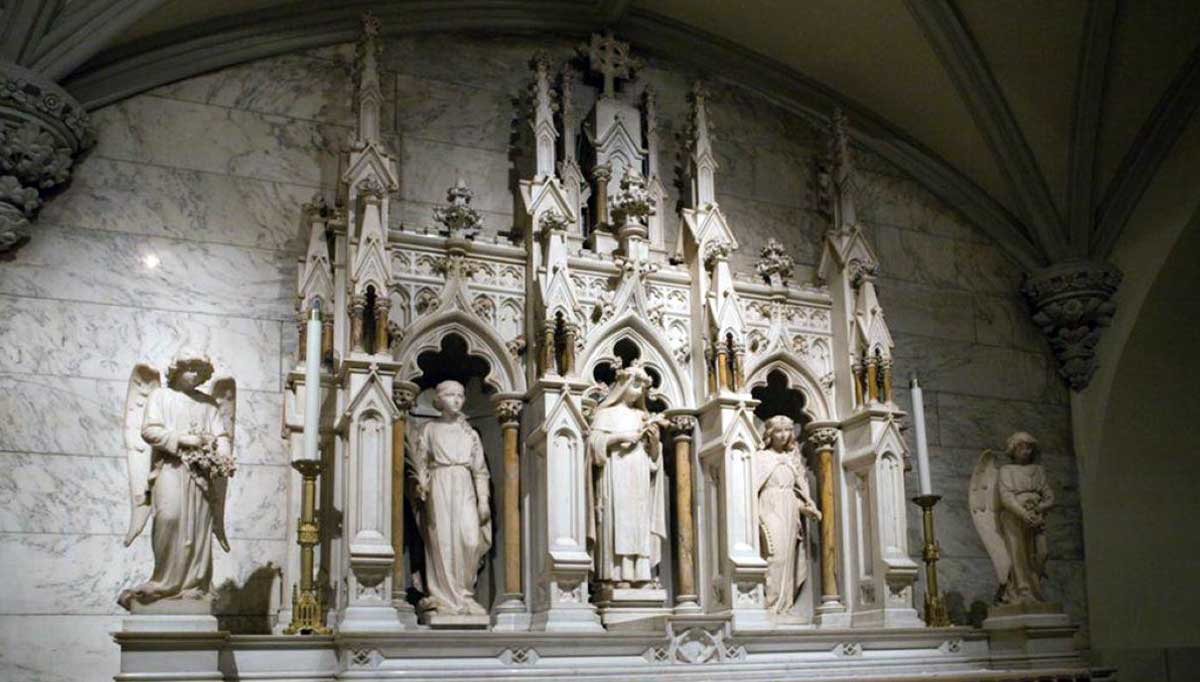
Sadly, Rosa passed away at the early age of 31 on August 24, 1617. Her death was the result of an illness that had plagued her for an extended period. The process of her beatification began just days after her death, though proceedings were halted due to the recent passing of a law stating that beatification could not begin until 50 years after a person’s death. However, King Philip IV of Spain rallied for the cause of Rose of Lima’s beatification, asking the pope to continue the process.
Her veneration was completed by Pope Clement IX in 1668 at St. Peter’s Basilica in Rome, and she was later canonized by his successor, Pope Clement X, in 1671. In 1669, she was declared the patron of Lima and Peru and was later named patron saint of the Indies and the Philippines as well. Afterward, her home was purchased by the auditor Andres de Vilela on the city’s behalf and donated to the Dominican Order that she had been a part of.
Rosa was investigated by the Spanish Inquisition twice, both during her life and after her passing, for the uproar she had caused, possibly due to her miracles. St. Rose is cited as having performed many miracles, both before and after her death. It is said that when the Dutch came in ships to invade Lima in 1615, St. Rose climbed onto the altar of the Church of St. Dominic to protect the Holy Sacraments. This, some chroniclers claim, scared the Dutch away. Another popular story claims that the entire city of Lima smelled of roses on the day of her death. However, Rosa is most popularly credited with having saved Lima from countless earthquakes.
St. Rose Beyond the Americas

Though Rosa began her work in the Americas, soon, word of her actions and devotion would spread across countries and continents. Poland and Lithuania are two countries that developed a particularly strong attachment to St. Rose of Lima. This is especially true in Lithuania, where a sort of cult following developed. Many churches in this small country began to create and display imagery of the Saint, marveling at her power and the miracles she is said to have performed. She is often displayed alongside her role model, Catherine of Siena, as well as Saint Hyacinth.
Rosa is also revered in the town of Sittard in the Netherlands. In the years between 1620 and 1670, the land surrounding the town had been experiencing waves of plague and dysentery. Following the advice of the local Dominicans, the town declared St. Rose of Lima to be their patron in 1669. Miraculously, the wave of dysentery completely bypassed the town, leaving everyone untouched. This action is considered another one of the miracles performed by the saint after her death.
Rosa’s Inspiration: St. Catherine of Siena
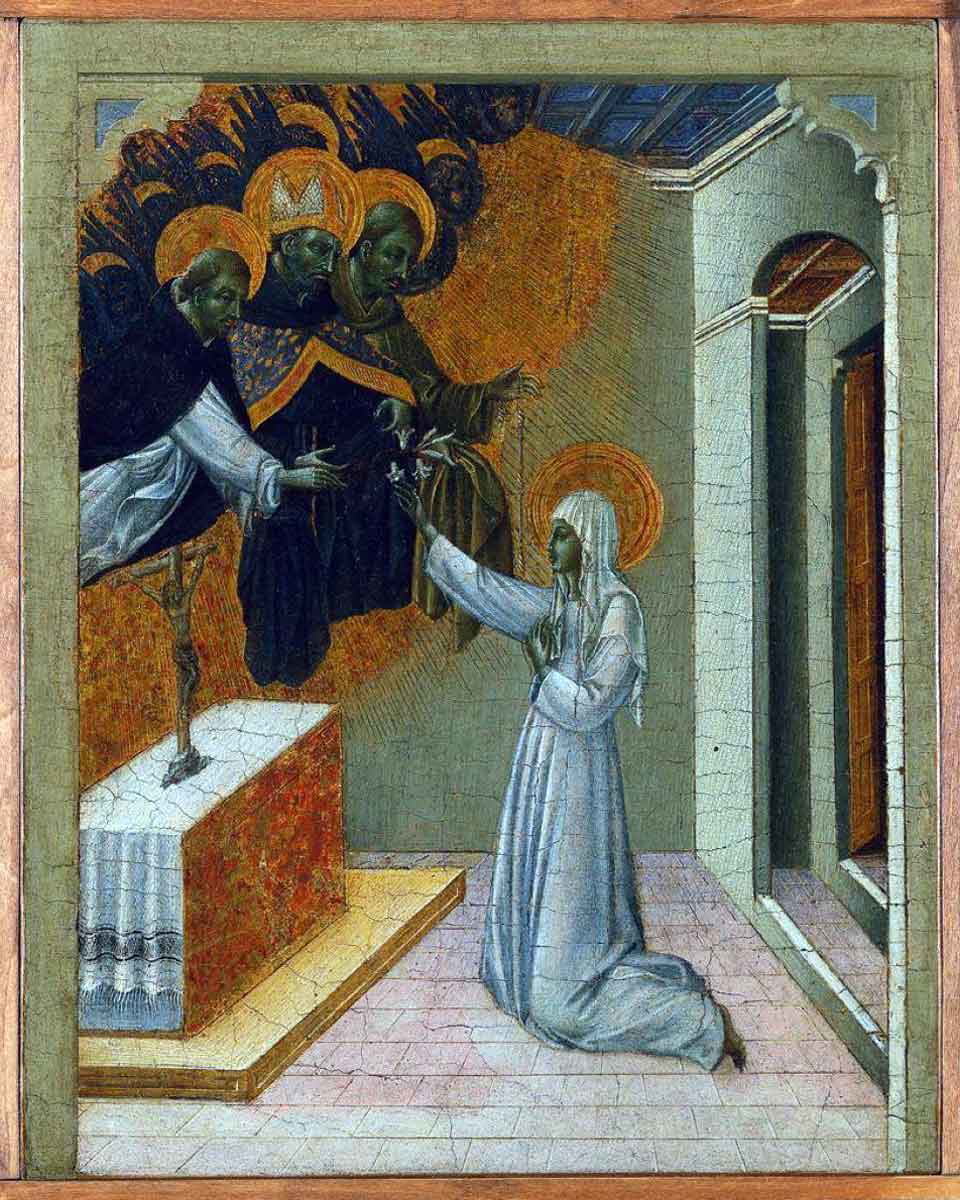
It is well known that from a very young age, Rosa had looked up to the Italian Saint Catherine of Siena, who had been canonized by Pope Pius II in 1461. In fact, Rosa’s life mirrored that of Catherine’s in many ways. Catherine had devoted herself to Catholicism from a young age, and when her parents arranged a marriage for her, she fasted and cut her hair to make her appearance unseemly. This pattern of fasting would continue and become more severe as she grew older. Catherine had also refused to become a nun and instead joined a group of dedicated women within the Order of St. Dominic, where she spent the rest of her life assisting the poor and ill. This group would eventually develop into the Third Order of St. Dominic, the very order that Rosa would join.
Rosa was also not the only saint to claim to have married Jesus—St. Catherine of Siena had also stated this. Another aspect that they shared was their propensity toward isolation, though both ended up leaving behind the life of the convent to remain in the public eye. St. Rose would spend hours praying alone in the hut she had built on her parents’ property. St. Catherine, meanwhile, was reported to have spent three years in seclusion before God requested that she leave her room and return to the world. It is clear that St. Rose looked upon St. Catherine with great admiration and wished to continue the work that she had started.
Modern Interpretations
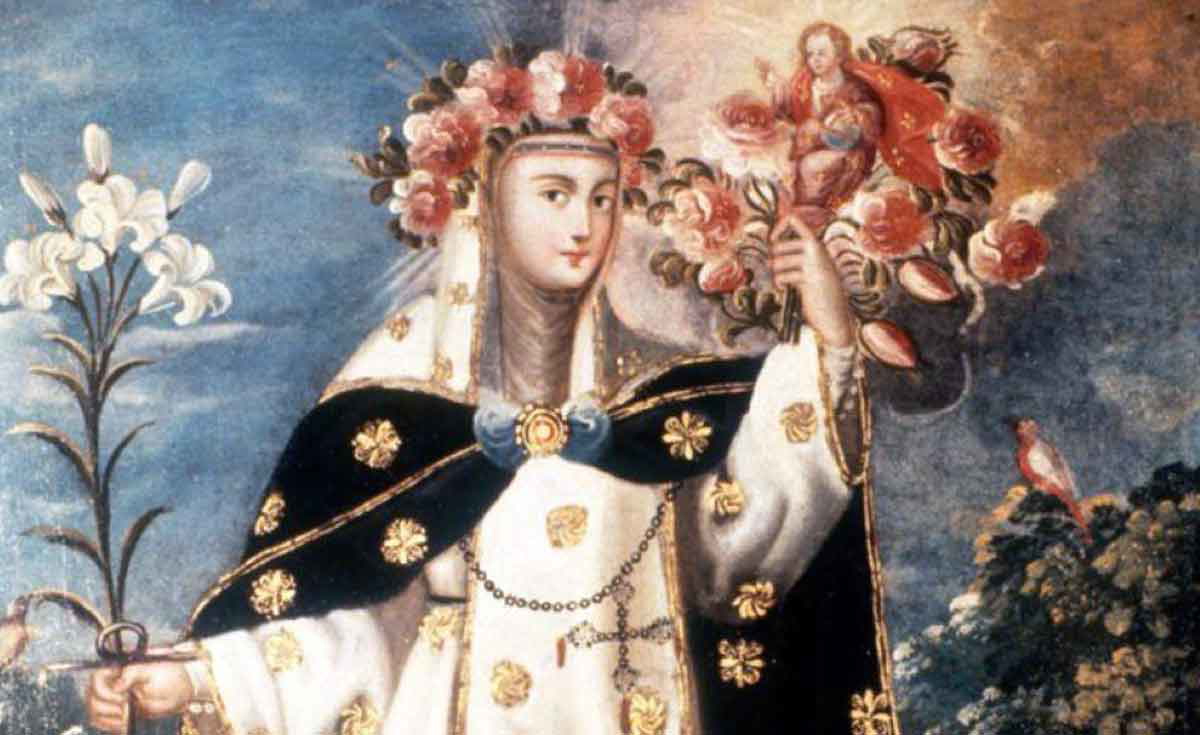
Many modern scholars writing on St. Rose’s life point out that the extremes of her dedication to Catholicism could indicate mental health problems. Many connect her symptoms with an eating disorder, anorexia nervosa, which is characterized by long stretches of fasting or avoiding food. However, some offer a different perspective on the reasons for Rosa’s and other saints’ extended participation in fasting. Recent theories argue that gluttony was often associated with the Roman Empire, where an excess of food and eating was celebrated. Therefore, starvation, a rejection of those Roman ideals, would bring people closer to God and Jesus.
Other scholars suggest that fasting allowed some women to take control of their lives at a time when they were little more than property. It is said that St. Catherine of Siena starved herself in order to appear less attractive and thus avoid a nearly inevitable marriage arranged by her family. Other women used starvation as a bargaining chip to achieve what would normally be impossible for them. The one thing that most modern scholars agree on is that labeling Rosa “anorexic” erases the entirety of her extraordinary religious and spiritual experience.