Poland, located in Central Europe, shares borders with seven countries and the Baltic Sea. The country was settled during the Lower Paleolithic and went on to be invaded by the Germans, Russians, Prussians, Mongols, Balts, and Austrians. Despite being the most powerful European state during the mid-1500s, Poland disappeared from the world map between 1772 and 1918, after being partitioned between Russia, Prussia, and Austria. Today, the resilient country features thriving cities, gorgeous scenery, and an excellent food scene.
1. A Look at the Worst of Humanity: Auschwitz-Birkenau
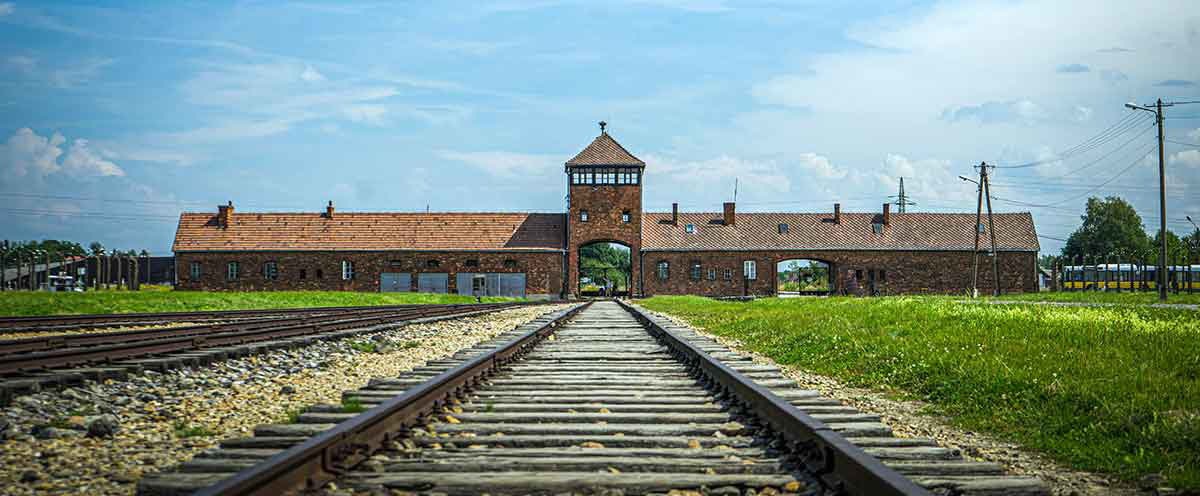
Auschwitz-Birkenau is likely Poland’s most famous (and most macabre) sight. The Nazis founded Auschwitz-Birkenau in the town of Oświęcim (called “Auschwitz” in German) during World War II. The camp consists of several parts located in different areas, including Auschwitz I, Auschwitz II, and dozens of subcamps. The camps were ground zero for Nazi Germany’s notorious “Final Solution.”
It was Germany’s 1939 invasion of Poland that began World War I, and Auschwitz I was initially an army barracks. The barracks were later converted to a prisoner-of-war camp that mainly held Polish political prisoners. Construction began on Auschwitz II in 1941 and it remained in operation until 1945. During those years, trains delivered Jewish people taken from around Europe, as well as Poles, Romani, Soviet prisoners, and members of the LGBTQ community, among others. Conditions at Auschwitz-Birkenau were famously horrendous and abusive, and an estimated 1.1 million people died at the camp in under five years.
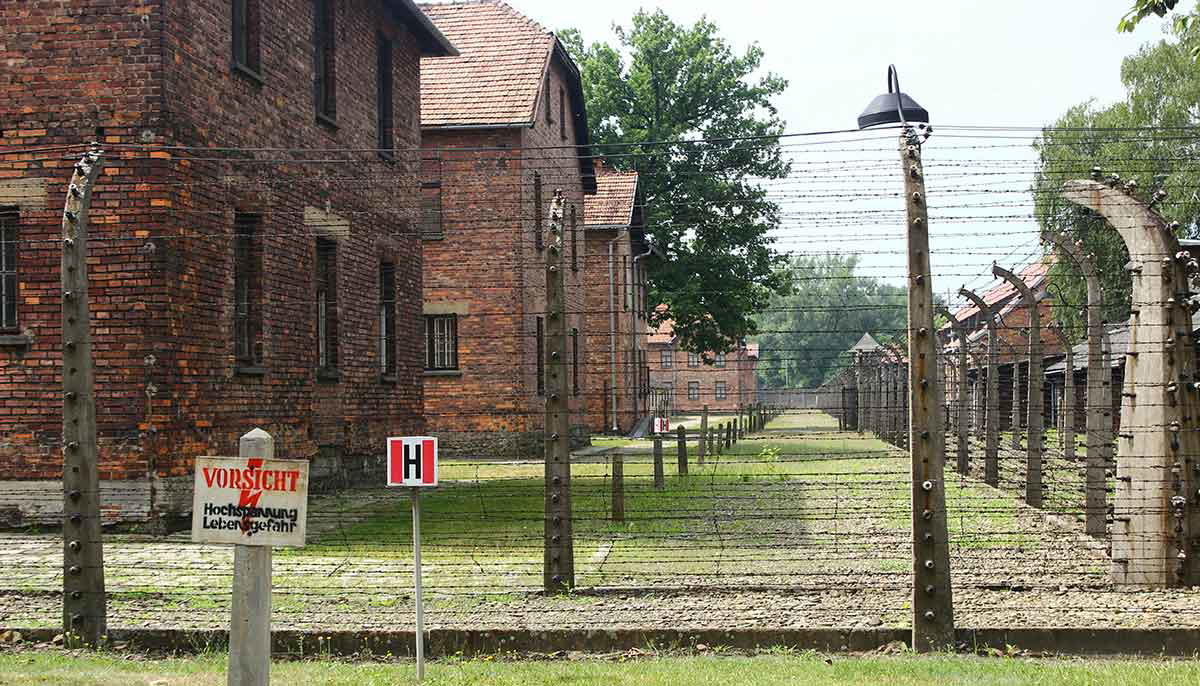
The camps at Auschwitz were designated a UNESCO World Heritage Site in 1979, and it remains the site of the largest mass murder in human history. Visitors to the camp must book their entry passes in advance, and all guests join a group with a tour guide. Visitors to the camps visit both Auschwitz I and II and can go inside the barracks and even the gas chambers. In display cases, visitors can view items confiscated from prisoners—everything from artificial limbs and eyeglasses to suitcases, shoes, and hair. Though somber, Auschwitz-Birkenau remains an important place to both experience and remember.
2. The Castle on the Hill: Wawel
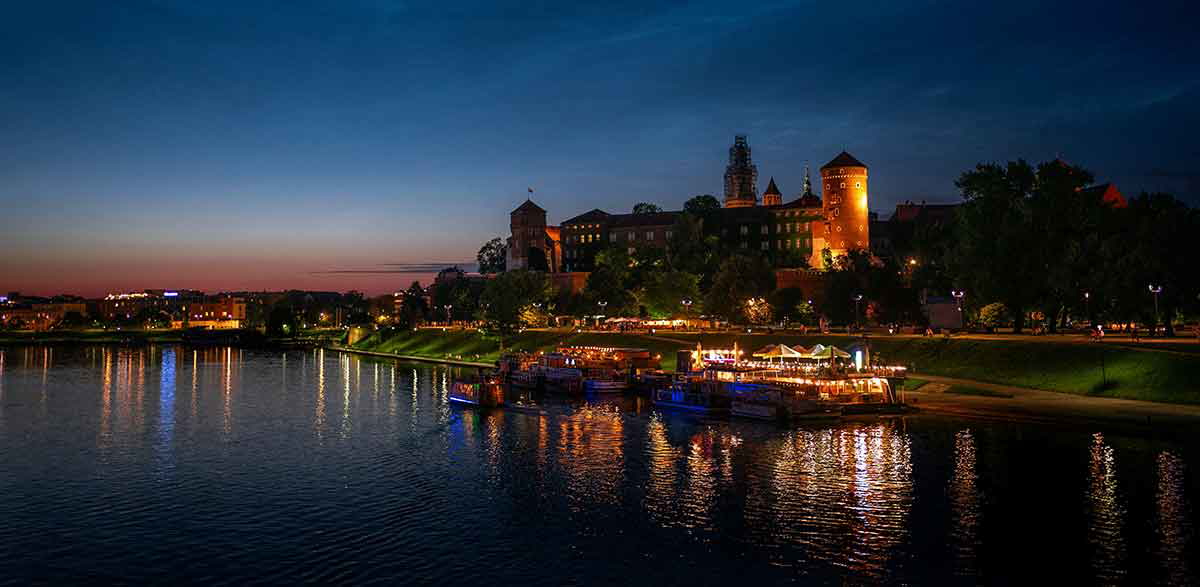
The Wawel Castle, located in central Krakow, is a 13th-century royal residence that housed some of Poland’s most important monarchs. The castle sits on Wawel Hill, a culturally and historically important site in Poland. The castle was first constructed by King Casimir III the Great, and between the 11th and 17th centuries, it was the main home for Poland’s monarchs.
Local myths state that the castle was established after Prince Krakus fought and defeated a dragon who was living in the caves below the hill. After his defeat, the castle was built on top of the dragon’s lair. Nowadays, the Wawel Dragon Statue is a nod to this myth. The 20-foot bronze statue, installed in 1972, breathes fire once every five minutes.
During the 14th century, Wawel Castle was expanded by King Ladislaus I, and in the 15th century, it was rebuilt in a Renaissance style. In 1595, there was a fire, and parts of the castle were rebuilt again in the Baroque style.
The site lost its importance in 1610 when the royal court relocated to Warsaw. The Austrians occupied Wawel in 1795 and used the castle as military barracks. Much of the castle had been destroyed by 1905 when it was handed back to Poland. As Poland had lost its independence during the period of foreign partitions, Wawel came to symbolize endurance. People went to Wawel to protest occupation, whether from the Russian, Austrian, or Prussian empires.
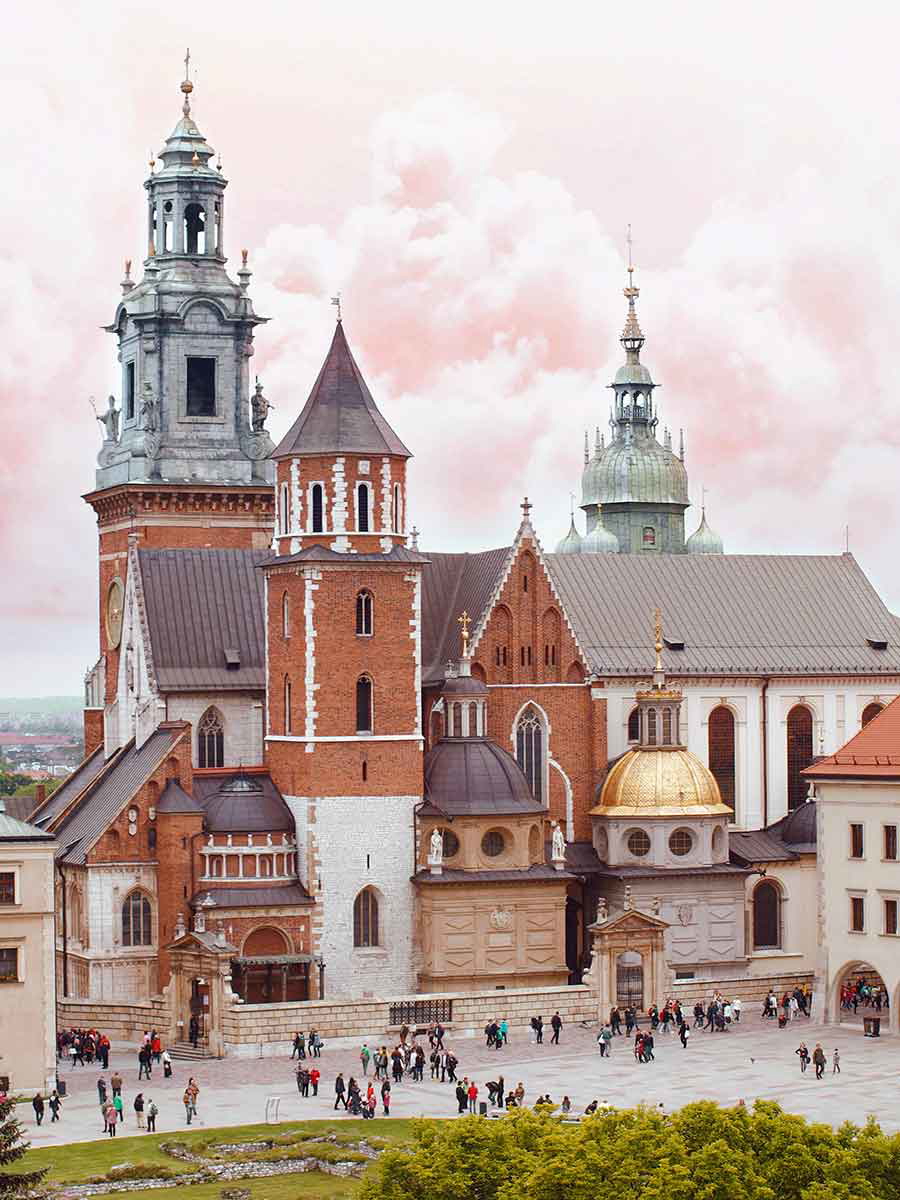
Today, Wawel Castle is a museum, and visitors can enjoy its collections of military and royal items, including the crown jewels. A highlight is the Wawel Cathedral, which has the full name of Cathedral Basilica of Saints Stanisław and Vaclav. The castle was declared a UNESCO World Heritage Site in 1978, as part of Krakow’s historic city center.
3. The World’s Largest Castle by Area: Malbork
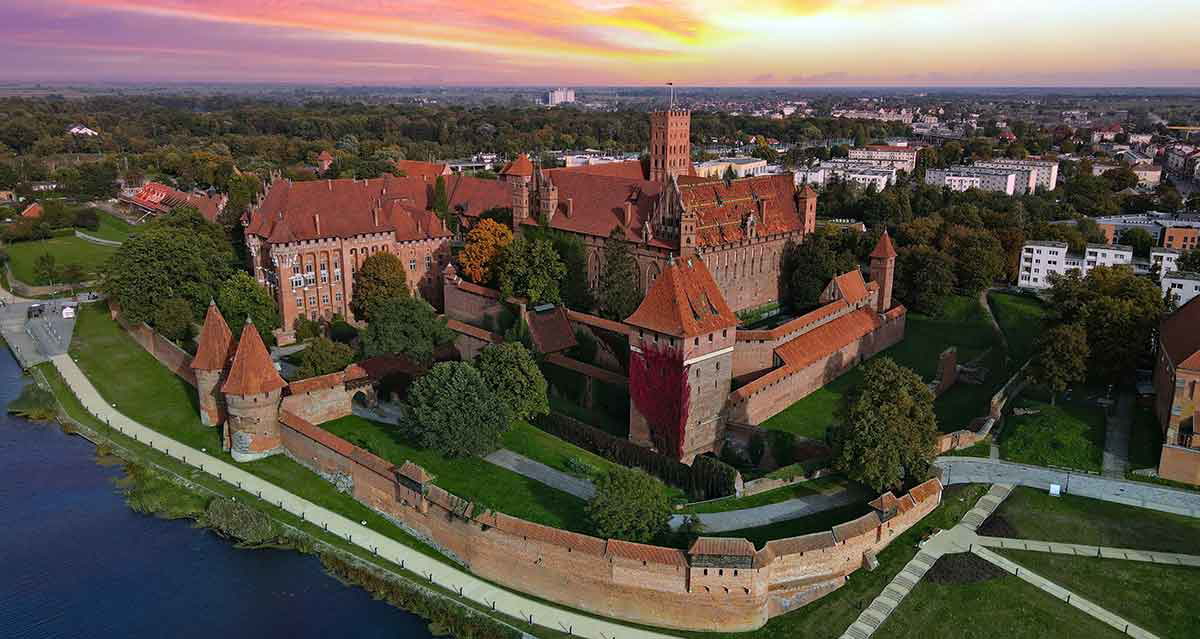
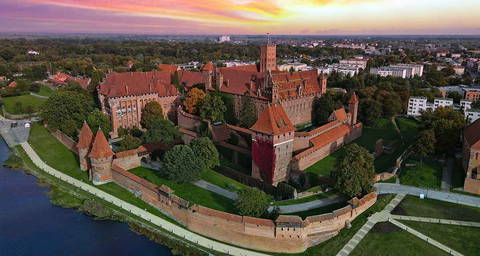
The Castle of the Teutonic Order in Malbork, known as Malbork Castle, is located in Malbork, Poland. The fortified medieval complex is in the Pomeranian Voivodeship, not far from the northern city of Gdansk. The brick castle within the complex is a Gothic structure that was constructed in the 13th century by the Teutonic Order, a Catholic religious order originating in Germany. It is generally accepted that the castle was built and expanded several times between 1274 and 1406 and was the largest brick castle in the world upon its completion. The castle was sold to King Casimir IV of Poland in 1457 and went on to serve as one of the residences of the Polish monarchy.
The First Partition of Poland in 1772 saw the castle fall under Prussian rule. It remained this way for over 170 years. During that time, the castle fell into disrepair and was nothing more than an interesting place to visit. In 1945, the castle came under Polish rule once again, and restoration took place from 1961 onward.
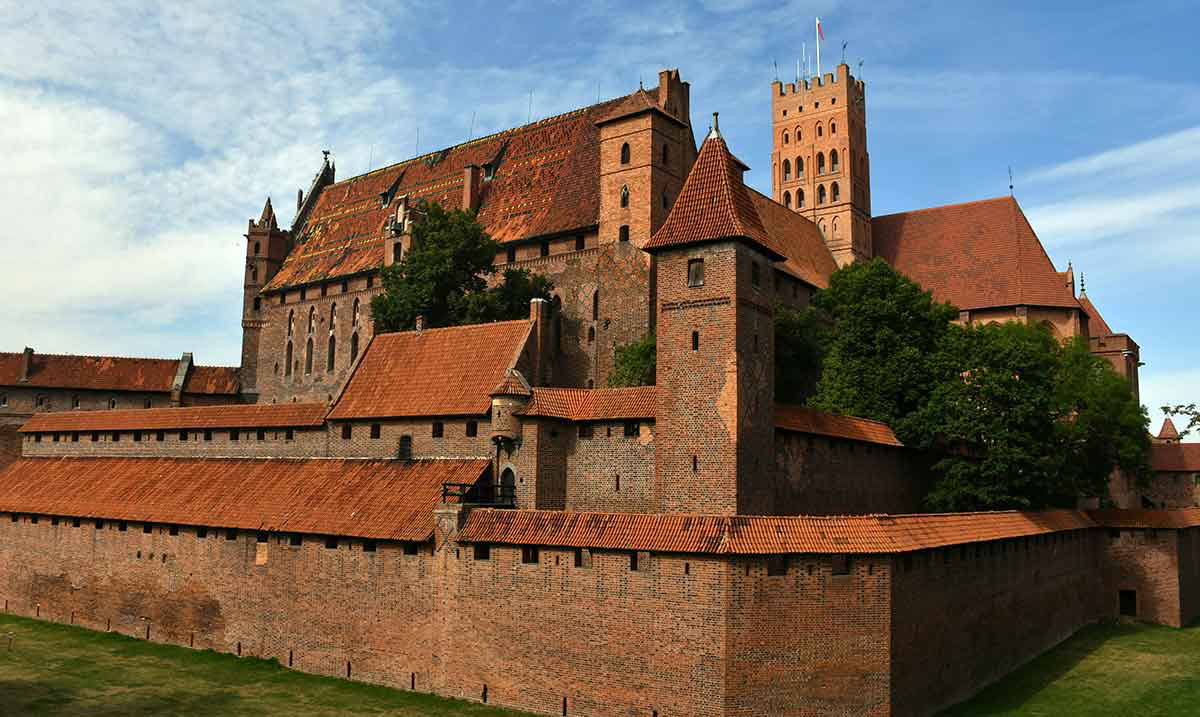
The castle complex, which covers 52 acres, is surrounded by two thick walls. It houses three fortified castles, a monastery, and hundreds of houses, along with an impressive collection of armor, amber, furnishings, and paintings. The Malbork Castle Museum was opened to visitors in 1961 and is the largest castle in the world by land area. The castle was listed as a UNESCO World Heritage Site in 1997 and is maintained by the National Heritage Board of Poland.
4. Discover an Underground World at Wieliczka
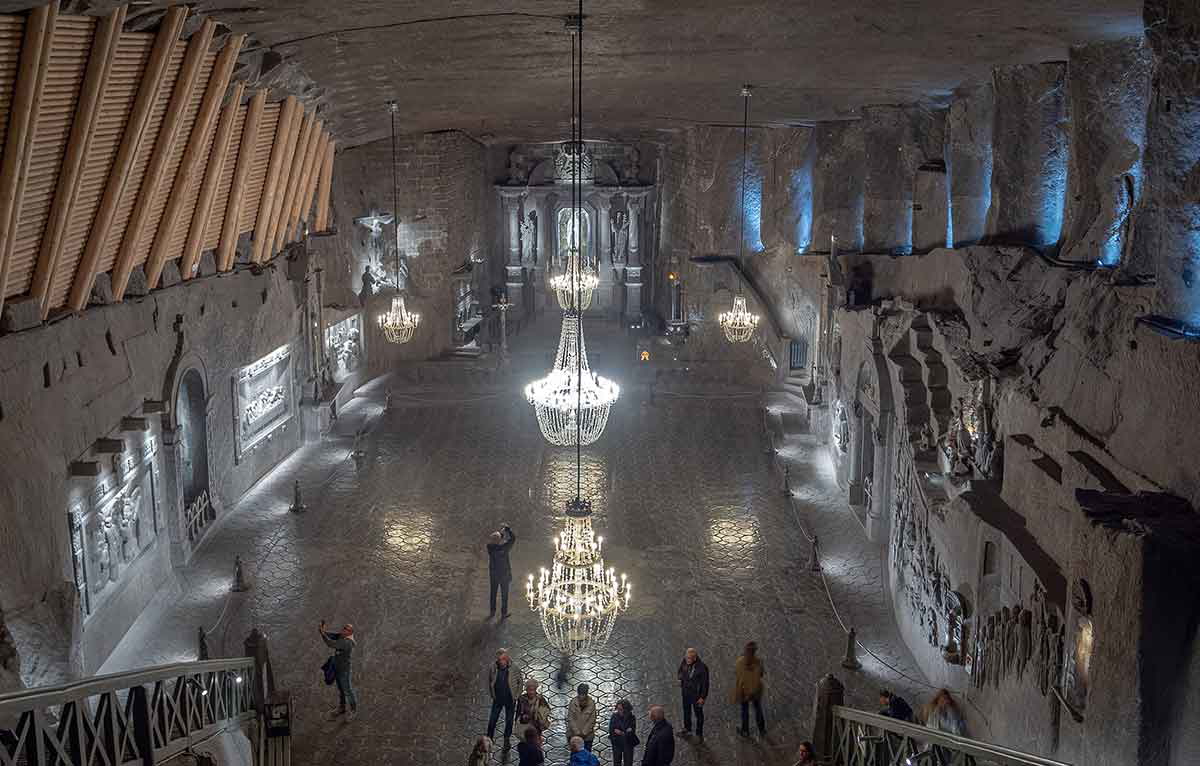
The Wieliczka Salt Mine, located southeast of Kraków, dates back to the 13th century and has a history of over 700 years. In Neolithic times, residents took brine from springs in the area to produce salt. Over time, the salt springs weakened and wells were constructed, leading to the discovery of rock salt. From there, mining activity began as a seasonal activity, conducted when there were no agricultural tasks to perform. Over time, salt became very important in the local economy, and year-round mining began in the 16th century.
As mining activities ramped up in the 16th century, so did the use of new technologies. The mine began to draw tourists, who took underground boat rides here. After the 1772 partitions, the Habsburgs further developed the mine. The mine continued to operate after returning to Polish control, and it was named a UNESCO World Heritage Site. Mining activities stopped in 1996. Over the mine’s years of operation, it yielded around 7.4 million cubic meters of salt.
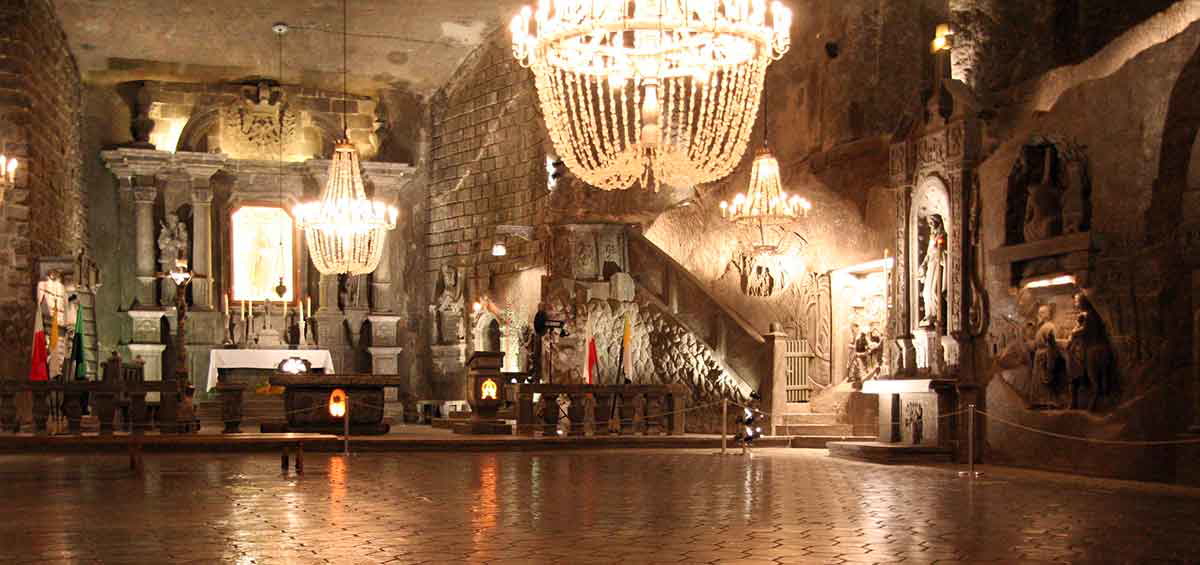
The Wieliczka Salt Mine is a labyrinth of passages, vast caverns, and underground lakes. It contains four chapels, with the Chapel of St. Kinga being the most impressive. This chapel covers around 4,305 square feet and can fit as many as 400 people inside. There are 800 stairs inside the mine, along with a tunnel network that covers around 186 miles over nine levels.
The interior of the mine, including the walls, sculptures, and decorations, is made primarily out of salt. The deepest part of the mine is 1,073 feet underground, meaning its depth exceeds the height of the Eiffel Tower by 10 feet! Visitors can view ancient mining machinery and tools, preserved by the salt. The mine also hosts a variety of events, including banquets, conferences, and concerts.
5. An Old Town Restored: Warsaw

Warsaw’s old town, known as Stare Miasto in Polish, is the oldest portion of the city of Warsaw. The area was settled during the 13th and 14th centuries and was designated a town in the year 1300. The original town developed surrounding the castle of the Dukes of Mazovia (which later became the Royal Castle), with a market square established in the late 13th or early 14th century. The old town was initially surrounded by ramparts made of earth, which were later converted to brick city walls.
In the 1910s, the old town had fallen into disrepair, marred by slums and overcrowding. It also had a red-light district and a bohemian area where many artists had studios. In the late 1930s, the old town was refurbished, but unfortunately, much of the area was badly damaged by German bombs in World War II. The Germans deliberately bombed historical and residential areas.
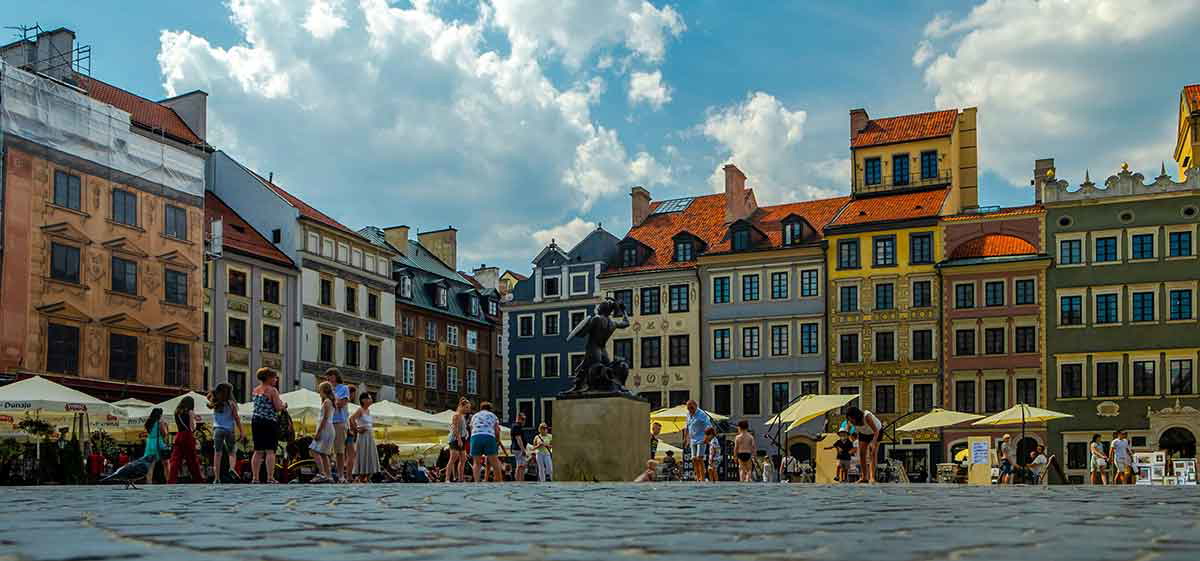
Following World War II, the decision was made that Warsaw’s old town would be reconstructed. An effort was made to make the area look as similar to pre-war Warsaw as possible (though with some changes and modernization). Decorative elements were even taken from the rubble and returned to their original places. The reconstructed old town was so impressive that it was listed as a UNESCO World Heritage Site in 1980. UNESCO described it as “an outstanding example of a near-total reconstruction of a span of history covering the 13th to the 20th century.”
Today, the old town has many sites of interest, including the Royal Castle, the Barbican, the market square, the Warsaw Museum, St. John’s Cathedral, Sigismund’s Column, and the Warsaw Mermaid Statue. Also be sure to visit the nearby Palace of Culture and Science, Poland’s second tallest building, which was a gift to Poland from Joseph Stalin.
6. The Storied Kraków Cloth Hall
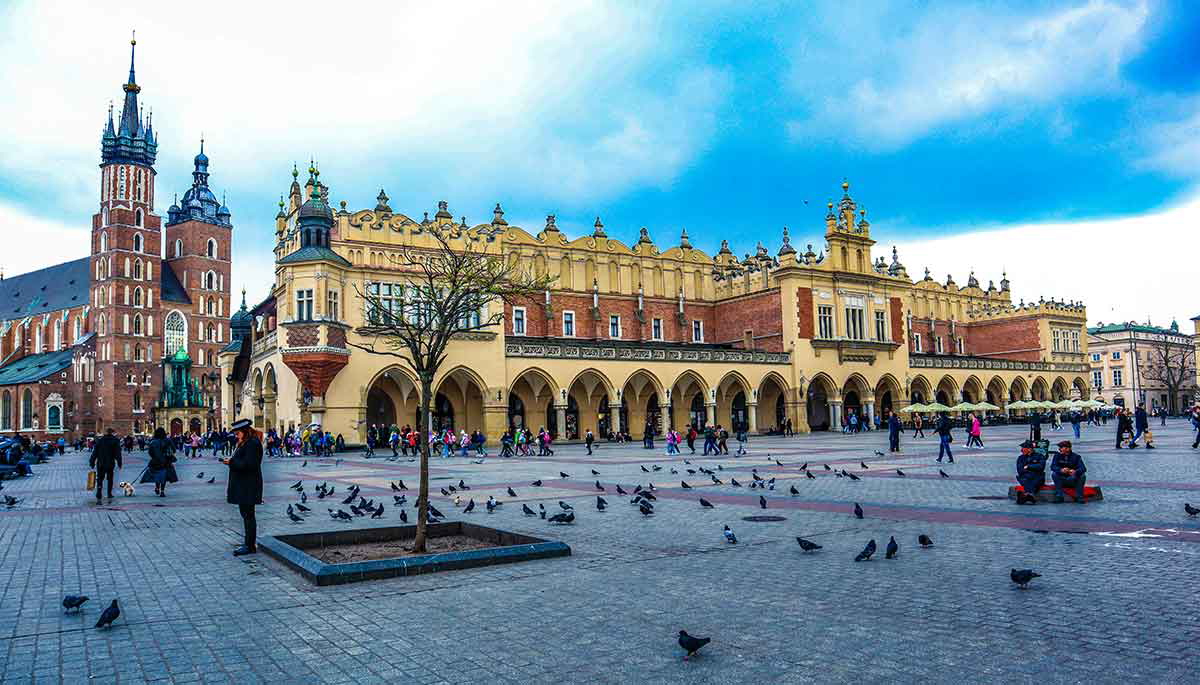
The Cloth Hall, known in Polish as the Sukiennice, is a medieval market building located in Kraków. The hall sits in the center of the market square in Kraków’s Old Town. This market hall was, historically, a center for international trade, with merchants from abroad gathering there. Trade activity in the area reached its peak in the 15th century, receiving silk, spices, wax, and leather from the east while exporting local salt, textiles, and lead.
Though Warsaw is Poland’s capital today, Kraków was its capital from 1038 to 1596. It was one of Europe’s largest cities prior to the Renaissance, but its importance decreased when Warsaw became the capital. The city further declined due to the Partitions, wars, and politics. In 1870, Poland’s then-Austrian rulers renovated the Cloth Hall, which had essentially gone to ruin.
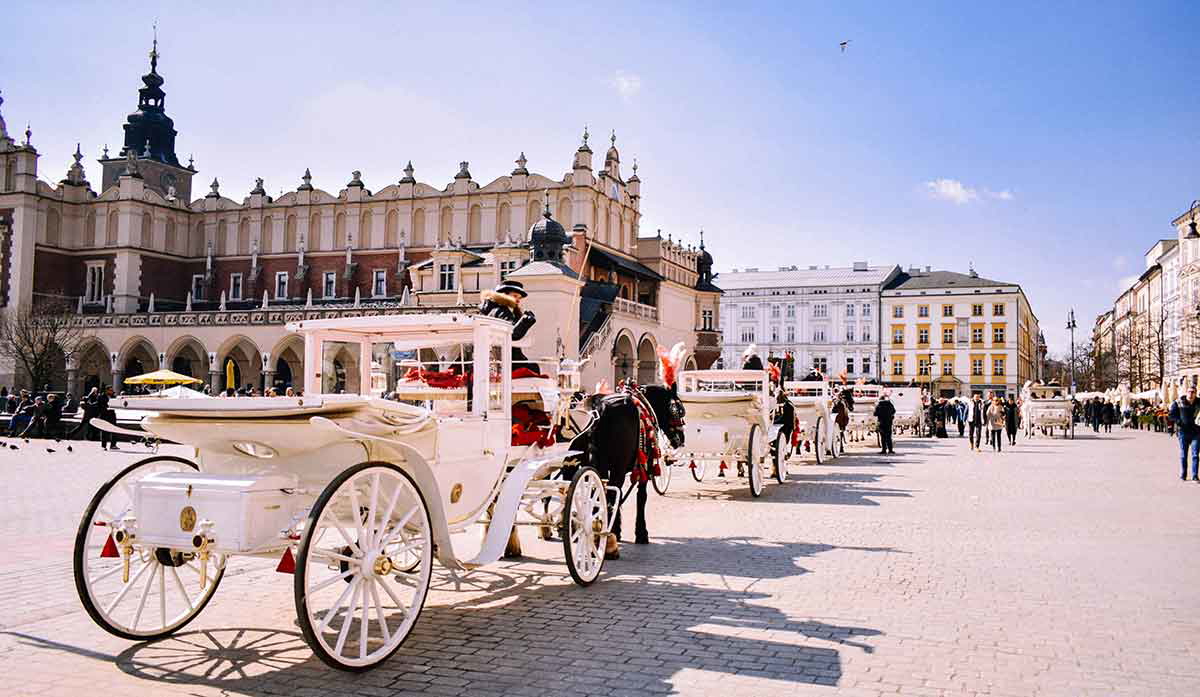
The Cloth Hall was listed as a UNESCO World Heritage Site in 1978. Today, the ground floor of the hall is still used as a market, while the upper floors house a division of the National Museum called the Sukiennice Museum. The museum holds the Gallery of 19th-century Polish Art, the largest permanent collection of this sort.
7. The City of Where WWII Began: Gdansk
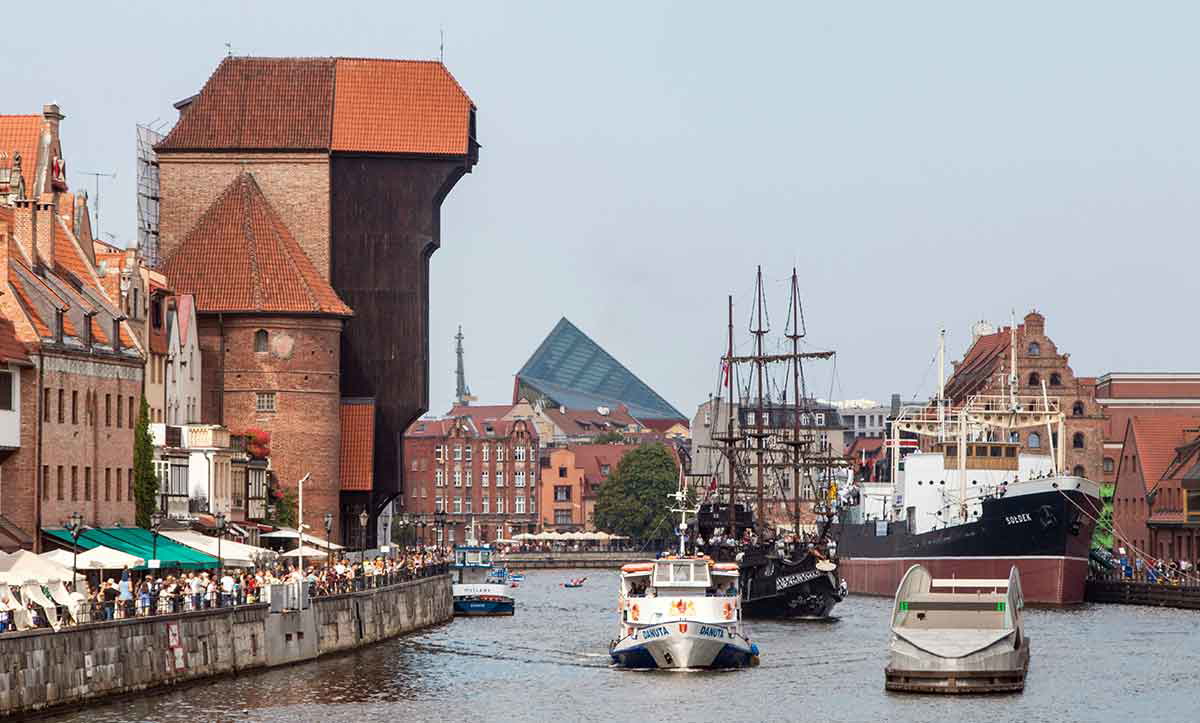
Gdańsk, Poland’s sixth largest city, is located in northern Poland, on the coast of the Baltic Sea. During the Middle Ages, Gdańsk became a hub for trade and shipbuilding and was Poland’s main seaport. It was also Poland’s largest city between the 15th and 17th centuries. When Poland was partitioned in 1793, Gdańsk was taken by Prussia. When Germany unified in 1871, Gdańsk became part of the German Empire and was known as Danzig.
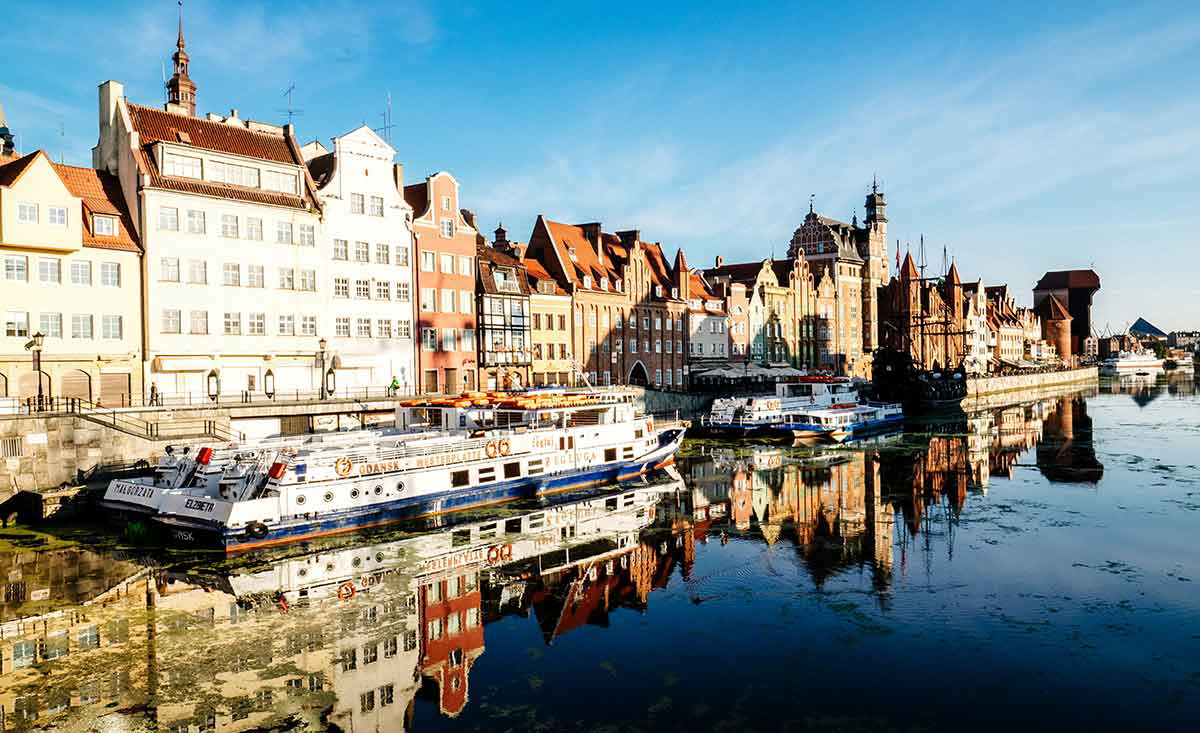
Gdańsk became a Free City, as defined by the League of Nations, following World War I. However, the peace did not last long. The city was the site of the first clash of World War II after the Germans invaded via Westerplatte, a peninsula in Gdańsk. In the years that followed WWII, Gdańsk was rebuilt and a new settlement was established. The city was also home to the Polish Solidarity movement, a trade union that later played a role in ending communist rule in Poland.
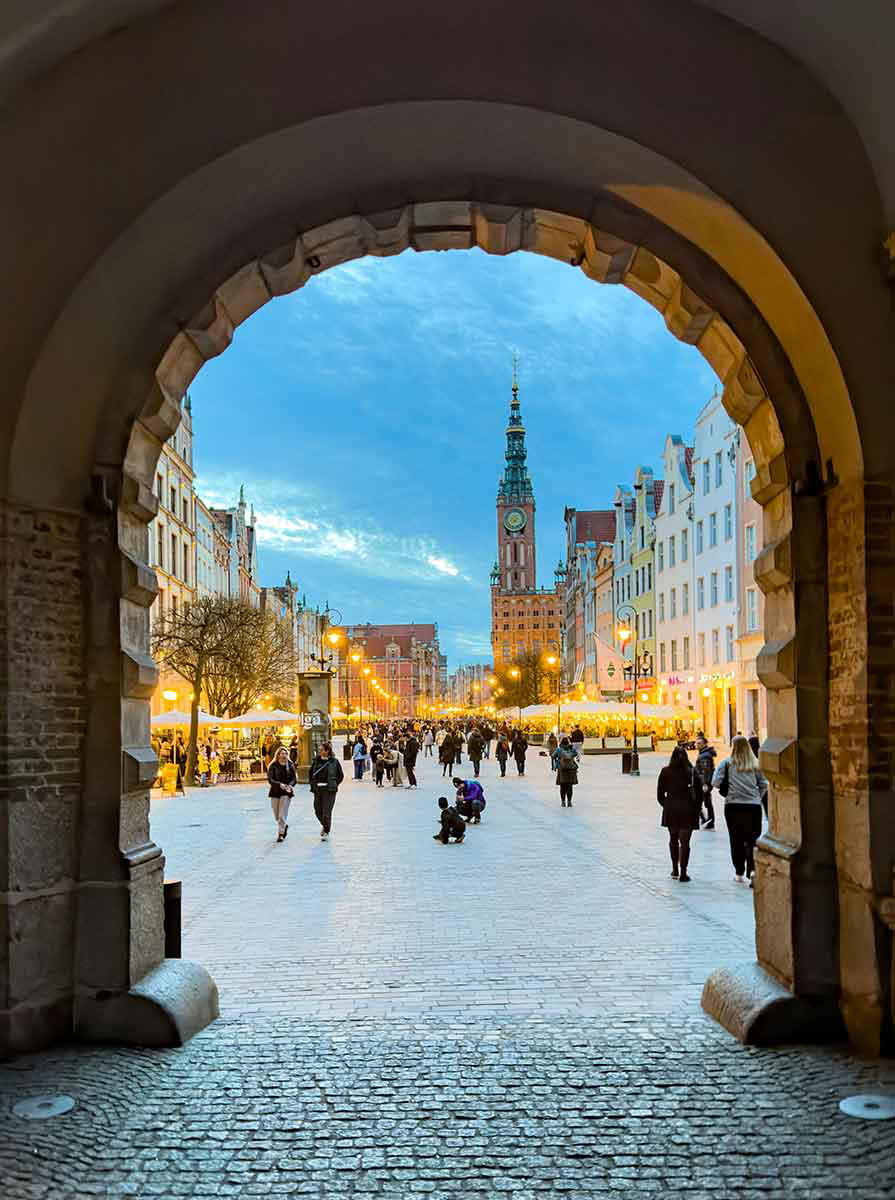
Today, Gdańsk is a popular tourist destination for travelers in Poland and receives roughly 3.4 million visitors annually. Gdańsk offers a unique experience, as it resembles a Dutch city more than a Polish city. Highlights in the city include its old town, where you can enjoy a mix of Renaissance, Gothic, and Baroque architecture.
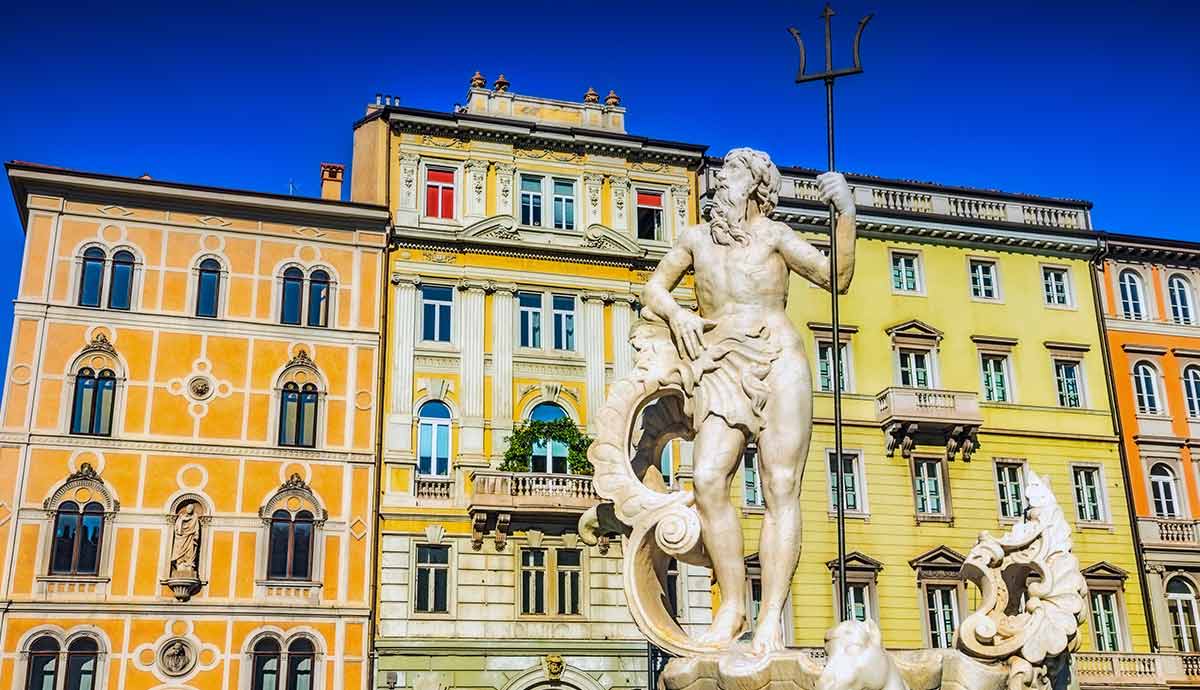
Enter the old town through the striking 17th-century Golden Gate. St. Mary’s Church, built in the 15th century, features a gorgeous 46-foot, astronomical clock. Other points of interest include the Gdansk Crane, Mariacka Street, Neptune’s Fountain, Artus Court, the Town Hall, the Museum of the Second World War, the National Maritime Museum, and the Westerplatte site.