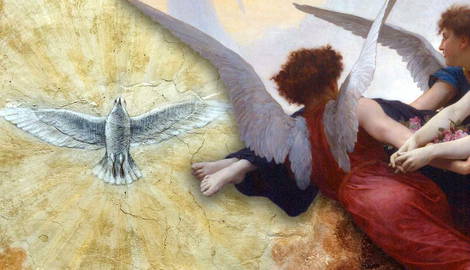
The question of what happens to the soul after death is an enduring one, and each religion poses its own answer. In Christianity, there is more than one answer. It largely depends on the weight the believer places on the evidence from the Old Testament compared to that of the New Testament, not that the two necessarily contradict one another. In essence, there are two views. The first posits that the soul is inherently immortal and continues in a conscious state. The second believes the soul enters an unconscious state when a person dies.
Consciousness After Death in the Old Testament
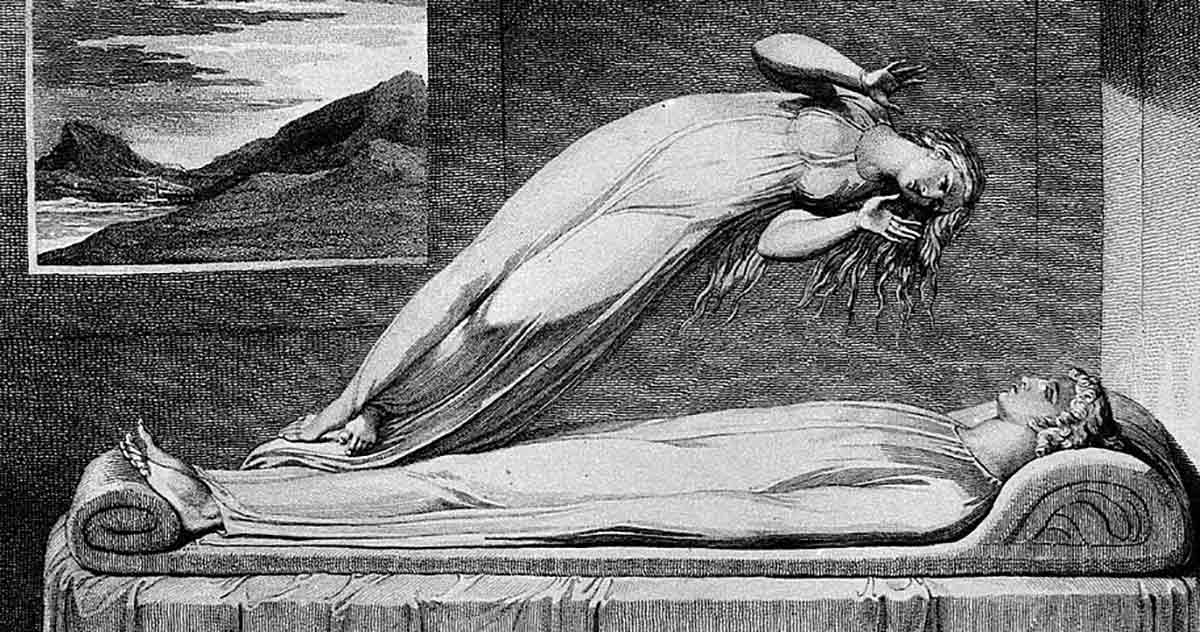
Many point to the summoning of Samuel when King Saul visited the witch of Endor as evidence that the prophet was conscious after death (1 Samuel 28). Samuel allegedly delivered a message from God to Saul. God expressly forbade necromancy, and it was punishable by death (Deuteronomy 18:10-12). It seems strange that God would speak through a deceased prophet to a king he had rejected, using a method he forbade. 1 Chronicles 10:13-14 suggests it was not Samuel that Saul communicated with. A reader would be hard-pressed to consider a violation of an instruction of God as the biblical doctrine on the state of souls after death.
Job 26:5 refers to the dead trembling. Since death separates a soul from the body, the physical manifestation of trembling must be understood metaphorically. As a metaphor, it does not contribute much to our understanding of the soul’s consciousness after death.
Isaiah 14:9-10 has bygone leaders speak from Sheol (sometimes translated as the grave or the pit), saying, “You too have become as weak as we! You have become like us!” Likewise, Ezekiel 32:21 had chiefs of old speaking to those in power then. The same problem we encountered with the record of Saul visiting a medium reappears here. Doctrinal interpretations drawn from verses that openly violate an instruction of God are problematic at best.
The Old Testament does not present much evidence for a conscious state of those who have passed. In general, the references contradict the explicit instruction from God that necromancy is a forbidden art. The Old Testament does not provide strong evidence for a conscious existence after death.
Consciousness After Death in the New Testament
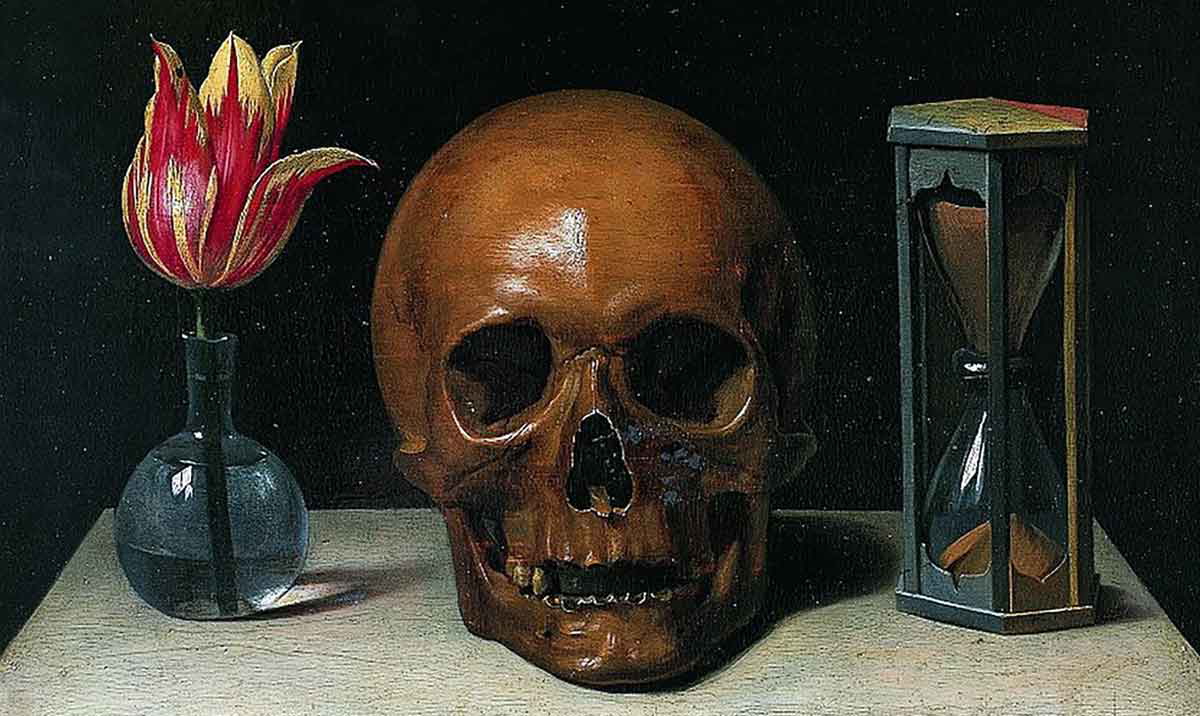
In the New Testament, several passages feature arguments in favor of a conscious condition of the deceased.
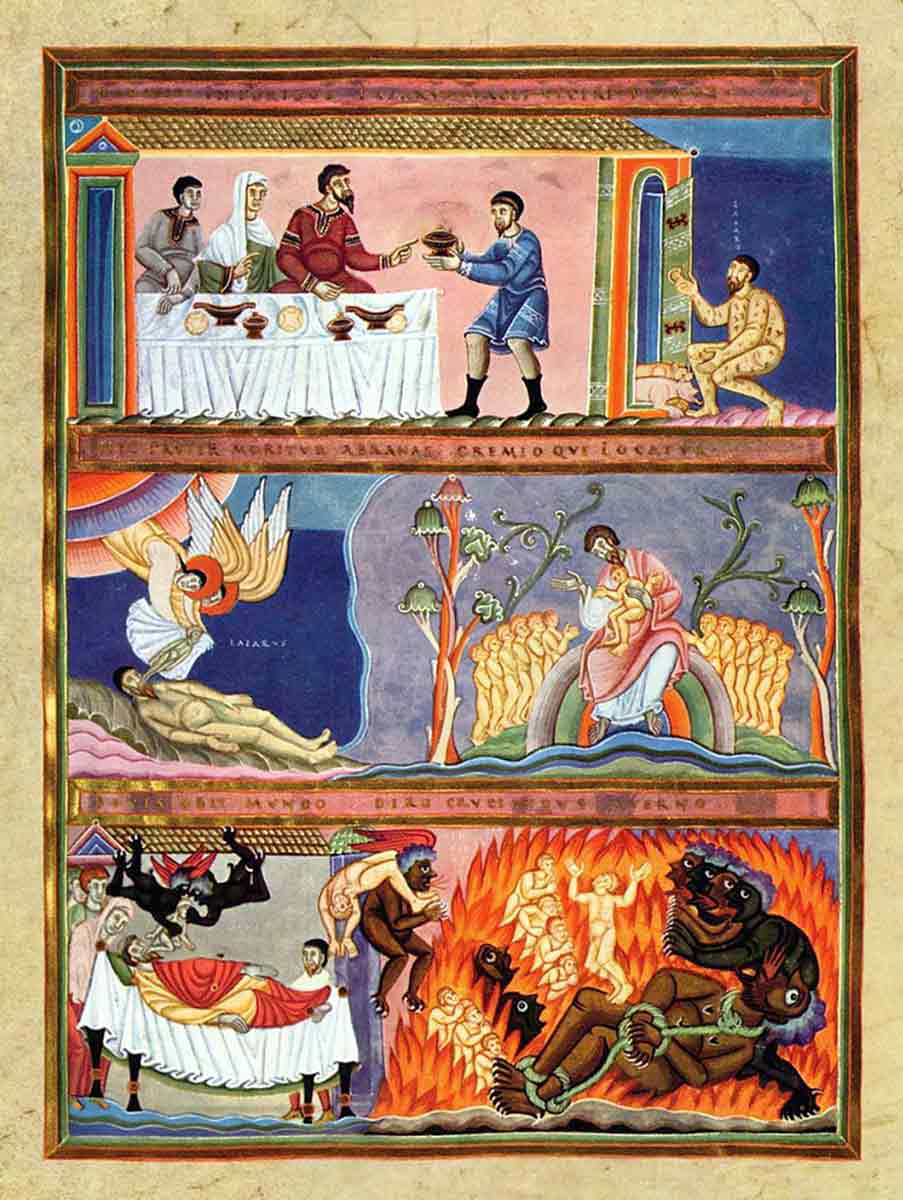
The parable of the rich man and Lazarus features prominently (Luke 16:19-31). In the story, Lazarus and the rich man are conscious and have bodies directly after death. Significantly, the rich man asks that Lazarus be sent to his five brothers to deliver a message. As with several instances from the Old Testament, this passage includes necromancy, even though Abraham denied the request. Nonetheless, the parable often serves as an example of conscious existence after death. Most scholars agree that a parable is not an ideal foundation for doctrine.
The words of Jesus on the cross seem to anticipate a conscious thief in paradise shortly after death. Jesus said: “Truly, I say to you, today you will be with me in paradise.” It supposes that the thief died the same day.
Philippians 1:23 says, “I am hard pressed between the two. My desire is to depart and be with Christ, for that is far better.” 2 Corinthians 5:6-8 ends with “we would rather be away from the body and at home with the Lord.” Both these verses suggest that a person is either alive in the flesh or with God.
In addition, Revelation 6:9-11 refers to the “souls of those who had been slain for the word of God and for the witness they had borne,” located under the altar. These souls were told to rest a little longer until their number had been filled with more that would be slain.
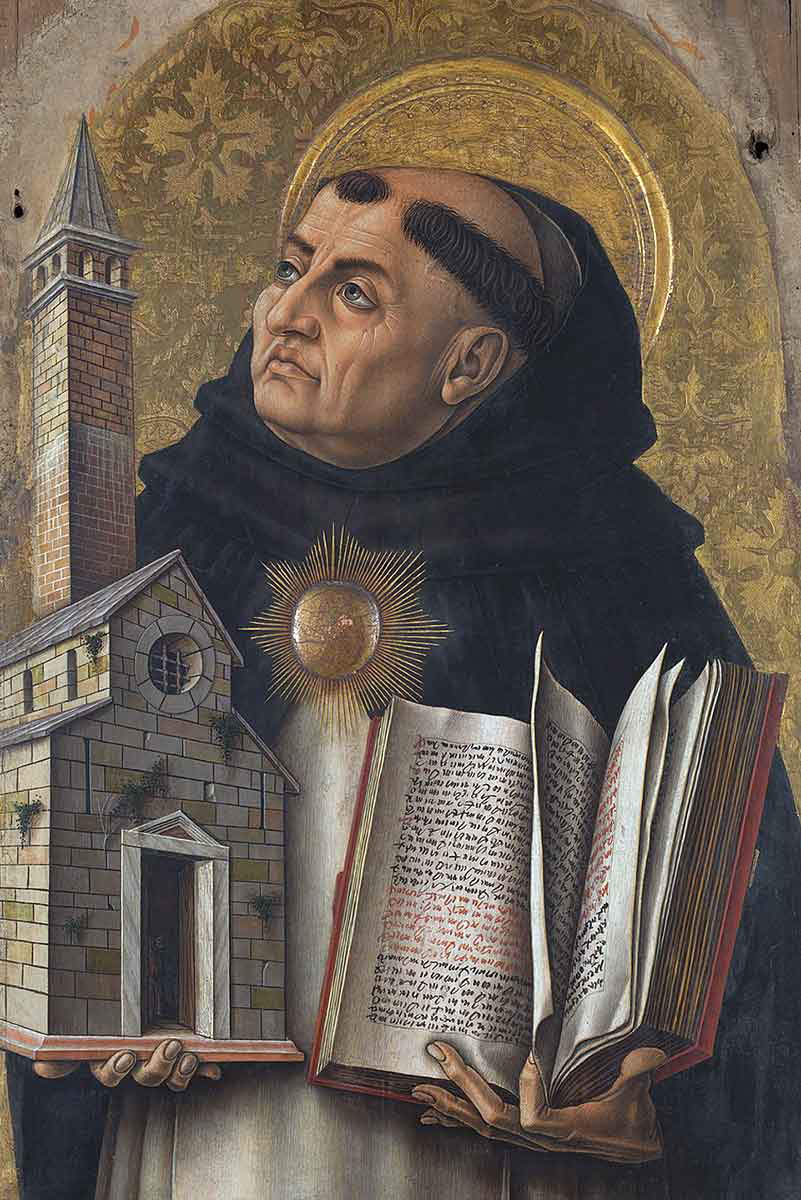
Some verses from the New Testament suggest a conscious existence after death. Thomas Aquinas, a Christian theologian, developed the Aristotelian theory of the immortality of the soul in his classic work Summa Theologica.
Bible References Suggesting Unconsciousness in Death
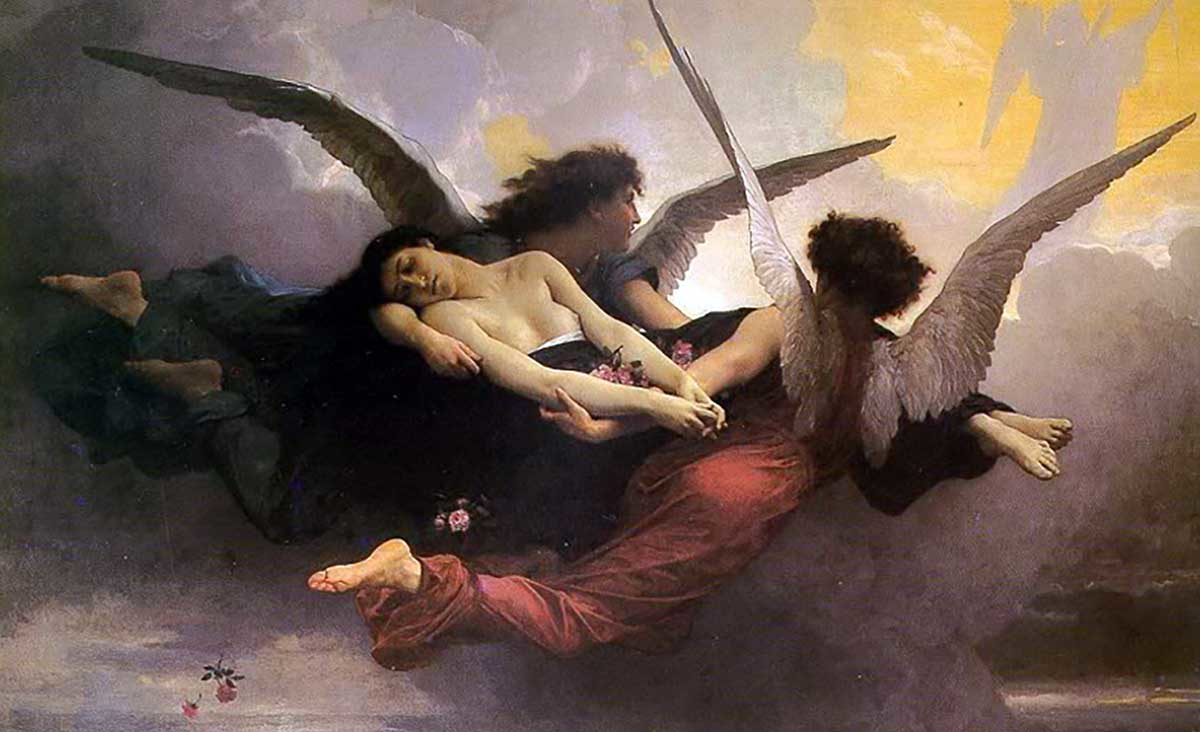
Proponents of the view that the deceased are unconscious after death base their perspective on the following verses.
Unconsciousness in Death in the Old Testament
Genesis 2:7 describes the creation of Adam and states:
“And the LORD God formed man of the dust of the ground, and breathed into his nostrils the breath of life, and man became a living soul.” (KJV)
Genesis 2:7 indicates that a person does not consist of body, soul, and spirit (breath), but rather, when God breathes the breath of life into a body, it becomes a soul (living being). When the parts that come together to constitute a living soul separate, the soul is no longer there. The soul, therefore, is life. If there is no life, there is no soul and no consciousness.
Several passages from the Old Testament support this view and describe the state of those who have died in such a way that it paints a picture of unconsciousness. Here are a few examples:
“For the living know that they will die, but the dead know nothing, and they have no more reward, for the memory of them is forgotten. Their love and their hate and their envy have already perished, and forever they have no more share in all that is done under the sun.” (Ecclesiastes 9:5, ESV. See also verse 10)
“His breath goeth forth, he returneth to his earth; in that very day his thoughts perish.” (Psalm 146:4, KJV)
“For in death there is no remembrance of you; in Sheol who will give you praise?” (Psalm 6:5, ESV)
These verses suggest that in death, there is no emotion, knowledge, thought process, or worship: a state of complete unconsciousness, even of those who were believers during their lifetime.
Job 14:10-12 suggests that the deceased remain in an unconscious state until a later time when they will awake from a sleep-like state. Sleep serves as a metaphor for a temporary unconscious state. A couple of verses further, Job 14:14 states: “If a man dies, shall he live again? All the days of my service I would wait, till my renewal should come.” Job envisioned a temporary state of unconsciousness comparable to sleep from which the deceased would be roused and renewed later.
Nothing in the context of these Old Testament texts suggests a Bible student should interpret them as metaphors.
Unconsciousness in Death in the New Testament
The words of Jesus in John 11:11-14 reflect the same sentiments as the Old Testament view of death as a sleep-like state. The disciples thought Jesus was speaking of rest in sleep when Jesus was speaking about death. Several other New Testament passages refer to death as a sleep (Acts 7:60, 1 Corinthians 15:6, 1 Thessalonians 4:13-15, 1 Thessalonians 5:10, 2 Peter 3:4).
According to these passages, death is a temporary, unconscious state for both the wicked and the righteous. The righteous will awaken at the Second Coming to receive immortality and unperishable bodies (1 Corinthians 15:51-53).
Influences and Contemporary Views
Most Christian denominations believe in the immortality of the soul. Such a view necessitates conscious existence after death and the eternal punishment of the wicked in hell. They do not necessarily believe that the dead go to Heaven or Hell immediately upon death, but rather suggest an intermediate state which is called Purgatory in Catholicism, either the bosom of Abraham or the place of fire to some Pentecostal groups, or paradise to others.
Prevailing world views of the Greeks and Romans, who dominated the world during the intertestamental period, may have influenced Jewish views on what happens with the soul after death. The Discourse to the Greeks Concerning Hades, a treatise by the historian and Pharisee Flavius Josephus, suggests as much and shows that the basis for the parable of the rich man and Lazarus was the prevailing view of consciousness after death among Pharisees.
Groups that hold to the unconscious soul during death, also called soul sleep, tend to have a higher regard for the Old Testament, or Tanak. Among them are groups like the Hebrew Roots Movement, Seventh-day Adventists, the Church of God 7th Day, and the Christadelphians. A logical conclusion of their view is that the wicked cannot experience the pains of hell forever because they have never received immortality, which is a gift to the saints alone.
There are two perspectives on the state of the soul after death. These two perspectives are more than irreconcilable, they are mutually exclusive. Most Christian denominations teach the inherent immortality of the soul, while a few teach that the soul is unconscious between death and resurrection. It is incumbent on each believer to carefully study which is the correct view because both views hold serious implications.