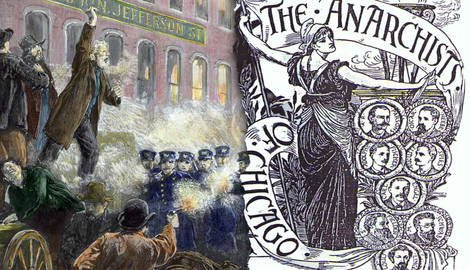
On May 4, 1886, a strike in Haymarket Square in Chicago turned deadly when an unidentified person threw a bomb at the police, who, in turn, opened fire against the strikers. Known as the Haymarket Affair, the event caused the first “red scare” in the US and led to the arrest of several foreign-born anarchists, many of whom received the death sentence in a controversial trial. While the Haymarket Affair caused a setback in the American labor movement, it inspired generations of labor activists, leaders, and artists throughout the world.
The Haymarket Affair & The Eight-Hour Movement
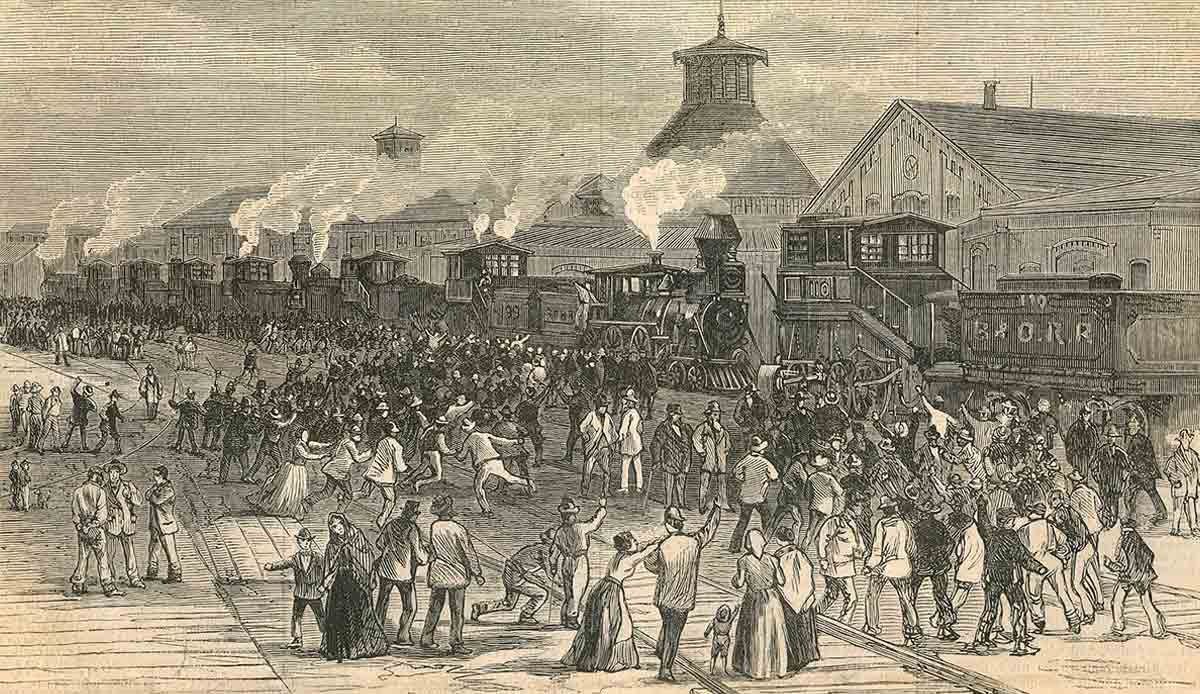
“We’re summoning our forces from the shipyard, shop, and mill,” sang strikers in the 19th century, “eight hours for work, eight hours for rest, eight hours for what we will!” Published in 1878 and written by I.G. Blanchard, the song Eight Hours quickly became the official anthem of the Eight-hour Movement that aimed to secure better working conditions for laborers.
In the 19th century, the average laborer worked around 12 hours a day in factories and mills, and some even worked up to 100 hours a week. Wages were often so meager that workers could barely afford a basic living. People from low socioeconomic backgrounds and recent immigrants usually started taking up physically demanding jobs in their childhood or teenage years. Working conditions were often unhealthy and dangerous.
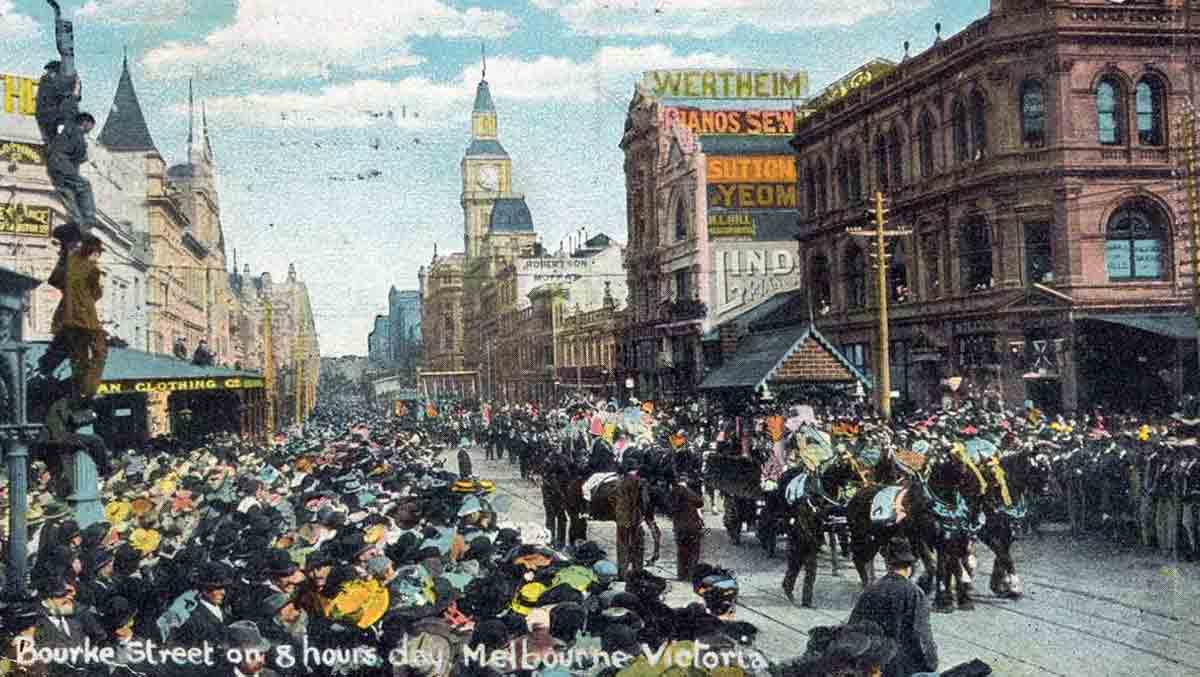
In the mid-19th century, the eight-hour workday, first proposed by Robert Owen in 1817 in New Lanark (Scotland), became the key demand of labor unions and movements that were quickly forming and spreading in industrialized countries. In 1856, for example, stonemasons working at a building site at the University of Melbourne, Australia, walked off their job to protest a failed negotiation between their union and building companies. On their banners, they painted a symbol of three intertwined numbers eight. The design was a visual representation of the Eight-hour movement’s motto: “Eight hour Work, Eight hour Recreation, Eight hour Rest.” The Australian workers were ultimately successful, and skilled laborers secured an eight-hour workday.
In the US, the first national call to shorten the workday was made during the August 1866 meeting of the National Labor Union in Baltimore, Maryland. While the resolution went unheeded at the time, the eight-hour workday remained a key demand of the various local and national labor organizations in America. The following year, the workers’ unions in Chicago believed to have finally achieved their goal when the Illinois government introduced a law shortening the working day to eight hours. However, a loophole in the decree allowed employers to contract longer working hours. On May 1, the city’s labor movement organized a strike that brought all economic activities in Chicago to a halt for a week. However, the protest (and its demands) eventually collapsed.
Chicago & the Labor Movement
In the 1880s, the demand for an eight-hour workday resurfaced among unionized workers. At the time, Chicago was the center of the labor movement in the US, embodying the contradictions of the Gilded Age. The 1871 Chicago Fire and subsequent rebuilding had attracted many foreign-born workers (especially from Germany, Scandinavia, and Bohemia) to the city. When the Panic of 1873 triggered the Long Depression and widened the gap between the upper and working classes, many laborers joined the anarchist and socialist groups and trade unions.
In particular, the 1877 national railroad strike, when tens of thousands of workers marched through the streets of Chicago, played a crucial role in spreading socialist and anarchist ideals among the working class. German-born George Schilling, a leading figure in the city’s labor movement, described the strike as “the calcium light that illumined the skies of our social and industrial life.” Led by August Spies (also an immigrant from Germany) and Albert Parsons, Chicago’s unionism (combined with anarchism) rejected capitalism and envisioned workers directly owning and managing their workplaces, a philosophy known as the “Chicago Idea.”
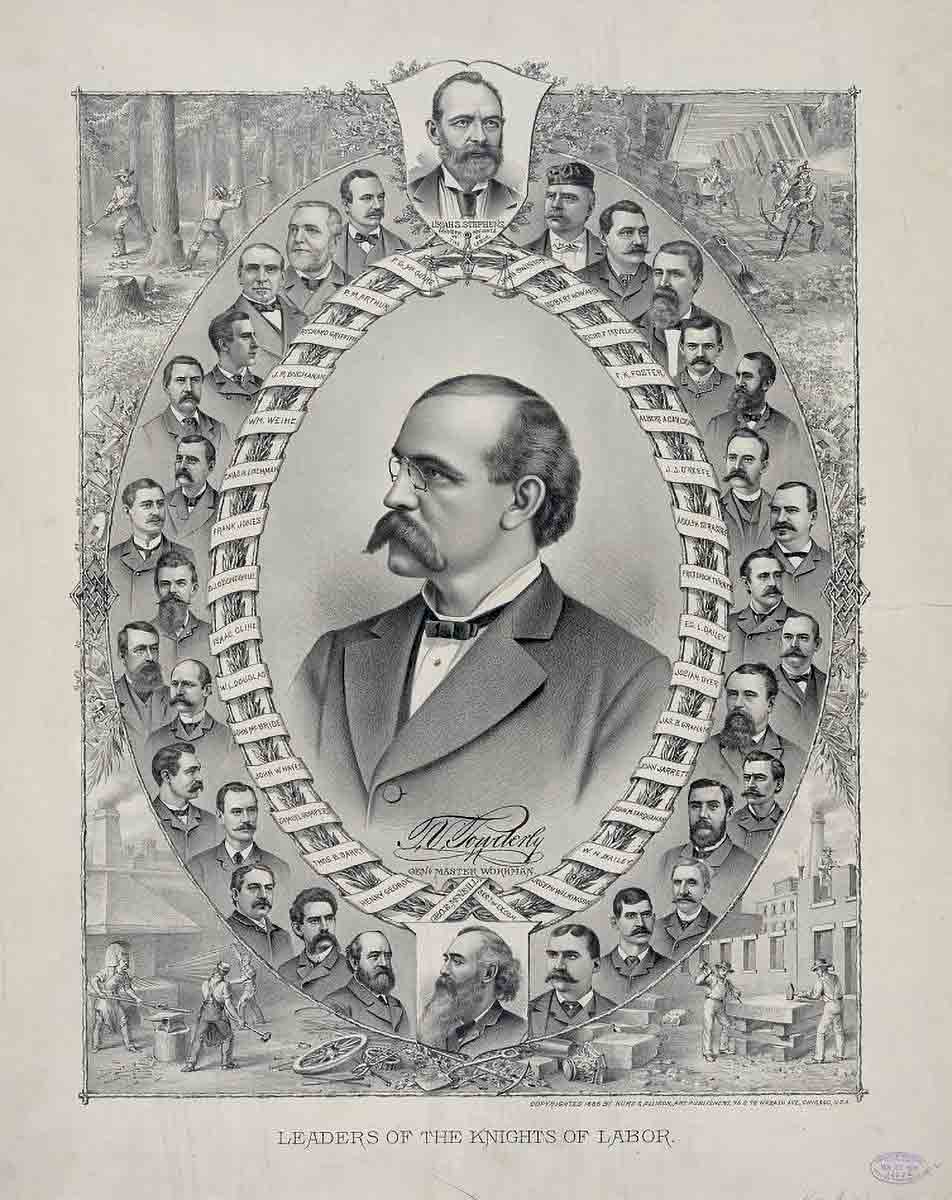
While the elite felt threatened by the rapid development of what contemporary observers called the “labor question,” an increasing number of workers joined the ranks of the city’s 26 anarchist groups and various labor unions, especially the Knights of Labor, the leading union in America at the time. In 1883, the Pittsburg Congress founded the International Working People’s Association (IWPA). While the anarchist group’s end goal was to replace the “wage-slavery” with a free society, by 1886, many had shifted their focus on securing higher wages and an eight-hour workday for the working class.
What Caused the Haymarket Affair?
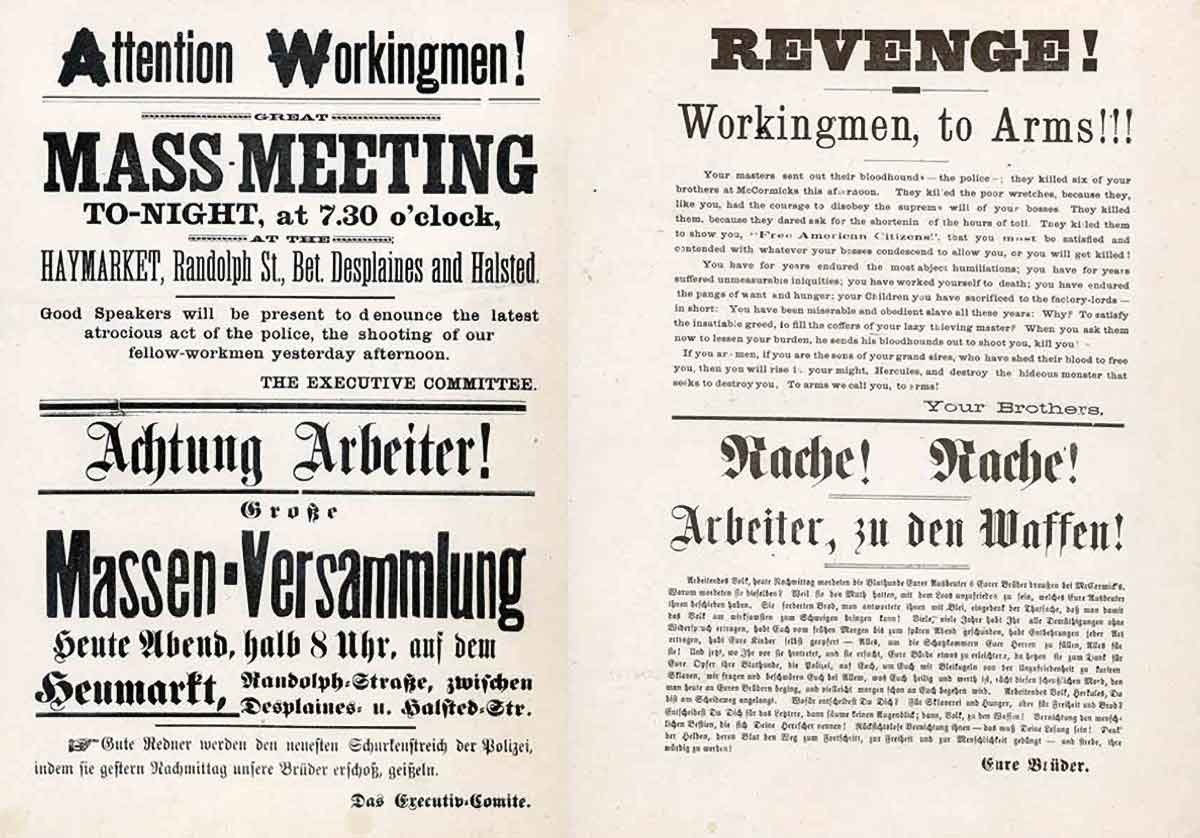
On May 1, 1886, the American labor unions organized a nationwide strike to demand the introduction of the eight-hour workday. In Chicago, about 80,000 people, led by Albert Parsons and his African-American wife, Lucy, walked off their jobs to march through the city’s streets. The event ended without violence. Two days later, however, police and workers clashed at a protest at the McCormick Harvesting Machine Company, where a group of policemen opened fire against the demonstrators who were harassing the strikebreakers hired by the firm. Several civilians died in the ensuing shootout.
August Spies, the editor of the Arbeiter-Zeitung (Workers’ Newspaper), the most popular anarchist publication in the US, witnessed the scene. Rushing to the office of his newspaper, Spies wrote a leaflet calling workers to protest police brutality. “Revenge! Workingmen, to Arms!” read the flyer’s slogan. However, Spies later testified he asked to remove the word “revenge” from the text. After reading Spies’ leaflet, some anarchist groups gathered at Grief Hall decided to organize a rally on the evening of May 4 at Haymarket Square.
What Happened During the Haymarket Affair?
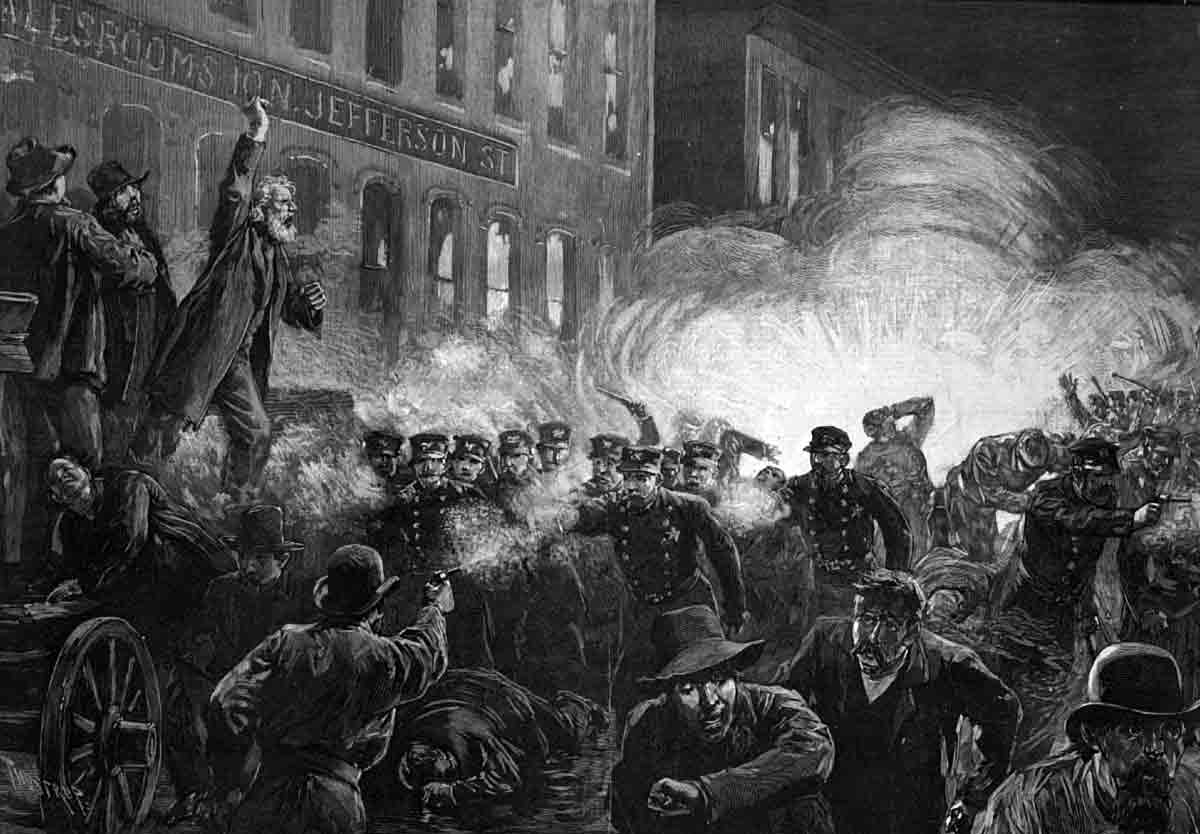
On May 4, 1886, only about 3,000 workers gathered in Haymarket Square to listen to the various speakers. Mayor Carter Harrison was also in attendance to make sure the rally would not turn violent. Before leaving the square, Harrison told Inspector John Bonfield the police were no longer needed, as the meeting was peaceful. At 10 p.m., when Samuel Fielden began the last speech of the gathering, only 300 people remained in the light rain.
Alarmed by some heated remarks made by Fielden, a group of policemen returned to Haymarket Square, demanding that the crowd disperse. As Fielden agreed to the request, a never-identified man threw a handmade bomb at the police, who opened fire. In the ensuing chaos, seven police officers and an estimated four to eight workers died. Several other policemen and civilians were wounded. It was later revealed that some officers were killed by the bullets fired by their colleagues.
What Happened After the Haymarket Affair?
The Haymarket Affair caused a nationwide wave of hysteria and xenophobia that has been described as the first American “Red Scare.” In the following days, as the police looked for the man who threw the bomb, several foreign-born anarchists, radicals, and labor leaders were arrested, and the offices of the radical press shut down. Initially, the investigators believed Charles Lingg, an anarchist known for his skills in handling explosives, had made and thrown the bomb. However, no solid evidence was found to confirm this theory.
As tensions rose in the city, with workers organizing strikes and demonstrations, the Chicago mayor forbade people to gather in public spaces and hold rallies. Amid the general panic and fear, the press depicted the Haymarket Affair as a conspiracy masterminded by radical immigrants. “Let us whip these slavic wolves back to the European dens from which they issue, or in some way exterminate them,” urged The Chicago Times. An article published in The New York Times on May 6 put forward a similar narrative of the Haymarket Affair: “Everything points to a preconcerted plan on the part of Spies, Parsons, and Fielden to try the effect of one of their bombs. The speeches were planned to rouse the mob gradually to a point where police interference could reasonably be hoped for and then a man … was detailed to throw a bomb when the proper time came.”
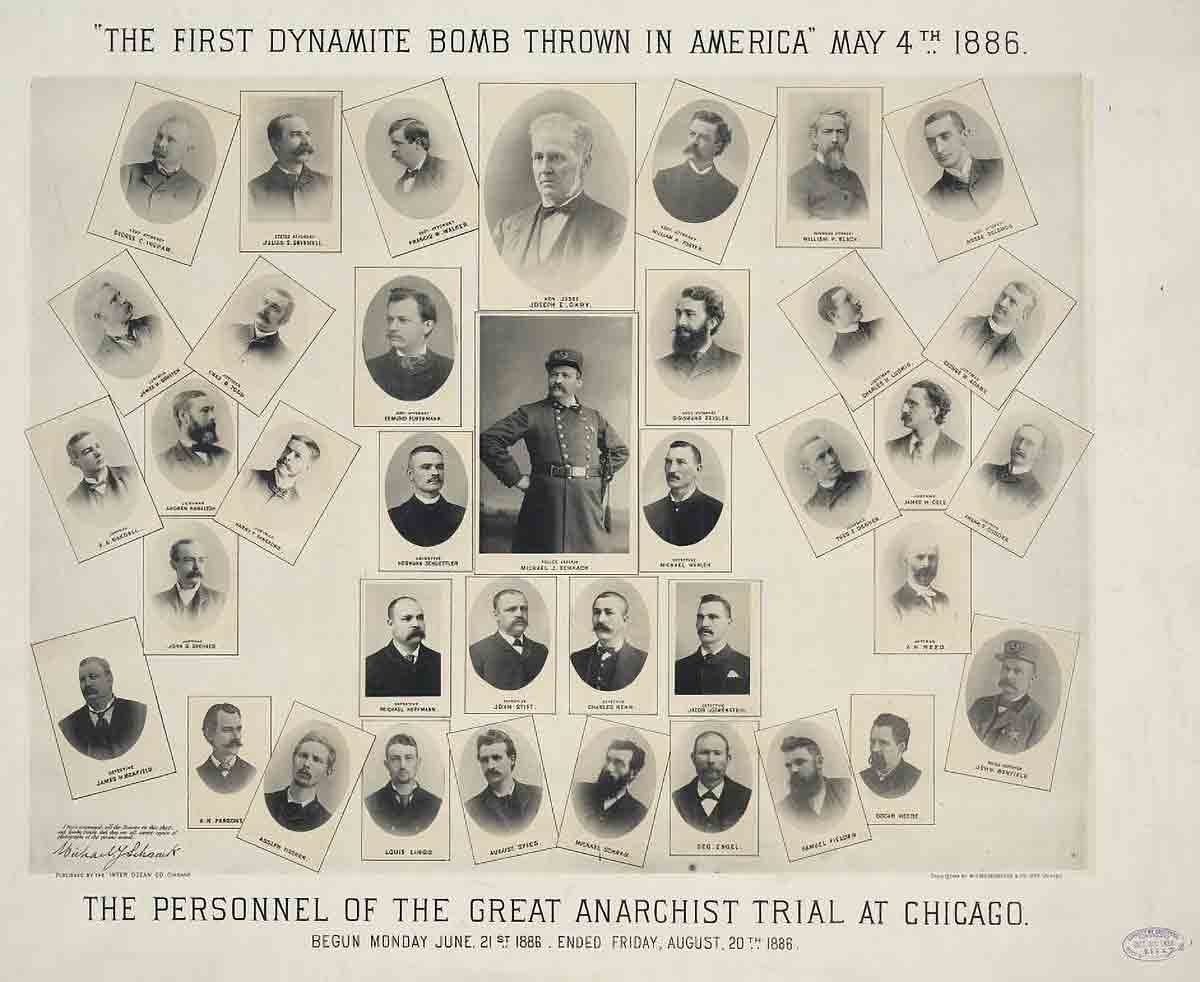
On May 27, the Chicago Grand Jury indicted several men for the Haymarket Affair, declaring: “We find that the attack on the police of May 4 was the result of a deliberate conspiracy, the full details of which are now in the possession of the officers of the law.” Eight of them, known as the “Chicago Eight,” would eventually stand trial: August Spies, Albert Parsons, Samuel Fielden, George Engel, Adolph Fischer, Michael Schwab, Louis Lingg, and Oscar Neebe.
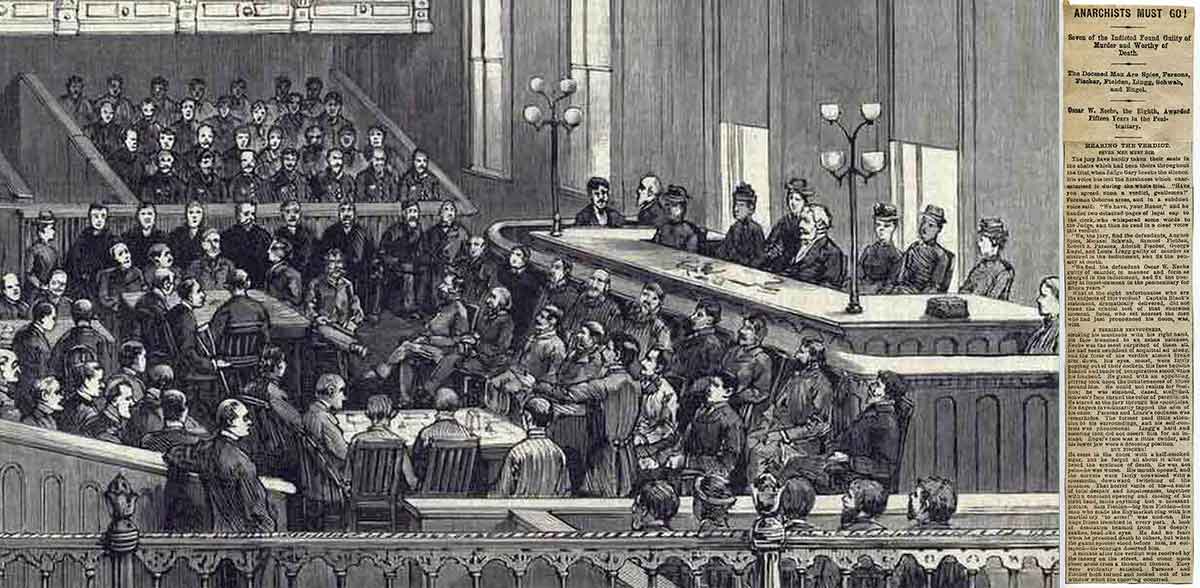
The Haymarket trial, presided over by Judge Joseph E. Gary, began in June 1886 in the Cook County courtroom. State Attorney Julius Grinnell initially tried to prove that August Spies had been the mastermind behind the violence and the one who threw the dynamite bomb on May 4. As the eyewitness statements brought forward by the prosecution were disputed, Grinnell urged the jury to hold the Chicago Eight morally responsible for the Haymarket Affair: “The question for you to determine is, having ascertained that a murder was committed, not only who did it, but who is responsible for it, who abetted it, assisted it, or encouraged it?”
On August 20, the jury found all defendants guilty. Seven of them received the death penalty. Oscar Neebe was sentenced to 15 years. As the Supreme Court rejected the defense’s appeals, even writers such as George Bernard Shaw and Oscar Wilde became involved in the Haymarket Affair, asking the governor to grant clemency to the Chicago Eight. In November, Illinois Governor Oglesby commuted Schwab and Fielden’s sentences to life in prison. On November 11, four of the Chicago Eight were hanged. The day before, Louis Lingg had committed suicide. In 1893, Governor John Peter Altgeld pardoned Fielden, Schwab, and Neebe, declaring the trial against them had been biased.
The Haymarket Affair & International Workers’ Day
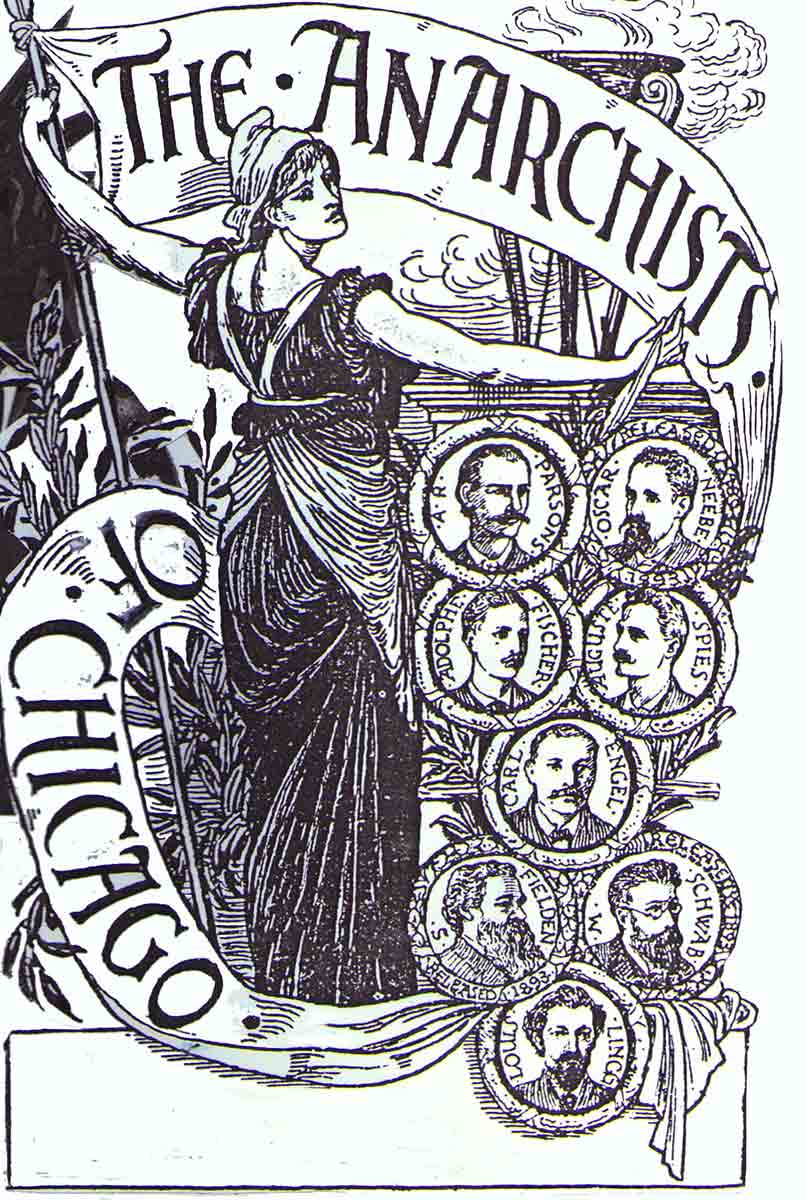
In the US, the Haymarket Affair led to a setback in the labor and eight-hour movements, with employers and businessmen rescinding some rights American workers had previously been granted. In particular, the Knights of Labor, blamed by many for the incident, lost their leadership position in American unionism and dissolved in 1886.
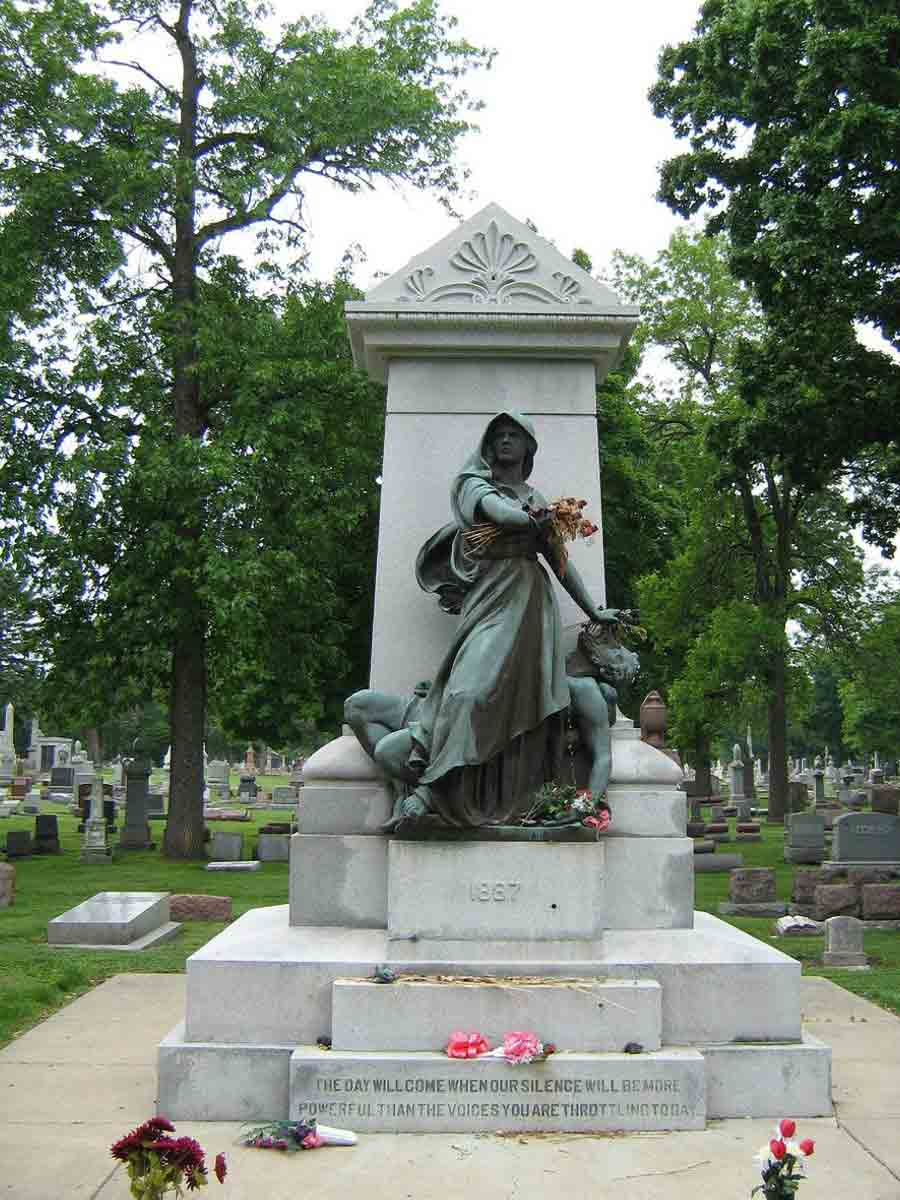
While the Haymarket Affair negatively impacted the workers’ movement in the US, labor leaders around the world hailed the “Chicago Eight” as martyrs, echoing August Spies’s last words: “The time will come when our silence will be more powerful than the voices you strangle today.” In 1889, when socialist and labor parties met in Paris for the First Congress of the Second International, the delegates attending the meeting decided to organize a “great international demonstration” to call for the eight-hour workday. The global strike would be held on May 1, 1890, to honor the victims of the Haymarket Affair, at the time widely referred to as a riot.
This “universal proletarian celebration” was supposed to be a one-off event. “No one could predict the lightning-like way in which this idea would succeed and how quickly it would be adopted by the working classes,” wrote the German philosopher and revolutionary Rosa Luxemburg. “Everywhere the Workmen Join in Demands for a Normal Day,” commented the New York World on May 2, 1890.
In the following years, other violent confrontations between workers and police occurred in the US. In May 1894, federal troops stopped a strike at the Pullman Palace Car Company in Chicago. In the ensuing riot, 30 people died. The event inspired the delegates of the 1904 Sixth Congress of the Second International to turn May First, present-day May Day (or International Workers’ Day), into an annual event. The Pullman Strike alarmed the American authorities, and President Grover Cleveland officially established Labor Day as a national holiday. However, reputing May Day as too closely associated with radicalism, he set the celebration for the first weekend of September.