
Albert Einstein, Alan Turing, Alexander Graham Bell and even Pythagoras—all famous for their contributions to the fields of science, technology, engineering, and mathematics, making them household names. But what about the women in STEM? Historically, women in STEM fields have been plagued by misogyny as well as the absence of female colleagues to support and inspire them. As a result, STEM fields remain dominated by men. Here are six inspiring and influential women in STEM that we should all know!
1. Hedy Lamarr (1914-2000)
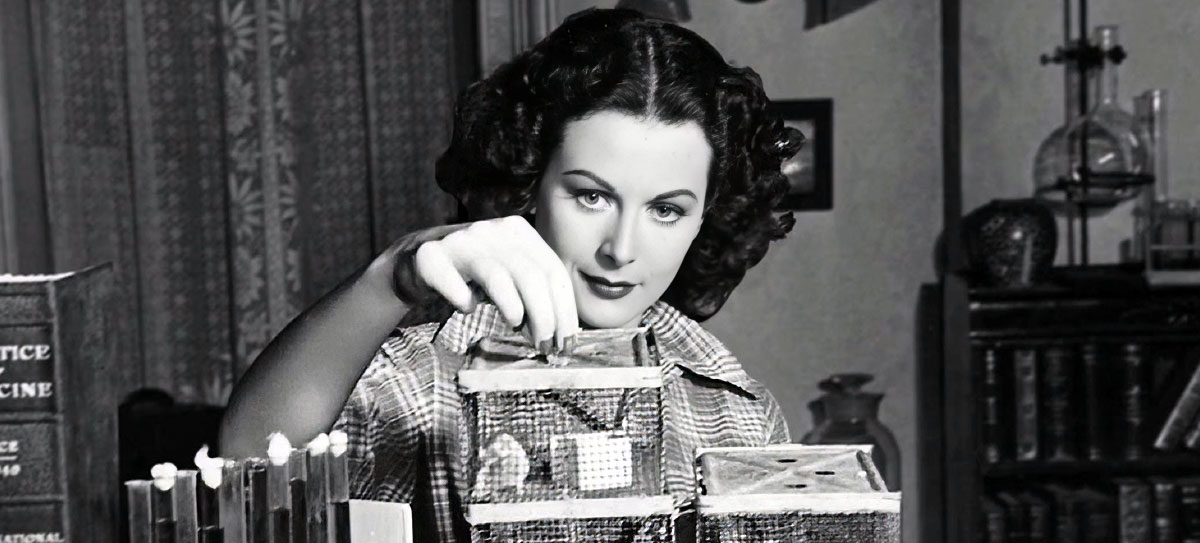
Hedy Lamarr, a popular actress during the 1940s and 50s, was once seen as a fixture of popular American culture. Today, Lamarr is best known for her beauty and acting—in fact, few people know that a technology she co-invented helped create a staple of modern life: Wi-Fi.
Though best known for her achievements in acting, having been honored with a star on the Hollywood Walk of Fame in 1960, Lamarr had been interested in technology from a young age. She was not trained in any STEM subjects, but she read books about engineering voraciously and as a result would design her own inventions. In the early days, these inventions were quite rudimentary—a glow-in-the-dark dog collar, for example—but World War II changed everything.
Working alongside George Antheil, an American composer, Lamarr discovered “frequency hopping.” This ingenious invention meant that switching radio frequencies became easier and signals jammed less often. Lamarr and Antheil aimed for their discovery to be used as a secret communications system; secret messages sent using their frequency hopping system were prevented from being intercepted.
Lamarr patented the invention in 1942 and planned to sell it to the US military, to help the navy command torpedoes underwater undetected, but frequency hopping wasn’t actually put into use until the Cuban Missile Crisis.
Frequency hopping, as well as the spread spectrum invented by Lamarr, provided the basis and earliest models of modern wireless communication technology like Bluetooth and Wi-Fi.
2. Dame Elizabeth Anionwu (1947- )
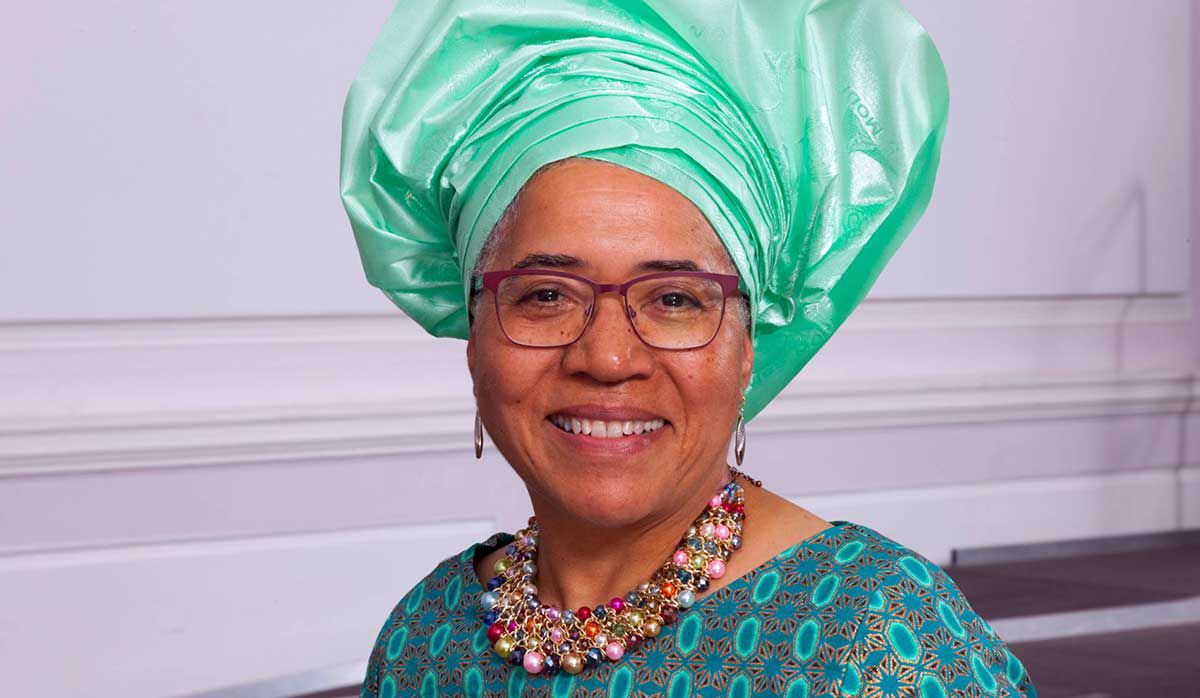
Dame Elizabeth Anionwu started her career in STEM as a nurse working for Britain’s National Health Service when she was just 16 years old. Working as a community nurse, Anionwu learned about sickle cell disease, an inherited variation of anemia that mainly affects those of African heritage, and decided to dedicate her career to helping those affected.
Anionwu felt as if sickle cell disease wasn’t thoroughly understood, or studied, by the NHS, and that there weren’t enough developments being made to help those who suffered from the disease. So, Anionwu traveled to the US to learn more about sickle cell disease and sickle cell anemia, as the resources and courses she needed were not available in the UK at the time.
In 1979, working alongside Dr. Milica Brozović, she opened the first UK center for counseling and screening for sickle cell disease, led by nurses in London. As more than 30 additional centers of this sort opened nationwide, Anionwu lectured at University College London and later became the dean of the School of Adult Nursing Studies and Professor of Nursing at the University of West London.
Anionwu wrote The Politics of Sickle Cell and Thalassemia in 2001, and A Short History of Mary Seacole in 2005. She is committed to fighting medical racism and discrimination that Black and minority ethnic patients face.
3. Katherine Johnson (1918-2020)
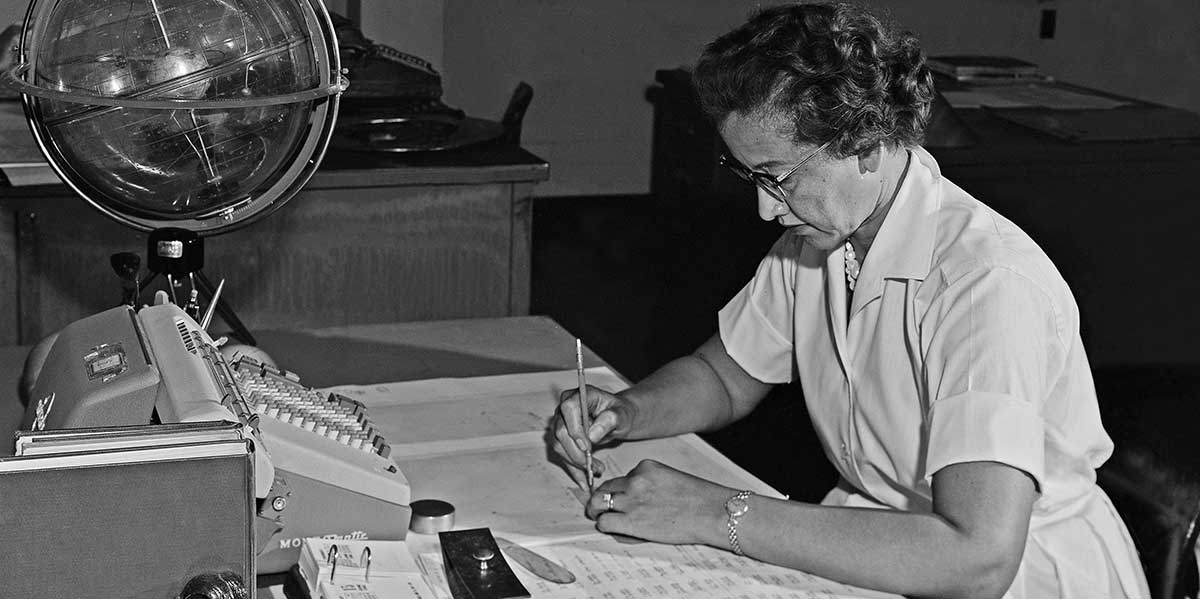
American mathematician Katherine Johnson is the reason man walked on the moon. One of NASA’s “human computers,” Johnson conducted and completed the complex calculations that sent astronauts into orbit in the 1960s and then to the moon in 1969.
Born in 1918, Johnson was a very bright child, having completed the eighth grade when she was only ten years old. Her town didn’t offer any further education for African Americans after the eighth grade, and so her father moved her family 120 miles away so she could attend high school. She ultimately graduated from high school at 14 and then from college, with a degree in mathematics, at 18.
In 1952, she applied to NASA after learning that they were hiring African American women to work as computers and check calculations. Those at NASA were impressed with Johnson’s adeptness and curiosity, and two weeks later she was moved to the flight research division.
Johnson found that geometry was the easiest way to calculate how to fly to space, and was given the task of plotting America’s first space journey in 1961. Johnson also worked on America’s space journey in 1962, 1969’s Apollo 11 mission, and calculated how to safely return the astronauts on the failed Apollo 13 mission in 1970. Johnson retired from NASA in 1986. The book by Margot Lee Shetterly and subsequent 2016 film Hidden Figures were based on Johnson’s work at NASA alongside fellow Black mathematicians Dorothy Vaughan and Mary Jackson.
4. Barbara McClintock (1902-1992)
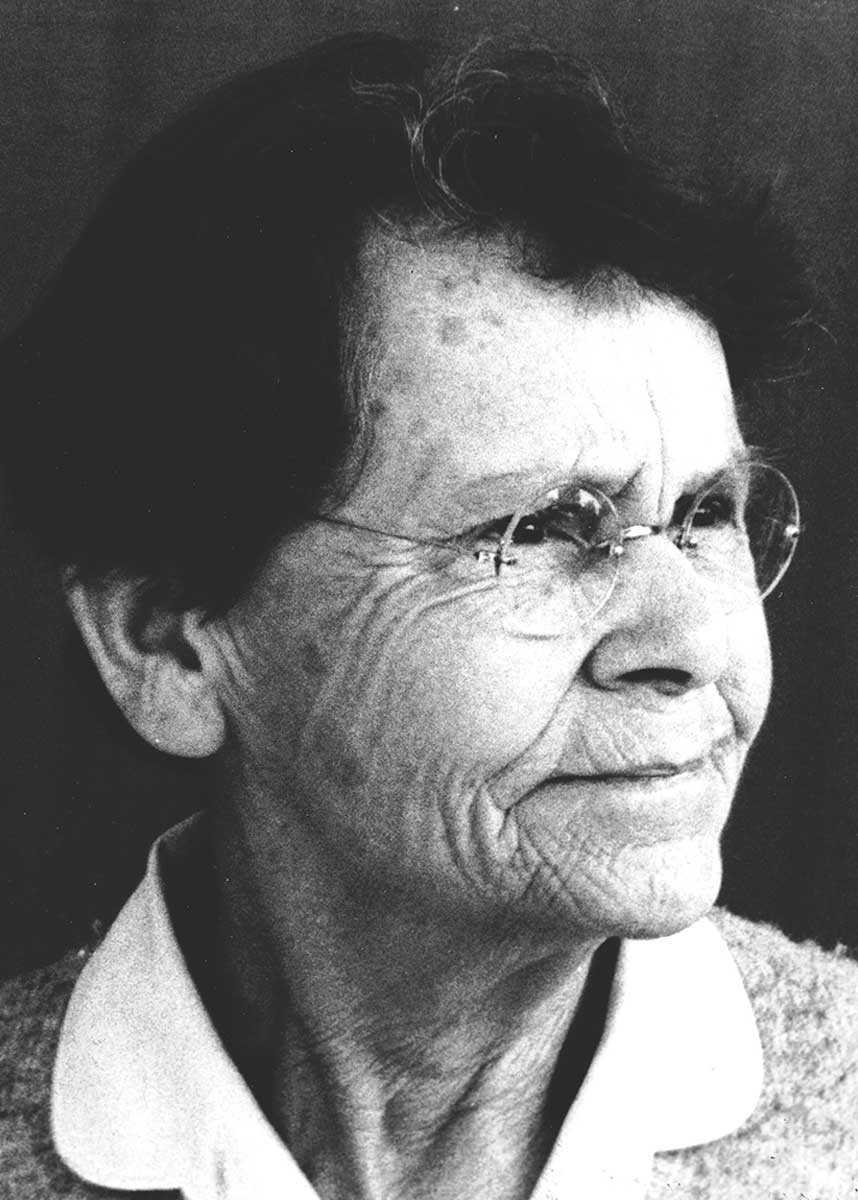
In 1983, Barbara McClintock won the Nobel Prize in Physiology or Medicine when she was 81 years old. Thought of as one of the greatest modern geneticists, McClintock discovered mobile genetic elements, which are genes that move between chromosomes.
Studying botany at Cornell University’s College of Agriculture, McClintock discovered her love and passion for genetics when studying maize chromosomes and how they change during reproduction. In 1929, McClintock identified all ten maize chromosomes, and was the first person to do so. McClintock was also the first person to be able to describe the genetic map of maize—before the DNA structure was discovered in 1953!
In the 1940s and 50s, she began her work and breakthroughs in the field of mobile genetic elements. At that time, most scientists believed that genes were static and stationary, and so McClintock’s work proving that some forms of genetic material can move was met with hostility. McClintock received so much backlash that she stopped publishing in 1953.
It wasn’t until the 1960s that her work was fully understood and accepted, and in 1970 she received the National Medal of Science, the first woman to do so. She later won her Nobel Prize, and in 1986 she was inducted into the National Women’s Hall of Fame.
After her death in 1992, biographies about her life and her discoveries were published to help inspire other young women and girls to study science and other STEM subjects.
5. Chien-Shiung Wu (1912-1997)
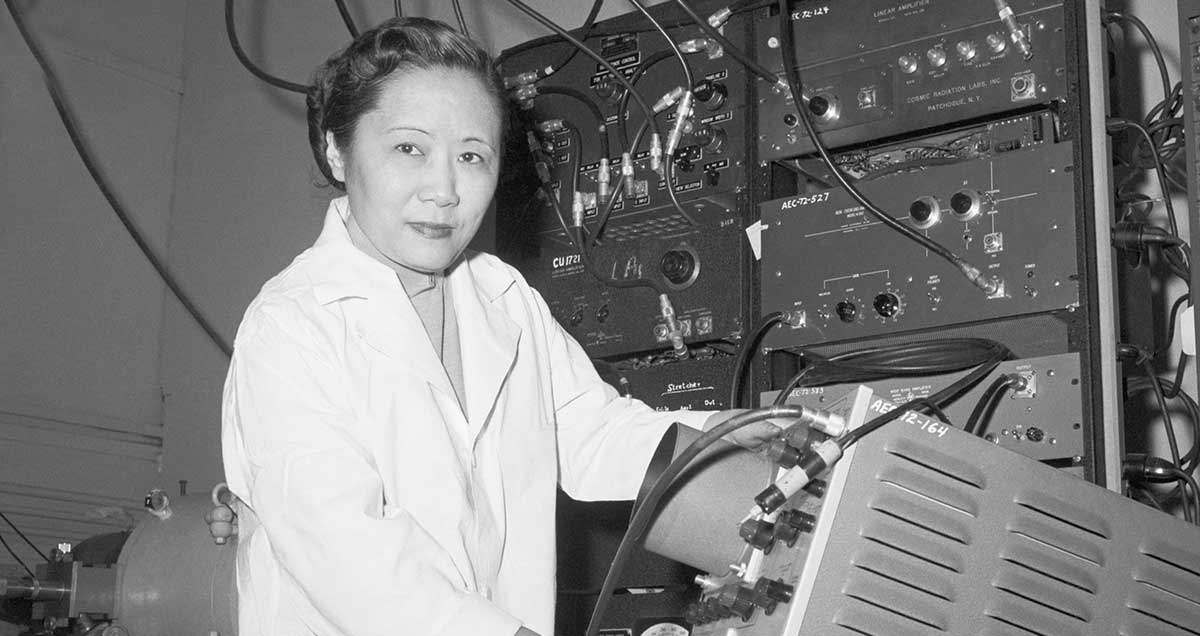
Known as the “first lady of physics,” nuclear physicist Chien-Shiung Wu worked on the Manhattan Project. Born in a small town near Shanghai, education was always very important to the Wu family. Her mother was a teacher and her father was an engineer, and so she was encouraged to pursue STEM subjects from a young age.
She first attended Nanjing University to study mathematics but switched to physics after being inspired by Marie Curie and graduated top of her class in 1934.
From 1935-1936, Wu completed her first experimental research, studying X-ray crystallography under the tutelage of Dr. Gu Jing-Wei. A fellow female researcher, she encouraged Wu to study at Berkeley, prompting Wu to move to the US. She later became the first female instructor to teach in Princeton’s physics department.
In 1944, she joined Columbia’s Manhattan Project, the program working to develop the first nuclear weapons, focusing her work on radiation detectors. She also discovered a way to improve uranium ore to produce large amounts of uranium, to be used as the bomb’s fuel.
Wu retired from teaching in 1981 and organized educational programs for people in the US, Taiwan, and China. She also dedicated the rest of her life to advocating for equal opportunities and rights for women in STEM and lectured worldwide to inspire young women in STEM.
6. Dr. Indira Hinduja (1946- )
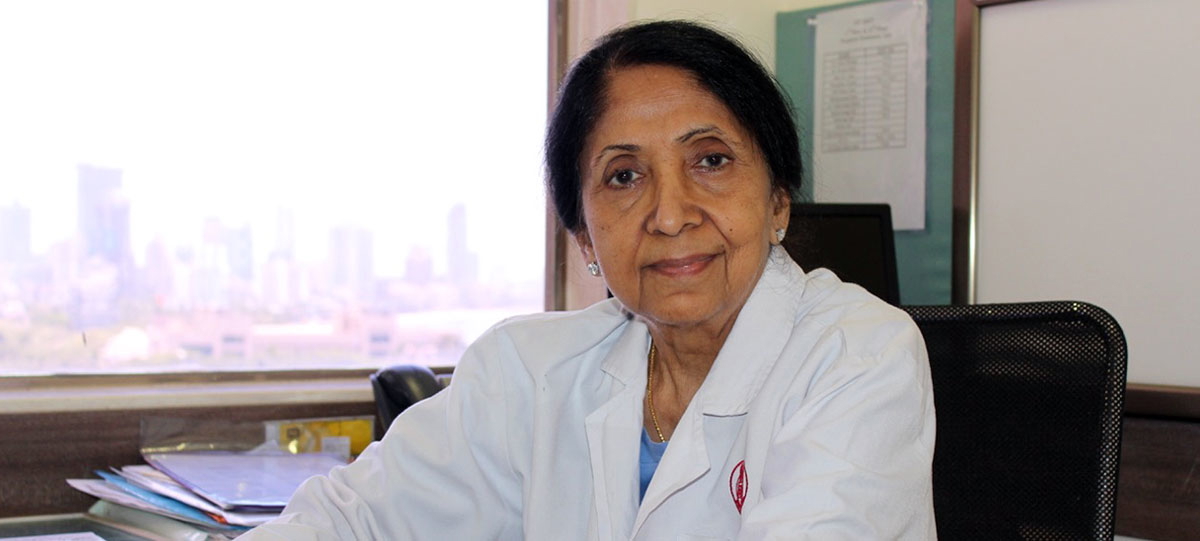
Dr. Indira Hinduja is a highly respected gynecologist and obstetrician who is one of the leading doctors in the field of combating infertility in India. Studying medicine at the University of Mumbai Medical School and practicing at the King Edward Memorial Hospital in Mumbai, she began experimenting with cell biology and embryology. This led her to her PHD in “Human In-vitro Fertilization and Embryo Transfer,” and this medical research helped make possible the birth of India’s first “test tube” baby.
Later in her career, Dr. Hinduja developed the Gamete Intrafallopian Transfer (GIFT) Technology and went on to deliver India’s first GIFT baby in 1988. Her GIFT technique involves removing eggs from the ovaries and placing them in the fallopian tubes with the sperm.
Other medical breakthroughs she has pioneered include the development of the Oocyte Donation Technique, which helps patients with premature and menopausal ovarian failure. In 1991, the first baby was born using this technique.
Dr. Hinduja’s groundbreaking medical procedures have paved the way for even more research into stem cell biology, and her research has helped many couples struggling with infertility.