
Whether you’re a history lover, art addict, or hiking enthusiast, Ukraine offers travelers plenty of cultural interest. These vibrant cities and magnificent destinations are located in western, southwestern, and north-central Ukraine. From ancient churches to mysterious underground labyrinths, breathtaking Carpathian trails, and wooden onion-domed churches, discover these five UNESCO sites that showcase the rich history and culture that Ukraine has to offer.
*Editor’s Note: Since Russia’s invasion of Ukraine in February 2022, the sites in Kyiv and Lviv have been added to UNESCO’s World Heritage in Danger List, and much of the country is at risk from Russian military activity. Please follow official government advice regarding travel to Ukraine.
1. St. Sophia Cathedral and Kyiv-Pechersk Lavra
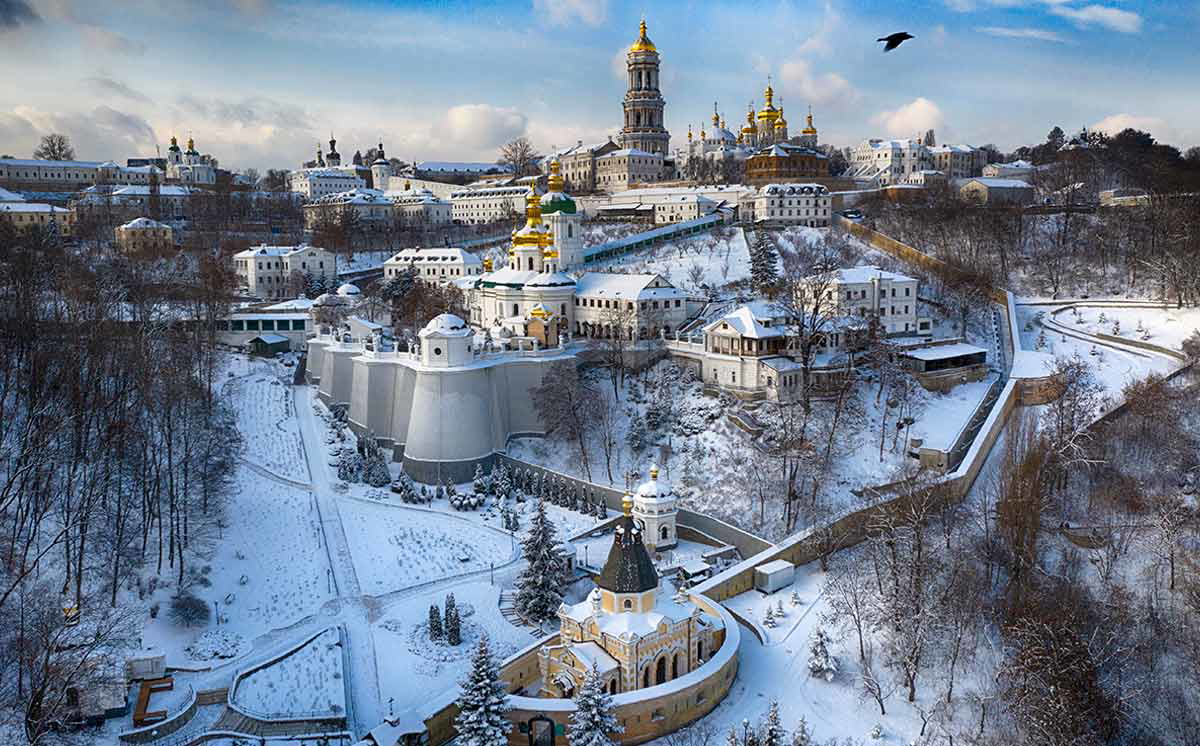
St. Sophia Cathedral and the nearby Kyiv-Pechersk Lavra monastery complex appear on the UNESCO list as a single entry and are collectively known as the “pearl of Ukraine” or the Vatican of Ukrainian Orthodox Christianity. During the eleventh century, the monastery served as a spiritual retreat from the world and the center of Christianity in Kievan Rus’. It is still the oldest monastic complex in Ukraine and Russia.
After Vladimir I’s conversion to Orthodox Christianity in 988 CE, construction work began on the Saint Sophia Cathedral in 1011. Much of the building dates from the reign of Vladimir’s son Yaroslav the Wise, who ruled in Kyiv from 1015 to 1054. Designed to rival the famous Hagia Sophia in Constantinople, St. Sophia’s became a major monument in the Slavic world. Local builders and Byzantine architects collaborated to create a soaring, celestial interior. St Sophia is constructed in a Greek cross shape and adorned with 13 arches, apses, and galleries. Priceless frescoes and mosaics adorn the walls, including the iconic images of Christ Pantocrator, the Communion of the Apostles, the Annunciation, and figures from the history of Kievan Rus’.
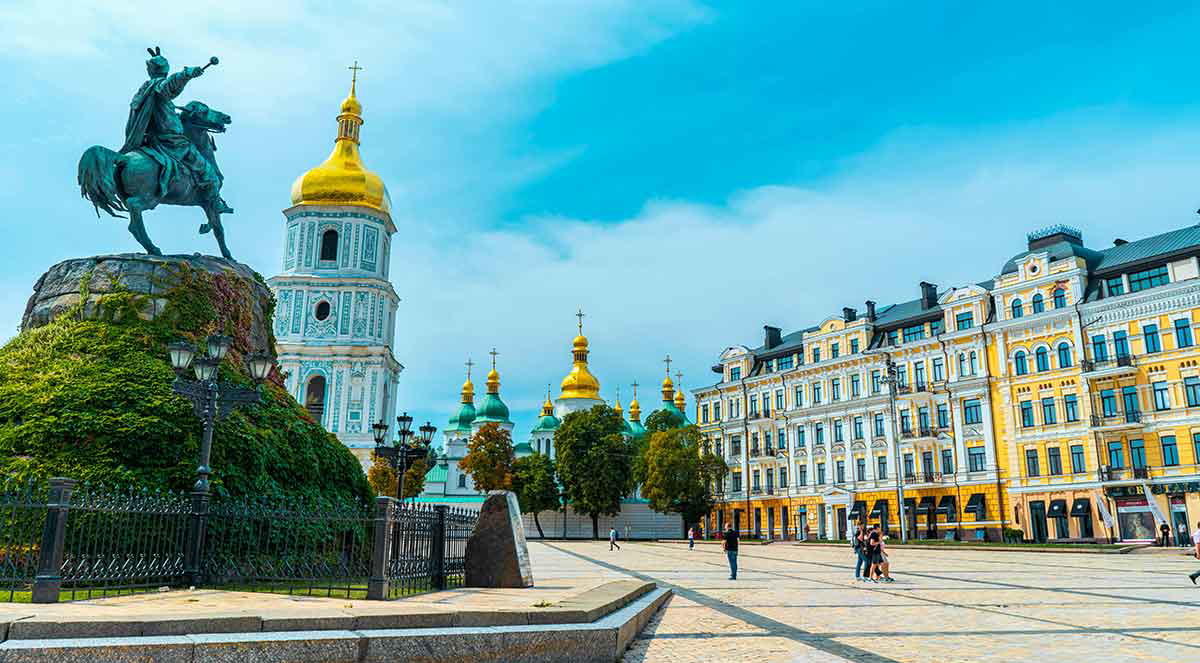
Built on a cave atop a hill overlooking the Dnipro River, the Pechersk Lavra or Monastery of the Caves was founded by medieval monks Anthony and Theodosius in 1051, three hundred years before the rise of Muscovy. By the 17th century, the monastery became known for its vast collection of icons, books, textiles, relics, woodcuts, and other religious artifacts, in addition to a busy early printing press that stimulated religious reform across Ukraine and Russia.
A bell tower, metropolitan’s house, domed refractory church, monastic cells, and Zaborovsky gate are surrounded by a high, medieval stone wall. The Pechersk-Lavra reflects a mix of Baroque styles that harmonize with the architecture dating to the earlier Kyivan Rus’ and Cossack Hetmanate periods.
Visitors can roam this bustling seat of power, view the gold-domed cathedral, or explore the unique underground catacombs filled with ancient relics, mummies, and historic chapels.
2. Lviv Historic Center
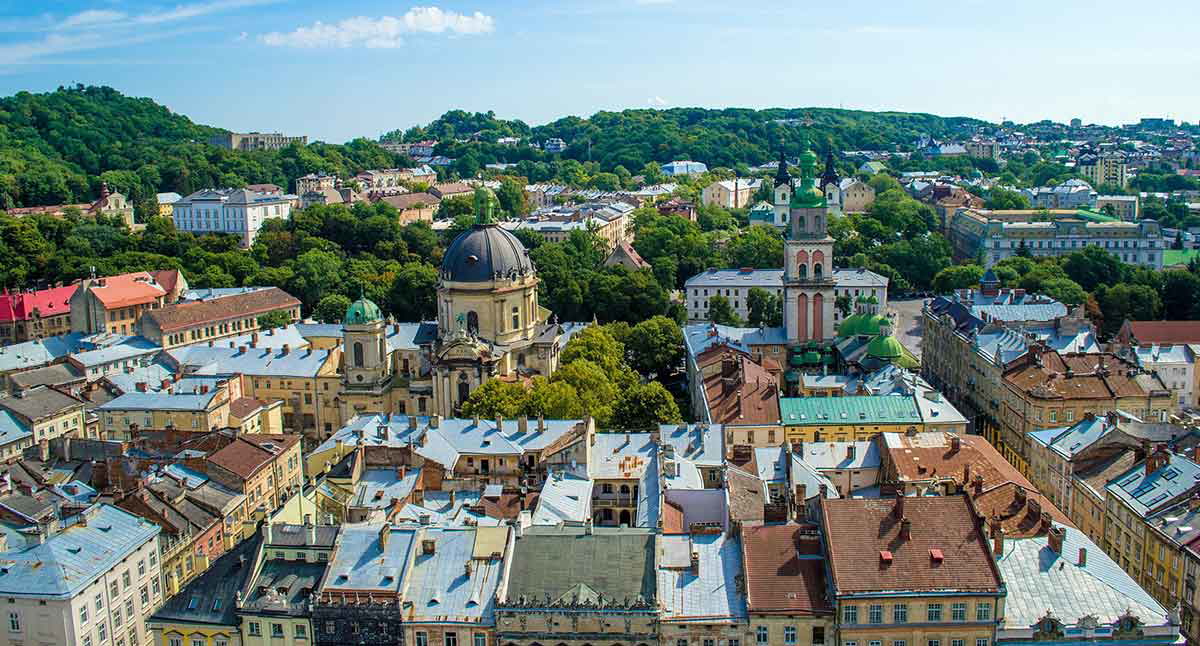
Known as the “City of Lions,” Lviv is an ancient and colorful city with lots to see. The city’s beautiful Old Town dates to the late Middle Ages.
In 1256, King Danylo Romanovych of Galicia founded the city and named it after his young son, Lev. A prince of Volhynia crowned King of Ruthenia in 1253, Danylo played an instrumental role in unifying the western Ukrainian territories, reforming the military, and resisting the Mongol invasion of Kyiv in 1240. The Battle of Yaroslav (1245) solidified Danylo’s control over Galicia before a new Mongol campaign destroyed his strategy for independence. Despite this defeat, the towns that Danylo founded, including Lviv, retained a strong Western European influence after being annexed to the kingdom of Poland in the 14th century.
Today, UNESCO considers Lviv’s ancient city center a World Heritage site. Walk through picturesque streets packed with the largest number of diverse architectural monuments in Ukraine. These top tourist sites include the Korniakt Palace, the Lviv National Opera, and St Yury’s Cathedral. This city also possibly has the most lion sculptures in the world. Lions crafted in stone, bronze, plaster, iron, and glass rear their regal heads at visitors from cornices, coats of arms, fountains, museums, tombs, signs, and even park benches.
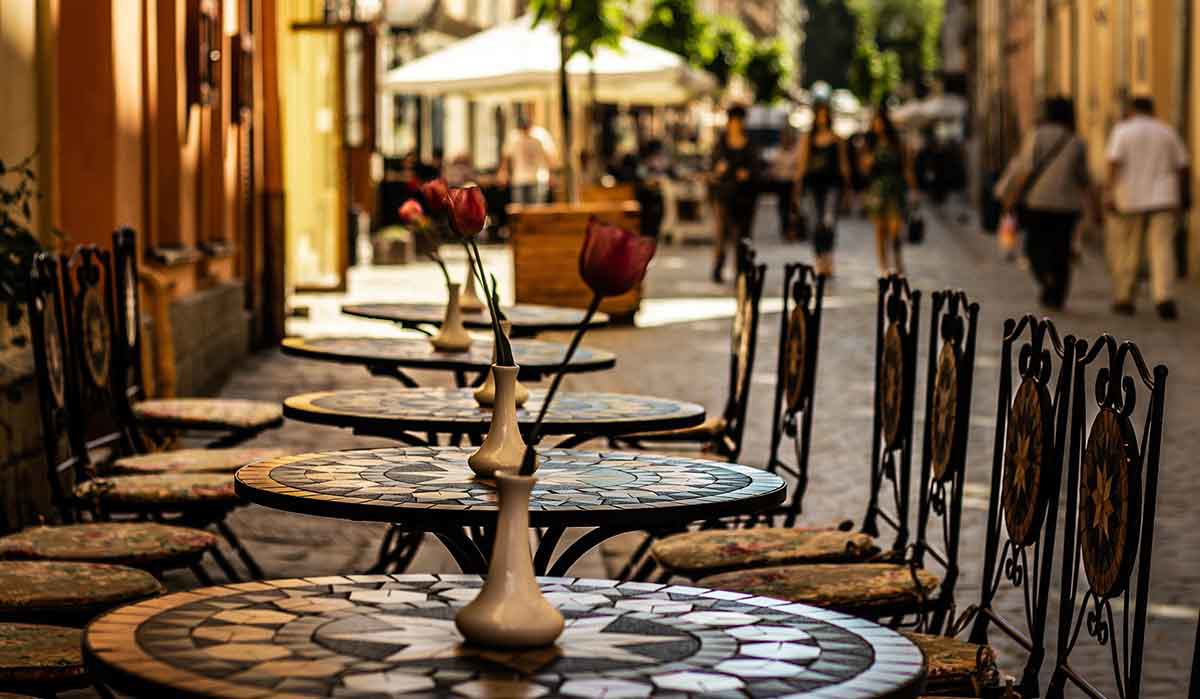
Stroll around historic Old Town and Rynok Square, enjoy a Ukrainian cuisine tour, or explore the Royal Arsenal. Climb the Powder Tower, peek at the Bernardine Monastery, view the city’s panorama from the ruins of Lviv High Castle, or tour the Potocki Palace, the Latin Cathedral (Cathedral of the Assumption), the Black House, Theater Square, and more.
If you’re an adventure-seeker, book a tour to explore Lviv’s mysterious underground. Over 700 years old and stretching for more than 100 kilometers, this underground river labyrinth served as the historical haunt of kings, knights, monks, lovers, and ordinary people. They hid and buried their treasures in these tunnels during times of war. During World War II, Jewish people fled to this underground network during the Lviv pogrom to escape the Nazis. Visitors still discover coins, crypts, antiques, and weapons there.
Enjoy a magical evening skating at Rynok Square’s open-air rink in winter. Afterward, warm up with spiced mulled wine or a delicious local coffee. Whatever your passion, this flourishing historic city with flourishing medieval buildings, art, and culture is a little-known tourist spot you won’t want to miss.
3. Residence of the Bukovinian and Dalmatian Metropolitans
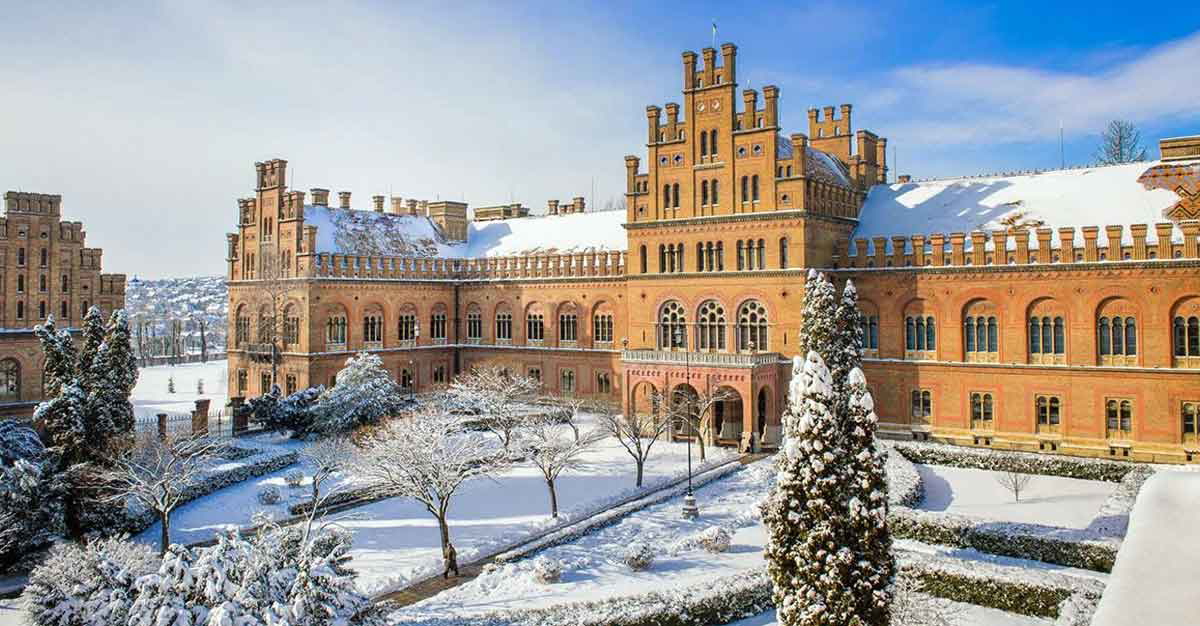
Another stunning Ukrainian heritage site protected by UNESCO is the former residence of the Bukovinian and Dalmatian metropolitans. It is near the beautiful historic town of Chernivtsi, known as the City of Dead Poets, close to the Romanian border. Originally a sprawling monastery complex designed for an Eastern Orthodox bishop, the residence is now home to the Yuriy Fedkovych Chernivtsi National University.
Partly inspired by the Spanish Alhambra, the residence was built by a Czech architect between 1864 and 1882. Its masterful eclectic and historicist style blends Gothic, Byzantine, Baroque, Moorish, and local folk decorative elements. During the nineteenth century, this palatial building became the seat of the Bukovinian Orthodox Church under Austrian Habsburg rule until World War I. The building continued to have a religious purpose after Bukovina became part of Romania in 1918. During World War II, Soviet troops occupied Bukovina in 1940 and the building suffered extensive damage. Restoration work began in the 1950s after it was transferred to Chernivtsi University.
You can take a regular guided tour to explore the cruciform church’s spectacular interior, decorated with domes and arches covered in Orthodox-style paintings. In winter, this historic site offers fairytale views when the entire complex, including the gardens and towers, is shrouded in snow.
4. Wooden Churches of the Carpathian Region
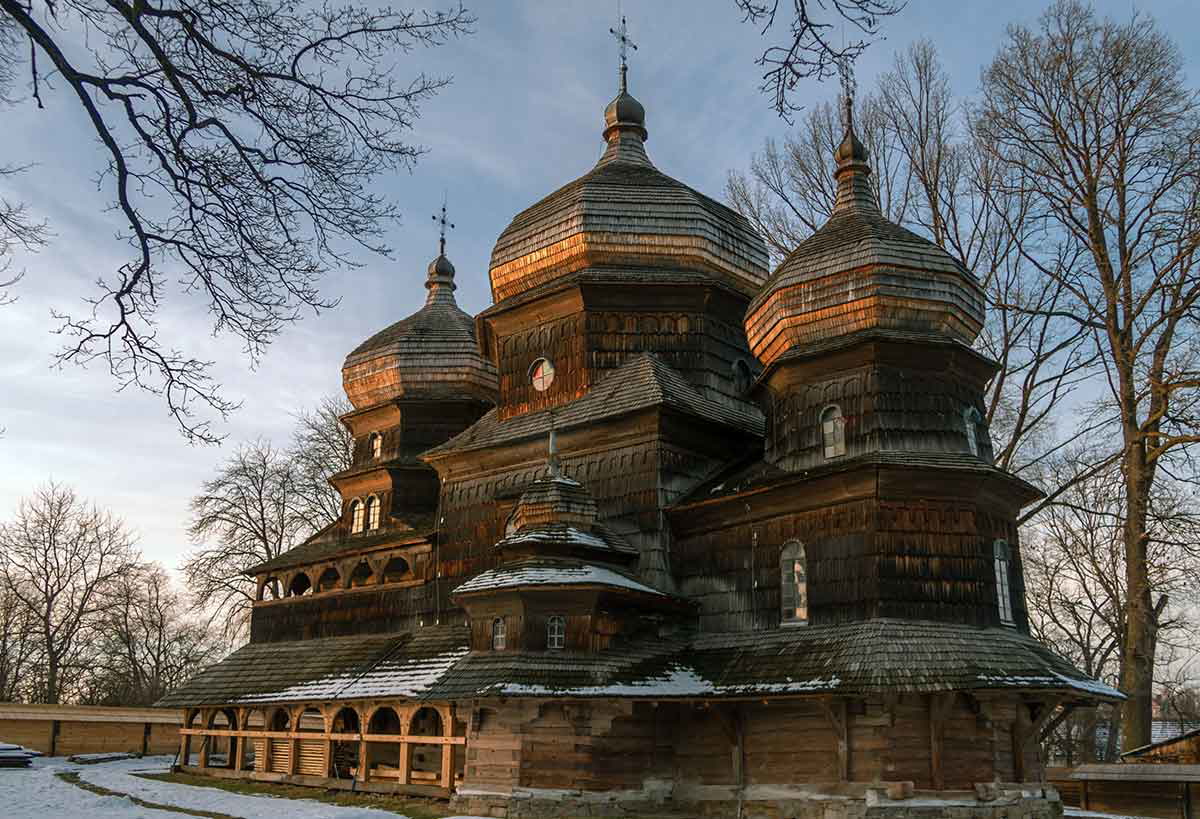
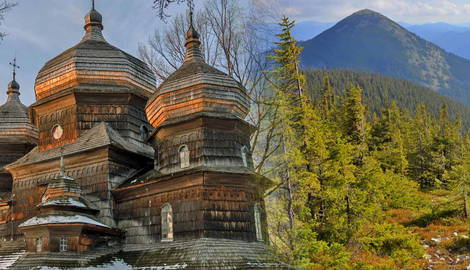
Located in the Carpathian Mountains between Poland and Ukraine, sixteen wooden tserkvas, or churches, stand as a testament to a widespread Slavic religious tradition.
These include the Church of the Nativity of the Blessed Virgin (1808), Church of the Descent of the Holy Spirit (15-16th centuries), Church of the Ascension of the Lord (1824), Church of the Holy Trinity (18th century), St George’s Church (16th century), Church of the Cathedral of the Blessed Virgin (1838), and Church of St. Michael the Archangel (1745).
Crafted by local peasant artisans, these churches display unique timber architecture, from the horizontal wooden logs and bell towers to the domed cupolas topped with Orthodox crosses.
Inside these soaring wooden structures, fragrant with the scent of aging wood and clear Carpathian air, colorful iconostases, murals, and creaking wooden floors carry a whiff of original artistry and history that is impossible to resist. These churches, which now house museums, once served as the heart of their communities. They have endured warfare and the elements for several centuries despite and represent rare masterpieces of wooden architecture in Europe.
5. Primeval Beech Forests of the Carpathians

This final UNESCO destination spans multiple countries, including western Ukraine. These ancient beech forests, the last large primeval forests left in Europe, are a national wonder protected as a World Heritage Site.
Over time, Europe’s centuries-old beech forests have experienced erosion due to human settlement and economic use. During World War I, Austrian and Russian armies crossed the rugged Carpathians, considered an extension of the Alps, to fight each other on the Eastern Front.
In 2007, UNESCO added five areas in the Stuzhytsia-Uzhok region in the Carpathian Biosphere Reserve near the Polish and Slovak borders to the World Heritage List. In 2017, UNESCO added another five protected sites in the Gorgany Nature Preserve. Other areas such as Roztochya have been protected since the 19th century.
This pristine countryside enables travelers with a zest for untouched landscapes and wilderness adventures to experience unspoiled hiking trails, views undamaged by deforestation, and even volcanic rock wonders in the Zacharovanyi Nature Park.
The region is also home to the indigenous Hutsul people. These Ukrainian highlanders have a unique culture that takes visitors back in time. The Hutsuls still retain their ethnic music and historic lifestyle. They plow their fields with horses, create intricate embroidery, bake bread in traditional ovens, make delicious local cheese known as bryndza, and spend the summers moving over the mountains with their flocks of sheep.
Hiking these alpine regions in Ukraine offers a unique opportunity to experience the pristine beauty and breathtaking vistas of the Carpathian Biosphere Reserve’s ancient beech forests. This entire site contains an endless variety of hiking trails, gorges, waterfalls, caves, and mysterious beech forests shrouded in morning mist.