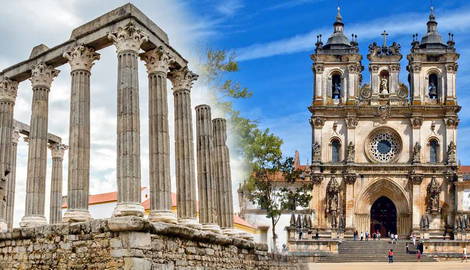
In this article, you will learn all about Portugal’s many UNESCO World Heritage sites, from the historic city centers of Porto, Guimarães, and Évora to other incredible monuments and historical sites, such as the Sanctuary of Bom Jesus do Monte, the University of Coimbra, and the prehistoric rock art sites of the Côa Valley.
1. Porto City Center: Luiz I Bridge and Serra do Pilar Monastery
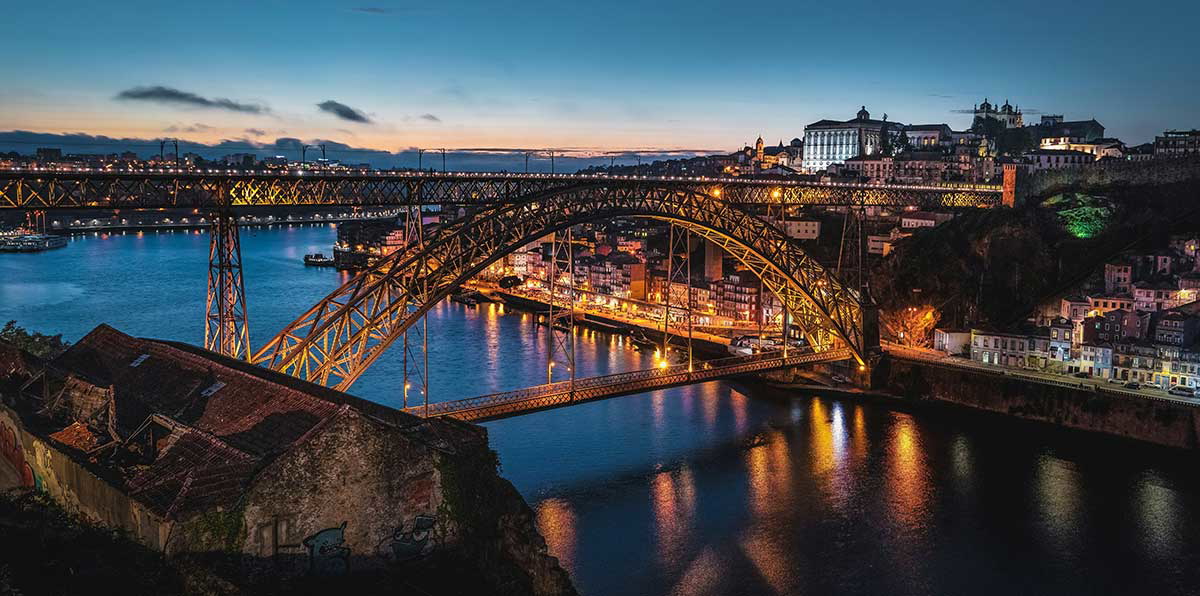
Since 1996, Porto’s historic city center, the Luiz I Bridge, and the Serra do Pilar Monastery have been classified as UNESCO World Heritage Sites. This city and its surroundings hold 2,000 years of history. Its buildings have witnessed the city’s development over the past thousand years.
The Romans named it “Portus” (port) and over the centuries, the city name became the origin of the word “Portucale,” which evolved into “Portugal.”
Archaeological excavations have revealed a human presence here since the 8th century BCE. Due to its strategic location, Porto withstood wars and pillaging in the centuries that followed when the Swabians, Visigoths, and Moors tried to capture it. In the 14th century, the Fernandine walls allowed the city to expand.
Inside the remains of the ancient city walls, you can admire Porto’s cathedral, built in the 12th century, and the Igreja de São Francisco and Igreja de Santa Clara, both built in the 14th century. The neoclassical Bolsa Palace, São Bento railway station, Luiz I Bridge, and Serra do Pilar Monastery are other iconic landmarks you must explore.
2. Guimarães Historic City Center and Couros Zone
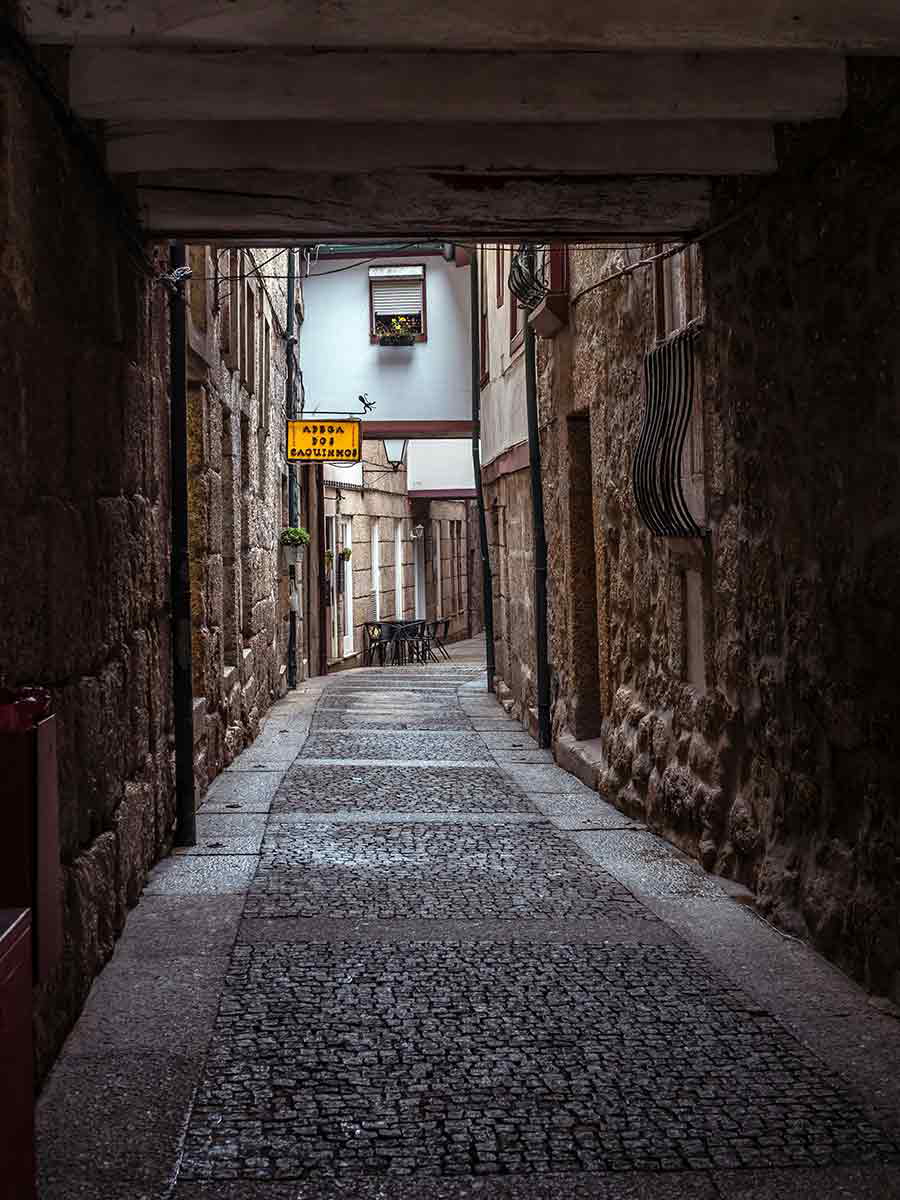
Guimarães is known as the cradle of Portugal’s national identity. Its historical old town is remarkably well-preserved. While wandering the streets, you can admire the evolution of Portuguese architecture between the 15th and the 19th centuries.
Guimarães’s traditional houses were built with medieval construction techniques, using granite walls on the ground floor and a half-timbered structure on the floors above. This technique was passed on to the Portuguese colonies in the 15th century.
Considering Guimarães’s importance to the birth of the Portuguese kingdom and language and its influence in architecture worldwide, the historic city center was declared a UNESCO World Heritage Site in 2001.
Here, you can admire Guimarães Castle, the Romanesque Chapel of São Miguel, the Paços dos Duques, Largo da Oliveira Square, Igreja da Nossa Senhora da Oliveira, São Tiago Square, and Santa Maria Street. These landmarks are part of significant historical events that defined the country’s history.
In 2023, Couros Zone, a proto-industrial area in Guimarães, was added to the UNESCO World Heritage Site listings.
In the 19th century and the first half of the 20th century, the Couros Zone was an important center in the leather processing industry, with production based on traditional techniques and manual labor. Today, you can still observe drying rooms and open-air dyeing tanks from that period.
3. Évora City Center
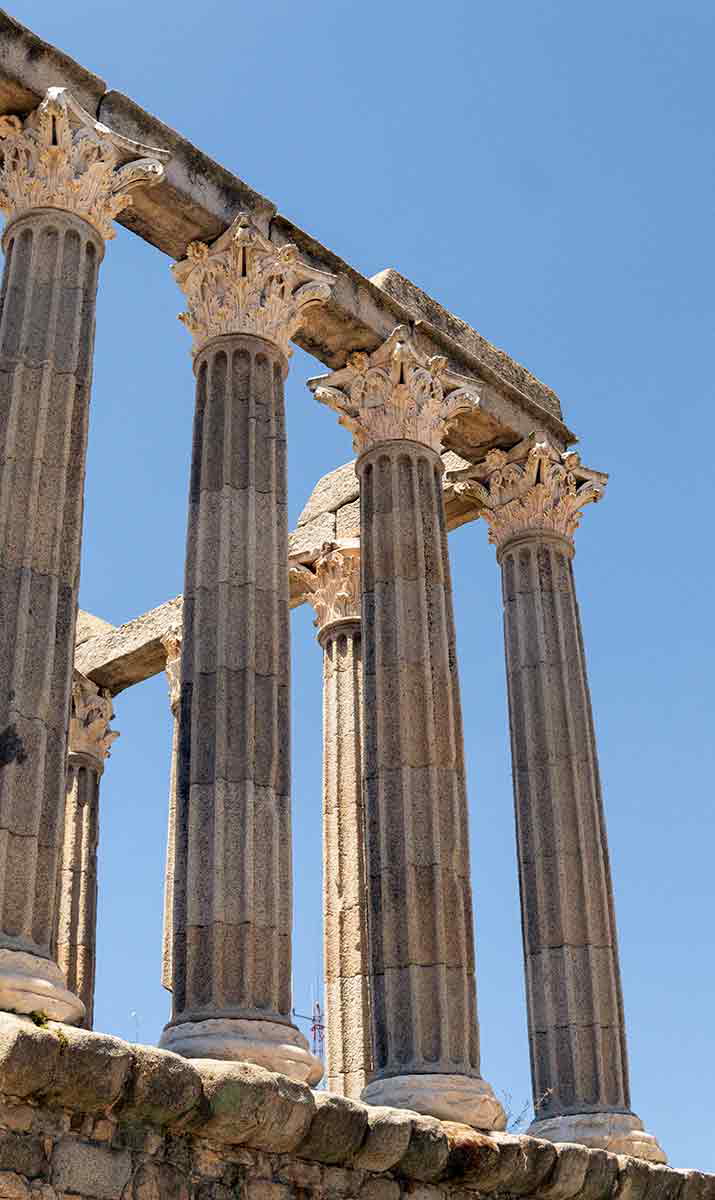
Évora is a stunning historical city in the heart of the Alentejo region. The Romans developed the city and transformed it into a political, military, and economic center. The Roman Temple is the most well-preserved monument from the Roman occupation in Portugal.
Around Évora old town, you can contemplate the Moorish influences in the city’s architecture: the narrow and labyrinthic streets, white-washed houses, and the traditional azulejos (tiles). However, most buildings you see today were constructed after the Reconquista. Évora Cathedral was one of the first, and it shows an incredible combination of different architectural styles, reflecting the extended construction period and several refurbishments over the centuries.
In the Middle Ages, Évora was home to Portuguese kings. From this period, you can still admire Palácio D. Manuel, Igreja da Graça, and Colégio do Espírito Santo.
In 1986, Évora historic city center became a UNESCO World Heritage Site due to the city’s influence on the architecture of São Salvador da Bahia, Brazil. Évora’s historical city center is also one of the best examples of a Portuguese city in its golden age after the infamous 1755 earthquake that destroyed half of the country.
4. Sanctuary of Bom Jesus do Monte
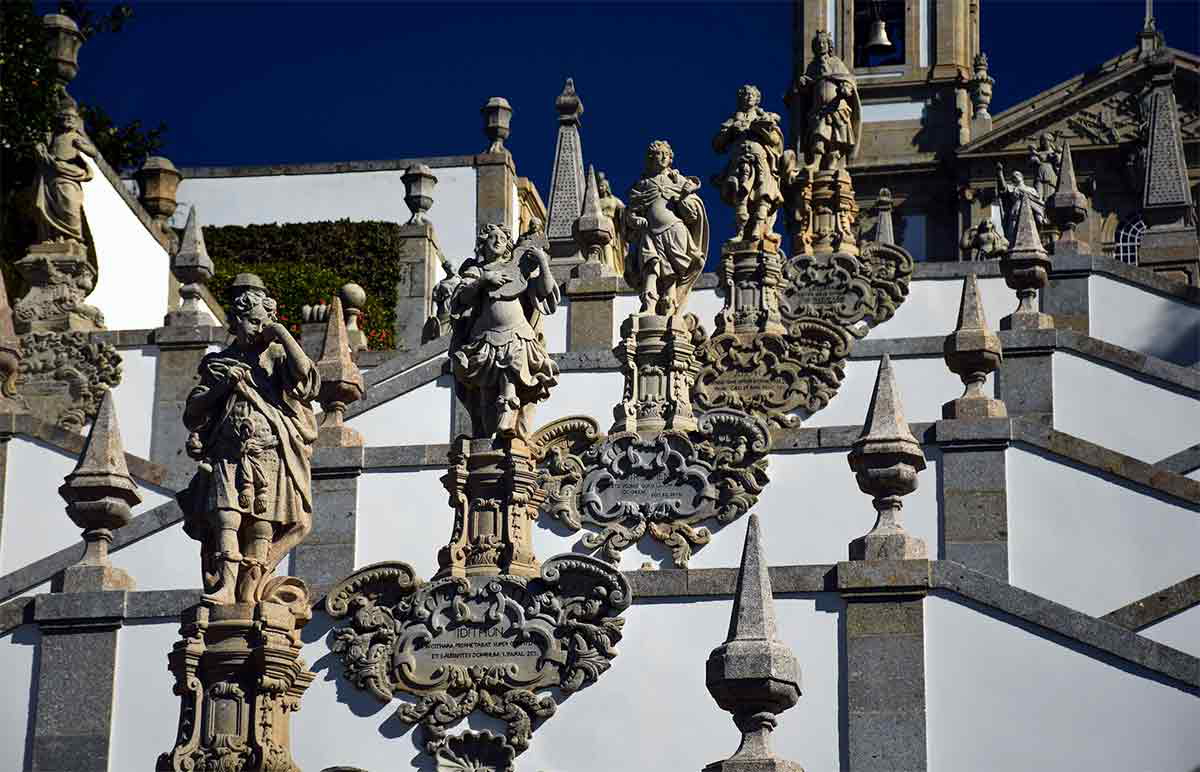
Located a few miles from Braga is the Sanctuary of Bom Jesus do Monte, a stunning cultural landscape.
This iconic landmark was declared a UNESCO World Heritage site in 2019 since its architecture, location, and natural surroundings evoke the image of a Christian Jerusalem, with a sacred mount and a hilltop church. The sanctuary stands out in the natural landscape, offering visitors a unique sensory experience.
This location has been occupied since the 14th century. However, the sanctuary you see today was developed over the next 600 years. In 1722, Braga’s Archbishop Rodrigo de Moura Teles designed the sanctuary’s massive Baroque project.
The monument revolves around the Via Crucis, where you can admire several chapels and sculptures evoking the Passion of Christ, which will lead you to the church. The emblematic Stairway of the Five Senses is the most recognizable feature. You can contemplate several fountains and statues along this Baroque stairway. Once you reach the top of the stairs, you will be impressed by the magnificent view.
5. University of Coimbra-Alta and Sofia
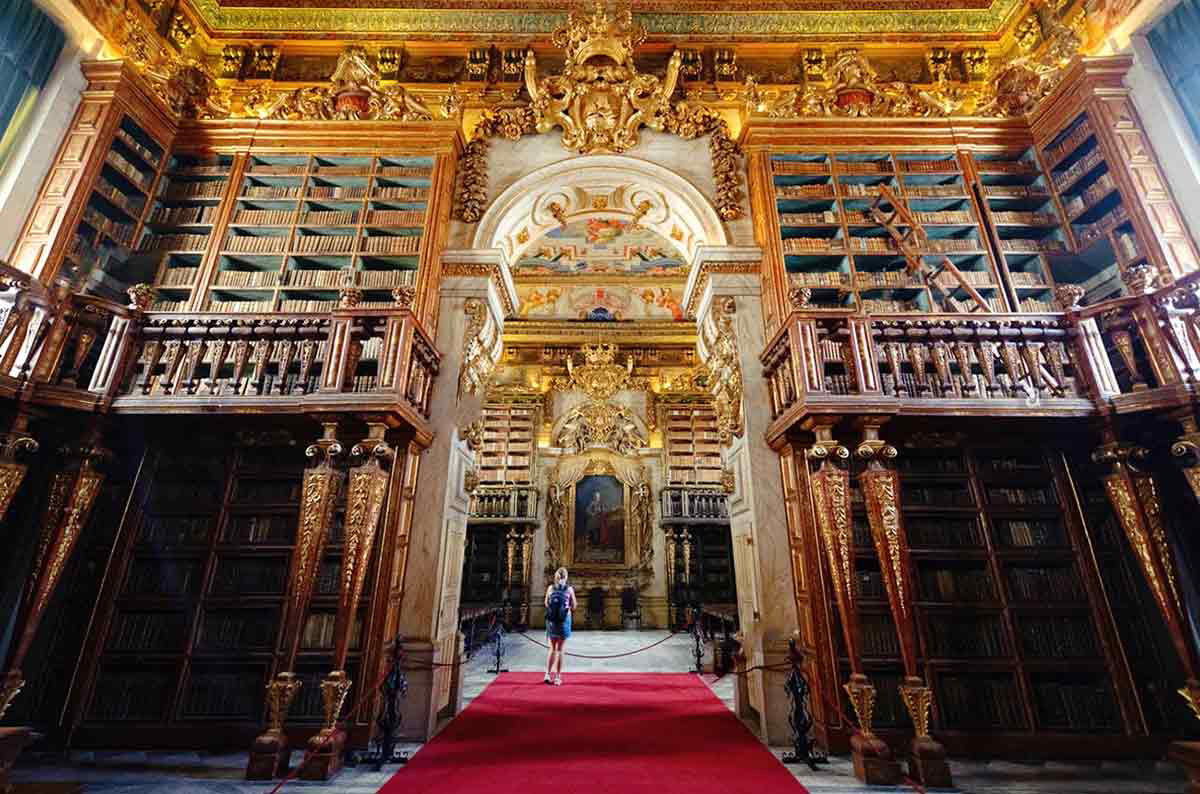
Founded in 1290, the University of Coimbra-Alta and Sofia is the oldest in Portugal and one of the oldest in Europe. This impressive building complex is located on a hilltop overlooking the city.
Since its inception, the University of Coimbra has been a center of knowledge in Arts, Sciences, Law, Architecture, and Medicine. It has also played a central role in producing academic literature in Portuguese. Due to its importance, the University of Coimbra-Alta and Sofia influenced the development of other universities in Portugal and its colonies.
In 2013, the University of Coimbra-Alta and Sofia was declared a UNESCO World Heritage Site. Besides its influence on the Portuguese colonies, the university witnessed the country’s development regarding architecture, art, culture, and ideology.
While visiting the University of Coimbra, explore Ponte Férrea, Sala Grande dos Actos, the Private Examinations Hall, the Museum of Sacred Art, and the beautiful Baroque Joanine Library.
6. Convent of Christ
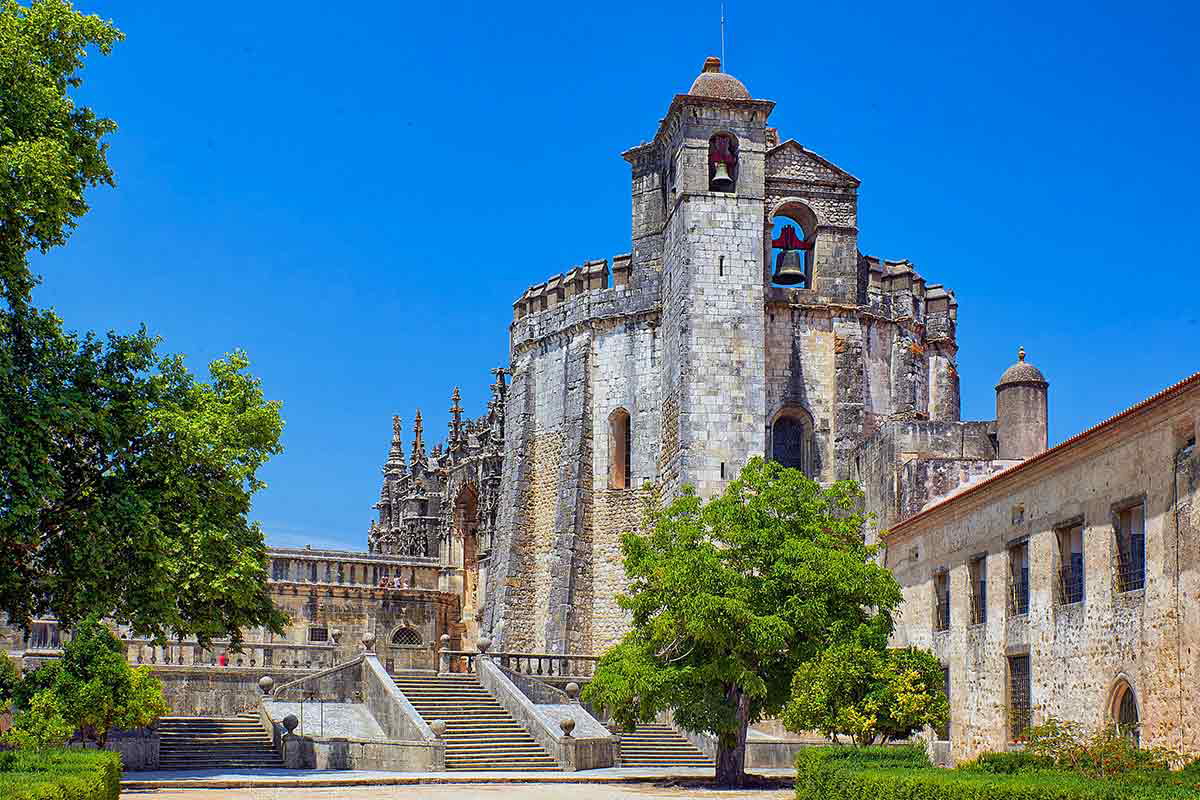
Convent of Christ, located in Tomar, Central Portugal, is a monumental complex founded in 1160 by Gualdim Pais, the grand master of the Order of the Templars. Its construction began in the 12th century and expanded over 500 years.
This architectural complex includes a variety of buildings. The Templar castle and Charola, the 15th-century cloisters, the Manueline church, and the Renaissance convent are among the most important. The Convent of Christ, as you see it today, reflects the building’s successive functions and the historical periods in which it was built. Here, you can admire several architectural styles here, such as Romanesque, Gothic, Manueline, and Baroque.
The Convent of Christ is linked to several historical figures, such as Henry the Navigator, who was responsible for the convent’s expansion and reconversion, and King Manuel I, who ordered the construction of the 16th-century church. In 1983, the Convent of Christ was designated as a UNESCO World Heritage Site.
The Templars’ primitive church and the building’s Renaissance construction form the mesmerizing building complex you can admire today. Although the Convent of Christ was originally intended to honor the Reconquista, today it symbolizes Portugal’s acceptance of other cultures during the Maritime Expansion.
7. Monastery of Batalha
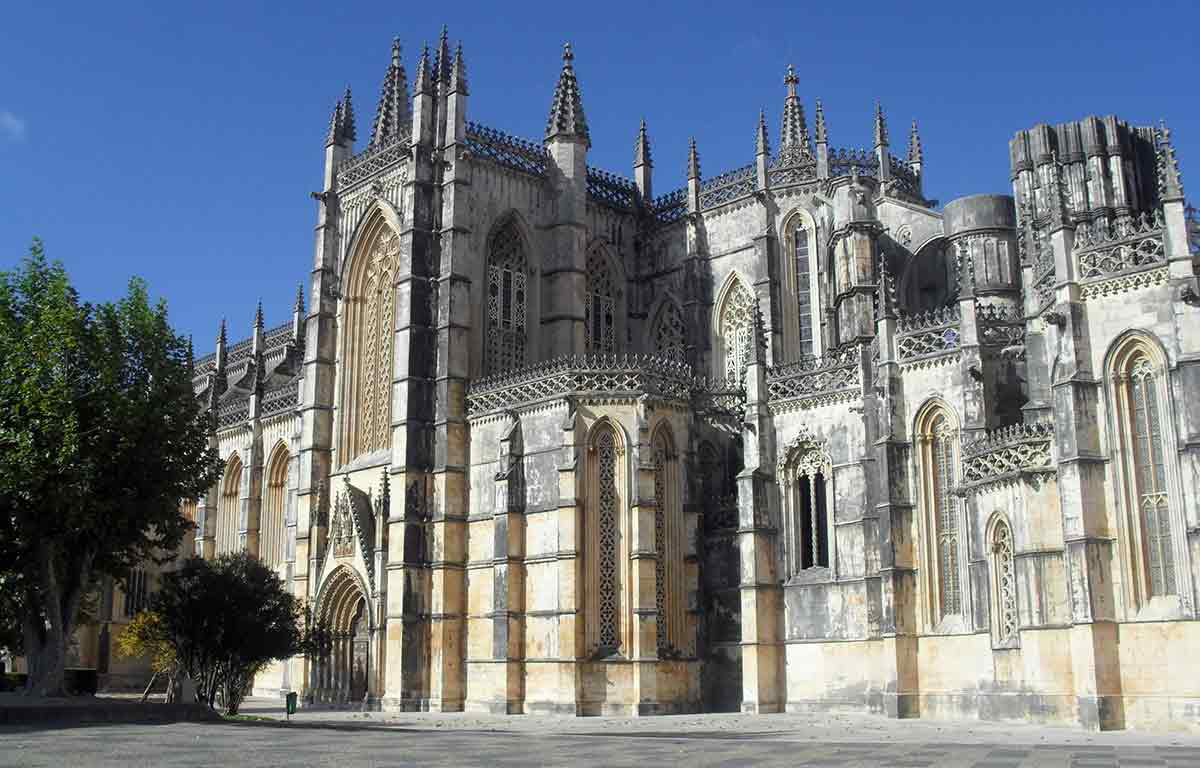
After emerging victorious from the Battle of Aljubarrota against the Castilians, King João I vowed to build the Monastery of Batalha. Construction began in 1387 and spanned over seven reigns until its completion in 1563. A vast team of Portuguese and foreign masons developed this unique masterpiece which became one of the best examples of Portuguese Gothic architecture.
English architect Master Huguet designed the octagonal-shaped chapel with its ceiling and eight-pointed star-shaped lantern. At the center, you will find the tombs of King João I, his wife Phillipa of Lancaster, and their son Prince Henry the Navigator.
The monastery houses an important collection of Portuguese medieval stained-glass windows, which you can admire in the main chapel and the chapter room. Inside, you can also contemplate the 32 meter (105 foot) high central nave sitting on eight columns on each side. While wandering the monastery, visit the dormitory, refectory, and kitchen.
The Capelas Imperfeitas (unfinished chapels) are a remarkable element of the monastery. King Duarte ordered its construction in 1434. However, he and architect Huguet both died shortly after. Although construction works in other areas continued as planned, the Capelas Imperfeitas remained unfinished.
The Monastery of Batalha was declared a UNESCO World Heritage site in 1983 due to its historical significance and architectural value.
8. Monastery of Alcobaça
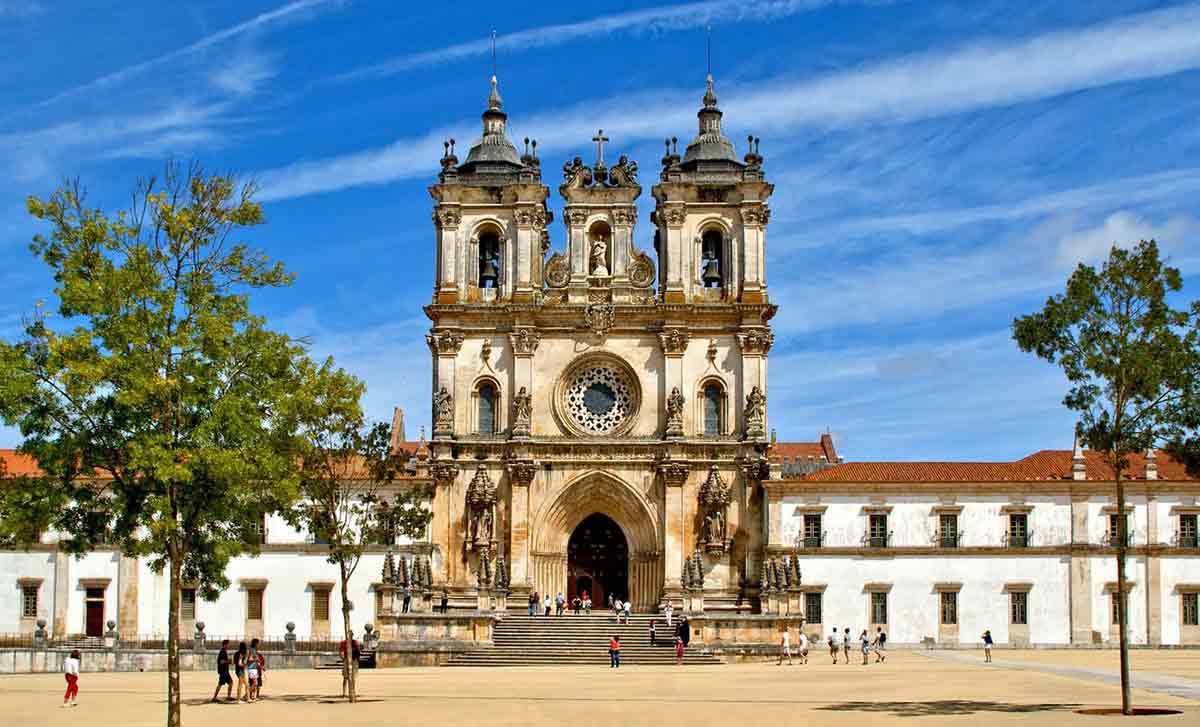
The Monastery of Alcobaça is a striking monument founded in the 12th century by King Afonso Henriques.
Despite being almost 900 years old, its medieval buildings remain intact. Its church was the first and largest in the early Gothic style to be built in Portugal during the Middle Ages. It is also one of the most impressive examples of European Cistercian architecture.
Construction began in 1178 and finished almost a century later. At the time, the master masons of the Cistercian Order tried out Gothic techniques, thus introducing this architectural style in Portugal.
The portico is the only Gothic element in the church’s façade. Beside it, you will find the statues of St. Benedict and St. Bernard. Inside, a majestic central nave, stripped of any adornment, provides a unique experience of elevation and spirituality. The transept houses the tombs of King Pedro and Inês de Castro, the lovers behind the most tragic love story in Portuguese history. Their tombs are placed face to face so they will meet again on the Day of Resurrection.
While exploring the monastery, one can admire the refectory, the dormitory, the chapter room, the cloister of King Dinis, the kitchen, and the King’s room.
The Monastery of Batalha was declared a UNESCO World Heritage site in 1989. The building complex represents a masterpiece of human creativity and stands out thanks to its unique architectural features.
9. Mafra: Palace, Basilica, Convent, Cerco Garden, and Tapada
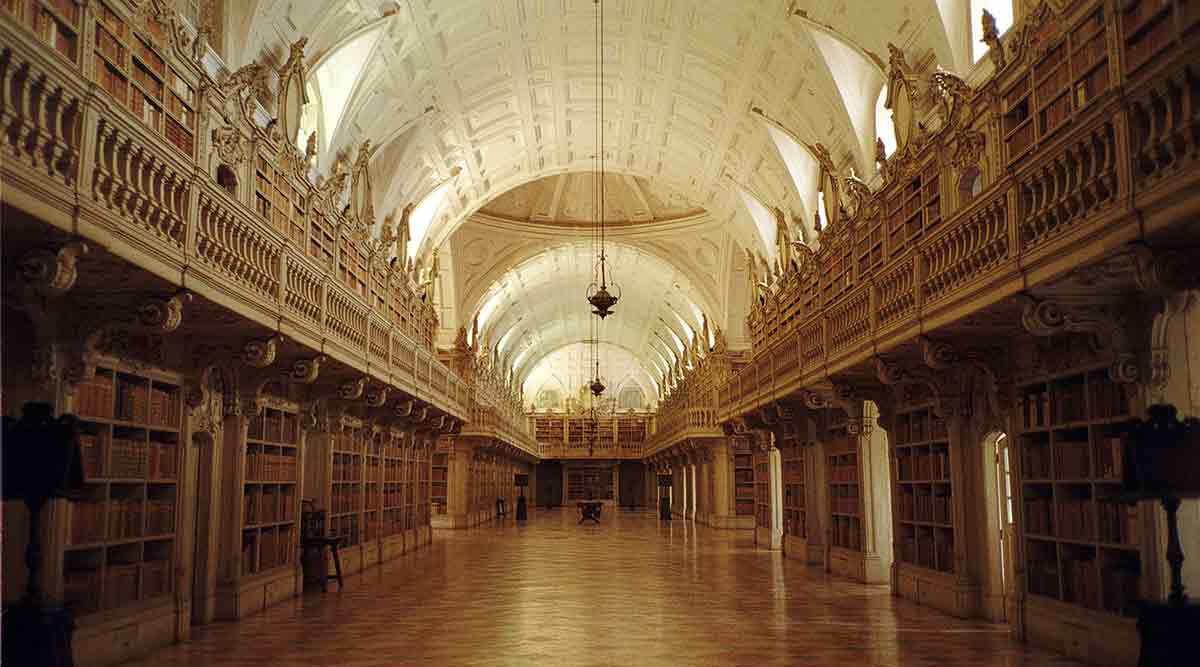
The Royal Building of Mafra is a monumental construction. It includes a Baroque palace and convent, a magnificent garden, and a Royal Hunting Park.
Construction began in 1717 and spanned over the next 40 years. The fast-paced work was only possible due to the 52,000 workers and the Brazilian gold brought by the Portuguese ships.
Today, you can contemplate an imposing façade built with local limestone, extending over 200 meters (656 feet). You can also admire two enormous square towers and bulbous domes at each end. The church, built with white marble, was inspired by St. Peter’s Basilica in Rome. Inside the church towers are two carillons with a total of 92 bells, which makes them the largest collection in the world.
Inside the basilica, you can admire the Latin cross design, a 21-meter-high nave (69 feet), stunning Italian statues, and a large Carrara marble crucifix. Nevertheless, the library stands out: it was a center of knowledge during the Baroque Era. Besides sacred texts, there are works on the sciences, humanities, and history.
The Royal Building of Mafra and its complex were declared a UNESCO World Heritage Site in 2019. Mafra represented King João V’s power and the power of the Portuguese Empire. Due to its size and architectural accuracy, it is also considered one of the most important European royal residential complexes.
10. Monastery of the Hieronymites and Tower of Belém
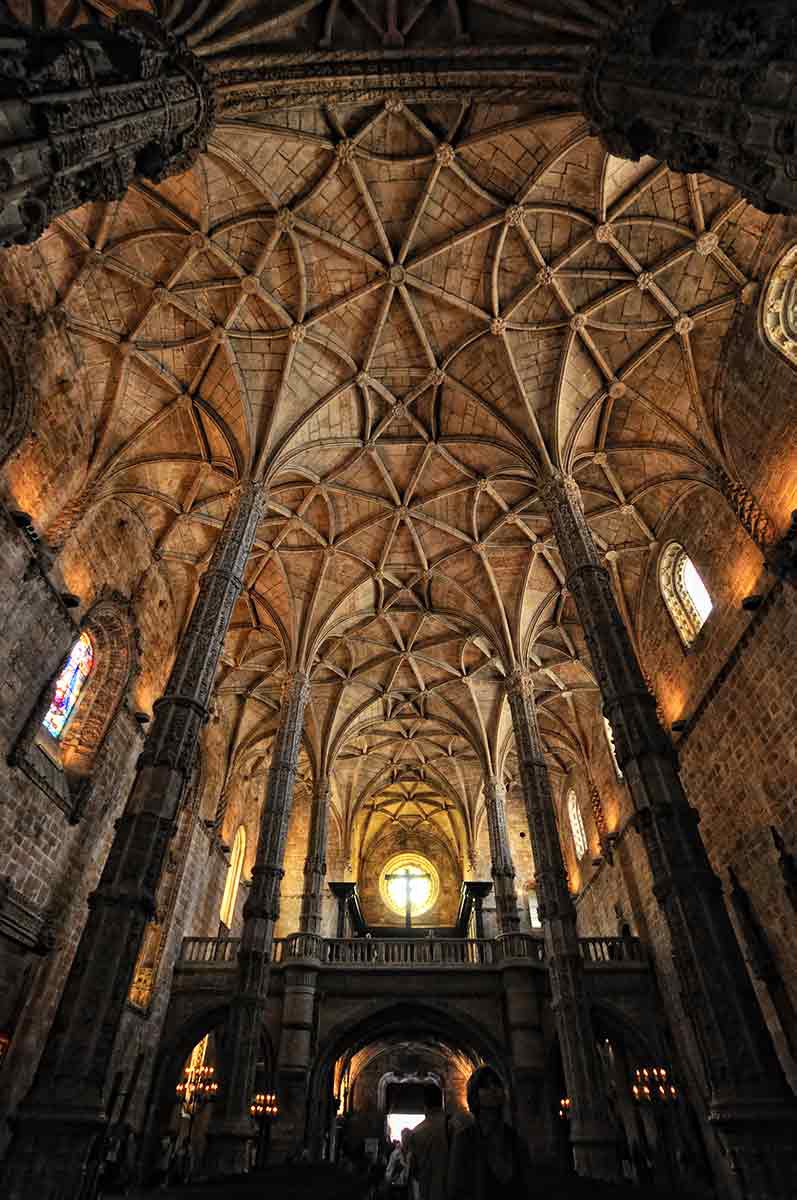
The Monastery of the Hieronymites and the Tower of Belém are iconic Manueline landmarks designated as UNESCO World Heritage Sites in 1983. These monuments are a remarkable testimony of Portuguese society in the 15th and 16th centuries. They pay homage to the Portuguese discoveries that opened Europe to the rest of the world.
A small hermitage built by Prince Henry the Navigator in 1452 was the location chosen for the Monastery of Hieronymites. The monastery’s construction began in 1501 and expanded over the next hundred years. At the time, Portugal enjoyed a vast overseas empire, trading merchandise with Brazil, Africa, India, and Asia. In fact, the profits from such activities allowed for the monastery’s construction.
The monastery was built to honor the memory of Prince Henry the Navigator. That is why you will find his figure guarding the entrance. Beside it, the Virgin of Belém blesses the monument. Inside, you can admire unique Manueline transept vaulting that is not supported by any columns.
A few steps away from the monastery is the Tower of Belém. Besides defending the city, this tower was also built to celebrate Vasco da Gama’s expeditions.
Today, you can still admire its mesmerizing architectural features. The watchtowers show Moroccan influences, while the Manueline style defines the tower’s appearance. Here, you can also admire stone rigging in the heraldic motifs and a rhinoceros figure, the first stone sculpture of this animal in Europe.
11. Elvas and Its Fortifications
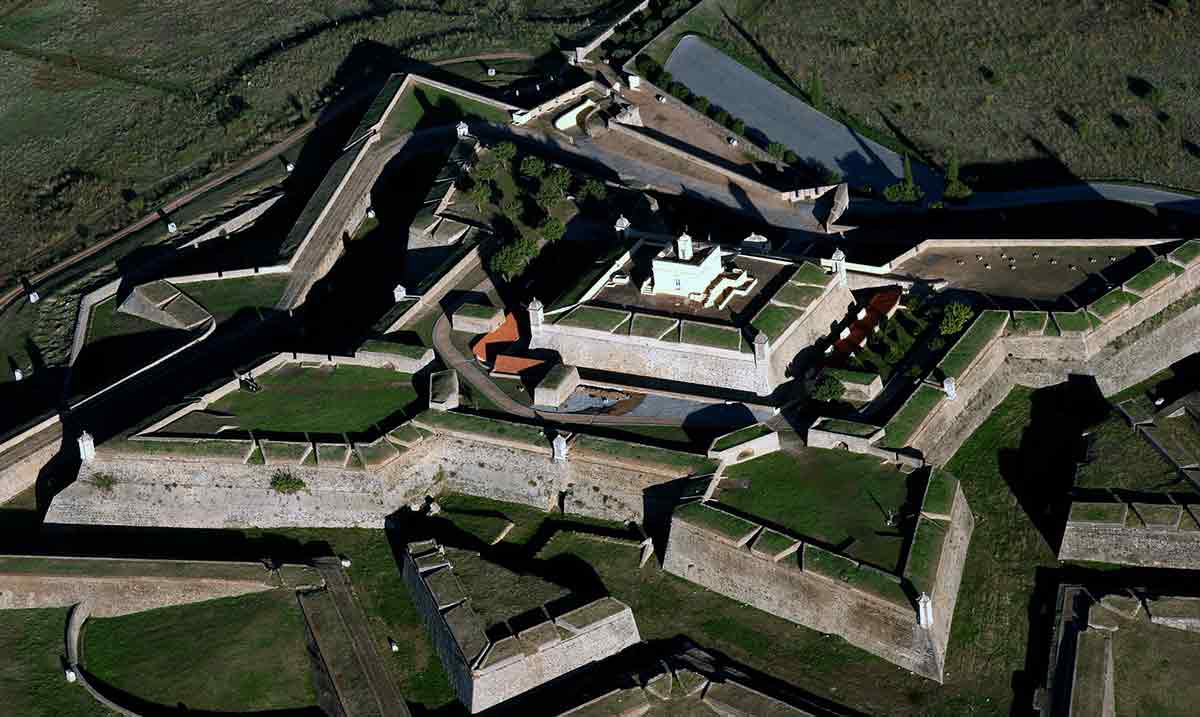
The garrison border town of Elvas and its Fortifications is a historical and cultural complex classified as a UNESCO World Heritage Site since 2012. After the Restoration of Independence in 1640, Elvas was heavily fortified between the 17th and 19th centuries. Today, it represents the largest bulwarked dry-ditch system in the world.
Inside the garrison border town, you can explore the historic center, the Amoreira Aqueduct, the Fort of Santa Luzia, and the covered walkway that connects the historic center to the Fort of Graça and other smaller forts.
The Amoreira Aqueduct supplied the town with enough water to withstand lengthy sieges. Inside, extensive barracks, churches, and monasteries catered for the military’s needs.
The historic center reveals the city’s evolution in the Middle Ages. Besides the castle and the remnant walls, you can also visit the Igreja de Nossa Senhora da Assunção, a fortress church built in the 16th century.
The town’s bulwark fortifications, the Fort of Santa Luzia, and the fortlets of São Mamede, São Pedro, and São Domingos represent a remarkable dry-ditch defense system.
Elvas reflects Portugal’s aspirations for autonomy and shows the evolution of its military architecture and technology.
12. Prehistoric Rock Art Sites in the Côa Valley and Siega Verde
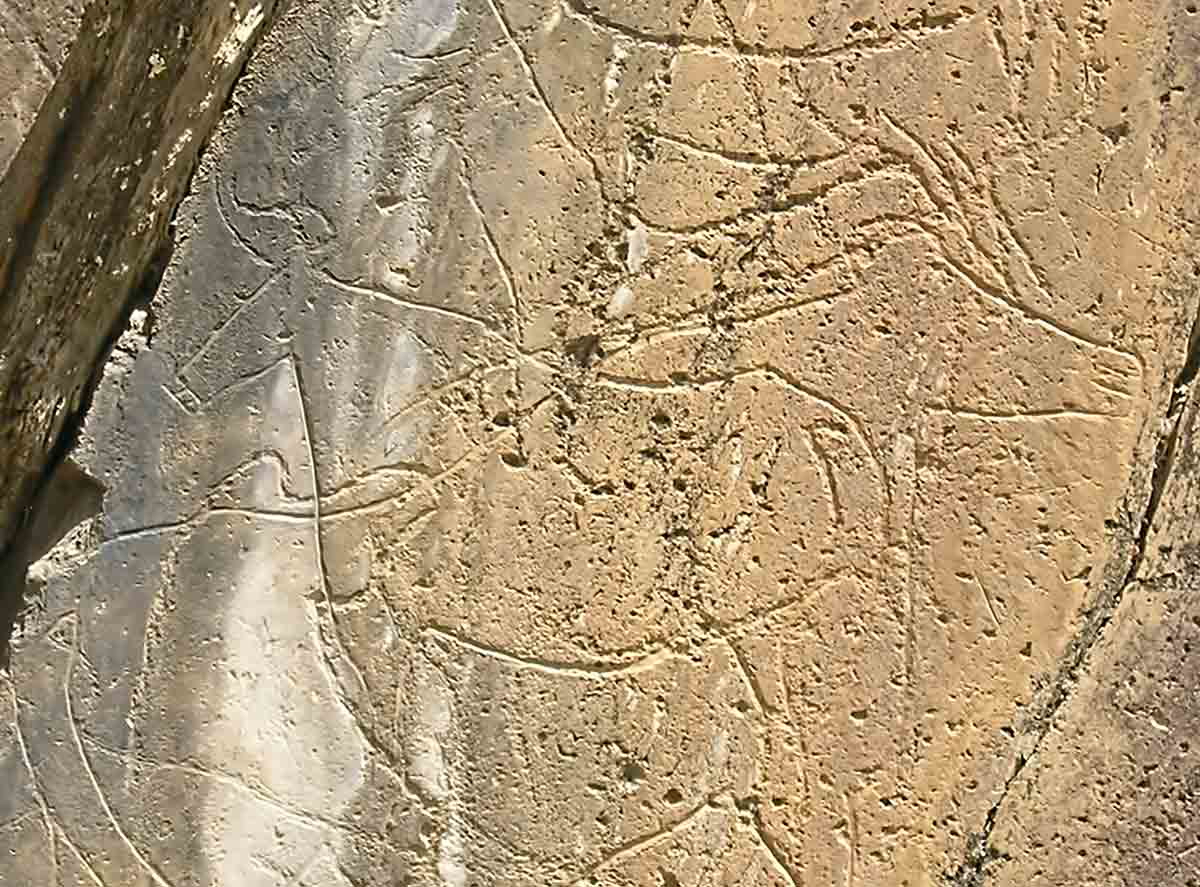
The prehistoric rock art site in the Côa Valley is a paleolithic archaeological site in Northern Portugal. Together with the Siega Verde Park across the Spanish border, this is the only UNESCO World Heritage Site shared between Portugal and Spain.
Hundreds of panels depicting animal figures can be seen along the Agueda and Côa rivers. This concentration of prehistoric rock art dates back to between 22,000 BCE to 10,000 BCE. There are over 5,000 figures scattered along 1,200 schist rocks and spread over 20,000 hectares (50,000 acres) of land.
Although the Foz Côa engraving was only discovered in the 1990s, it quickly captured public attention due to a dam construction that would flood the entire area. Since then, archaeologists have found stone engravings of extinct aurochs, horses, and goats, with sizes ranging between 15 to 180 centimeters (6 to 70 inches).
Although Foz Côa was declared a UNESCO World Heritage Site in 1998, the consecutive findings led to several extensions. The prehistoric rock art found in Foz Côa and Siega Verde shows the first representations of symbolic human creations. It also helps us understand the spiritual beliefs of the stone engravers.
13. Alto Douro Wine Region
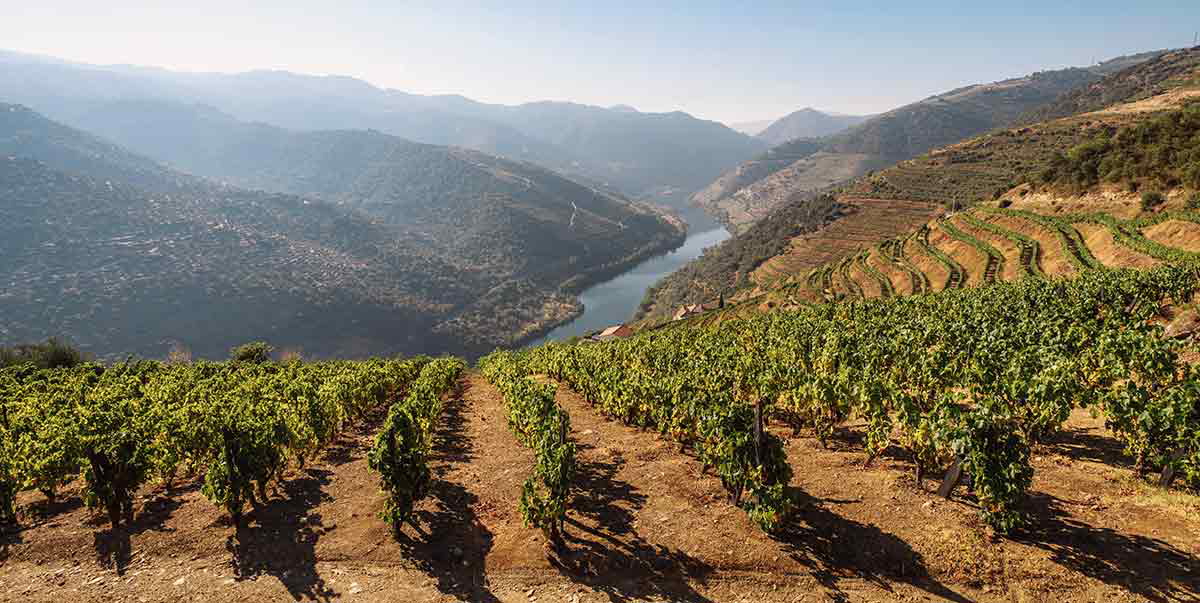
Alto Douro Wine Region is an area of more than 26,000 hectares in the north-east of Portugal. It was classified by UNESCO in December 2001 as a World Heritage Site cultural landscape.
The wine-making tradition changed the landscape here. Over the millennia, winemakers transformed the steep slopes into vineyard terraces. This technique was the only way to plant vines in a mountainous region.
Alto Douro has been producing wine for over 2,000 years, including world-famous port wine. Its origins date back to the second half of the 17th century when Port began to be produced and exported in large quantities, especially to England.
However, the high profits from exports to England led to fraud and adulteration of the fortified wine. Douro wine producers demanded government intervention. In 1756, Companhia Geral da Agricultura das Vinhas do Alto Douro was founded to guarantee the production of exclusively high-quality port wine. Producers also benefited from tax exemptions on trade and exports.
Additionally, the vineyards where port wine was produced were demarcated with 200 granite milestones. Over the years, the demarcated region expanded. Today, the Alto Douro Wine Region is one of the oldest demarcated wine regions in the world.
14. Cultural Landscape of Sintra
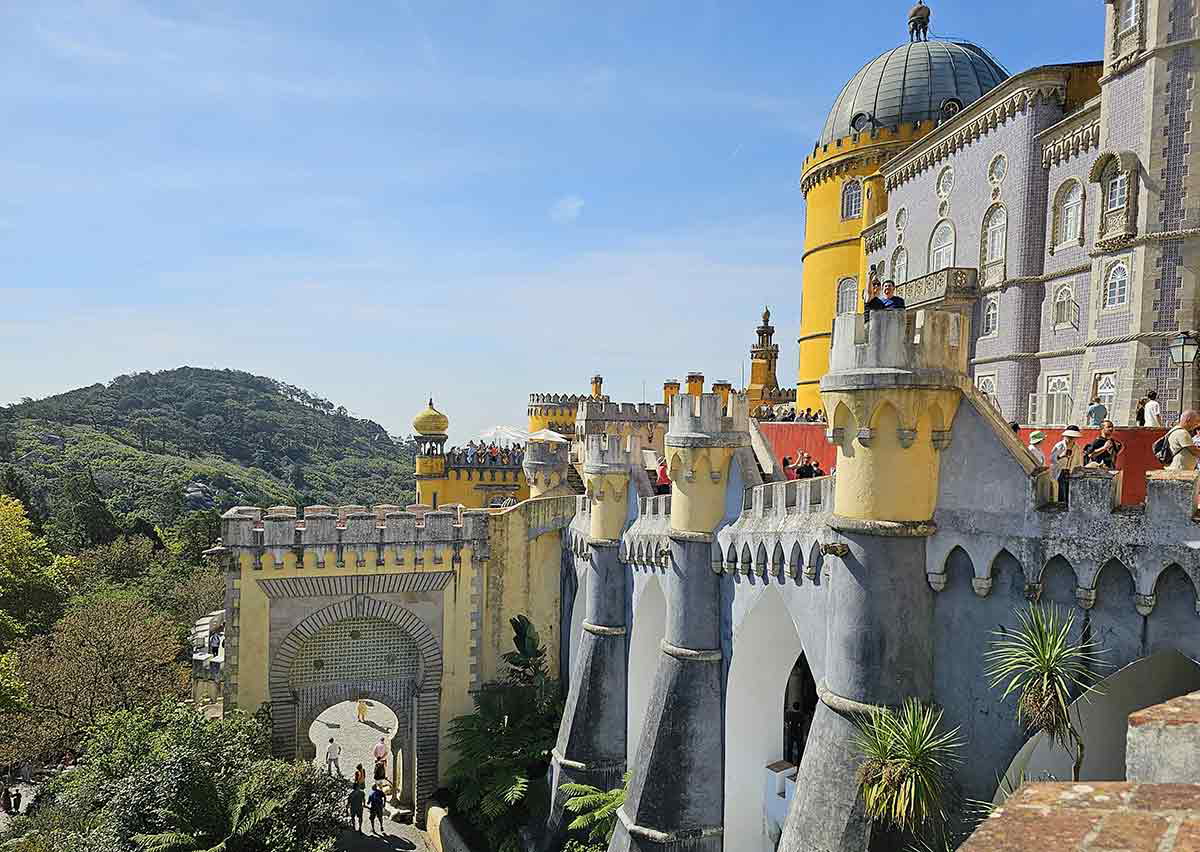
In 1995, Sintra became a UNESCO World Heritage Site. Sintra’s natural setting offers a surprisingly rich culture that reflects Portugal’s history over the centuries.
The first traces of human occupation date back to Prehistory. However, this region was later occupied by the Romans. The Moors also settled here and left behind the Moorish Castle, the oldest Islamic castle in Portugal.
In the 15th century, Sintra became a summer residence for the nobility and bourgeoisie. King João I ordered the refurbishment of the Palácio da Vila. During King Manuel’s reign, the palace saw the most significant redesigns. The tiles used are now considered the most valuable collection of Mudejar tiles in the Iberian Peninsula.
However, the 19th century was Sintra’s golden era. Several landmarks from this period shaped the landscape you see today. Among them are the Palácio da Pena, Palácio de Montserrate, and Quinta da Regaleira.
Prince-consort Ferdinand of Saxony-Coburg-Gotha brought Romanticism to Portugal. In Sintra, he built an environment combining nature and revivalist architecture. Palácio da Pena, built over the ruins of an old monastery, is the best example of this artistic trend. That is why in Palácio da Pena, you can find Gothic, Manueline, and Mudéjar architectural styles.
Furthermore, Sintra’s microclimate provides for local and exotic species of plants. You can find them in various Romantic-styled gardens and parks where Revivalism profoundly changed Sintra’s landscape.