
The traditional cognitive view, rooted in computationalism, sees the mind as an internal information processor. However, 4E cognition challenges this perspective, emphasizing the embodied, embedded, enactive, and extended nature of cognitive processes. Inspired by ecological psychology, pragmatism, and phenomenology, 4E views cognition as a dynamic interaction between the brain, body, and environment.
Traditional Cognitive View
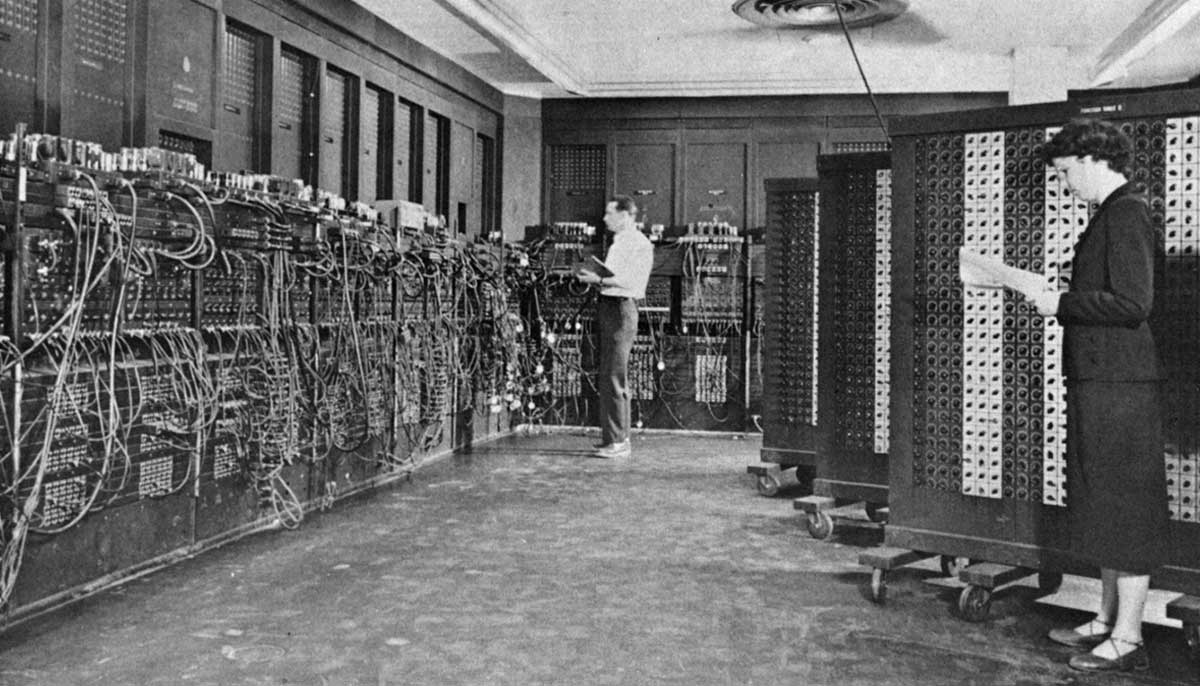
The classical representational view of cognition derives from computers; it treats cognition as computational, meaning that it is a stepwise, serial process—transducing stimuli into symbolic expressions for processing and then further transforming them into particular outputs.
This is directly inspired by computerized operations and algorithmic computation through the manipulation of symbols or representation. The mental is, then, constituted by these internal representations.
This view remains highly influential in brain science, not because of the belief that the brain is like a computer; most brain scientists accept that there is more to the brain than that. But treating the brain as a computational system simplifies its investigation by reducing the complexity of neuronal types and by enabling computational models to test brain function. This has allowed the investigation of the brain as an idealized system within a mechanistic framework that retains the mind-body distinction.
While it has proven fruitful, this simplification and what underlies it have faced significant opposition and challenges.
Ecological Psychology
Around the same time as the rise of computationalism and cognitive science, J. J. Gibson developed ecological psychology, which, in many respects, is in direct opposition to the ideas of computational cognition.
Ecological psychology requires that organisms be externally driven and interconnected with their environment. It dismisses the internal, isolated view of information processing in computationalism. For example, instead of manipulating internal environmental representations to generate action plans, it emphasizes “direct perception.” This means that perception is unmediated: it does not require symbolic processing because the environment provides “affordances,” which are possibilities for action shaped by the inherent properties of the object, but also the organism and its relation to the environment.
This view was not widely accepted at its inception, largely due to Chomsky’s impoverished-stimulus argument. Chomsky argued that environmental stimuli are insufficiently rich in information for the brain’s learning and development.
However, stimuli are not confined to a single system, such as the visual system with the eye, its stimulus, and its subsequent processing areas. They are integrated into a larger system that derives its knowledge from multiple sources.
4E and Its Inspirations
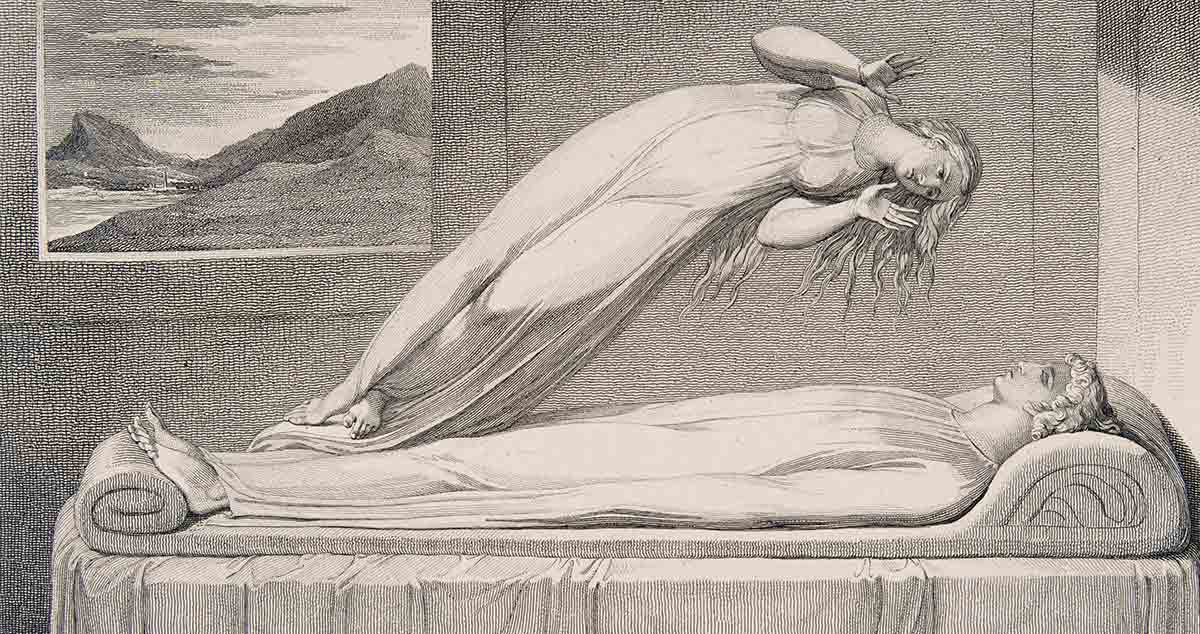
Gibson was not the first nor the last to argue against the inherent Cartesian dualistic nature of mind-body, which takes the mind to be separable from body and world in a solipsistic way. Before Gibson, there were pragmatists, Gestalt psychologists, and phenomenologists. They all argued against dualism, rejected the split between perception and action, and adopted an externalist view rather than an internalist view, which processes information entirely internally.
Drawing on these precursors, the latest criticism of the classical view comes most strongly from enactive cognition and the so-called 4E framework. The 4E framework emphasizes cognition as a process of the interaction between the individual and the environment. It comprises enactive cognition, embodied cognition, embedded cognition, and extended cognition, all beginning with an E. These ideas coalesced into a movement to revolutionize how we conceptualize cognition.
Embodied Cognition

Embodied cognition is the idea that cognition is shaped by our bodies. In other words, what we think boils down to how we can move our bodies. Proponents of this idea about cognition envision human beings as directly constrained by their physical capabilities and, subsequently, cognitively dependent on such capabilities. This is similar to the notion of affordances in ecological psychology. Cognition, thus, emerges from the relationship between an agent’s body and the affordances provided by the environment, rather than from the brain alone.
This idea interlocks the previous clear demarcation between the mind and the body, internal and external. Cognition is situated in our body as well as our mind. We use our bodies directly to support cognition, as shown by the fact that being denied the ability to gesture can hinder thinking and communication.
We can also see indirect evidence of embodiment in our use of metaphors, like “feeling down” and “grasping a concept.” Nonetheless, affordances are the most suitable example: a tool affords grasping because it is shaped for our grip.
This contradicts the classical representational view, which treats the body and environment as merely internal states or representations stored in the brain. It also goes against the view that the brain is an internal processing machine, cut off from the world, like a brain in a vat. Representations mediate between the sensory inputs and action outputs. In embodied cognition, perception is directly coupled with action; it doesn’t passively receive information but guides and shapes action.
Enactive Cognition
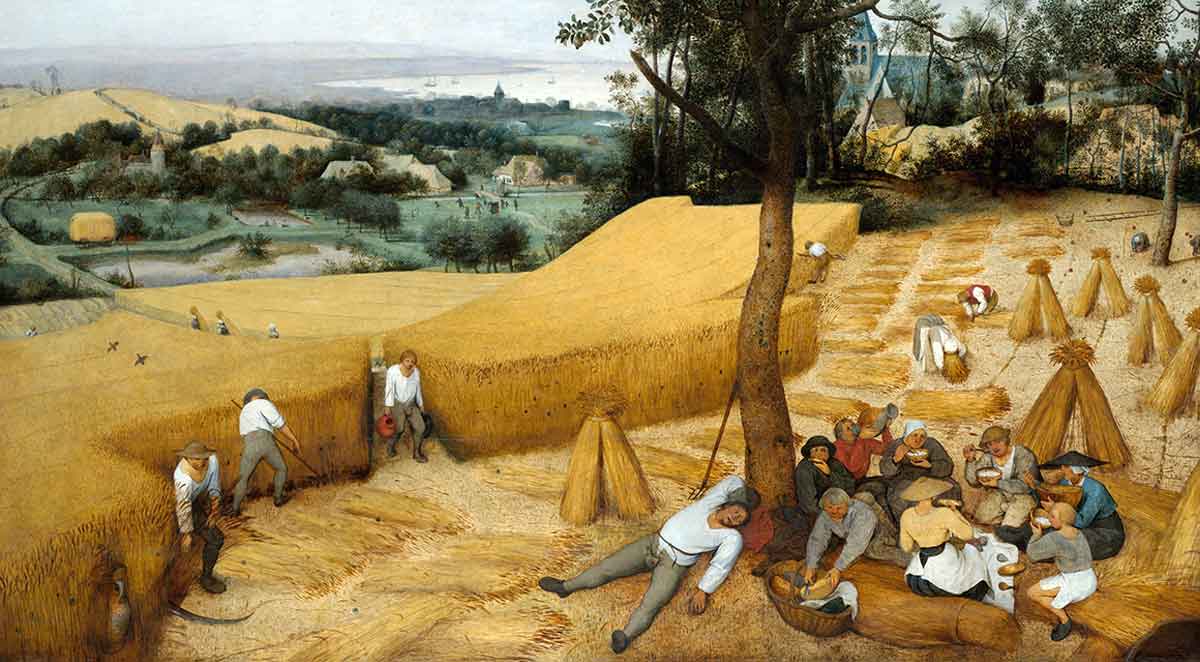
Enactive cognition is fundamentally opposed to the classical cognitive view of a passive observer and representer who acts on the environment through internal processes. Instead, the world is brought forth through our actions upon it. It is a reciprocal, dynamic interaction between the body, brain, and environment, none of which can be considered in isolation. This active engagement of the organism with its environment is what gives rise to cognition.
A common illustration of the enactive view is a baseball fielder catching a fly ball. The fielder’s typical strategy is not to perform a difficult trajectory calculation based on sensory representations. Instead, they use a technique that leverages the inherent properties of their body and the environment: they walk forward or backward to keep the ball aligned in a specific region of their visual field, thereby matching its trajectory. This shows that the body is not merely a tool for calculation but is inseparable from the cognitive process itself. Cognition changes and updates as the body and environment do, employing their inherent properties in an enactive manner.
While embodied cognition focuses on how the body’s characteristics and its interaction with the environment shape thought, enactive cognition emphasizes the dynamic, active role of the organism-environment system. Enactive cognition is fundamentally opposed to the classical cognitive view of a passive observer and representer who acts on the environment solely on the basis of internal processes, even though embodied cognition may still allow action-oriented internal representations.
Embedded Cognition

Embedded cognition, in a similar vein, holds that cognition emerges from the interlinking of the brain, body, and environment. The organism uses these constraints and characteristics to lessen its cognitive load. Representing everything and internally performing calculations would maximize cognitive load; acting on the environment, shifting environments, and using the relation between it and the self would reduce it.
An example of embedded cognition is employing landmarks to navigate roughly rather than remembering routes exactly. This offloading of mental work to the environment is key to minimizing the overall effort required for a cognitive task.
Much of modern society is offloading cognitive processes to the environment, such as watches, calculators, and organizational systems. We use environmental cues to reduce our need for decision-making; we follow paths, others’ actions, and norms.
We can say that we use the environment to both enhance our cognitive capabilities and lessen the load. We organize our environments and use visual aids to support cognitive processes such as calculation and comprehension, and we place objects in specific locations to reduce the need for memorization. Our cognition is embedded in our environment, inherently and by choice.
Extended Cognition

Extended cognition expands the boundaries of where thinking occurs, moving beyond just the brain and even the body. Proponents argue that the tools we use for cognitive tasks, such as taking notes to support extended memory or using props for calculation, are not merely aids but extensions of cognition.
For instance, proponents of this view of cognition suggest that imagining an object’s rotation is functionally equivalent to physically rotating it. This perspective mirrors the way we treat tools as physical extensions of the body, such as prostheses, hearing aids, or crutches. The concept of extendedness applies this same principle to cognition, incorporating social groups, computers, notes, or even our own bodies (like counting on fingers) into the cognitive process.
4E as a Philosophy of Nature

The primary aspect of the 4E framework is its holistic view of cognition and its challenge to certain foundational assumptions of the current cognitive approach. Yet, the deeper you delve into 4E, the harder it becomes to specifically ascertain exactly what it is trying to do. As is evident by the fact that some scholars add concepts like empathic, affective, and even a second, broader sense of ecological cognition to the original four ‘E’s. It is not sufficiently well defined to serve as a concrete research program that generates specific, testable hypotheses. Instead, as philosopher Shaun Gallagher has put forward, it is more akin to a philosophy of nature.
The 4Es, as a philosophy of nature, may serve as a guide. It may shape how we see nature, in terms of intentionality, the brain-body interaction, and even the mind-brain dialectic, etc. While it may be overly general and holistic to design specific experiments or formulate specific hypotheses, it can still influence the interpretation of models and experimental results.
As a philosophy, it is an attack on the long-lasting ghost of the Cartesian internalist, dualistic mind. This view has been difficult to dislodge, yet science and philosophy as a whole may have begun a slow move away from it. More radically, it challenges the mechanistic view of nature by arguing that we cannot separate our understanding of nature from our place within it, thereby defying the traditional methods of decomposition.