Even though the way we talk may suggest otherwise, physicalism—the idea that all things can be grounded in the physical, material world—in the philosophy of mind is thought by some philosophers to be distinct from materialism. If this is the case, then there is a need to trace back this theory to its origins and see where these distinctions may lie. Are there differences in origins? Theory? This article takes a deeper look at these theories, looking for differences.
What Is Physicalism, and Who Supports It?

Physicalism and materialism are often used interchangeably. Both positions are rooted in the idea that reality is physical or material. This means that there are no mysterious non-physical events and entities. Nitpicking philosophers would, however, point out that the history of these positions is quite different: whereas physicalism was introduced in the 20th century thanks to the influential figures of the Vienna Circle, materialism can be traced back to Ancient Greece. Moreover, modern physics also showed that not every physically described phenomenon is material in its nature, like forces.
For this reason, physicalism about the mind is a more scientifically probed position than mere materialism. It holds that the mind can be explained in physical terms without any need to postulate the soul or anything similar. The next step is a metaphysical one: physicalists argue that this further implies that the mind is physical. Remember that “physical” is a placeholder for any empirical process scientists currently tell us is the best fit.
In the philosophy of mind, the first knockdown of dualism came from behaviorism. Behaviorism bloomed in psychology with its groundbreaking methodology, which states that the only thing that matters is measuring reactions to stimuli. There is no need to discuss mental states since they can’t be directly observed, unlike behavior. The outcome of dualism was, however, that there is no inner spectator that monitors and guides our reactions.
Some philosophers, especially the famous trio from Australia—David Armstrong, U. T. Place, and J. J. C. Smart—were unhappy with behaviorism but also fervently opposed dualism. This led them to develop physicalism by solving the puzzle of what it means to say that the mind is physical. Armstrong claimed that mental states correspond to the states of our central nervous system, and any further details are up to our best scientists to uncover.
On the other hand, U. T. Place and J. J. C. Smart wanted to think more thoroughly about the relation of identity between the mind and its physical realization. This resulted in the formulation of the position dubbed “Type Physicalism” or “Type-Identity Theory.” Type physicalists hold that for every type of mental state (e.g., pain, belief, desire), there is a type of physical state in the brain (e.g., a specific pattern of neural activity or release of neurotransmitters). Mental states are thus understood as quite literally identical to physical states.
U.T. Place
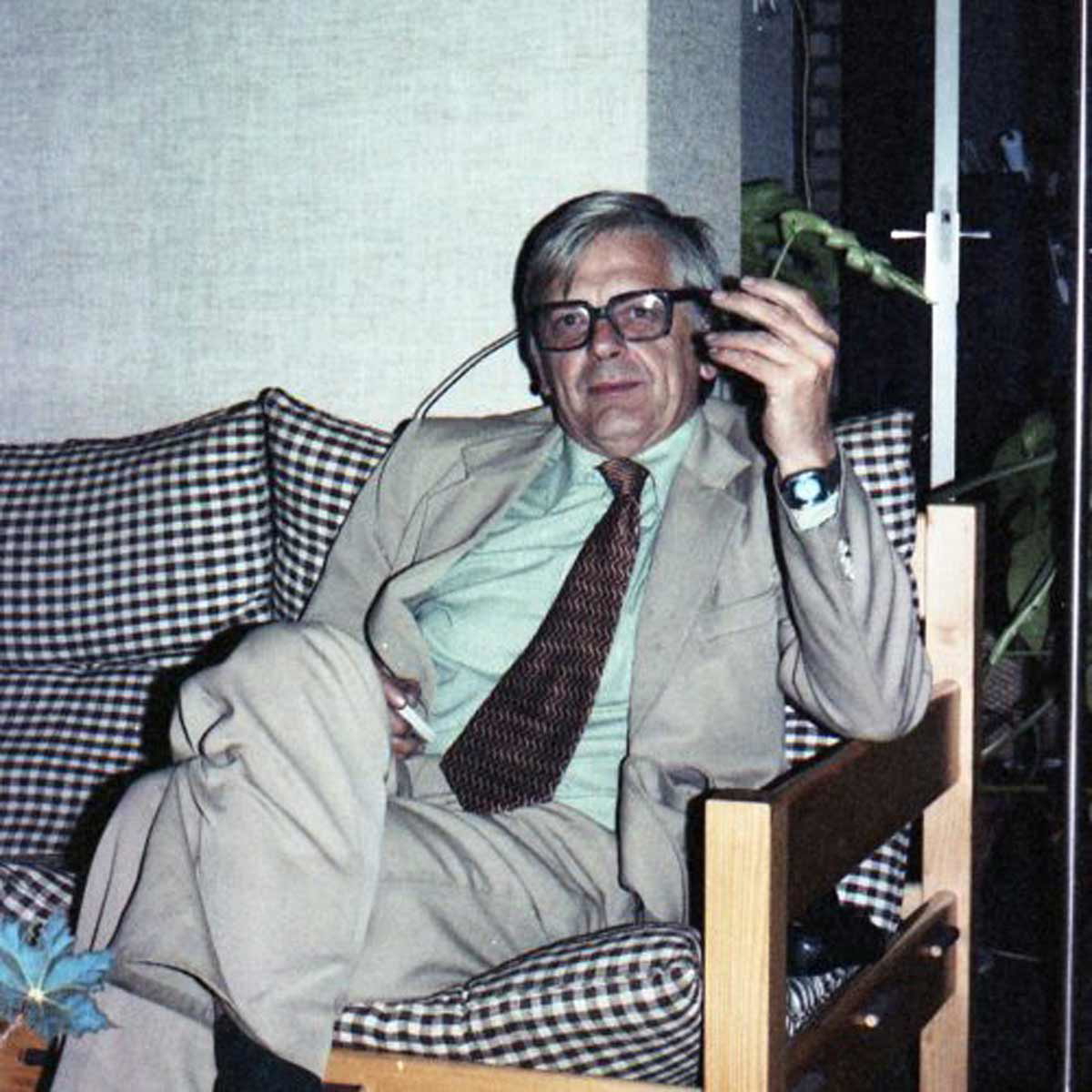
In his 1956 paper titled “Is Consciousness a Brain Process?”, Place argued that the relation of identity between mental states and brain states is strict and empirically accessible. Just as lightning is a type of electrical discharge, our conscious mental states—like hopes, beliefs, desires, and sensations—are types of brain processes. Our path towards establishing the identity in the statement “The lightning is electrical discharge” was scientific. At the ontological level, this identity must hold, given that two processes describe the same reality. In other words, conscious mental states and brain states are not ontologically independent entities.
J. J. C. Smart defended Place’s argument in light of the criticisms. For instance, one of the objections to Place’s type of physicalism was that uneducated people may not know that mental states are brain states, but that doesn’t mean they do not experience hopes, beliefs, desires, and sensations and can’t describe them without any reference to complex physiological details. Moreover, we can recall many wrong conceptions about the human brain in the history of science and philosophy, such as Aristotle’s idea that the brain is a cooling device.
Again, this did not deter Aristotle from making true assertions about his mental state. Smart’s answer was simple and pretty convincing. Uneducated people may talk about lightning without knowing, at the same time, that electrical discharge causes the lightning. Nevertheless, that doesn’t mean that the true nature of lightning is not electrical discharge, but rather that at the conceptual level, someone may be familiar with A but not with B, so they can’t grasp the true nature of A and B, which is revealed in the identity statement “A=B.”
Donald Davidson
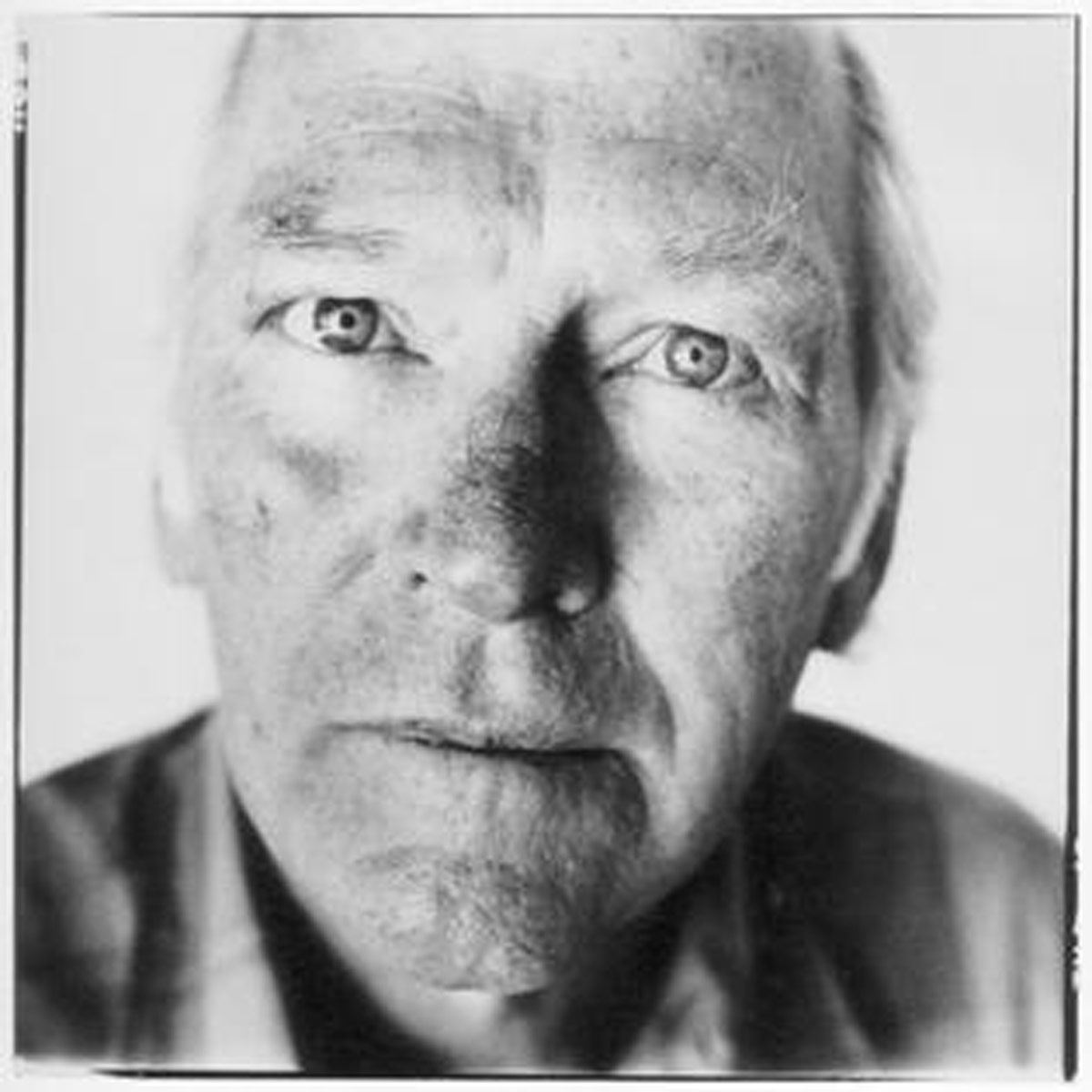
In the 1970s, Donald Davidson proposed a slightly different physicalist position: “Token Physicalism” or “Token-Identity Theory.” This kind of physicalism assumes that each specific occurrence of a mental state (e.g., a particular instance or token of belief, desire, hope, or pain) is identical to some specific physical state in the brain. However, these physical states might vary from one instance or token to another. Davidson was left unsatisfied with type physicalism because he thought that the lawlike relationship between the mental and physical realm couldn’t be established on the type-to-type grounds.
For Davidson, the mental realm is best described with anomalous monism, the view that mental states can’t be determined or predicted by physical states since the mental is, to a certain degree, autonomous and escapes reduction to strict physical laws. Otherwise, we couldn’t make sense of our free will. However, the mental occurrences are still physical in their nature because they supervene on physical. The relation of supervenience conveys the idea that any change in a token mental state is dependent on a change in a token physical state. However, the reverse is not necessarily true because changes in the physical realm do not always predict changes in the mental realm straightforwardly.
What Does Physicalism Say About the Mind-Body Problem?
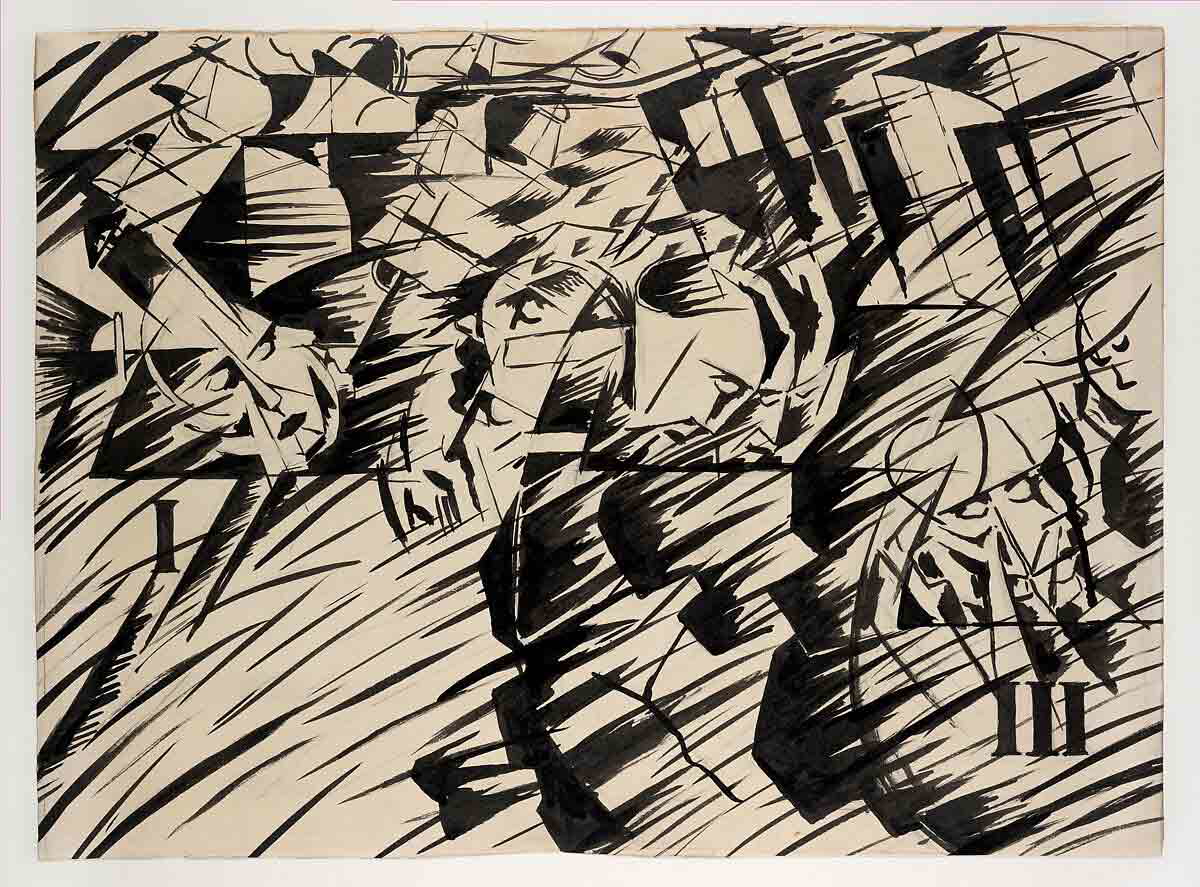
Generally speaking, physicalism dissolves the mind-body problem by claiming that the mind is the body. More precisely, all entities and processes are physical, so there are no non-physical things. Formulated this way, physicalism threatens the viability of substance dualism—Descartes’s position that mind and body are distinct substances that occasionally interact via the pineal gland. For Armstrong, U. T. Place, and J. J. C. Smart, physical states, such as brain states, cause mental states. In other words, there is a constant, scientifically backed-up causal interaction between the two, so we might as well consider it the same thing.
It is worth mentioning that there are slight differences between type and token physicalism in this regard. Type physicalists are usually committed to reductive physicalism as well. Reductive physicalism is a subtype of physicalism in which mental states can be completely reduced to physical states in principle. This means we assume we could have a one-to-one mapping between neural mechanisms in specific brain regions and mental events. If this is the case, the mental realm can and should be reduced to the physical. We are left only with the body part of the mind-body problem.
Philosophers like Davidson would disagree with this reductionist tendency and endorse non-reductive physicalism instead. This subtype revolves around the idea that mental states are irreducible to physical states despite their physical basis. In other words, the token mental states are not fully causally dependent on token physical states, so it wouldn’t make much sense to argue in favor of the reducibility of the mental realm to the physical. The problem with this subtype is that it hardly threatens property dualism since it almost boils down to the same point. Property dualism maintains that there are mental and physical properties (instead of substances) that are metaphysically independent of each other and can’t be determined by each other.
What Does Physicalism Say About Consciousness?

Physicalism implies that consciousness is a natural phenomenon governed by physical laws and subject to scientific investigation. This perspective encourages scientists to explore the neural correlates of consciousness, seeking to identify the specific brain regions, processes, and mechanisms involved in conscious experience. As David Armstrong suggested, we leave it to our best scientific theories to pass judgment on what consciousness is.
Nonetheless, philosopher David Chalmers, in his 1996 book The Conscious Mind: In Search for a Fundamental Theory, argued that physicalism is inadequate because it is unable to explain everything in purely physical terms. According to Chalmers, physicalism fails to explain why we have subjective experiences at all. He distinguishes the easy problem of consciousness from the hard problem of consciousness. The easy problem would be solved by obtaining a detailed neural and physiological description of the mental realm. However, this has no bearing on the hard problem because it seems impossible to develop a scientific explanation for the existence of subjective experience, such as the taste of a vegemite sandwich, the redness of an apple, or the dizzy spell while locking eyes with one’s love interest.
What Are the Key Criticisms of Physicalism?
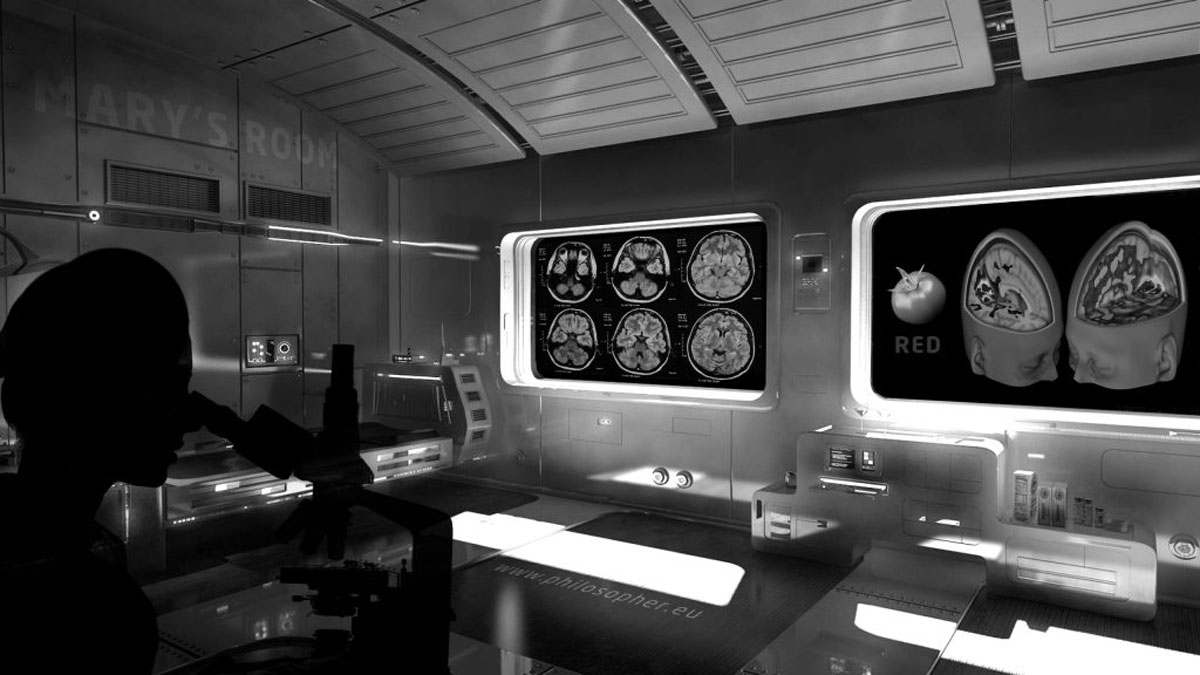
Among many criticisms of physicalism, we will cover the two that made a lot of fuss in the philosophical community, thus reorientating the philosophy of mind in the 1990s and early 2000s. Both criticisms rely on thought experiments that echo well beyond academic philosophy.
Frank Jackson advanced the first objection that jeopardized the very core of physicalism. The objection was presented through a thought experiment known as Mary’s Room. Jackson asked the reader to imagine a brilliant neuroscientist, Mary, who was born and raised in a black-and-white room and has never experienced colors. Despite having all the scientific knowledge about colors, she presumably learns something new when she exits the room for the first time and sees red. Suppose we are inclined to agree that she gathers novel pieces of information upon leaving the room. In that case, it seems that there is more to our experience than physicalism assumes, emphasizing the supremacy of the physical realm.
The second objection originates from David Chalmers’s 1996 book. To illustrate why physicalism fails, he devised The Zombie Thought Experiment. Chalmers argued that if zombies—creatures that behave exactly like humans but lack subjective conscious experience—are conceivable, then physicalists should consider throwing the towel. Why? Well, if zombies can exist without consciousness, then consciousness must be something over and above physical states. Thus, dualism (although not Descartes’s) persists.