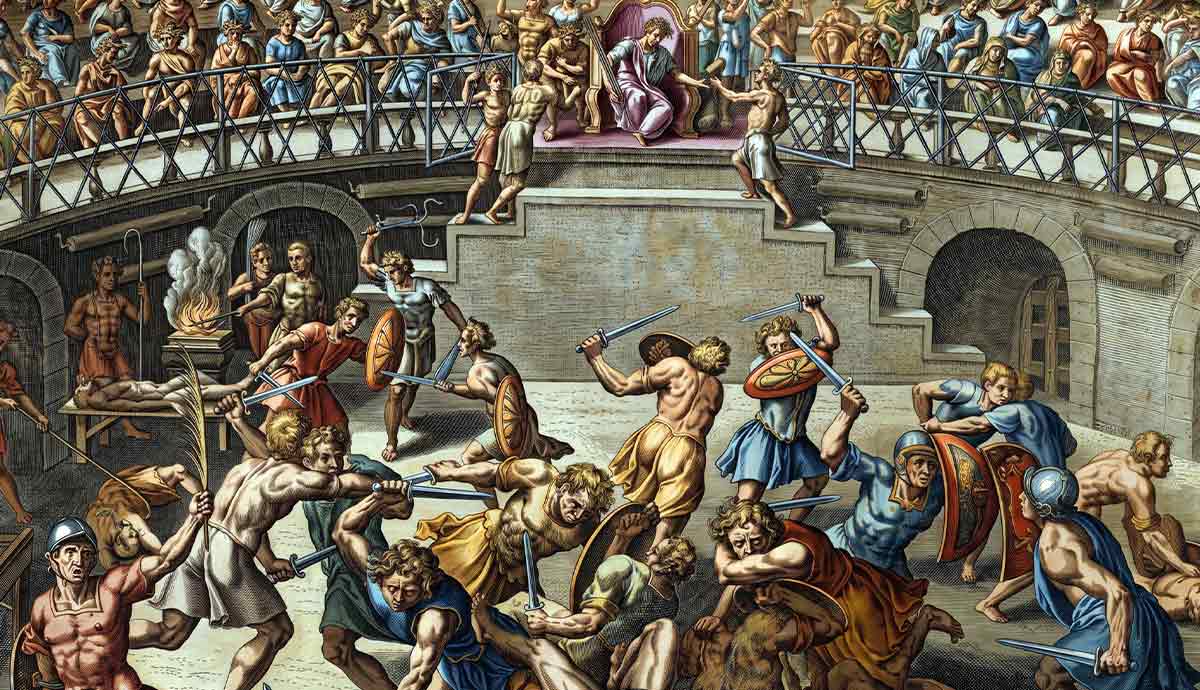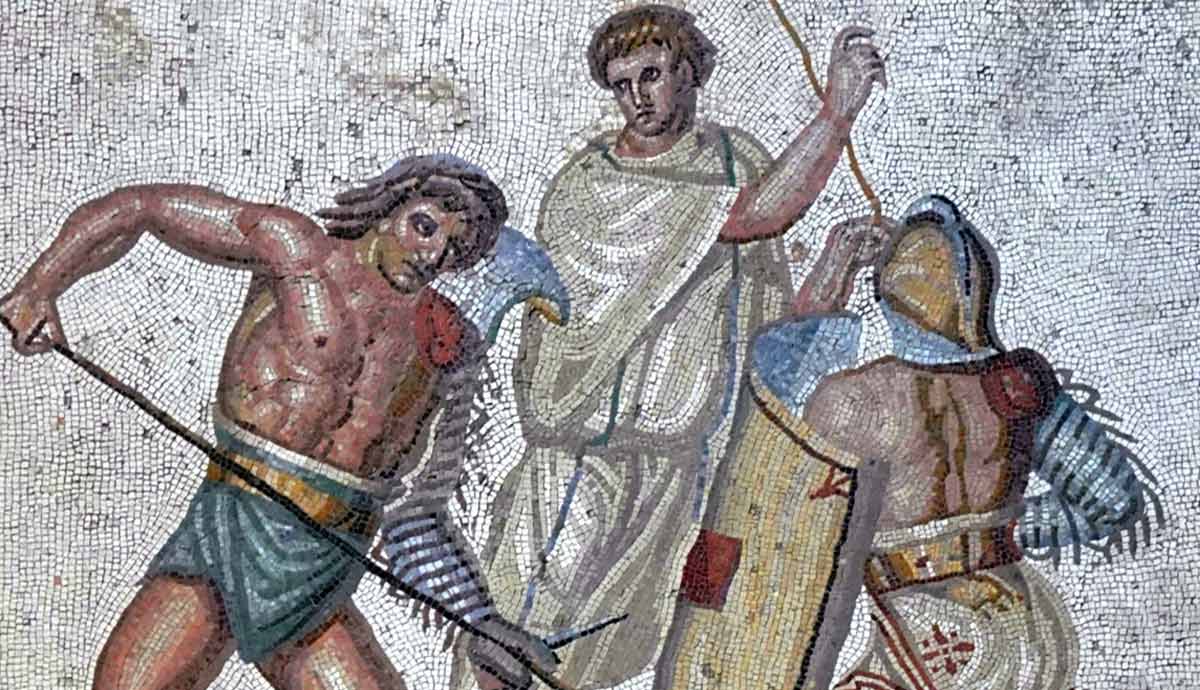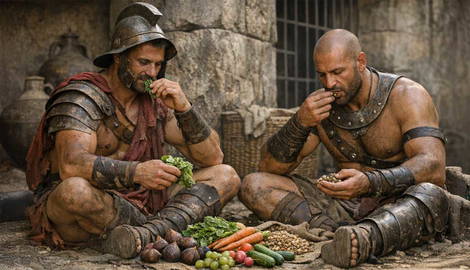

Modern movies often portray Roman gladiators as muscle-bound warriors who mainly ate large slabs of meat and drank wine. The physical evidence, however, tells a much different story. The men who fought in the arenas and considered the high-performance athletes of the Roman world apparently had a very plain diet. This is according to an analysis of their bones done by experts.
What the Scientific Evidence Says About Their Diet
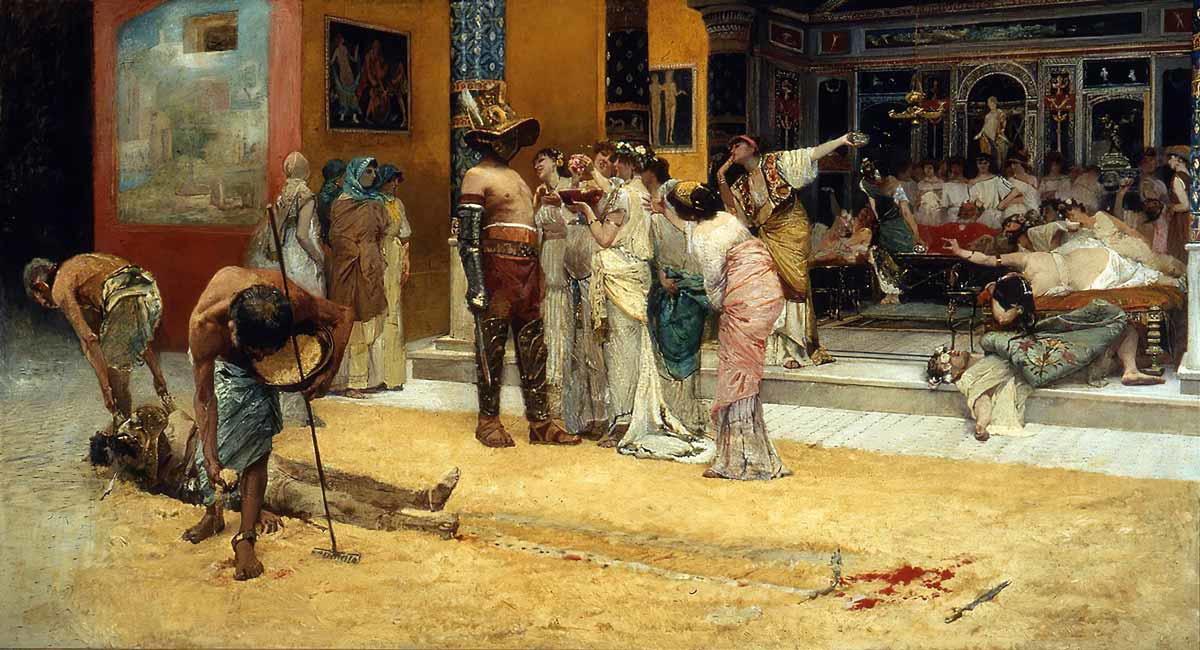
In 1993, a team of researchers from the University of Vienna found a dedicated gladiator cemetery in the ancient city of Ephesus in modern Turkey. Years later, a scientific analysis of the bones changed much of what people thought they knew about the lives of ancient gladiators. The experts who examined the remains performed isotopic analysis on the bones to determine what they ate over their lifetimes.
Because the chemical levels in the skeletons showed a high strontium-to-calcium ratio, the researchers concluded that the gladiators followed a mainly plant-based diet rich in grains and beans. Specifically, the bone studies from Ephesus found that the gladiators had much higher strontium-to-calcium ratios compared to those of the local citizens.
The Life of a Barley Man
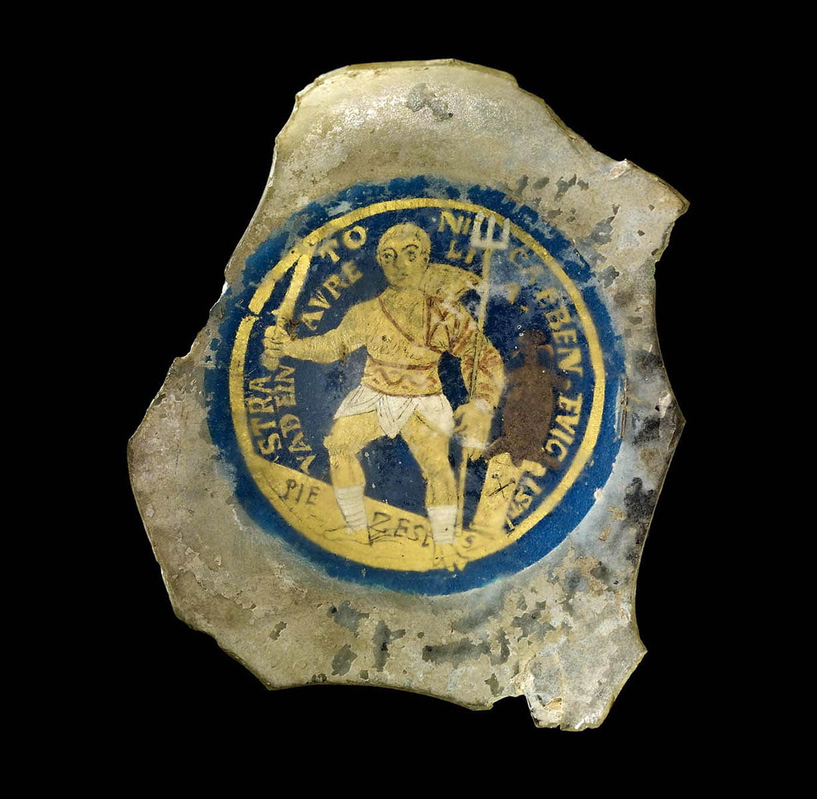
At the time, the warriors were often referred to as hordearii, a Latin term that translates to barley men or barley eaters. Barley was considered a low-grade grain, at the time, and was mostly given to animals or poor people in the city. However, because it provided the energy needed for training, the warriors frequently consumed barley and other plant-based foods in large quantities.
Notably, it was the care of the lanista, the man who owned the school and the lives of the fighters, that kept them ready for the games. He viewed the gladiators as a valuable investment. As such, he provided foods that were relatively cost-effective to him. Under his watch, the fighters received massages and medical attention. They followed a strict routine while living together in groups.
How Gladiators Lived at the Ludus Magnus
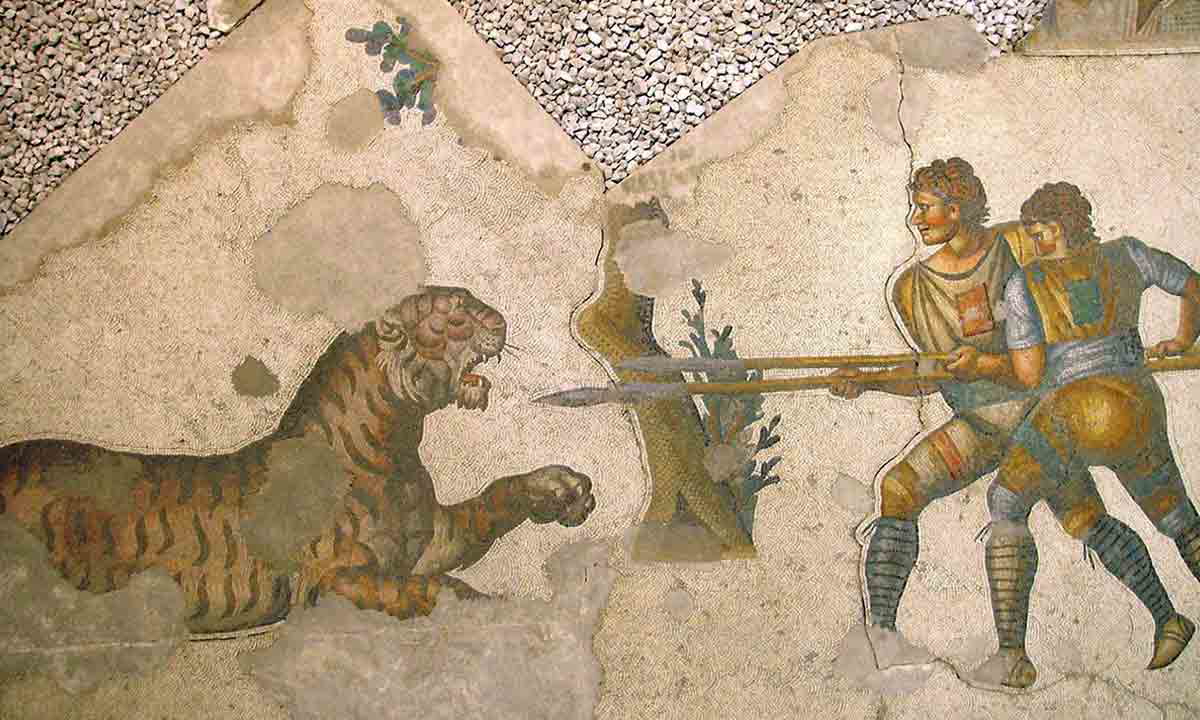
Around the late first century AD, the emperor Domitian started the Ludus Magnus, the biggest gladiator training school in Rome right next to the Colosseum, that was later rebuilt by Emperor Trajan. The school had its own small arena and rows of tiny cells where the men lived, though they typically ate together in communal dining areas. According to historical records, a gladiator at the school would eat hundreds of pounds of barley, chickpeas, lentils, broad beans, and other legumes.
The fighters consumed the legumes almost every day, as they are a rich source of plant protein. The diet also helped the men to put on weight quickly. For the gladiator school owners, having a lot of subcutaneous fat meant that a blade wound would often not cut deep into the muscles or the nerves. The complex carbohydrates fueled the long drills under the hot southern European sun while the slow energy release from barley sustained the fighters. Modern science confirms the caloric efficiency of the ancient plant-based diet.
The Mysterious Ancient Recovery Drink
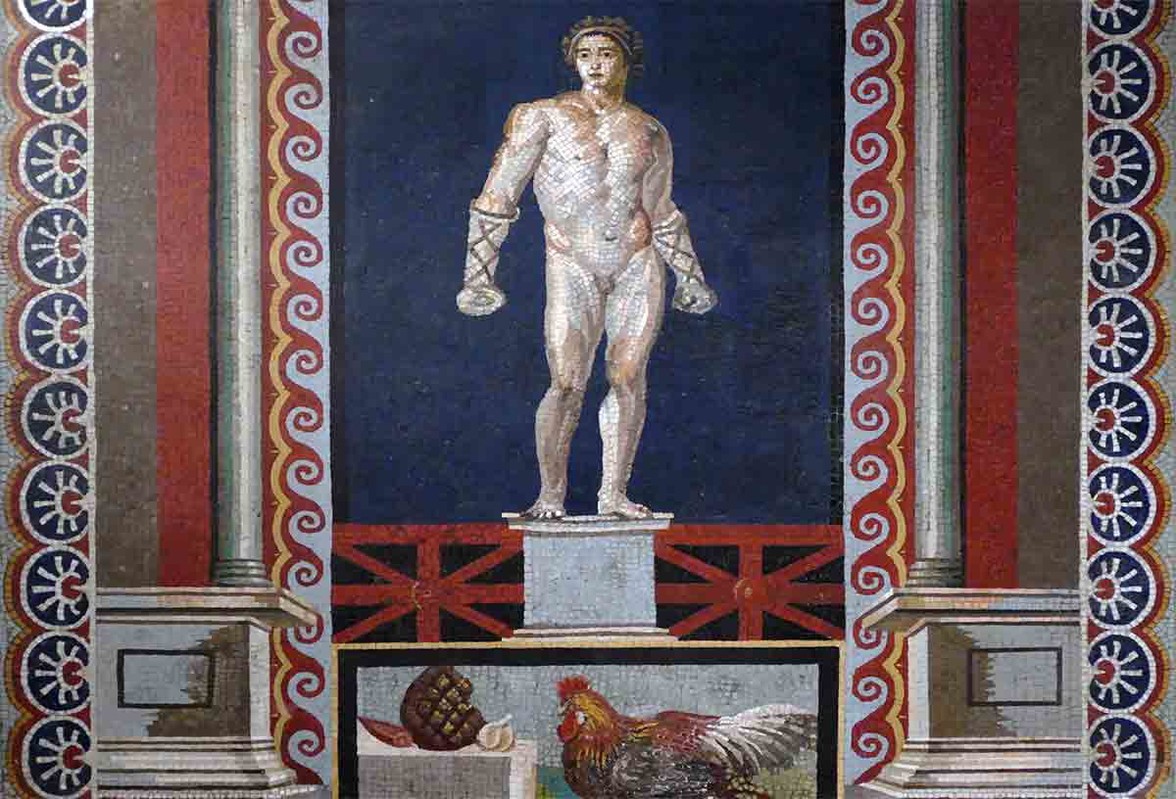
In the Naturalis Historia text written by the Roman writer Pliny the Elder, a very strange drink is mentioned as a remedy for fatigue. Apparently, after a hard workout or a fight, the men would drink a mixture made of charred plant ash mixed with water or vinegar. While the drink may sound disgusting in the contemporary world, it is believed to have been a very effective early version of a sports drink. Because the fighters needed strong bones and required fast healing to survive, the ash is thought to have provided the extra minerals needed to boost their recovery.
What Caused the Gladiator Diet to Disappear?
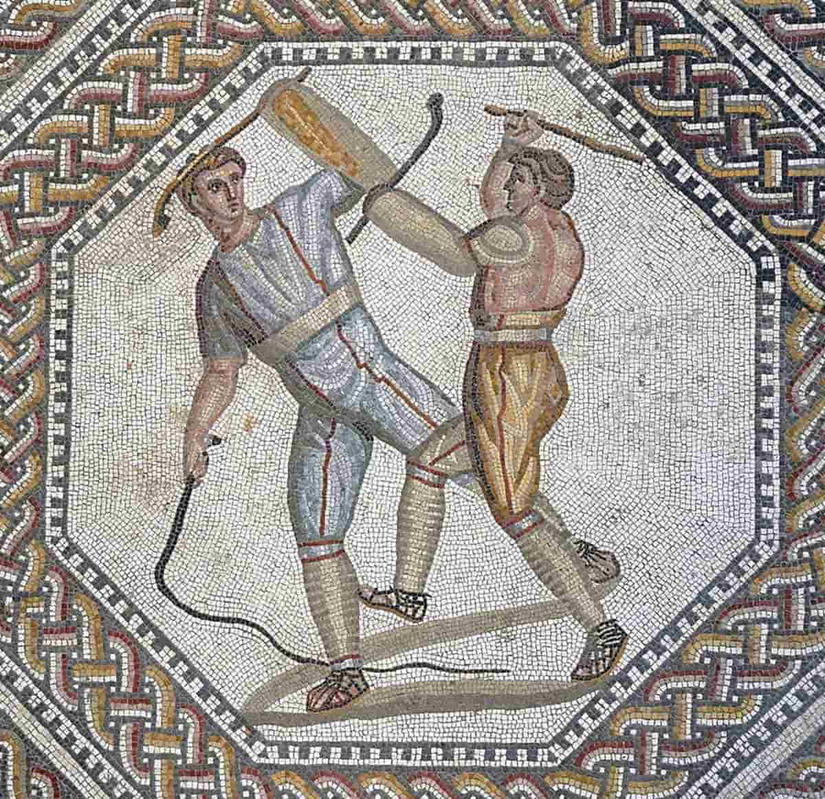
Gladiators were treated like expensive pieces of property as well as celebrated heroes. On special occasions, the men received rare luxuries before major events. Organizers sometimes held a public feast called the cena libera for those scheduled to fight the next day. Historical records describe better food for these events that included meats, fruits, bread, salted fish, and spiced wine.
However, as the Roman empire began to face trouble in the 5th century, the schools had less money to feed the declining number of fighters. The games were finally banned in the city of Rome in the year 404 CE. The specialized diet of the hordearii disappeared along with the schools.