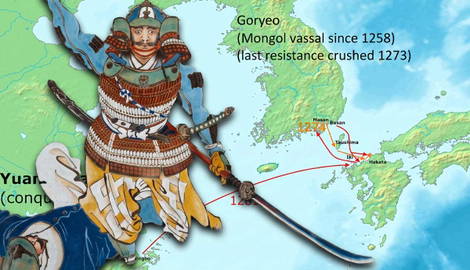

The Mongol Empire was an unstoppable force in the 13th century, and by the late 1200s, nothing could stop its soldiers as they rampaged across Eurasia. China, Persia, and even Kievan Rus’ fell like dominoes. And then, suddenly, they crashed into the islands of Japan.
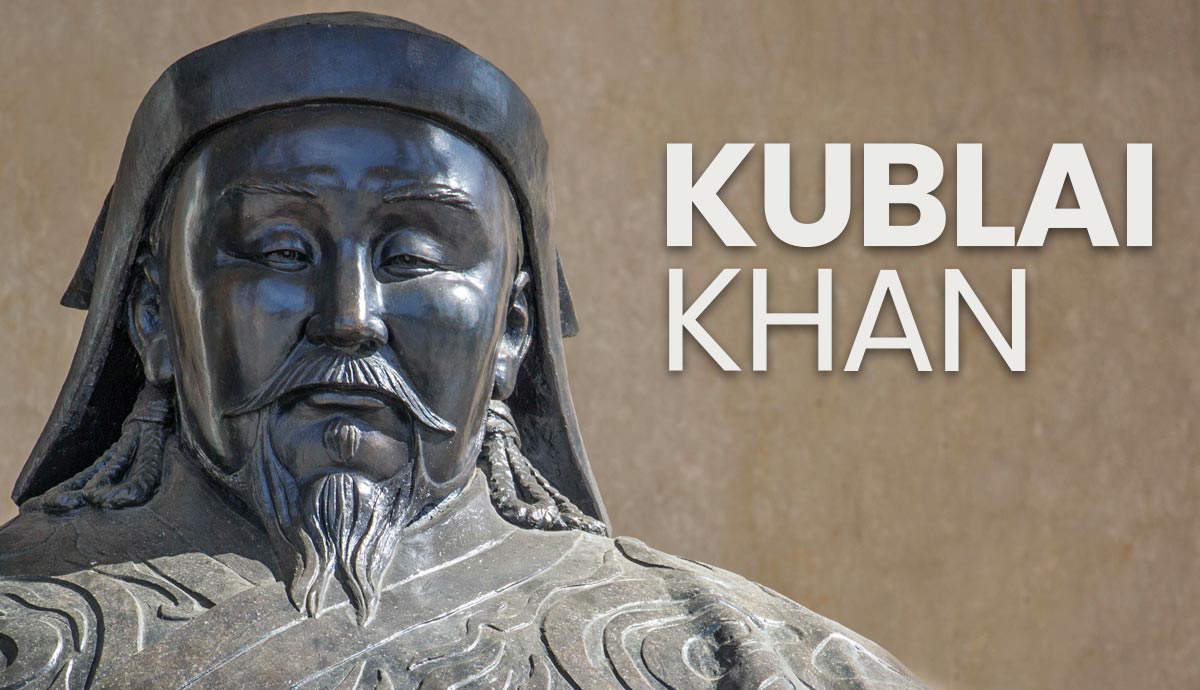
In one of the greatest ironies in military history, Kublai Khan’s (the grandson of Genghis Khan) army was thwarted when it tried to seize the Japanese islands. For hundreds of years, Japanese history books told students that Japan was saved by the divine power of the gods, popularly referred to as “Kamikaze” or “Divine Wind”. They said that a typhoon wiped out the vastly superior Mongol navy. However, modern research and underwater digs near Takashima have finally debunked the divine wind theory, proving that Japan was actually saved by a mix of its own gritty defense, strategies, and a stroke of bad weather.
The First Invasion— Kublai Khan Invades Japan
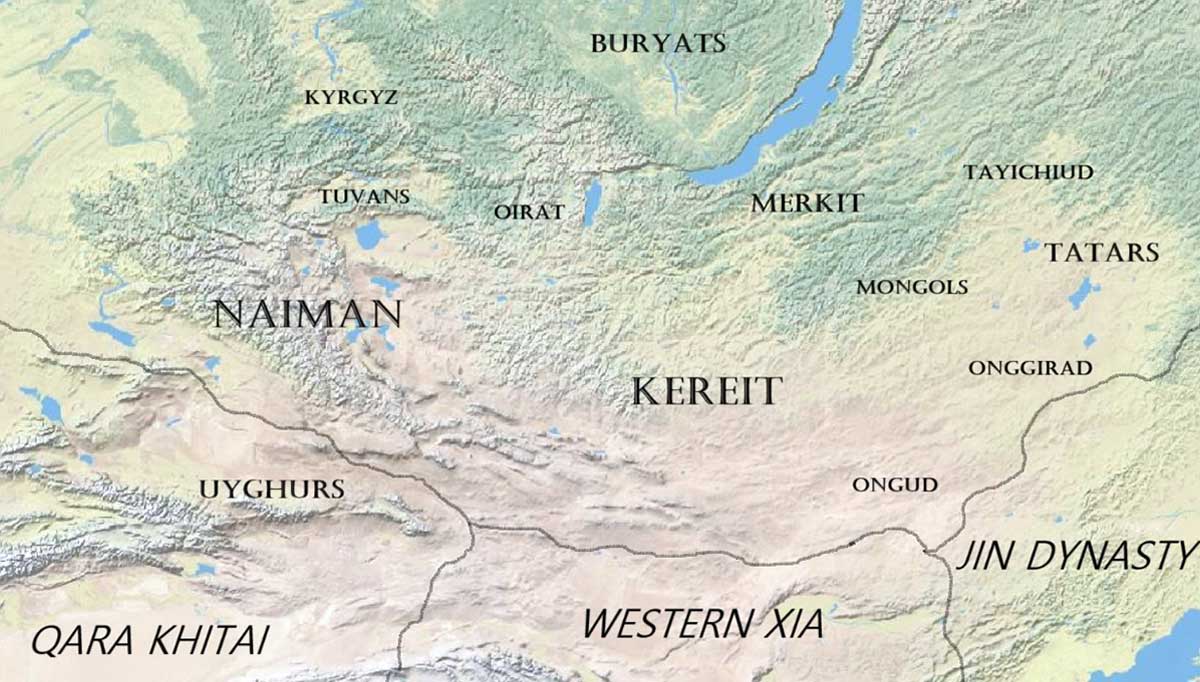
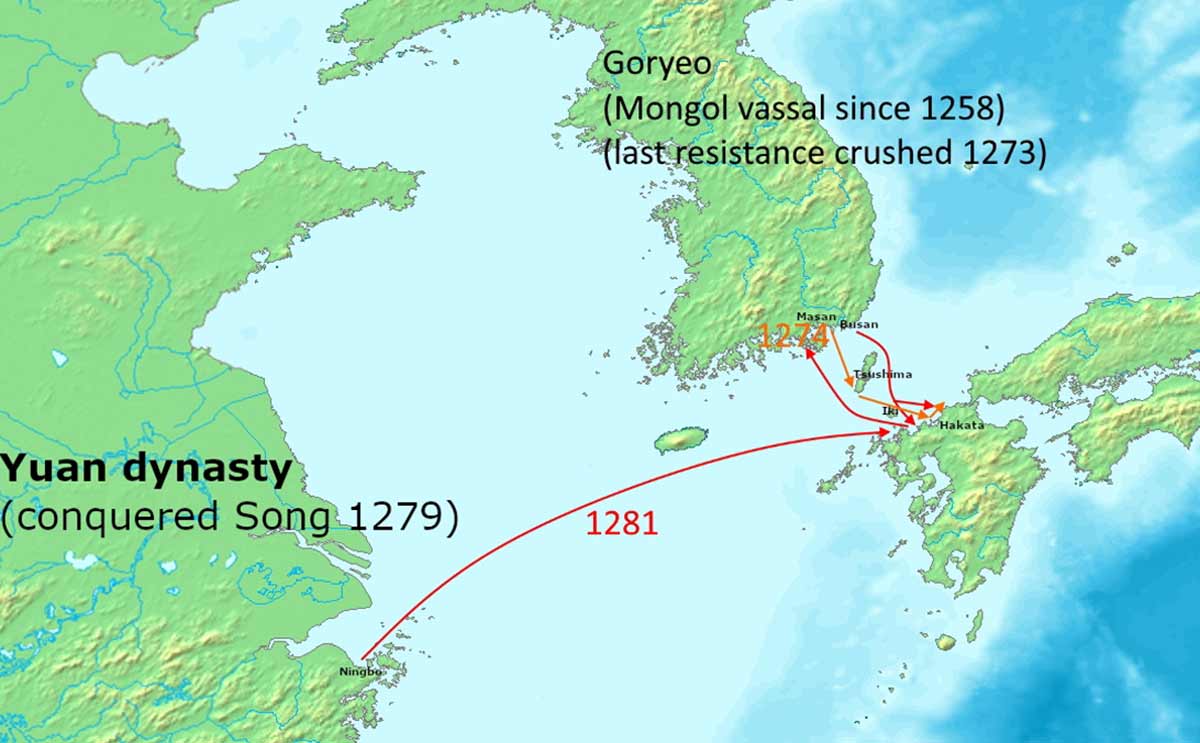
Kublai Khan founded the Yuan Dynasty of China in 1271. Just before that, he set his sights on Japan, launching a campaign to conquer the island kingdom to secure his flank and snag some prime real estate for his empire. The khan sent emissaries to Japan in 1268 and again in 1269 to demand that Japan become a vassal state and pay tribute to the Mongol Empire. Both times, the envoys were completely ignored. War was now inevitable, and in November 1274, the Yuan Dynasty struck the Japanese outposts of Tsushima and Iki with about 900 ships carrying roughly 25,000 to 30,000 men in the opening clash of the Battle of Bun’ei.
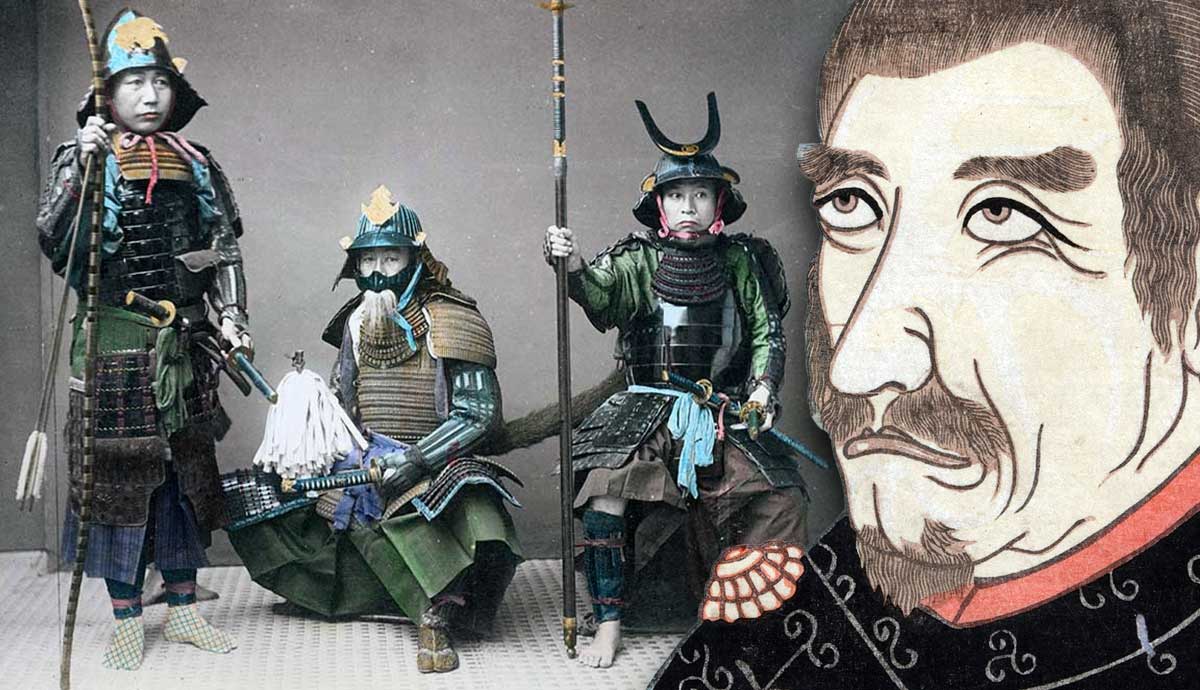
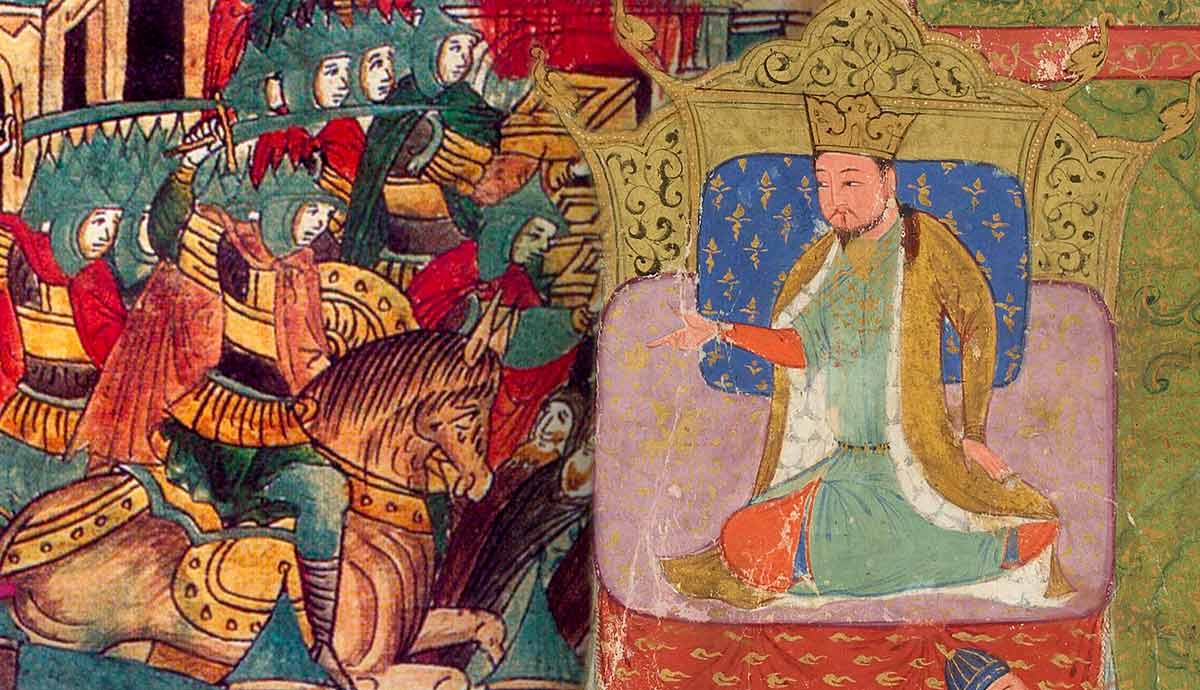
As was typical for later Mongol campaigns, Kublai Khan employed Chinese and Korean warriors alongside his Mongol and Jurchen troops. The Japanese were horrified as tight Mongol formations tore through their lines during this first massive clash. Unused to mass infantry armed with bows and spears, the Japanese samurai struggled against the Mongols’ tactics of swarming their enemies.
A Change in Fortunes
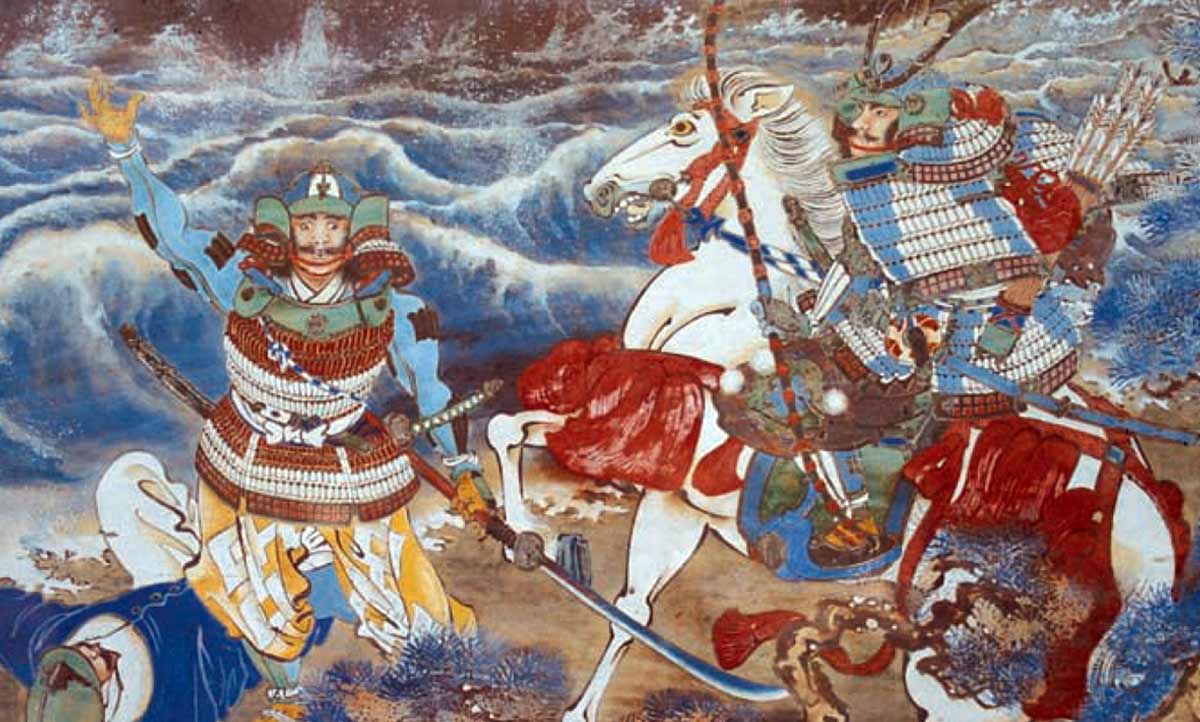
The psychological warfare caused by the Mongol explosive tetsuhau bombs was also intense. Ceramic thunder-crash bombs stuffed with gunpowder were thrown into the Japanese ranks, causing havoc and physical trauma. When the Mongols hit the beach at Imazu on Kyushu, it looked like the end for Japan. That night, however, the vaunted Mongol army returned to their ships. Soon, a massive storm rolled in, causing damage to their ships. They were so damaged that the Yuan army retreated to mainland Asia.
Japan didn’t forget that close call, and by the time the second invasion arrived in 1281, the Kamakura Shogunate had a solid plan. They built a massive stone barrier along the coast of Hakata Bay known as the Genko Borui. This defensive bulwark stretched for over 20 kilometers (12 miles) and stood about two meters (6.5 feet) tall. The Japanese knew that they needed to prevent Mongol cavalry from maneuvering on the beaches, and the wall was specifically built to achieve this.
The Second Invasion
The Yuan Dynasty would not be so easily defeated. For the second attempt, Kublai Khan came back with a vengeance. Two armies would strike Japan. The Eastern Fleet would leave Korea with roughly 40,000 men, while the Southern Fleet would depart from southern China with a host of about 100,000. The numbers represented one of the largest amphibious invasion forces in pre-modern history. The two forces had different departure schedules, and the fleets were entirely separate.
Expecting to steamroll the island kingdom as they had attempted in 1274, the Mongols were stunned to find their way blocked by the Genko Borui. Stuck on the shore, the Mongols couldn’t even hunt for food or water without getting attacked. The Japanese military also used small, agile boats to harass the giant Mongol ships all night long.
Recent dives near Takashima have revealed a major reason for the disaster: the ships were a rush job. Because Kublai Khan demanded that his invasion fleet be finished as soon as possible, many ships were recycled using flat-bottomed river boats. With their weak construction, the vessels stood no chance against the brutal waves of a major typhoon.
The Typhoon of August 1281
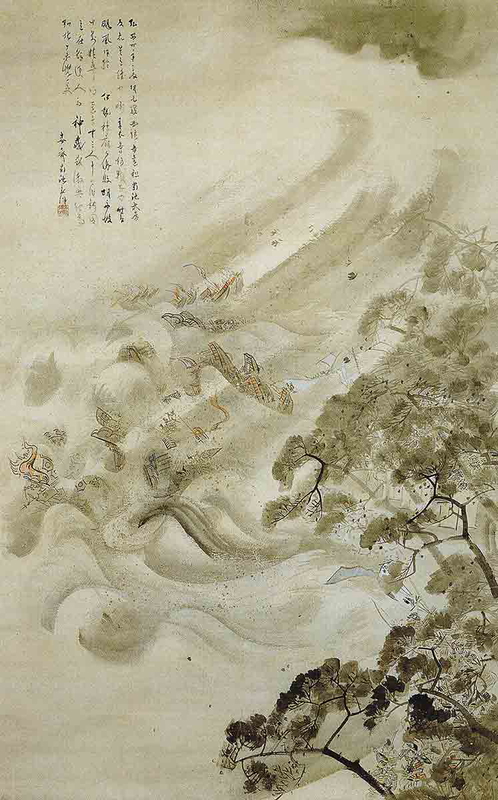
By mid-August of 1281, things looked bleak for the invaders. The Yuan armada was struggling. Food and supplies were low, disease was rampant, and the Mongol forces were pinned on the beaches. Then, a massive typhoon struck, sinking a significant portion of the Mongol fleet. As such, Japan’s “divine wind” really did help save the day. But that victory came with a heavy price tag. The war left the Kamakura Shogunate bankrupt. The financial disaster eventually triggered the Shogunate’s collapse in 1333.