The late 18th century was a time of revolution. It may not have seemed like it in the peaceful landscapes of the Lake District, where William Wordsworth grew up, but major sociopolitical upheaval was taking place overseas in France and America. This spirit of revolution found its way into poetry, too. Inspired by the empowerment of ordinary people he saw unfolding around him, Wordsworth sought to rethink poetry completely, using everyday language to express the thoughts and feelings of all manner of people.
“The child is father of the man,” William Wordsworth, The Rainbow, 1802
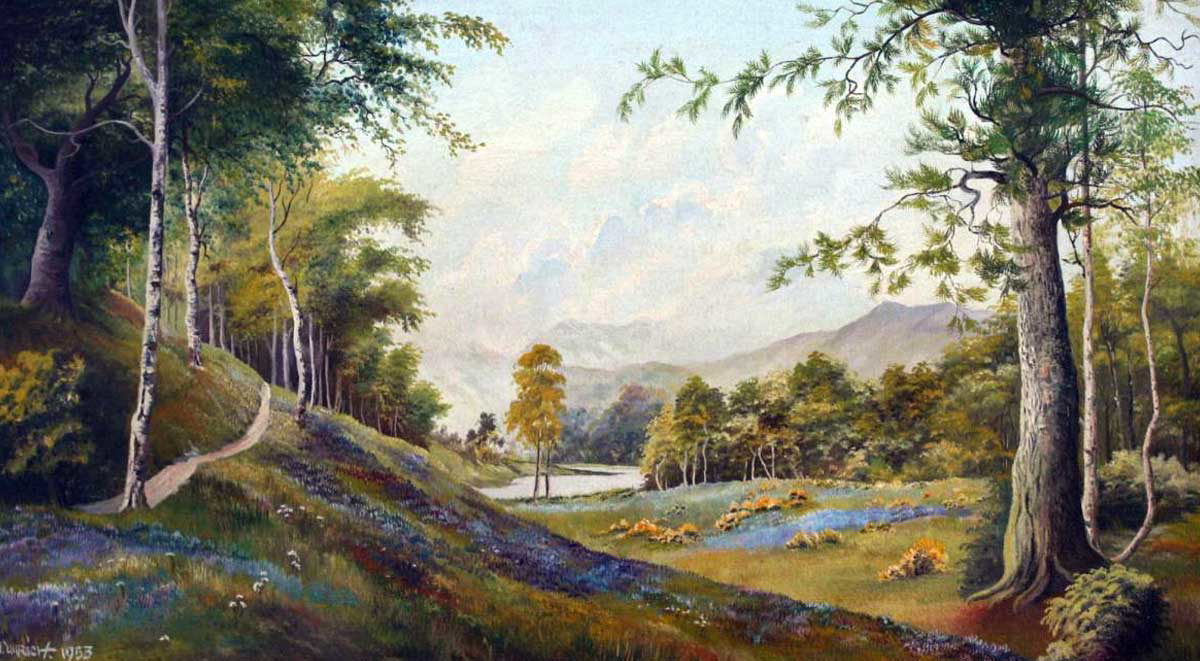
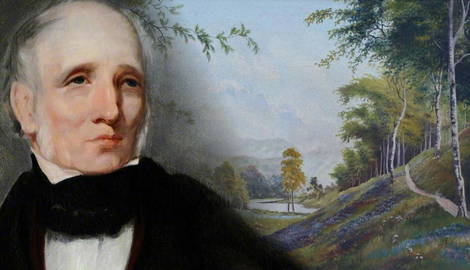
William Wordsworth remains one of the most celebrated denizens of England’s Lake District, where lakes lie nestled among mountains near the border with Scotland. The childhood Wordsworth spent in the region had a profound impact on the poet.
Born on April 7, 1770, Wordsworth was the second son and one of five children in total. His younger sister Dorothy was born a year later; they were baptized together and would remain close for the entirety of their lives. In her extensive diaries, Dorothy provides a key source for much that we know about Wordsworth. Although the poet himself would leave behind an exceptional amount of autobiographical insight in his poem The Prelude, Dorothy’s writing gives an outside perspective on him and reveals how integral the sibling bond was to his success.
Wordsworth’s father was bailiff of Cockermouth, a small town in Cumbria in the north of the Lake District, where the River Cocker meets the River Derwent. Much of Wordsworth’s childhood was spent there and in nearby Penrith, where he enjoyed roaming around the landscape, with its pikes and fells—names for the great, sky-scraping mountains in the area. The young Wordsworth did not always get on with his extended family, finding the natural world a calming place of retreat and a stimulant for his imagination.
William Wordsworth‘s need for these influences increased when his mother died when he was only eight. The family was then split up, separating William and Dorothy for the next nine years. Wordsworth’s father died when he was 13, leaving him in the care of his uncle and grandparents.
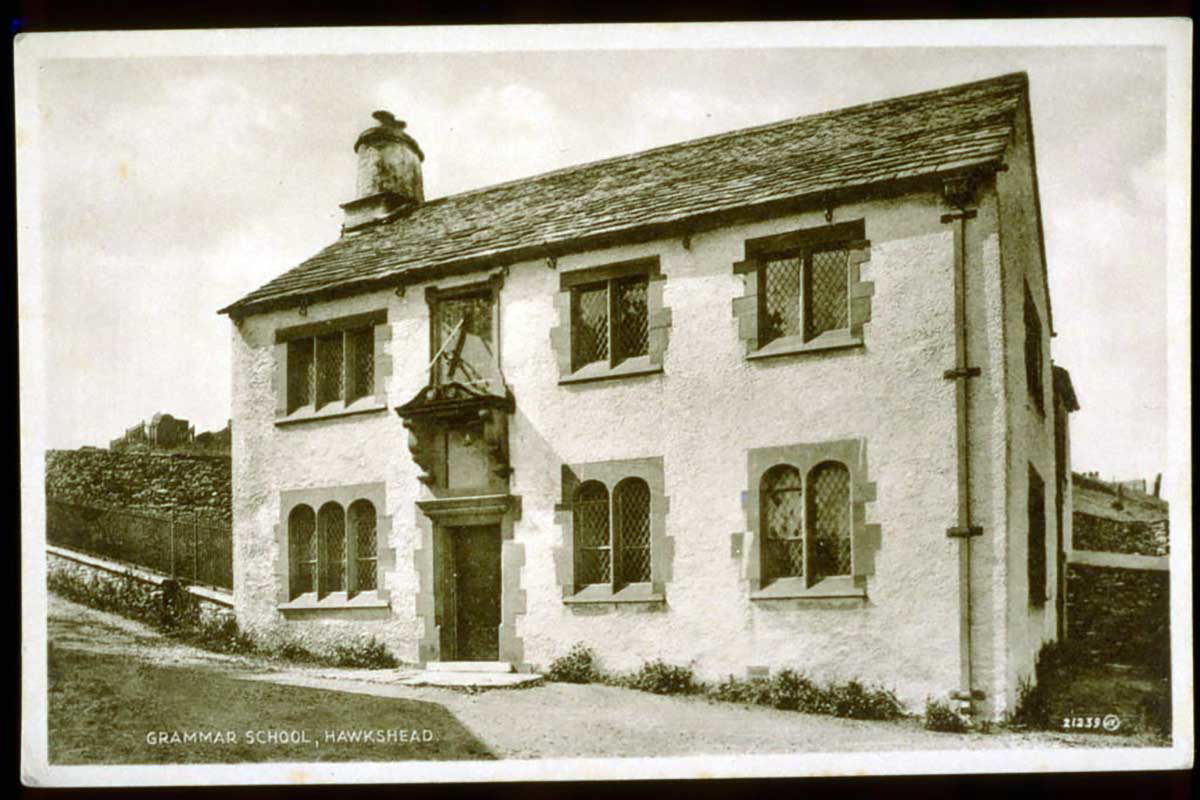
Although he had seen little of his father as a child, he did read poetry with him, getting an early education in the works of William Shakespeare and John Milton. Thanks to his father’s high social standing, he also received a high standard of schooling compared to many other children in Cumbria at that time. At Hawkshead Grammar School, he learned mathematics, Latin, and the classics, and through the school’s connections, Wordsworth enrolled at St. John’s College, Cambridge, at the age of 17.
“We poets in our youth begin in gladness,” William Wordsworth, Resolution and Independence
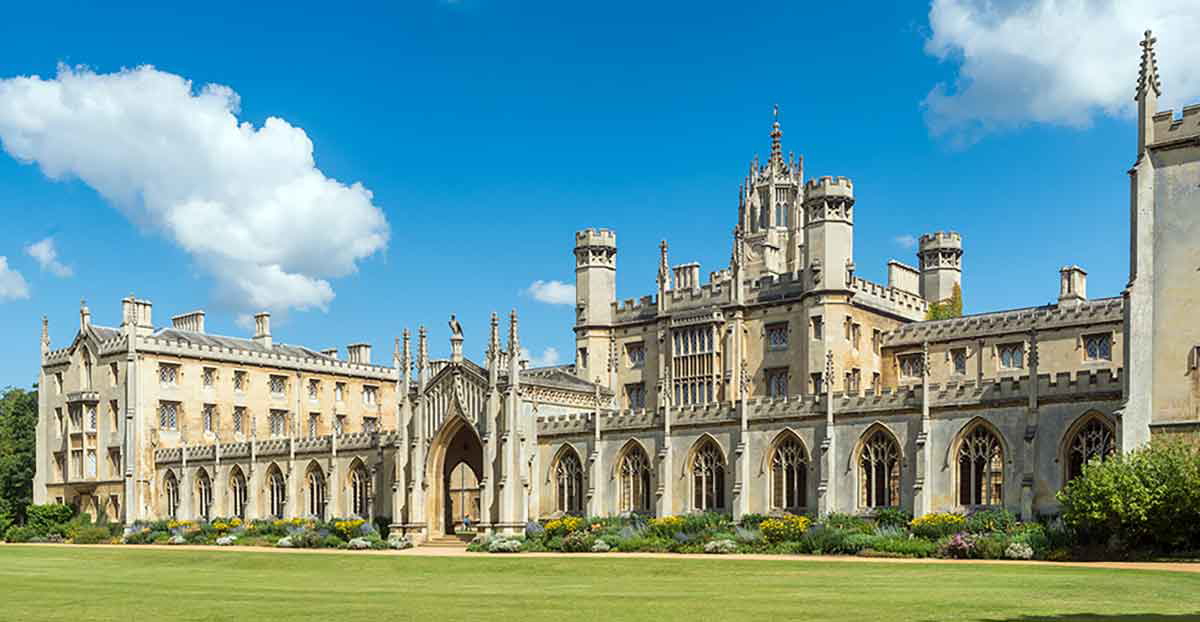
In book three of his sprawling autobiographical poem, The Prelude, Wordsworth covers his three years at Cambridge. Unlike other Romantic poets—such as his future friend Samuel Taylor Coleridge, who went to Jesus College, Cambridge, shortly after Wordsworth attended St. John’s, or Lord Byron, who spent three years at Trinity College, Cambridge—Wordsworth did actually graduate in 1791. In The Prelude, however, he depicts himself as a not-very-devoted student, unimpressed by college bureaucracy, and he places far more emphasis on his walks around Cambridge and its environs, continuing his education in the natural world.
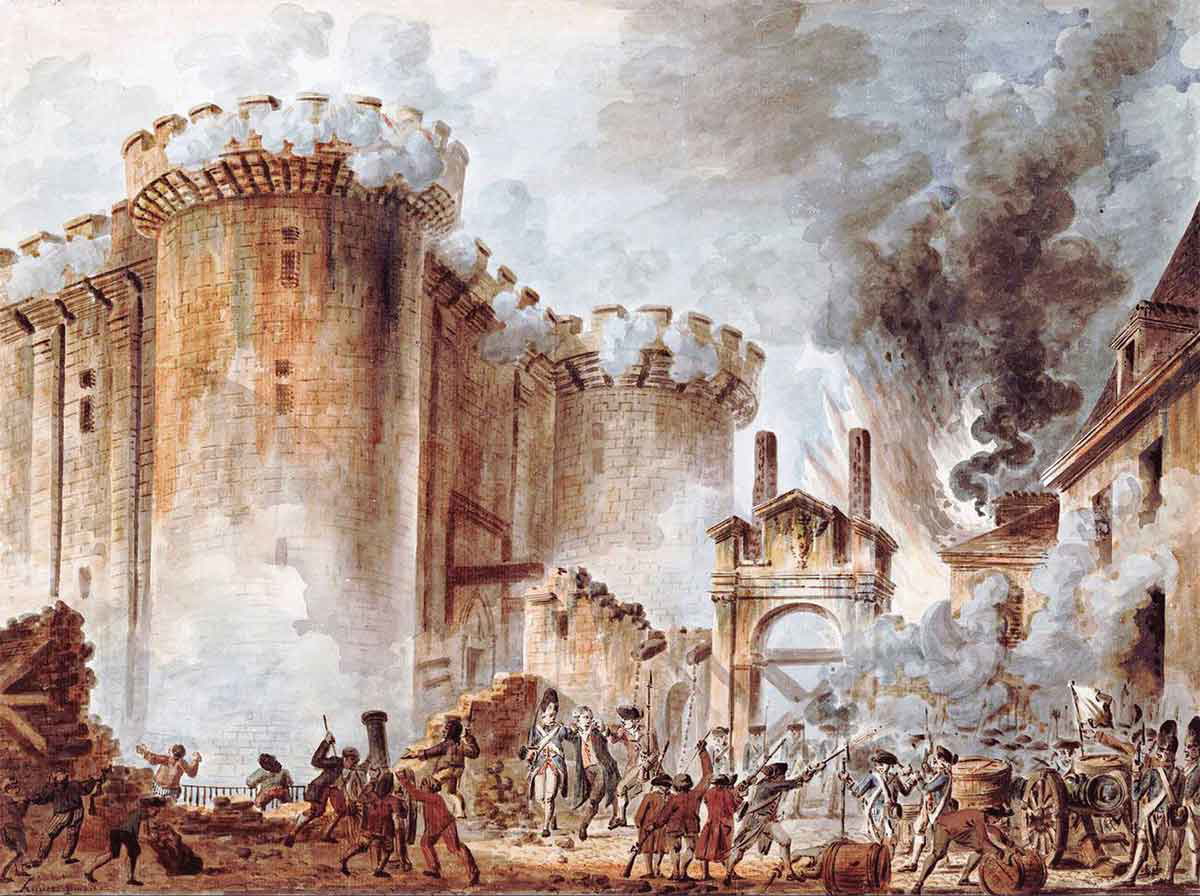
In the long summer vacations, Wordsworth would travel back to the Lake District for walking tours. In his final long vacation in 1790, he went further afield, scaling the Alps in France, Switzerland, and Italy. The early 1790s were an auspicious time to be in France. July 1789 had seen the first outbreak of revolutionary insurgence with the storming of the Bastille. By 1790, the Old Regime was beginning to crumble, and Wordsworth—like two other key figures of the era, Mary Wollstonecraft and Thomas Paine—saw firsthand how the French Republicans were seizing their rights.
For Wollstonecraft and Paine, these experiences led to the publication of their pamphlets, A Vindication of the Rights of Men and The Rights of Man, respectively. Although Wordsworth did not pen a political response to what he saw, his time in France marked him profoundly. He visited again after graduating in late 1791, spending several months there and falling in love with a French woman, Annette Vallon, who gave birth to their daughter Caroline in 1792. Wordsworth’s family, who had expected that he would take holy orders after Cambridge, were not pleased. However, Wordsworth was eager to reject authority at this time, whether at university, in his family life, or in society as a whole.
“My life became / A floating island, an amphibious thing,” William Wordsworth, The Prelude, 1799-1806
Wordsworth’s time in France was cut short by mounting hostilities between Britain and France, but he would remain influenced by the democratic ideals he had seen put into practice by the revolutionaries. He later befriended Coleridge and another poet, Robert Southey, young men with grand ambitions. Inspired by ancient Greece and more recent events closer to home, Coleridge and Southey devised a political system called pantisocracy (a Greek-derived word meaning “government by all”). Abandoning the strictures and hierarchies enforced by personal property, they would form a commune in which all would work together for the common good.
As the French Revolution devolved into the Reign of Terror, Coleridge and Southey became disillusioned with it. Instead, they drew greater inspiration from the idea that America was a New World, representing the possibility of stripping society back to its fundamentals and starting anew. Initially, they planned to implement pantisocracy on the banks of the Susquehanna River in Pennsylvania. Ultimately, their trial run of utopia took place in a more logistically convenient location, between Bristol and the Quantock Hills, where they met Wordsworth.
Pantisocracy was the brainchild of Coleridge and Southey, not Wordsworth. However, at this stage, he shared the other poets’ distaste for authority and desire to re-envision how society might be structured to give voice to all ranks of people. Wordsworth, however, was not as interested as his friends in direct political action. Around the time they devised a pantisocratic society, Wordsworth was taking his first steps towards publishing poetry with the collections An Evening Walk and Descriptive Sketches in 1793.
“Fit audience let me find, though few,” William Wordsworth, Prospectus to The Recluse, c. 1800
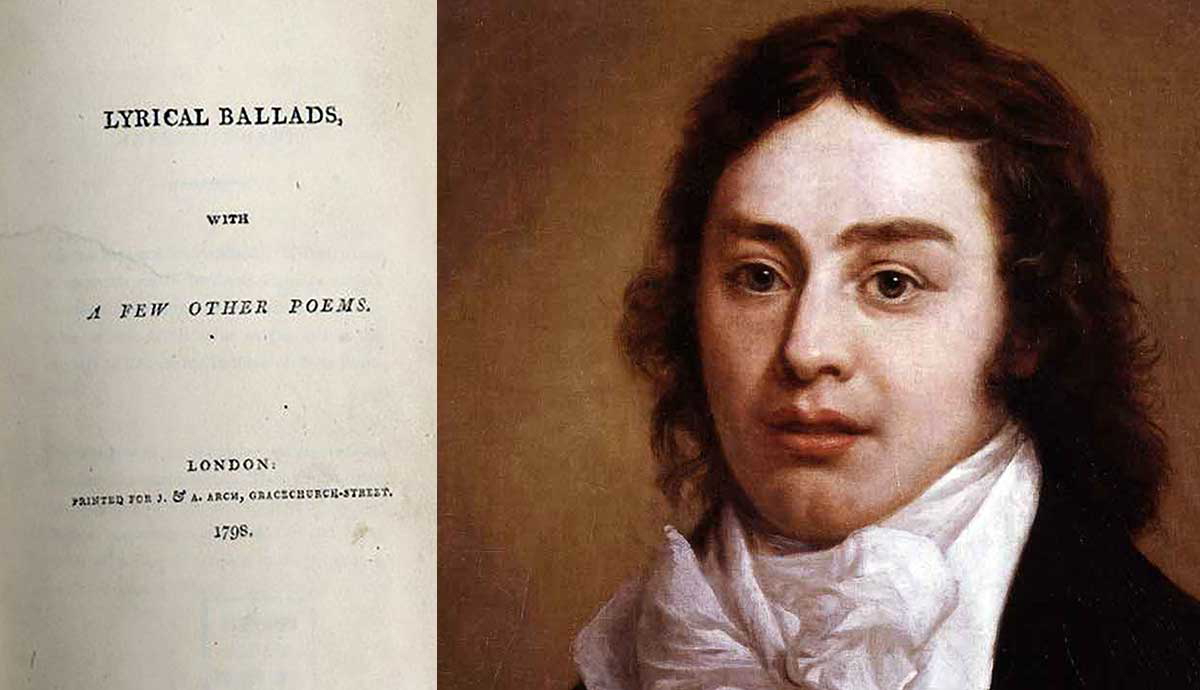
Meeting Coleridge in 1795 was galvanizing for Wordsworth. He and Dorothy were living in Dorset while Coleridge was in nearby Somerset. Two years later, Wordsworth and Dorothy would move to Somerset too, as the friendship between Wordsworth and Coleridge deepened. Together, they embarked on a poetic project every bit as ambitious as Coleridge’s now-abandoned pantisocratic project: the collection that would be published in 1798 as Lyrical Ballads.
The title Lyrical Ballads gives some indication of how its authors imagined it would differ from other poetry of its time. However, it is actually somewhat oxymoronic since the lyric and ballad are two different poetic forms: the former has classical roots and long-established conventions, while the latter is a folk invention, ever-developing, and embedded in oral tradition. At the confluence of these two forms, Wordsworth and Coleridge would produce something new, combining the lyric’s celebration of exalted states with the ordinary language of the ballad.
Neither Wordsworth nor Coleridge’s name appeared in the first edition of Lyrical Ballads, but the volume did include a short “advertisement” explaining that the poems were meant as an experiment in using ordinary language for poetic expression. When the second edition came out in 1800, Wordsworth included a longer preface, which elaborated on the poets’ shared principles. Lyrical Ballads, he explains, was born from a dissatisfaction with modern poetry on two counts: its language and, to a slightly lesser extent, its subjects.
By the 18th century, poetry in English had, in Wordsworth’s view, fallen from the heights of Shakespeare and Milton and was now full of “gaudiness and inane phraseology.” As critic Jonathan Bate explains, this meant that many poets resorted to ornate, Latinate circumlocutions, avoiding the word “fish” and instead referring to “a member of the finny tribe.” Wordsworth and Coleridge aimed instead to use “a selection of language really used by men,” and not just highly educated men, but men of all classes. In this preface, Wordsworth goes to great lengths to explain his choices not only to use this language but to write in blank verse without sticking to prescribed structures and rhyme schemes—both means, he hoped, of coming closer to ordinary people’s mode of expression.
His chosen subjects, too, would be ordinary: “incidents and situations from common life.” His characters would not be the classical or pseudo-classical figures of Alexander Pope and John Dryden but rustic figures such as shepherds, common soldiers, and vagrants. This decision would also produce a more authentic expression of human feelings since these people, living simpler lives, experience “elementary feelings” in a more direct and comprehensible way.
This did not mean, Wordsworth insisted, that the poems would be vulgar or lacking in the elevation traditionally associated with the term “poetic.” He would not simply reproduce the “plainer and more emphatic language” of ordinary people living simple lives. Instead, he would “throw over them a certain coloring of imagination, whereby ordinary things should be presented to the mind in an unusual way.” All of this built towards a statement that would come to define Wordsworth’s notion of poetry: “the spontaneous overflow of powerful feelings” but also “emotion recollected in tranquility.” In other words, he aimed to maintain a delicate balance: capturing human emotions spontaneously and authentically but drawing back sufficiently to elevate them into something refined, collected, and ultimately poetic.
“Through the turnings intricate of verse,” William Wordsworth, The Prelude, 1799-1806, Book 5
The poems in Lyrical Ballads mark a turning point in English poetry. They moved away from the subjects and forms of the earlier 18th century and toward what would come to be known as Romanticism. This movement emphasized (as Wordsworth had laid out in his preface to the collection) the poet’s inner life, intense subjectivity, and imagination.
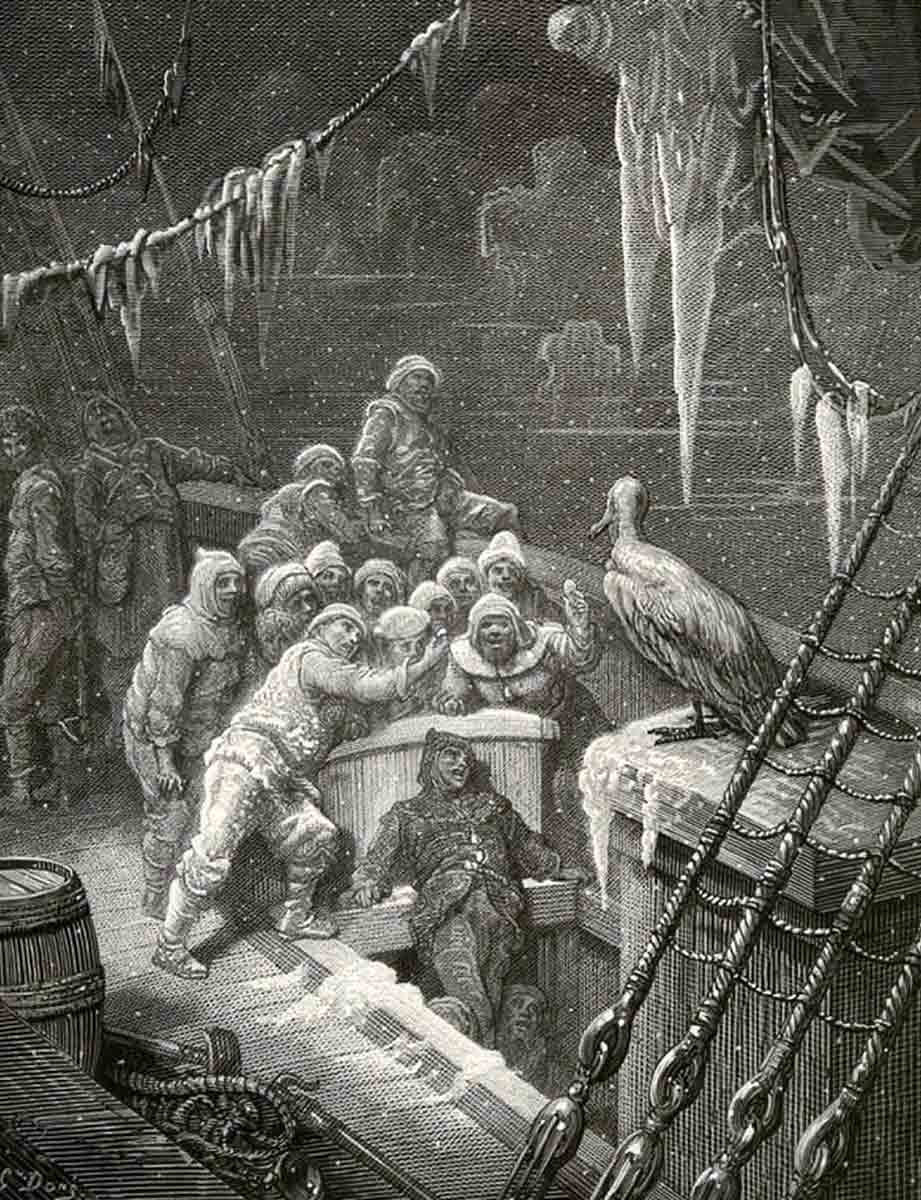
Most of the poems in Lyrical Ballads were Wordsworth’s, although Coleridge was apparently responsible for a good half of the ideas in the preface, as well as one of the collection’s longest poems, The Rime of the Ancient Mariner. This was one of the first poems the pair had discussed together in 1795. It is narrated by a ghostly old sailor who stops a guest on his way to a wedding and recounts haunting tales of his voyages. In a pivotal moment of the poem, he shoots an albatross who had been guiding the ship, bringing a curse upon them, and is condemned to wear the corpse of the bird around his neck—giving us the phrase “an albatross around one’s neck.”
The Rime of the Ancient Mariner, with its archaic Gothic language, was not quite in keeping with the professed aims of Lyrical Ballads nor the ordinary diction of the other poems in the collection. These comprised Wordsworth’s “spontaneous overflow[s] of emotion,” “recollected in tranquillity”—poems like Lines written in early spring—or ballads about rustic and vagrant characters: The Mad Mother, The Idiot Boy, Old Man Travelling, and the unsettling We Are Seven.
The latter is structured as a conversation between the adult narrator and a young girl he meets, who insists that she is one of seven siblings, although she is the only one present—two are at sea, unaccounted for, and another two are buried in the nearby churchyard. An interest in childhood innocence and the possibility that children have unfettered access to a simpler kind of knowledge would become a recurrent theme for Wordsworth and the Romantic movement.
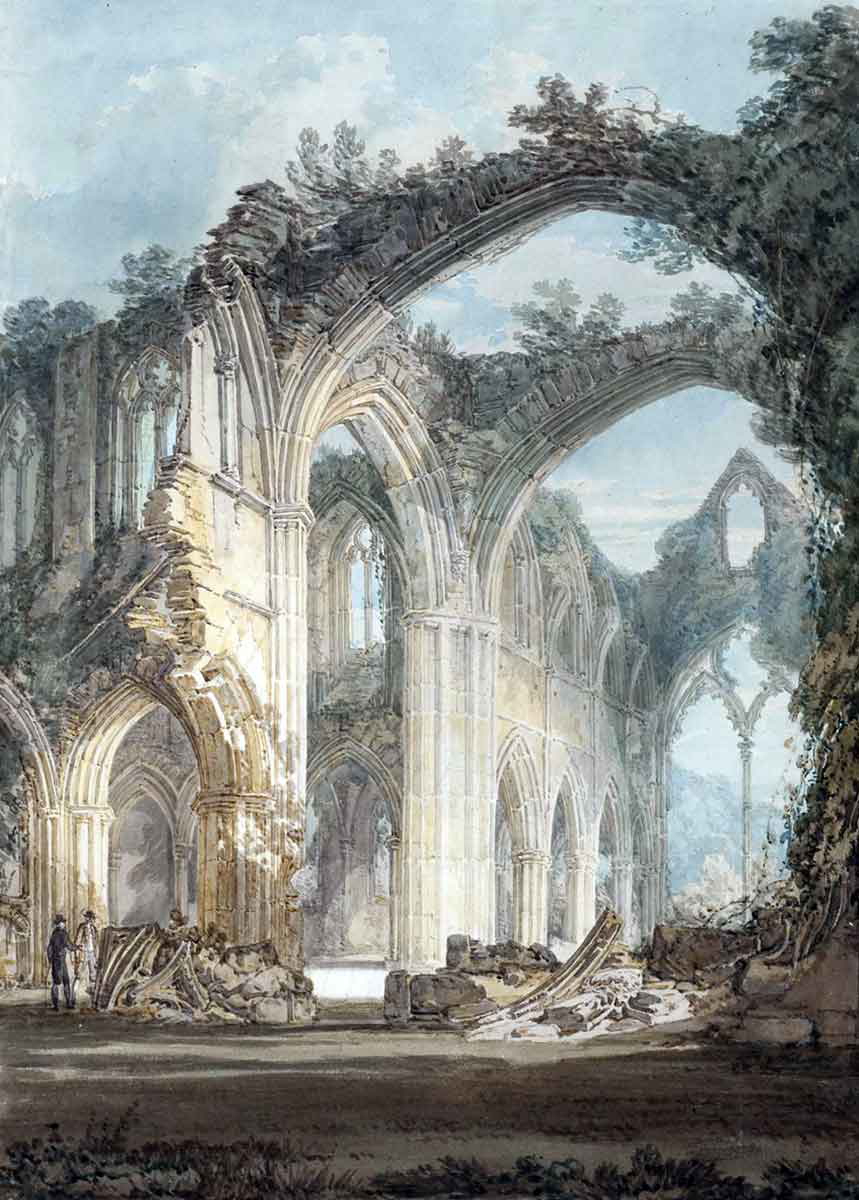
The last poem in the first edition of Lyrical Ballads was Wordsworth’s Lines Written A Few Miles Above Tintern Abbey, recounting a walking tour he had taken with Dorothy on the borders of England and Wales. Tintern Abbey is partly addressed to Dorothy, as Wordsworth muses on the emotions he experienced while communing with nature and his companion as they walked. The poem has become one of Wordsworth’s best-known works, perfectly encapsulating his philosophy as a poet: the idea that nature affords “tranquil restoration” and has a spiritual quality that allows him to “see into the life of things.”
Only in this peaceful communion with nature can Wordsworth hear and understand what he calls “the still sad music of humanity” at a distance from the hustle and bustle of an increasingly industrializing world. These themes, along with the central importance Wordsworth places on the poet’s ego as a kind of receptor for the natural world, would become hallmarks of his work in the coming years.
“There are in our existence spots of time,” William Wordsworth, The Prelude, 1799-1806, Book 11
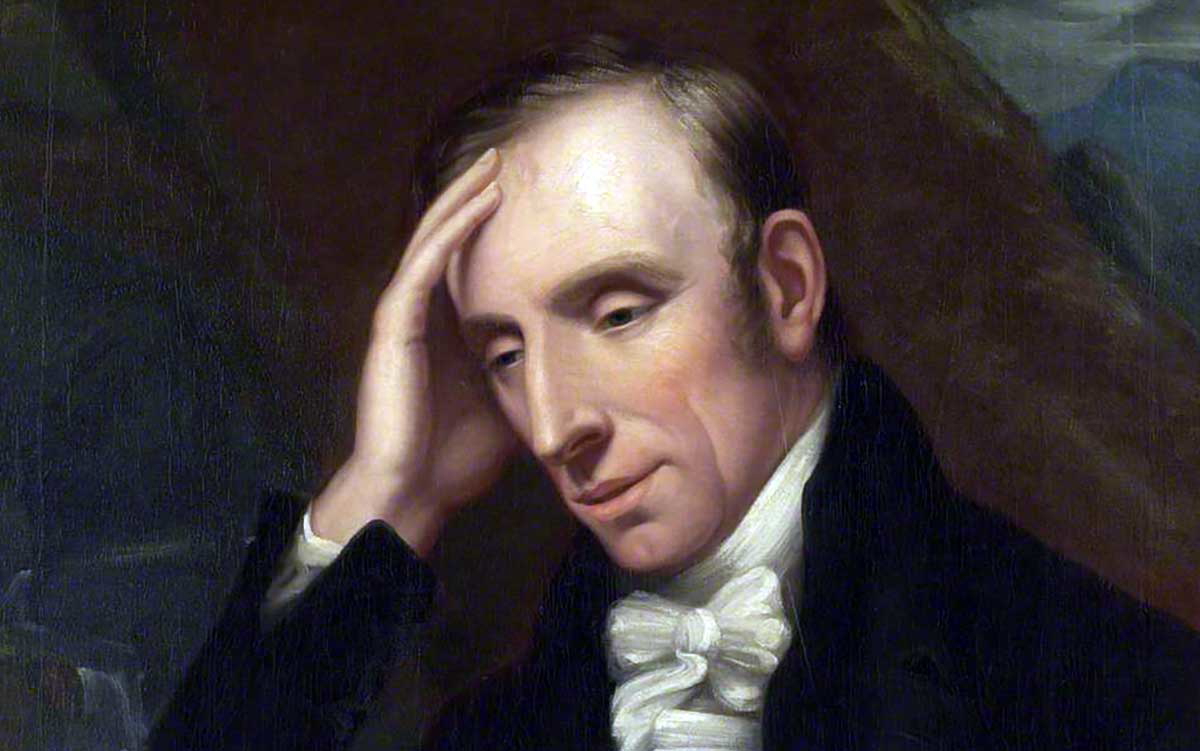
One of the legacies of Romanticism, and Wordsworth’s writing in particular, was a new understanding of the centrality of the self in producing art. Across all the arts, things were taking an autobiographical turn, tying works to the identity of their creators.
The Prelude sprang from this new autobiographical impulse as part of a long project Wordsworth and Coleridge devised called The Recluse. As its name suggests, The Prelude (which Wordsworth began after Lyrical Ballads was published in 1798) was originally meant to form the prologue to The Recluse, a staggeringly long poem detailing Wordsworth’s life and thoughts on nature and society. Initially, Wordsworth and Coleridge hoped the work’s length would surpass John Milton’s Paradise Lost.
The idea of The Recluse was that the poet is necessarily at one remove from society, like a recluse. He is blessed with an ability to channel his “spontaneous overflow of powerful feelings” (to return to the preface to Lyrical Ballads) into beautiful poetry because he is “possessed of a more than usual organic sensibility,” or an innate capacity for poetic thought.
As it turned out, The Prelude was the only part of the larger project that Wordsworth completed, and it never appeared in full during his lifetime. He worked continuously at it until he died, chipping away at its 14 books, which deal with distinct chapters in his life: his childhood in the Lake District, his time at Cambridge, and his travels in Revolutionary France. It was not called The Prelude in his lifetime; rather, he thought of it as a poem addressed to Coleridge, whose idea it had been.
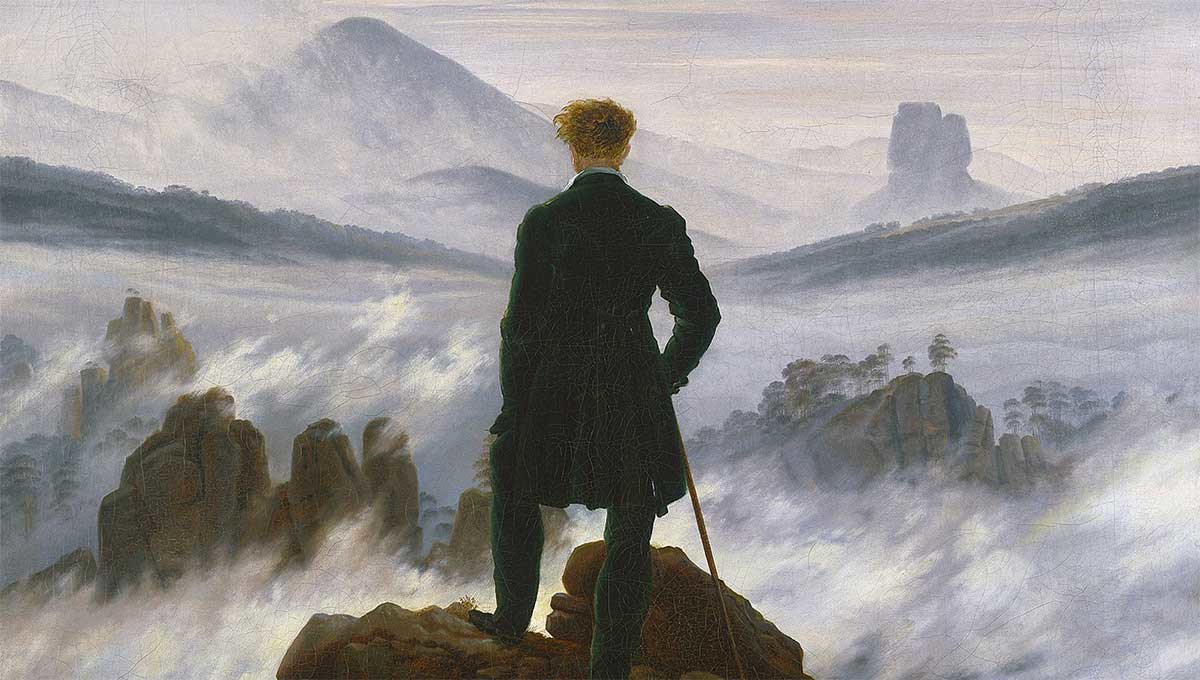
The poem, written in blank verse, is not just a standard autobiography. Wordsworth often draws back from the events he is describing to reflect on philosophical matters, using his own experiences as the basis for conjectures and judgments about life’s great questions. This movement between self-reflection and universal truths was what fellow Romantic poet John Keats recognized when he used the term “the egotistical sublime” to describe Wordsworth’s poetic identity. Keats preferred “negative capability,” which he conceived of as the poet acting as a conduit for sensations and ideas, bringing nothing of themselves to their search for truth and not attempting to make any affirmative statements.
Ultimately, though, Wordsworth’s endeavors in The Prelude were not dissimilar to Keats’s “negative capability.” Indeed, he attempted to portray how the poet might open his imagination to sensation and reach towards, if never fully grasp, certain truths. Yet The Prelude was also a testament to Wordsworth’s poetic ego, rooted in his relationships with Coleridge and his sister Dorothy, and represented his own life and journey towards realizing his poetic vocation as the stuff of deep philosophical thought.
“My whole life I have lived in pleasant thought,” William Wordsworth, Resolution and Independence, 1802
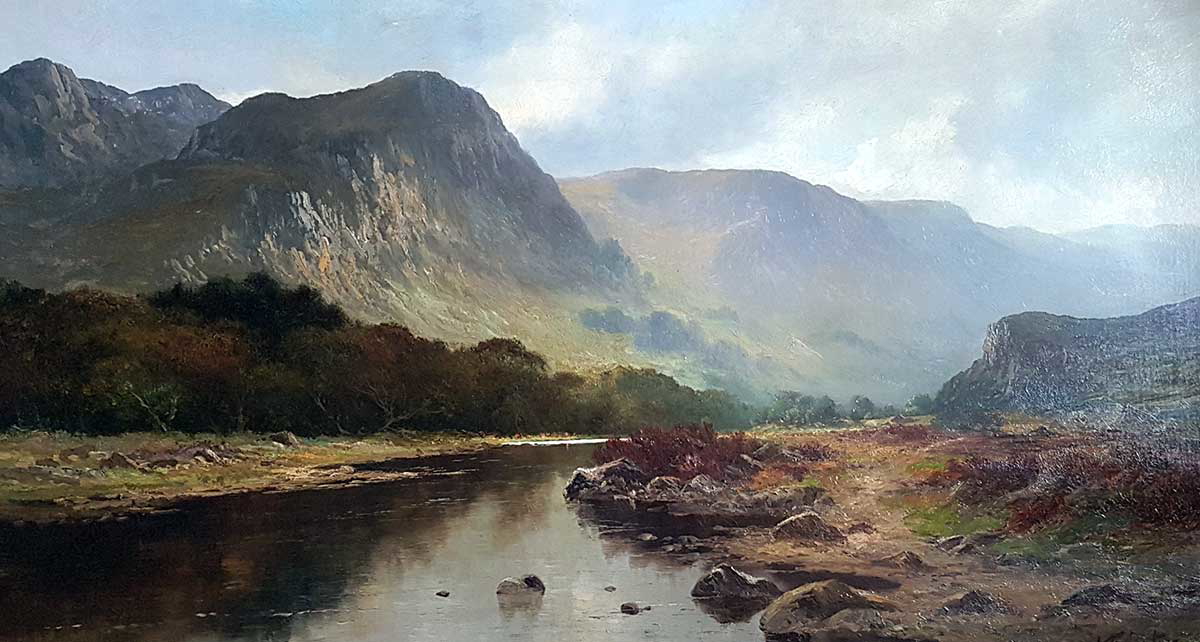
Much of Wordsworth’s adult life was spent with Dorothy, Coleridge, or both. The trio traveled to Germany in 1798, just as Lyrical Ballads was published, taking in the impressive landscapes that appealed to the Wordsworths and the intellectual atmosphere of German Idealism with which Coleridge was fascinated.
On their return to England, they settled in the Lake District, along with Coleridge’s former partner in the pantisocracy project, Robert Southey. Coleridge and Southey had married sisters Sara and Edith Fricker, and the couples remained close, quite literally. In 1802, Wordsworth married Mary Hutchinson, whom he had known as a schoolboy. Dorothy continued to live with the couple at Dove Cottage in Grasmere, a village next to Lake Grasmere and not far from the slightly larger Lake Windermere. The group immediately and enduringly became known as the Lake Poets.
All of the Lake Poets, but perhaps Wordsworth most of all, began to shed their youthful radicalism the longer they basked in their peaceful surroundings. The younger generation of Romantic poets—Keats, Shelley, and Byron—were initially drawn to the Lake Poets’ secluded existence, which might be construed as an extension of their earlier critiques of social hierarchies. However, they all became disenchanted when they discovered that Wordsworth was growing more and more conservative with age. Tragically, none of these three younger poets lived long enough to discover whether they, too, would eventually discard their youthful idealism.
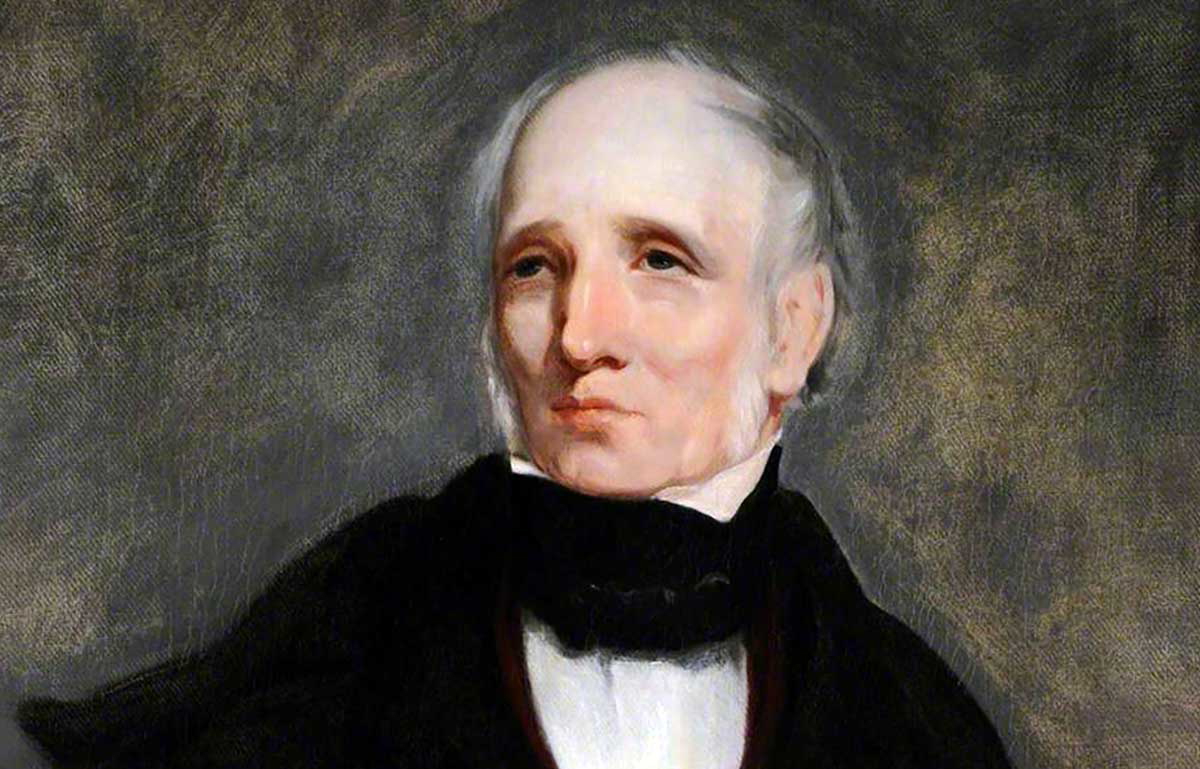
Despite The Prelude remaining unpublished, Wordsworth’s reputation as a poet went from strength to strength after the initial shockwaves of Lyrical Ballads. In 1807, he published Poems, in Two Volumes, which included some of his most popular poems: Daffodils, otherwise known by its first line, “I Wandered Lonely As A Cloud,” The Rainbow, otherwise known by its first line, “My Hearts Leaps Up” (containing the typical Wordsworthian sentiment “the child is father of the man”), and the sonnet Composed upon Westminster Bridge, September 3, 1802.
In 1814, Wordsworth published The Excursion, intended as the second part of The Recluse. This poem cemented his reputation for his contemporaries and the early Victorians, who could not read The Prelude until 1850. As a formidable poet and authority in the Lake District, Wordsworth became a significant public figure. In 1843, after the death of his friend Southey, he was asked to become Poet Laureate. For anyone who hoped Wordsworth might retain an ounce of his earlier republicanism, his acceptance was a final betrayal—proof of his allegiance to the monarch and to the Prime Minister, Robert Peel, who had assured Wordsworth that he could accept the laureateship without an obligation to actually write any verses.
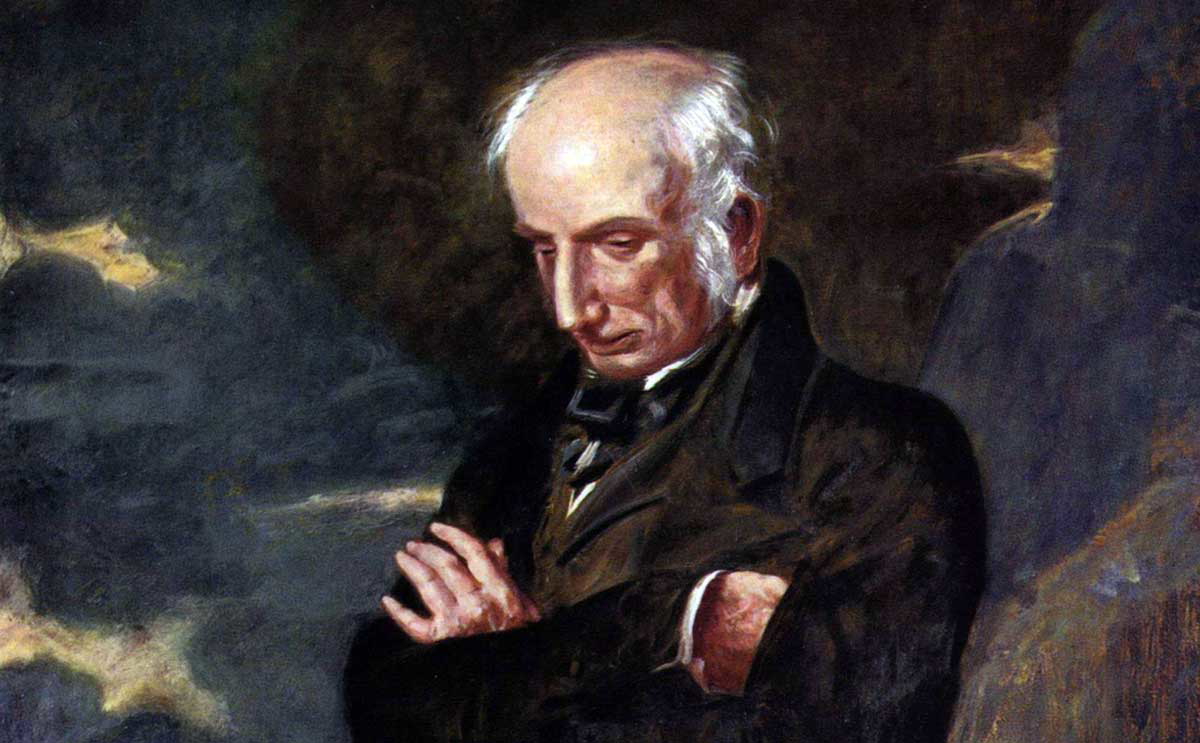
As it was, Wordsworth did not write any poetry as a laureate. By this time, he was in his seventies and struggling with grief. Not only had several friends predeceased him (notably Coleridge in 1834), but also three of his five children, two in infancy back in 1812 and one, Dora (named after her aunt Dorothy), aged 42 in 1847. Dorothy was still around but an invalid, and William too became ill in his late seventies, eventually dying of a lung inflammation in 1850, when he was 80.
He was buried in Grasmere, among the landscape he had loved since childhood. Shortly afterward, with his widow Mary’s help, The Prelude came out, allowing readers an insight into this full-circle life: from the early years in the Lake District, through radical and revolutionary times, and back again to create the enduring mythos of the Lake Poets.
Reference List:
All Wordsworth quotations are taken from Wu, D. (1996). Romanticism: An Anthology. Oxford: Blackwell.