One of the greatest American artists, James McNeill Whistler, was a controversial figure. His eccentric personality and penchant for making up stories sometimes made it difficult for viewers and patrons to appreciate the intellectual effort and mastery of his works. His preoccupation with tone and texture envisioned the development of abstract art. Read on to learn about the five most important works by James McNeil Whistler.
1. The Early Self-Portrait of James McNeill Whistler
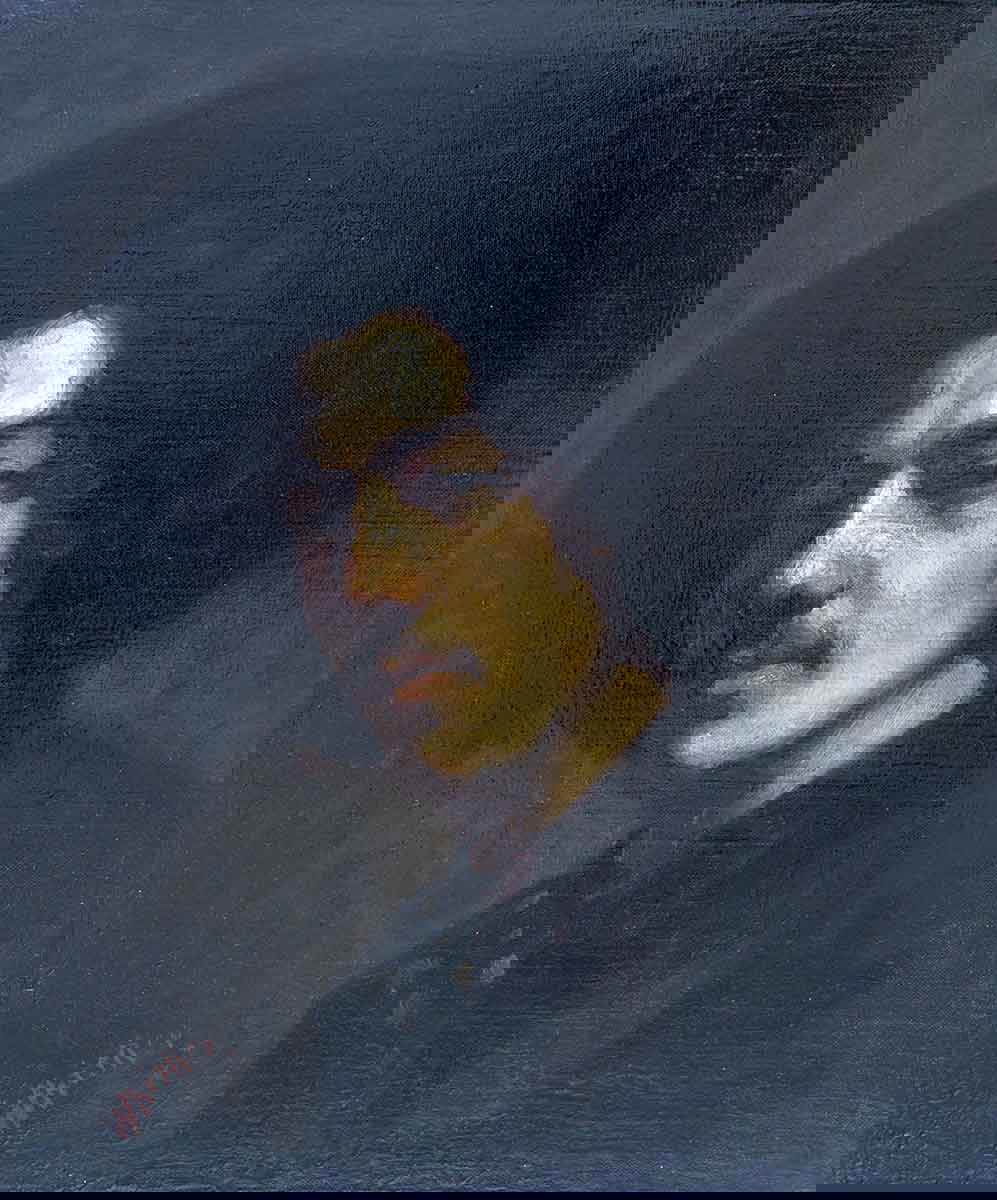
James McNeill Whistler was notorious for his experimental art, which defied all possible conventions of his time. Yet. he was eccentric enough even outside of his creative experiments. Whistler compensated for his small figure by wearing patent leather heels and outrageously colored shirts. He constructed elaborate lies about his origins and childhood, never consistent or making any sense. While researching Whistler’s biography, historians had to trust only documented sources, ignoring pretty much everything that the artist ever said about himself. His eccentricity was his way of self-promotion and a protective screen behind which he hid a vulnerable and sensitive personality.
In his work, he mixed and matched influences from the Old Master painting, Japanese art, the Aesthetic Movement, and Ancient Greek Art. This particular self-portrait was a clear homage to the works of Rembrandt van Rijn, the Dutch master who documented his entire creative life in dozens of reflections. This was Whistler’s early work, most likely inspired by the Rembrandt self-portrait he saw in the Louvre while studying. Historically, the act of painting one’s own image served as something infinitely more valuable and meaningful than any other work. A self-portrait is an act of self-recognition, the proclamation of oneself both worthy of depiction and capable of depicting. Whistler’s bold homage to Rembrandt demonstrated his high artistic ambition and a sure lack of doubt in his abilities.
2. Symphony in White №1 (The White Girl)
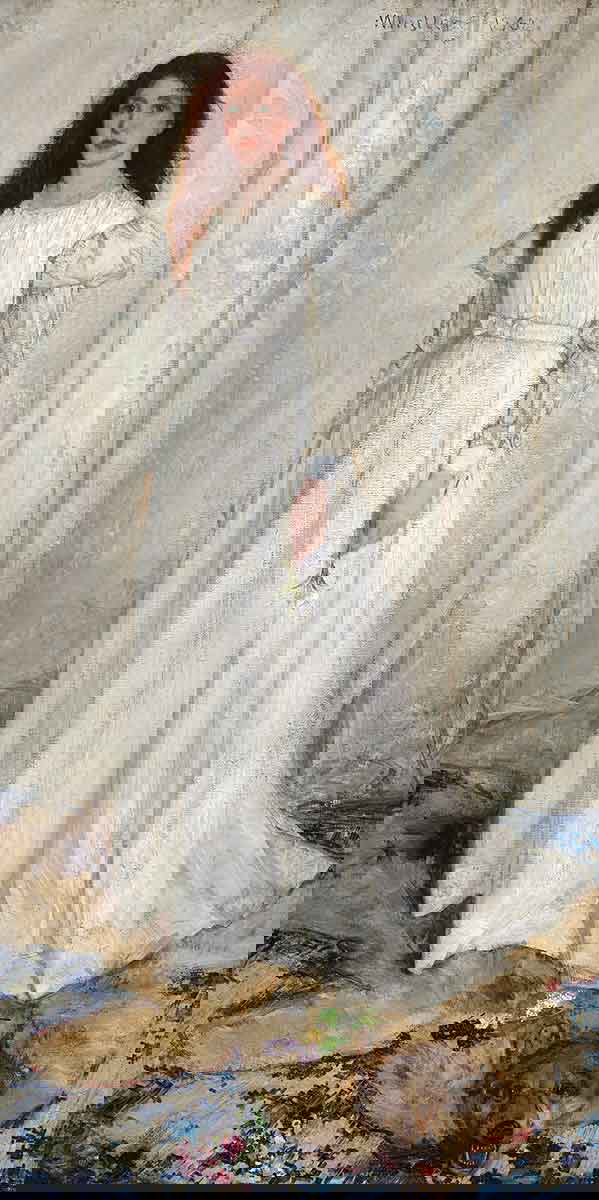
Today, James McNeil Whistler is considered to be one of the most influential American and British artists of his time. However, during his lifetime, his works were frequently dismissed and ignored. One of Whistler’s early works, The White Girl, later renamed Symphony in White, was rejected by both British and French salons. As a result, Whistler exhibited it at the famous 1863 Salon des Refusés, the group show that united modern artists rejected by the artistic establishment. Along with Whistler’s painting, the exhibition featured the legendary Luncheon on the Grass by Edouard Manet and the works by Gustave Courbet and Camille Pissarro.
The model Whistler painted in his Symphony in White was his then-partner and manager, Joanna Hiffernan. She was a young Irish woman who was strikingly beautiful and extremely intelligent despite her limited education. Hiffernan spent six years with Whistler and remained on good terms with him even after their breakup. Apart from Whistler, she modeled for Gustave Courbet. It was also rumored that she painted on her own.
Despite the personal connection with the model, The Symphony in White showcased Whistler’s minimal interest in people as subjects of his paintings. The contrast of a white lily, the symbol of innocence usually used in the paintings of the Virgin Mary, and the wolfskin rug preoccupied him much more, hinting at the deceptive nature of feminine gentleness. Whistler painstakingly chose the tones and decorations for the work, rearranging his entire studio to create a fitting backdrop.
3. The Arrangement in Grey and Black #1 (Whistler’s Mother)
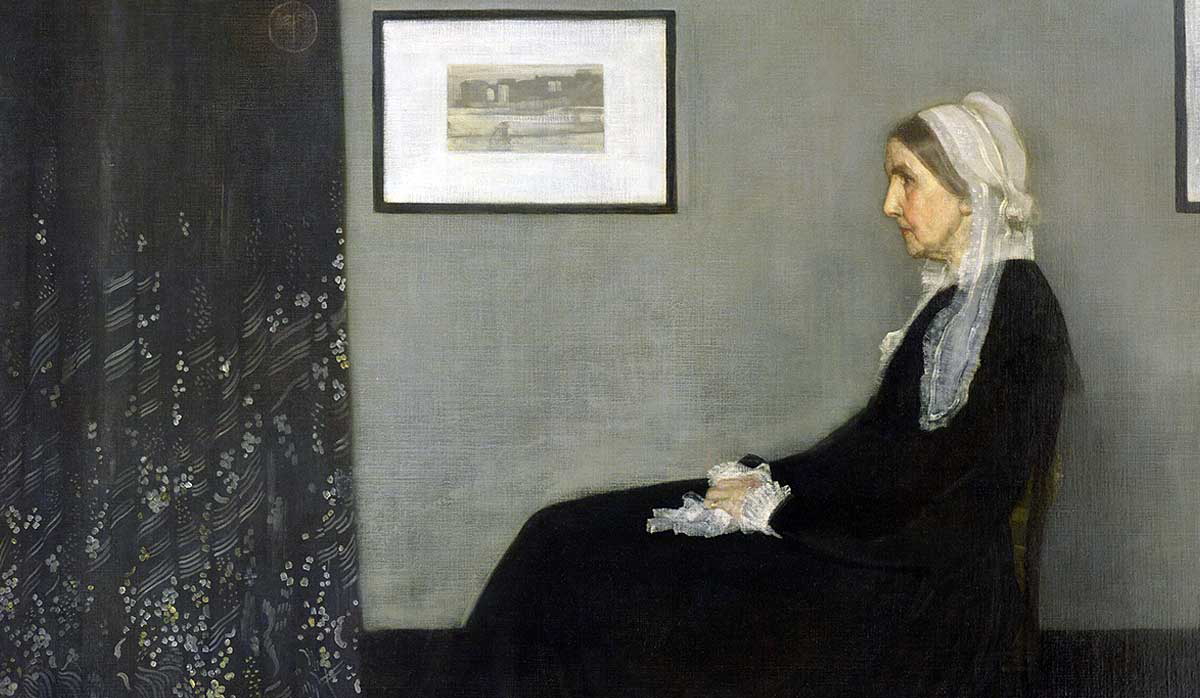
Anna McNeil Whistler raised five children, including the future artist, on her own after her husband passed away from cholera. Staunchly religious, she forbade all toys and books apart from the Bible. She moved her family to England after the start of the American Civil War and later became James Whistler’s personal manager and assistant despite being rather shocked by his lifestyle and career choices. Anna Whistler remains a controversial figure when we look at the historical context: she came from a family of plantation owners and slave traders and supported the Confederate Army during the war.
Whistler’s most famous painting emerged almost accidentally after a model who previously worked with the artist got too bored of standing still for hours and skipped the session. Whistler asked his mother to model for him instead, but, being in her late sixties, Anna could not stand for too long. Seated next to a patterned curtain and a grey wall, the artist’s mother was wearing her mourning dress that she vowed to wear for the rest of her life after her husband’s death that happened decades before. For Whistler, the painting was more of an exercise in color arrangement than a sentimental gesture. Still, over the years, the image of the artist’s mother has become the symbol of American motherhood, used in popular culture, social campaigns, and wartime propaganda.
4. Nocturne in Black and Gold (The Falling Rocket)
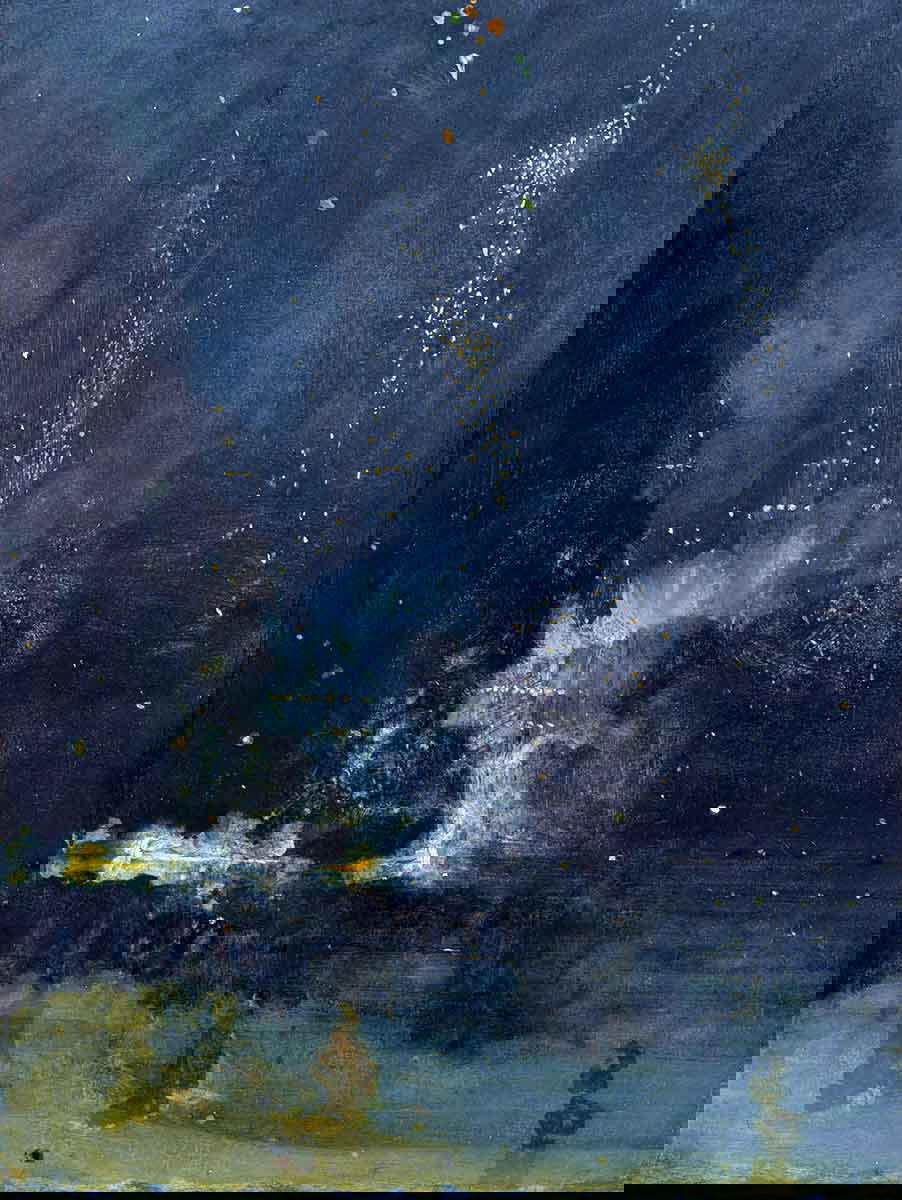
Even though Whistler insisted on always taking inspiration from natural forms, some of his works approached abstraction dangerously close. Moreover, his preoccupations with texture and color to the detriment of actual correspondence with reality, as well as his obsession with music, brought him closer to the artistic philosophies of artists like Piet Mondrian and Wassily Kandinsky. His painting titles usually employed terms and notions borrowed from music to highlight the similarities between tonal variations of sound and color.
One of his most famous Nocturnes notoriously became the subject of a court case. Art critic John Ruskin compared Whistler’s image of fireworks erupting over a dark river with “flinging a pot of paint in the public’s face.” Whistler, then almost destitute, initiated a libel trial, hoping to promote his art and receive compensation from the critic. However, the artist’s conceptual vision was not well-received by the jury. Ruskin’s attorneys questioned whether Whistler even had the right to demand payment for a seemingly simple piece of artistic work. Whistler retorted that he offered not only the canvas itself but also years of practice, thought, and experience that led him to discover and develop such a manner of painting.
Whistler won the case but did not receive compensation and even had to pay half of the legal costs, which ultimately bankrupted him. John Ruskin had a long history of personal hatred towards Whistler and his work. His emotions were so intense that some art historians and medical professionals suggested that Ruskin suffered from a medical condition that was triggered by Whistler’s arrangements of color and tone.
5. The Peacock Room by James McNeill Whistler
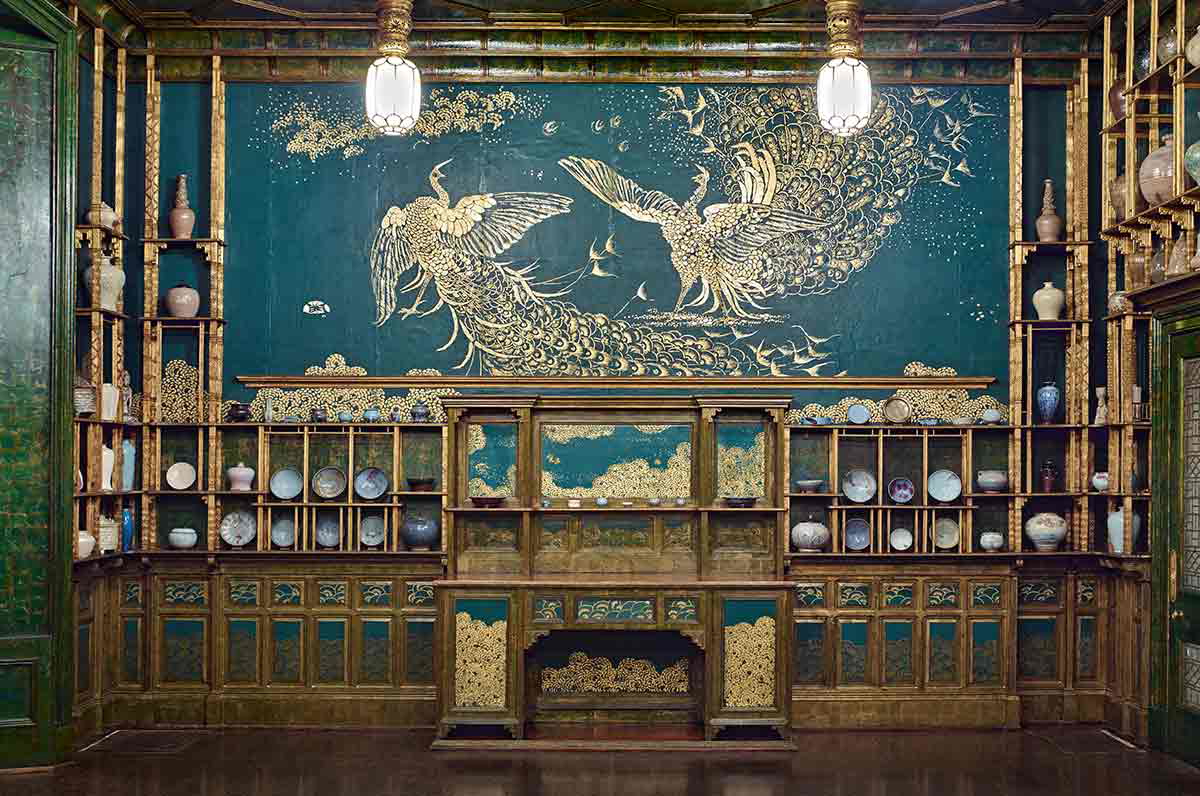
One of the most famous and acclaimed works by James McNeill Whistler, his unique and precious interior design project called The Peacock Room was the subject of great controversy and social scandal, ruining the artist’s relationship with one of his main patrons for good. The British magnate Frederick Leyland, the famous patron of the Pre-Raphaelite Brotherhood and Whistler himself, asked the artist to finish the renovation of his dining room after the leading architect fell ill. Apart from the actual dining purposes, the room had to display Leyland’s collection of Chinese porcelain. Leyland expected Whistler to finish the project according to the plan, yet he chose to resort to ambitious creative experiments with little regard for the work of his predecessor.
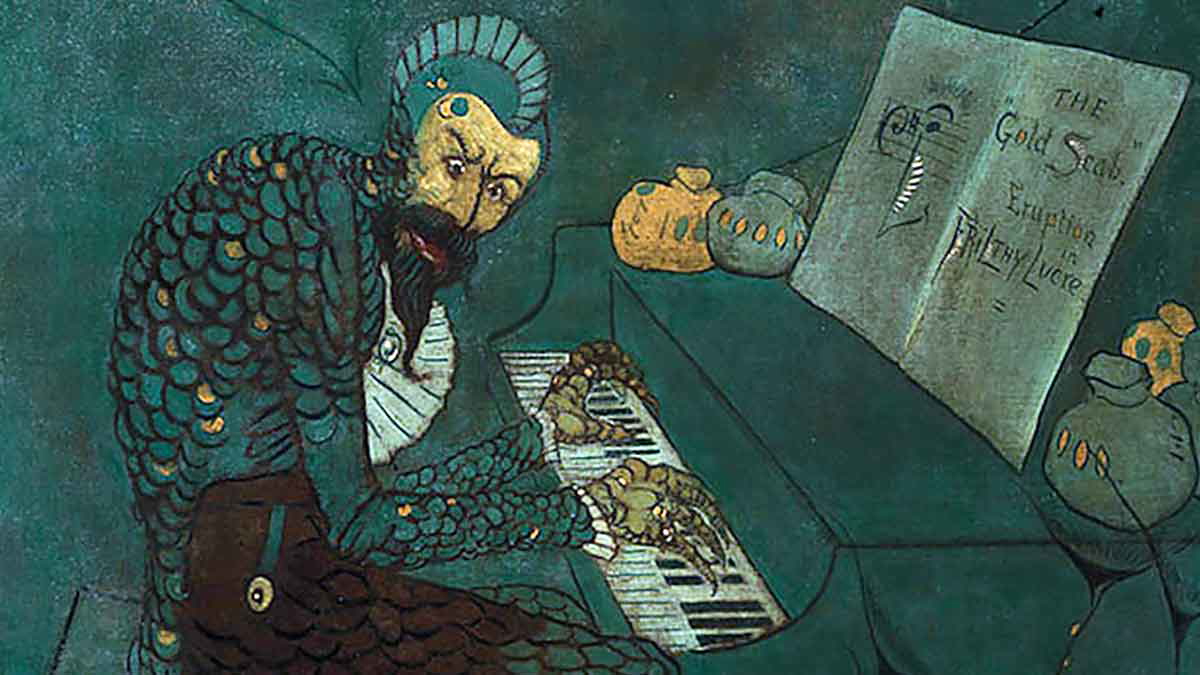
Whistler painted over the leather-covered walls, gilded the already assembled shelves, and completely repaired the ceiling. The artist worked without any plan or preconceived design, simply repainting and reshaping one element after another, aligning all fragments into the experimental harmony of blue and gold. In the end, the room transformed into something entirely different. Despite Leyland’s initial favoritism towards Whistler, he was outraged by his impulsive arrogance and refused to cover the artist’s expenses.
Bitter, Whistler left one more remark: a mural of the two fighting peacocks, a commentary on his relationship with his ex-patron. Whistler claimed that he made Leyland famous by creating The Peacock Room and, for years, kept drawing petty caricatures of the magnate in peacock feathers. Thomas Jekyll, the original architect of the room, also suffered because of Whistler. Upon seeing his room completely redone, he suffered a mental breakdown and never fully recovered. The unfortunate room, widely considered a masterpiece despite the dramatic events around it, was soon disassembled and sold to an American art collector called Charles Lang Freer. Today, visitors can see it in the Smithsonian Museum in Washington, D.C.