
According to legend, the Library of Alexandria was a great repository of knowledge constructed in the capital of Hellenistic Egypt. It is reported that over the course of 300 years, it accumulated almost half a million papyrus scrolls and contained much of the knowledge of the ancient world. Unfortunately, a significant section of the library was burned in 48 BCE during Julius Caesar’s civil wars, and it suffered further devastating destruction in the 3rd century CE. It was assumed that the library lost its importance, but new excavations of the site suggest that between the 5th and 7th centuries CE, the site of the Library may have become a major learning complex, called an Akadēmeia, which was a kind of prototype Late Antique university.
Note: In April 2025, at the American Center for Research in Egypt (ACRE) Conference, Richard Marranca sat down with Kholoud Mohamed Shawky to discuss the Akadēmeia of Alexandria in Late Antiquity; this article is the fruit of their conversation. Richard attended the conference on an award from the Kogan Fund of the Religion Department at Montclair University.
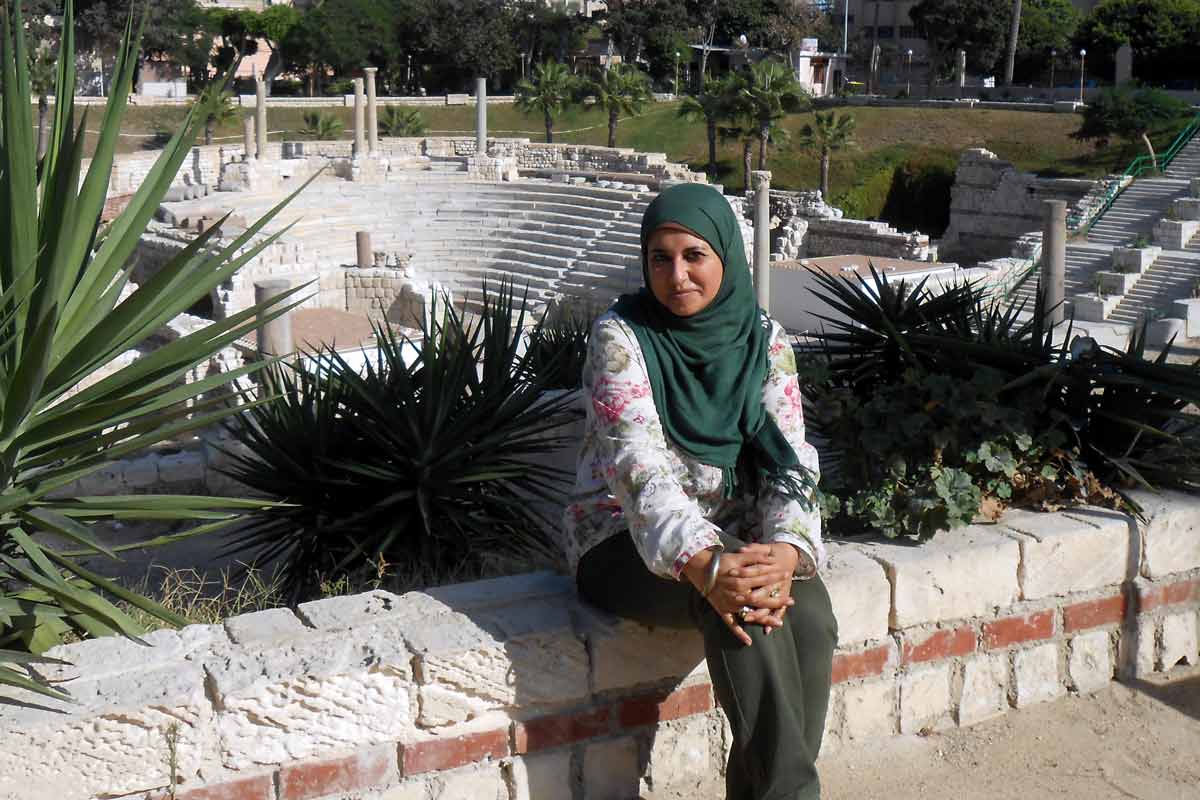
Kholoud worked as an archaeologist for Egypt’s Ministry of Antiquity and participated in the study of the last lecture hall at the Alexandria site. She is pursuing a PhD in Alexandria University and wrote her master’s thesis on “The Architecture of Educational Buildings in Egypt at the late Roman period, in the light of the recent discoveries at Kom el-Dikka, in Alexandria”
The Library of Alexandria: A Hellenistic Knowledge Repository
After Alexander the Great conquered Egypt, he established the most famous of his eponymous cities on the northern coast of Egypt, Alexandria. Established in 332 BCE and then constructed under the Ptolemaic dynasty, the Egyptian city was designed following the Hippodamian grid plan of Greek cities, creating the ancient nation’s first Hellenistic city. The city plan consisted of two main roads intersecting at right angles, with side streets running parallel to form a chessboard-like pattern. According to the Greek geographer Strabo, who visited in 25 BCE when Egypt was under Roman rule, one of the most important complexes in the city was the Museion, the temple dedicated to the goddesses of science and arts. The Library of Alexandria was attached to the temple, alongside a hall for scholarly meetings, a dining room, and public gardens.
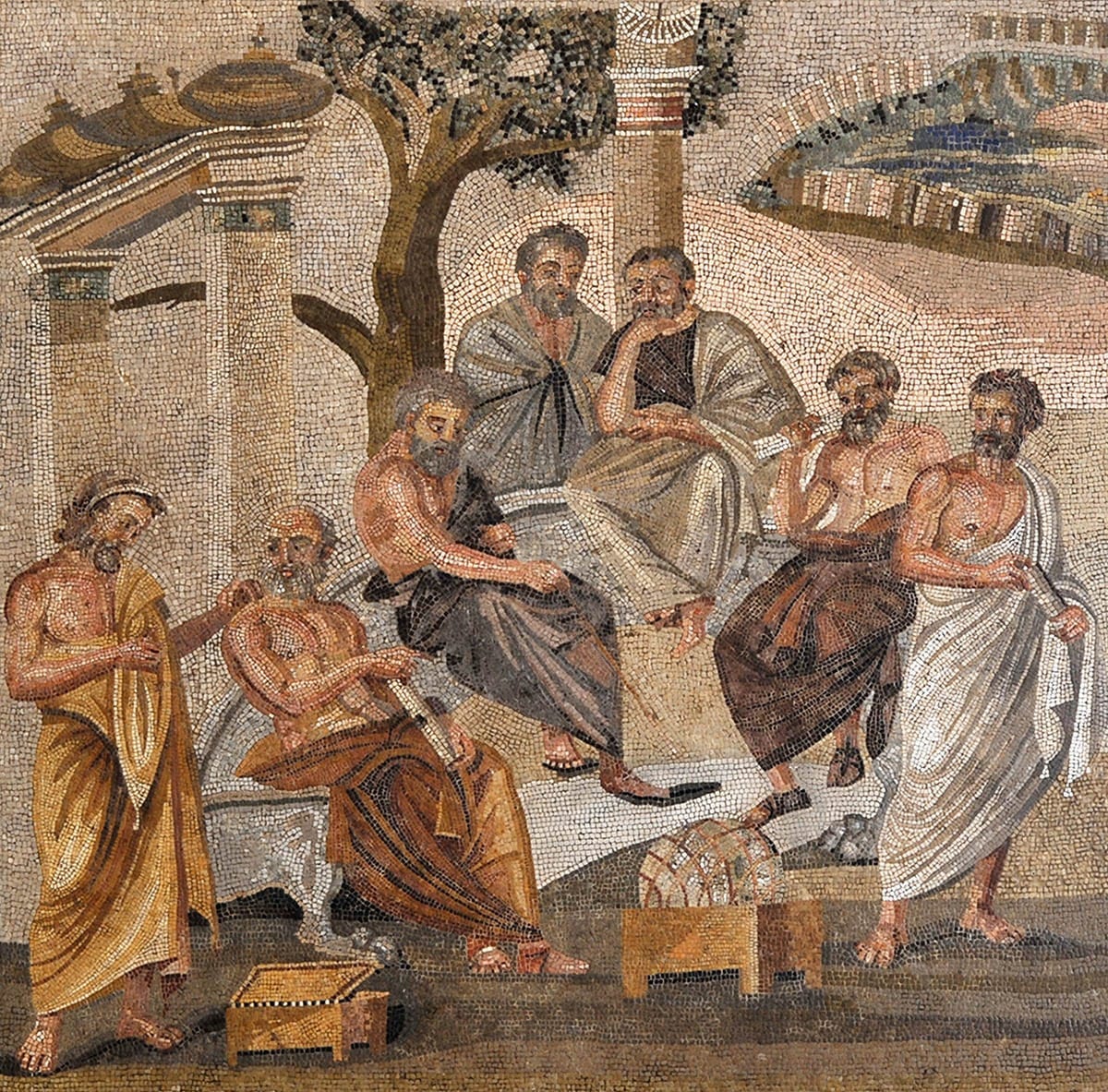
This description evokes the Greek gymnasia, institutions of physical exercise that existed in Athens from the 6th century BCE onwards. It also brings to mind the schools of the Athenian philosophers, including the Κυνόσαργες (Cynosarges, associated with the Cynic Antisthenes), the Ἀκαδημία (Academy of Plato), and the Λύκειον (Lyceum of Aristotle), where philosophers developed their ideas and taught the youth in the 5th and 4th centuries BCE.
Excavating the Library of Alexandria
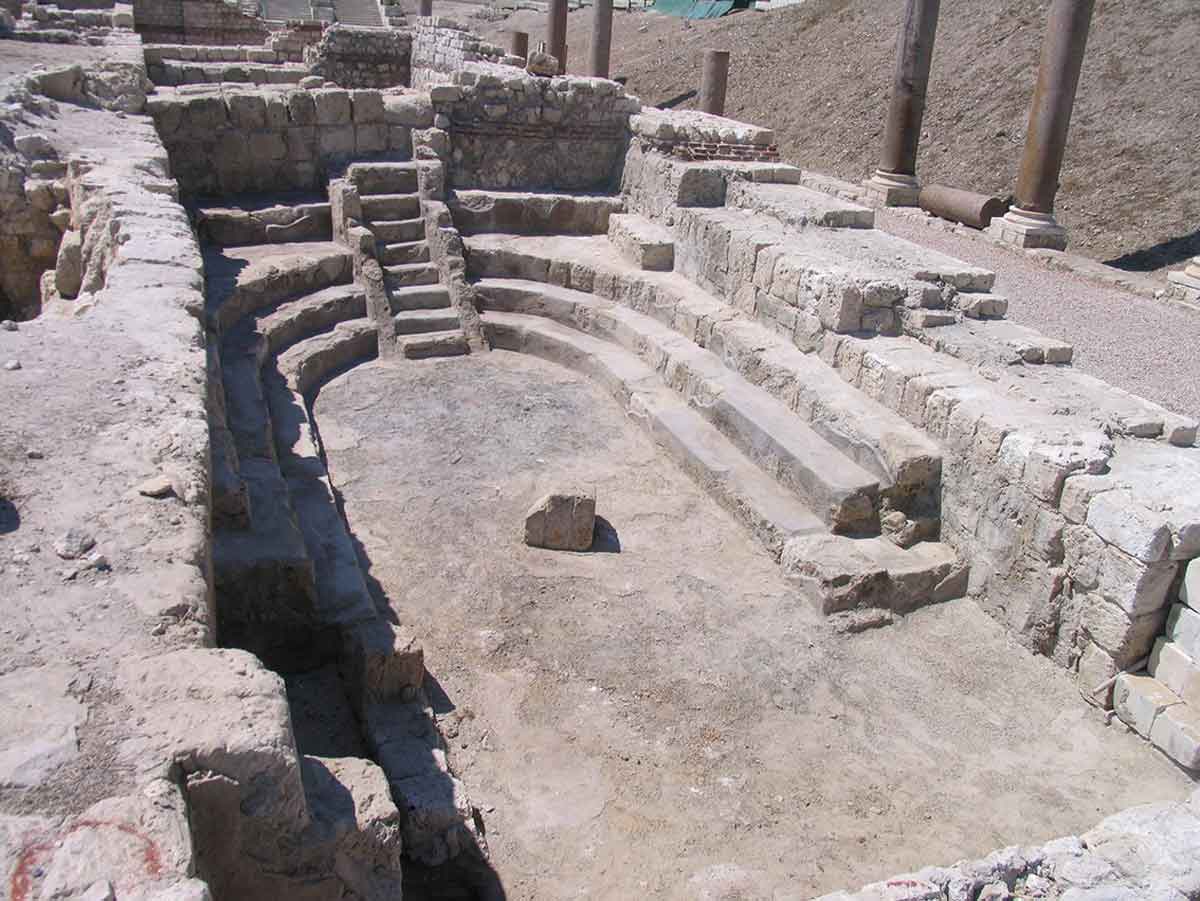
In 2005, an Egyptian-Polish mission, working at the Kom El-Dikka archaeological site, which encompasses the site of the ancient library, announced the discovery of 22 lecture halls in the center of Late Antique Alexandria, which flourished around the 6th century CE. These halls were designed as elongated exedrae, which are arcades with benched seats. They had three or five graded benches running along three sides, centered on some small steps that led to a main teaching chair, and a podium on the floor that confronts both the benches and the professor’s chair. Three of these lecture halls also had a cistern. Ten of the halls had anterooms with no traces of benches, while the anterooms of the three largest halls, measuring 17 meters long, had benches.
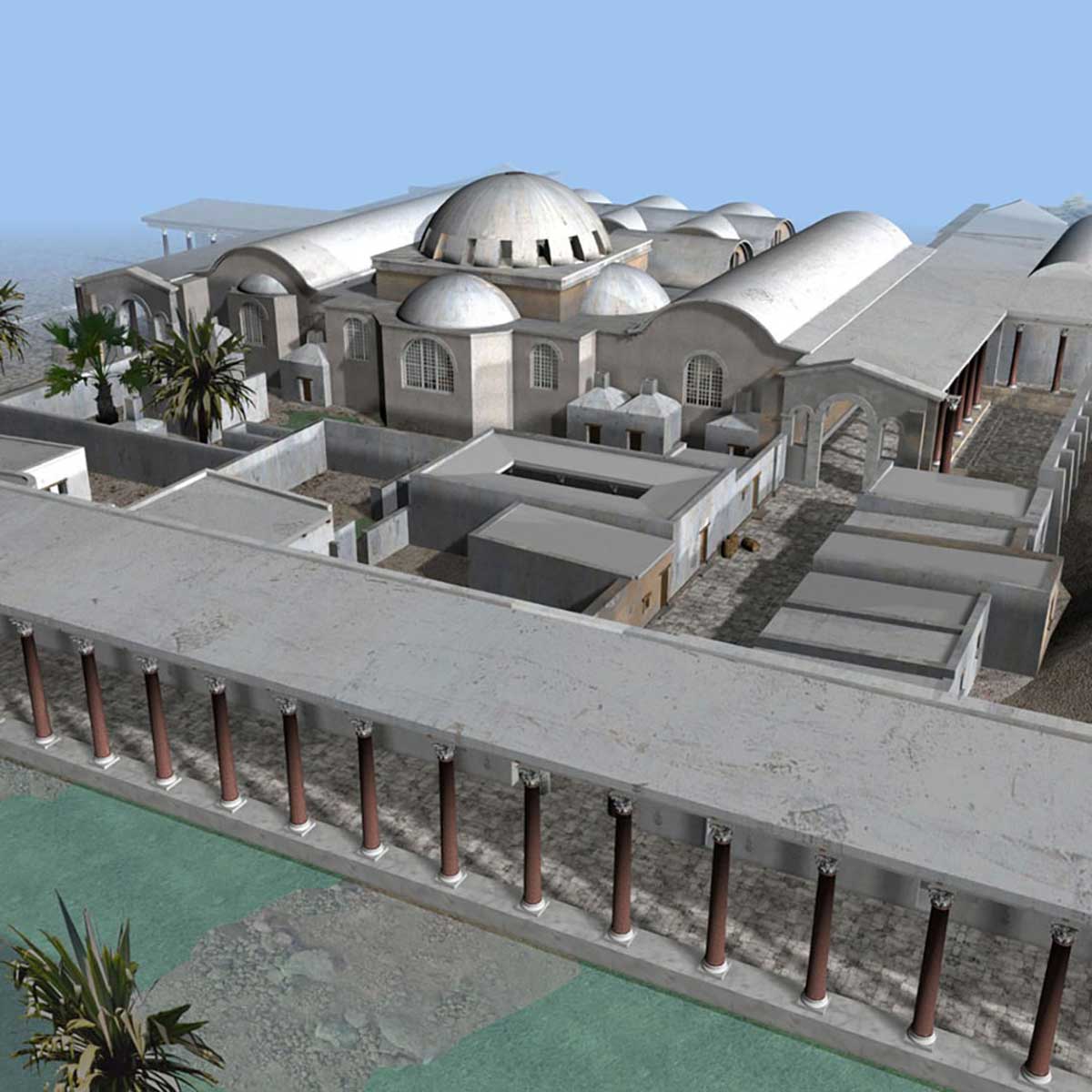
All the lecture halls were located within a significant urban complex that was built around big imperial baths flanked by monumental colonnades. In addition to the exedrae, numerous public buildings were built around it, including spacious bathing chambers that could accommodate hundreds of users every day, bathing pools, gymnasia for sports, and public latrines. A complex system of furnaces was used for heating water, which was drawn from the nearby cisterns. All the buildings are oriented north-south, except for two double halls with an external apse towards the east.
An Antique University
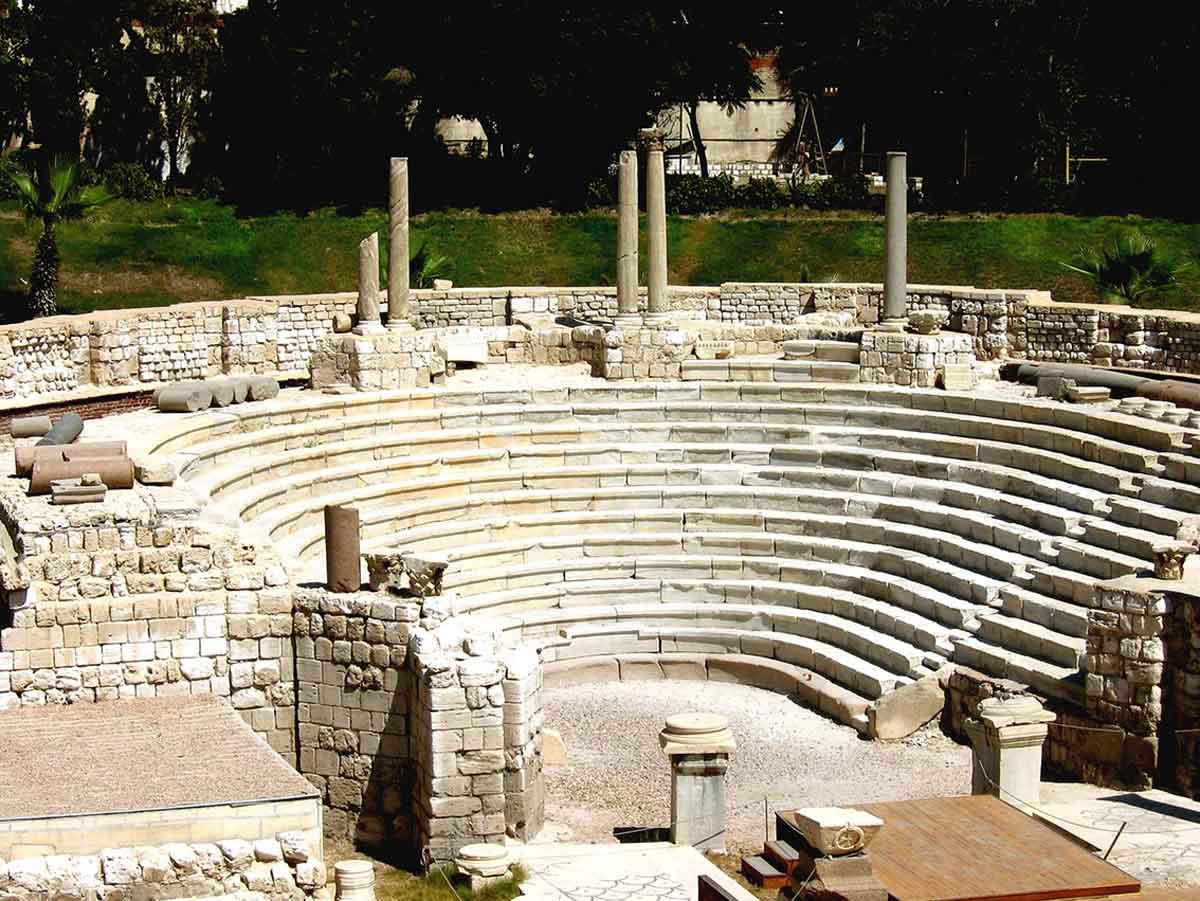
It is worth noting that scholars and researchers excavating the site have referred to these unique halls as the “Akadēmeia.” They describe it as the prototype of a new kind of educational organization characterized by regular attendance and study of science (e.g., arithmetic, geometry, astronomy, and music) in permanent buildings, with specialized professors, and a complete scientific curriculum.
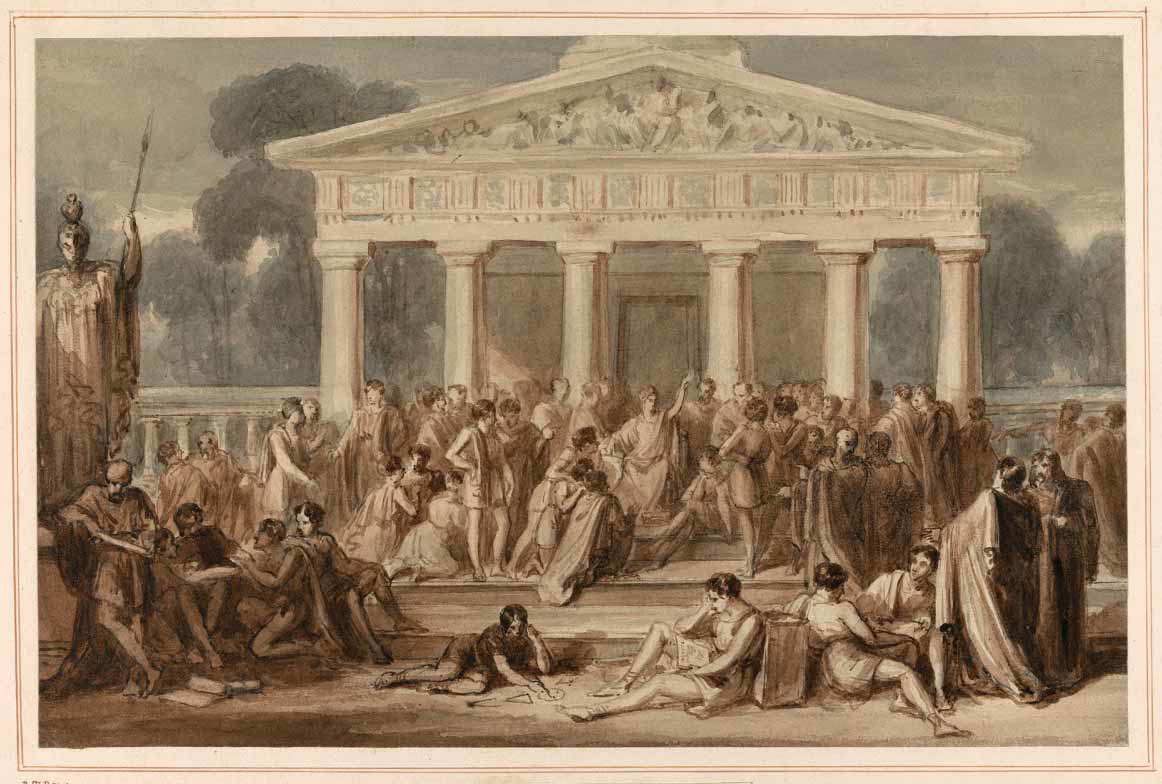
In Late Antiquity, as part of the Byzantine Roman Empire between the 5th and 7th centuries CE, Alexandria rose to prominence as an intellectual center of higher education, attracting both students from the aristocracy and distinguished teachers. Many biographies of famous thinkers indicate that they spent time or resided in Alexandria. To name but a few, there was Proclus, one of the most famous pagan philosophers in Athens in the 5th century CE; the Arab physician and pagan philosopher Gessios of Petra; the Patriarch Severus of Antioch; the Neoplatonic philosopher Damascius; the mathematician Theon and his daughter Hypatia; and the physician Agapios. This concentration of great minds in Alexandria has earned it the nickname the “Oxford of Late Antiquity.” It now seems that more than just being a gathering of minds, Byzantine Alexandria also had the physical infrastructure to support this time of learning.
When the Christian rhetorician Procopius (c. 465-526 BCE) was heading the school of Gaza, he described Alexandria as ὴ οίκνή τὥν λόγων μήτηρ (the house of the mother of words), suggesting its important role in education and culture in the 5th and 6th centuries CE. Sadly, the Akadēmeia was largely destroyed with the Persian conqquered Egypt in the early 7th century CE.