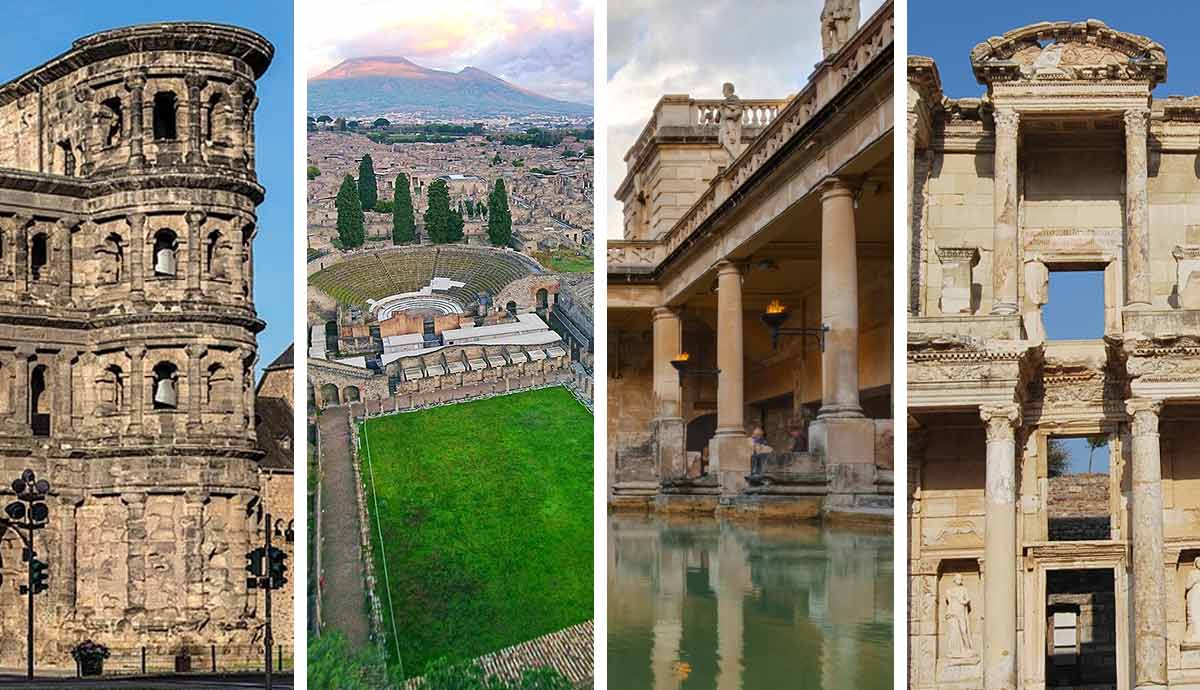
The Ancient Greek World spread beyond the borders of present-day Greece to Asia Minor in what is now the Republic of Turkey. While Istanbul attracts millions of visitors each year seeking to discover the imperial glory of the Eastern Roman capital, there are many other important ancient Greek cities that visitors to Turkey can explore on their travels across the country. Find out how to see the ruins of two of the Seven Wonders of the Ancient World or wander around what remains of the legendary citadel of Troy.
1. Ephesus

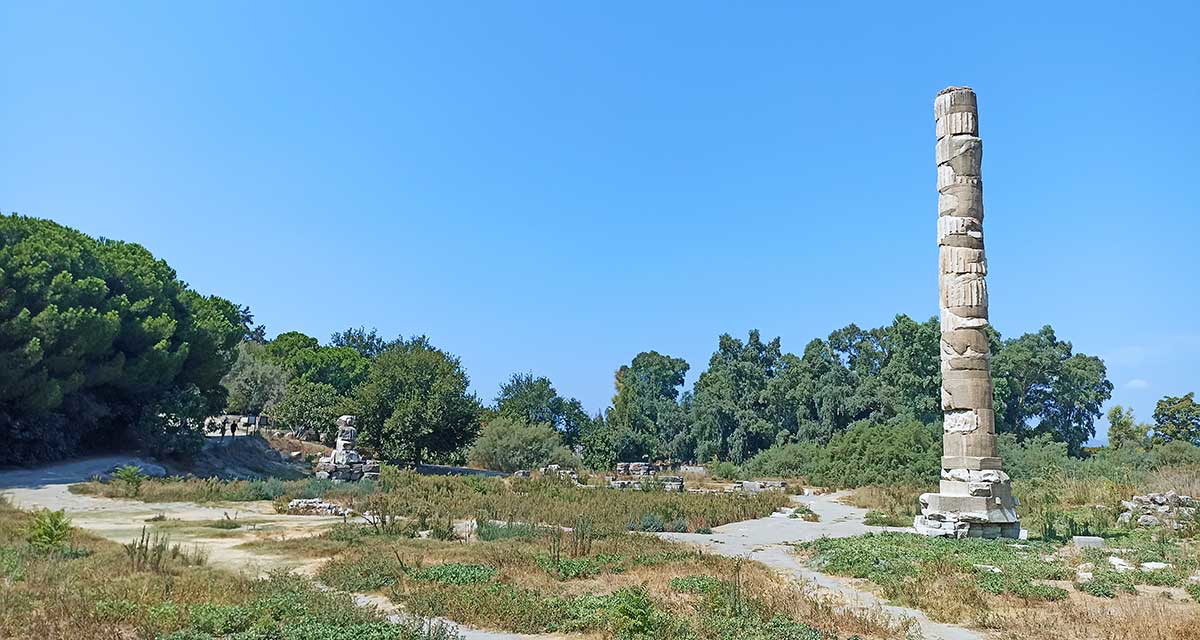
A UNESCO World Heritage Site, the former port city of Ephesus was one of the most important cities of Asia Minor in Greek and Roman antiquity. The site has been of major religious significance since the 2nd millennium BC. After the arrival of the Greeks in the 10th century BCE, the city hosted a large sanctuary to the goddess Artemis, which was destroyed on several occasions. A third temple on the site, built during the late 4th century BCE, was recognized as one of the Ancient Wonders of the World. Unfortunately, there is little to see of the Temple of Artemis. All that remains of the magnificent building is a single column reconstructed from fragments.
The old city around the sanctuary was soon abandoned by Lysimachus, one of Alexander the Great’s generals and successors, who ordered the construction of a new site to the southwest. After the Romans took control of Asia Minor in the late 2nd century BCE, the city became the capital of the Roman province of Asia.
The main archaeological site at Ephesus dates to the Roman period. Visitors can see the monumental theater, which, at an estimated capacity of 25,000 people, is understood to be the largest theater in the ancient world. The city’s most iconic monument is the Library of Celsus, built to honor the memory of Tiberius Julius Celsus Polemeanus, a distinguished general and statesman who served as Roman governor of Asia. The façade was reconstructed by German archaeologist Volker Michael Strocka during the 1970s.
The Library of Celsus stands at one end of Curetes Street, named after the priests of the cult of Artemis who led processions along the road to the site of the Temple of Artemis. One of the three main streets of the city, it was lined with monuments, fountains, and statues. A short distance from the Library of Celsus, visitors can pay an extra fee to see the wall paintings that decorated the houses of wealthy Ephesians. On the opposite side of the road, the Temple of Hadrian, with its distinctive arched roof, is one of the city’s principal architectural monuments.
In addition to its significance as a religious center for the Greeks and Romans, Ephesus was also an important place for the early Christian Church. Ephesus is mentioned as one of the Seven Churches of Asia in the Book of Revelation, while the Apostle Paul’s Epistle to the Ephesians is the tenth book of the New Testament. A reading of St. John’s Gospel indicates that the Virgin Mary spent her last years in Ephesus, and the House of the Virgin Mary to the south of the main site continues to attract Christian pilgrims to this day. The ruined Basilica of St. John, dating from the reign of Emperor Justinian, is now surrounded by the modern Turkish city of Selçuk.
2. Troy
The Trojan War, as related by Homer’s Iliad and other Greek myths, marked the beginning of the Western literary tradition. The name Troy conjures up images of Achilles and Hector battling to the death underneath the city’s mighty walls; of Greek soldiers leaping out from the Trojan horse in the middle of the night to finally capture the impregnable city after a ten-year siege.
While such narratives are legendary rather than historical, the city of Troy—or, more properly, Ilium—was real enough. Located at the southern end of the approach into the Dardanelles Strait, Troy commanded a strategic position that made it an important center of trade in Asia Minor. Archaeological excavations have shown that Troy was destroyed on several occasions, suggesting a historical basis for the Trojan War. Known as Wilusa by the Hittites, the site has been home to nine distinct settlements between 3000 BCE and 500 CE.
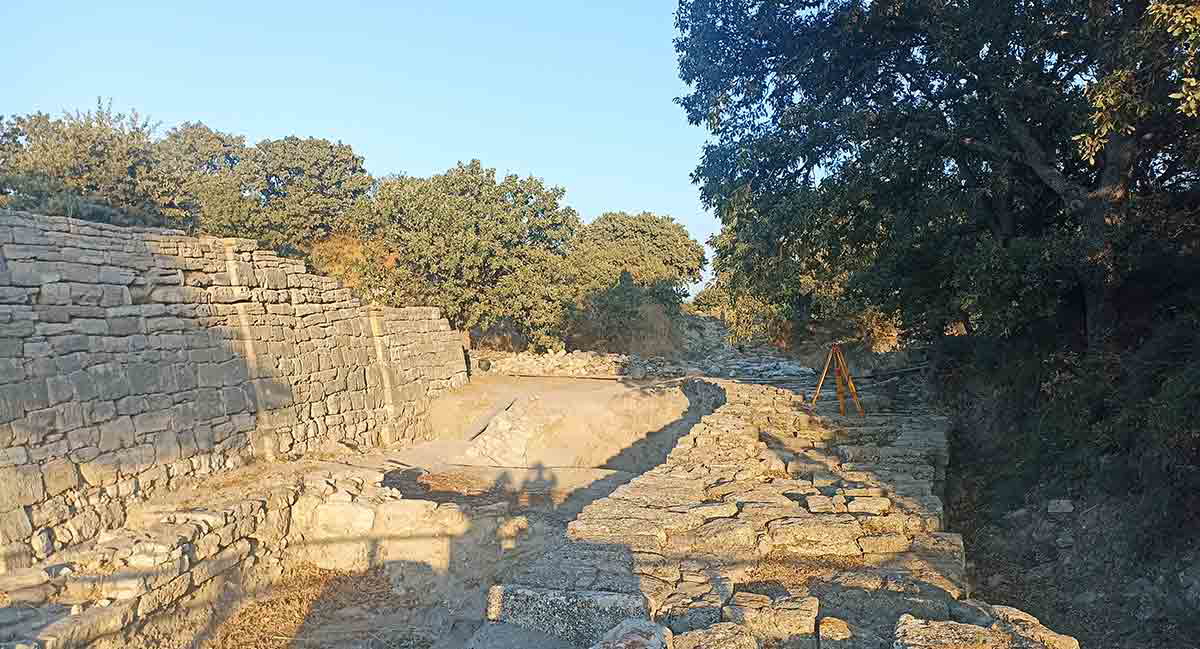
A new Museum of Troy, which opened in 2018, does an excellent job of weaving together the history and legend associated with the site. While the remains of tall, thick walls are reminiscent of the Homeric epic, the archaeological site itself may appear rather underwhelming. However, Troy’s rediscovery and subsequent history is itself a saga of Homeric proportions.
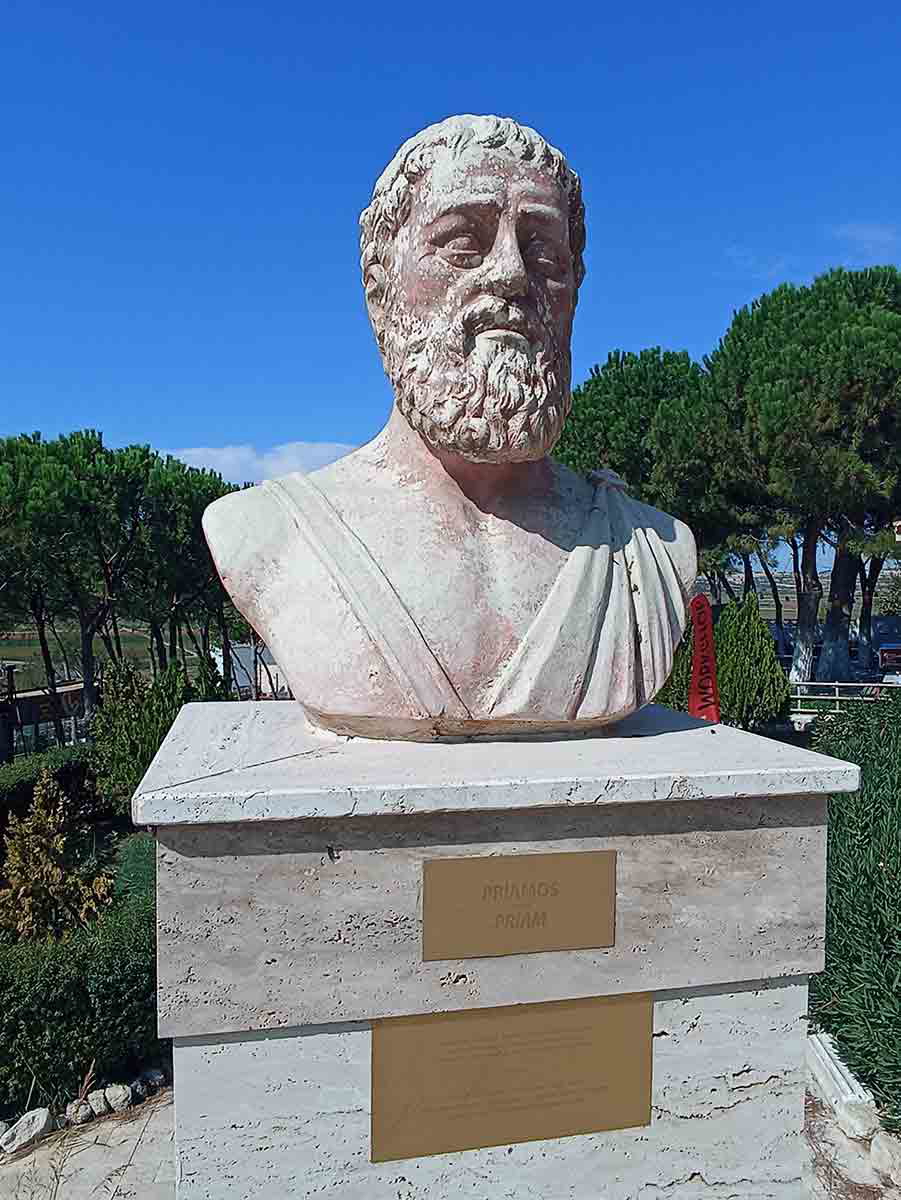
The rediscovery of Troy is credited to Heinrich Schliemann, a German businessman and amateur archaeologist who made it his life’s quest to demonstrate the historicity of Homer’s Iliad. He began excavations at a site known as Hisarlik Tepe, and by 1873 his excavations had revealed nine layers of occupation.
In June 1873, Schliemann uncovered a deposit of gold jewelry from a layer of the city that exhibited signs of destruction by burning. He triumphantly declared that this layer (Troy II) corresponded to Homer’s Troy and claimed that the ornaments belonged to Helen of Troy. The treasure was illegally taken to Germany, and it was only after paying a substantial fine that Schliemann was allowed to resume his excavation work.
In reality, Troy II is believed to have existed between 2550 BCE and 2300 BCE, more than a thousand years before Homer’s Trojan War is understood to have taken place. In his quest to uncover the historical basis of the Iliad, Schliemann had destroyed much of the city of Priam (Troy VI) and much more besides. It was only in the final year of his life in 1890 that Schliemann admitted he had been mistaken in his identification of Troy II as Homer’s Troy.
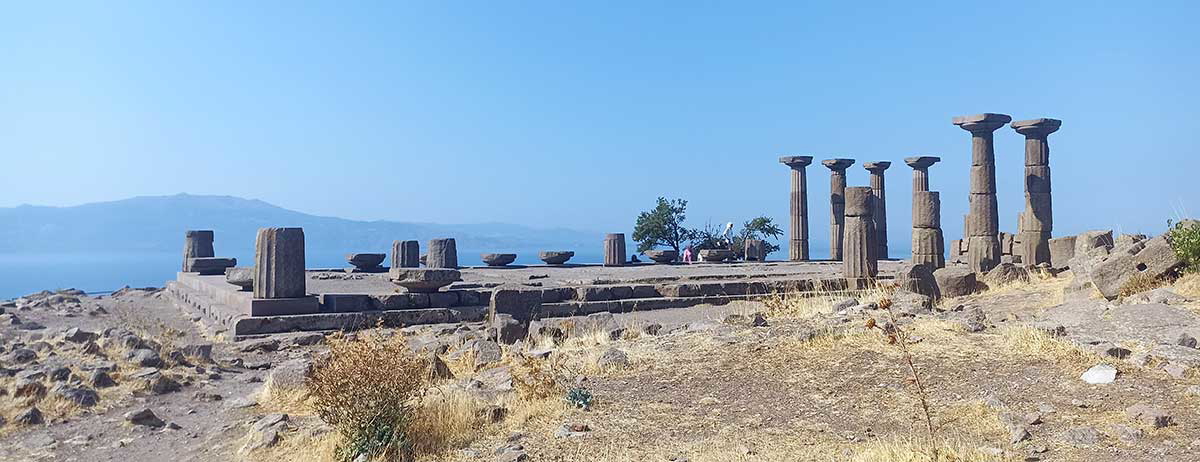
The area around Troy, known historically as the Troad, is also home to several other archaeological sites. The most impressive of these is at Assos, an hour’s drive to the south of Troy near the modern town of Behramkale. In the mid-4th century BCE, Assos was home to a distinguished community of philosophers, and Aristotle founded a short-lived academy before it was taken over by the Persians. The ruins of the Temple of Athena offer a breathtaking view of the Aegean Sea and the nearby Greek island of Lesbos.
3. Miletus
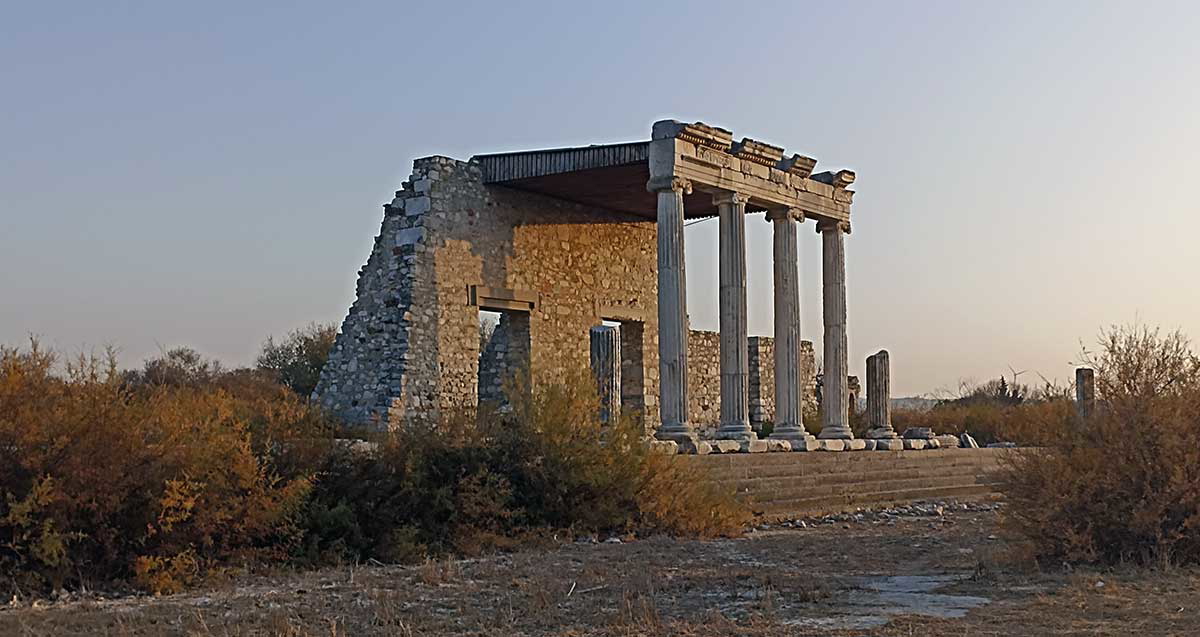
The ancient city of Miletus, once located on the Aegean coast but now a few miles inland, was one of the greatest city-states of Greek antiquity. According to Pliny the Elder, the Milesians founded over 90 colonies, many in the Black Sea. During the 6th century BCE, the city was a major center of learning. Thales of Miletus is regarded as a pioneer in the fields of natural philosophy, mathematics, science, and logic.
A few decades after submitting to Persian rule in around 540 BCE, the Milesians were at the center of the Ionian Revolt, which served as a prelude to the Graeco-Persian Wars. Although the revolt was suppressed, Miletus was restored to independence after the Greek victory at Plataea in 479 BCE. Miletus enjoyed close ties with Athens, and during the 5th century BCE, Aspasia of Miletus achieved fame as the political and romantic partner of the Athenian statesman Pericles.
Closely associated with the Temple of Apollo at nearby Didyma, the Sanctuary of Apollo Delphinios was the center of Miletus’ religious life. Today, little remains of the sanctuary buildings and most of the extant monuments, such as the Ionic Stoa (covered walkway), date to the Roman period. During excavations in the 19th century, the remarkable Market Gate of Miletus was transported to Germany and reassembled for display at the Pergamon Museum in Berlin. Other significant monuments include the Baths of Faustina (wife of Emperor Marcus Aurelius), the Ancient Greek Theater, and the Byzantine castle built on the hill behind the theater. To the south of the ancient ruins, the İlyas Bey Mosque bears witness to the Ottoman occupation of Miletus until the 15th century, when the harbor silted up and the city was gradually abandoned.
4. Halicarnassus/Bodrum

The city of Bodrum in southwestern Turkey is built on the site of Halicarnassus, the capital of the region of Caria. The city has several claims to fame. A few decades after the city came under Persian rule in the 520s BCE, Queen Artemisia I of Halicarnassus commanded the Carian fleet at the battles of Cape Artemisium and Salamis in 480 during the Persian Wars. Halicarnassus was also the birthplace of Herodotus, the Father of History, whose Histories examine the causes of the Persian Wars and the victory of the independent Greek city-states over the Achaemenid Empire.
Halicarnassus is perhaps best known for the Mausoleum of Halicarnassus, another of the Seven Wonders of the Ancient World. Built in the 4th century BCE to accommodate the bodies of Mausolus and his sister-wife Artemisia II, who ruled as satraps of the Persian province of Caria, the Mausoleum inspired monumental tombs across the ancient world, and the word mausoleum has come to denote any above-ground funerary monument.
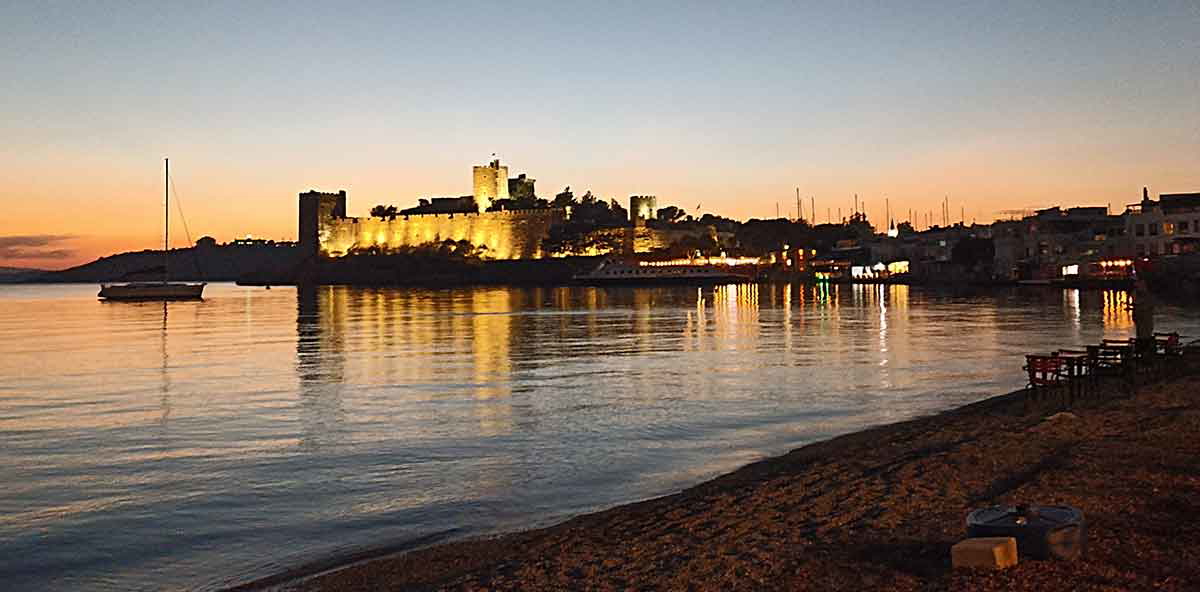
The mausoleum is believed to have been destroyed by earthquakes between the 12th and 15th centuries CE. In the 15th century, the Knights of St. John used material from the mausoleum in the construction and fortification of Bodrum Castle, an impressive medieval fortification now home to the award-winning Museum of Underwater Archaeology.
Like the Temple of Artemis at Ephesus, the archaeological site of the Mausoleum of Halicarnassus can appear rather disappointing. Nevertheless, visitors can gain a useful perspective on the sheer scale of the monument, which, at a height of 45 meters, would have towered over the harbor below. Some decorative elements from the monument are on display nearby, though the most impressive statues were taken to the British Museum in the 19th century.
5. Pergamon
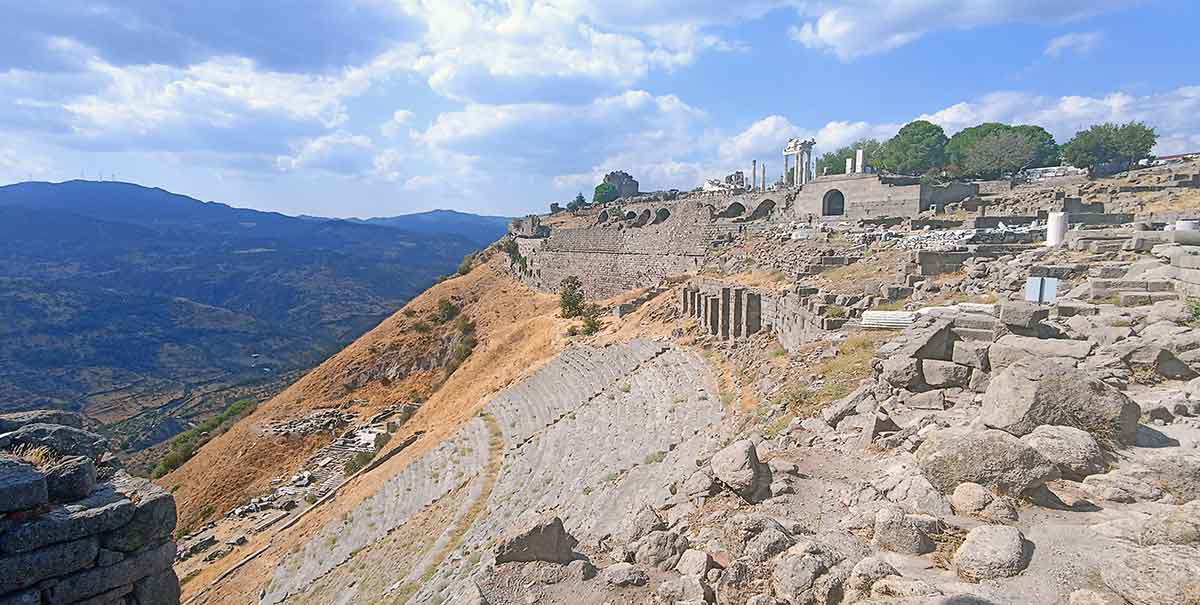
Located on the hill above the present-day Turkish city known as Bergama, Pergamon was a rich and powerful city in antiquity. From 281 to 133 BCE, the city was the capital of the Kingdom of Pergamon, ruled by the Attalid dynasty. At its height, the kingdom controlled much of the western half of Turkey. It was during the reign of King Eumenes II in the first half of the 2nd century BCE that the city’s most famous monument, the Pergamon Altar, was constructed.
Visitors to the site of Pergamon seeking to find the Great Altar of Zeus will be disappointed. Like the Market Gate of Miletus, after being excavated by German archaeologists in the 19th century, the monumental altar was taken to Germany and reconstructed as the centerpiece of the Pergamon Museum in Berlin, which opened in 1907.
Even without the Great Altar, the site of Pergamon still contains some impressive monumental ruins. After the extinction of the Attalid dynasty, which had been closely allied to Rome, the kingdom was inherited by the Roman Republic. Although the city lost some of its political and economic privileges after serving as the headquarters for King Mithridates VI of Pontus in his wars against Rome, it enjoyed a resurgence during the imperial period under Emperor Trajan, who built the Temple of Trajan at the highest point of the acropolis. The Greek Theater on the western slope of the acropolis accommodates some 10,000 people and is one of the steepest in the world.
During the 2nd century CE, Pergamon was a city of some 200,000 inhabitants and boasted a great library, second only to that at Alexandria. It was also a major center of healing owing to the presence of the Sanctuary of Asclepius, founded in the 4th century BCE but expanded significantly under the Romans. The famous Greek physician Galen, whose ideas formed the basis of European medical science until the 17th century, was born in Pergamon in 129 CE and worked at the sanctuary.
6. Hierapolis/Pamukkale
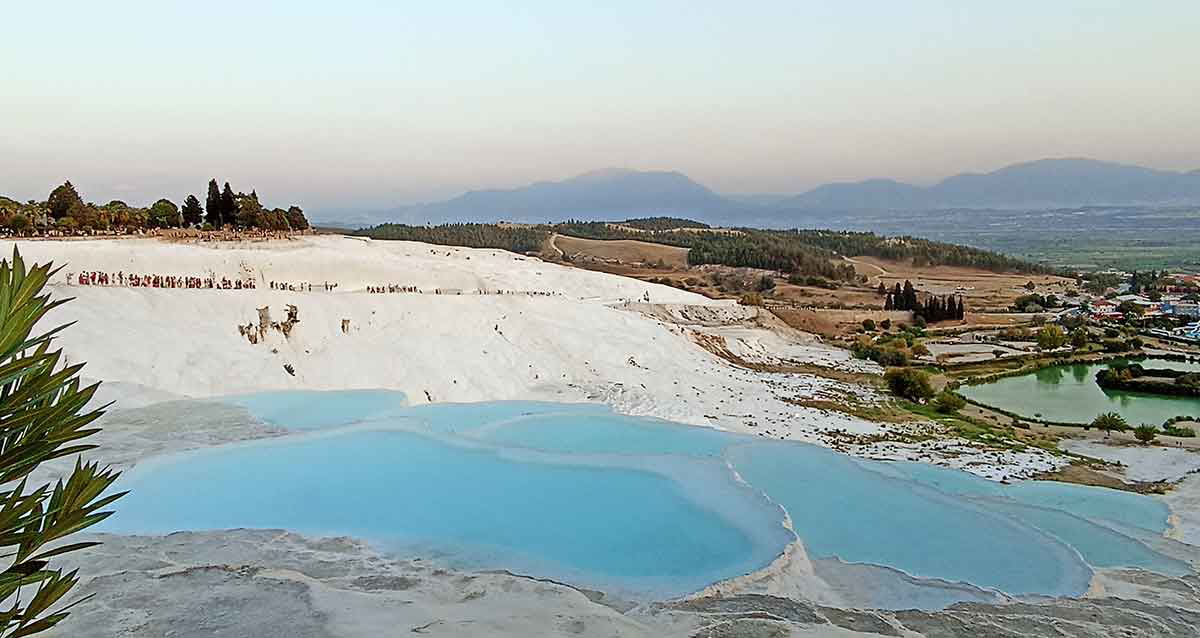
Pamukkale is best known for its natural beauty in the form of its white travertine terraces and thermal springs, which have attracted visitors to the site since antiquity. As a result, the UNESCO World Heritage Site of Pamukkale also incorporates the ruins of the Greek city of Hierapolis, founded in the 2nd century BCE by the Attalid kings of Pergamon. Hierapolis is also an important site in early Christian history, as St. Philip the Apostle was executed and buried there.
Prominent surviving structures at Hierapolis include the Frontinus Gate, the Great Theater, the Sanctuary of Apollo, and the adjacent Nymphaeum or fountain, one of several in the city that supplied drinking water to the population. The most unique structure in the city is the Ploutonion or Pluto’s Gate. Built on top of a seismic fault emitting toxic gases, it was regarded as an entrance to the underworld. The entrance to the small cave was blocked up by Christians in the 4th century CE.
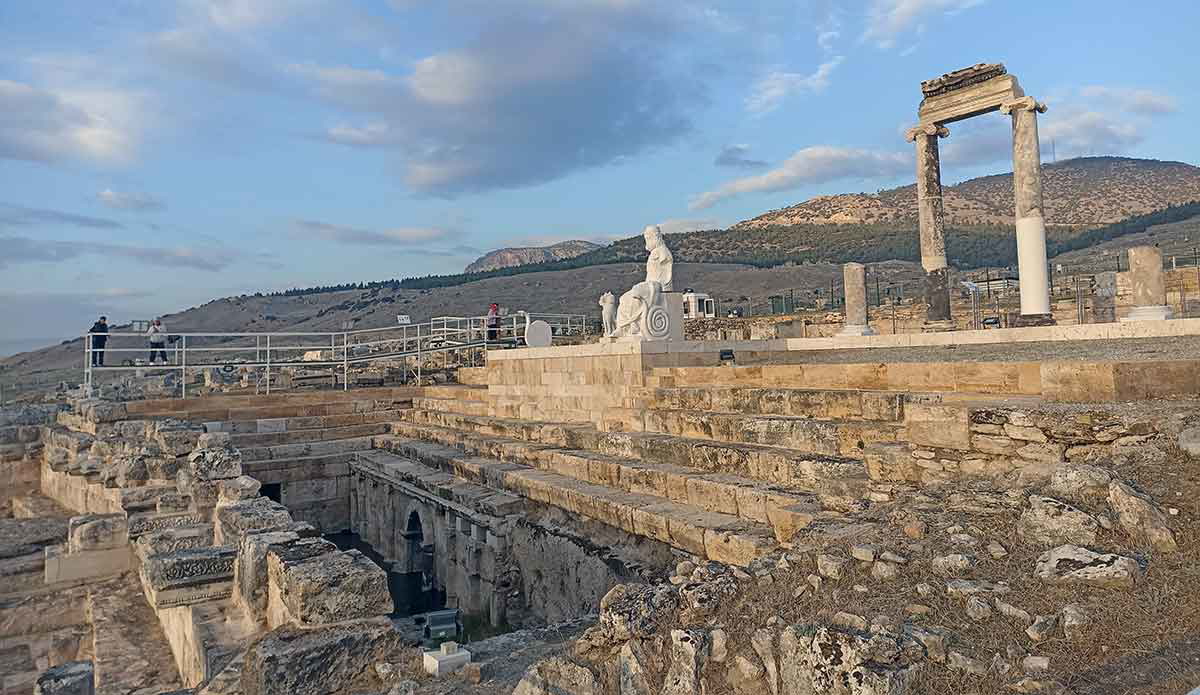
For an extra fee, visitors to Pamukkale have the opportunity to swim in the waters of the Antique Pool among the ruins of the Sanctuary of Apollo. Sometimes known as Cleopatra’s Pool, according to legend, Mark Antony built the pool and gifted it to Cleopatra, though there is no evidence that the Egyptian queen ever visited the site.
7. Perge
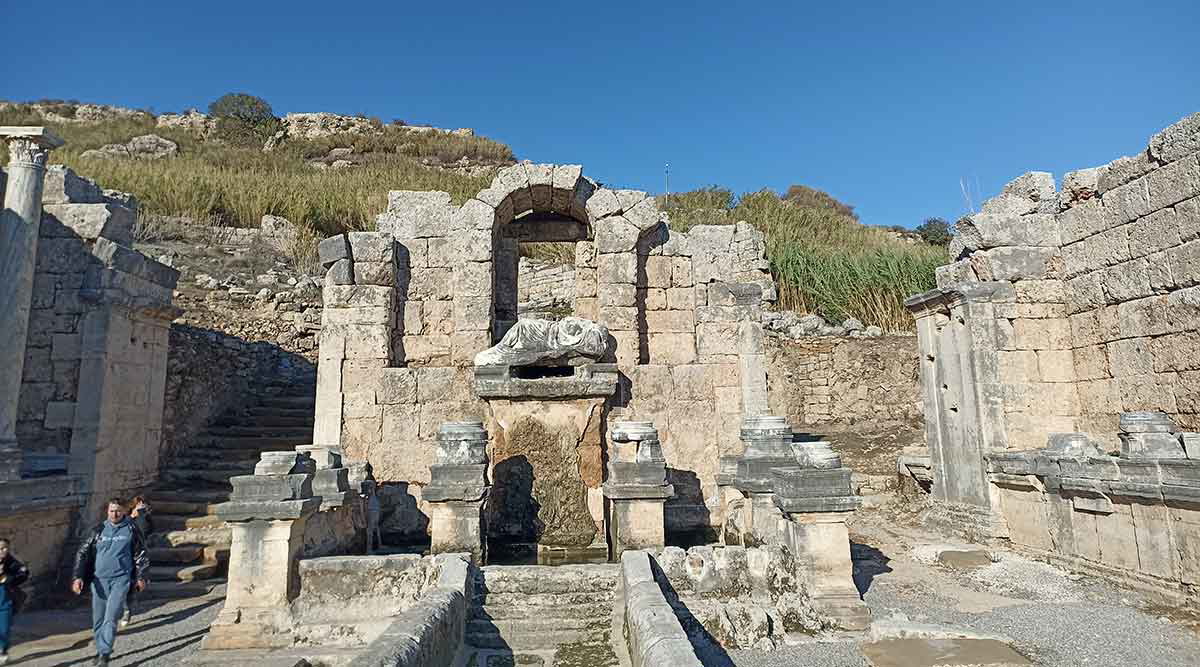
A short distance from the popular city destination of Antalya on Turkey’s Mediterranean coast, Perge was initially settled by the Lycians before becoming a colony of Rhodes in around the 7th century BCE. The city went on to experience periods of Persian, Seleucid, and Attalid rule before passing to the Romans. The city experienced its heyday between the 1st and 3rd centuries CE, during which it became one of the most important cities in the Roman province of Pamphilya. One of the city’s most influential benefactors was Plancia Magna, a daughter of a senator who served as high priestess at the Temple of Artemis.
A large statue of Plancia Magna, which stood in one of the niches at the south gate, can now be seen in the Antalya Museum. One of the best museums in Turkey, the Antalya Museum has a large collection of artifacts unearthed from Perge. One exhibition hall features statues of gods and mythological figures, while an adjacent hall, known as the Hall of Imperial Statues, displays statues of emperors and prominent citizens of the Roman period.
Perge is home to an extensive set of remains, including the stadium, Roman Theater, agora, the monumental towers of the south gate, and several fountains that brought water to the city in what is otherwise an arid landscape. Archaeologists have recently discovered well-preserved mosaics in some of the houses, but these have been covered up to protect them from the elements. Visitors can also climb up the acropolis for a panoramic view of the city below, though there is little to see on the acropolis itself.
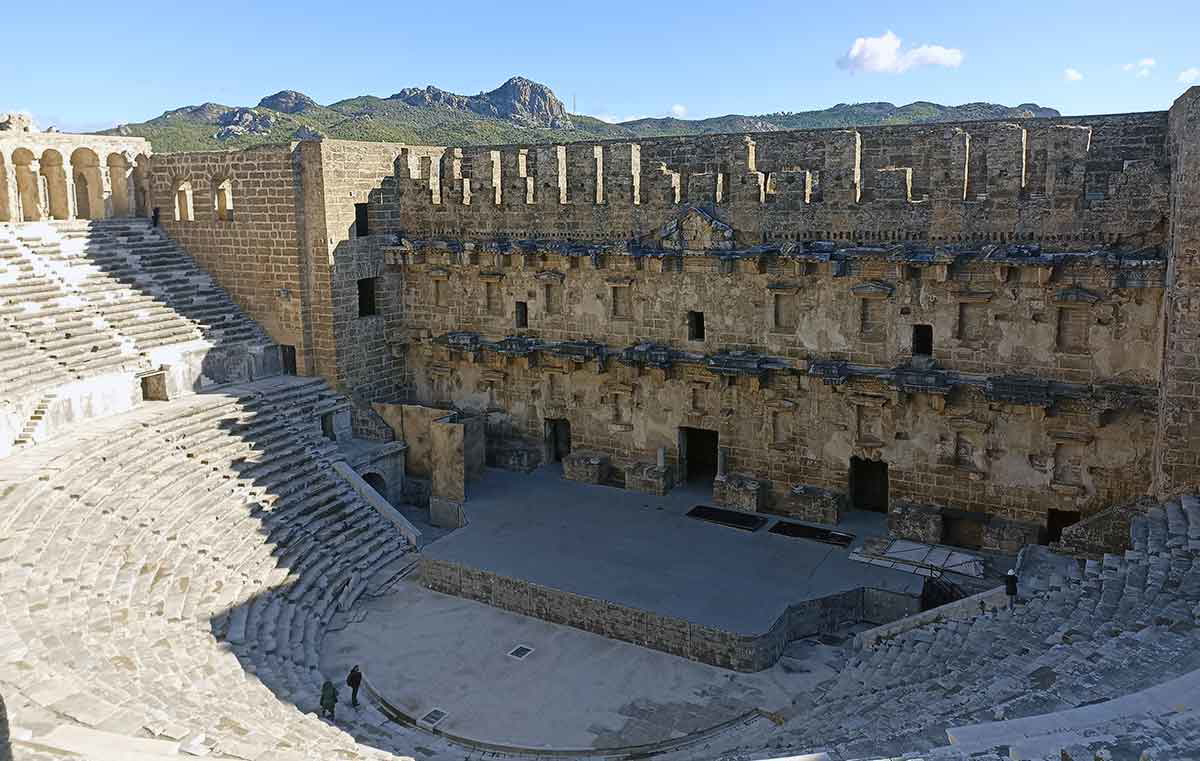
Visitors to Perge should not fail to pay a quick visit to nearby Aspendos. Like many of the ancient cities in Turkey, the surviving ruins are predominantly Roman. While there is little to see on the main acropolis apart from the Basilica, the site is known for its Roman Theater, built during the reign of Marcus Aurelius and considered to be the best preserved Roman theater in the world. The Aspendos Theater continues to host cultural events, including the Aspendos International Opera and Ballet Festival, first held in 1994.