The Netherlands gained independence in 1648 after the lengthy Eighty Years’ War against Spain. Although Britain provided military support to their fellow Protestants across the North Sea during their struggle for independence, Anglo-Dutch relations quickly soured in the 17th century. Between the 1650s and the 1780s, the two maritime powers fought a series of four wars largely motivated by commercial and colonial considerations.
The Collapse of the Anglo-Dutch Alliance

On August 10, 1585, English and Dutch diplomats signed the Treaty of Nonsuch. Through this agreement, England entered into a formal alliance with the Dutch revolutionaries seeking to overthrow Spanish Habsburg rule. Queen Elizabeth I of England feared that Spain would use the Dutch coast as a staging ground for an invasion of England. Both the English and Dutch were Protestant countries and hoped to keep the French and Spanish at bay.
This alliance worked well for both the English court and the Dutch States’ General. Both countries’ navies worked together to stop the Spanish Armada from landing on the English coast in 1588. English and Dutch privateers ravaged the Spanish Empire’s maritime trade routes and raided Spanish colonial outposts in the Americas and Asia. Thousands of English troops joined the Dutch States’ Army on the ground to fight Spanish forces. Their joint efforts weakened the Spanish, setting the stage for Dutch independence.
However, this alliance faced serious challenges as the war ground on. In 1604, King James I of England announced that he planned to sign a separate peace with the Spanish to relieve his weakening economy. While the Dutch did secure some additional English aid after this, the States’ General considered this to be a betrayal. When the Dutch gained full independence in 1648, the English saw the newly independent country as a leading competitor in the race to establish overseas colonies.
The Failed Attempt at a Union
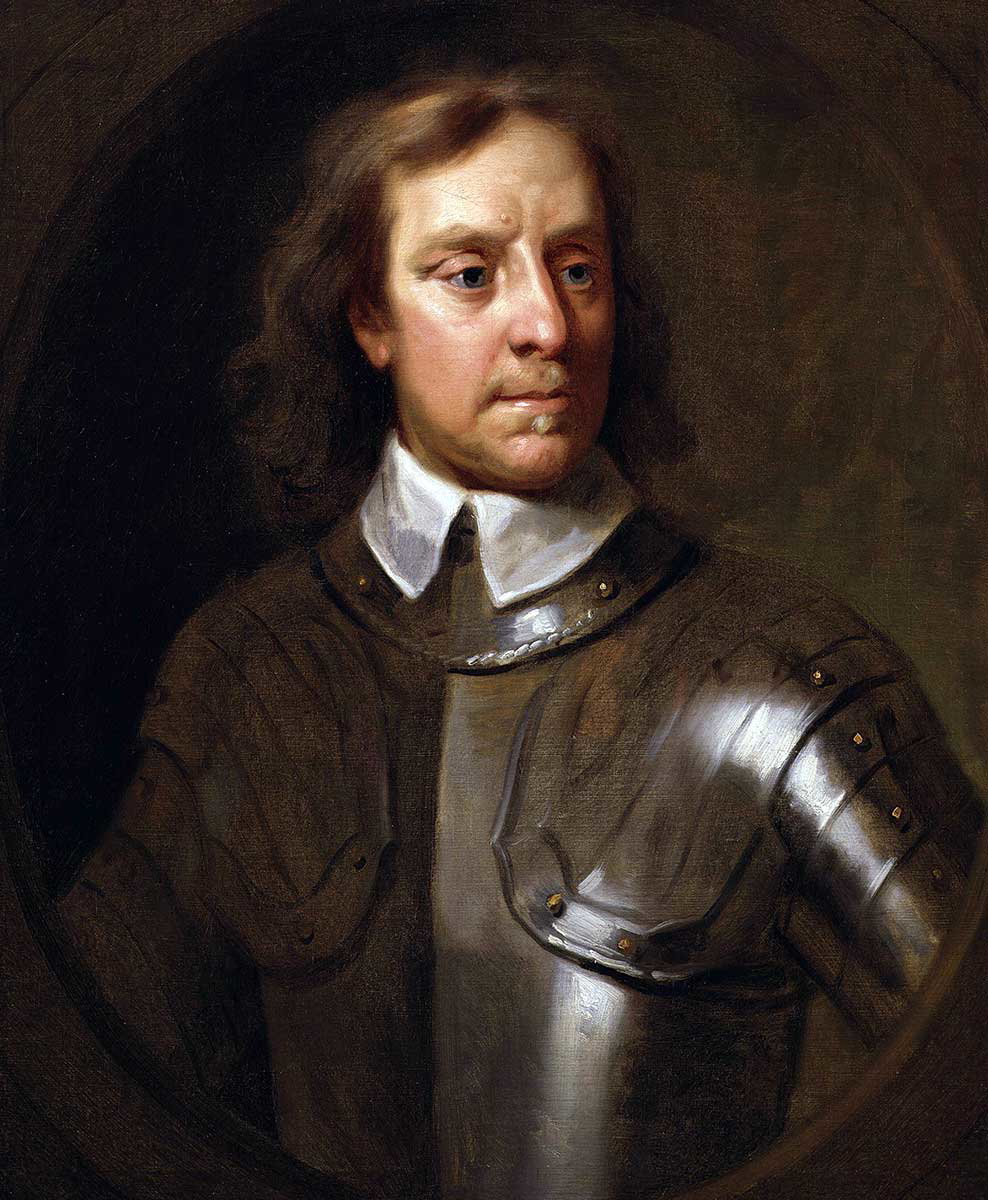
In 1651, England’s Lord Protector Oliver Cromwell made an offer to the Dutch government (led by Grand Pensionary Adriaan Pauw and his council of Regents) that both countries unite. Cromwell figured that a Protestant superstate in Northern Europe could counterbalance the Catholic powers to the south. He also believed that the Dutch owed England for its military support during the war of independence against Spain.
The Dutch were insulted by this proposal. Cromwell’s government had overthrown and executed King Charles I, a man who was popular in the Netherlands. Additionally, most Dutch people saw the proposal as a British plot to take control of the Dutch shipping lanes and overseas colonies. Members of the English negotiating team were attacked in the streets by angry mobs.
Meanwhile, Cromwell hoped to resume hostilities with Spain and seize as much overseas territory as possible. Having just ended a war that lasted close to a century, the Dutch were in no mood to immediately restart hostilities with their former overlords. Ties deteriorated very quickly from here on out.
Causes of the First War (1652–1654)

Later that year, the Rump Parliament in London passed a very contentious law known as the Navigation Act of 1651. It effectively required all imports into England to be carried by English ships or ships from the country of origin. Because the Dutch acted as the primary maritime power in Europe, this act directly targeted their economy. Many Dutch politicians believed, not unreasonably, that this law was directed towards them. Attempts to get the law repealed failed.
English privateers began seizing Dutch merchant ships under the pretext that they were carrying “contraband” or violating the new trade laws. Between October 1651 and July 1652, the English captured over 100 Dutch vessels. To make matters worse, the English invoked a claim that the Channel belonged to them, meaning that any foreign ships sailing had to salute English warships or privateers prowling those waters. The Dutch struggled to respond to the ship seizures because their navy had been scaled down heavily after the end of the Eighty Years’ War.
On May 29, 1652, Dutch Admiral Maarten Tromp sailed a fleet of forty ships into the Straits of Dover. An English fleet intercepted his ships. When he refused to salute the flagship of Robert Blake, the English opened fire. For the next five hours, both fleets exchanged fire in an inconclusive exchange until they both broke off contact. Last-minute overtures for peace failed and England declared war on June 10, 1652. For the next two years, the former allies engaged each other in a brutal series of battles fought predominantly at sea.
Causes of the Second War (1665–1667)

A string of English victories forced the Dutch to negotiate the Treaty of Westminster in 1654. However, the tensions between the two countries did not abate. In 1660, Cromwell’s Commonwealth collapsed, leading to the return of the Stuart monarchy. King Charles II was vehemently opposed to allowing Dutch trading monopolies to develop overseas and he insisted that the English enforce mercantile laws on the seas. In the Netherlands, Grand Pensionary Johan de Witt reorganized and reformed the Dutch military and prepared for the resumption of hostilities against England.
In 1663, the English began attacking Dutch outposts on the African coast, especially ports used for the slave trade. The Dutch military was not prepared to defend these posts. Emboldened, the English sent a flotilla of four ships to seize the Dutch colony of New Netherland in North America without a shot being fired. The Dutch ordered Admiral Michiel de Ruyter to respond by retaking the conquered posts in Africa. He did so and followed up by wreaking havoc on English ships in American waters. English ships escalated by attacking more Dutch vessels in the English Channel. All of this took place without a declaration of war.
Throughout this period of undeclared warfare, diplomatic efforts failed to bring about peace. The English ambassador to The Hague, Sir George Downing, dismissed Dutch fighting capabilities and took an aggressive stance. The Dutch, for their part, authorized their captains to fire on English warships in self-defense. With hostilities ongoing globally for months, the English Parliament granted the King the necessary funds for a full war effort. England formally declared war on the Dutch Republic on March 4, 1665. The war ended favorably for the Dutch after the successful Raid on the Medway in 1667.
Causes of the Third War (1672–1674)

In 1670, King Charles II faced a quandary as Parliament was refusing to grant him additional money. He instead made a secret agreement with King Louis XIV of France to join the French in destroying the Dutch Republic once and for all in return for an annual sum of £230,000. Several of Charles’s advisors knew that a war with the Dutch would be unpopular, so they sought to fabricate a casus belli to legitimize their actions. In 1671, they got the royal yacht Merlin to sail through a Dutch flotilla in the Channel. While the Dutch ships saluted, they did not fire a cannon leeward, generally a sign of recognition of a warship. The English claimed that this was an act of hostility and sought to use it to gin up outrage at home.
Because Parliament refused to fund a war alongside Catholic France, Charles faced a massive deficit. In January 1672, he suspended repayment of all government debts, an act known as the Stop of the Exchequer, which raised £1.3 million but ruined many London merchants. Additionally, he ordered a fleet of warships and privateers to attack a Dutch merchant convoy sailing from Smyrna in Anatolia. Similar to the start of the second war, the English attacked Dutch ships with the intention of gaining prize money to fill the state’s coffers. However, the attack on the convoy failed, meaning that the English missed out on a chance to gain more wealth for the impending war.
Nonetheless, Charles insisted that England declare war in accordance with his secret plan with the French. For two years, England sought to destroy the Dutch fleet while France launched an offensive against the Netherlands on land. However, the Dutch were able to hold off both enemies, leading to another Treaty of Westminster in 1674.
Causes of the Fourth War (1780–1784)

Over a century of peace passed between the Netherlands and Great Britain before the fourth Anglo-Dutch War. This time, the catalyst was the American Revolution. The Dutch colony of Sint Eustatius in the Caribbean was a vital hub for weapons and supplies heading from Europe to the rebellious colonies. In 1776, St. Eustatius even became the first foreign territory to officially salute the flag of the United States.
When France entered the war on the American side in 1778, the British demanded Dutch Stadtholder William V to enter into an alliance against France. While the 1674 Treaty of Westminster required the signatories to come to the other’s defence if attacked, the Dutch refused to declare war against the French or American rebels in order to preserve its trading relations with all parties.
Instead, the Dutch joined the League of Armed Neutrality, a coalition led by Russia to protect neutral vessels from being boarded by the British. Britain viewed this as a hostile act because it would have allowed the Dutch to carry “naval stores” (timber, tar, and rope) to France under the protection of a neutral alliance.
In September 1780, the British found another reason to fight the Dutch. When they captured the American envoy Henry Laurens at sea, they found he was carrying a document claiming a secret agreement between Amsterdam and the revolutionaries. Although this was an unsigned document of no importance, it convinced the British that the Dutch were violating their neutrality.
By December 1780, the Dutch declared war against the British to preempt British naval attacks on Dutch merchantmen. Although the British captured St. Eustatius in 1781, it was subsequently recaptured by the French. The island regularly changed hands during the Revolutionary and Napoleonic Wars and did not return to Dutch control until 1816.