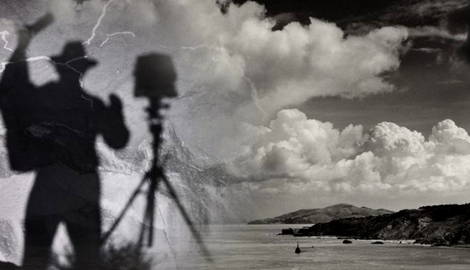
Ansel Adams is one of the most influential photographers of the 20th century, renowned for capturing the grandeur of Yosemite, the Sierra Nevada, and the American West. Beyond landscapes, his portraits and urban scenes reveal a masterful eye for light, composition, and narrative.
These five iconic photographs showcase Adams’s ability to transform nature, architecture, and human moments into breathtaking art, offering a window into the vision that shaped modern photography.
1. Yosemite’s Dramatic Clouds: Ansel Adams in the High Sierra
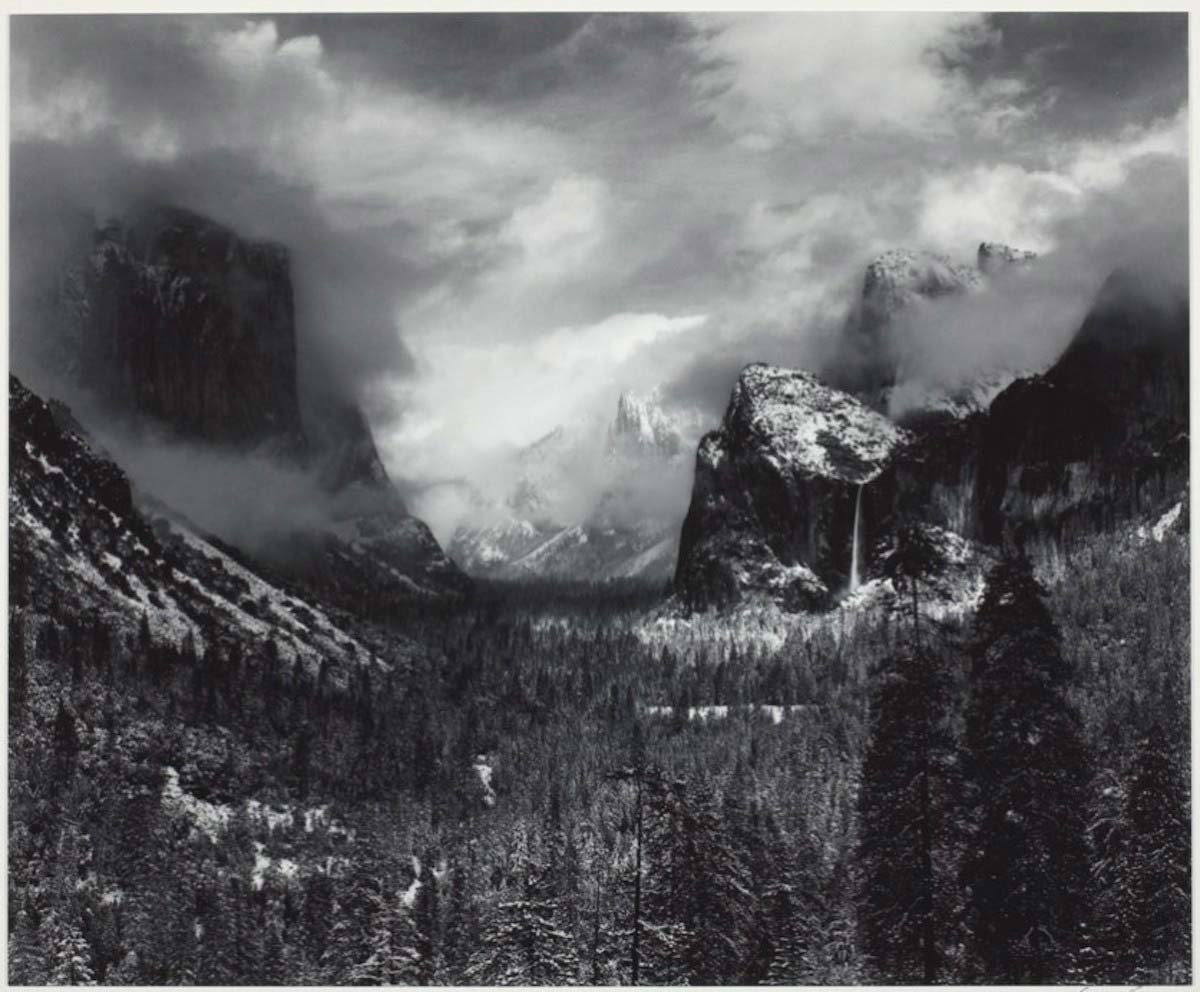
At fourteen, Ansel Adams visited Yosemite Valley for the first time, having only seen it in a book months earlier. He received his first camera there and took some of his earliest photographs. Already eager for hands-on exploration, Adams had left school at twelve, supplementing his education with private tutoring and trips to the mountains.
He returned repeatedly, climbing to new heights and capturing different perspectives of the High Sierra. This photograph shows a smoky quality, with clouds filling the upper third of the frame, lending a sense of expansiveness. As the forest recedes, the mountains open to the viewer, revealing the dramatic light and shadow characteristic of Adams’s early work.
His treatment of tonal saturation and compositional dynamics reflects admiration for early landscape painters such as Winslow Homer and Thomas Moran. The vitality and truth in his images convey the experience of standing atop the American West’s highest peaks. These early Yosemite photographs established a visual language Adams would carry throughout his career: one that combines technical mastery with a deep reverence for the natural world.
2. San Francisco Bay Through Adams’s Lens
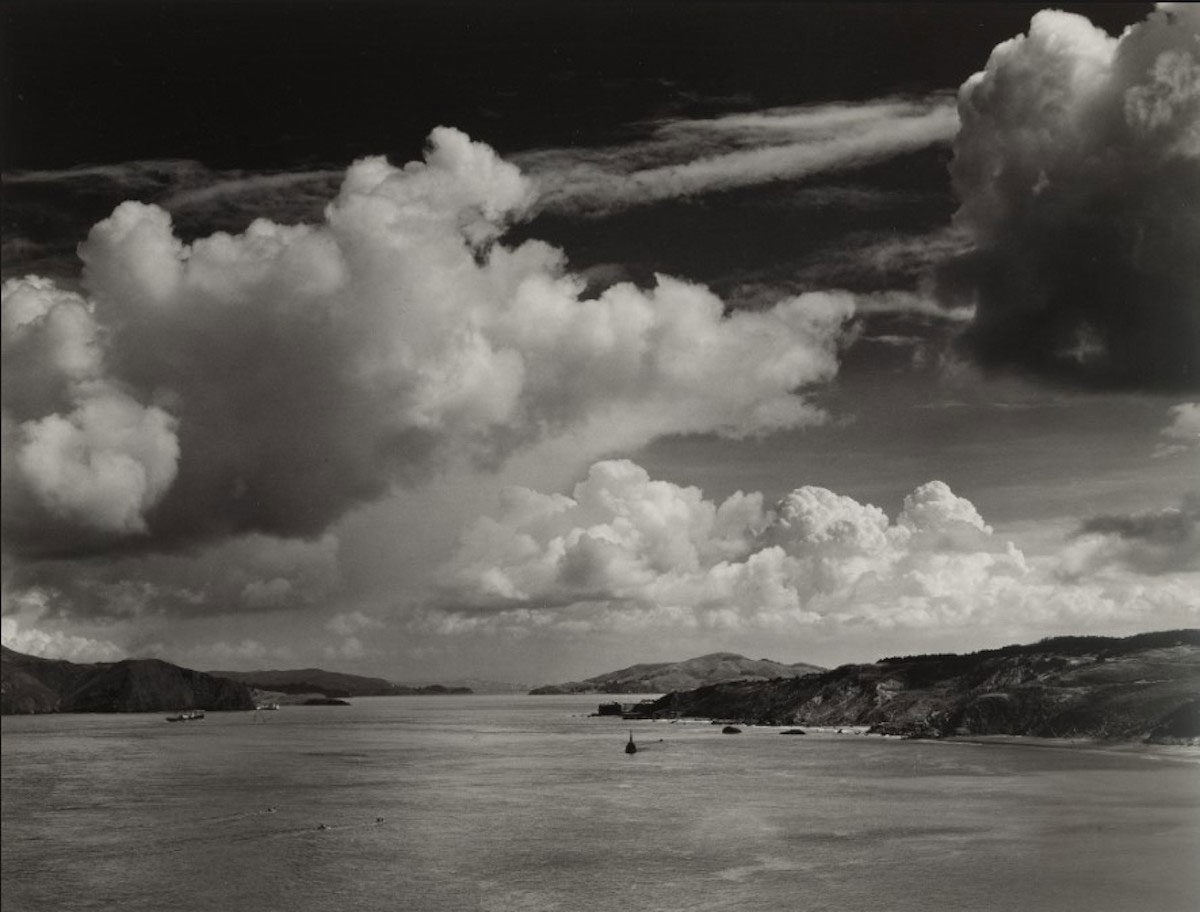
Adams’s photographs of San Francisco Bay reveal his fascination with the interplay of nature and urban life. In this image, clouds sweep across the sky while mountains recede into the horizon, creating the sensation of floating above the landscape. The photograph’s atmospheric perspective emphasizes scale, making the viewer feel small relative to the vast natural world.
Adams often photographed the Bay from varying altitudes and viewpoints to explore different light and composition. His 1953 return, after the construction of the Bay Bridge, captures a landscape reshaped by human intervention, reflecting his concern for environmental preservation.
Through these urban landscapes, Adams maintained the tension between human development and wilderness, balancing grandeur with intimacy. His attention to tonal gradation and compositional structure transforms ordinary scenes into profound meditations on scale, light, and the relationship between humanity and the natural environment. These works bridge his city and wilderness photography, revealing an artist equally attuned to industrial and untouched landscapes.
3. City Portraits: Stieglitz, O’Keeffe, and Adams
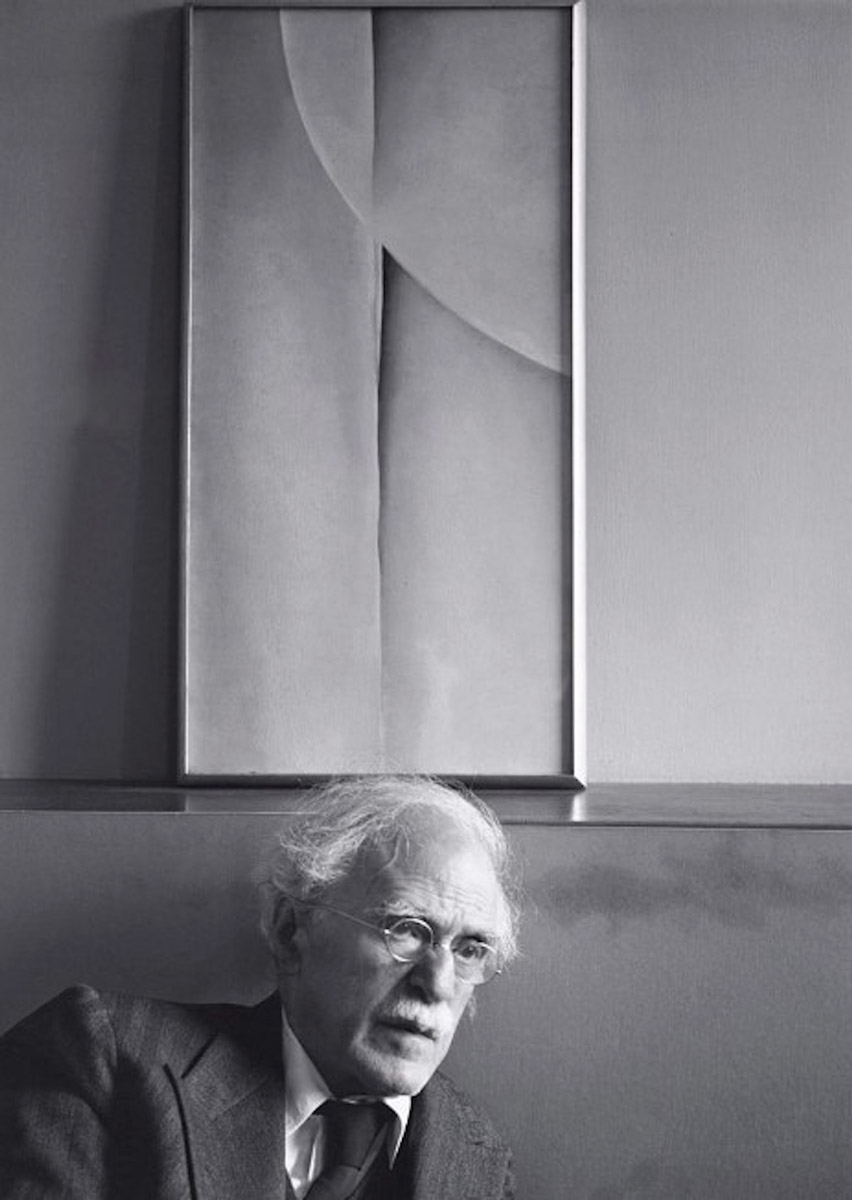
While Adams is best known for landscapes, his city portraits reveal his skill in capturing intimacy and personality. In this image, Alfred Stieglitz gazes away from the camera, with a painting by his wife, Georgia O’Keeffe, behind him. The light falls across his face, creating chiaroscuro and emphasizing depth and nuance.
Some scholars interpret this as a portrait of the couple, with the painting serving as an index for O’Keeffe. Adams’s urban photography reflects his interest in relationships, artistic dialogue, and human presence, providing a personal counterpoint to the vast, impersonal landscapes he often captured.
Adams’s portraits demonstrate his ability to merge technical mastery with narrative subtlety. Composition, light, and shadow are carefully orchestrated to convey emotion and context. Even in urban settings, his photographs retain a painterly quality, demonstrating that human moments can be as compelling and dynamic as the natural scenes for which he is best known.
4. Taos, New Mexico: Adams and the Desert Landscapes
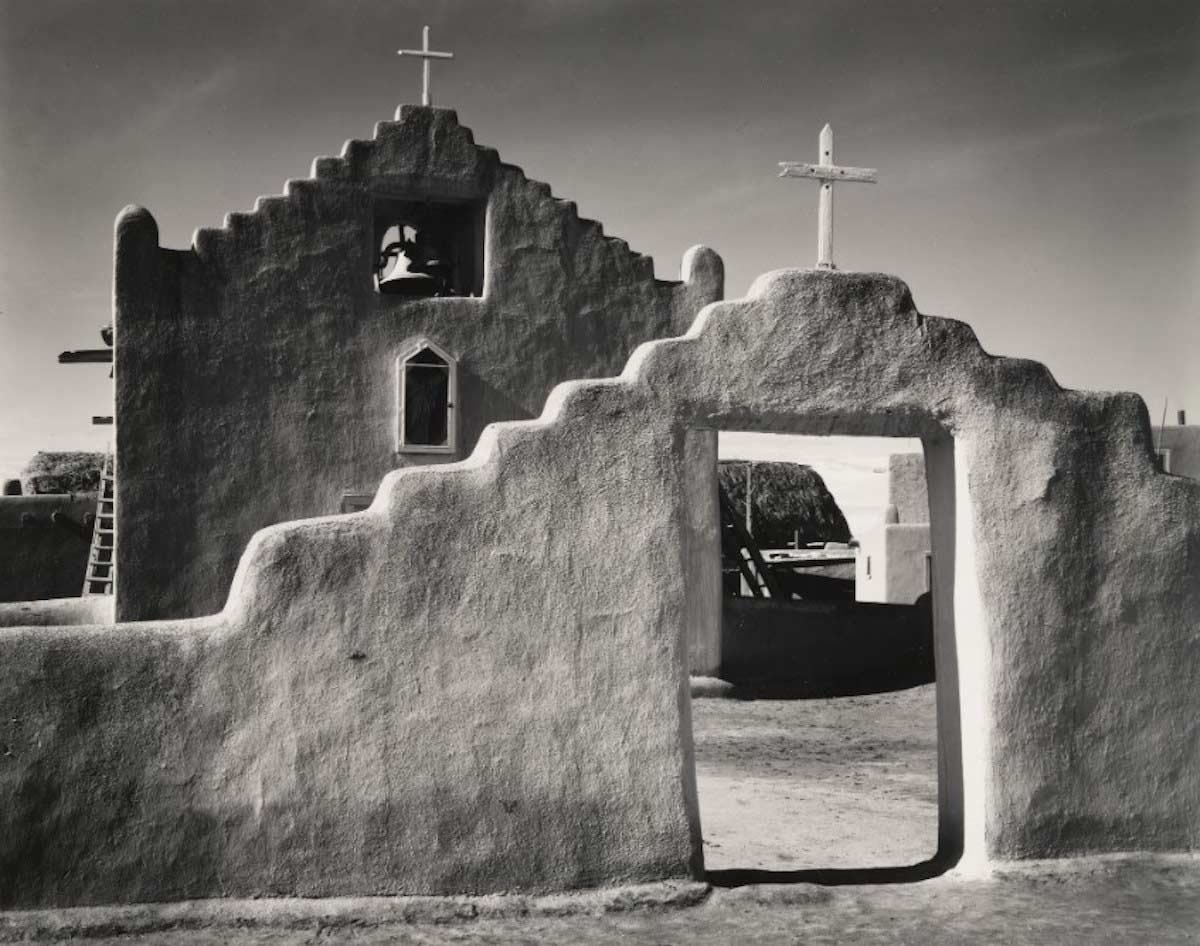
Ansel Adams’s trips to Taos reflect his regionalist approach, emphasizing a connection to nature and the people who inhabit it. During his stays, he visited Georgia O’Keeffe, who may have shared the landscapes that inspired her work. Simultaneously, Adams collaborated indirectly with Mary Austin on a book about Taos, pairing photographs with text to present the region’s environment and Indigenous architectural traditions.
Although no people appear in this composition, Adams’s photographs of adobe-style homes demonstrate how locals adapted earth-based materials to create sustainable, harmonious dwellings. These works celebrate the balance between human life and nature.
Adams was a passionate advocate for preserving the natural world. He wrote about the toll of industrial technology: “Man lived close to nature—a raw and uncompromising nature—and he was a part of the great pageant of sun, storm, and disaster. By the turn of the century…men turned upon the land and its resources with blind disregard for the logic of ordered use, or for the obligations of an ordered future.” His Taos images embody this philosophy, capturing beauty as a means to inspire protection and reverence for the land.
5. Moments in the Gallery by Ansel Adams
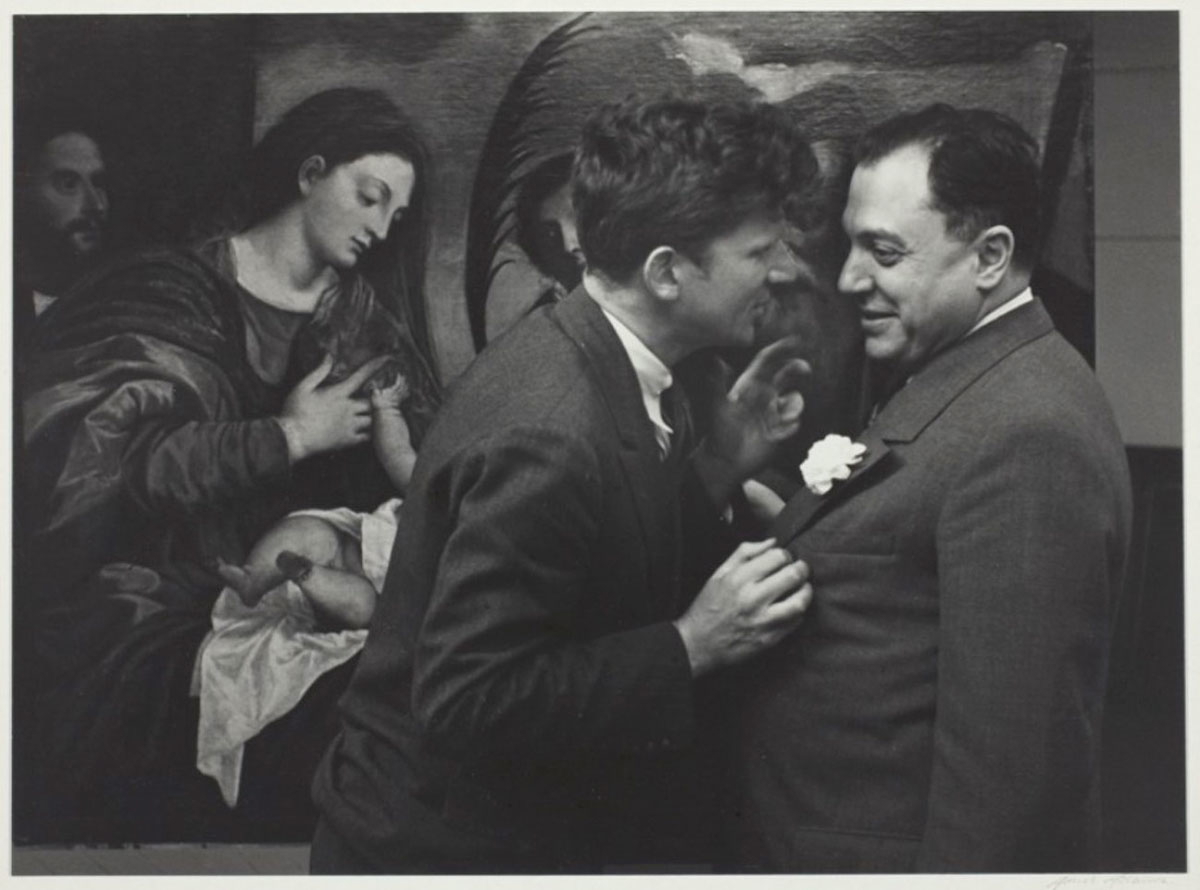
Adams’s work in galleries and urban interiors demonstrates his interest in human interaction and compositional symmetry. In this photograph, men converse while standing before a painting, their postures echoing the figures in the artwork behind them. This mirroring creates harmony and rhythm, animating the scene and drawing the viewer into the interaction.
Even in such intimate settings, Adams’s mastery of light, contrast, and depth transforms a simple moment into a visual narrative. His keen eye captures both gesture and atmosphere, highlighting subtleties of human behavior and engagement with art.
These gallery photographs complement his landscapes, showing that Adams’s artistry extended beyond mountains and rivers. By framing ordinary encounters with the same care he gave to Yosemite or Taos, he demonstrates that life can be observed and rendered as a work of art.