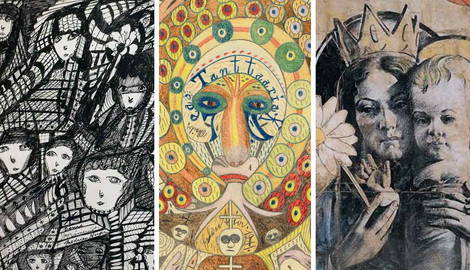
The term Art Brut, also known as Outsider art, was coined by Jean Dubuffet in 1945. It refers to works created by self-taught artists from marginalized backgrounds, including psychiatric patients, prisoners, and societal outcasts. These artworks often possess a naïve quality and do not adhere to traditional artistic conventions. In 1948, Dubuffet established the Compagnie de l’Art Brut to promote these creations, which are now showcased in exhibitions worldwide. Continue reading to learn more about Art Brut through the masterpieces of three notable Outsider artists.
Adolf Wolfli: A Schizophrenic Outsider Artist
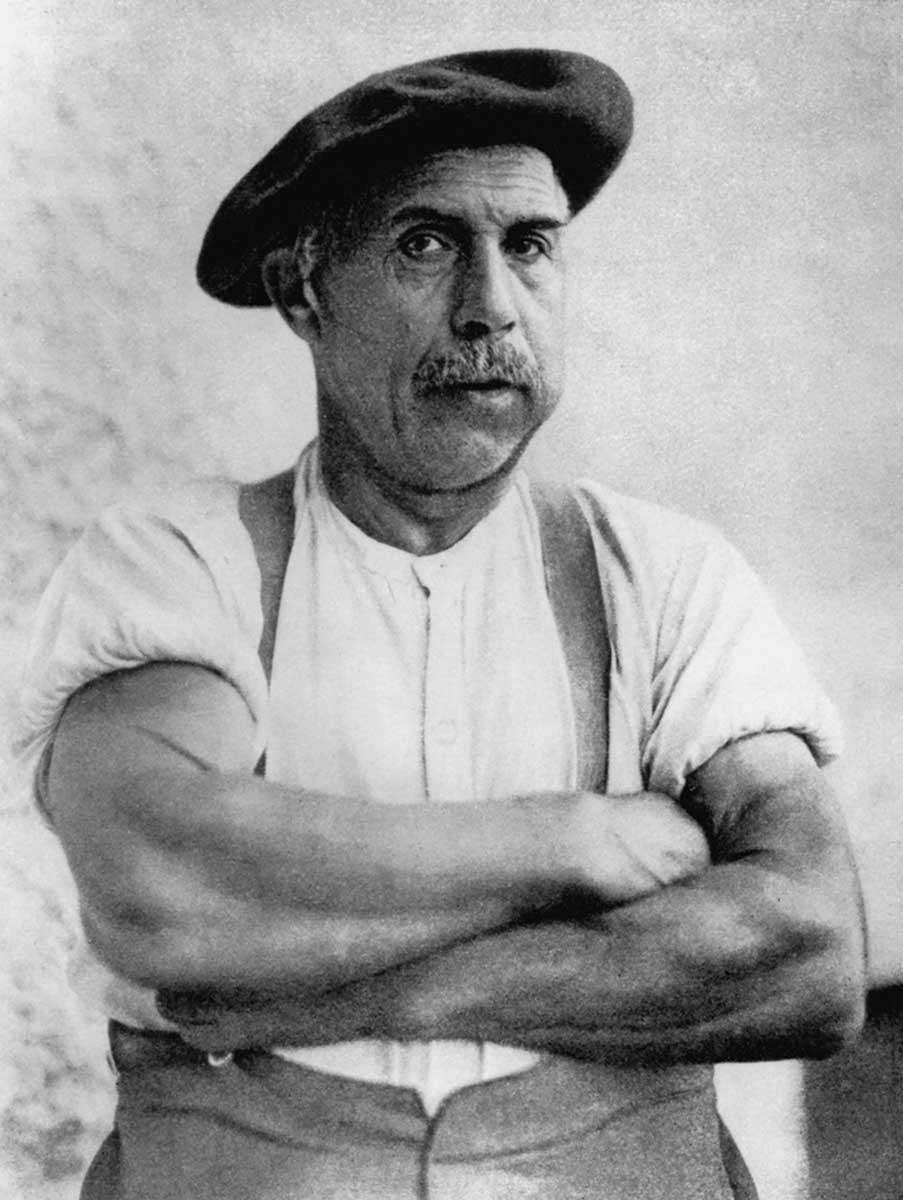
One of the most important figures of Art Brut is Adolf Wolfli. He was a Swiss artist, writer, and musician born in 1864 in Emmental, Switzerland. In 1870, his father abandoned the family, leaving Wolfli and his six older siblings in the care of their mother. When he was 9 years old, his mother passed away, and he was sent to live with several foster families. These families provided him with shelter and food in exchange for farm work. Due to his difficult circumstances, Wolfli received little formal education and endured a challenging childhood marked by poverty, as well as physical and sexual abuse.
In 1890, at the age of 26, Adolf was accused of molesting young girls and he was imprisoned for two years. After his release, he faced similar charges, which led to his transfer to the Waldau Psychiatric Hospital in Bern in 1895. He was diagnosed with schizophrenia and remained in the asylum until his death in 1930. During his stay there, he managed to externalize his illness and attract attention through his art.
His Early Drawings
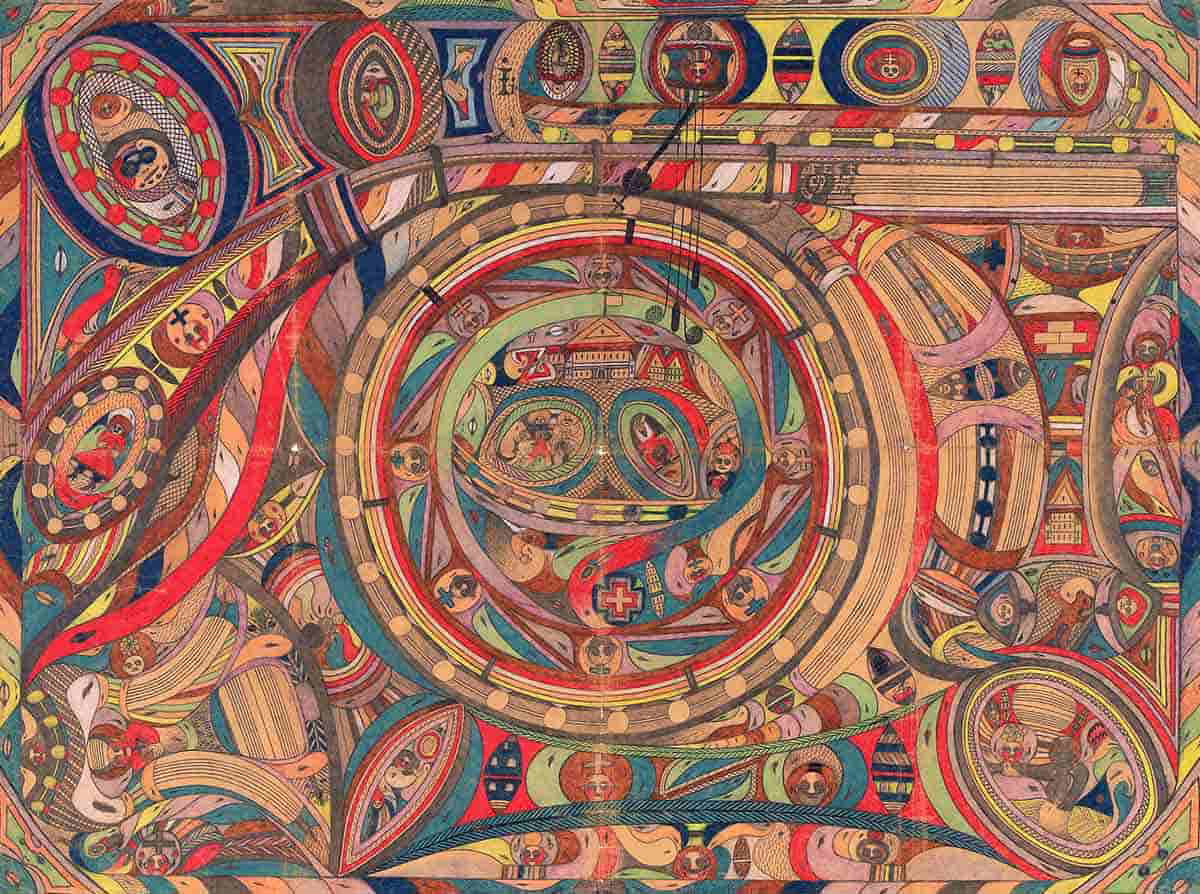
His earliest artistic activity started in 1899, but his most significant artworks emerged from 1907 onwards, with the support of resident psychiatrist Walter Morgenthaler. In 1921, Morgenthaler published a monograph called Madness and Art: The Life and Works of Adolf Wolfli, which led to exhibitions of Wolfli’s art in Zurich bookstores and expanded his recognition beyond the walls of the psychiatric hospital. In 1908, he started work on his great masterpiece, an autobiography, and a large collection of accompanying illustrations.
From the Cradle to the Grave
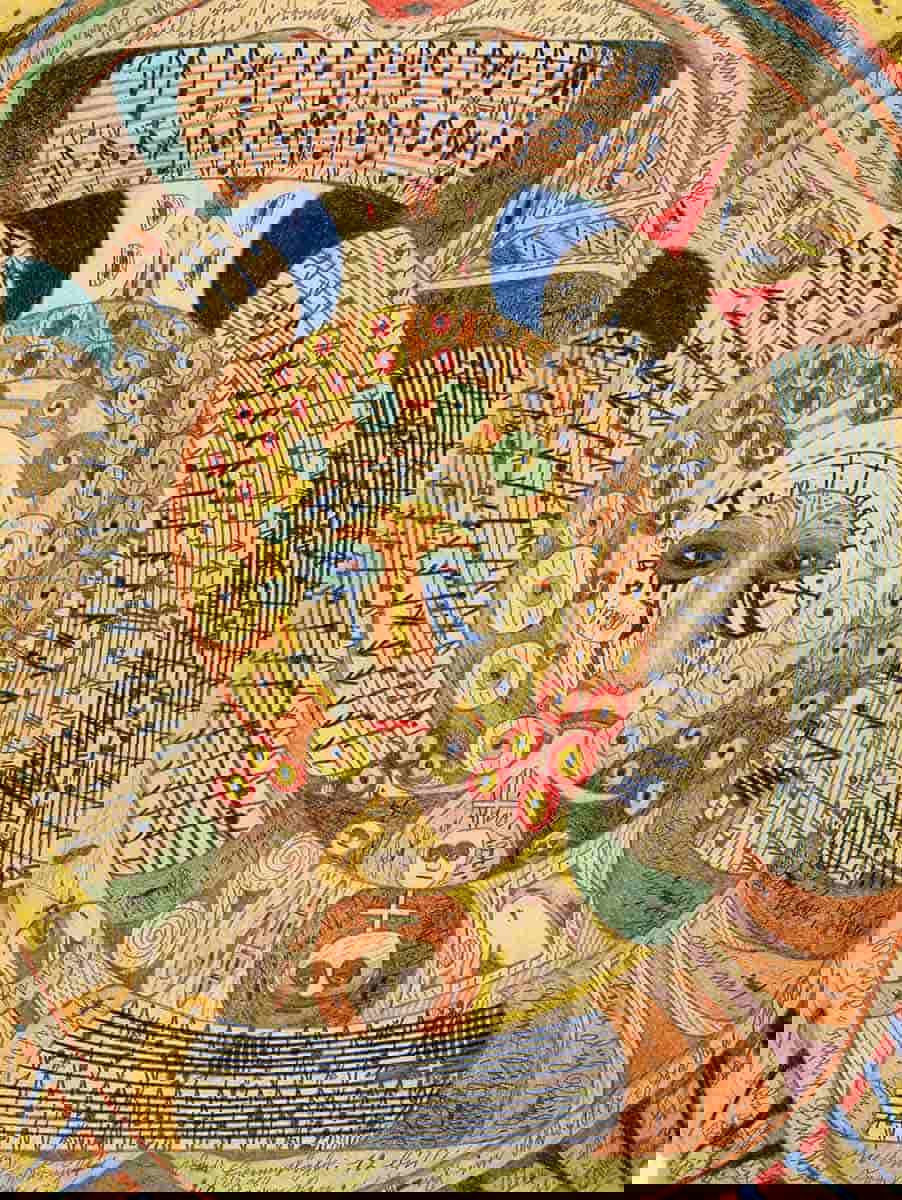
This estate of work includes prose, poetry, drawings, collages, and musical compositions. The narrative is divided into five sections: From the Cradle to the Grave (nine books, 1908-1912), Geographic and Algebraic Books (seven books, 1912-1916), Books with Songs and Dances (six books, 1917-1922), Album Books with Dances and Marches (eight books, 1924-1928), and Funeral March (16 books, 1928-1930, unfinished). Despite the work coming to an abrupt end due to Wolfli’s death, these five volumes include 25,000 pages and feature over 1,600 drawings and collages across forty-five self-bound books and sixteen exercise books.
Geographical and Algebraic Notebooks
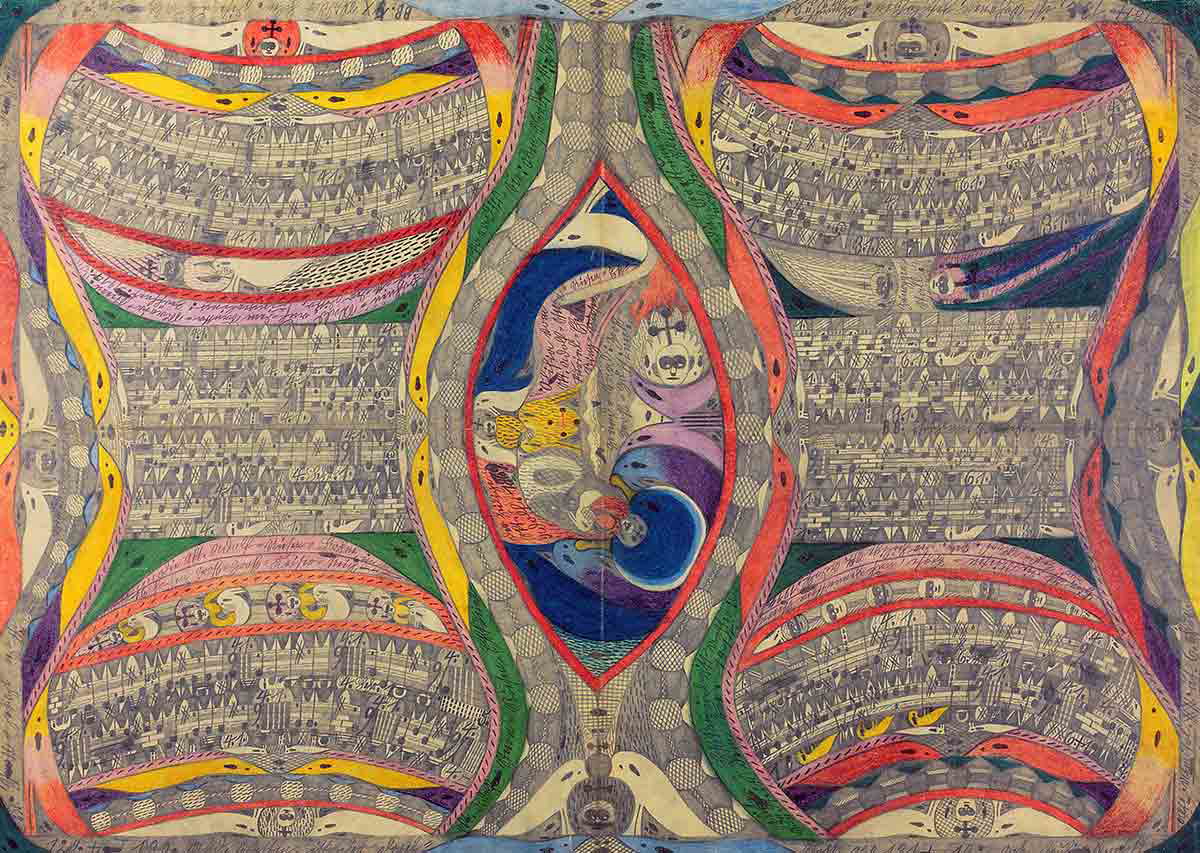
In the volume Geographical and General Books Adolf creates a Utopia. He imagines a future in which he proclaims himself Saint Adolf II and reigns as planetary ruler. He plans to buy and rename the whole globe, turning Switzerland into the Forest of St. Adolphus and the Ocean as St. Adolf Ocean. His team, the Giant Travel Avant-garde, launches cosmic travel, while Wolfli develops a new number system and manages the capital assets of St. Adolph. In this utopia he embodies the grandeur and creativity of his personality, building a world in which he can feel authentic.
Art of Bread and Butter
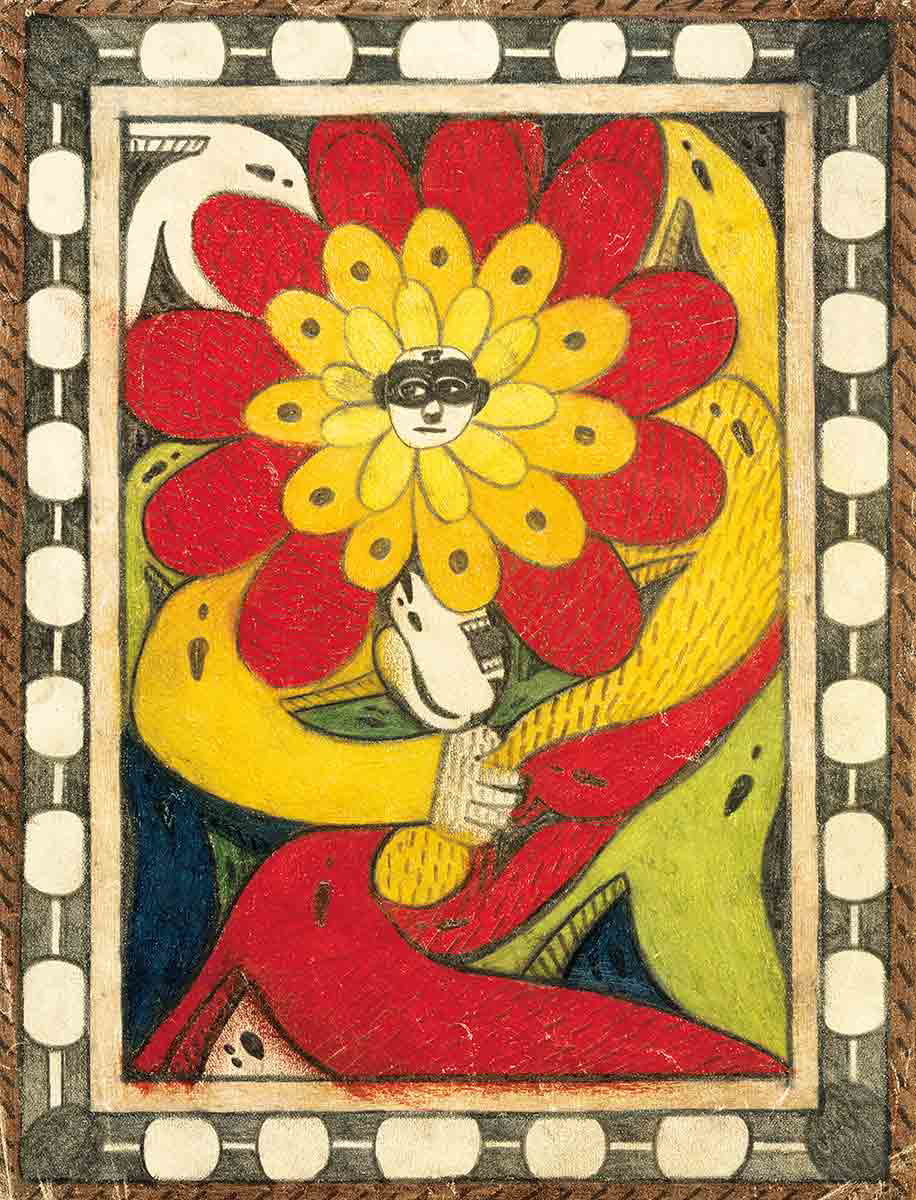
In addition to his narrative creations, Wolfli also made one-sheet drawings. Initially, these were made sporadically, but from 1916, as their popularity grew among fans and collectors, he began to produce them much more frequently. He often traded these drawings for colored pencils or tobacco. Walter Morgenthaler, his psychiatrist, referred to these works as the Art of Bread and Butter. About 760 of the thousands of works in this category survive today.
His work is intricate and symbolic, filled with geometric patterns and fantastic themes. It reflects an obsessive and surrealistic tendency, featuring a strong emphasis on symmetry and a skillful use of color. The materials he utilized included colored crayons, pencils, and cut-outs from magazines and newspapers. He often depicted enigmatic faces and identified himself either as St. Adolphus II or Dufy, showcasing his complex personality. His masterpieces played a significant role in the Art Brut movement and were exhibited by Jean Dubuffet in 1949. His works are currently in the Waldau Clinic Museum, the Adolf Wölfli Foundation, and the Museum of Fine Arts in Bern.
Madge Gill: A Visionary Artist
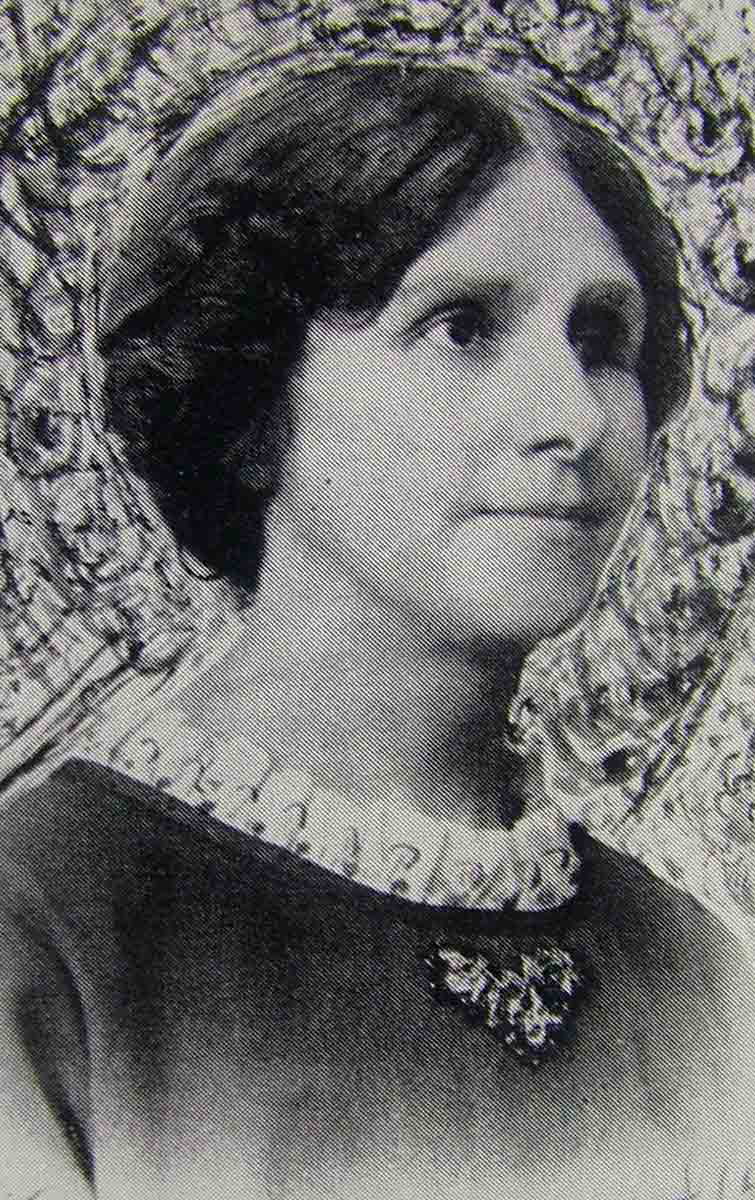
Madge Gill is regarded as one of the most esteemed self-taught artists in the world and a notable figure in British Outsider Art. Born in London in 1882, she spent most of her life there. As an illegitimate child, she was raised by her single mother and aunt until the age of nine, when she was sent to an orphanage. At 14, she moved to Canada and was compelled to work as a hired servant. However, she returned to England four years later and found a job as a nurse in London.
After marrying her cousin, she faced multiple tragedies, including the death of two of her four children and the loss of one eye due to a serious illness. Like many working-class people of her generation, Gill turned to Spiritualism. At the age of 38, she gained recognition as a well-known medium, holding sessions with the assistance of her spirit guide Myrninerest. Madge connected with Myrninerest through trance, facilitated by music, knitting, writing, and, particularly, painting. She skillfully explored different techniques and formats: paints, inks, and textiles.
Colorful Abstraction
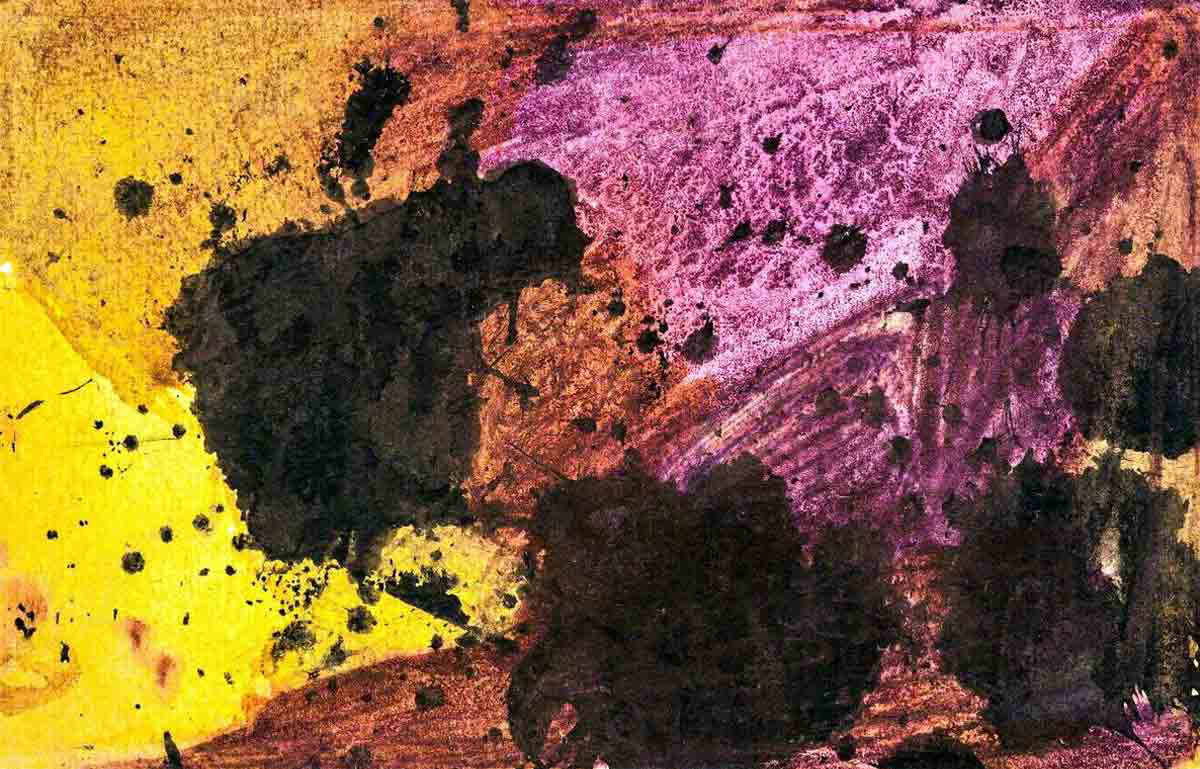
She is best known for her numerous postcard-sized drawings and large-scale works on calico rolls. Many of her pieces, including A Drawing with Splatters, reflect the style of Abstract Expressionism. These works were created using colored inks and convey an arbitrary theme through the vibrant colored forms. In addition to abstract colored works, one of Madge’s favorite subjects was portraits of women with pale faces and seductive looks. Drawn in monochrome ink, either in units or in groups, these portraits are awe-inspiring.
Her World of Faces
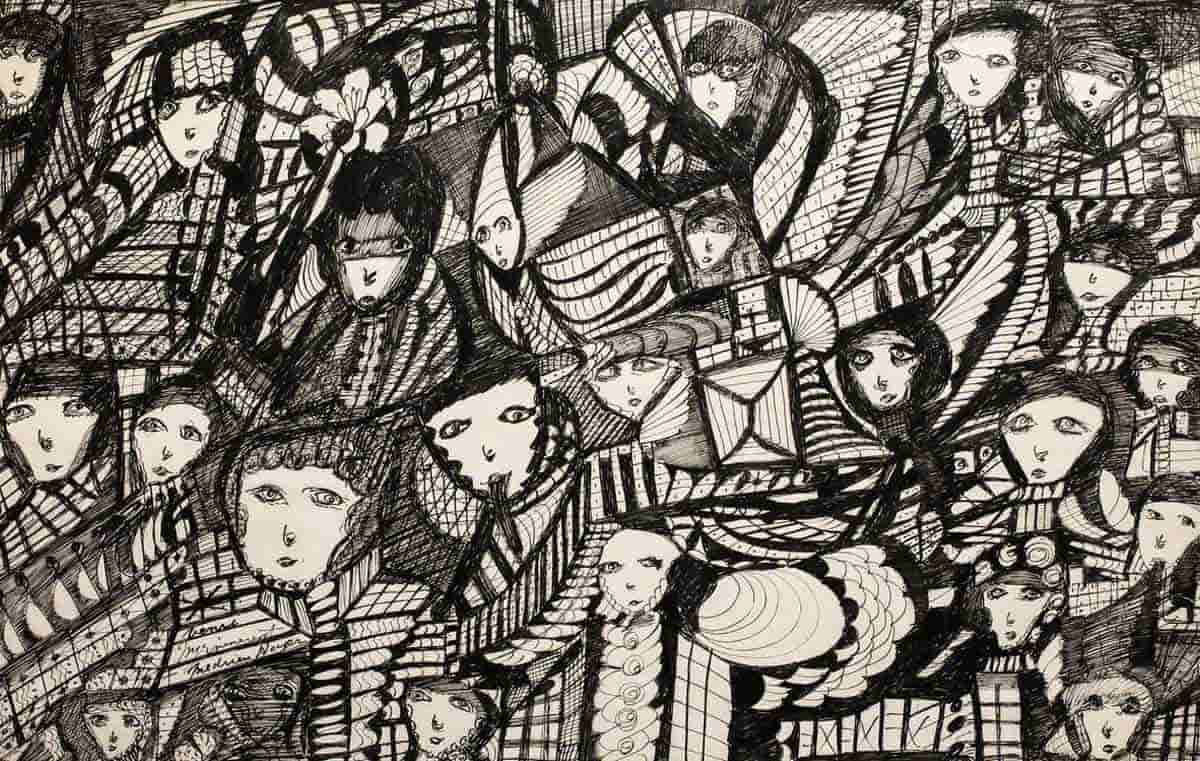
It is tempting to analyze these portraits within Gill’s life story. Perhaps she was trying to reference her lost daughter, her mother, or some feminine ideal. Maybe these were self-representations or efforts to stabilize her delicate existence, as if through fleeting snapshots. It is certain that through creation, even as Myrninerest, she allowed herself to soothe her wounded spirit and express all that she might not be able to communicate in words.
Black and White
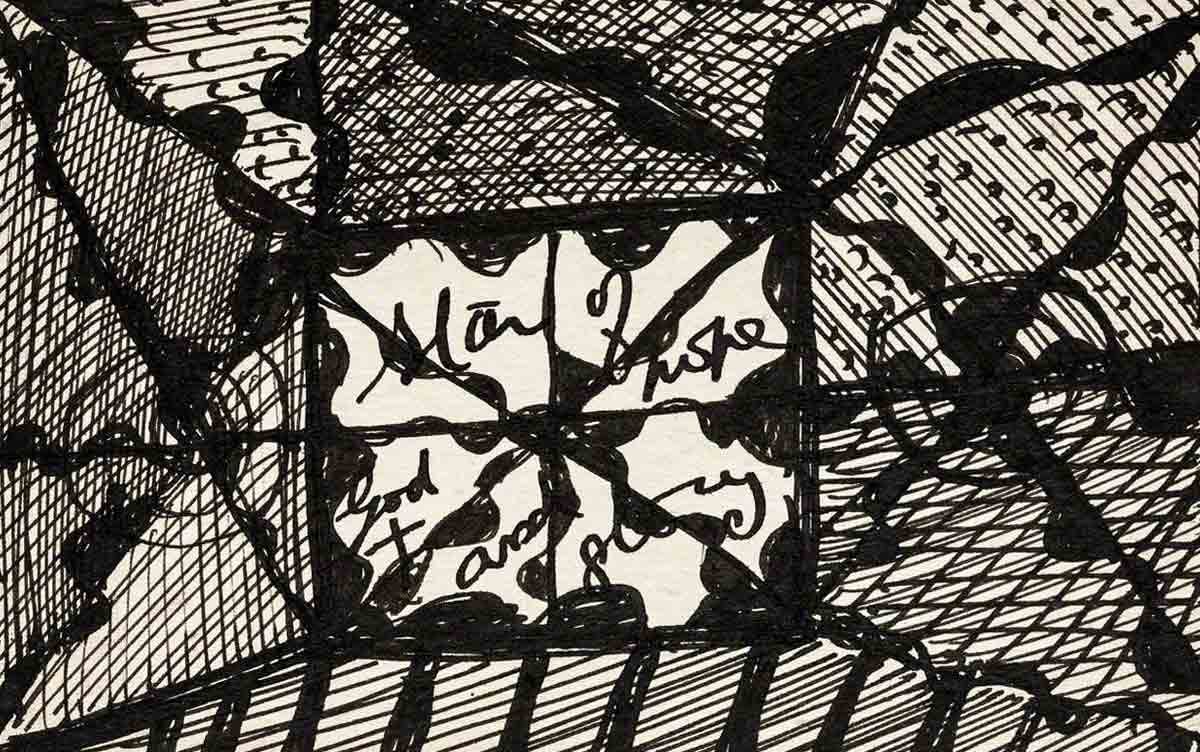
On closer examination, many of her monochrome artworks reveal mysterious symbols and phrases, often referring to biblical and astrological themes. This supports her claim that they were created under the influence of her spiritual mentor, Myrninerest. Madge was one of the few outsider artists who had the opportunity to exhibit her work during her lifetime. In 1939, at the urging of her son, Laurie, she showcased an artwork at the Whitechapel Gallery that was nearly forty feet wide, likely the largest piece she ever exhibited, spanning an entire wall of the gallery. She continued to present her art annually at the Whitechapel until 1947. In fact, she often declined gallery proposals, explaining that her masterpieces could not be sold as they all belonged to Myrninerest.
Vibrant Patterns
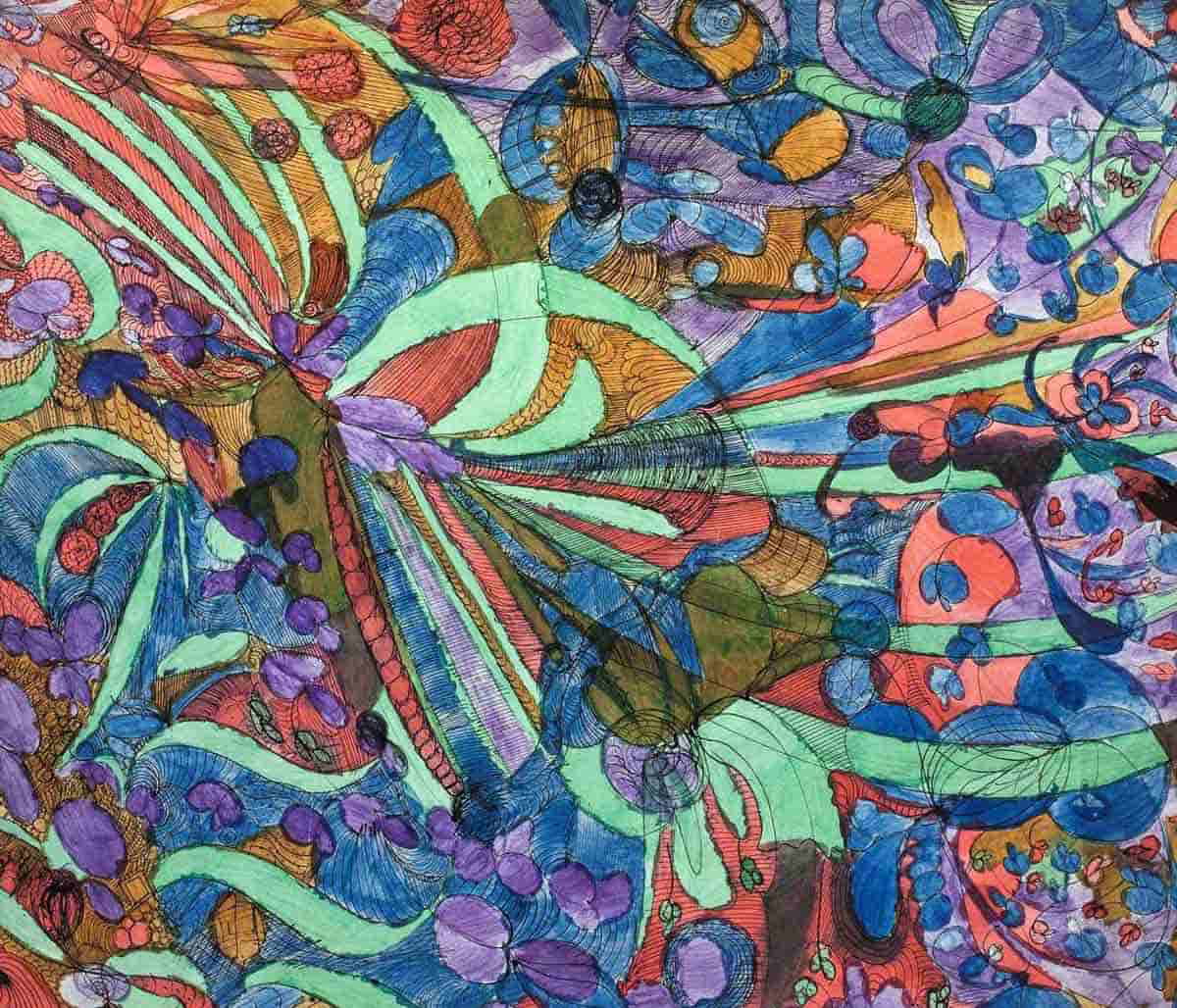
She also created a series of works featuring colorful geometric and botanical motifs characterized by striking color combinations and abstract themes. Despite the high demand for her paintings, Gill was reluctant to part with them during her lifetime. This changed after her death. In 1968, a retrospective exhibition at the Grosvenor Gallery in the West End finally brought her the recognition that had eluded her while she was alive. A selection of her works, including the stunning calligraphic piece The Crucifixion of the Soul, contributed to the success of the 1979 Outsiders exhibition at the Hayward Gallery.
Her artwork is currently part of several public collections, including the Collection de l’Art Brut in Lausanne and the Aracine Collection in Lille. Since 2018, galleries and museums in London have hosted events and projects showcasing her masterpieces. Most recently, they were exhibited at the Venice Biennale during the 60th International Art Exhibition, titled Foreigners Everywhere, which was curated by Adriano Pedrosa.
Henry Darger: An Isolated Self-Taught Artist
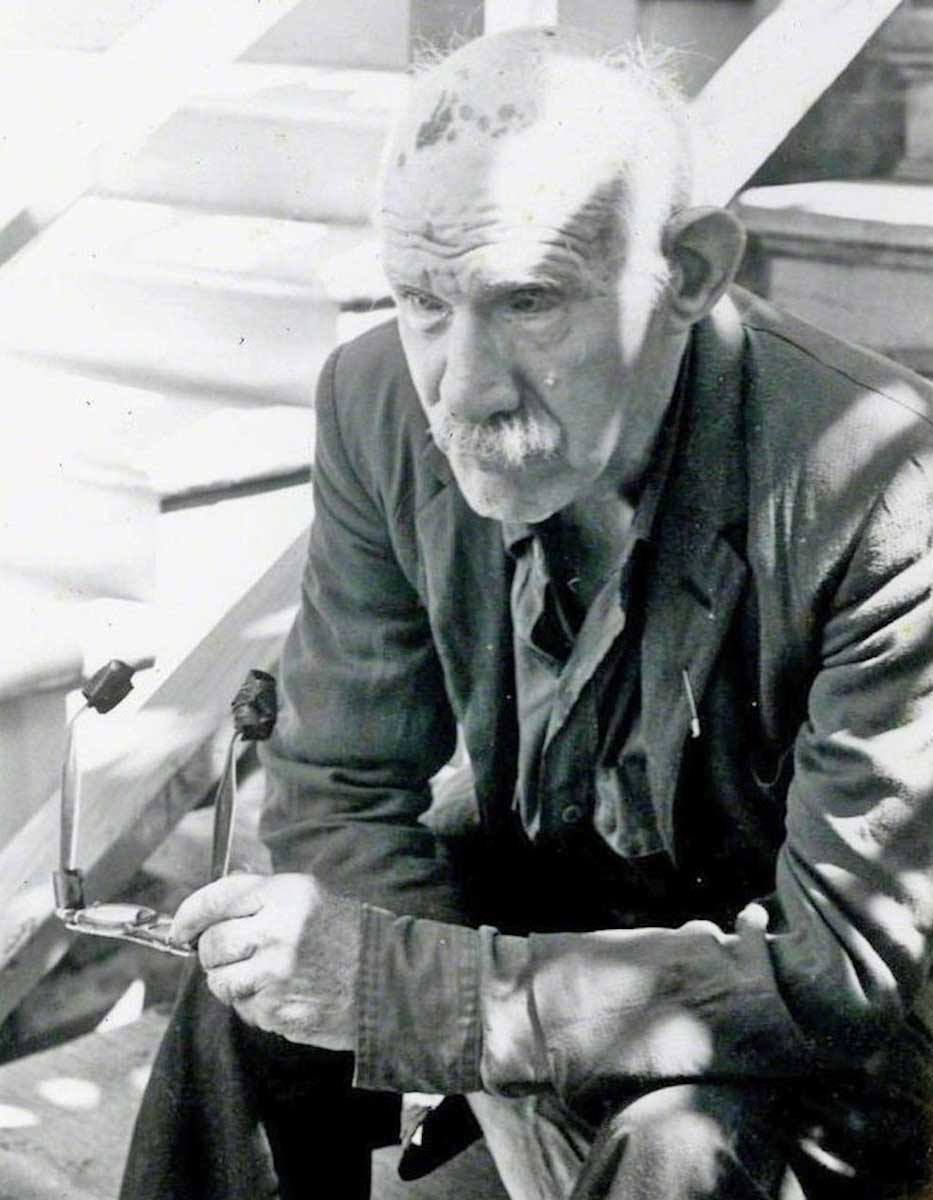
In 1972, Henry Darger, a retired custodian, moved out of his apartment to spend the last year of his life in a nursing home. He left behind an extraordinary treasure that surprised his landlords and enriched the world of Outsider art. For over four decades, his room was a vault for his collections and a workshop for his creations. Among the multitude of newspapers, magazines, and coloring books, a variety of his original works was discovered. This included a six-volume weather journal, a 5,000-page autobiography, a 15,000-page novel, and numerous drawings, paintings, and collages. It is believed that Darger never shared these works with anyone.
Henry was a lonely man leading a simple and impoverished life. Unlike the two previous artists, he created his work in isolation and only became recognized after his death. This recognition happened thanks to his landlords, photographer Nathan Lerner and musician Kiyoko Lerner, who took care of his masterpieces and shared them with the world. Prior to that, Darger was often viewed as the weird old man in the neighborhood. He attended masses daily, spoke to himself, and collected discarded items from the rubbish. However, he was much more than that.
The Realm of the Unreal
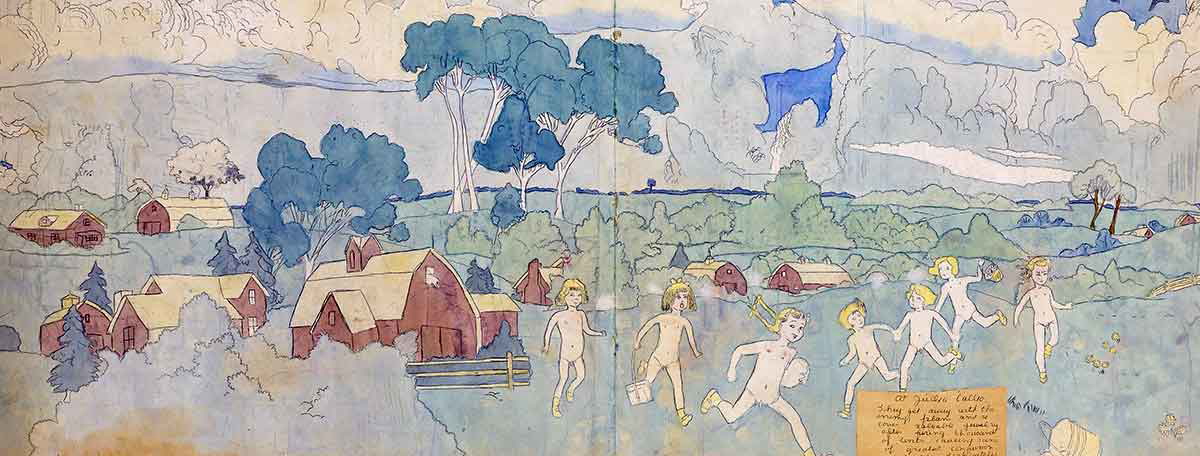
He was a genius, in fact. Born in Chicago in 1892, Darger faced numerous traumatic experiences in his early life. After losing his mother at four and having his sister adopted, his father sent him to the Mission of Our Lady of Mercy, a Catholic orphanage, where he suffered abuse. At 12, he was placed in the Illinois Asylum for Children with Intellectual Disabilities, which also neglected and mistreated the children. Darger attempted to escape three times and finally returned to Chicago in 1909 when he was 17 years old.
That same year he started working as a janitor at a hospital and writing his saga The story of Vivian Girls, in what is known as The Realm of the Unreal, of the Glandeco-Angelinian War Storm. Caused by the Child Slave Rebellion. That was a 15,000-page fantasy novel about a war of evil-non Christian Glandelinians, who abused and enslaved children, and good Christian Angelinias, who sought to liberate children. This typewritten book was accomplished by hundreds of illustrations that represent the adventures of Vivian girls and 8,500 pages of handwritten sequel shorts entitled Further Adventures of the Vivian Girls in Chicago.
The Vivian Girls
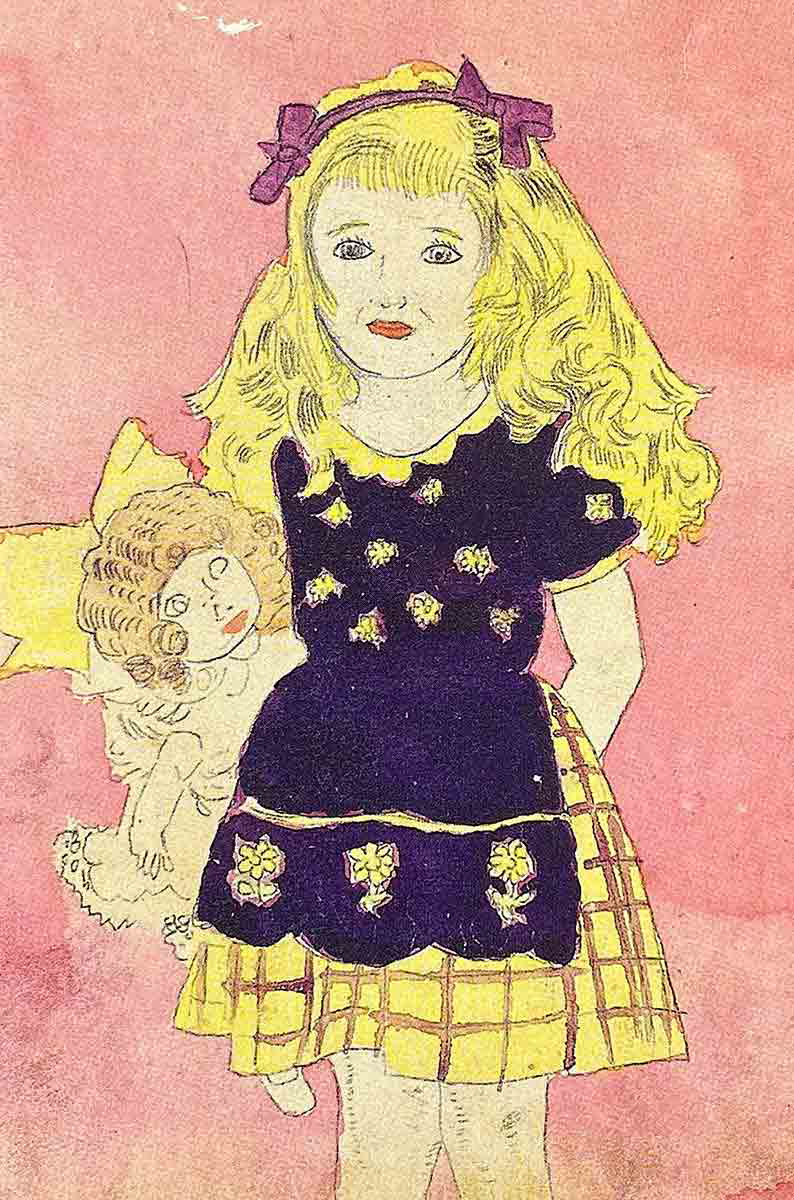
The Vivian Girls were seven princesses from the Christian Angelinian nation of Abbieannia, known for bravely rescuing imprisoned children. In The Realm of the Unreal, even little girls are extraordinary, possessing a unique nature that makes them appear with male genitalia. This portrayal suggests that Darger viewed the female gender as powerful or perhaps thought they should be represented this way due to their extraordinary abilities. His saga allows him to explore childhood traumas while incorporating strong religious and mythical elements, possibly influenced by his World War I experiences. The story features a double ending: one in which good triumphs and another in which evil prevails.
His Collages
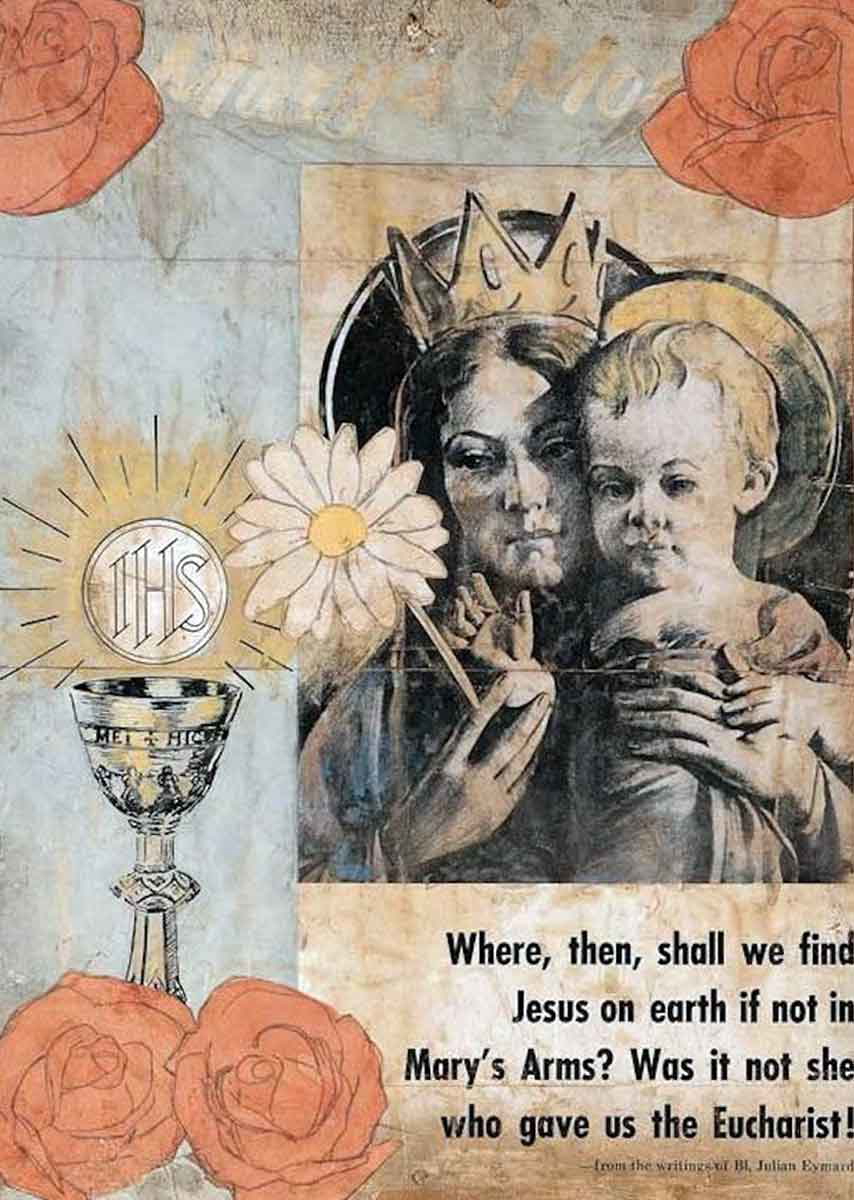
Despite living and working in isolation, he used many pioneering techniques of the 20th century. Like Dada and Surrealist artists, he created works in colored pencils, watercolor, and photo collages, using clippings from newspapers, magazines, and advertising brochures. His figures with strong expressions and enigmatic themes. They evoke mixed emotions, and it is unclear whether he was promoting barbarism or freedom. Nevertheless, his autobiography suggests that he considered himself a protector of children and believed they were more important to God than adults.
Outsider Artist’s Colorful Paintings
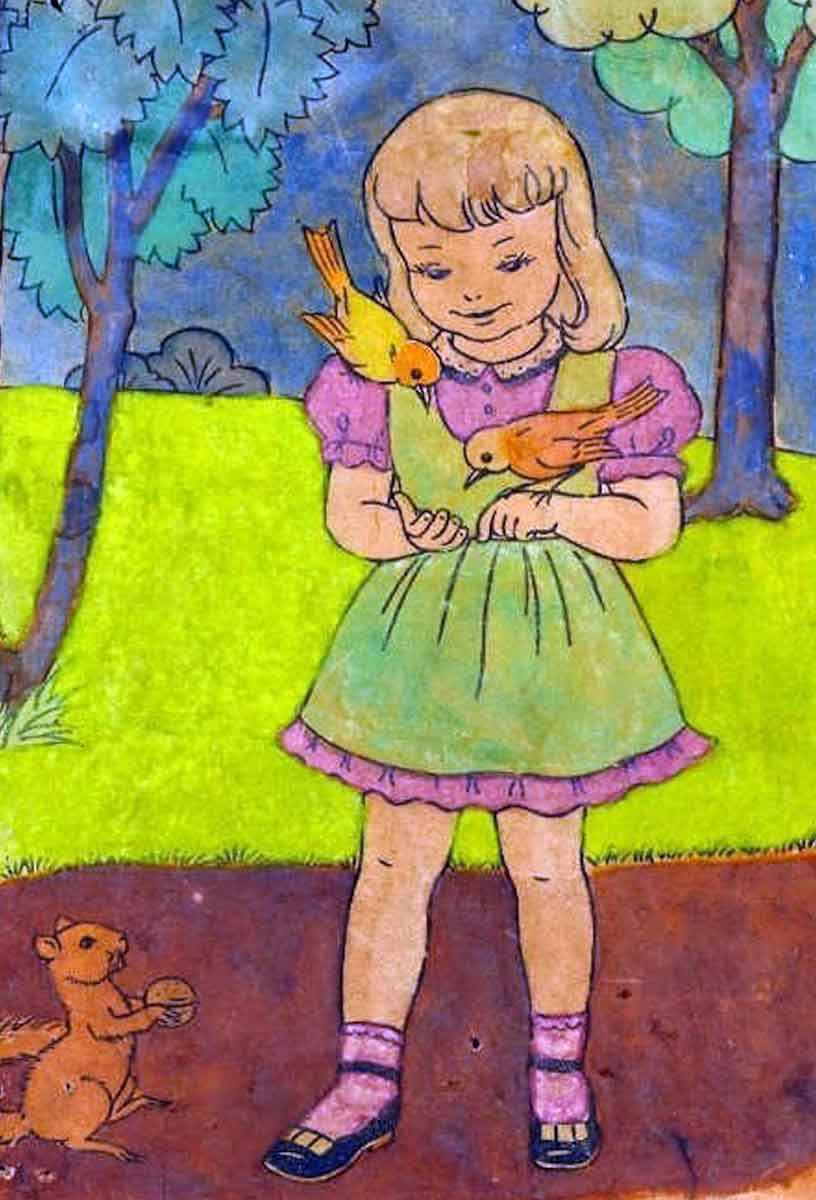
Darger created vibrant, colorful artworks. He primarily used watercolor, incorporating pastels and showing great skill in depicting details. He often contrasted bright hues with darker colors, creating an underlying sense of malevolence that threatened to overwhelm his subjects a few panels later. Henry also used Kodak’s photo-labs to enlarge and rework images from his many magazine cuttings. The Vivian Girls were copied from cartoons such as Little Annie Rooney. Darger worked with intense passion and earnestness, using a palette that was simultaneously tender and violent, leaving viewers with a sense of unease and ambivalence.
Shortly before his death in 1973, he bequeathed all his possessions to his landlords. His work is now in the collections of major museums, including the Museum of Modern Art and the American Museum of Folk Art in New York. Darger created a world in which he could finally interact with others. Although he created it for himself, he inspired musicians, directors, and artists, enriching the field of Outsider Art.
These are just three examples of many Outsider artists, each of whom, in their own unique way, created a brand new world where they felt like insiders. Through their art, they found a way to free themselves from the traumas, psychoses, or marginalization they faced in society. In recent years, Art Brut has gained recognition within the broader art movement landscape. However, there is still an ongoing debate about whether these works should be classified as art forms or merely random creations. Regardless, this genre continues to inspire and captivate viewers.