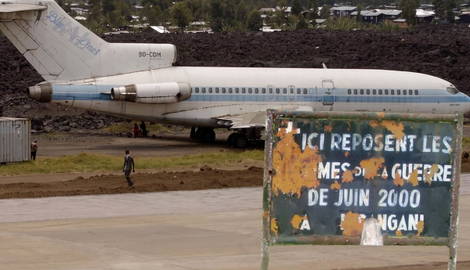

In the aftermath of the Rwandan Genocide, a refugee crisis developed that led the tiny nation to invade Congo. Rwanda has continually invaded its larger neighbor over the years. One of the more significant actions taken by Rwanda was Operation Kitona, one of the most ambitious military operations in not just African, but world history.
How the Rwandan Genocide Sparked a Regional Crisis
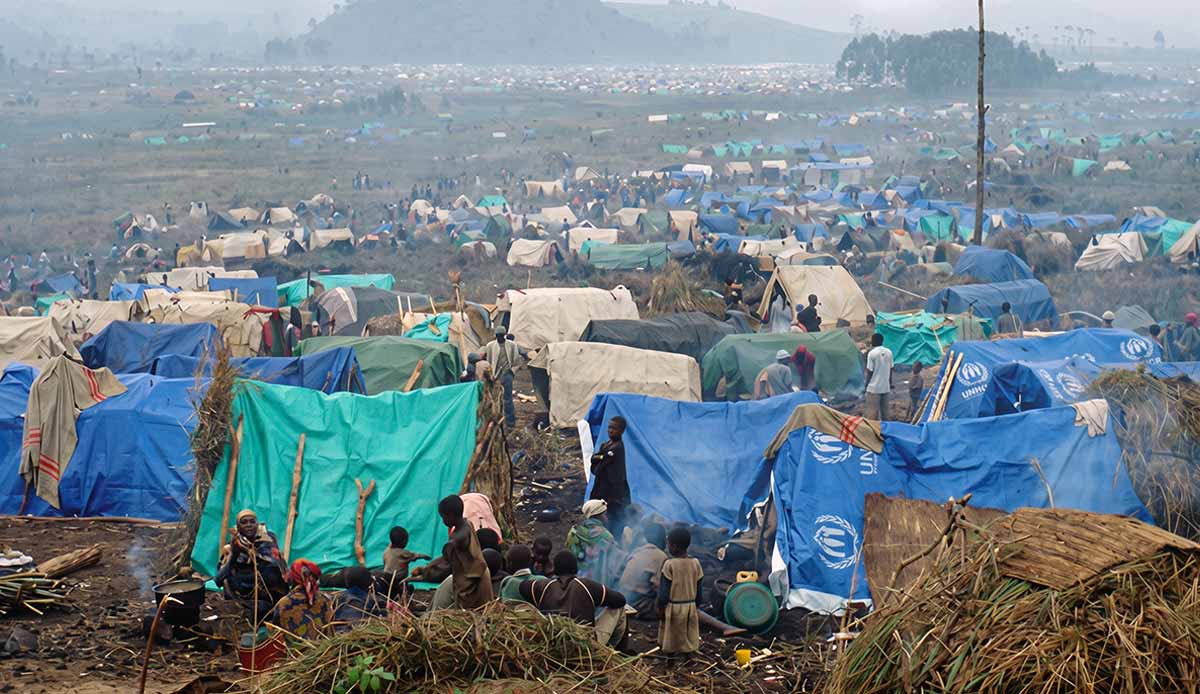
In the late 20th century, Congo was still known as Zaire, and its leader was the dictator Mobutu Sese Seko. However, it was also surrounded by countries engaged in civil wars. It would not be long until these conflicts spilled over the borders.
In April 1994, the Rwandan Civil War turned into genocide, and 800,000 people were killed in three months. Despite inflicting a genocide on the Tutsi population living in Rwanda, the Rwandan government could not defeat the Rwandan Patriotic Front, the Tutsi rebel group that eventually won the civil war. Fearing retaliation from the victorious rebels, hundreds of thousands of Hutu civilians fled across the border to Eastern Congo. The new Rwandan government demanded an immediate repatriation of all refugees so they could ascertain who had taken part in the genocide. Mobutu refused to cooperate, as he hoped to use the refugee crisis to receive foreign aid and gain concessions from his regional neighbors for his cooperation.
The Rebel Alliance That Toppled Dictator Mobutu

Rwanda was not going to allow their enemies to regroup and restart the civil war. Rwanda’s ally Uganda was similarly unhappy with Mobutu, as he was allowing their opponents (such as Joseph Kony) to operate within Zaire’s borders. And so, the two countries began to organize an alliance composed of Mobutu’s enemies, both internal and external. In October of 1996, the Alliance of Democratic Forces For The Liberation of Congo was formed. By May of 1997, the multinational force had successfully defeated Mobutu’s army and deposed the longtime dictator.
The victory over Mobutu resulted in Zaire being renamed back to Congo, and Laurent Kabila assuming the office of president. Things seemed positive at first, as Kabila had good relations with the countries that had brought him to power. However, distrust soon set in, as many Congolese citizens saw him as a Rwandan puppet. Things grew worse when Kabila accused Rwanda of smuggling mineral resources out of Eastern Congo, while Rwanda accused Kabila of supporting the FDLR, the organization that participated in the Rwandan Genocide.
With tensions rapidly rising, war broke out once again on August 2, 1998.
Hijacked Airliners and the Riskiest Airborne Blitz in History
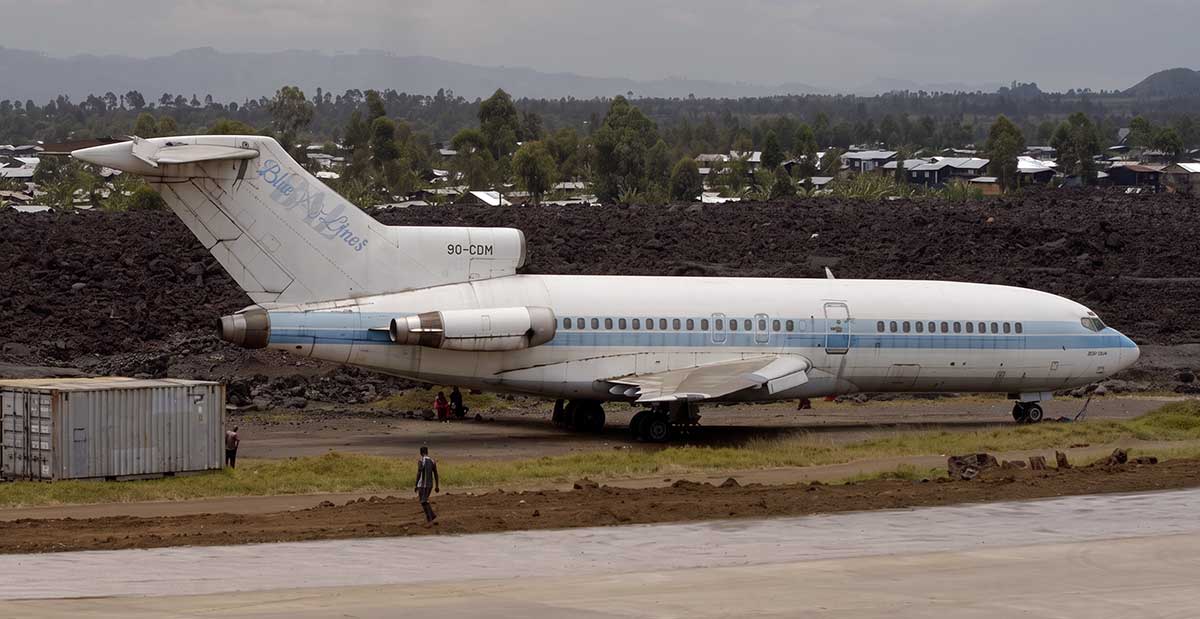
While Rwanda and its allies had achieved a victory in the first war over the course of seven months, it desired to end the second war even more quickly. With the Congolese army focused on the war in its Eastern Provinces, Rwanda devised a plan to oust Kabila in one fell swoop. On August 4, Operation Kitona was launched. Composed of 3,000 Rwandan and Ugandan soldiers, the operation was led by the Rwandan general James Kabarebe, who had also masterminded the plan. Under his orders, the commandos hijacked several Boeing 727’s from Goma International Airport. The pilots were ordered at gunpoint to fly to Kitona Airbase, over 900 miles away in Western Congo.
Upon arrival, Kabarebe’s men captured the airbase and then began their rapid advance to Kinshasa, Congo’s capital and the home of Kabila. The Congolese forces in the area were caught by surprise and unable to halt the advance. To make matters worse, Kabarebe was able to recruit dissatisfied Congolese soldiers, bolstering his numbers. By August 13, Kinshasa’s power had been cut, panic had set in, and an invading army was only a few days away. Desperate for help, Kabila called on his allies to support him. And they did.
Zimbabwe was the first to send help. Airlifting commandos to meet the Rwandan advance, they were soon accompanied by a well-trained Angolan army that had advanced into Congolese territory to support Kabila. With the arrival of Kabila’s allies, Kabarebe made an attempt to take Kinshasa quickly. Despite coming alarmingly close to penetrating the city, his attempt failed, as Zimbabwean special forces and air power managed to repel the attackers. With the failure of Operation Kitona to eliminate Kabila, Kabarebe ordered his army to withdraw on August 30.
A Months-Long Jungle Escape and the Onset of Africa’s World War
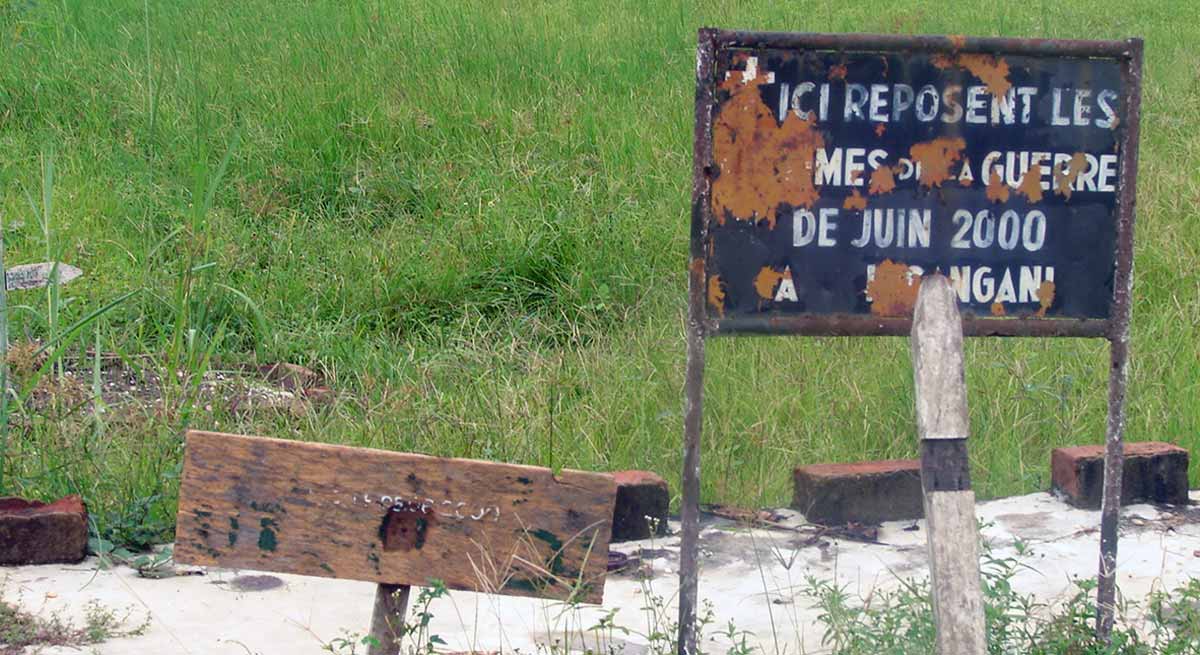
Even after ending the operation, Kabarebe’s force faced a difficult journey home. Surrounded by their enemies on three sides, they were forced to retreat southward to Angola in the hope of finding an airport that could provide them an airlift home. When they finally managed to capture one, they found that its runway was too small. For the next several months they worked to enlarge the runway, all the while defending from Angolan army attacks. By December 24, they had finally managed to be airlifted home, after almost five months of fighting.
While Kabila’s Congo had managed to survive the direct assault, Operation Kitona was only the beginning. The Second Congo War would escalate into a continental conflict that would drag on until 2003, and claim millions of lives. One of those lives was Laurent Kabila, who was assassinated by his own bodyguard in 2001.