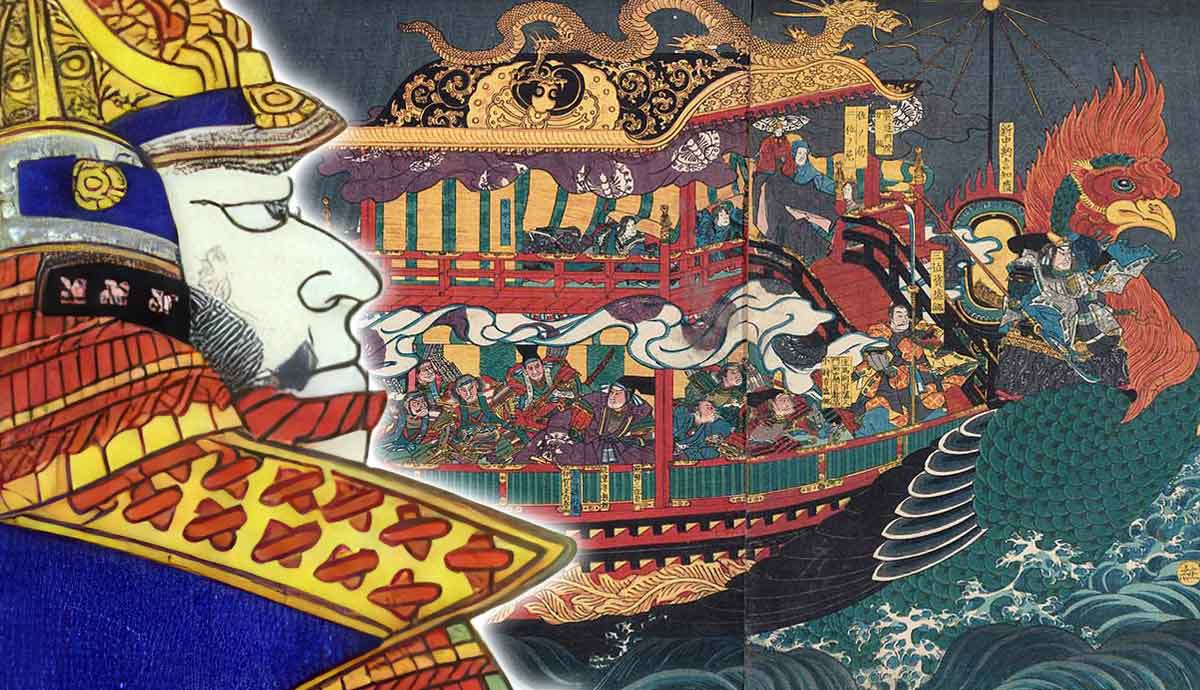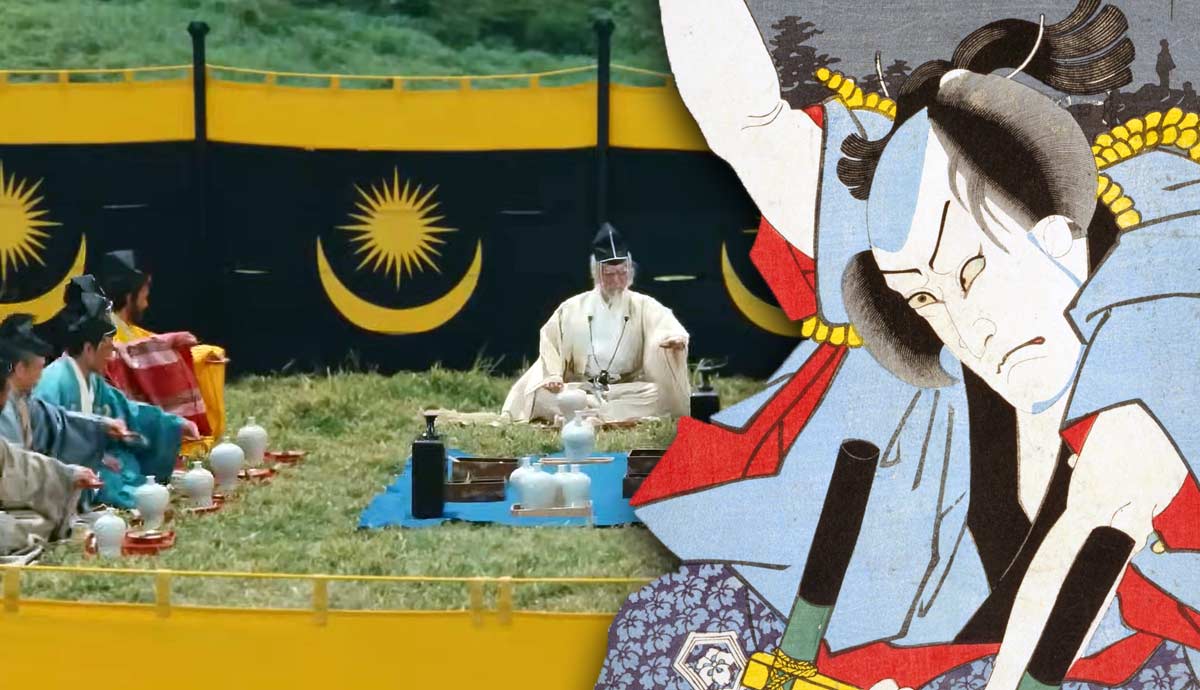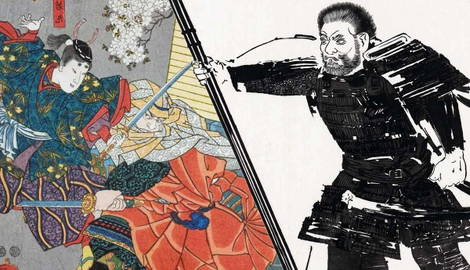

Although many details associated with Benkei come from legend rather than verified records, his name is instantly associated today with some of the most important people and events in Japanese history. Active during the late Heian Period (794–1185), Benkei’s association with Minamoto no Yoshitsune, one of Japan’s most celebrated military figures, transformed him into a symbol of the perfect vassal, warrior, and protector of samurai values. Though most famous for his death, his life, which included the theft of 999 katanas, is just as worthy of exploration and admiration.
From Demon Child to Wandering Warrior
Stories of Benkei’s early years differ in detail but they all consistently portray him as an extraordinary child. Tradition places his birth around 1155, which supposedly took place in the Kumano region (parts of modern-day Mie, Wakayama, and Nara prefectures) after an unusually long pregnancy lasting anywhere between 18 and 36 months. That last detail is most likely part of Benkei’s legend that portrayed him as the son of a deity.
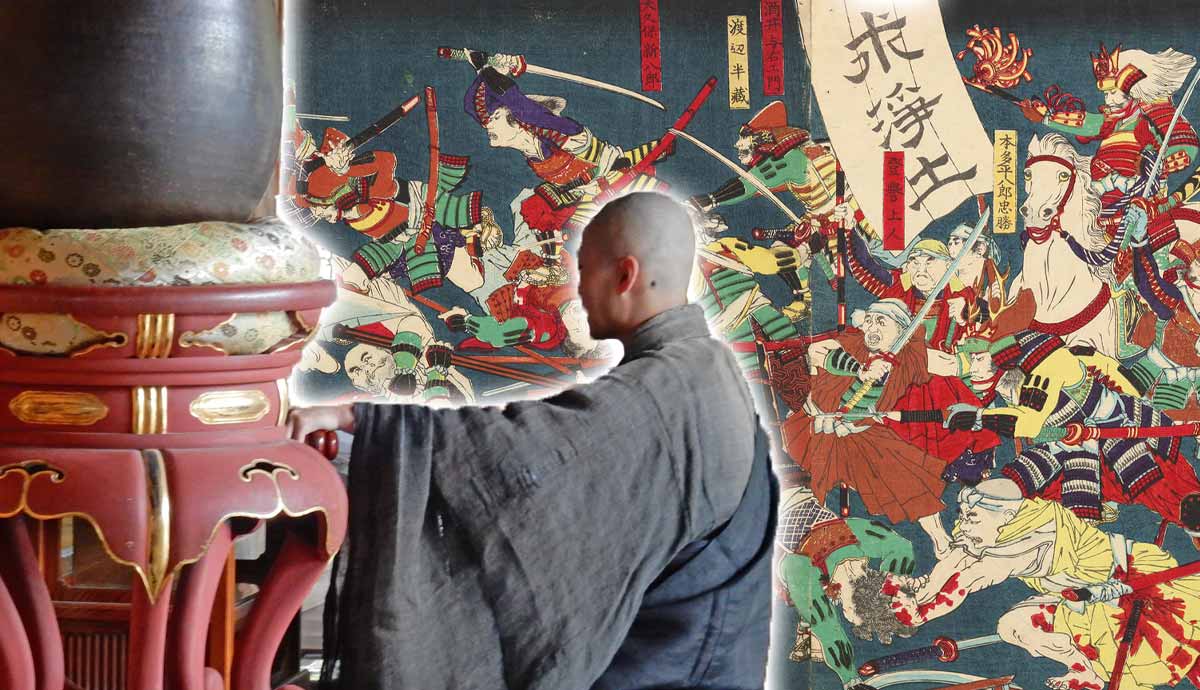
Following his birth, the extremely large Benkei reportedly sported hair down to his shoulders and a full set of teeth. His appearance frightened his father so much that he tried to kill the child, though Benkei was ultimately saved by his aunt and raised in Kyoto under the name Oniwaka or Oniwakamaru (Demon Child). As he grew older, he continued to exhibit great strength but also an unruly temperament befitting his diabolic moniker. Those around him hoped that a religious education would temper his wild side, so the child entered temple life and became associated with the monks of Mount Hiei and the influential Enryaku-ji temple complex. After that, Oniwaka became known as (Saito) Musashibo Benkei.
However, legends describe him as intellectually capable but unwilling to conform to the strict, organized life in a Buddhist institution. In the end, he either left on his own or was kicked out (Turnbull, p. 45), but it was not the end of his spiritual journey.
Benkei’s Quest for 1,000 Swords
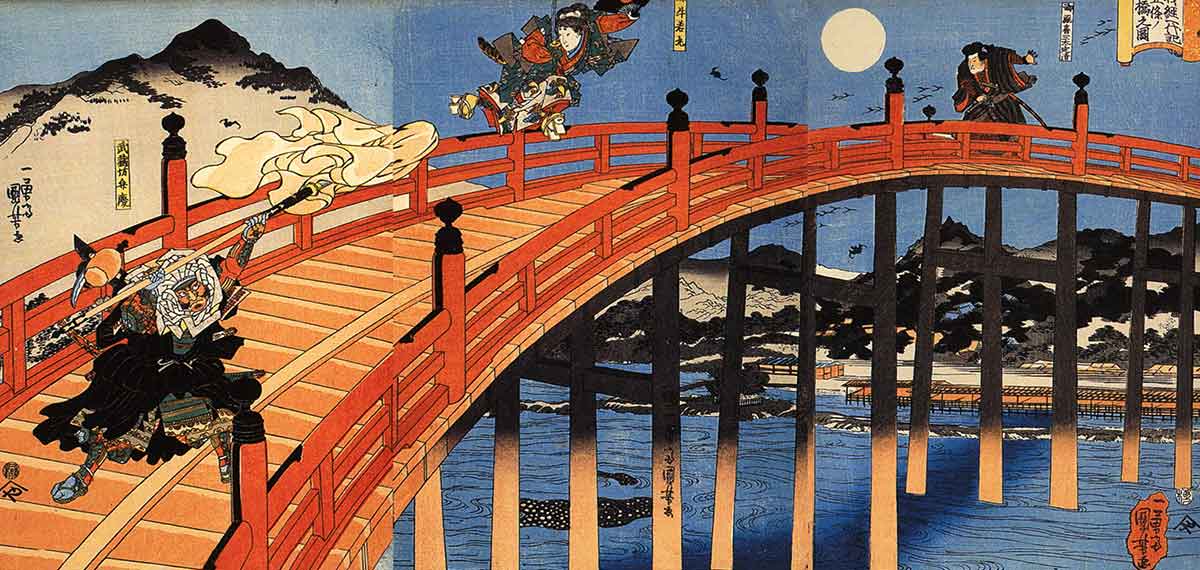
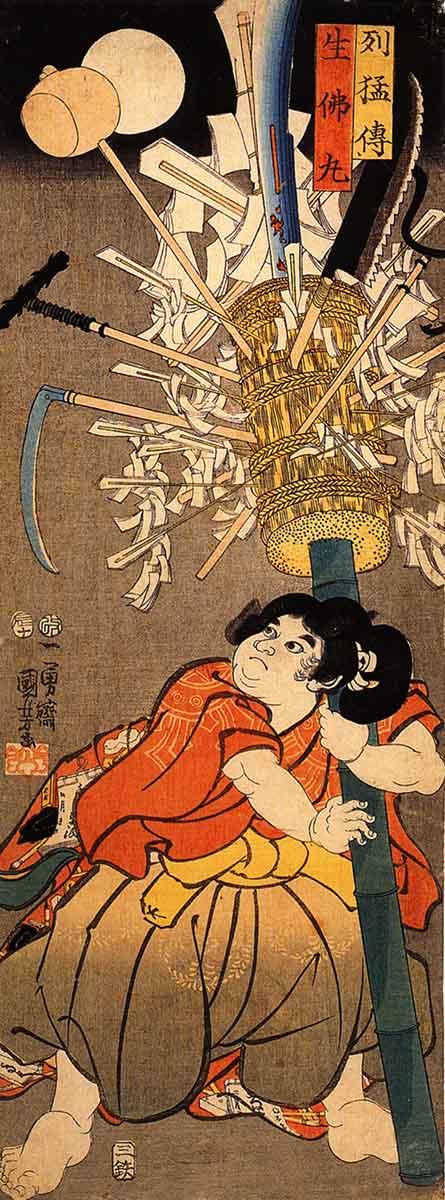
One of the most famous legends surrounding Benkei was his attempt to gather 1,000 swords from defeated samurai whom he deemed unworthy of wielding the weapons because of their arrogance or disgraceful behavior. In the stories, the giant monk with his arsenal of weapons (axe, sickle, saw, rake, wooden mallet, tetsubo club, and the naginata glaive) traveled through Kyoto picking fights with warriors of every rank. It was not just a moral quest. The undefeated Benkei was also looking for a warrior that could challenge him. “Oh, how I long for a foeman worthy of my hand,” he is quoted in a Noh play about his life (Adolphson, p. 139).
In most versions of the tale, Benkei eventually accumulated 999 swords. Only one remained before his mission was complete. That was when he encountered a swordsman unlike anyone he had faced before. The young samurai that Benkei had chosen for his final target appeared slight and less imposing than his previous adversaries. Nevertheless, when they clashed at Kyoto’s Gojo Bridge, the monk found himself hopelessly outmatched. His attacks failed to connect while his opponent moved with remarkable speed and agility. Instead of claiming his 1,000th sword, Benkei tasted defeat for the first time in his life.
Unwilling to accept it, he sought out the young samurai and demanded a rematch. He lost again. The conclusion was inescapable. This was not a fluke. Benkei finally found someone whose abilities surpassed his own.
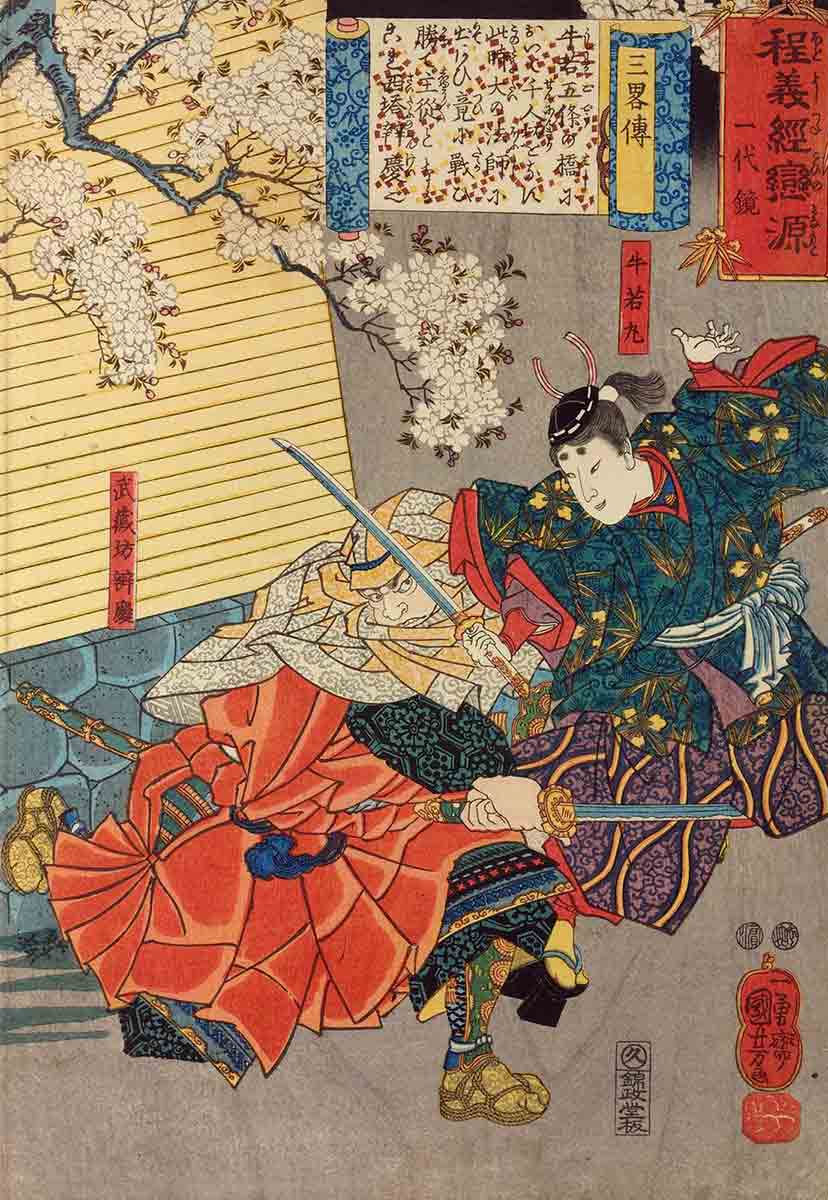
The victor was Minamoto no Yoshitsune, half-brother to Minamoto no Yoritomo who would go on to become the first shogun. But at the time, he was just a young man of extraordinary martial skill that left a lasting impression on Benkei. The meeting between the two men established one of the most famous partnerships in Japanese history.
Benkei was so impressed with the man who did not gloat or abuse him despite his clear superiority that he pledged himself as a retainer to the younger warrior. The fighting monk who had spent years pursuing physical and spiritual challenges stopped his wandering and redirected his energy toward service to a man of honor. From that moment on, tales of Benkei became intertwined with those of Yoshitsune.
Loyalty Forged During the Genpei War
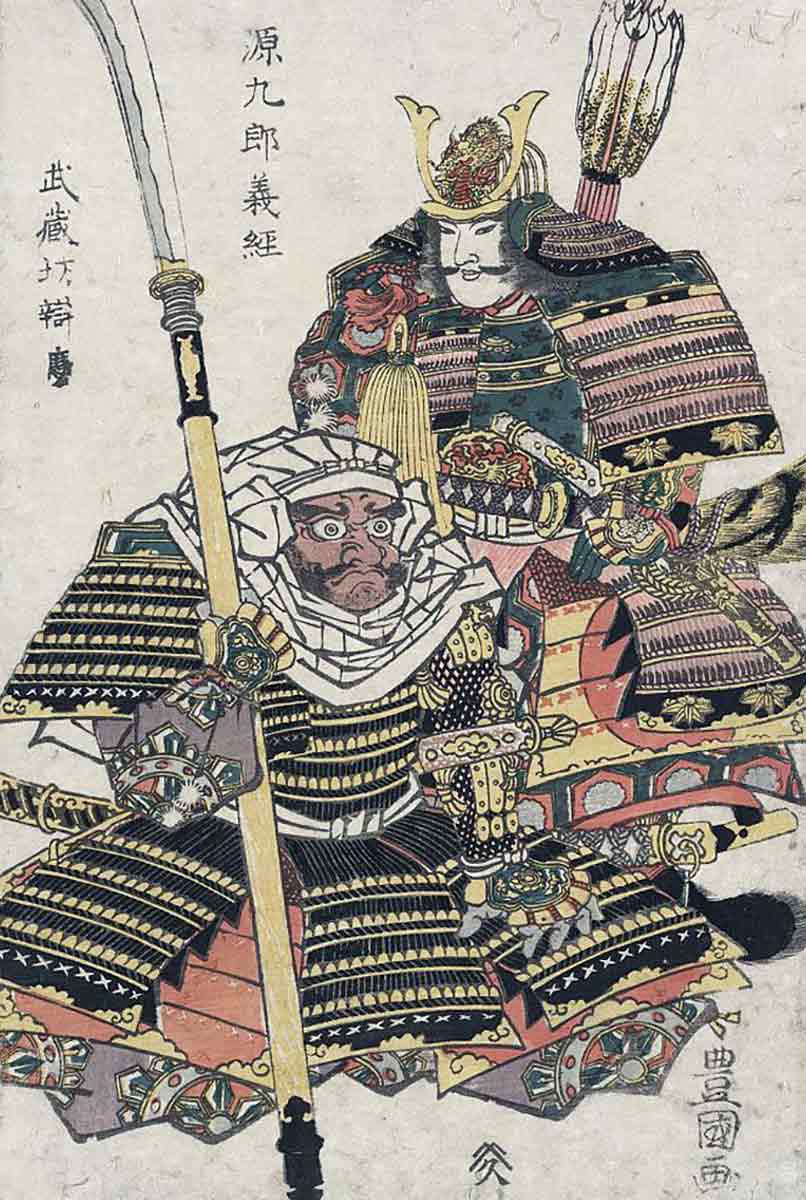
After entering Yoshitsune’s service, Benkei participated in the Minamoto-Taira clan conflict that would reshape all of Japan during the Genpei War. Within both historical accounts and legends, Yoshitsune emerged as one of the war’s most successful commanders with Benkei always close by as a loyal companion and supporter. Several stories place Benkei at the center of several dramatic military encounters such as the Battle of Ichi-no-Tani, where he distinguished himself through both his physical strength and strategic mind.
The Minamoto won the Genpei War, destroying the Taira clan and laying down the foundation for a new military-style government that had been slowly materializing since the 10th century. Yet victory created new problems for Benkei and his master. As Yoshitsune’s achievements elevated his reputation across Japan, tensions emerged between him and the head of the family, Yoritomo, who was worried about being eclipsed by the celebrated commander.
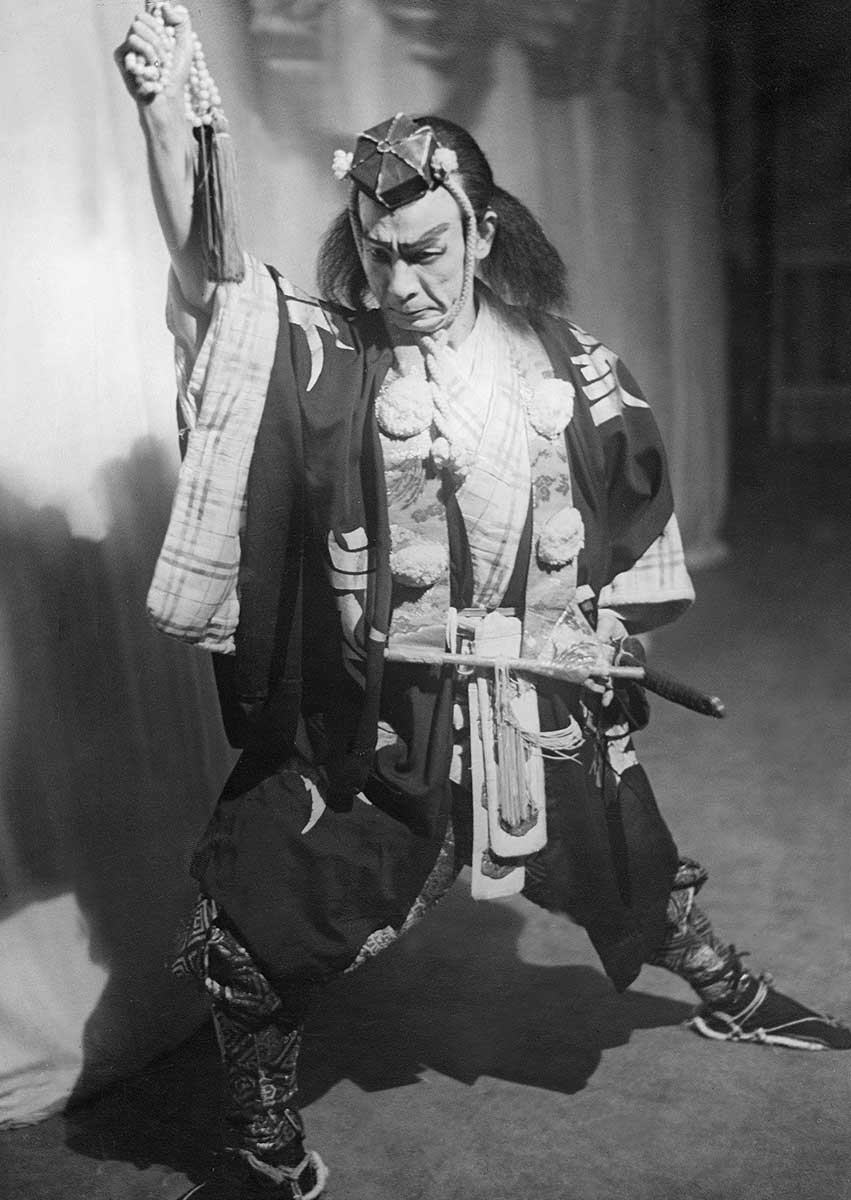
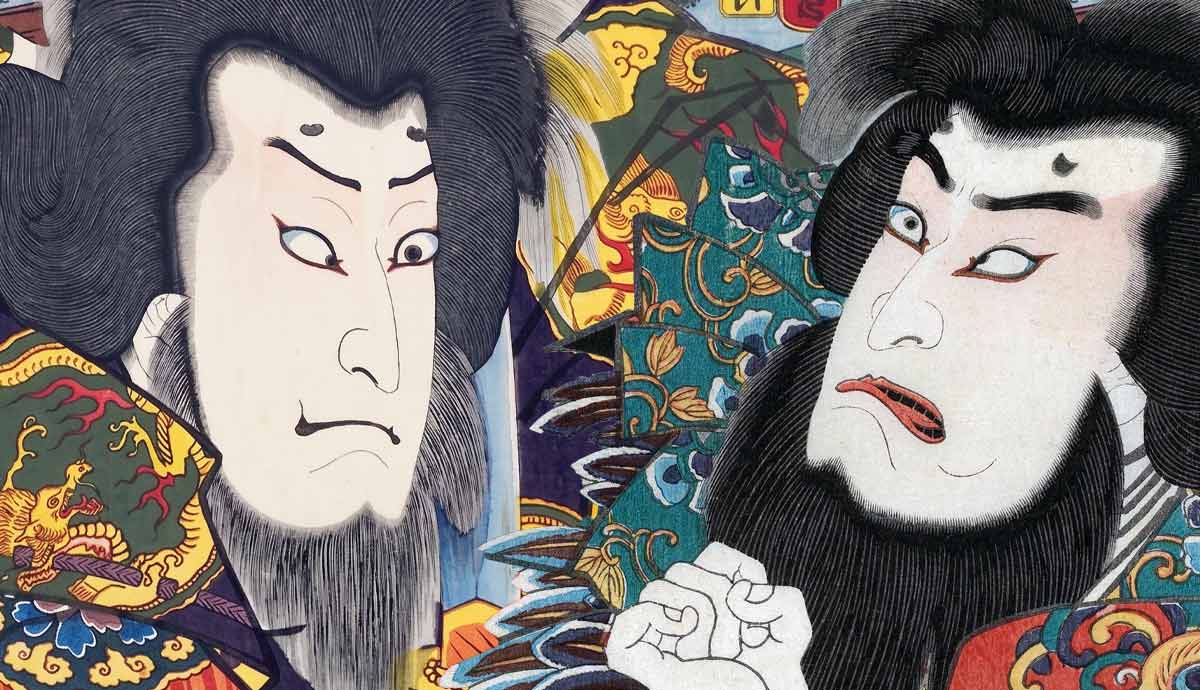
With time, Yoshitsune’s position became increasingly precarious. Isolated and threatened, the former general of the Minamoto effectively went on the run accompanied by his loyal retainers including Benkei. One famous episode describes the group traveling in disguise while attempting to reach safety in the north of the country. When officials questioned them at a checkpoint, Benkei relied on his knowledge of religious institutions to portray them all as wandering monks and servants. This episode became the basis for the 1952 Akira Kurosawa period drama The Men Who Tread on the Tiger’s Tail.
Almost every form of the story, from legends to stage adaptations and film versions, includes the scene where Benkei strikes Yoshitsune in front of suspicious guards, because obviously no retainer, especially one of Benkei’s reputation, would hit their lord. The very existence of the story, which is most likely apocryphal, encapsulates a lot of qualities of Benkei that often get lost in the tales of his great strength, like his scholarly nature and quick thinking.
The Standing Death of Benkei
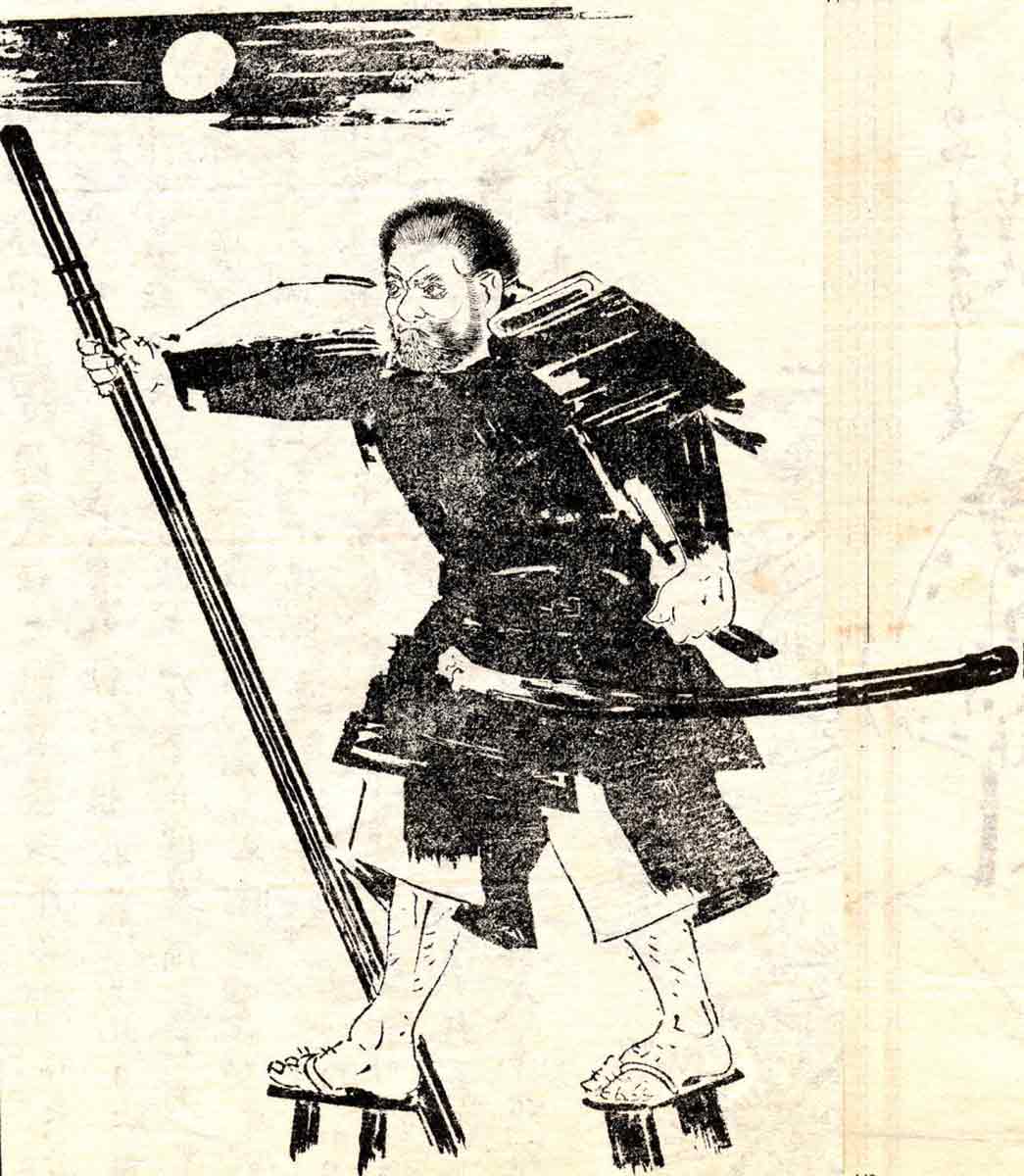
Benkei met his end after Yoshitsune sought refuge in what is today Iwate Prefecture, northeastern Japan. For a period, protection from local leaders allowed Yoshitsune to avoid capture. But as Yoritomo consolidated power and influence and Yoshitsune lost his supporters, the champion of the Genpei War found himself facing a death squad sent by his own half-brother in 1189.
Surrounded, Yoshitsune prepared to take his life via seppuku. According to the most popular version of the story, Benkei delayed the attackers to give his master time to make the necessary preparations. The scene became one of the most defining Japanese legends ever told. Benkei reportedly confronted enemy warriors outside Yoshitsune’s residence, fighting off the assassins with great skill. As casualties mounted and Benkei showed no signs of slowing down, the attackers changed weapons from swords to bows.
The legend says that after getting pierced by dozens of arrows, but only in the front as he never showed his back to the enemy, the legendary warrior finally died. But even in death, he refused to go down, remaining upright. From a distance, observers thought he was still alive and possibly immortal given how many arrows were sticking out of him. Only after someone mustered the courage to get closer to him did they discover that Benkei was no longer alive.
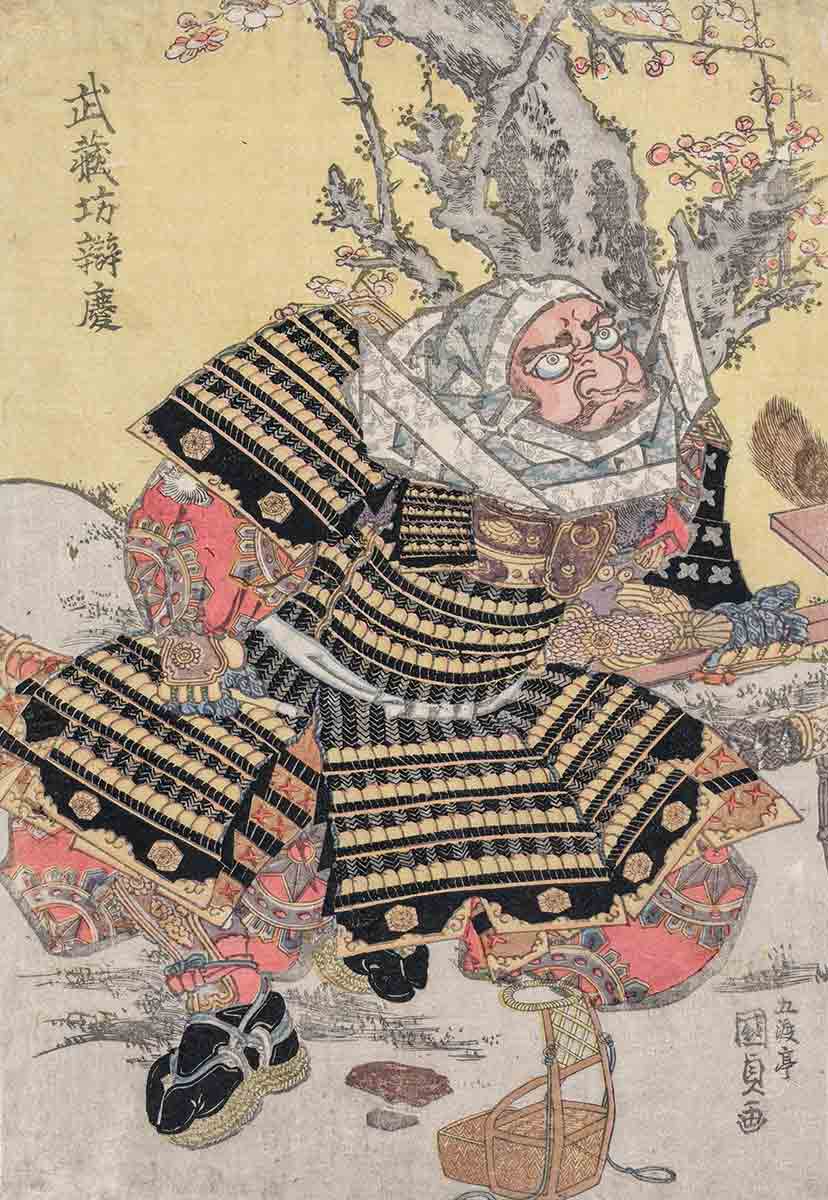
This episode became known as the standing death of Benkei. Whether historically accurate or not, the story is undeniably enthralling and continues to capture the imagination to this day, having been depicted or referenced in everything from movies and TV shows to games and even the One Piece anime. The event also completed the narrative arc that began with the restless Demon Child. The figure once associated with chaos and personal ambition ended his life selflessly in service to another. For audiences across centuries, that transformation proved just as memorable as any battlefield achievement.
Benkei’s historical reality remains difficult to verify given the centuries of storytelling and mythmaking. Yet his importance does not depend solely on facts. Through legends, plays, literature, and popular culture, he became a lasting representation of loyalty and perseverance, and he continues to occupy a special place in Japan’s cultural memory. In every way that matters, he has lived, and will continue to live on for centuries to come.
Sources:
- Adolphson, M.S. (2007). The Teeth and Claws of the Buddha, Monastic Warriors and Sohei in Japanese History. University of Hawai’i Press.
- Turnbull, S. (2003). Japanese Warrior Monks AD 949–1603. Osprey Publishing.
- Tyler, R., translated by (2014). The Tale of the Heike. Penguin Books.