
Interestingly, the medieval period in Britain begins with a battle. In 1066 CE, the Battle of Hastings marked the beginning of Norman rule and a new era in Britain. Medieval warfare in Britain was often used as a tool to implement feudalism and maintain centralized power.
The period from 1066 to 1485 CE was a dynamic era of medieval warfare, marked by a number of important battles that were instrumental in political and territorial affairs. The Medieval Period in Britain both began and ended with a battle: the Battle of Bosworth Field, which marked the rise of the Tudor Dynasty.
1. The Battle of Hastings (1066)
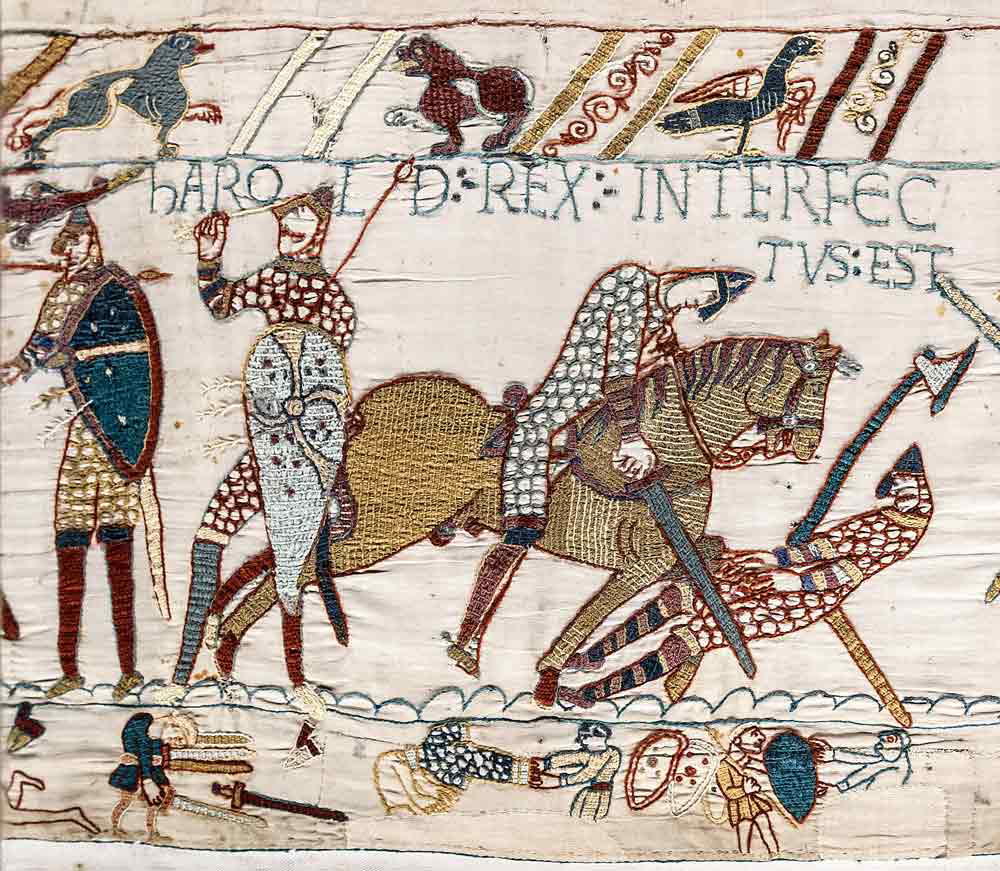
- Date: October 14, 1066
- Combatants: Normans vs. Anglo-Saxons
- Key leaders: William, Duke of Normandy vs. Harold Godwinson
- Location: East Sussex, England
- Outcome: Norman victory; Harold Godwinson was killed
October 14, 1066 CE, marked the start of Norman rule over England after they ousted the Anglo-Saxons. The Battle of Hastings involved the forces of William, Duke of Normandy, often referred to as William the Conqueror, and the army of Harold Godwinson, the last Anglo-Saxon king of England.
King Edward the Confessor left no clear heir when he died in January 1066. You will see throughout history that this was a common problem in England. While Harold Godwinson was crowned king, he immediately faced a contesting claim from William of Normandy. William claimed that Edward had promised him the throne as far back as 1051. This dispute set the stage for the subsequent Norman invasion.
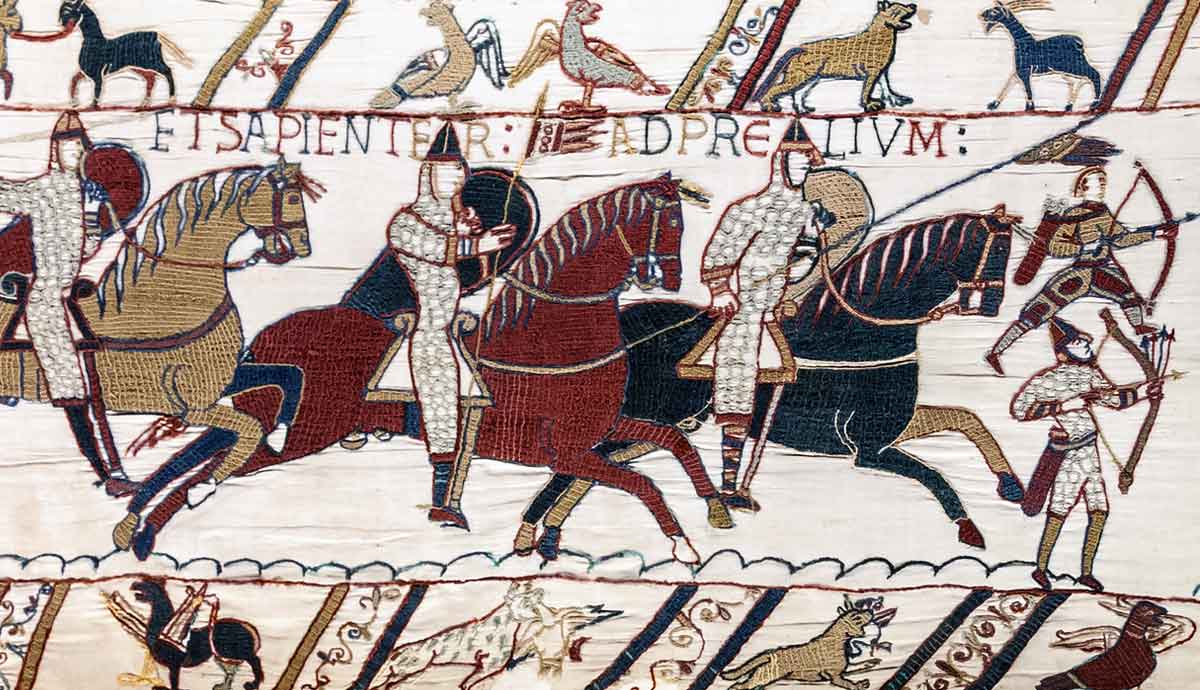
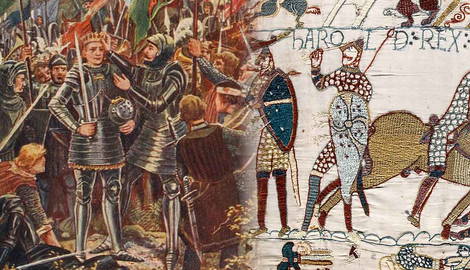
The battle took place near the present-day town of Battle, East Sussex. The fighting lasted from morning until dusk. William used innovative tactics, new to the English Saxons, which included feigned retreats that drew out and broke the English shield wall. This tactic has been attributed as the leading factor in the Norman victory. The end of the battle was signaled by Harold’s death. The famous Bayeux Tapestry depicts his death as an arrow to the eye. Despite this artistic representation of events, historians regularly debate the details of his death.
William’s victory fundamentally altered England and its aristocracy. Anglo-Saxon lords were replaced with Norman ones, and a new system of governance was introduced. Norman-French started to replace Old English as William was crowned King of England on Christmas Day 1066.
2. The Battle of Stirling Bridge (1297)
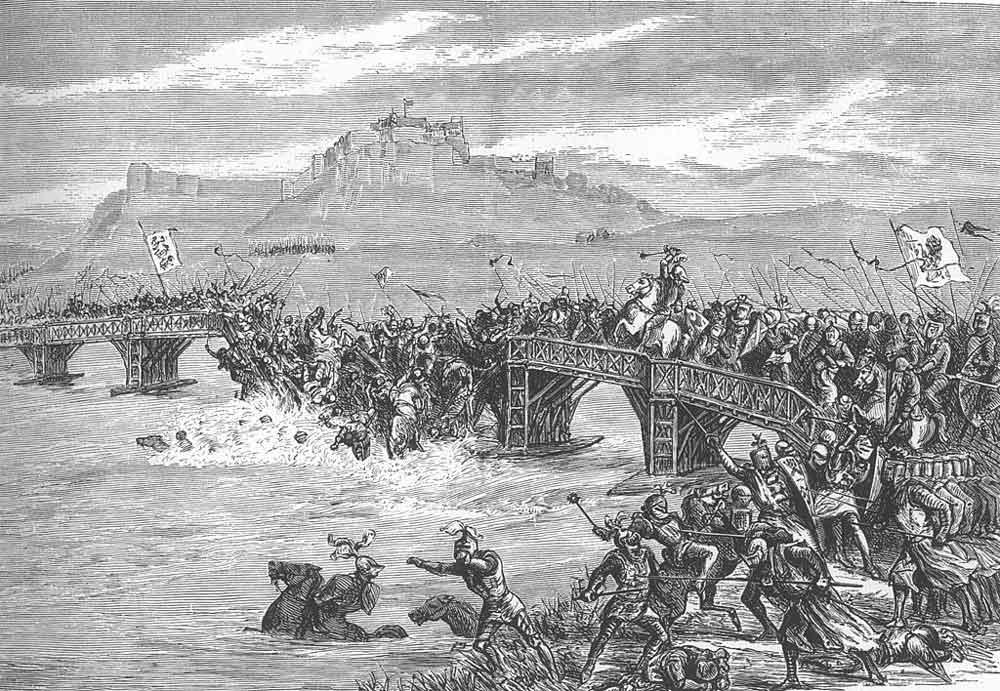
- Date: September 11, 1297
- Combatants: Scottish vs. English
- Key leaders: William Wallace & Andrew Murray vs. John de Warrene & Hugh de Cressingham
- Location: River Forth in Stirling, Scotland
- Outcome: Decisive Scottish victory
A battle made famous by Hollywood in the film Braveheart, the Battle of Stirling Bridge was fought on September 11, 1297 CE. This was one of the largest battles during the First War of Scottish Independence. William Wallace and Andrew Murray led Scottish forces to a decisive victory against English forces led by John de Warrene, the Earl of Surrey, and Hugh de Cressingham.
Edward I of England wanted to assert control over Scotland after the death of the Scottish queen in 1290. The people of Scotland disagreed, and this disagreement culminated in the battle at Stirling Bridge.
The English were at a disadvantage. They were forced to cross a narrow bridge over the River Forth, and the Scots made sure to capitalize on this moment. This narrow path limited how much the English troops could move. The Scots could then hold back their forces until most of the English had crossed the river. Once they crossed, Wallace and Murray launched a surprise attack, cutting off the English’s access to the bridge. The English were left vulnerable and disorganized, resulting in a Scottish victory.
This victory boosted Scottish morale and cemented Wallace’s reputation as a symbol of the resistance. This eventually made him a great target for the English crown. However, this defeat forced Edward I to reconsider his strategies in Scotland, and Scottish resistance only grew.
3. The Battle of Bannockburn (1314)
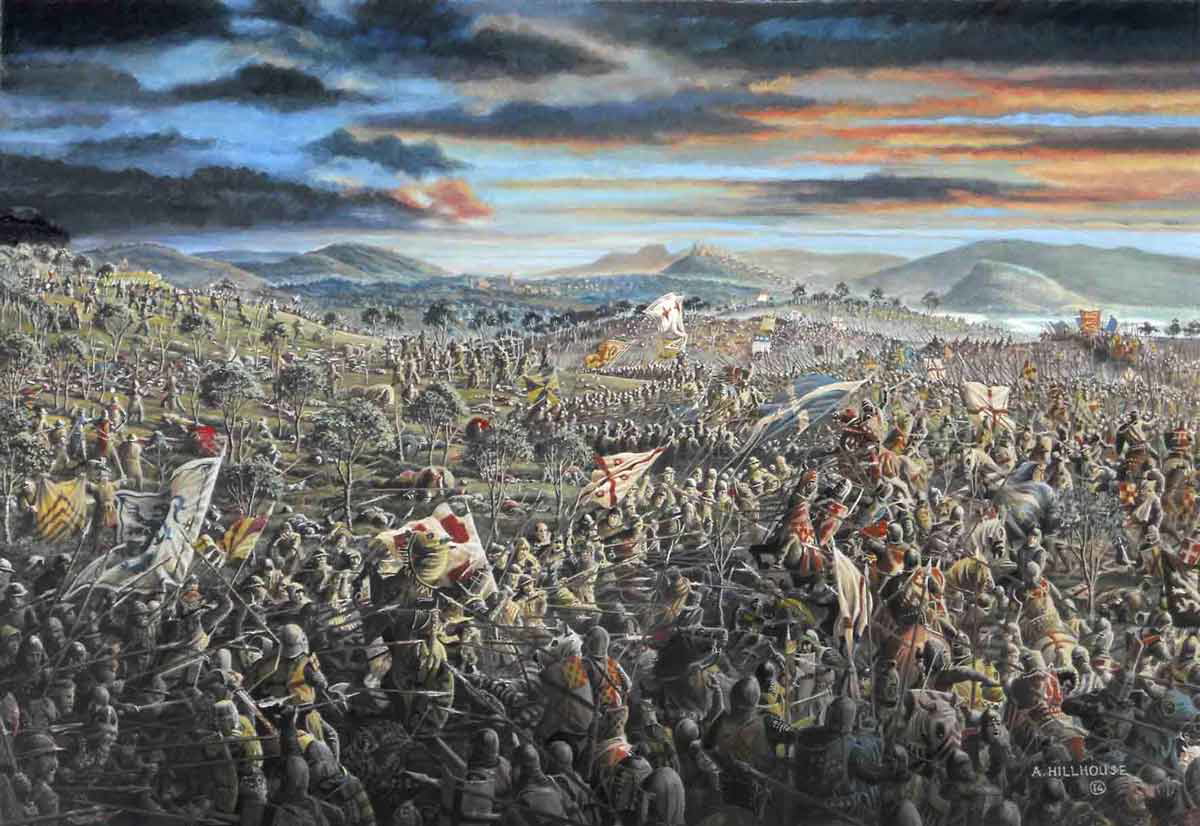
- Date: June 23–24, 1314
- Combatants: Scottish vs. English
- Key leaders: Robert the Bruce vs. Edward II
- Location: Bannock Burn near Stirling, Scotland
- Outcome: Decisive Scottish victory, confirming their independence
The Battle of Bannockburn was fought from June 23 to 24, 1314. While the Battle of Stirling Bridge was a decisive victory, the Battle of Bannockburn finally confirmed Scottish independence and solidified Robert the Bruce’s place as a legendary figure of national pride in Scotland.
By 1314, the tensions between Scotland and England had escalated considerably. Edward II now controlled England and wanted to assert control over Scotland. The siege of Stirling Castle became a focal point of these tensions and set the stage for a great battle. The Scots were led by Robert the Bruce, who aimed to lift the siege and simultaneously assert their independence. They faced an English army that was significantly larger and better equipped than their own.
Yet again, the Scots employed the terrain to their advantage and forced the English into a cramped and marshy battlefield at Bannockburn near Stirling. This tactical advantage hampered the English forces’ movement and effectiveness.
The Scottish forces were organized into schiltrons. This special formation moved infantry into dense groups with outward-facing spears. They were highly effective against cavalry. With these tactical formations and their expert use of the terrain, the Scots could decisively defeat the English.
The victory at Bannockburn ended English claims over Scotland and established Robert the Bruce as the uncontested ruler of an independent Scotland. The legacy of this battle extends beyond the immediate victory. The Battle of Bannockburn became a symbol of Scottish resilience and a classic example of tactical ingenuity in medieval warfare.
4. The Battle of Crécy (1346)
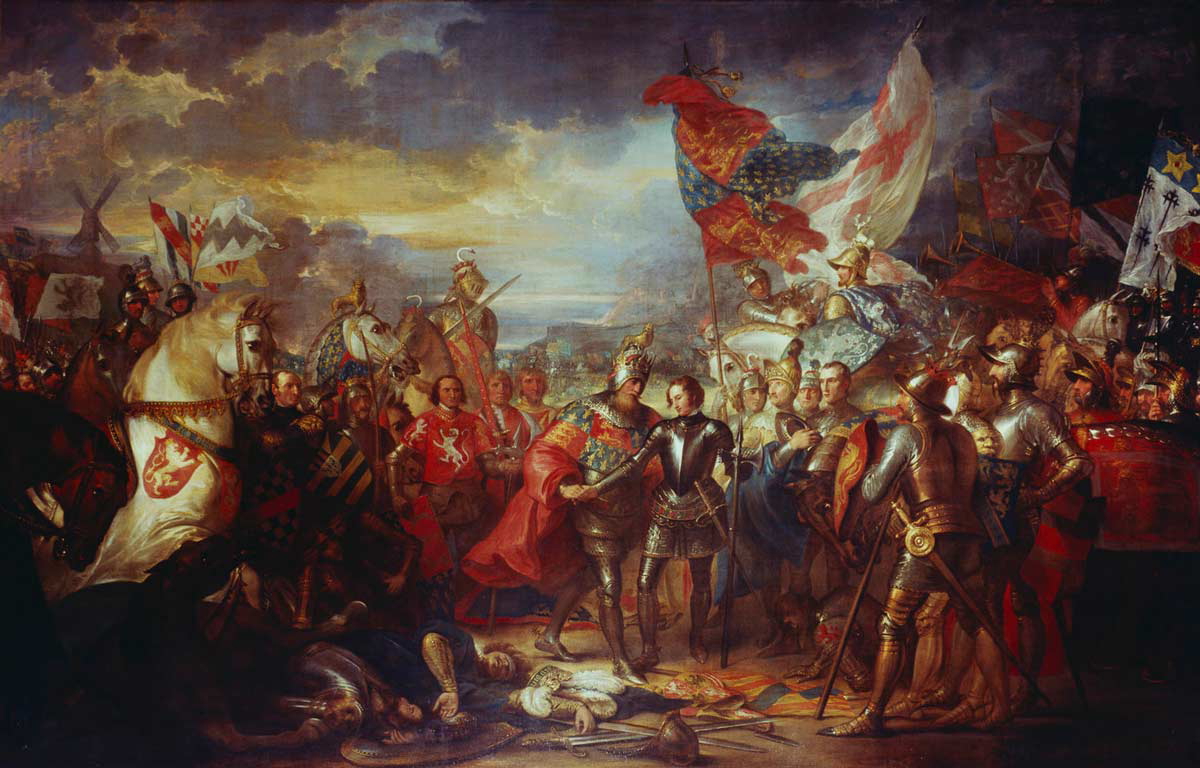
- Date: August 26, 1346
- Combatants: English vs. French
- Key leaders: King Edward III vs. King Philip VI
- Location: Crécy-en-Ponthieu, France
- Outcome: Overwhelming English victory
The Battle of Crécy, on August 26th, 1346, was a rather significant conflict during the Hundred Years’ War, a series of conflicts in which the English monarchs sought to assert their claims to French territories. In this case, King Edward III of England landed his army in Normandy. From here, he launched a campaign of rapid movement and scorched-earth tactics across northern France. This campaign culminated in the Battle of Crécy at Crécy-en-Ponthieu. It was here that Edward held a strong defensive position against the French army led by King Philip VI.
Edward’s army was very good at using their longbows to their benefit, and the longbowmen formed the backbone of his tactical approach. Edward positioned his archers in a place that would capitalize on their long range and rapid fire.
The French were hampered by muddy terrain and were never able to break through the English defensive formations. The English won an overwhelming victory here. The Battle of Crécy also marked a pivotal evolution in medieval warfare. From this point forward, you can see the decline in the dominance of heavy cavalry in medieval warfare and a move toward the heavy use of infantry, especially those with longbows. Medieval warfare shifted from melee combat to a greater emphasis on ranged weaponry.
5. The Battle of Neville’s Cross (1346)
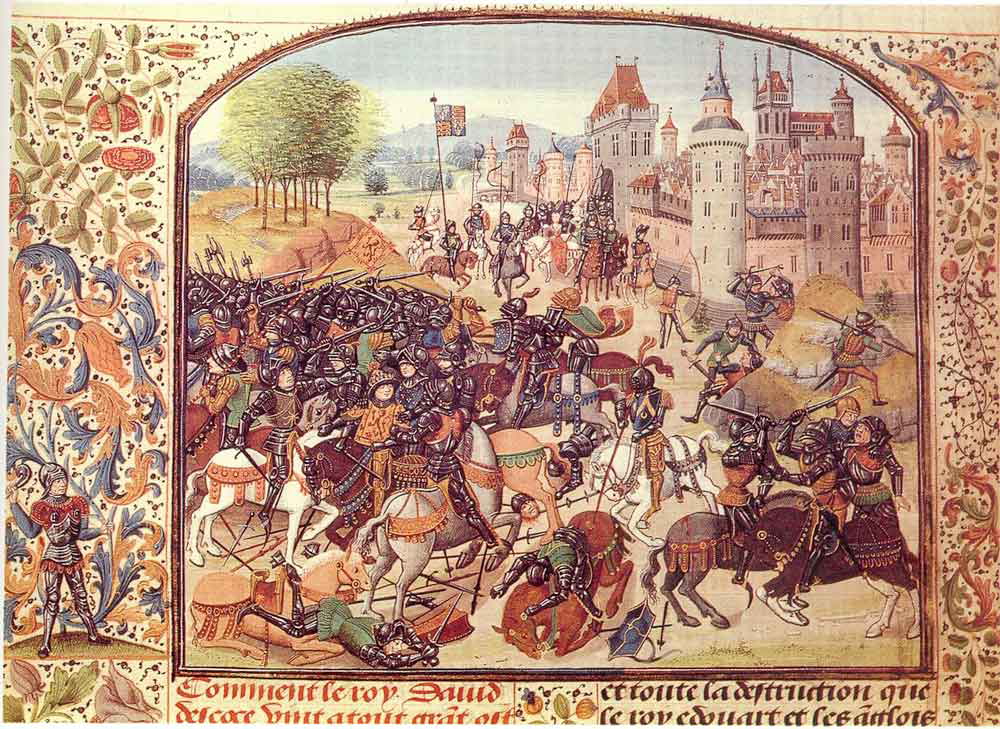
- Date: October 17, 1346
- Combatants: English vs. Scottish
- Key leaders: English defensive force (under Edward III’s orders) vs. King David II
- Location: Near Durham, England
- Outcome: Conclusive English victory; the Scottish king was captured
While deeply involved in the Hundred Years’ War, England was also facing the Second War of Scottish Independence. The Battle of Neville’s Cross, fought on October 17, 1346, occurred near Durham, England.
Because of the conflict between England and France in the Hundred Years’ War, France allied with Scotland. Through the Auld Alliance, France encouraged the Scottish King David II to open up a northern front against England. France wanted English resources diverted to the Scottish border so that they would focus less on the siege of Calais.
The Scottish army began by rampaging through Northumberland but was eventually caught by an English force near Durham. The English army was smaller but still held the advantage of higher ground. The English forces were to disperse the Scottish forces through fierce attacks by English longbowmen.
Not only did England win a conclusive victory, but the Scottish king was captured. Scottish power was weakened, and the English very quickly exploited this. After Neville’s Cross, England gained stronger control over southern Scotland.
6. The Battle of Agincourt (1415)
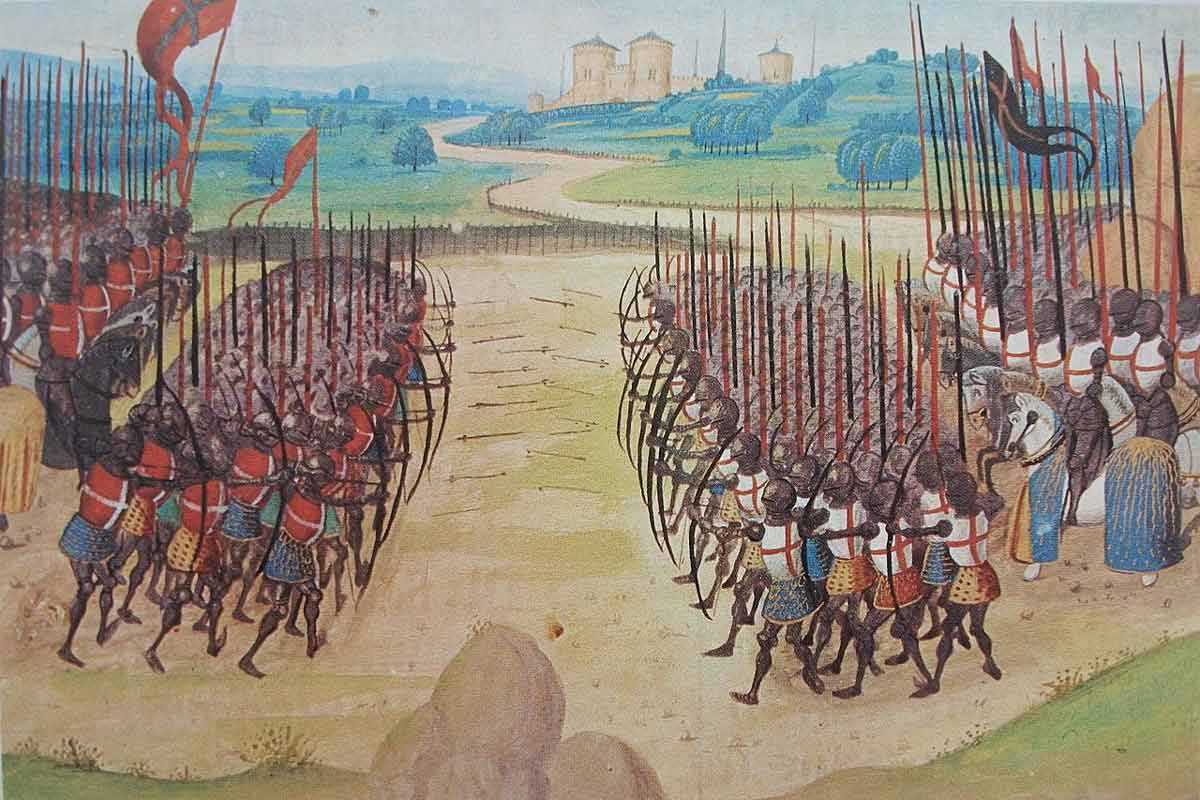
- Date: October 25, 1415
- Combatants: English vs. French
- Key leaders: Henry V vs. Charles d’Albret
- Location: Near Agincourt, France
- Outcome: English victory
The Hundred Years’ War was a constant back-and-forth between England and France, very typical of medieval warfare. On October 25, 1415, Henry V of England was campaigning to assert his claim over the French throne and invaded Normandy. However, the English army had been greatly weakened by battle and disease. Henry still decided to push forward and march for Calais, where he was intercepted by a larger French force near Agincourt. The French forces were led by Charles d’Albret, the Constable of France.
This is another one of those moments in history where, despite the French having the numbers, they were ill-suited for this particular battle. Their heavy cavalry and knights could not perform properly on the muddy, enclosed battlefield. This limited their movement and their effectiveness. The English were weakened, but they were able to exploit their longbowmen’s reach and mobility, which meant they could inflict severe losses on the French forces. Henry had his archers flanked by stakes and positioned them to maximize their impact, which played a central role in the English victory.
Agincourt was devastating for the French. They suffered significant losses, including many of their nobility. So, they not only lost this battle, but it also weakened their feudal military structure. For England, this victory once again showcased the power of their longbowmen, a defining element of English medieval warfare, and simultaneously boosted national morale. The loss at Agincourt could be directly linked to Henry’s success in France, which led to the Treaty of Troyes recognizing him as heir to the French throne.
7. The Battle of Towton (1461)
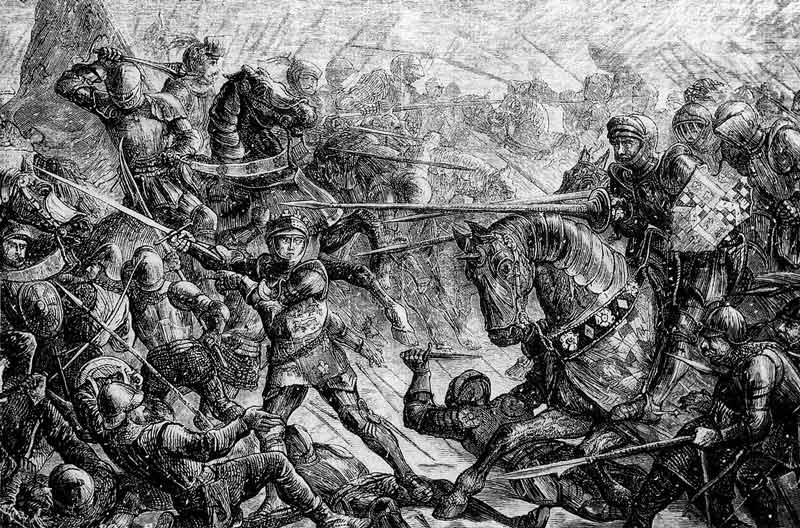
- Date: March 29, 1461
- Combatants: Yorkists vs. Lancastrians
- Key leaders: Edward IV (Yorkist) vs. Loyalists of Henry VI (Lancastrian)
- Location: Towton, North Yorkshire, England
- Outcome: A crushing victory for the Yorkists
The War of the Roses was a continuous, prolonged affair between the houses of York and Lancaster, who disagreed over who should rightfully rule England. The Battle of Towton on March 29, 1461, represents a brutal high point in British medieval warfare and is said to be the largest and deadliest battle ever fought on English ground. The combatants encountered each other in the midst of a vicious snowstorm, which added to the battle’s carnage.
Yorkist leader Edward IV confronted the Lancastrians, the loyalists of Henry VI. The nobles had been agitated by major players like Richard Neville, Earl of Warwick (the Kingmaker).
The Yorkists came back to the successful deployment of longbowmen. Lord Falkenburg, a Yorkist leader, used the storm’s wind and snow to his advantage. He instructed his archers not to shoot a single arrow until he gave the command, which came after the Lancastrians had spent the majority of their shots. After a long period of long-range combat, the battle came down to short, fierce hand-to-hand fighting.
The Yorkists achieved a crushing victory, which immediately led to Edward IV’s ascension to the throne. The Lancastrian cause was virtually wiped out when their leader, Henry VI, went into hiding, and many Lancastrian nobles were lost on the field. The Battle of Towton took the lives of more Englishmen than any other battle during the War of the Roses, and perhaps in all of English history.
8. The Siege of Orleans (1428–1429)

- Date: 1428–1429
- Combatants: English & Burgundian troops vs. French
- Key leaders: Earl of Salisbury (English) vs. Charles VII & Joan of Arc (French)
- Location: Orleans, France
- Outcome: French victory; the siege was lifted
In 1428, the English could boast of their alliances with Burgundian troops, and they controlled most of northern France, including Paris. The city of Orleans represented a vital crossroads leading to the South of France.
The Earl of Salisbury, later Duke of Suffolk, mobilized his English troops and besieged Orleans, the last important stronghold held by Charles VII of France. Then Joan of Arc arrived in April 1429. She brought fresh inspiration and led several assaults against strategic English positions. Her presence was said to have revitalized the French forces, empowering them to overrun key English fortifications.
The siege of Orleans lasted almost a year, from October 12, 1428, to May 8, 1429. It ended in a decisive French victory, forcing the English to retreat and marking a crucial turning point in the Hundred Years’ War.
9. The Battle of Bosworth Field (1485)
- Date: August 22nd, 1485
- Combatants: House of Lancaster vs. House of York
- Key leaders: Henry Tudor vs. King Richard III
- Location: Near Ambion Hill, Leicestershire, England
- Outcome: Tudor victory; Richard III killed in battle
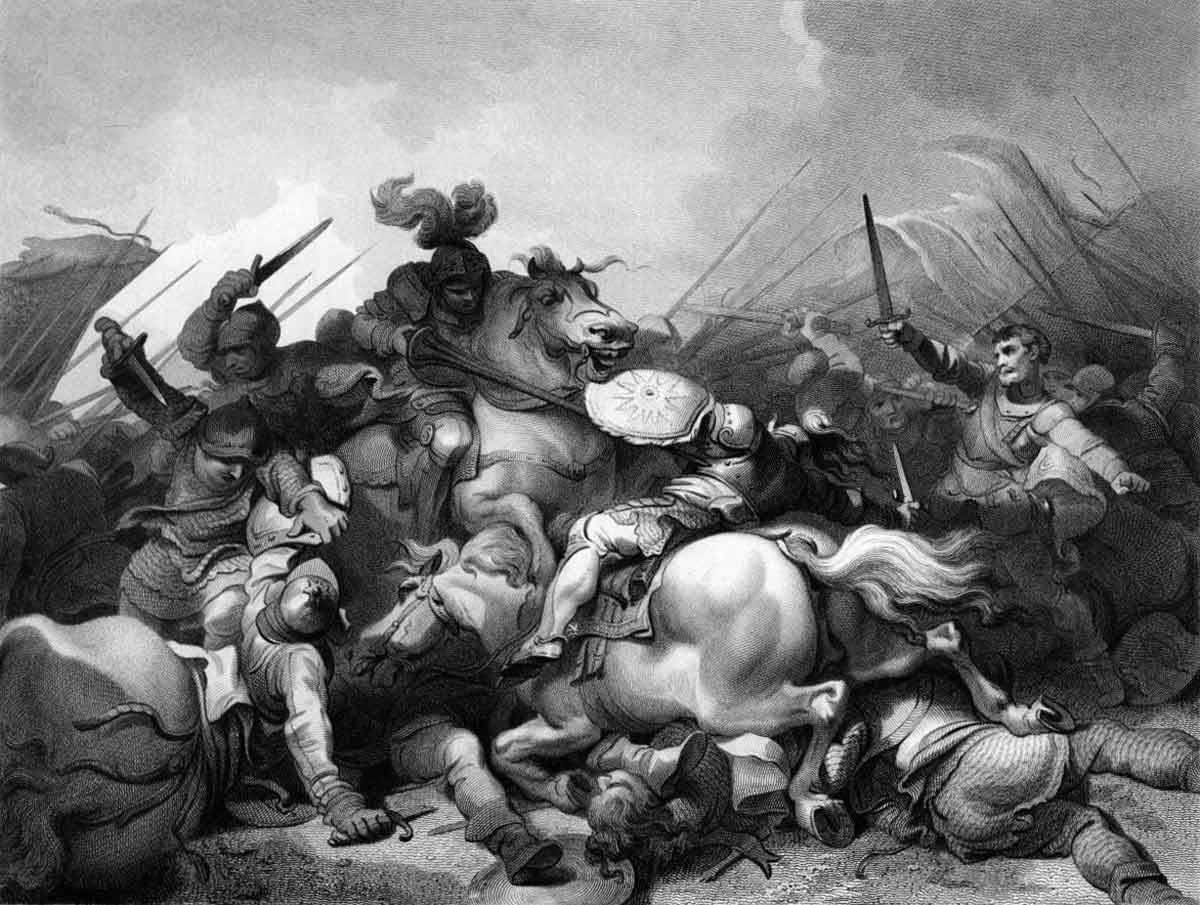
The Battle of Bosworth Field was the final important engagement of the War of the Roses. It marked a shift in the control of the throne from the House of York to the House of Lancaster. Henry Tudor, who would become Henry VII, ended the reign of Richard III and the Plantagenet Dynasty’s centuries-long hold on the English crown.
When Richard III controversially took the throne in 1483, he plunged England into instability—creating an opening for the unlikely Lancastrian claimant Henry Tudor to rise.
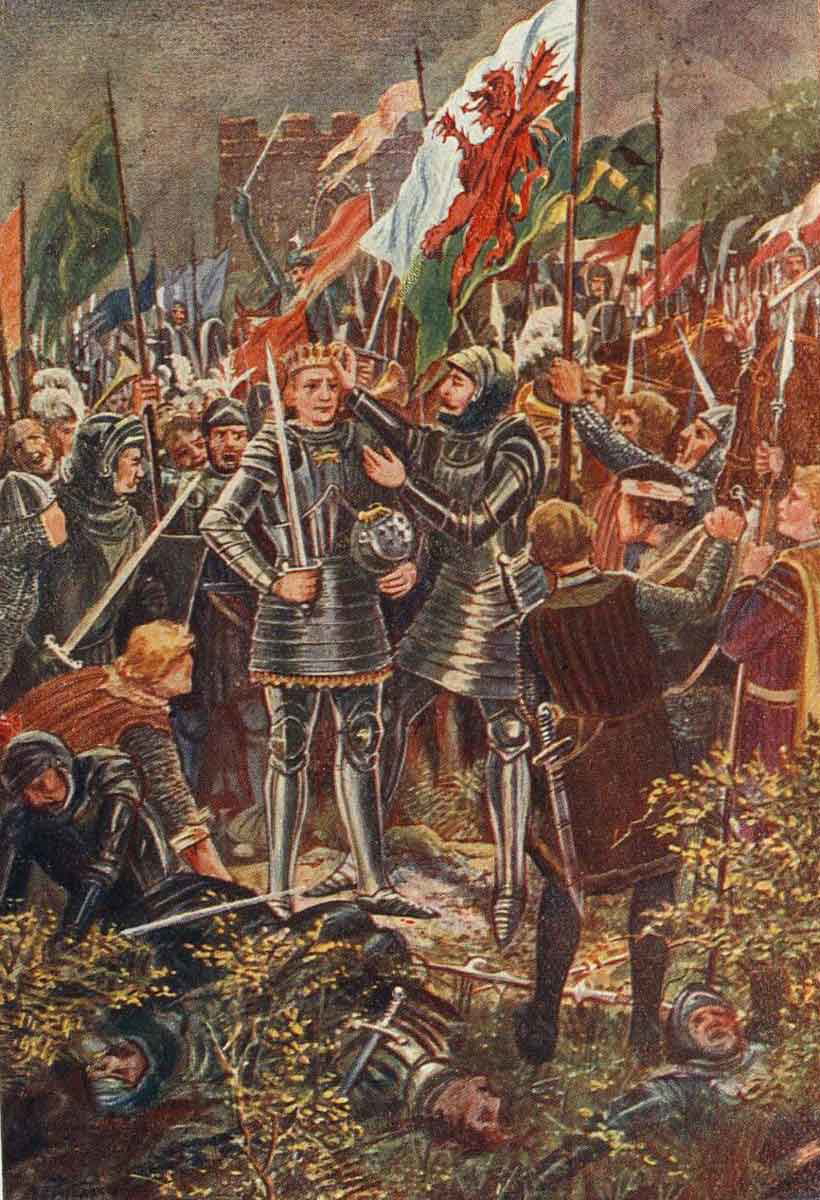
Henry Tudor landed in Wales in 1485, gathered the forces he needed, and marched to London. His forces were outnumbered, but Henry Tudor was intelligent and strategic. Richard III either drew great courage from his greater numbers or was incredibly bold in general. He led a direct charge aiming to kill Henry Tudor himself, effectively ending the civil war once and for all. His charge ultimately failed when one of his largest supporters, the Stanleys, declared for Henry mid-battle. Richard was killed in the fray.
With Richard’s death, Henry Tudor ascended the English throne as Henry VII and united the warring factions through his marriage to Elizabeth of York. Together, they founded the Tudor Dynasty under a combined Lancastrian and York flag. This rise of the Tudor Dynasty and Henry’s marriage is seen as the end of the Medieval Period in England.