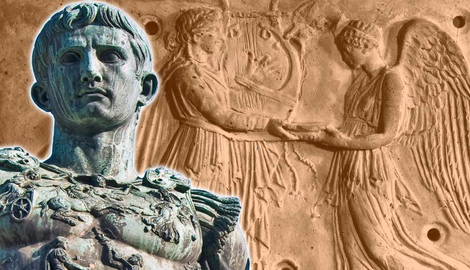
With his victory at the Battle of Actium in 31 BC, Octavian, later known as Augustus, ascended to sole rule of Rome. He was hailed as the savior of the Republic, and he attributed his victory to his divine patron, Apollo. In the years following, Apollo gained popularity as a bringer of peace, in no small way due to a program of cultural renewal sponsored by Augustus. Artists and poets evoked the god to ingratiate themselves with the new regime, creating a new foundation myth that directly linked Apollo, the founding of Rome, and Augustus’ rise to power. But this connection was not an invention of poets. Augustus carefully crafted his relationship with the god for a decade.
Guarantor of the State
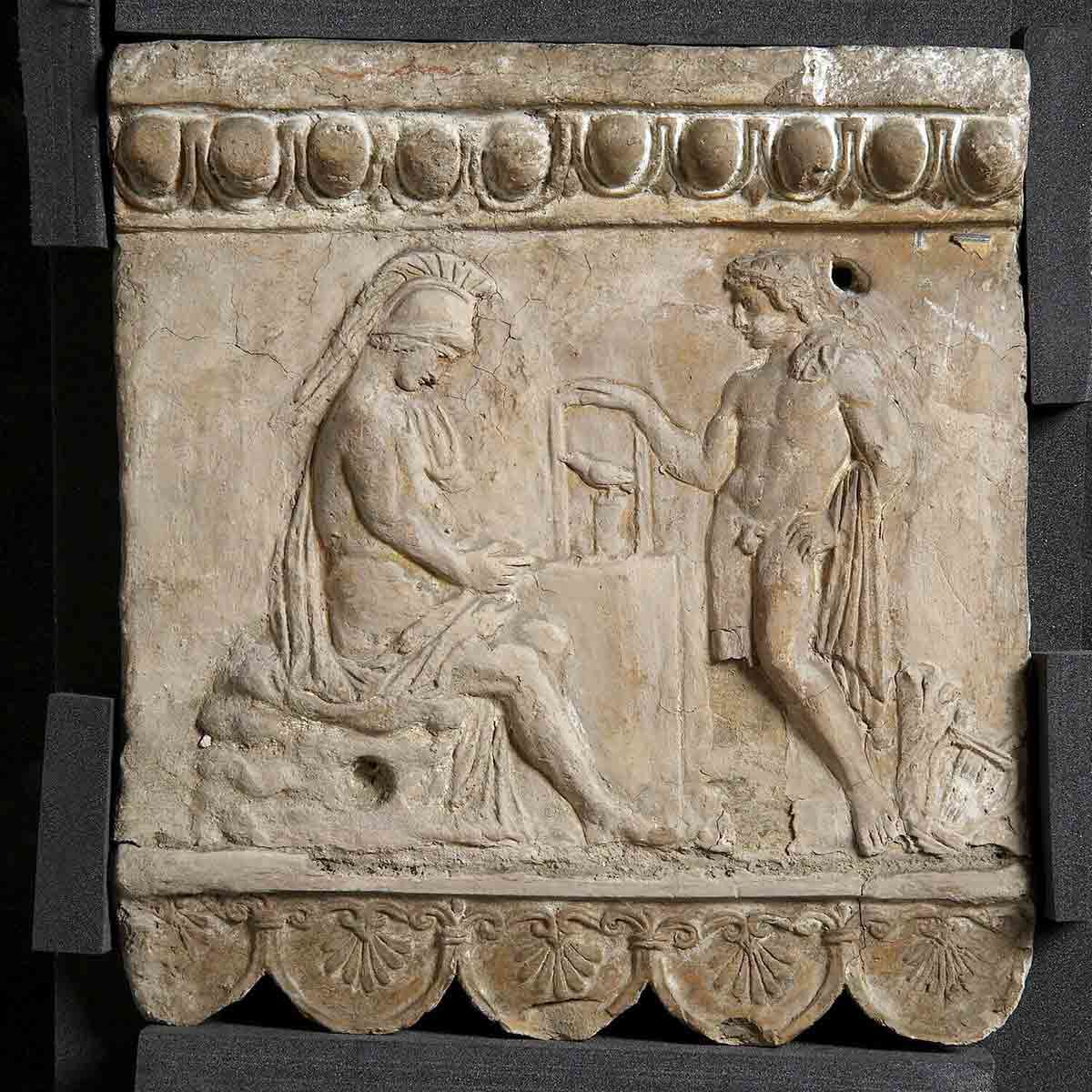
Augustus’ adoption of Apollo as his patron deity was not the first time the god was evoked by those who sought power in Rome. When Rome was ruled by kings in the 6th century BC, an ancestor of Marcus Brutus, Lucius Brutus, once went to the Oracle at Delphi, overseen by the god Apollo, with the king’s sons.
The sons wanted to know which of them would rule Rome after their father. The oracle replied that it would be whoever kissed their mother first. The princes vowed to kiss their mother at the same time when they returned to Rome, but Brutus interpreted the oracle differently. When they landed in Italy, he bent to the ground and kissed the earth, interpreting that Italy was the mother of them all. He went on to expel the royal family from Rome and co-founded the Republic, his victory acting as proof that Apollo had given his blessing.
From the time of Sulla in 78 BC, the symbols of Apollo appeared on coinage, promising a bright future for the Republic. Sulla made much of his connection with Apollo, visiting Delphi and carrying around a small idol of the god to which he attributed his many victories. Sulla famously marched an army on Rome and became dictator. He enacted many policies meant to strengthen the Republic, and once the policies were in effect, he resigned his power.
Political Legitimacy
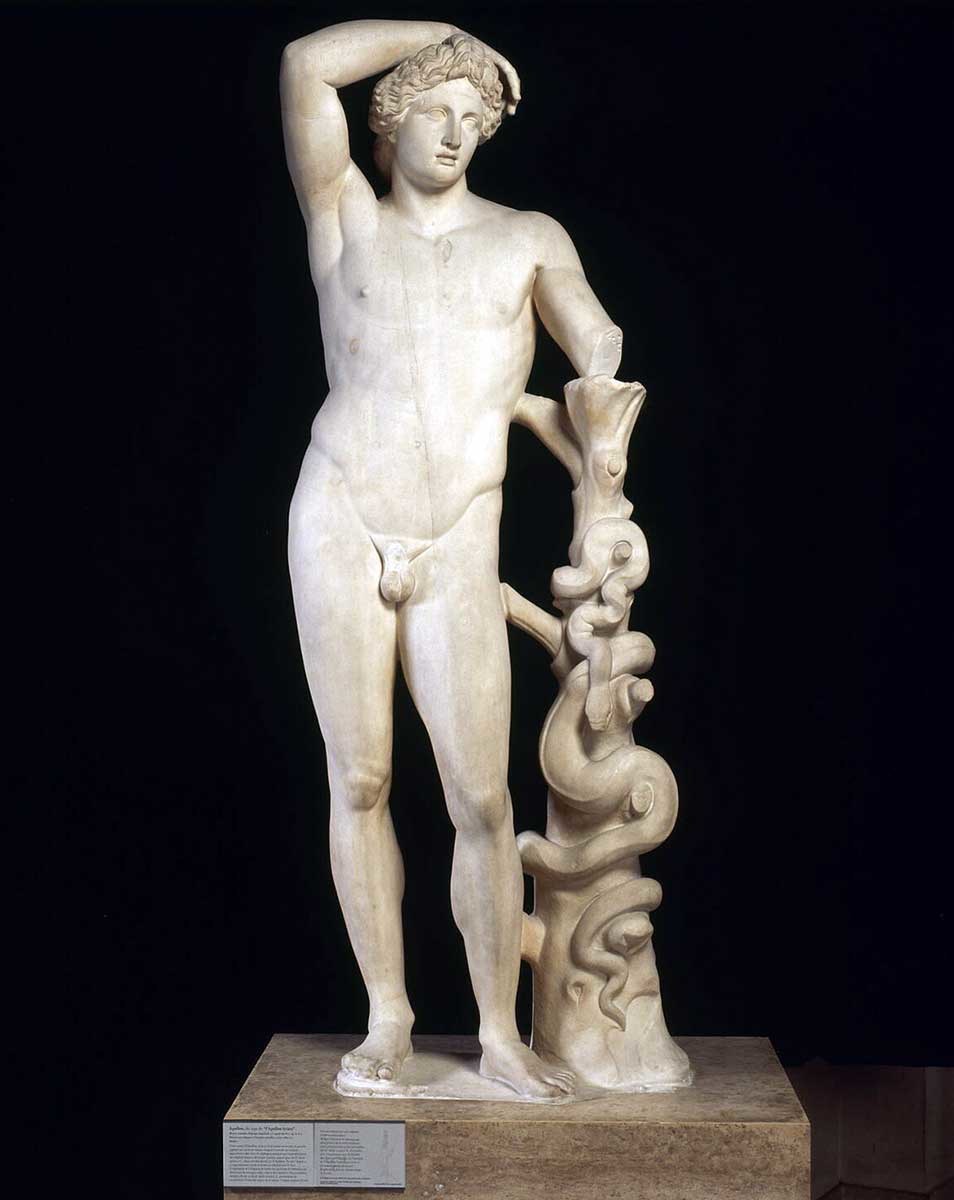
When Octavian entered the Roman political scene in 44 BC after the assassination of Julius Caesar, he was an unknown teenager with nothing but his uncle’s name. He had no allies except for his friend, Agrippa, and many enemies, not the least of whom being Mark Antony. Given the dangerous and tense circumstances he found himself in, Octavian foremost needed to protect himself, and raised an army of Caesar’s veterans to that end. This increased tensions in the city, since Octavian was not authorized by the Senate to hold military command. Mark Antony led opposition to Octavian, denouncing his legitimacy to hold military or political power in Rome. The main attack was directed at his “low” birth.
Octavian descended from an old equestrian family, none of whom had held the consulship. This meant that his family did not have the aristocratic prestige, nobilitas, that the senatorial class prided themselves on. Many of the nobility of Rome claimed familial descent from heroes and gods. Mark Antony himself claimed descent from one of the sons of Heracles named Anton. Mark Antony constantly attacked Octavian’s ignoble birth, calling his great-grandfather a freedman and his grandfather a usurer.
Octavian needed to respond to these attacks, and one of the ways he did so was by claiming divine legitimacy. After Julius Caesar was posthumously deified, he called himself divi filius, meaning son of the deified one.
Child of Apollo
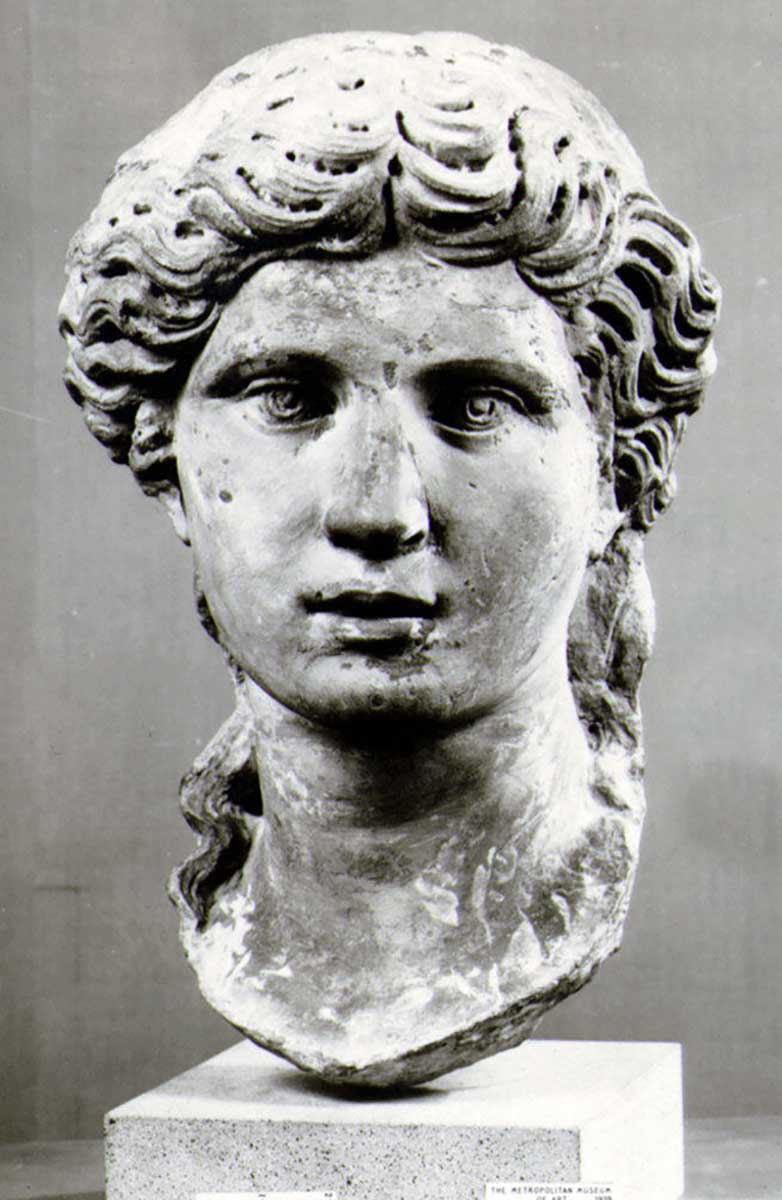
Like Alexander the Great, Octavian may have actually believed in his own divine ancestry. Suetonius and Cassius Dio both reported that Octavian’s mother, Atia, had one time slept in a temple of Apollo and had dreamed that she had intercourse with a serpent. When she awoke, a mark appeared on her body in the shape of a snake, and nine months later she gave birth to a son. They further wrote that before the birth, Atia dreamed that her intestines, a symbol of prophecy, stretched out across the stars. At the same time, Octavian’s father dreamed that the sun rose from her womb.
There is evidence that these stories were circulating as early as the 40s BC. Written around the time of Atia’s death in 43 BC, an epigram attributed to the poet Domitius Marsus references this divine conception.
“May it be said of me that I am happy above all women
To have given life, be it to a man or a god.”
These stories apparently influenced Julius Caesar to begin grooming Octavian to be his heir. While in his own memoir he never wrote of himself as being the son of Apollo, he was obviously aware of these stories. Octavian’s reluctance to say he was an actual son of Apollo may have only come down to Rome’s reluctance to deify people that were still alive. To say he was the son of Apollo would go against the Roman traditions he so carefully presented himself as adhering to. It was also something that he himself criticized Mark Antony for during their civil war, when Antony demanded to be referred to as Dionysus. Whether Octavian believed in his own divine parentage is impossible to know, but the stories proved politically advantageous.
Liberators’ Civil War
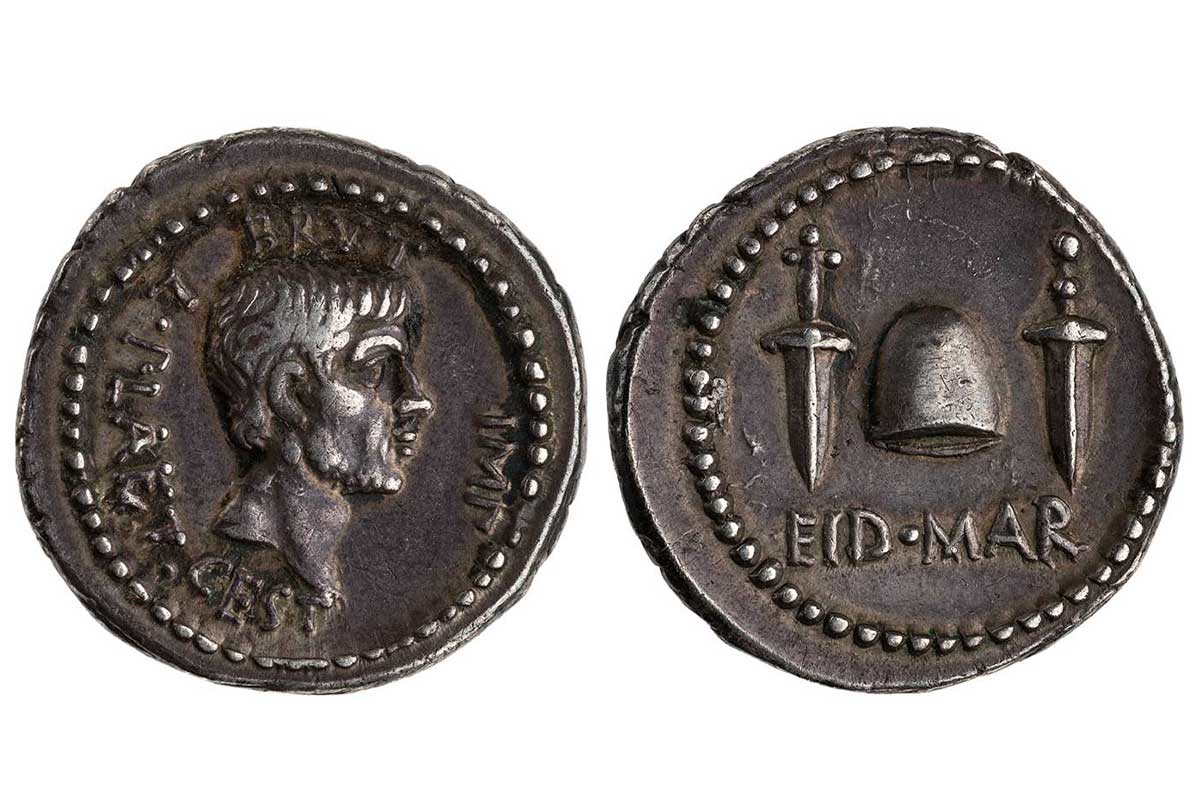
Claiming divine patronage also legitimized military victories by being able to claim ideological and moral superiority. In the years following Caesar’s assassination, another party besides Octavian claimed the patronage of Apollo. That was the assassins themselves.
They called themselves the Liberators, and emphasized Apollo’s connection to liberty. Over the years of 43-42 BC, Brutus and Cassius would issue coins with the images of Apollo and of Libertas, the personification of liberty. In his Life of Brutus, Plutarch wrote that during the final Battle at Philippi against Octavian, Brutus’ camp used Apollo as a watchword. Interestingly, another source attributed the god as the watchword for Octavian’s camp as well. With Octavian’s victory at Philippi, Apollo had clearly chosen whom he favored.
Sicilian Revolt
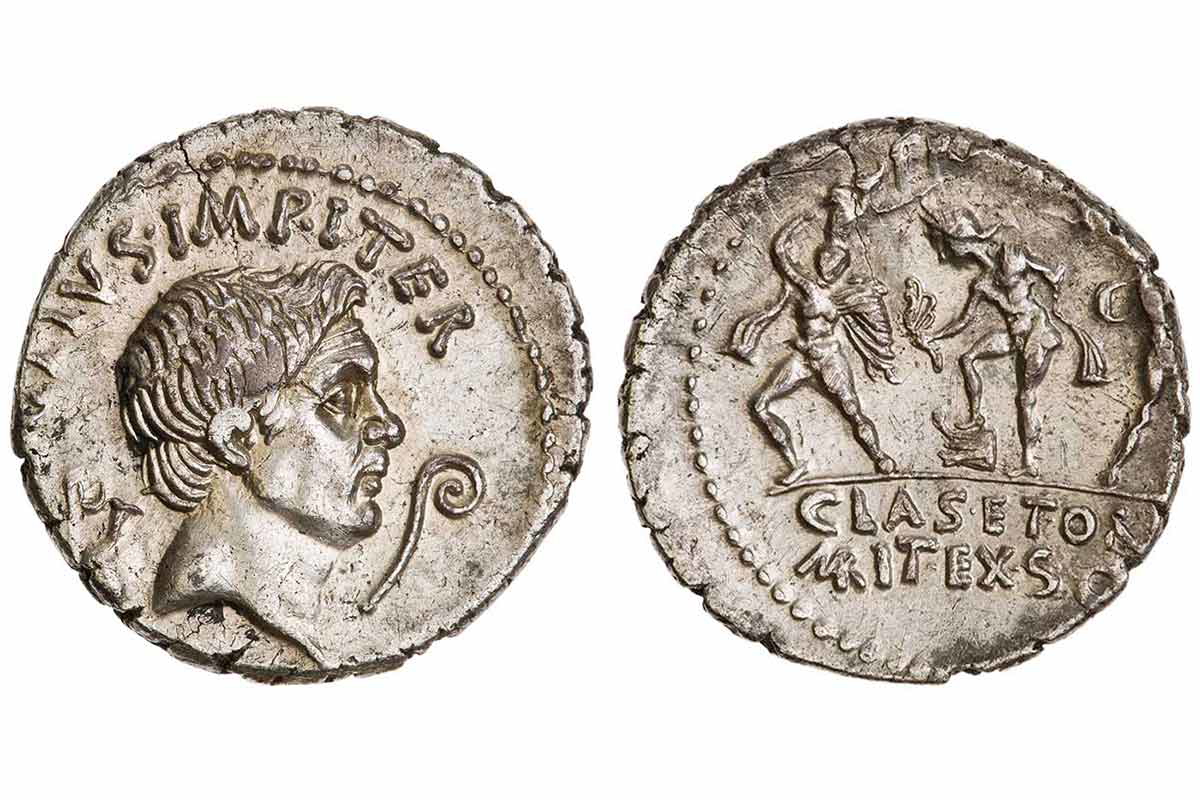
With their victory against the Liberators, Mark Antony, Octavian, and Lepidus divided the rule of the Republic among themselves in what became known as the Second Triumvirate. Mark Antony took the East, Octavian the west, and Lepidus was left with Africa.
From 42-36 BC, Octavian found himself contending with Sextus Pompey, the son of Julius Caesar’s rival Pompey the Great. Sextus had occupied Sicily, and used his navy to cut off the grain supply to Rome. Due to his naval domination, he began calling himself Neptuni filius or dux Neptunius, translating to son of Neptune or Neptune’s commander. During this period, images of Neptune, especially those in a political context such as coinage, were associated with Sextus. During the decisive Battle at Naulochoi, Octavian vowed to build a temple to Apollo on the Palatine Hill. With Octavian’s victory over Sextus he naturally ascribed his victory to Apollo.
Octavian stayed true to his vow, beginning construction on a new temple of Apollo directly adjacent to his own home. The location was apparently decided by the god himself, when lightning struck the hill immediately beside Octavian’s home. There was even a ramp connecting the temple complex to his home. He was later known for welcoming guests from the steps of the temple.
Opposing Ideologies: Apollo Versus Dionysus
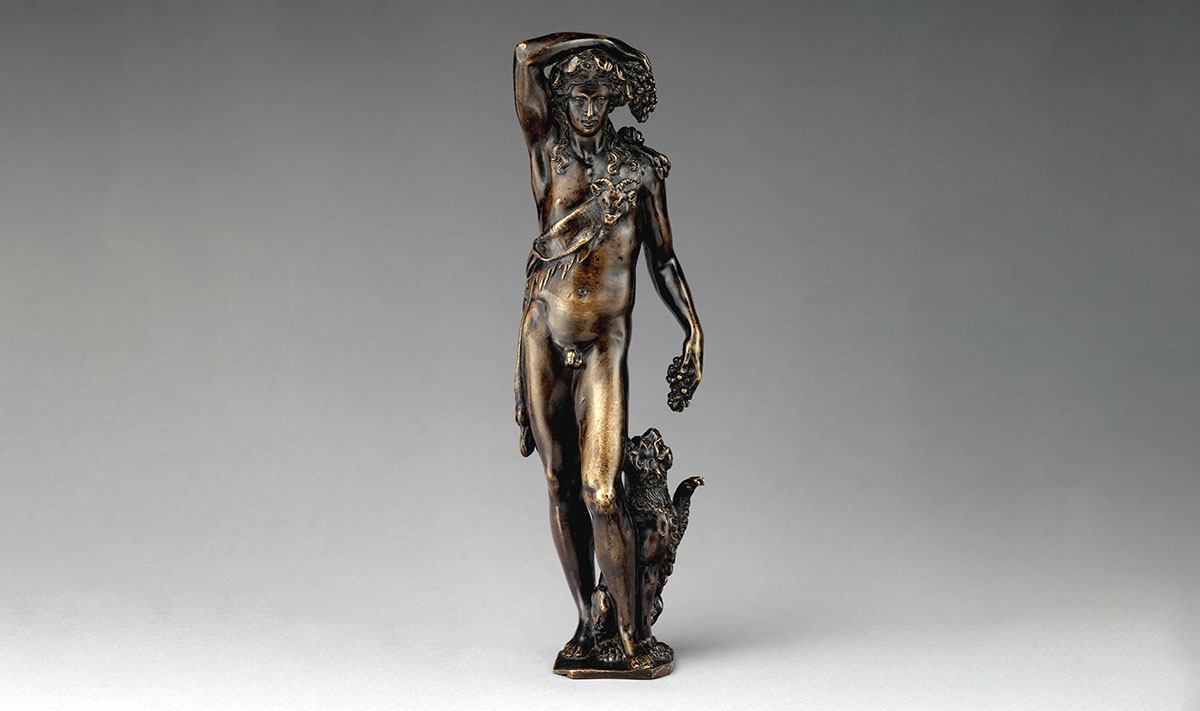
Part of why Octavian created a persona as the favored of Apollo was in direct opposition to Mark Antony’s association with Dionysus. In the decade before 31 BC, Mark Antony ruled the east as the senior member of the Second Triumvirate, in alliance with Octavian and Lepidus. The East was dominated by Hellenistic kingdoms, which traditionally represented their kings as incarnations of Dionysus. The god was associated with revelry and indulgence, but he was also a conqueror of the east. This image suited Mark Antony perfectly, given both his political power and his lifestyle. In Greece and the East, Dionysus had a favorable reputation, yet his more indulgent and excessive aspects were prime ammunition for Octavian’s anti-Antony propaganda.
Octavian used preexisting prejudices held by the Romans against the East as decadent, leisurely, and subservient to portray Antony as corrupted by the East. Apollo was the natural opposite to the eastern Dionysus. Where Dionysus represented indulgence, Apollo represented austerity; where Dionysus represented excess, Apollo represented moderation. This contrast helped to paint Octavian as embodying traditional Roman values.
Mark Antony’s relationship with Cleopatra only served to further Octavian’s point that Antony was corrupted and no longer in control of his own faculties. Octavian managed to convince the Senate to declare war to defend against Antony, but nominally it was against Cleopatra. In a speech attributed to Octavian before the Battle of Actium, Cassius Dio wrote:
“I have heard and believed that he has been bewitched by that accursed woman—and therefore pays no heed to our generosity or kindness, but being a slave to that woman, he undertakes the war and its self-chosen dangers on her behalf against us and against his country.” (Cassius Dio, Histories 50.26.5)
Actium itself was sacred to Apollo, so Octavian’s victory was attributed to the god and he dedicated all the captured ships to him. This was the moment Apollo ceased being solely the patron of Octavian and became a symbol of victory and peace. On the site of his camp, Octavian founded a new city he called Nicopolis, and where his tent was he built a shrine to Apollo.
Apollo in Augustan Literature
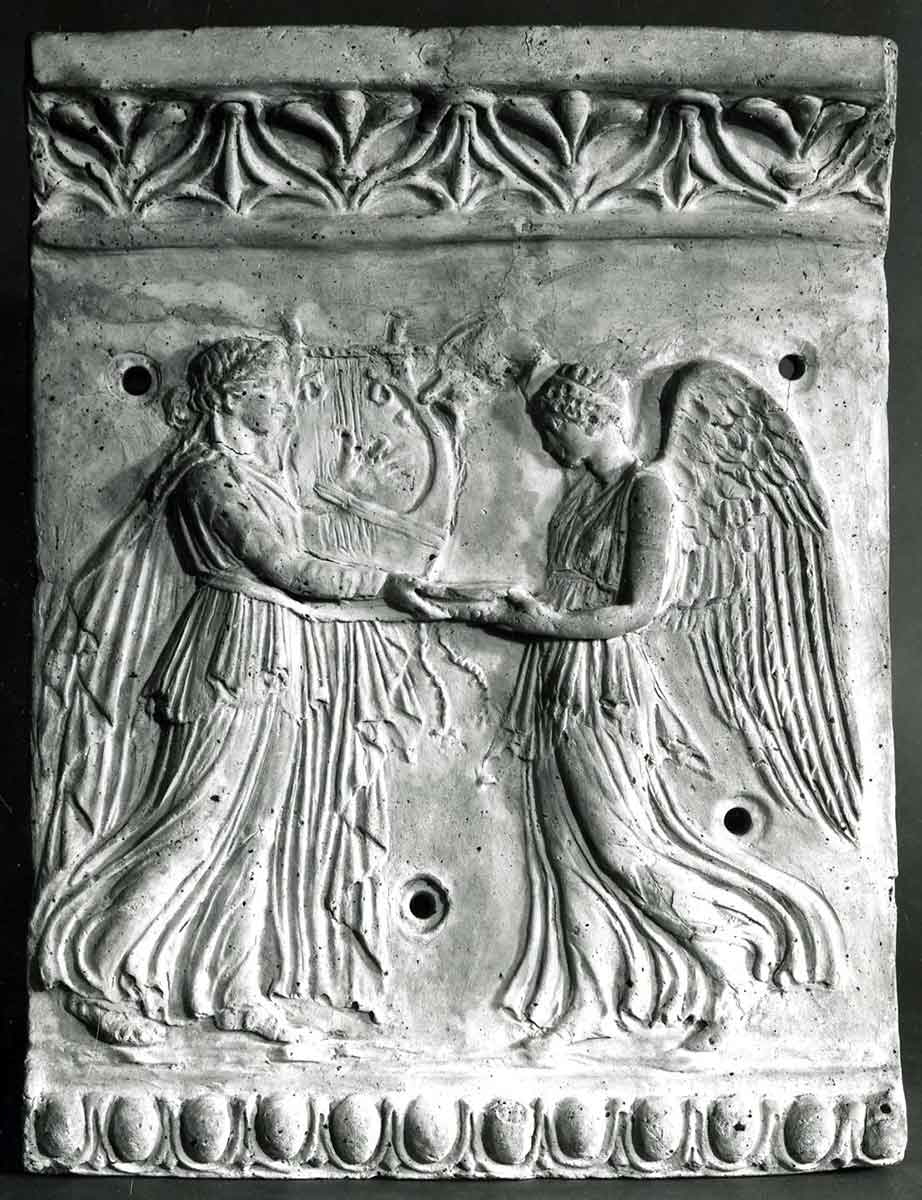
With Octavian victorious over all his enemies, he needed to consolidate his power in such a way as to avoid succumbing to the same fate as Caesar. To that end, he presented Apollo, and thus himself, as the savior of the Republic and a guarantor of peace. This image was propagated not only by Octavian, who was given the name Augustus in 27 BC by the Senate, but also by authors and poets under his direct patronage.
In his poetry, Horace references Apollo by his epithets of Far-Shooter and Healer, seeing in the god a defender of the state and a restorer of peace. In Virgil‘s Aeneid, Apollo guides Aeneas on his journey, as well as protecting him and other leaders. Virgil made conscious links between Apollo and Augustus, and Aeneas and Augustus, expanding on Rome’s foundation myth and tying Augustus and his family with Rome’s mythical past. In this way Augustus was seen as a founder of the city and of a new era in Rome’s history.
Select Bibliography
Cassius Dio (2004). Roman History (Reprinted). Harvard University Press.
Freyburger-Galland, M.-L. (2009). “Political and Religious Propaganda Between 44 and 27 BC.” Vergilius (1959-), 55, 17–30.
Gosling, A. (1992). “Political Apollo: From Callimachus to the Augustans.” Mnemosyne, 45(4), 501–512.
Gosling, A. (1986). “Octavian, Brutus and Apollo: A Note on Opportunist Propaganda.” American Journal of Philology, 107(4), 586–589.
Scott, K. (1933). “The Political Propaganda of 44-30 B.C.” Memoirs of the American Academy in Rome, 11, 7–49.
Suetonius, edited by Graves, R. (2007). The Twelve Caesars. Penguin Books.
Velleius, edited by Shipley, F. W. (2002). Compendium of Roman History. Harvard University Press.
Zanker, P. trans. Shapiro, A. (1988). The Power of Images in the Age of Augustus. University of Michigan Press.