At the end of the first five books of the Bible—called collectively the Torah or Pentateuch—Moses dies and is buried by God himself. Almost all interpreters would acknowledge that Moses could not have written that part of the story. However, with regard to the rest of the Torah, Mosaic authorship was almost universally accepted among Bible readers until relatively recently. Today, however, few biblical scholars believe that Moses wrote these books. Why? What is problematic about the traditional view?
Written in the Third Person
While Moses is credited elsewhere in the Bible with writing it, the Pentateuch itself does not mention an author; it was passed down anonymously. This is not unique among biblical books. Others, such as Job, Joshua, Ruth, Judges, Samuel, Kings, Chronicles, etc. also mention no author. Like the Pentateuch, these books are attributed to the authorship of prominent biblical figures.
From the start of the book of Exodus, Moses is the main character of the Pentateuch’s story all the way through Deuteronomy; that is, he is the protagonist of four out of the five books. Yet, all of these books are written in the third person. When biblical authors write autobiographically, as does Nehemiah and the writing prophets, they normally use the first person, as one would expect. Why would Moses have written so extensively about himself but from the perspective of someone else? Some, in asking this question, wonder if the question itself is wrong. Maybe Moses did not write the Pentateuch at all.
Does a Humble Man Talk Like That?
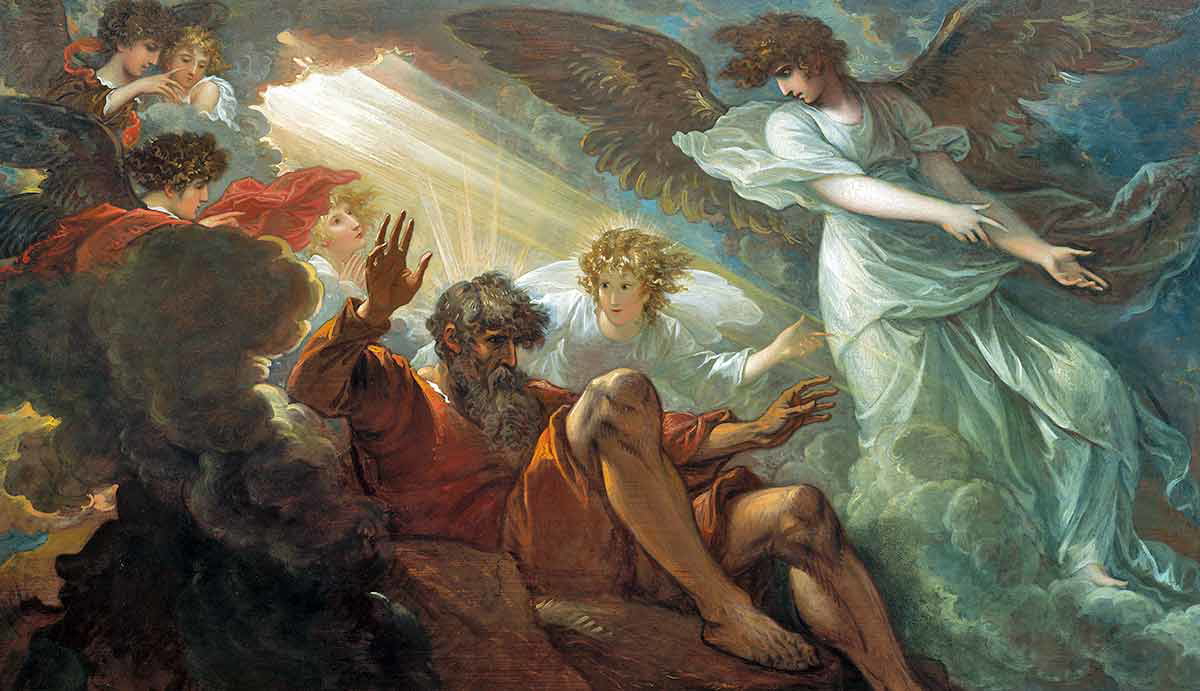
An elusive virtue, humility presents a paradox for those who aspire to it. Whether or not the truly humble can recognize themselves as such may be debatable, but all would agree that genuine humility precludes boasting about it.
Yet famously, Moses is described in the Pentateuch as the humblest man who ever lived. This presents a puzzle for the traditional view. Those who hold to it tend also to ascribe to the Bible a high level of authority, and sometimes even claim that it is entirely truthful. But if Moses wrote such a statement about his own virtue, could the statement itself be true? Can a truly humble man claim to be the humblest of all time? To solve the puzzle one could point out that the statement could be true, at least theoretically, if someone other than Moses wrote it! Setting aside Mosaic authorship, thus, provides a way of respecting both Moses’s virtues and the text’s insights simultaneously with less dissonance between the two.
From the Perspective of Canaan
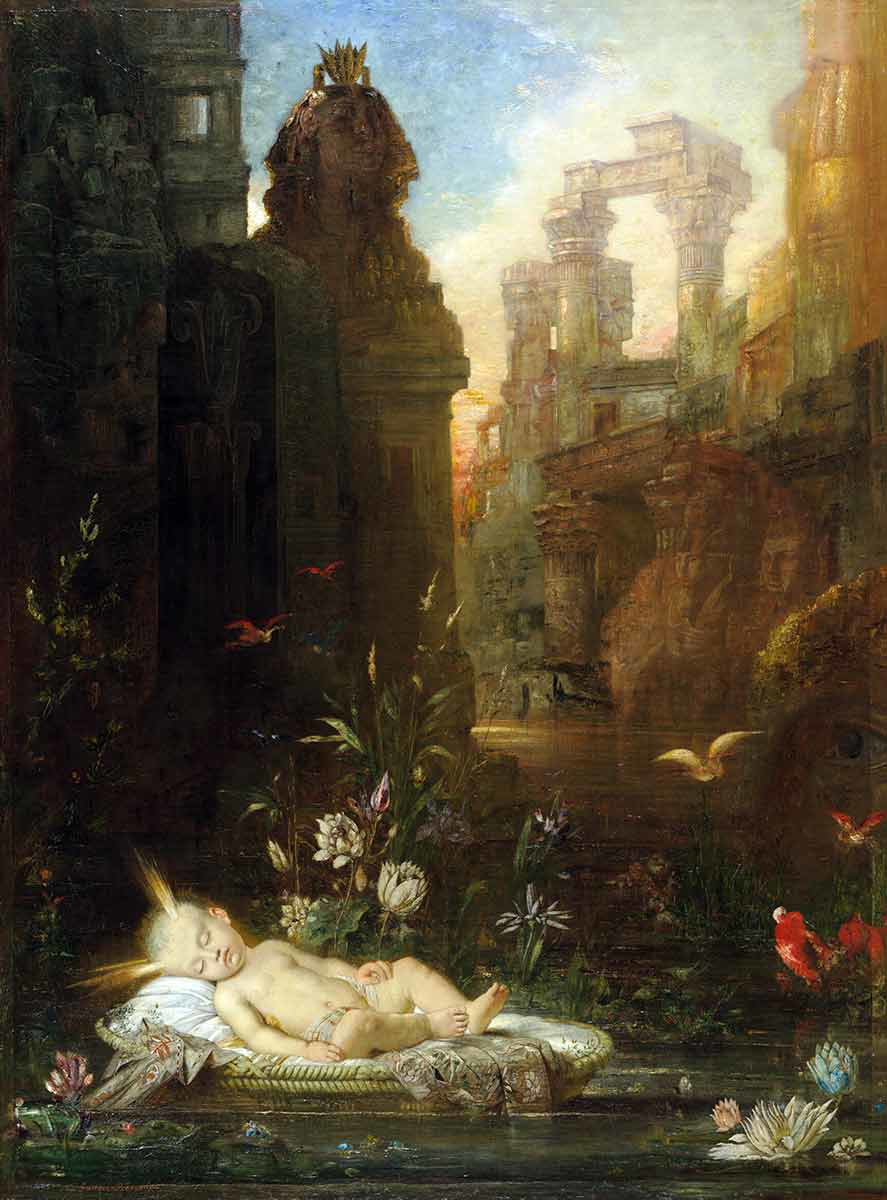
As noted above, Moses never entered the land of Canaan according to the Pentateuch. Yet there are many geographical references to locations therein throughout it. This, in and of itself, may not be problematic for Mosaic authorship since Moses could have consulted with others who had been in the land. But, not only does the Pentateuch demonstrate familiarity with the land, it also contains phrases that suggest the author is writing from the perspective of Canaan.
One of the most obvious of these is the phrase, “across the Jordan,” which appears several times in reference to events that happened on the eastern side of it. Long discourses of Moses, for example, are referred to as having been delivered “beyond the Jordan in the wilderness.” This would be an odd way for a person to write who had never been west of the Jordan River, and who was still in the wilderness at the time of writing.
References to a Distant Past
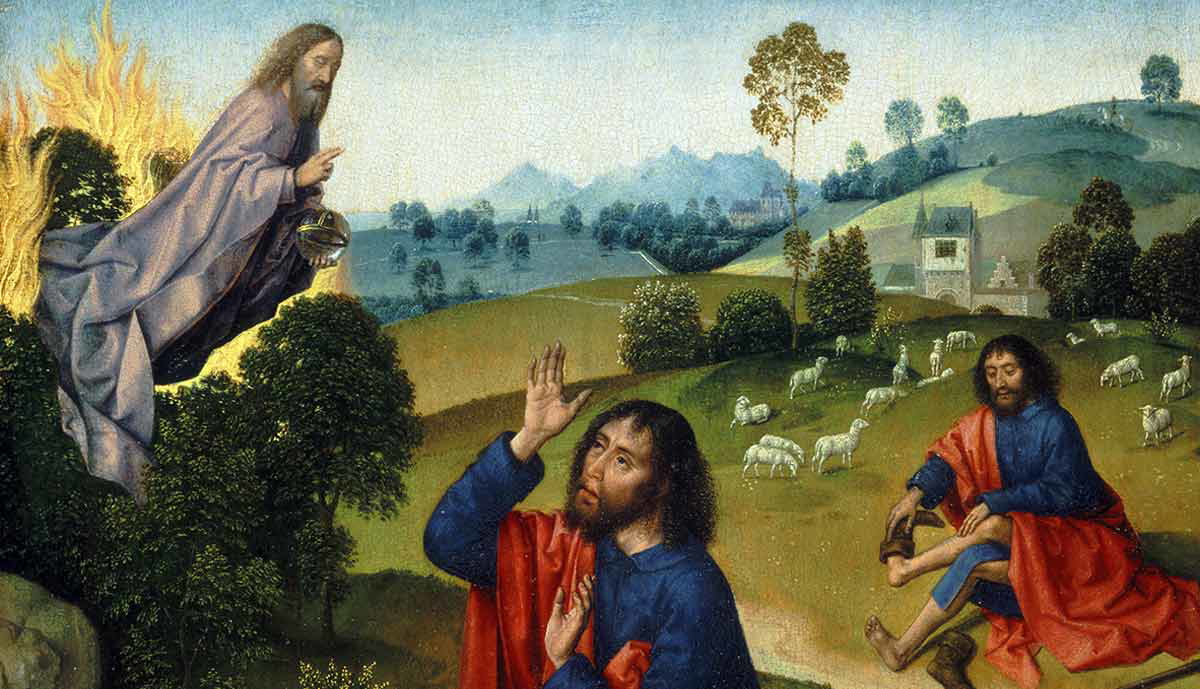
The Pentateuch sometimes refers, almost in passing, to the effects or results of certain events enduring “to this day.” This suggests that the narrator intends to relate events that had occurred sometime in the relatively distant past—at least a generation or two prior.
The last chapter of Deuteronomy gives an account of Moses’s death, and traditionally this was explained as being an addition from the hand of Joshua, Moses’s successor. But the style of this portion of Deuteronomy follows the rest of the book; no clear break in authorship is discernible upon Moses’s leaving the scene. If Moses had, in effect, handed Joshua his pen, one would expect the text to provide some evidence of it. But it does not.
But there is another reason to suspect that neither Moses nor Joshua wrote this account of Moses’s death. At the very end of the narrative, the text says, “Never since has there arisen a prophet in Israel like Moses” (NRSVue). This statement would not make sense if Joshua had written it since, albeit younger, Joshua was part of Moses’s own generation. Like the “to this day” references, this high praise for Moses also seems to be coming from an author who is looking back on his legacy from a time at least several generations after his lifetime. Other, similar clues in the narrative suggest that the text’s author was someone who lived after Moses and Joshua had both lain in the grave for some time.
References to Future Events in Israelite History
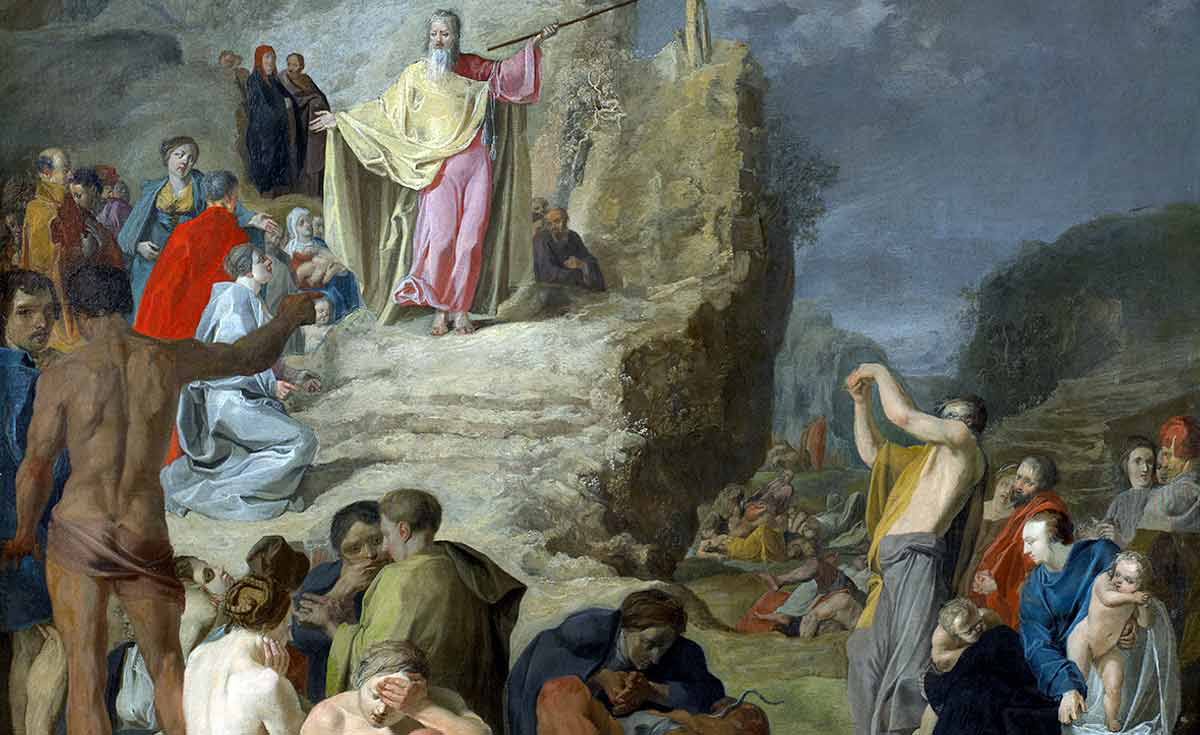
Some of the legal material in the Pentateuch, especially in the book of Deuteronomy, seems to refer directly to events that would later occur in Israelite history. For example, laws regulating the behavior of kings are given, even though the first part of Samuel suggests that God would later oppose kingship as a governing model for Israel. Deuteronomy warns that, if the kings of Israel lead them into devotion to foreign deities or away from obedience to the laws and regulations contained within the book, they would be punished by being handed over to foreign oppression and, ultimately, exile. As the narrative continues into Joshua, Judges, and then on to Samuel and Kings, this is what happens.
The connection is made so overtly that many scholars believe that Deuteronomy was written by someone who knew the whole story up through the Exile—that is, all the way through the book of Kings. Whether or not this person or group should be called the “author(s)” is difficult to say. But the narratives stretching from Deuteronomy through Kings, in any case, seem to have been crafted, formed, or created—through a process of compiling, writing, rewriting, and editing—carefully to tell a coherent story.
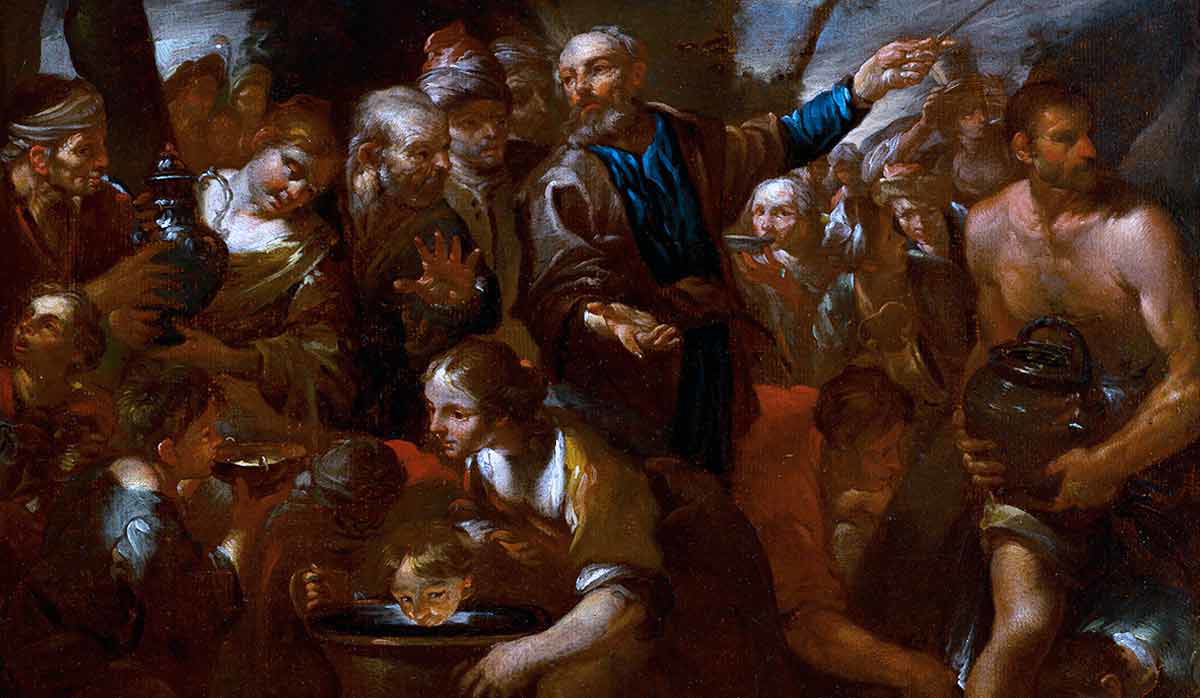
These findings further complicate the idea that Moses is the author of the Pentateuch since, in reality, Deuteronomy is as much a compositional part of the corpus of literature that follows it as it is of what comes before. Conclusive proof is virtually always elusive in questions about historical events as old as the date of the Bible’s composition. Still, given the other clues discussed above that seem to show that the Pentateuch’s author(s) came from generations after Moses’s day, one can claim that there is good evidence that Deuteronomy was also part of a later literary enterprise.
More Than One Author?
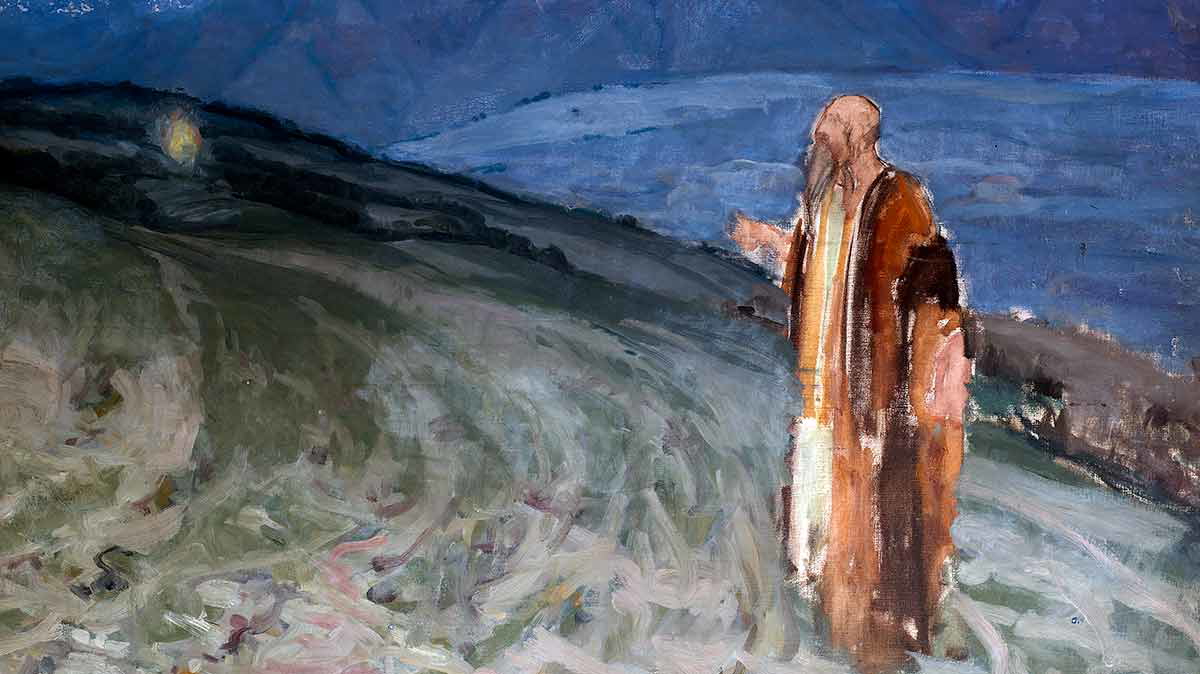
Another reason to doubt Mosaic authorship is less immediately accessible to the casual reader than the above observations. It has to do with the literary-historical discipline called “Source Criticism.” Scholars who are interested in finding the Bible’s authors observe that, in many cases, several sources seem to have been “stitched” together to form the “fabric” that constitutes the text as it now stands.
While there is disagreement among scholars on the exact number and origin of these various sources, virtually all biblical scholars today agree that there is evidence of this integration of various sources. The two creation narratives in Genesis chapters one and two are the examples most commonly given. In this example, two sources are easily discerned because two very different stories are simply put together with one following the other. But in most cases in which scholars discern the presence of two or more sources in a single passage of the Bible, the sources have been “cut” into several pieces, interwoven, and then restitched together to form what appears to the casual reader to be a single, ongoing narrative.
“Stitched” Together
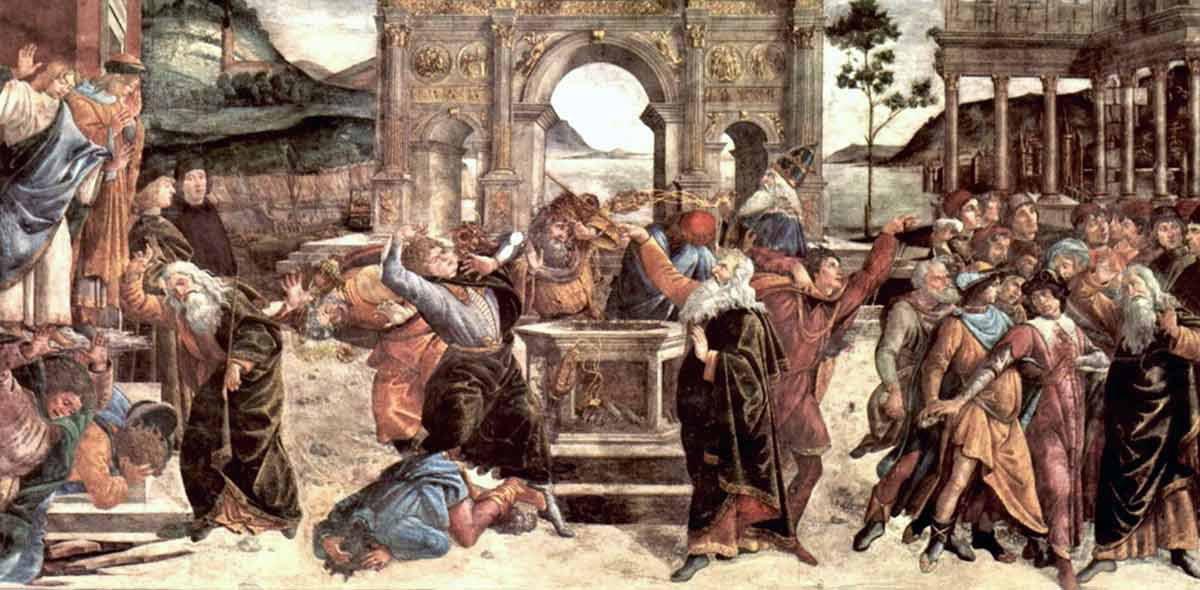
Source critics use contradictions or wrinkles in storylines as well as stylistic clues in the Hebrew prose to try and discern where various sources have been integrated with each other. For example, in a long narrative about Moses and the Israelites’ war with the Midianites in the book of Numbers, the text jumps back and forth between calling Israel’s enemies Moabites and Midianites. The slaughter of the Midianites that eventually ensues strikes the reader as odd, since in Exodus the family of Moses’s first wife Zipporah, who welcomed and supported Moses throughout his adult life, were Midianites. Also, the conflict began when a Moabite king and his contracted prophet set out to do Israel harm. Why would the war begin with Moab, but then end in the defeat and (according to the text) eradication of the Midianites? Perhaps it is because, originally, these were two separate stories.
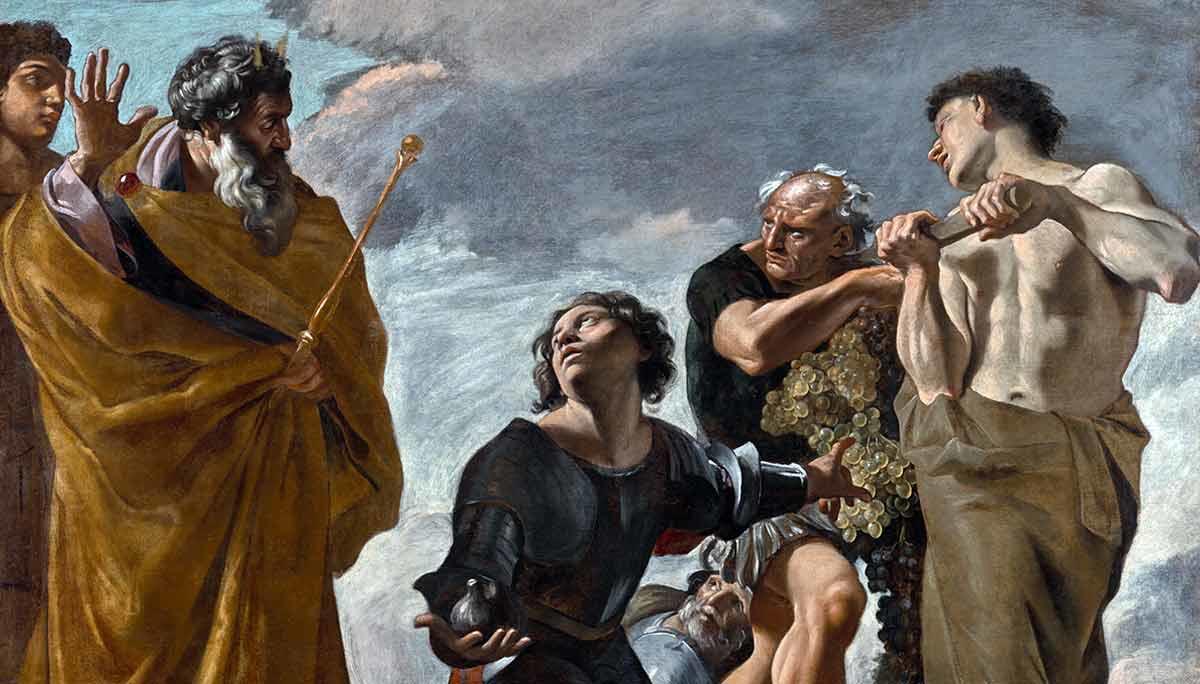
Another example, also from Numbers, involves what appears to be two, originally separate stories about groups who challenged Moses and Aaron’s authority. The text jumps back and forth between a group called “the sons of Korah” and another under the leadership of “Dathan and Abiram.” As a result, the narrative is difficult—or maybe impossible—to follow. But when the (what appear to be two) different sources are separated, each storyline makes sense on its own.
This phenomenon is so common that there is wide consensus among scholars that the Pentateuch, as well as other parts of the Hebrew Bible, went through intergenerational processes of compiling and editing before arriving at its present form. But because we only have the Bible as it is, finding exactly where (let alone when historically) the “stitching” happened can sometimes be challenging and, in many cases, is probably not possible with a high level of certainty.
Why Does It Matter?
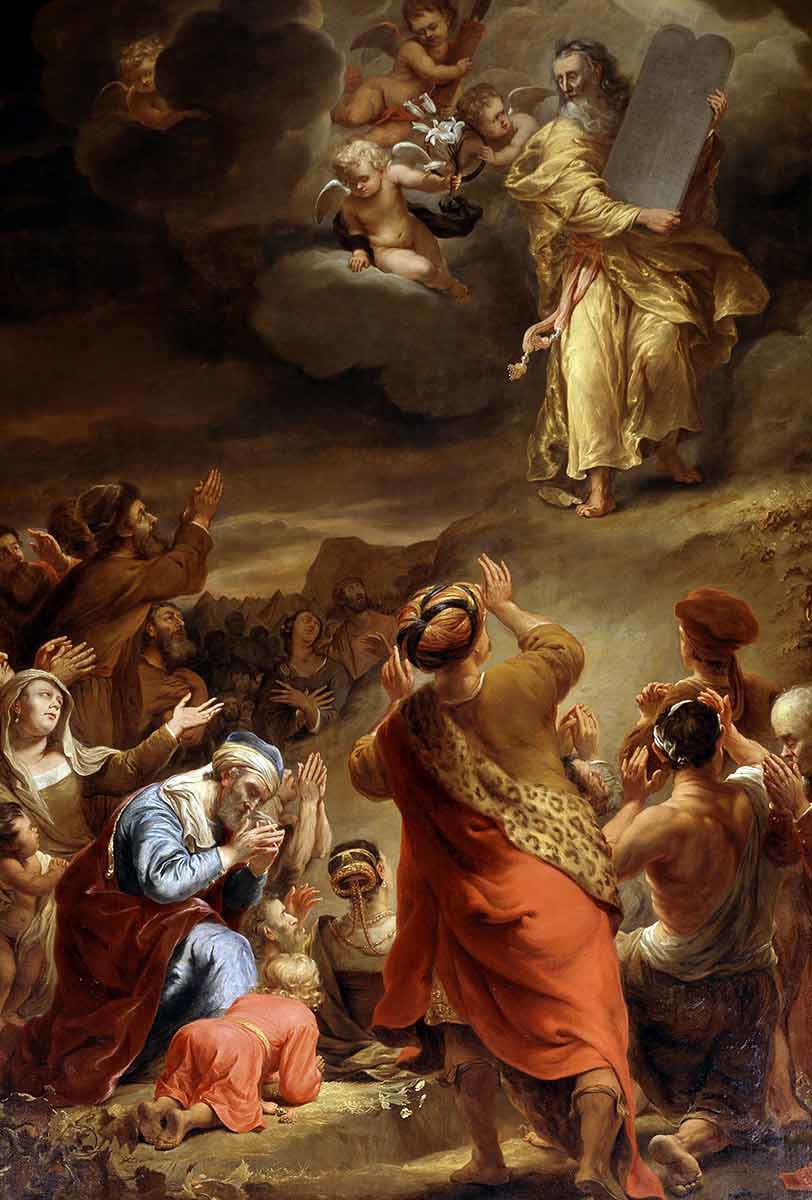
If Moses is its author, the Pentateuch was composed during the lifetime of its primary protagonist. And if this is so, the relevance of the stories therein, whether to history, theology, or other areas of human inquiry that would come thereafter would have been all but unknown at the time it was written.
But if scribes privy to the influence of these stories on the ensuing life of Israel over several generations wrote it, the authorial perspective changes significantly and, as a result, so should the way it is read today. The readers’ questions become less about what happened and more about what Israel remembered about their past, and how those memories had an ongoing effect on Israel’s self-understanding as the text continued to be read, studied, and pondered. Did those who wrote of the Israelite exodus from Egypt, for example, know of the Assyrian and Babylonian exiles? Did those who wrote about Moses and Joshua’s leadership also know about Israel’s judges and kings? Is the Pentateuch best understood as a memoir, a work of nostalgia, hagiography, history, a tragedy, or a combination of these? And if a combination, how did the mixture form?
Departing from the traditional view of the Pentateuch’s authorship opens up many questions, and there is something for everyone. The historian, text critic, anthropologist, theologian, psychologist, and others all find plenty to explore as a result.