
The devastating effects of World War II were unanimously felt around the globe. The conflict pulled millions of America’s sons and daughters away from the comforts of daily life, but few risked a life of fortune and fame to answer the call to serve. While many equate the crossroads between military service and celebrity with figures such as Elvis Presley, America’s pastime contributed many baseball stars to greater causes. These Hall-of-Famers deserve to be remembered for their exploits on the battlefield as well as the playing field. Here are their stories.
1. Ted Williams
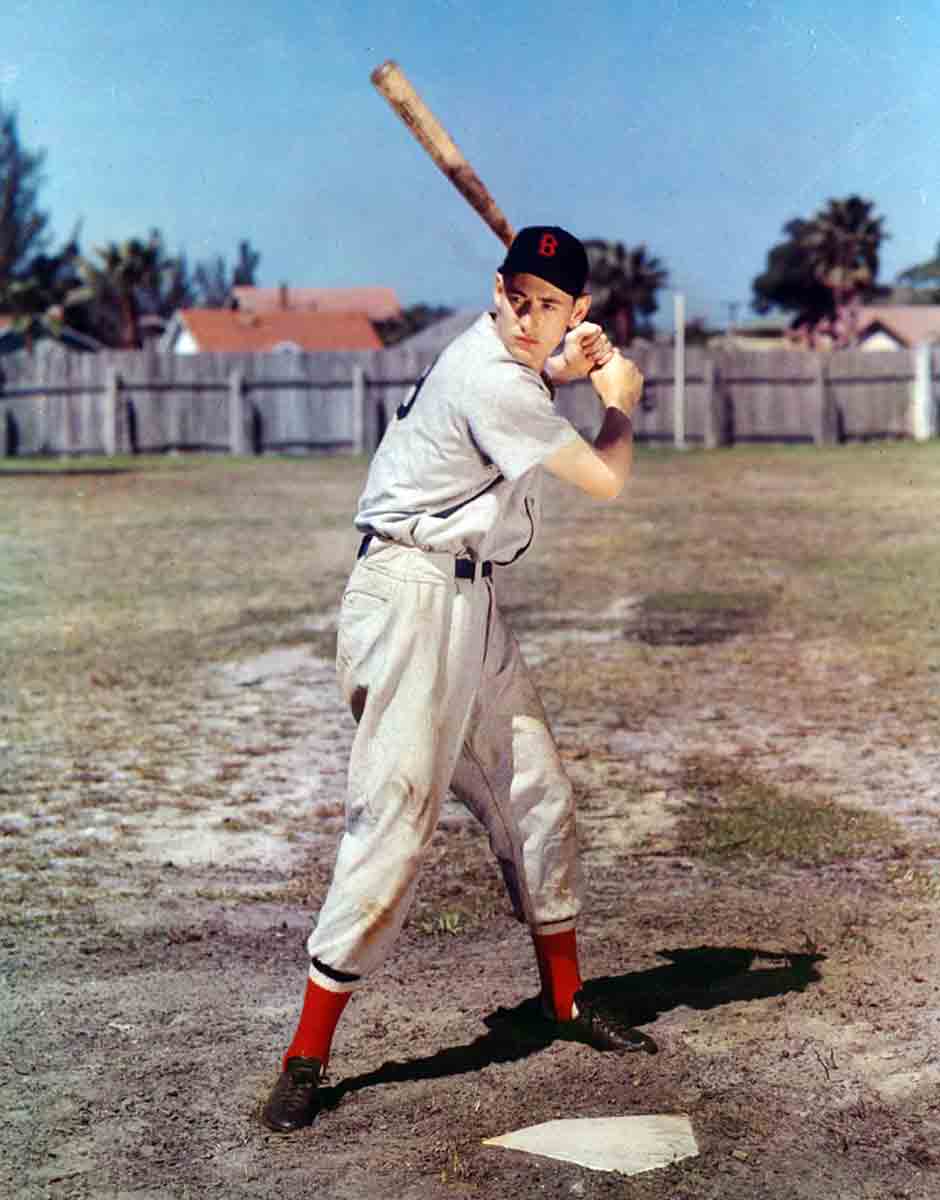
Ted Williams is considered one of the best hitters in the history of Major League Baseball. Aside from his unmatched abilities on the field for the Boston Red Sox, Williams was a talented fighter pilot. After being drafted by the United States Navy in 1942, the left fielder was assigned to the Marine Corps and received extensive training for combat operations. This intention, however, was not realized as Williams instead chose to remain an instructor for military aviators. While the baseball star was medically discharged in 1946 due to poor eyesight, Williams earned both an American Campaign Medal and World War II Victory Medal for his service as an instructor.
Despite his thriving baseball career and service during the Second World War, Williams was called back to service during the Korean War. Williams was reportedly surprised by being called back into service, but this shock did not stop Williams from flying 39 combat missions over North Korea in support of his fellow Marines on the ground. His aircraft were hit multiple times during the war, but the formidable hitter returned to the field in 1953 unscathed. Today, many baseball analysts point out how Williams’ service interrupted some of his prime years as an athlete. Williams started playing in Major League Baseball in 1939, but he did not play a single game between 1942 and 1944, and only 43 games over the 1952 and 1953 seasons.
2. Jackie Robinson
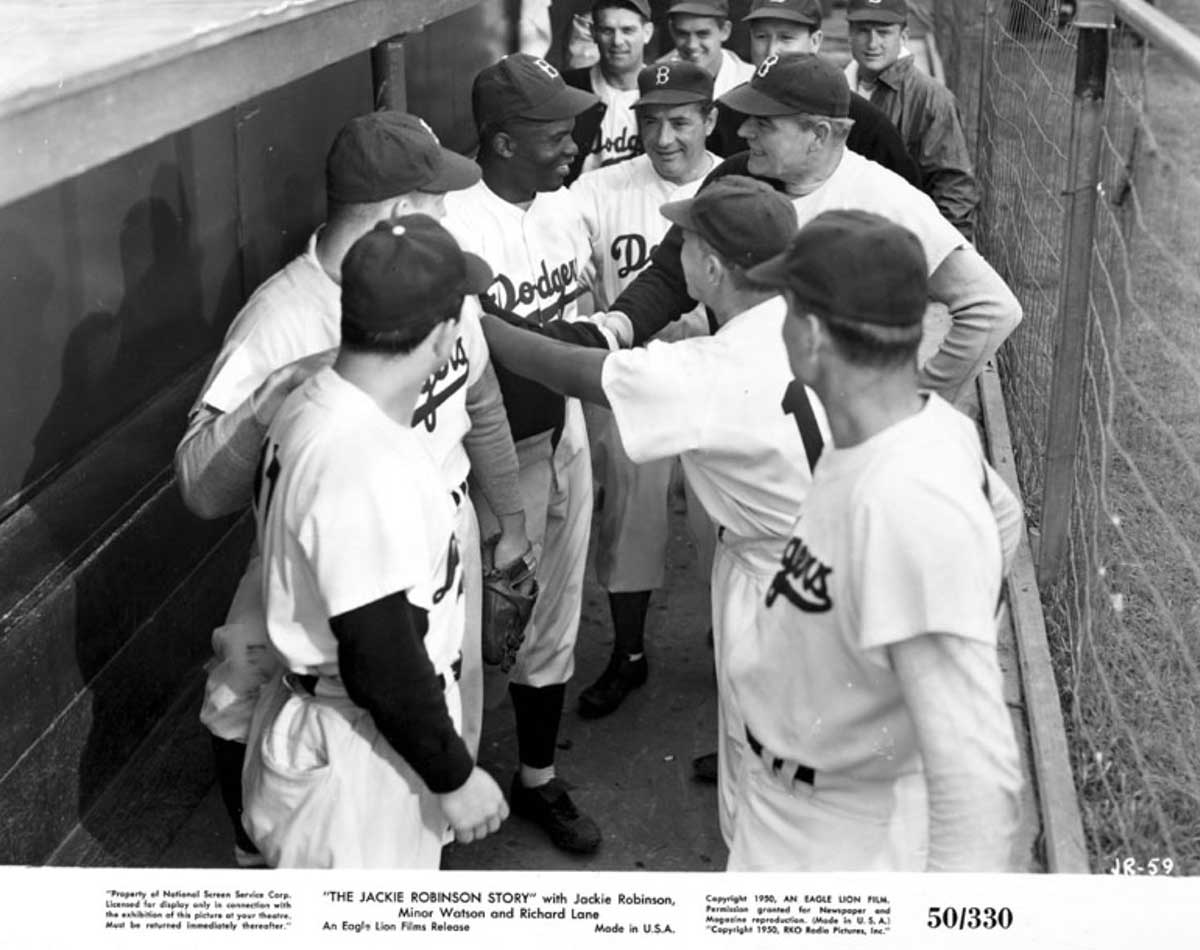
Jackie Robinson’s legacy is one of bravery, talent, and service in more ways than one. Before breaking the color barrier in mainstream American sports in 1947, Robinson was drafted into the United States Army in 1942. Initially assigned to a segregated unit at Fort Riley, Kansas, the future Major League Baseball star was commissioned as a second lieutenant in early 1943 before serving in the “Black Panthers” 761st Tank Battalion out of Fort Hood, Texas. Unfortunately, Robinson faced similar prejudice in the military as he did as a professional sportsman.
After refusing to sit in the back of a segregated bus in 1944, Robinson was court-martialed. While his Black Panther commander refused to press charges, the junior officer was transferred to the 758th Tank Battalion and charged by his new commander. Robinson, however, was eventually acquitted of all charges and received an honorable discharge in 1944. Just three years later, Robinson was on the field as a second baseman for the Brooklyn Dodgers, where he would go on to challenge the racial status quo in the United States and inspire millions of Americans. While Robinson never saw active battle in World War II due to racial prejudice, Robinson’s showed a similar degree of courage fighting against discrimination within the United States, and his military service adds unique distinction to a life of triumphing over hardship. This toughness, while natural to Robinson, was partially formed during his military training.
3. Joe DiMaggio
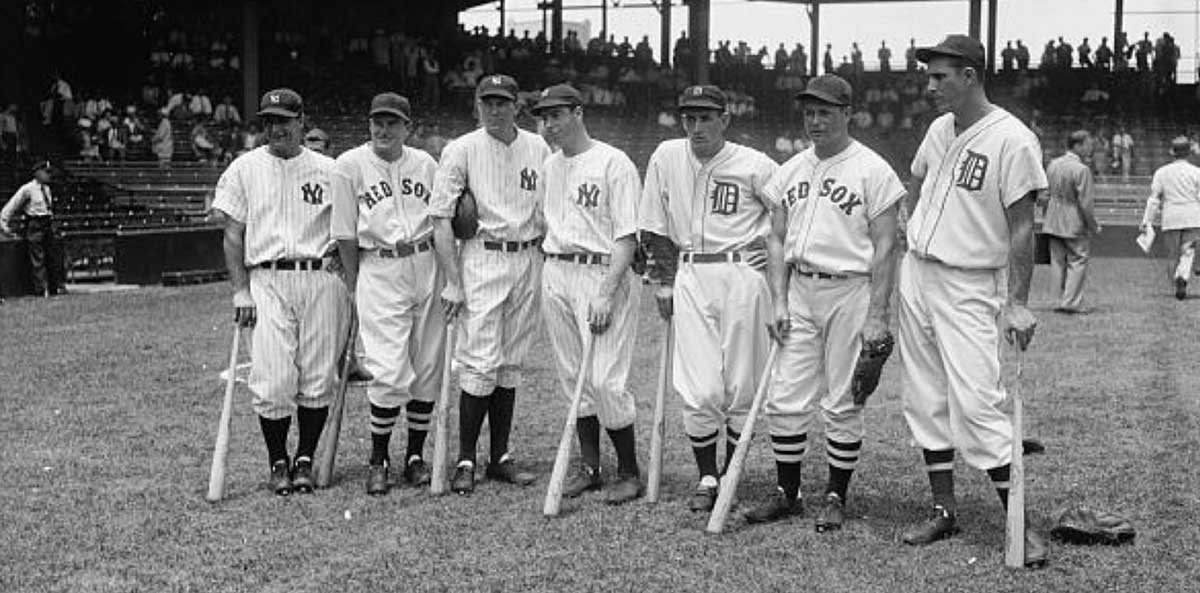
Next to New York Yankees legends Babe Ruth and Lou Gehrig, Joe DiMaggio is one of baseball’s most successful athletes of the early 20th century. Before enlisting in the United States Army in 1943, the “Yankee Clipper” won Major League Baseball’s most valuable American League player award in 1939 and 1941. As such, DiMaggio was already a high-profile individual before the war. While professional athletes serving in the military were commonplace throughout the league, President Franklin Roosevelt urged baseball team owners to keep the sport running to give America a distraction and a sense of life as normal amid the existential conflict. Naturally, military leaders assigned DiMaggio to fulfill physical education instructor roles across the country to help prepare soldiers for the rigors of war. While the star humbly asked for a combat role, his request was denied.
Shortly after Japan’s surrender in September 1945, DiMaggio was medically discharged from Army service due to stomach ulcers. Due to his pre-war fame, DiMaggio’s service is described as one of relative comfort, but one cannot discredit the effect DiMaggio had on encouraging recruitment and promoting public awareness of war bonds. Upon return to baseball, DiMaggio resumed his historic stride immediately. The Yankee once again won a Most Valuable Player award in 1947, highlighting how DiMaggio’s time in service removed one of baseball’s best from competing during the most active years of the war.
4. Yogi Berra
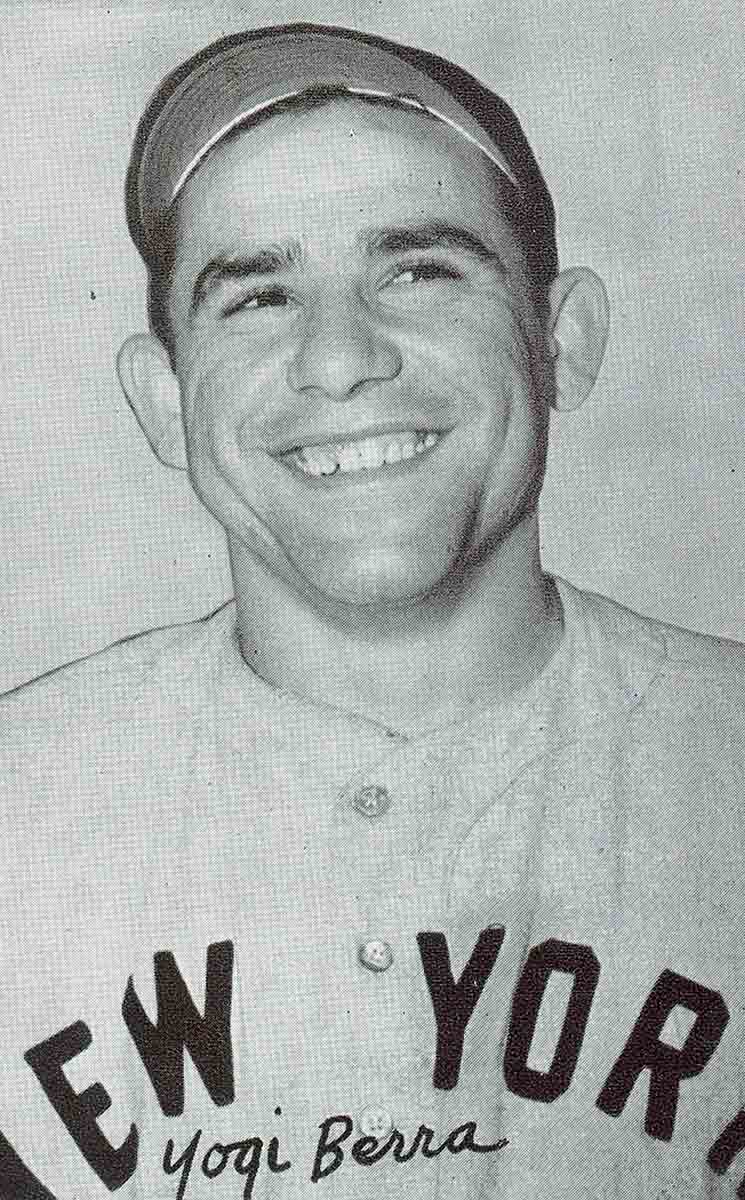
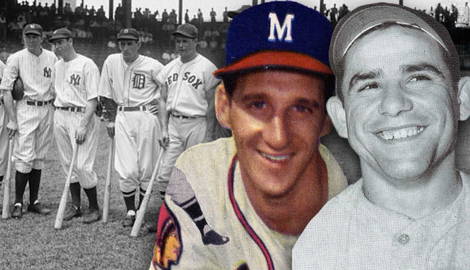
Yogi Berra is known as one of Major League Baseball’s best catchers of all time. Following the attack on Pearl Harbor, Hawaii, Berra enlisted in the Navy. As a gunner’s mate aboard the USS Bayfield, he was one of thousands of servicemembers present for Operation Overlord, better known as D-Day, attacking the coast of Normandy from both Omaha and Utah beaches. Berra was responsible for firing the machine gun turret on the landing craft support vessel and earned a Purple Heart at just 19 years old. Later in life, he recalled how just a thin plate of metal was all that lay between him and German projectiles. Exposure to such dangers gave Berra a contagious enthusiasm for life, and he would live to the age of 90.
Berra did not start his professional baseball career until after completing his military service in 1946. Shortly after his discharge, Berra joined the New York Yankees alongside legend Joe DiMaggio, and went on to win three most valuable player awards in addition to ten world series championships, the most of any player in history. After a nearly 20-year career as a player, Berra went on to manage both the New York Yankees and Mets, extending his influence on baseball into the mid-1980s. Today, Berra is amicably known for his charming and wise personality, voiced through unique “Yogi-isms,” making him one of the best-liked personas in baseball history.
5. Warren Spahn
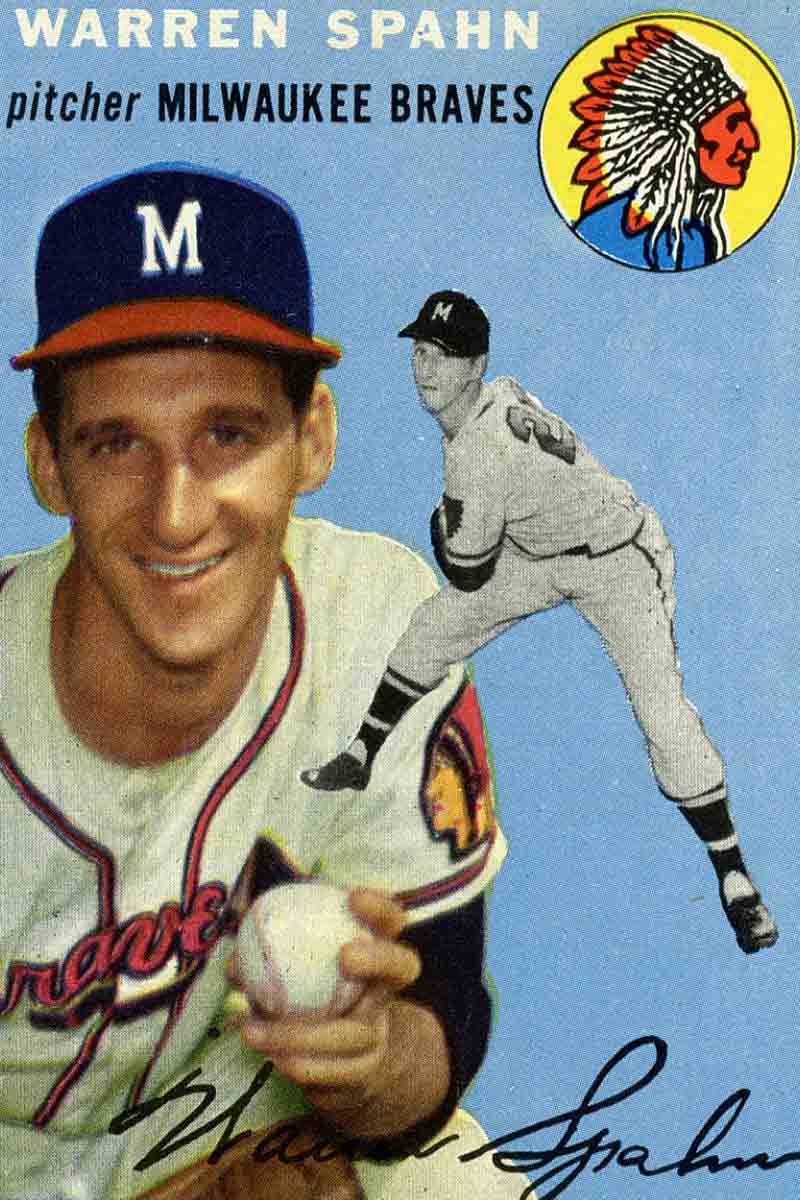
Much like Yogi Berra, Warren Spahn was one of the few professional athletes to see combat during World War II. Prior to enlisting in the United States Army, Spahn only played four Major League Baseball games. The Boston Braves member, known for his comically high leg kick when winding up to pitch, participated in the Battle of the Bulge in 1944 as a soldier in the 1159th Engineer Combat Group. Shortly after, Spahn played an instrumental role in retaking and repairing the damaged Remagen bridge, which led Allied troops across the Rhine and into Nazi Germany, and was wounded when the bridge was attacked. For his actions on the frontline, the lefty was awarded a battlefield commission as an officer, a Bronze Star, and a Purple Heart.
After military service, Spahn returned to professional baseball, playing 19 years with four teams. His most notable accomplishments include winning the 1957 Cy Young award, a World Series championship, 17 All-Star Game appearances, and two no-hitters. The ace pitched 13 different seasons with over 20 wins each, a remarkable accomplishment rarely emulated today. As a result, Spahn is widely considered one of the best left-handed pitchers in baseball history, rightfully earning his spot in the Hall of Fame. In the modern-day Major League Baseball Association, the best left-handed pitcher is awarded the Warren Spahn Award in the veteran’s honor.
6. Hank Greenberg
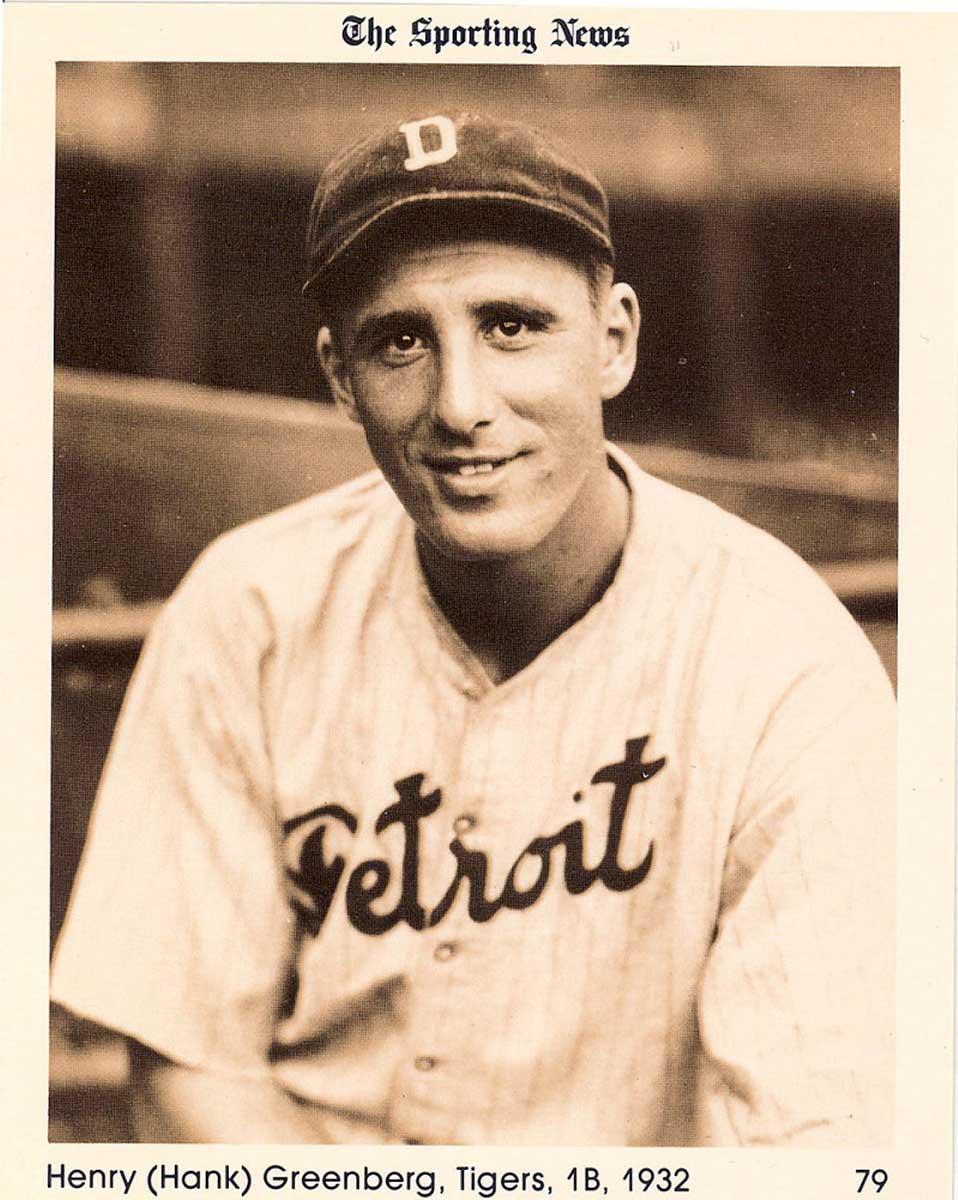
At ten years in the Major League Baseball association, Hank Greenberg had the most pre-war experience as a professional baseball player compared to his peers. Just two days before the attack on Pearl Harbor, Greenberg was honorably discharged after volunteering for the peacetime draft. Just three months later, the “Hebrew Hammer” was labeled unfit for service, but the Army reconsidered after Greenberg insisted. A member of the Army Air Corps, the left fielder quickly passed the Army’s Officer Candidate School. He would go on to scout locations for military bombing missions, including for Operation Matterhorn, in the China-Burma-India Theater.
Despite believing that his time in professional sports was over after nearly four years of service, Greenberg returned to the game of baseball after his second stint in uniform. Fittingly, he hit a home run in his first game back with the Tigers in 1945, leading the team to a World Series victory in the same year. At 47 months in total, Greenberg spent far more time in uniform than the other baseball players who served in World War II. Today, the feared hitter is remembered for his proud Jewish heritage.
While professional athletes and armed forces personnel are both celebrated in American society, the relationship between baseball and wartime service contributes to the sport earning the title of “America’s pastime.”