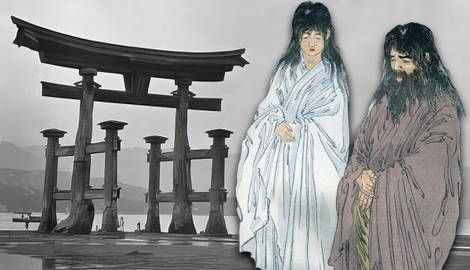

Long ago, the world that would eventually become known as the Land of the Rising Sun was covered in chaotic darkness. From the chaos emerged five primordial spirits named the Kotoamatsukami. These invisible spirits decided to set the cosmos before hiding away. After they hid, a divine couple arose from the cosmos and made order of the Japanese archipelago.
How Japanese Mythology Was Recorded in the Kojiki
Japanese mythology is recorded in the Kojiki, translated as Records of Ancient Matters. It is divided into three sections: Kamitsumaki (upper volume), Nakatsumaki (middle volume), and Shimotsumaki (lower volume). It is believed to be the oldest surviving literary work in Japan. It contains a plethora of information, including a genealogy, early Shinto myths, legends, hymns, and semi-historical events. It was written for Empress Genmei by Ōno Yasumaro.
Emergence of the Kotoamatsukami from Primordial Cosmic Chaos
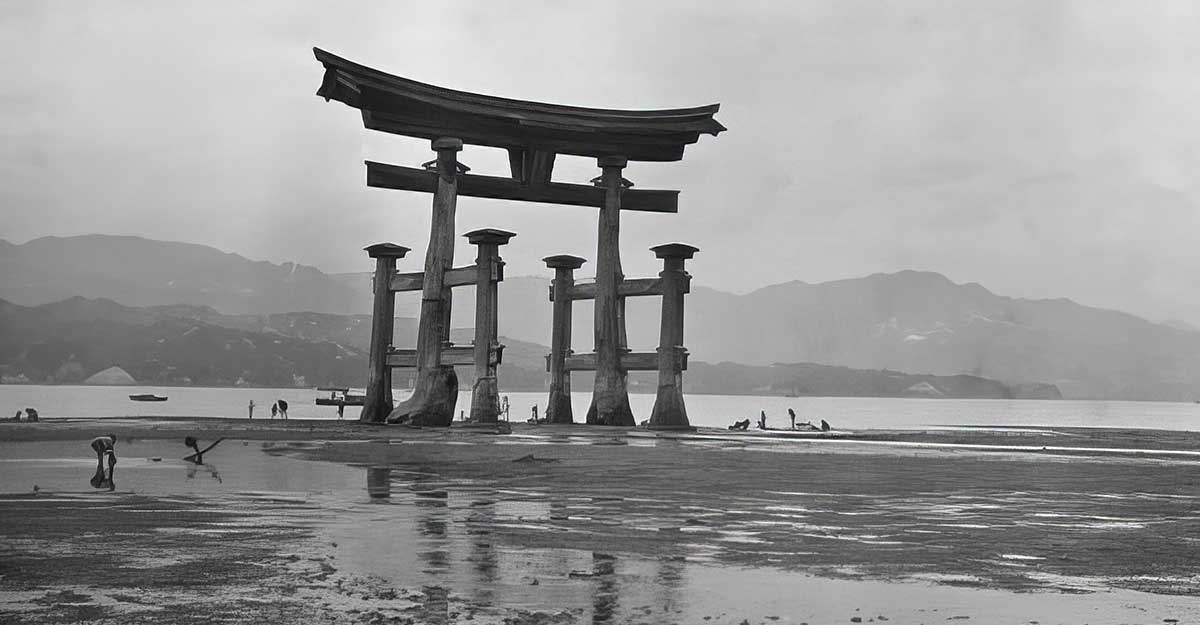
In the beginning of Shinto mythology, the universe was pure chaos and shaped like an egg. Light was at the top of the universe, while beneath it was the energy and matter that formed the clouds that became heaven, or Takamagahara (High Plain of Heaven). The rest of the matter sank below heaven and became the earth. Within Takamagahara, a plant grew, and from this arose five deities who were spontaneously born without any form or gender in a process called hitorigami.
These deities were called the Kotoamatsukami (distinguished heavenly gods), who ruled a dark, cosmic void. These beings set in motion the entire Shinto cosmology. They lived in Takamagahara, where all the primordial forces existed, and gods were spontaneously born without any form or gender. These gods were led by Amenominakanushi, the first spirit to be named in the Kojiki. After they emerged, they disappeared and were not mentioned again.
Divine Mandate of Izanagi and Izanami
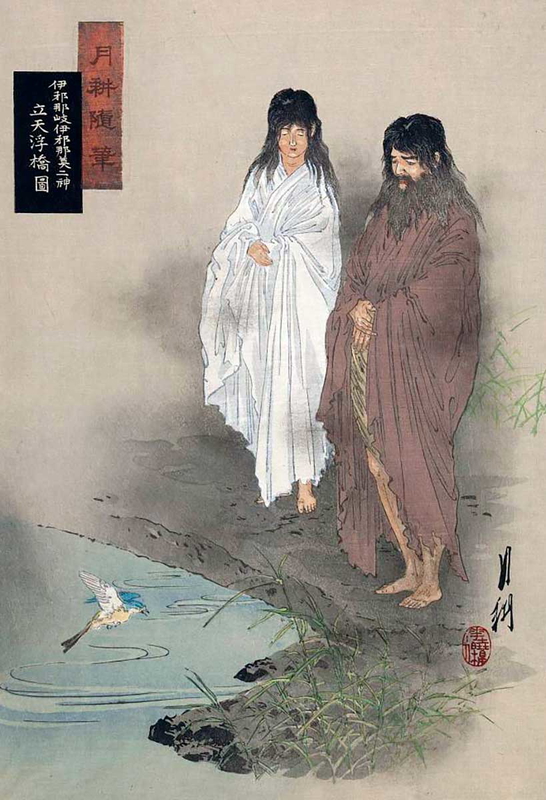
After the Kotoamatsukami came seven generations of divine deities, all of whom were male and female, partnered together. These gods are known as the Kamiyonanayo (Seven Divine Generations). Finally, a pair was born, named Izanagi and Izanami. The divine pair were ordered to make the earth, and to accomplish this, the older deities gave them a spear known as Ame-no-Nuboko (heavenly jeweled spear).
Churning the Primordial Ocean and Shaping the Islands
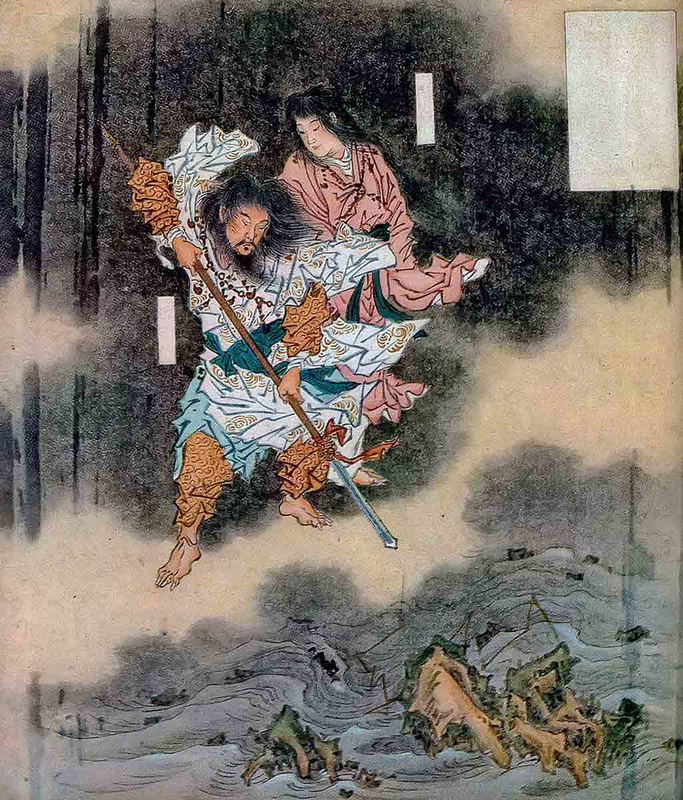
Using the Ame-no-Nuboko, Izanami and Izanagi churned the waters to make the land. When brine fell from the tip of the spear into the ocean, the island Onogoro was formed. The divine couple then descended from heaven and made their home on this island. Izanagi and Izanami then married and decided to birth other kami (gods). Izanami birthed many kami until the fire god Kagu-tsuchi was born.
Tragic Fate of the Divine Couple and the Birth of Shinto Gods
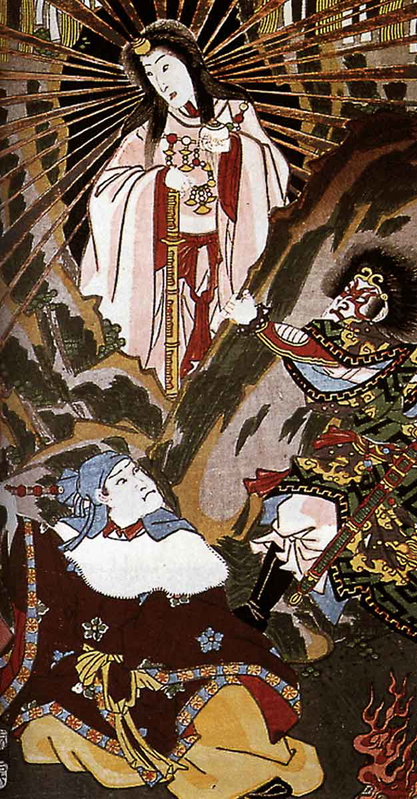
When Izanami gave birth to the fire god Kagu-tsuchi, she was burned to death. In a fit of rage, Izanagi killed the fire god with a saber, and more kami were born from the blood and Kagu-Tsuchi’s body.
After his wife’s passing, Izanagi descended to the land of the dead, Yomi, to search for her. When he found Izanami, he was overjoyed, but also crushed and repulsed because her body had become a rotting corpse. More kami were born of her rotting body, and Izanagi fled to the world of the living, where she performed a cleansing ritual called the misogi. From the misogi, the three primary deities of the Shinto religion were born: the sun goddess Amaterasu, the moon god Tsukuyomi, and Susanoo, the god of storms.