
Johannes Kepler didn’t want to destroy astrology; in fact, he loved it. He was a practicing court astrologer and imperial mathematician, so he relied on casting horoscopes for his career. He hated the way street fortune tellers told horoscopes without any mathematics to back up their “predictions.” He wanted to ground astrology in cold, hard science, but as he researched his hypothesis, he discovered the laws of planetary motion. He proved that the stars didn’t influence people’s fates, but rather that they moved in imperfect ellipses by gravity. He killed his beloved astrology.
Johannes Kepler and the Renaissance Obsession With the Stars
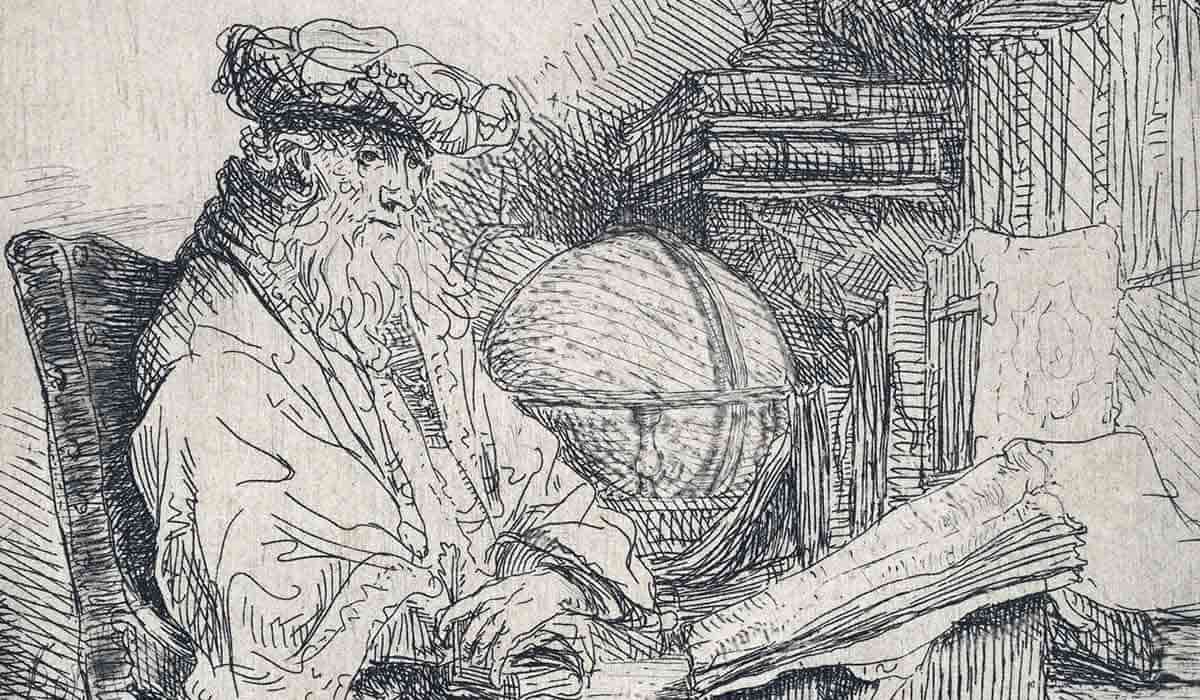
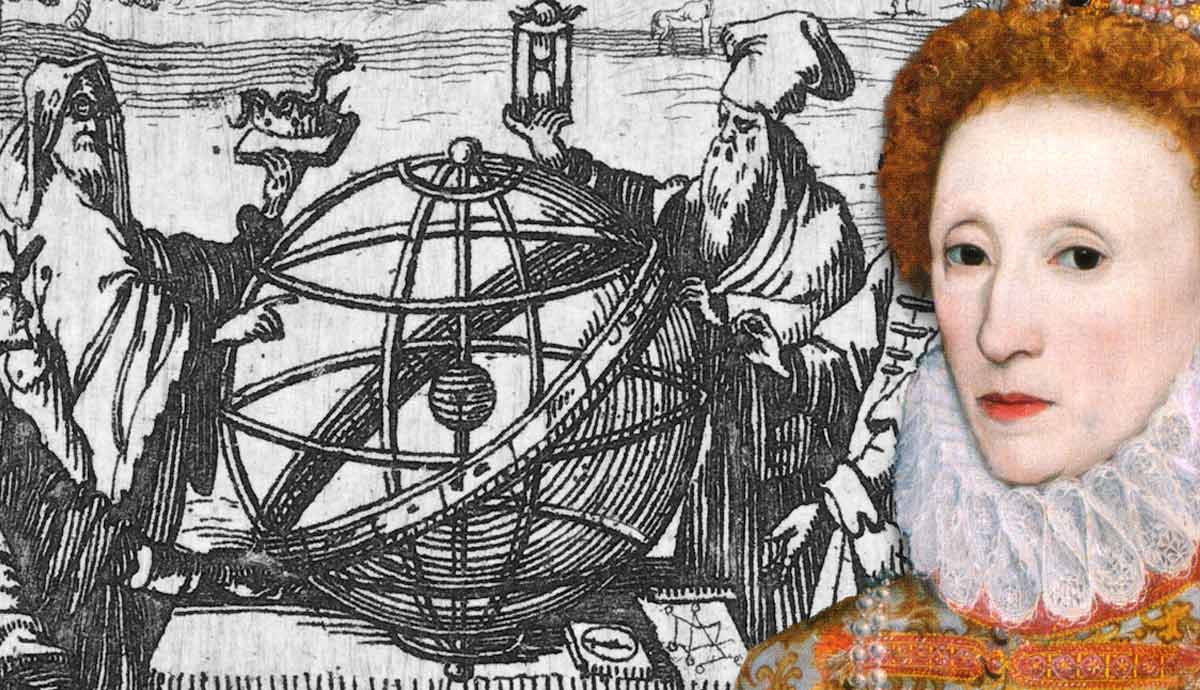
Johannes Kepler was an important astrologer for royalty and prominent figures, including Emperor Rudolph II and General Albrecht von Wallenstein. Astrology was his career, but along with casting horoscopes, he also followed the movement of the stars with math called astronomy.
In his day, these two scientific practices were two halves of the same coin; one could not exist without the other. However, Kepler was tired of the charlatans who predicted futures on the street. He held a deep belief that God created a geometric universe, so he set out to prove that the future could be found in the stars and that the universe was geometric perfection.
Why Kepler Rejected the Traditional Zodiac Houses

The common street fortune-mongers relied on the 12 houses of the Zodiac to divine fortunes. Kepler hated the 12 houses and thought they were man-made garbage. They didn’t have any physical reality to prove that they truly influenced life. As an educated man, Kepler turned to mathematics, in this case geometry, to prove that the stars did indeed influence humanity, but not based on the Zodiac. Instead, these divine aspects came from the planets that created physical, musical harmonies in the human soul. This was where the true horoscopes lay, but he had to find the geometry to prove it.
How Elliptical Orbits Ruined Astrological Mathematics
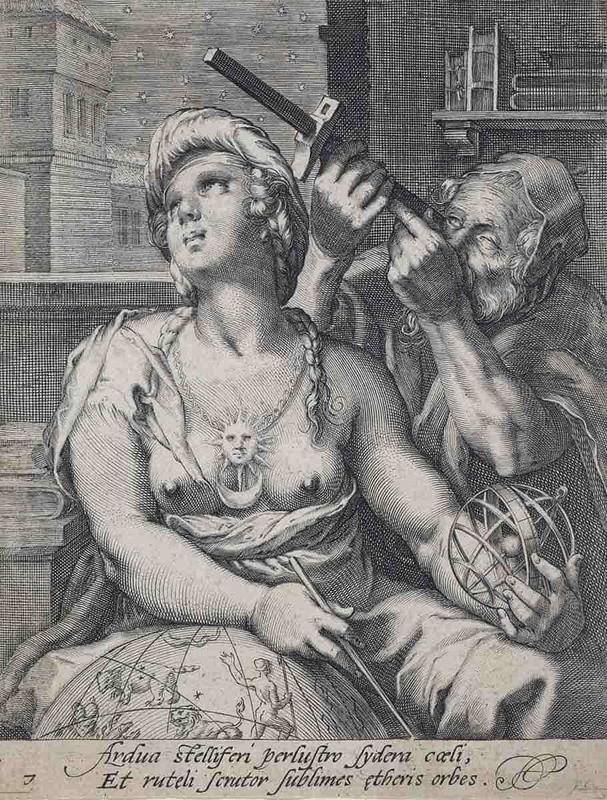
Kepler loved his circular orbits, but when he studied the orbit of Mars, he discovered that it moved in an elliptical fashion. What was moving the Red Planet was the sun! It astounded Kepler, and he had to break with the popular Aristotelian theory about spheres. Astrology relied on Aristotle’s theory that the universe remained an unchanging constant, but Kepler’s telescopic observations proved otherwise. Because astrology remained constant, the calculations remained fluid and easy to make. Kepler, however, introduced calculations about elliptical orbits and variable speeds that threw these completely off.
The Rudolphine Tables and the Death of a Symbolic Cosmos
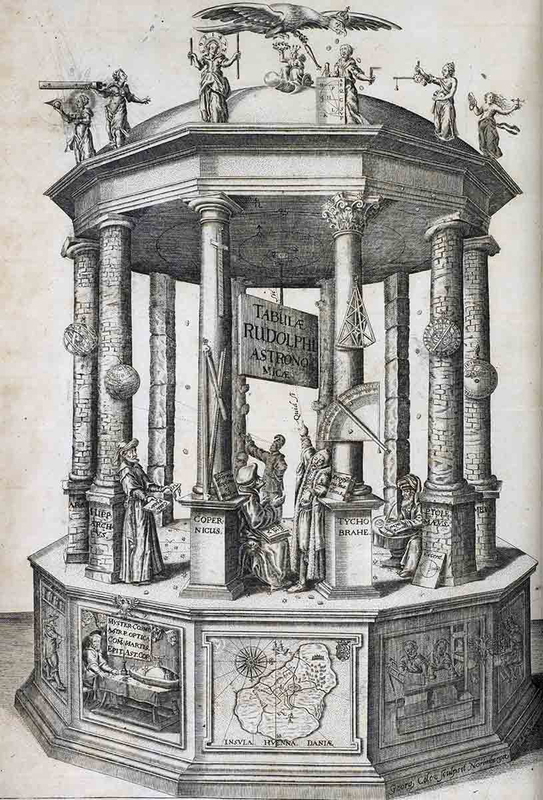
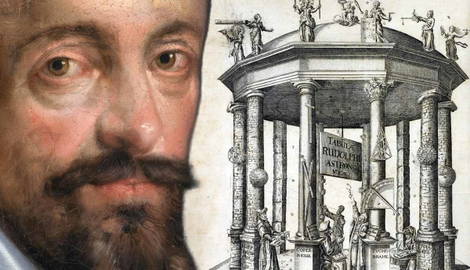
What Kepler did was use his own observations with Tycho Brahe along with his new mathematical concepts to create the Rudolphine Tables. This publication predicted the planetary positions extremely accurately. Astrologers were keen to implement the new mathematical formulas into their charts, but it proved that their “science” was wrong. Because the universe could be explained with hard facts, there wasn’t any room for spiritual interpretations. This forced scholars and some charlatans (although they still existed) to accept that the universe was predictable and could be explained with the new information Kepler printed.
The Unintended Legacy of a Mystical Mathematician

What happened afterward was a huge division that led to a divorce between astrology and astronomy. The scientific community backed off from astrology and left it to the street charlatans who could still persuade uneducated rubes that the stars and planets controlled their fates. Meanwhile, Kepler has become acknowledged as the father of modern astronomy as well as one of the founders of modern physics. He bridged the gap between the two disciplines, proving that his hypothesis about a grand, orderly universe was in fact wrong. Instead of trying to make the science fit his facts, he adapted, and the field of astronomy has expanded like the Doppler effect. Astrology, however, has become akin to tarot cards and using crystals. It’s an amusement but nothing near true science.