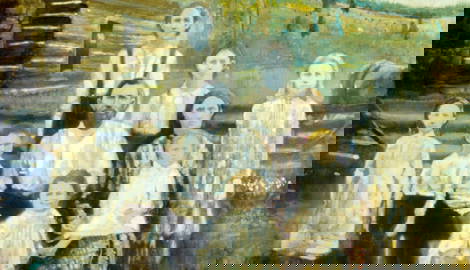

The idea of someone turning a different color is somewhat preposterous in the collective pragmatism of modern society. When one considers a blue person, it is often thought of as fantasy, such as the plight of Violet Beauregard of Charlie and the Chocolate Factory fame or James Cameron’s Avatar, with its world of blue people. Many can’t fathom that genetic mutations can often turn fantasy into reality, as is the case with the Fugate family of Eastern Kentucky’s hill country. This is the story of the Blue Fugates, a family that, in the words of locals, were “bluer than Lake Louise.”
Origins of the Fugate Family
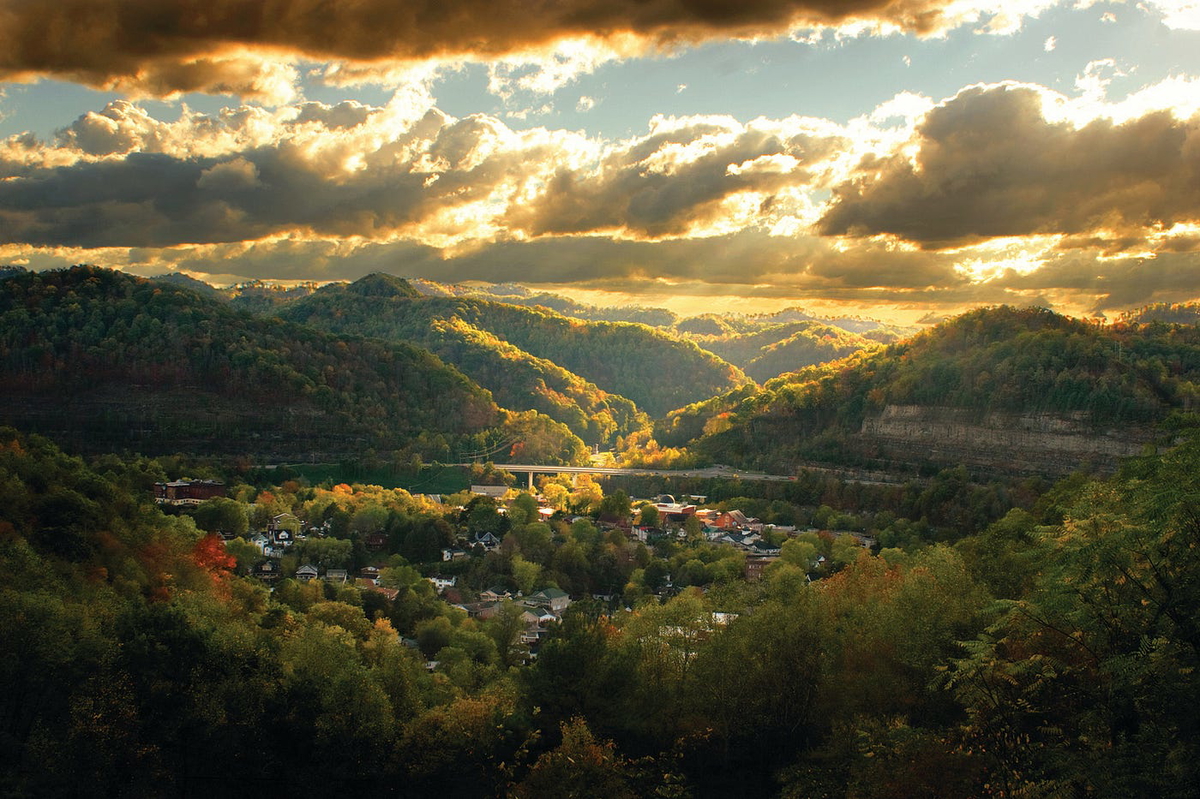
The peculiar story of the Fugate family begins with a French orphan named Martin Fugate. In 1820, Fugate claimed a land grant in Eastern Kentucky on the banks of Troublesome Creek. The creek, which runs through Knott County, was so named because of its nearly impassable game trail. Even experienced hunters could not weave their way through the valley, as large trees, creeping vines, and misshapen stones guarded the pathways of the creek.
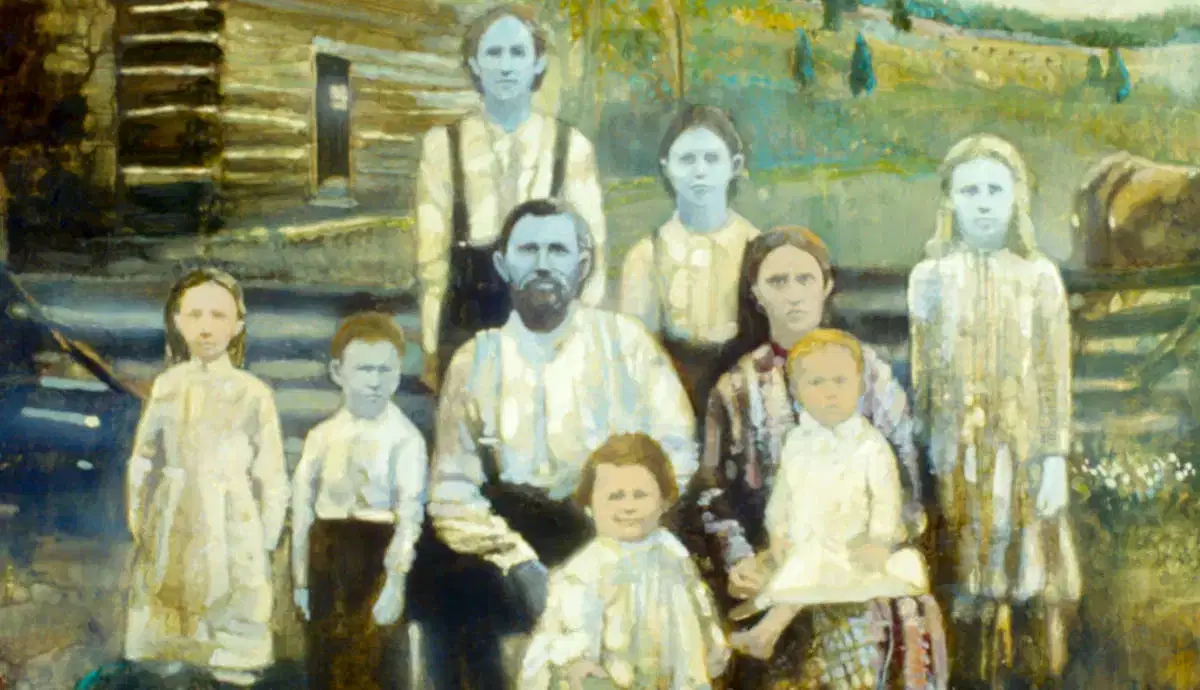
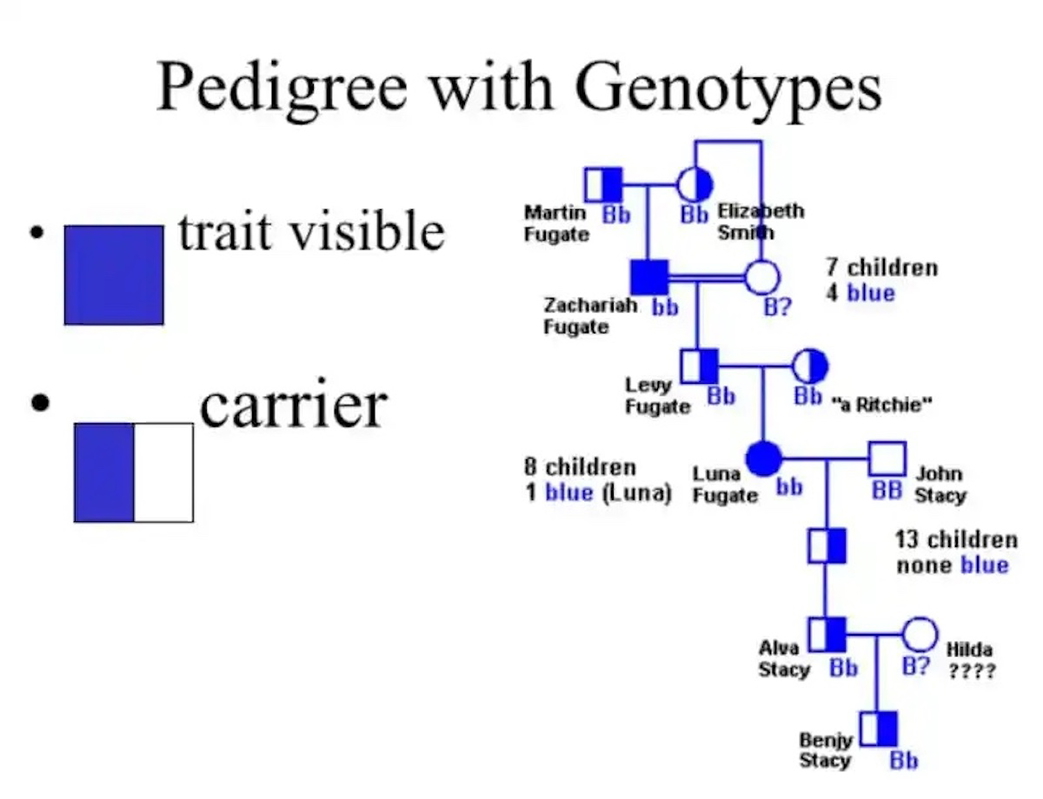
A few families settled in the surrounding valleys, including Martin Fugate, who met and married Elizabeth Smith, a redheaded American woman. The Fugates settled in the remote valleys surrounding Troublesome and Ball creeks and had seven children. Three children came out white. Pale, they said, like their mother’s skin, which was “as pale as the mountain laurel that blooms every spring around the creek hollows.” The four other children, on the other hand, were not white. They were beyond the conceptual understanding of skin color in America at the time. Four of the Fugate children were born blue.
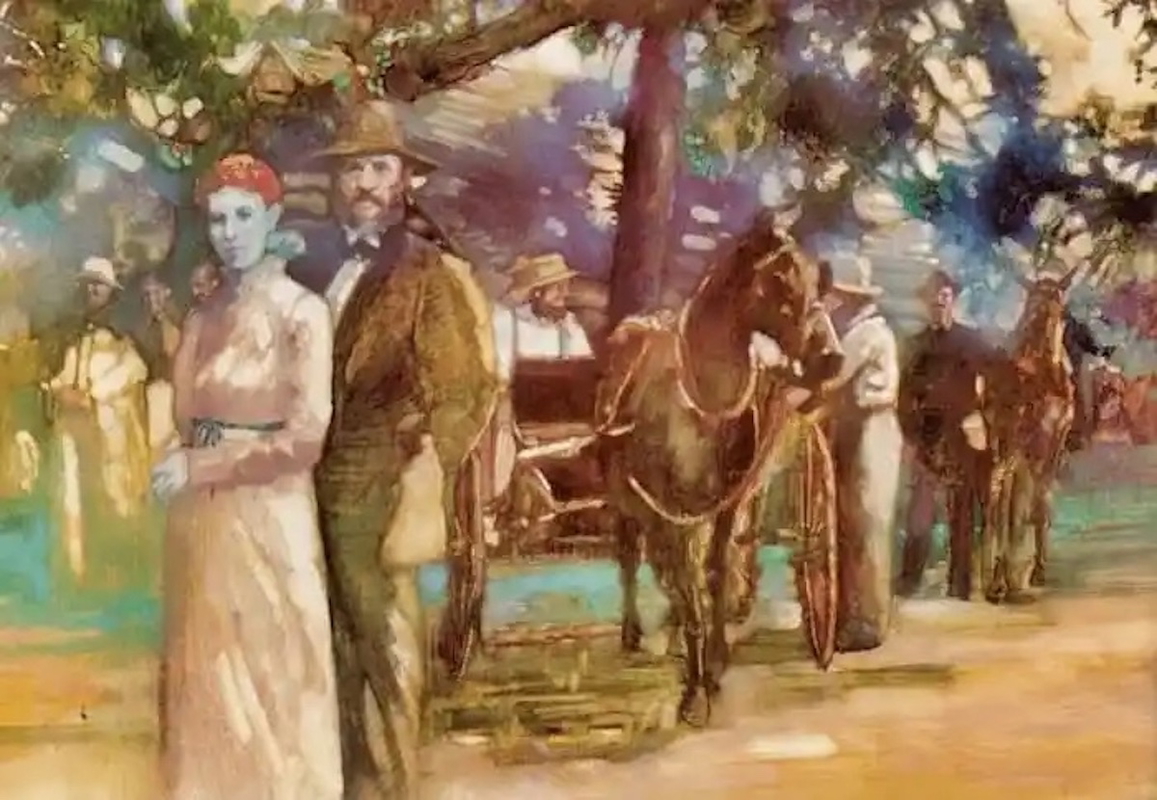
If legend is to be believed, Martin Fugate himself was of an indigo tint. Eastern Kentucky, like much of Appalachia, relies heavily on the tradition of oral storytelling. Many in the region were born and raised illiterate, so passing down stories relied on the narrative of mothers, fathers, grandparents, and friends. This is how the story of Martin Fugate was passed down, for all intents and purposes, through the hill country gossip mill.
The hills of Eastern Kentucky were not kind to outsiders. It was hard to move there and harder still to leave. Thus, throughout the ages, the Fugates married other Fugates while occasionally co-mingling with Smiths, Combses, Stacys, or Ritchies. When a family lives in isolation, it doesn’t make sense to constantly leave to marry. This is how the blue people spread throughout Eastern Kentucky.
For nearly 200 years, no one knew what caused the blue people to turn blue. Some thought it was heart disease or lung disorder, while others described it as a disease where the blood got “too close to the skin.” It was inconceivable, however, that the blue people would live with such conditions for 80 to 90 years, as they often did.
In addition to being the subject of gossip, the blue Fugates were also the target of superstition. Appalachia is a place of isolation, where customs and traditions develop parallel to the modern world but deviate in their capacity to be reasonable. Many hill people believed that the blue skin of the Fugates was an act of the devil or that it was a racial issue. Some just thought they looked funny. For this reason, the Fugates and their blue descendants never really left their hollers and continued to intermarry.
The Science Behind Being Blue
In 1960, a young hematologist named Madison Cawein began hearing rumors at the University of Kentucky. People spoke about the blue hill folks who inhabited, by that time, a great deal of the Cumberland Plateau. There were blue Stacys, Combses, Smiths, and Fugates at that time as a result of inbreeding and the small gene pool from which many of Eastern Kentucky’s families came.
Cawein was an accomplished doctor. He helped isolate the antidote for cholera and helped create a drug for Parkinson’s Disease. He was, however, a hematologist at heart. Cawein said that “blood cells always looked beautiful to me,” so when he began hearing about the blue people, his interest was piqued.
Cawein, along with Ruth Pendergrass, a nurse from the American Heart Association clinic in Hazard, scoured the hollers for blue people. Pendergrass had her fascination with the blue people since she gave a blood test to a woman who identified herself as a blue Combs from Ball Creek. Cawein and Pendergrass went on daily missions to find blue people until they were frustrated and near giving up. After all, Cawein was forced to drive eight hours one way, from Lexington to Hazard, when he wanted to go on a search. Then a pair of siblings, Rachel and Patrick Ritchie, walked into the heart clinic in Hazard. They were blue, and Cawein had found his white (or blue) whale.
Cawein began charting the family’s history and found no evidence of heart disease. He suspected from the start a rare condition called methemoglobinemia, a rare but toxic form of anemia that can occur based on many factors, principally from abnormal hemoglobin in the blood. However, when Cawein tested the pair for abnormal hemoglobin, the test returned negative.
Cawein turned to medical literature, where he found a case of Native Alaskans who seemed to resemble Kentucky’s blue people. The researcher who treated the blue Alaskans found that they did have methemoglobinemia based on an enzyme deficiency and that this condition can be passed down through recessive traits.
The blue Kentuckians were found to lack the enzyme diaphorase, which would help process hemoglobin and keep the blood from producing too much methemoglobin. While most people have less than one percent methemoglobin in their blood, the Fugates likely carried a level of about 10 to 20 percent; not enough to be harmful, but too much to have a standard skin color. This abundance of blue methemoglobin overpowered the ability of the red hemoglobin to transport oxygen to the blood, thus turning the Ritchies and their ancestors blue and their blood a chocolatey brown.
It seems that the enzyme deficiency began with Martin and Elizabeth Fugate, over 150 years before Cawein’s time, and had trickled down through many hill folks due to inbreeding. Martin and Elizabeth both carried the gene by chance, and they passed it down until the 1960s when Cawein discovered the cause.
The Later Life of the Blue Fugates & Their Descendants
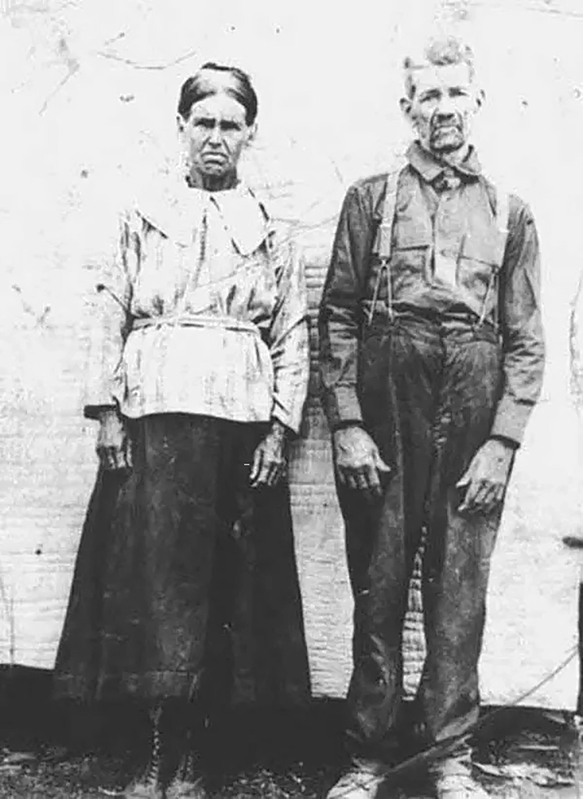
The blue people of Troublesome and Ball Creeks were not happy to be blue. Even when Dr. Cawein examined the Ritchie siblings, he could tell they were embarrassed by the questions aimed at understanding their skin color. Patrick and Rachel were hunched and leaning, almost like they could hide their color with their body language. Dr. Cawein remembered, “you could tell how much it bothered them to be blue.”
This embarrassment likely stemmed from the maltreatment levied toward the blue people from their mountain neighbors. It was, by all means, a strange phenomenon to be blue. The people of Appalachia, however, are known for their superstition, and that unfortunately extended to the descendants of Martin Fugate. They were treated differently than others because their skin color was not something people could reconcile with the reality of life.
Regardless of the way the blue people had been treated in the past, Cawein was eager to find a solution to their situation. He did so quite quickly. To get the body to begin turning methemoglobin back to normal, an “electron donor” had to be introduced into the body. This substance would kickstart a color change in the patient, from blue to pink, by replicating the processes of a normal level of diaphorase. Methylene Blue was the obvious solution to the doctor, as it had been used successfully and safely in the past. Many of the blue folks thought Dr. Cawein was crazy; after all, how could something blue fix the blue in their skin?

Cawein went ahead with the Methylene Blue injection, traveling to the Ritchie siblings’ cabin in the former mining town of Hardburly. He injected Patrick and Rachel with 100 milligrams each of the faux enzymes, and within minutes, the pair’s skin began to turn. By the end of the process, the Ritchies were fair-skinned for the first time in their lives. Cawein gave the siblings methylene blue in tablet form to take daily to maintain their skin tone.
Before the doctor could leave, however, he wanted to chart the families’ progression with the recessive gene, beginning with Martin Fugate. The recessive blueness did seem to fade throughout the family tree as modern advancements like the railway and modern roads were laid in Eastern Kentucky. However, these methods of integration were not realized until the 1910s and began gaining traction by the 1930s. With the roads came the eventual migration of the Fugate descendants, who moved into neighboring towns and began marrying people outside of their traditional circles.
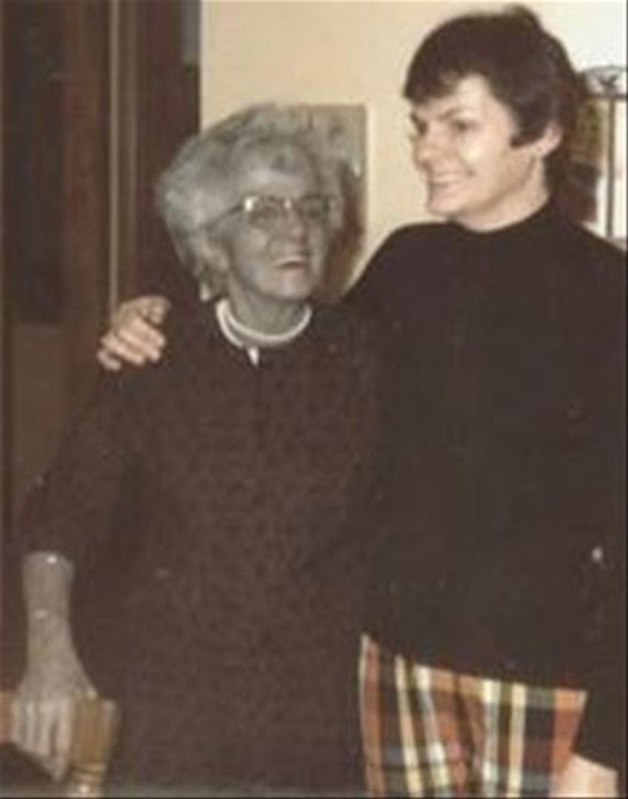
Thus, the descendants of the original Fugate clan began losing their blue color until Benjamin Stacy was born in 1975 at the University of Kentucky Medical Center. Benjamin, or “Benjy,” was born purple. While doctors wanted to perform a blood transfusion, Benjy’s grandmother remarked that the baby’s great-grandmother, Luna Fugate, was known for having a similar coloring. It turns out that Benjy’s father, Alva Stacy, was a direct descendant of Martin Fugate. Stacy’s family tree showed that he was, in his words, “kin to himself.” One of Martin and Elizabeth’s blue sons, Zachariah, married his maternal aunt. This was normal for the day, as the Fugates simply married those who were close to them, whether they had the same last name or not.
One of Zachariah’s sons, Levy, married a girl from the Ritchie family, and they had eight children. Luna, one of Levy and the Ritchie girl’s daughters, was blue. She married John E. Stacy, Benjy’s great-grandfather. The families of Troublesome Creek had mixed for over 100 years when they began to branch out to other towns, so it wasn’t necessarily a surprise that Benjy came out with the recessive trait. His skin eventually faded to a normal color, though rumor says that his lips and fingernails still turned blue when he was angry or cold.
The Blue Fugates in Popular Culture & Modern Society

According to an ABC News article from 2012, it is unknown if Benjy is still alive or whether there are other blue descendants of the Fugate clan around today. Their relatives are spread across the country, and it is likely that some of the descendants are like Benjy, who owes his non-blue skin color to only carrying one gene for methemoglobinemia.
Not much is known about the Blue Fugates outside of the work accomplished by Dr. Cawein, but others do carry the blue gene or have been turned blue by outside factors like exposure and ingestion of anesthetics like benzocaine or xylocaine, meat additives like benzene, and certain nitrates, or antibiotics like dapsone or chloroquine.
In one case, a man named Paul Karason turned his skin blue by consuming and rubbing his skin with colloidal silver compounds to self-treat various skin conditions. While Karason looks like he has methemoglobinemia, blue skin like his is also caused by the ingestion and application of silver and other chemicals, leading to another condition called argyria.
In popular culture, the blue-skinned mountain people of Kentucky are featured most prominently in two books: The Book Woman of Troublesome Creek by Kim Michele Richardson and Blue-Skinned Gods by S.J. Sindu. Both are fictionalized accounts of the Fugate lineage that don’t use the Fugate name. They’ve also been featured as stories on several TV shows focusing on strange history.