Julius Caesar reportedly uttered the fateful words “the die is cast” when he marched his troops across the Rubicon into Italy in 49 BCE, characterizing this moment as a fateful turning point in the history of Rome. While this was a point of no return for the Roman Republic, it was a long time in the making. Caesar was not the first Roman general to use his troops to threaten Rome’s politicians to advance his own interests. He was also not the first to march his troops into Rome. His purpose was not a political revolution, but simply to become consul and secure a plum military command. Nevertheless, his actions exposed that power in Rome was now based on military might, transforming the Republic into an Empire ruled by “Caesars” for the next 500 years.
Rise of the Strongmen (70 BCE)
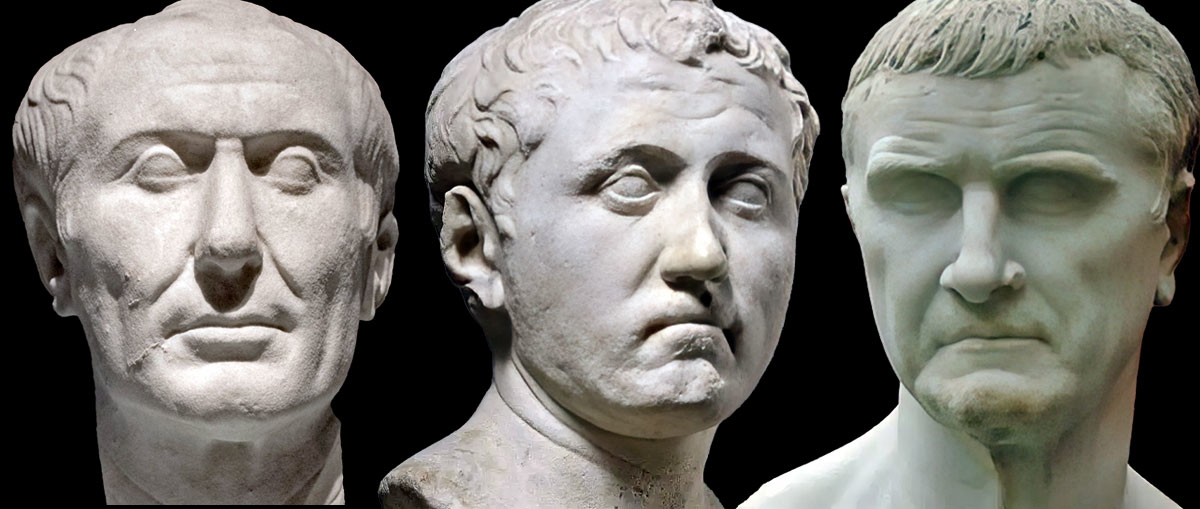
The rise of the strongmen whose individual power would erode the institutions of the Republic was gradual, beginning with the likes of Gaius Marius and Sulla. Both men built up armies bound to them by personal loyalty and used them to pursue their own interests, setting a precedent for later generals. Nevertheless, it was the formation of the First Triumvirate that marked the beginning of the end of the Republic, as three strongmen made a private agreement to work together for power.
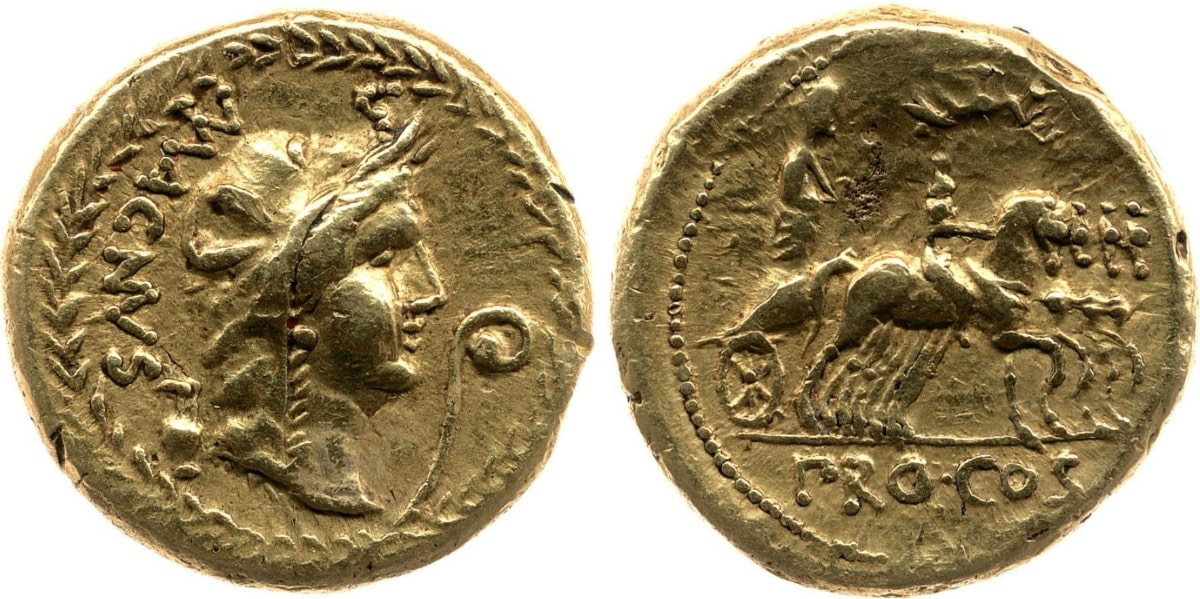
Pompey was the most senior member of the gang. After making a name for himself supporting Sulla during his civil war (83-82 BCE), his career took off. As he put down remaining pockets of Marian support for Sulla, he took the opportunity to invade Numidia, in North Africa, earning him a triumph. He then went to Spain to deal with the final rebellious general, Quintus Sertorius, earning him the nickname Pompey Magnus (the Great).
Meanwhile, Marcus Licinius Crassus was also a supporter of Sulla. He made his wealth after the civil war, exploiting the proscriptions of wealthy Romans who had chosen the losing side, becoming the richest man in Rome. In 71 BCE, he led the main effort to put down the slave revolt of Spartacus, but Pompey swooped in and claimed the glory, earning him another triumph.
Rather than causing friction, the pair formed an alliance. Traditionally, generals in the field had to disband their armies and return to Rome in person to stand for office. But returning generals and provincial governors risked prosecution for corruption before gaining the immunity of a magistracy. Exceptions were sometimes made, for example, Marius had previously been allowed to run from the field in absentia. Both Pompey and Crassus demanded this right. With the threat of their armies looming, the Senate had to agree, and the pair were elected consuls for 70 BCE.
Caesar’s Debut (60s BCE)
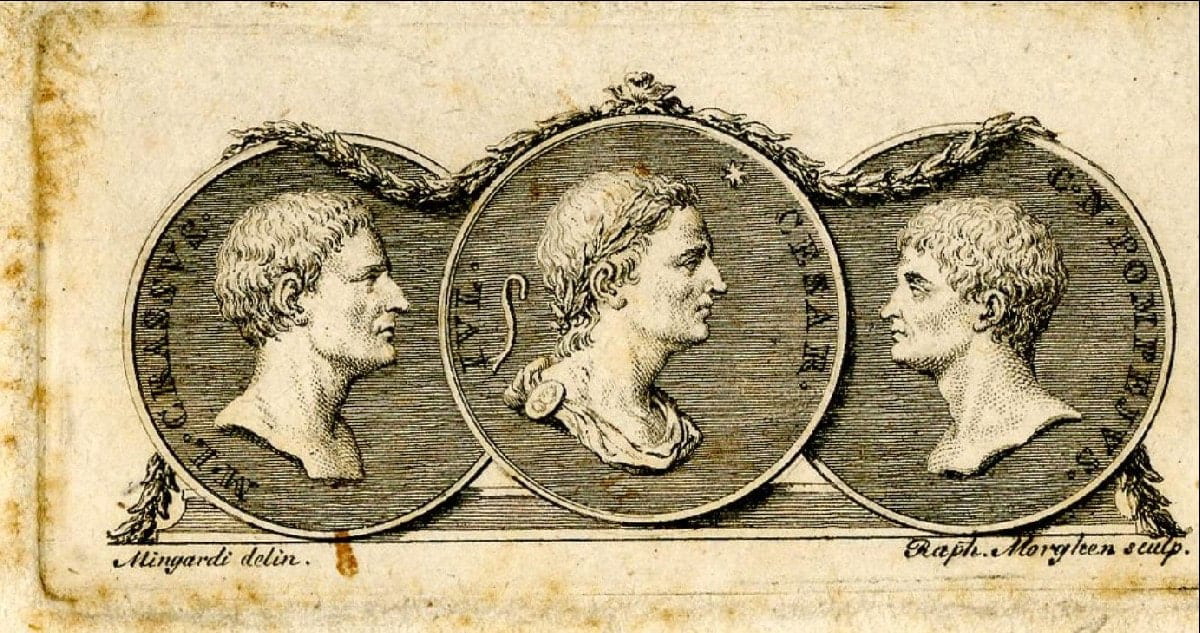
Pompey and Crassus used their power to secure Pompey the command to deal with the growing pirate threat, which saw him wield vast and unprecedented powers across the eastern part of the Empire. After putting the pirates down in 67 BCE, he took on Mithridates VI of Pontus and conquered various territories in the east.
Meanwhile, Crassus stayed in Rome, using his wealth to build his popularity through philanthropy. In 65 BCE, he became censor, a coveted senior magistracy, which allowed him to revise the membership of the Senate in his own favor. He also took the up-and-coming politician Julius Caesar under his wing.
Caesar was a relative of Marius, so his career stalled in the immediate aftermath of Sulla’s success in the civil war. Nevertheless, he was able to rebuild his career, eventually marrying Sulla’s granddaughter, thereby building alliances on both sides of the aisle.
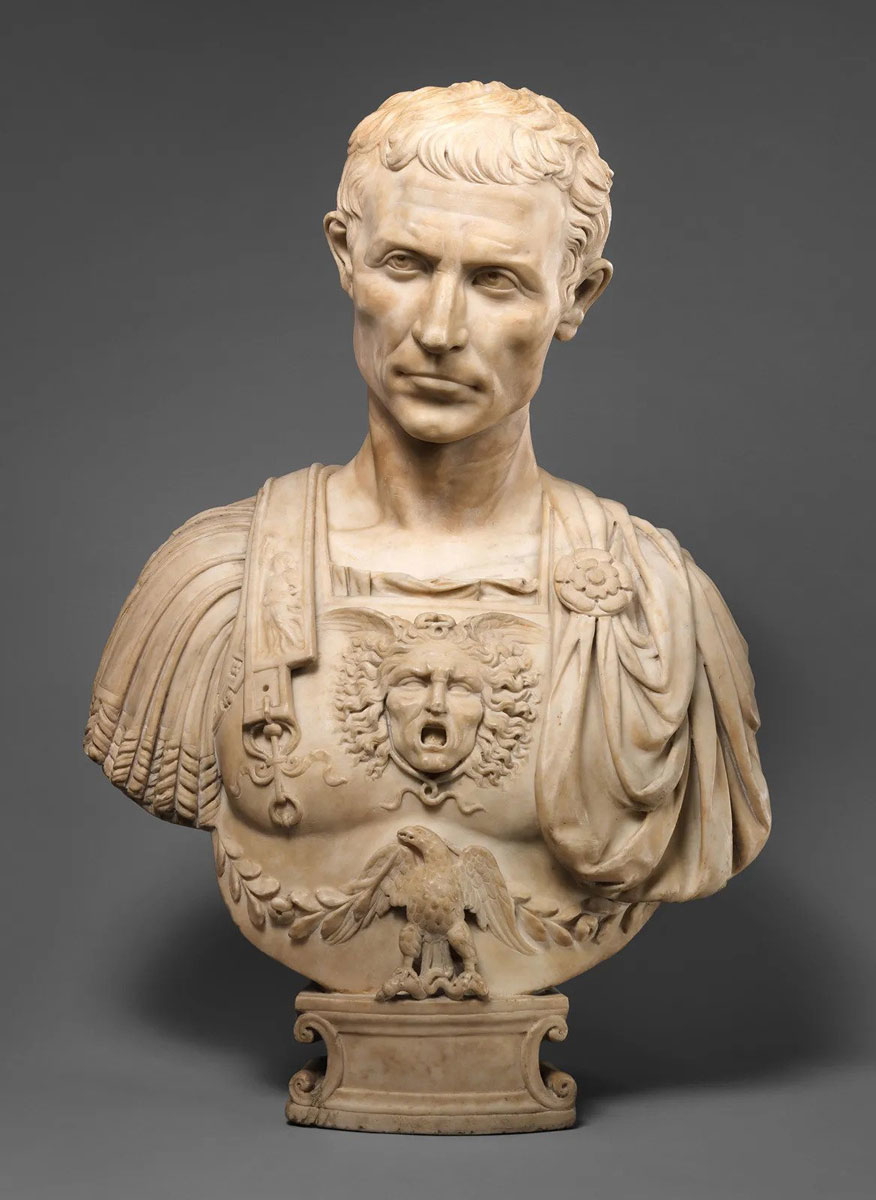
With Crassus’s support, Caesar served as curule aedile, was elected pontifex maximus, Rome’s most important priestly position, and became praetor in 62 BCE. He then served as governor of Hispania Ulterior, where he successfully campaigned against the local tribes.
In 60 BCE, Caesar had his sights set on his first consulship but was refused the right to stand in absentia. Opposition was largely spearheaded by Cato the Younger, a conservative politician who mobilized his faction against Rome’s increasingly powerful generals. This denial meant that Caesar had to choose between standing for the consulship and celebrating a triumph. To claim his triumph, he would have to stay with his army outside Rome until the triumph, forcing him to miss the elections. Confident that he would win the top magistracy and have the support he needed to push through his agenda, Caesar skipped his triumph and stood for election.
Formation of the First Triumvirate (60 BCE)
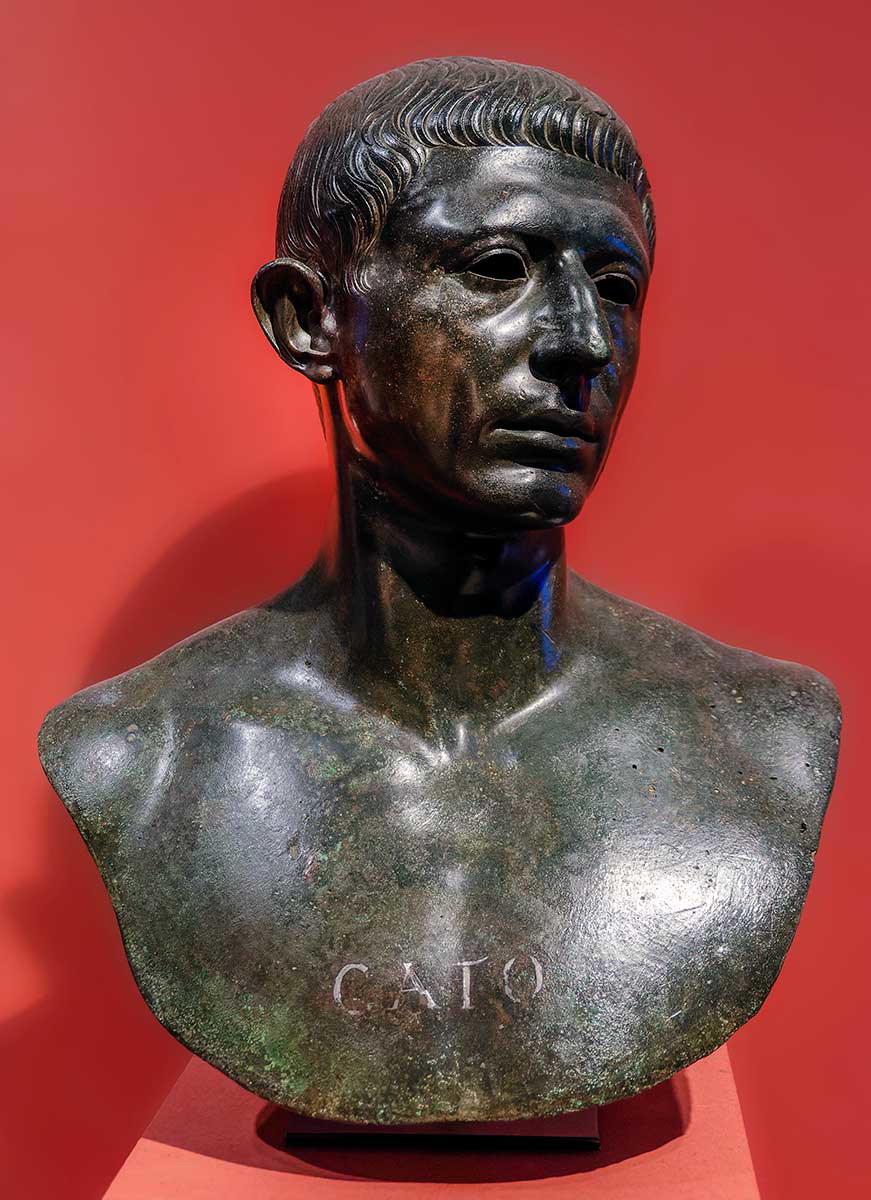
Pompey returned to Rome in 61 BCE following his successes in the east, but he was faced by a hostile Senate, especially from Cato’s faction. They refused to grant land to his veteran soldiers and refused to ratify many of the political arrangements he had made in the east, placing Pompey under threat.
By this time, Pompey’s relationship with Crassus had soured, and Crassus also opposed Pompey’s interests. But Crassus’s interests were also under threat. Through his business ventures, he had become the patron of Rome’s wealthy equestrian tax collectors. Many had overbid on tax contracts and were now obligated to settle tax debts that they could not collect. They were looking to Crassus to help push through legislation that would relieve their liability, but this was being opposed in the Senate, specifically by the Catonian faction.
While Caesar was the favorite to win the consulship for 59 BCE, he sought the office as a gateway to further military command. Looking to stymy his ambitions, Caesar’s enemies in Rome, notably Cato, sought to assign the yet-to-be-elected consuls for that year to the defense of Italy, blocking military command. Cato also sought a disagreeable partner in office for Caesar, his personal enemy, Marcus Calpurnius Bibulus.
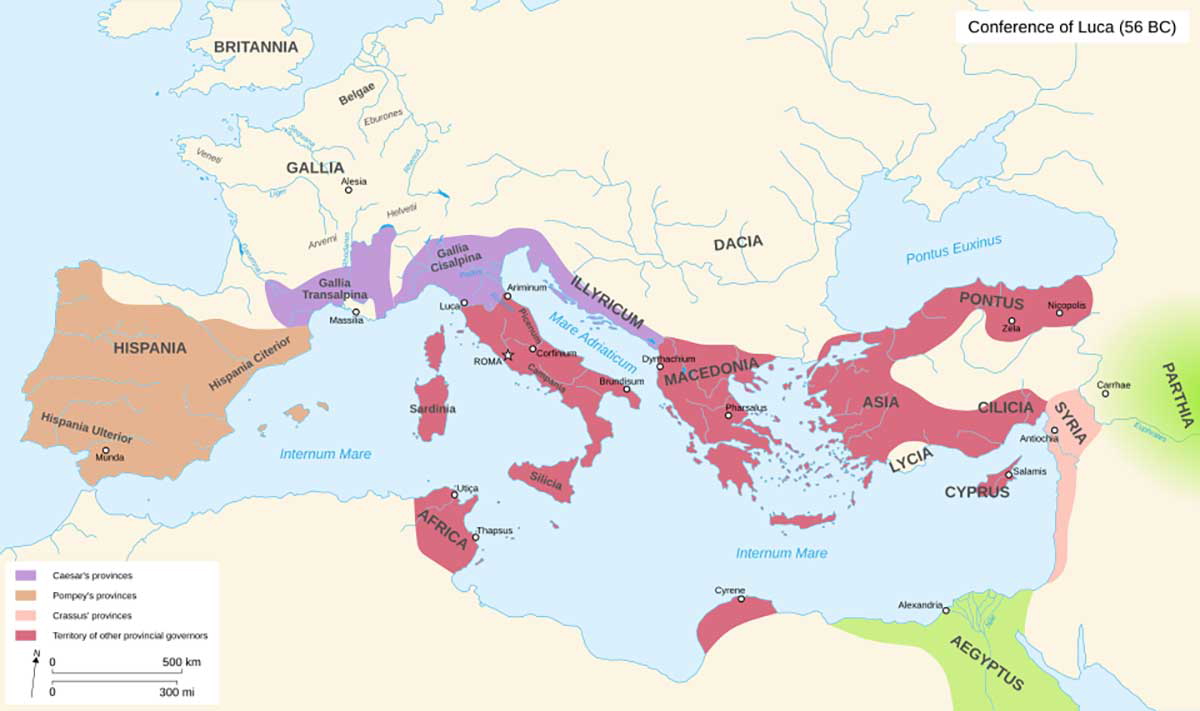
In 60 BCE, Caesar won one of the consulships for the following year but knew that he would need support to secure a military command after his year in office. On good terms with both Pompey and Crassus, he approached the two and proposed a secret political alliance to secure their aims. The public animosity between Pompey and Crassus would only help to make their moves less transparent. A deal was struck before Caesar took office in January 59 BCE.
Caesar’s Consulship (59 BCE)
One of Caesar’s first acts in office was to propose the lex Julia agraria, which, among other things, would secure the land needed to settle Pompey’s veterans. He proposed the bill in the Senate, where it was rejected due to Cato’s opposition. This led Caesar to confine Cato to Rome’s small jail, seemingly confirming Cato’s public claims that he had tyrannical tendencies. Caesar quickly had Cato released and abandoned the bill in the Senate. He took it to the public assembly.
Bibulus opposed the bill before the assembly. To avoid a veto from one of Bibulus’s friendly tribunes and rally support, Caesar revealed his alliance with Pompey and Crassus, which was later sealed by Pompey marrying Caesar’s daughter, Julia. Despite this additional support, Bibulus still opposed the bill, both through a tribunician veto and by claiming bad omens to block the vote. But as he attempted to do so, he was attacked by a mob and thrown from the rostra, breaking his fasces, the symbol of his political power. The bill was passed.
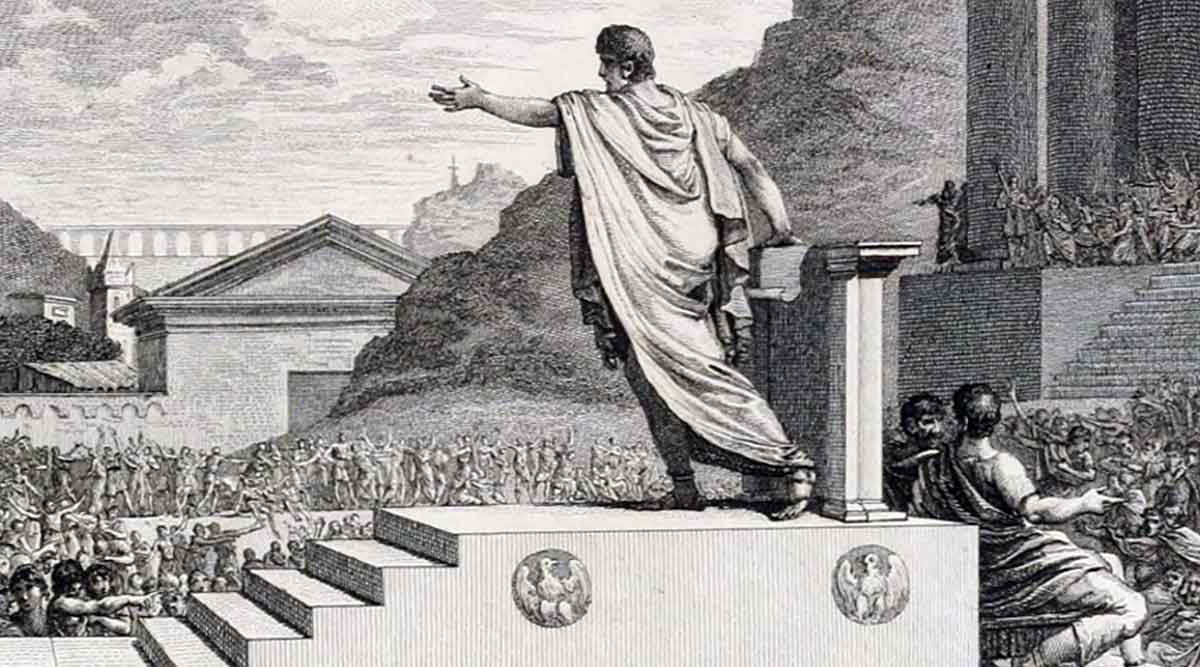
This incident set a precedent for the rest of the year. Bibulus withdrew from public business, claiming unfavorable omens on all future voting days. This gave Caesar the freedom to push further bills through the assembly with little opposition. He ratified a reduction in the tax bills of the equestrian tax collector for Crassus and ratified the settlements that Pompey had made in the east. A tribune of the plebs, friendly with the triumvirate, proposed overruling the decision to grant that year’s consuls Italy. Instead, he proposed giving Caesar Illyricum and Cisalpine Gaul to deal with the threat posed by the recent victors of a power struggle there. Transalpine Gaul was also added to his portfolio when its governor died unexpectedly.
While the triumvirate was getting everything they wanted, popular opinion was turning against them. By staying out of the public eye, Bibulus’s absence made Caesar appear to be acting without a colleague in office, which the Romans considered autocratic. This, combined with their political tactics, reflected badly on all three triumvirs. By the end of the year, public opinion had soured, placing pressure on the alliance.
Start of the Gallic Wars (58 BCE)
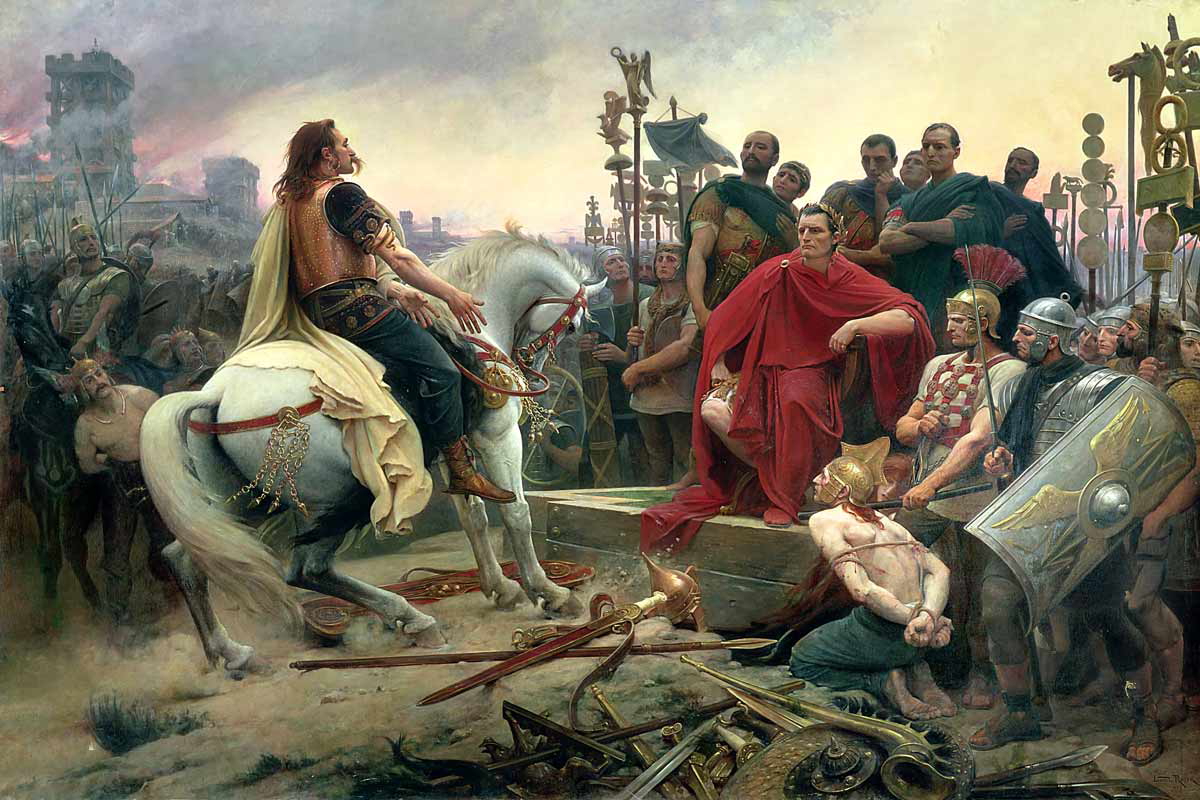
In the years immediately following Caesar’s volatile consulship, Caesar had the best part of the deal. Away from the hotbed of Rome, he was enriching himself and boosting his popularity as a successful general in Gaul. He wrote his Gallic Wars as part of a propaganda campaign to promote his successes. Fifteen days of thanksgiving were declared in Rome for his victories so far in 57 BCE, and more resources were awarded to him in 56 BCE. Nevertheless, his political opponents in Rome continued to work against him, and they tried to have him removed from his command several times. Cato and Bibulus worked tirelessly to brand him a tyrant and a threat.
The story in Rome was more volatile, with many families aligning themselves against the triumvirs and mob violence erupting in the streets. One of the key figures working against them was Publius Clodius Pulcher, a former ally whom they had helped secure an adoption into a plebeian family. He was then elected as Tribune of the Plebs in 58 BCE, despite objections from the triumvirate.
Clodius worked to have Cicero, who was under the protection of the triumvirate despite agitating against them, exiled from Rome for his role in ending the Catilinarian Conspiracy, although Pompey successfully had him recalled. Clodius also severely criticized Pompey, forcing him into self-imposed seclusion at home and blocking his hopes of being assigned a new military command in Egypt. All the while, Crassus worked tacitly against his former ally.
Renewal of the Triumvirate (56 BCE)
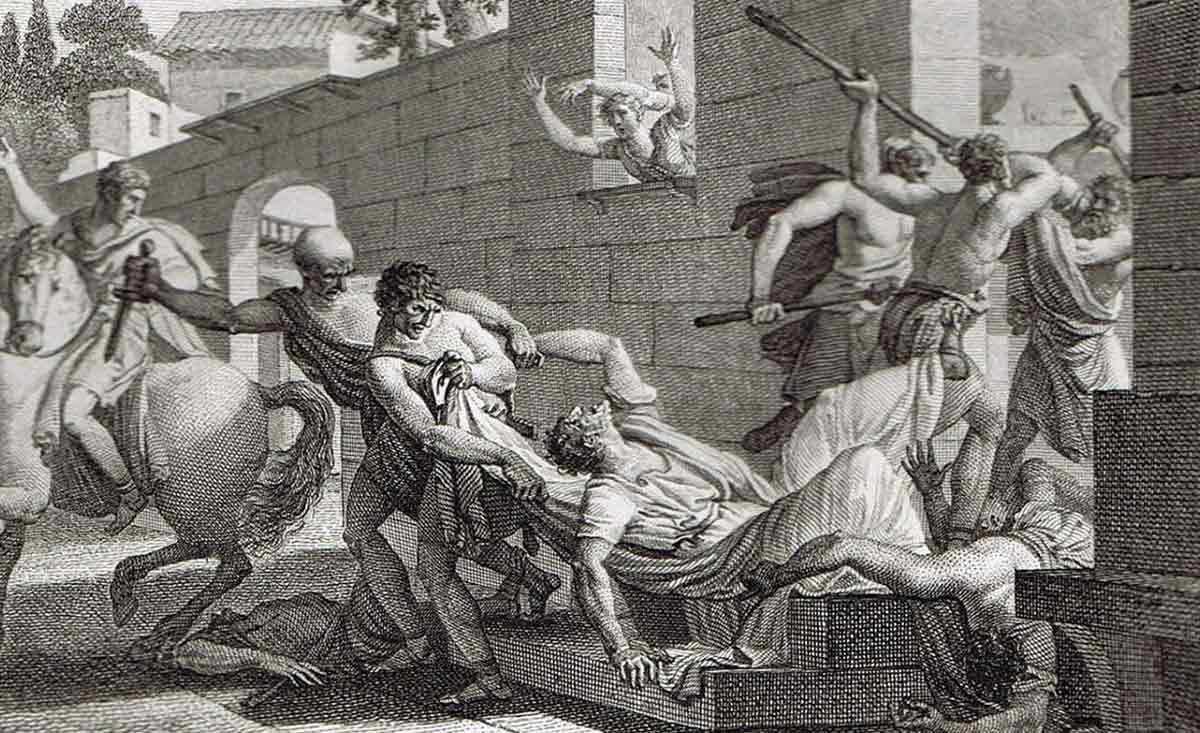
With their political fortunes threatened and few other allies available, Caesar met with Crassus and Pompey separately in Cisalpine Gaul to reach a new agreement. The three agreed to work together again to secure consulships for Pompey and Crassus, with good proconsular assignments for the following year, and to extend Caesar’s command in Gaul. Their renewed agreement also enabled them to rally more support among Rome’s elite. They even turned former enemies such as Cicero and Clodius into temporary allies.
Pompey and Crassus decided to stand for the consulship for 55 BCE, but by the time they had declared themselves, the standing consuls claimed that the deadline had passed. To get their way, they used mob violence and a friendly tribunician veto to postpone the election until the new year, when the consul had already left office, allowing the pair to stand as candidates. Some of Caesar’s soldiers from Gaul arrived in winter close to Rome just before the elections, their presence influencing the outcome. The pair were duly elected, and their allies elected to junior positions.
Second Consulship of Pompey and Crassus (55 BCE)
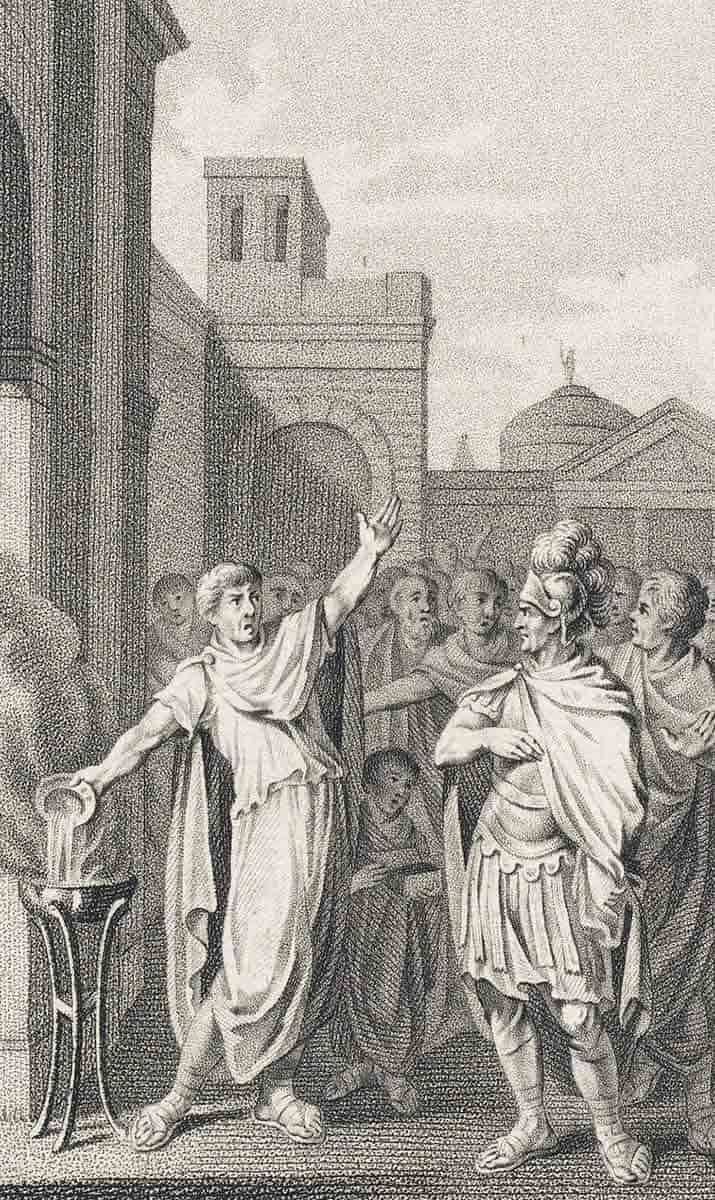
Using mob violence to obstruct any veto, the new consuls secured a five-year command in Syria for Crassus for the following year, and Hispania for Pompey. They also extended Caesar’s command in Gaul for another five years.
Pompey tried to regain his former popularity by celebrating lavish games for the dedication of the Theater of Pompey in September. Around the same time, news of Caesar’s campaigns in Britain and across the Rhine reached Rome. His successes were marked with 20 days of thanksgiving.
Despite attempts to obstruct military recruitment, Crassus left for Syria in November. Bad omens were muttered against him by opposing magistrates, and he was cursed at the city gates. He intended to use his Syrian command to take on the Parthian Empire. Pompey soon left for Spain.
While the elections of Pompey and Crassus and the passing of their legislation represented immediate success, their tactics just gave more fuel to Cato’s criticism of the trio. The next year, the elected consuls were unfriendly to the triumvirs. Moreover, Caesar’s daughter and Pompey’s wife, Julia, died. While Caesar offered him his grand-niece Octavia, Pompey rejected the proposal. Then, in Spring 53 BCE, news arrived in Rome of Crassus’s disastrous defeat by the Parthians at the Battle of Carrhae, losing seven legions.
Pompey as Sole Consul (52 BCE)
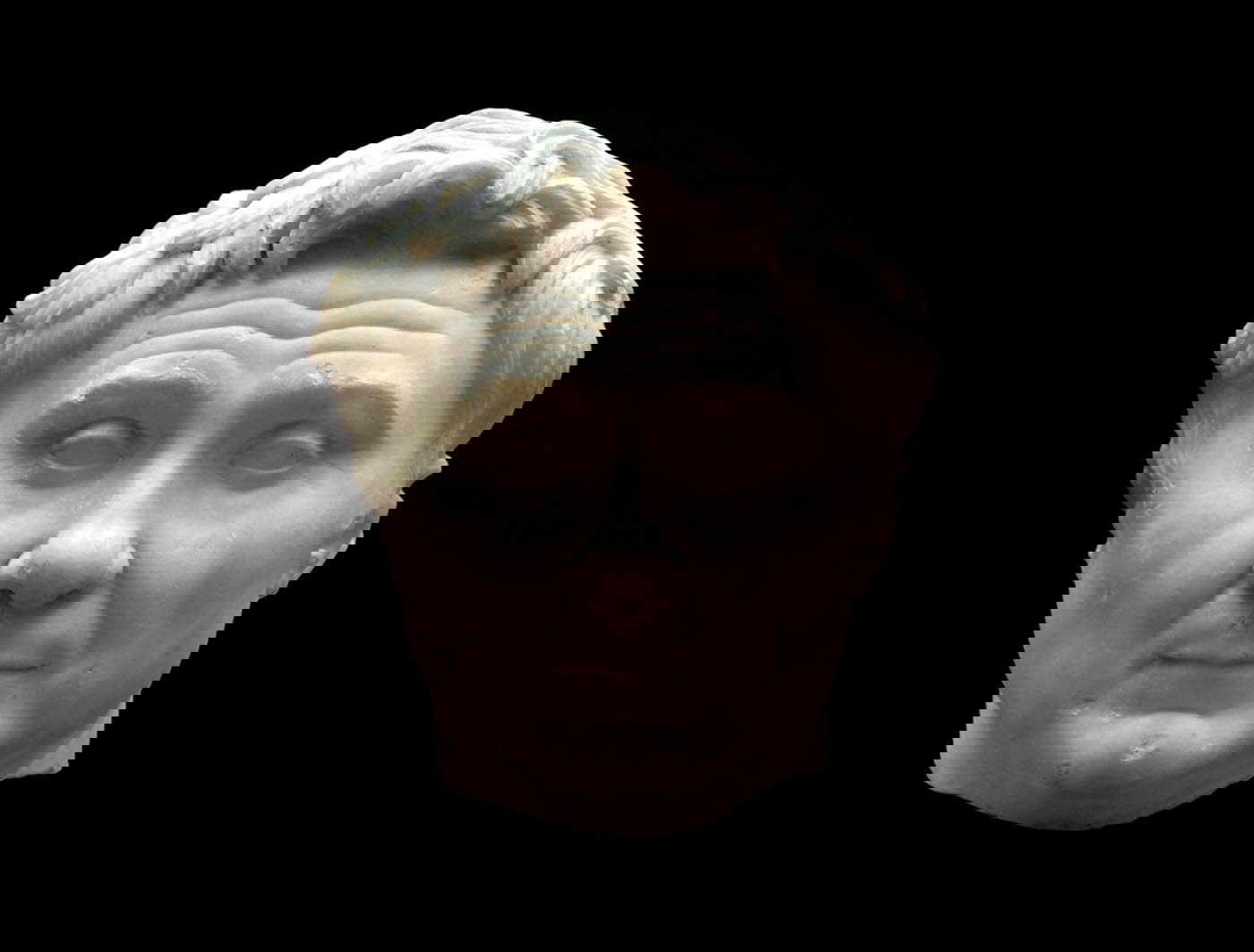
Again, violence and numerous political prosecutions delayed elections for 52 BCE. Pompey, back from Spain, was offered the dictatorship to stabilize the situation, but rejected the offer, instead helping organize the much-delayed elections. He was empowered to use military force by a Senatus Consultum Ultimum, working alongside the senatorial interrex, who changed every few days.
After around two months, only Pompey’s candidacy was accepted for the election, so he was elected without a colleague. He began his consulship by marching soldiers into Rome to restore order and then prosecuting his enemies for inciting public violence. He also proposed a law that mandated a five-year gap between holding the consulship and taking up provincial commands, to try and break the cycle of political machinations that he himself had benefited from. He also sought an exception for himself so that he could head back to Hispania directly after his consulship.
The following year, Cato stood for the consulship, promising to recall Caesar from Gaul. While he was not elected, Marcus Claudius Marcellus was, and he also proposed recalling Caesar, claiming that his success at the Battle of Alesia marked an end to the Gallic campaign. Pompey blocked the proposal.
Nevertheless, by the next year, Cato had convinced Pompey to join him in undermining Caesar’s allies and blocking proposals of honors for Caesar. Losing Pompey’s support put Caesar in a difficult position. He wanted to ask for permission to stand for the consul in absentia, as he was likely to be prosecuted by his enemies if he stood down from his command and returned to Rome. Nevertheless, he rejected a senatorial proposal that would allow him to return to Rome to run without standing down his armies, because he did not trust Pompey and the Senate to keep their word once he was in Rome.
Caesar Crosses the Rubicon (49 BCE)
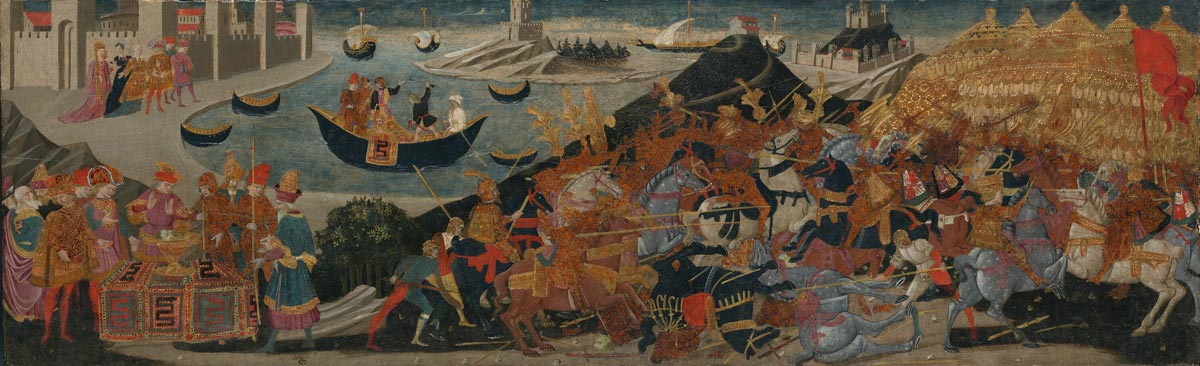
Contemplating his next steps, Caesar began moving his troops towards southern Gaul and northern Italy. With Caesar being unable to run, new consuls were elected who quickly turned hostile to Caesar. They started military preparations in northern Italy with the clear purpose of preventing Caesar from returning to Rome with his army to celebrate a triumph. Pompey was charged with defending Italy against Caesar, which he agreed to do as a last resort. While both sides tried to reach terms, this proved impossible, and on January 7, 49 BCE, the senate passed a Senatus Consultum Ultimum declaring Caesar an enemy.
Caesar may not have realized the full ramifications of his actions when, on January 10 or 11, he marched his troops across the Rubicon, a symbolic border, and into Italy. What he seems to have wanted was to avoid prosecution, secure the consulship, and use it to assign himself another top military command. Instead, he ignited civil war.
That Caesar did not intend to seize Rome as a new dictator, or indeed king, is reflected by the fact that he did not march on Rome directly, even though it had been left largely defenseless by Pompey, who retreated south to Apulia and then to Greece. Caesar rather seized communication lines and tried to open negotiations, without success.
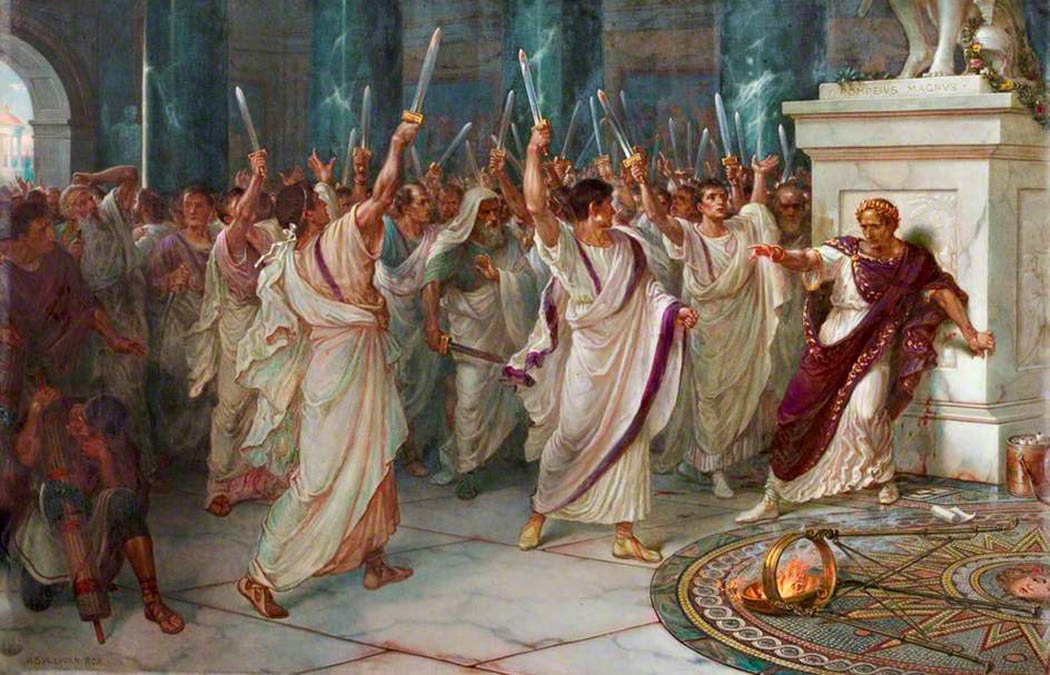
Within less than two years, Caesar emerged triumphant, defeating Pompey at the Battle of Pharsalus in Greece. Pompey then fled to Egypt, where he was killed, leaving Caesar as the last man standing. While this may have been what he wanted, it was a challenge Caesar was not prepared for. The Roman Senate, trying to win his clemency and formulate his position within the state, offered him increasingly extravagant honors, from the hated title of king, which he rejected, to the status of a god, which he seems to have accepted. Unable to walk the fine line between enjoying absolute power while respecting the traditions of the Republic, Caesar was assassinated on the Ides of March, 44 BCE.
This would result in another decade of civil war, first between his heirs, Mark Antony and Octavian, and the “liberators” who had killed him, and then between Antony and Octavian, which Octavian would win by 30 BCE. While Octavian, later known as Augustus, could not match his adopted father as a military leader, he outstripped him as a statesman. He successfully framed his absolute power as a “principate,” representing himself as the first among equals using the trappings of the Republic. This would create a precedent for imperial rule that would last for centuries, with ruler after ruler using the name Caesar as a nod to the man who started it all.