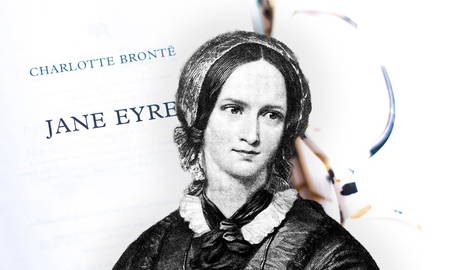
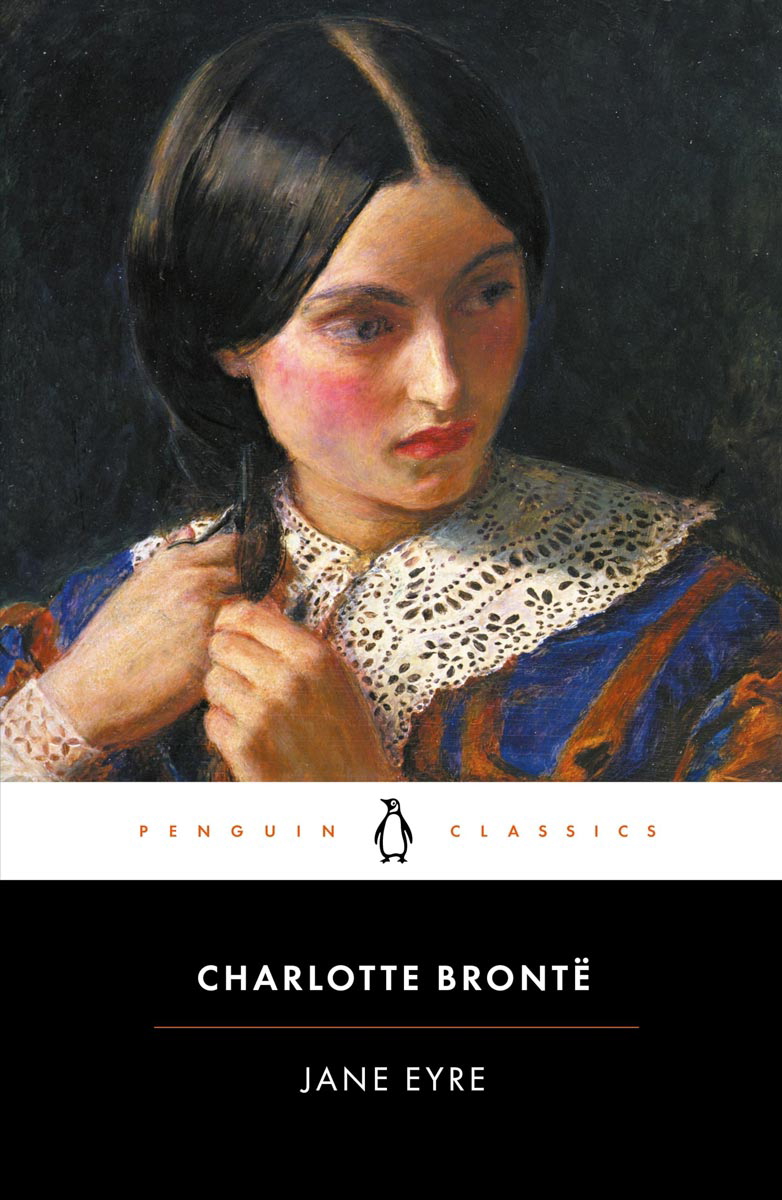
Alongside her sisters Emily and Anne, Charlotte Brontë—one of the famed (and tragically short-lived) Brontës—penned a groundbreaking novel featuring a headstrong, “plain Jane” heroine, with its first third notably narrating Dickensian hardships through a child’s eyes. Not that the book’s initial generation of readers were privy to the author’s true identity; like other early female novelists, Brontë endeavored to skirt the prospect of prejudicial reviews and reception while cloaked in an androgynous nom-de-plum, “Currer Bell.” Here’s what you need to know about Charlotte Brontë’s Jane Eyre.
Coming of Age: Charlotte Brontë’s “Jane Eyre”
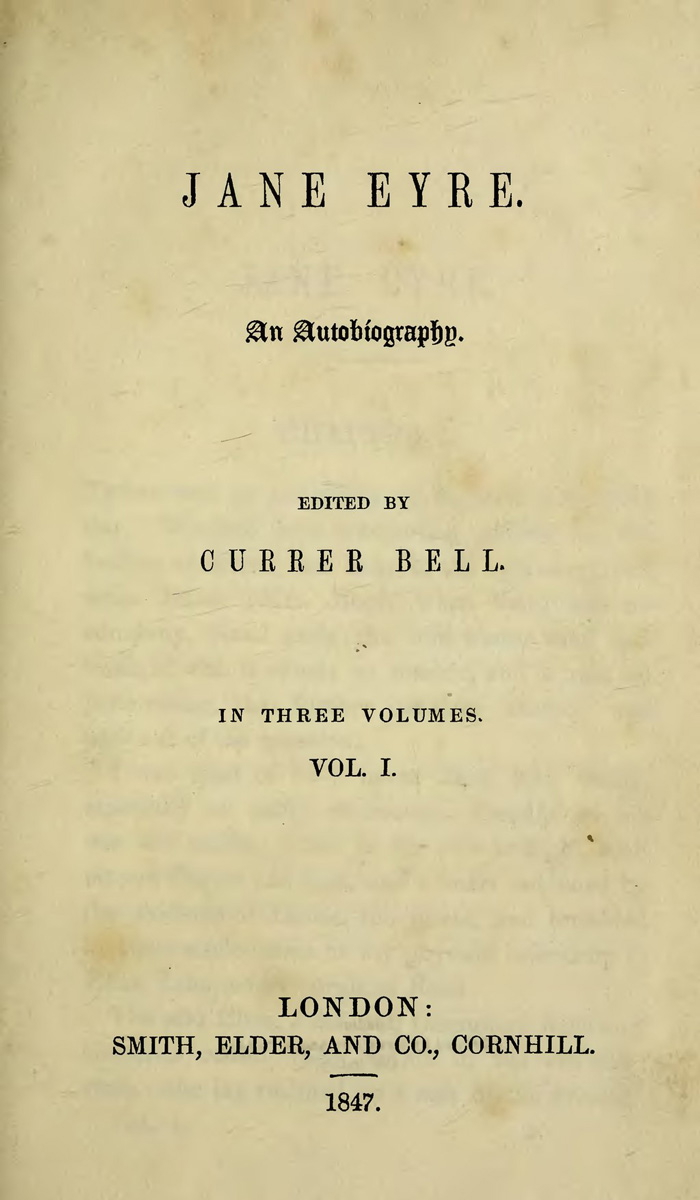
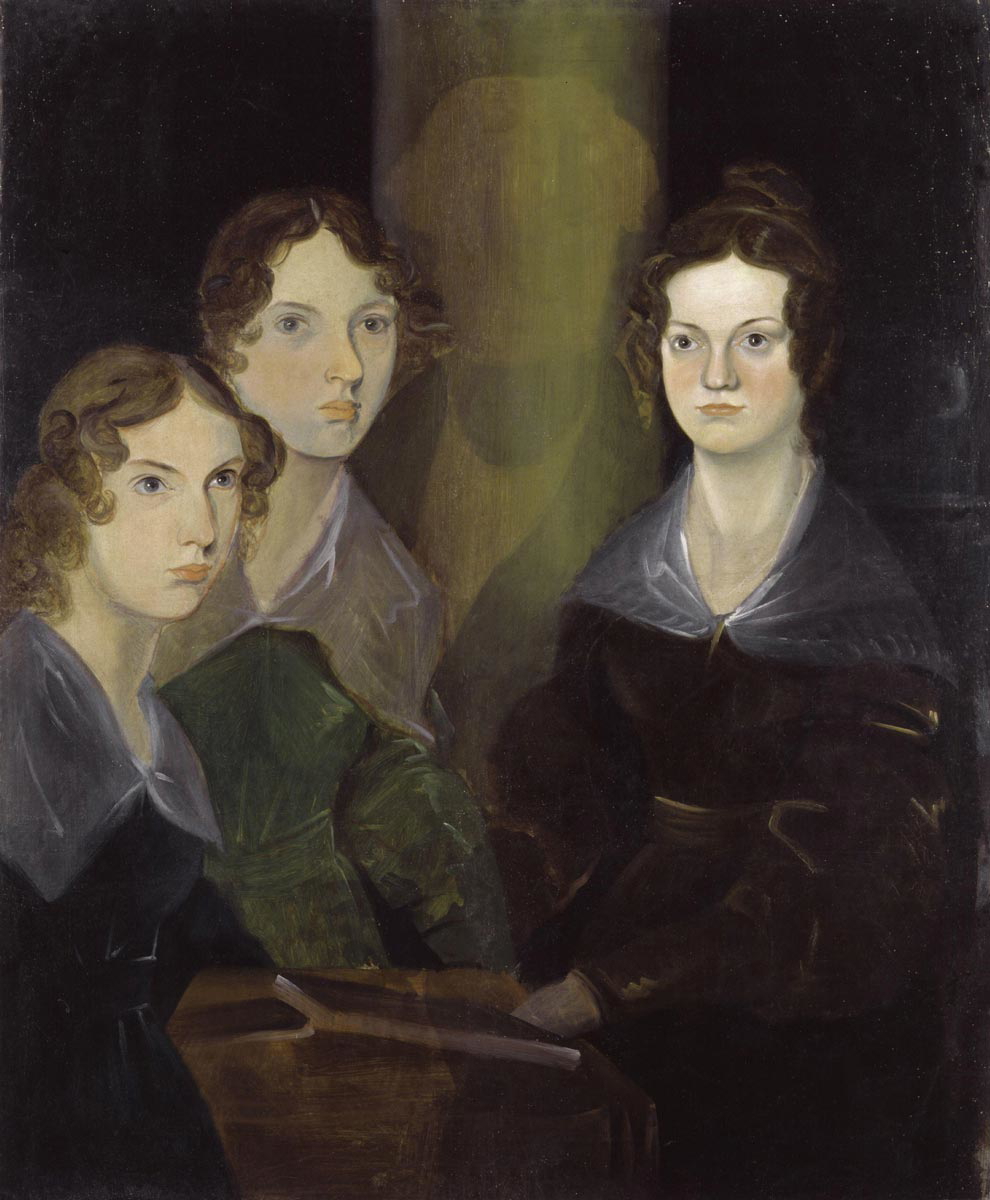
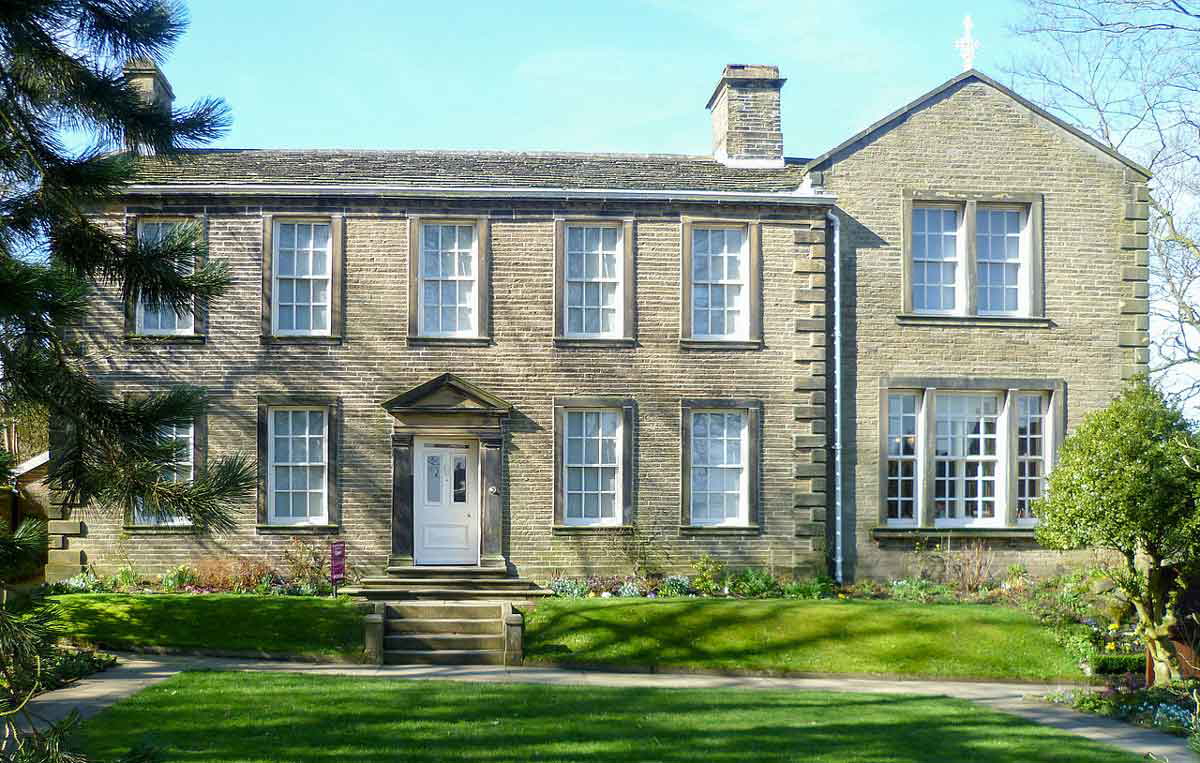
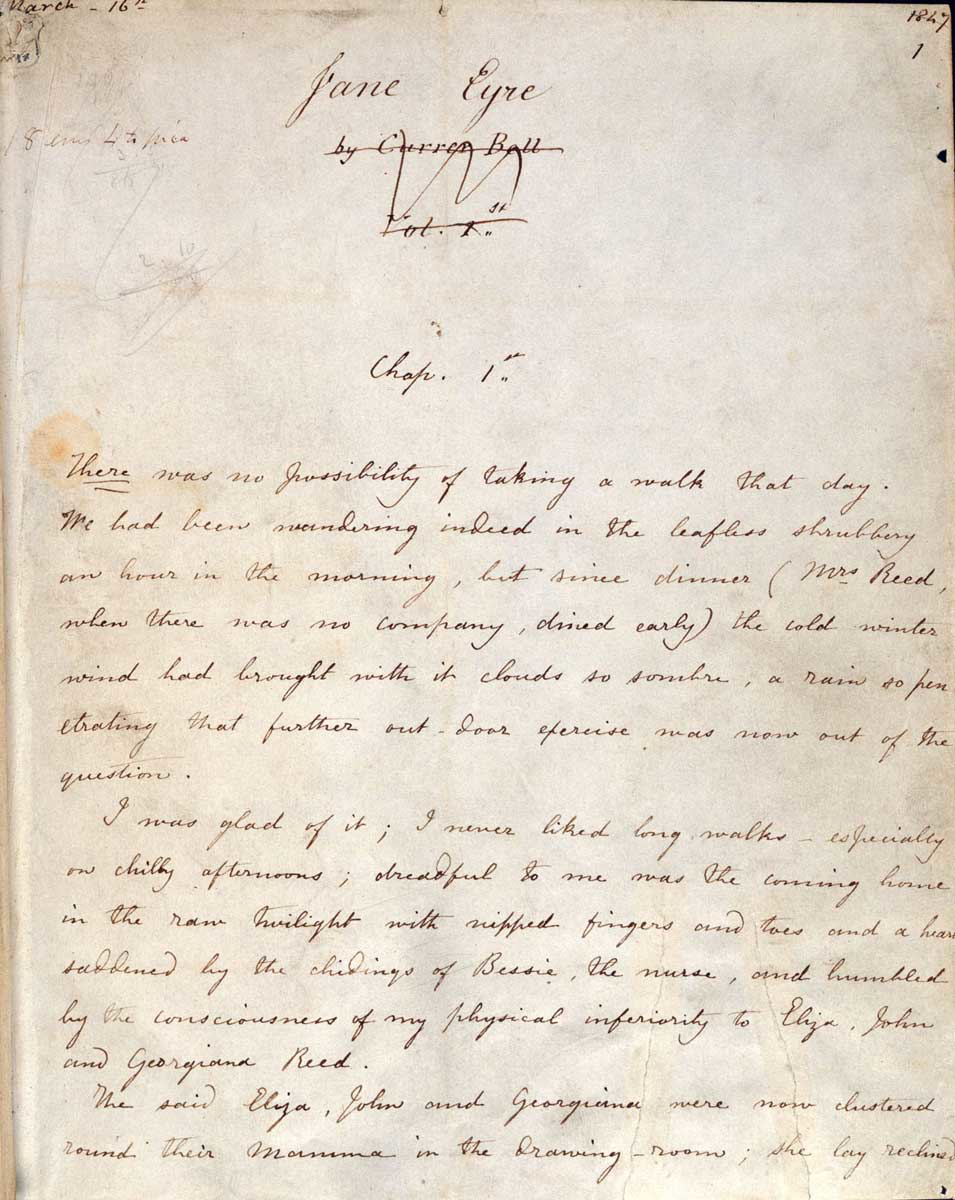
In another literary red herring, those scanning the original 1847 title page [above] will note that the book purports to be an “autobiography” edited by one Currer Bell. While hardly the case, the exemplary coming-of-age saga in Jane Eyre does incorporate at least some of the details from Charlotte’s life up to then, particularly her dismal childhood experiences while attending a small girls’ school. As the new rector in the small Yorkshire village of Haworth, father Patrick Brontë (born “Brunty” or “Prunty”) had moved his family into the village’s parsonage in 1820, including his wife Maria and their six children. In what would become a string of untimely, unfathomable losses scarring the family over the decades, in 1821, Maria died of cancer, soon followed by the two eldest children, Maria and Elizabeth, both of what was likely consumption (called tuberculosis today).
Over its vivid 500-plus pages that are resonant of an entirely different era of the British novel—and perhaps its formal apex—Jane Eyre brings the reader into the private confidences of its titular narrator. Indeed, frequently this “Jane” will employ a direct address (“dear reader”), further involving her audience in her tumultuous and trying adventures stretching from age ten to approximately 19. Acute readers will realize that the “autobiographical” events occurred sometime in the not-too-distant past, and that the heroine is writing from the perspective of her late twenties.
Audiences should also note a progression in Jane, not simply from childhood to adulthood, but also from an impulsively defiant, indignant, and judgmental girl to a young lady measurably more sympathetic to the plight and trials of others, even those who mistreated her. Befitting the times and Austen’s own religious beliefs, this arc is backed by a veiled, never overstated, Christian template that foretells a dawning of redemption and grace, especially for those suffering the lonely agonies of the “dark night of the soul.”
Jane Strikes Back
That’s not to say that a young, bloodied Jane didn’t have right on her side when she hauled back and struck her bullying cousin John (“Wicked and cruel boy!” she shouts) after he had first felled her with a book, then crashed headlong into her and pulled her hair. But seeing how orphan Jane is the poor, unwanted relation in her Aunt Reed’s household, she is immediately thrown and locked into Gateshead Hall’s gloomy “red room” as punishment.
This is only the latest unruly, ungodly behavior that incites Mrs. Reed to ship Jane off to Lowood school for orphans. But not before Jane gives her aunt a piece of her mind, which obviously had been simmering for years. “People think you are a good woman; but you are bad—hard-hearted. You are deceitful!” With this, Jane is proud of herself, for perhaps the first time. She writes that “my soul began to expand, to exult, with the strangest sense of freedom, of triumph that I have ever felt.”
Obviously, such rash and ill-tempered words (and thoughts) from a ten-year-old girl were hardly encouraged during a century when family elders were to be respected at all times, and proper children were indeed to be “seen, not heard,” or risk the lash. Throughout the novel, in ways rarely seen as authored by women or men during the era, Jane rarely holds back on matters near and dear to her and acts the shy, retiring “weaker sex.” It’s exactly this type of challenging, unorthodox (and prophetically pre-feminist) dialogue that gave some of the early critics fits. London’s Quarterly Review called Jane “the personification of an unregenerate and undisciplined spirit … a mere heathen mind which is a law unto itself. No Christian grace is perceptible upon her.”
Yet most critics and even more readers saw Jane as a personification of a remarkable human spirit, set in an uncommonly introspective and involving story, including the great authors of the day, such as William Makepeace Thackeray (Vanity Fair). For those familiar with Dickens’ Oliver Twist (1838), Jane’s hardscrabble journey from outcast orphan to finding her place in the world would have strong resonance, especially as an indictment of the oppressive and cruel social institutions set up to care for impoverished children.
In her preface to the book’s second edition, Brontë pointedly states that “conventionality is not morality” and “self-righteousness is not religion.” While in her sadly short life (she died in 1855) Brontë proved to be no social radical, feminist or otherwise, her Jane Eyre nevertheless is an unequivocal assertion of individual freedom to follow one’s passion and conscience, even in the face of social roles and expectations based on prevailing systems of power and “morality.”
The Lowood Years
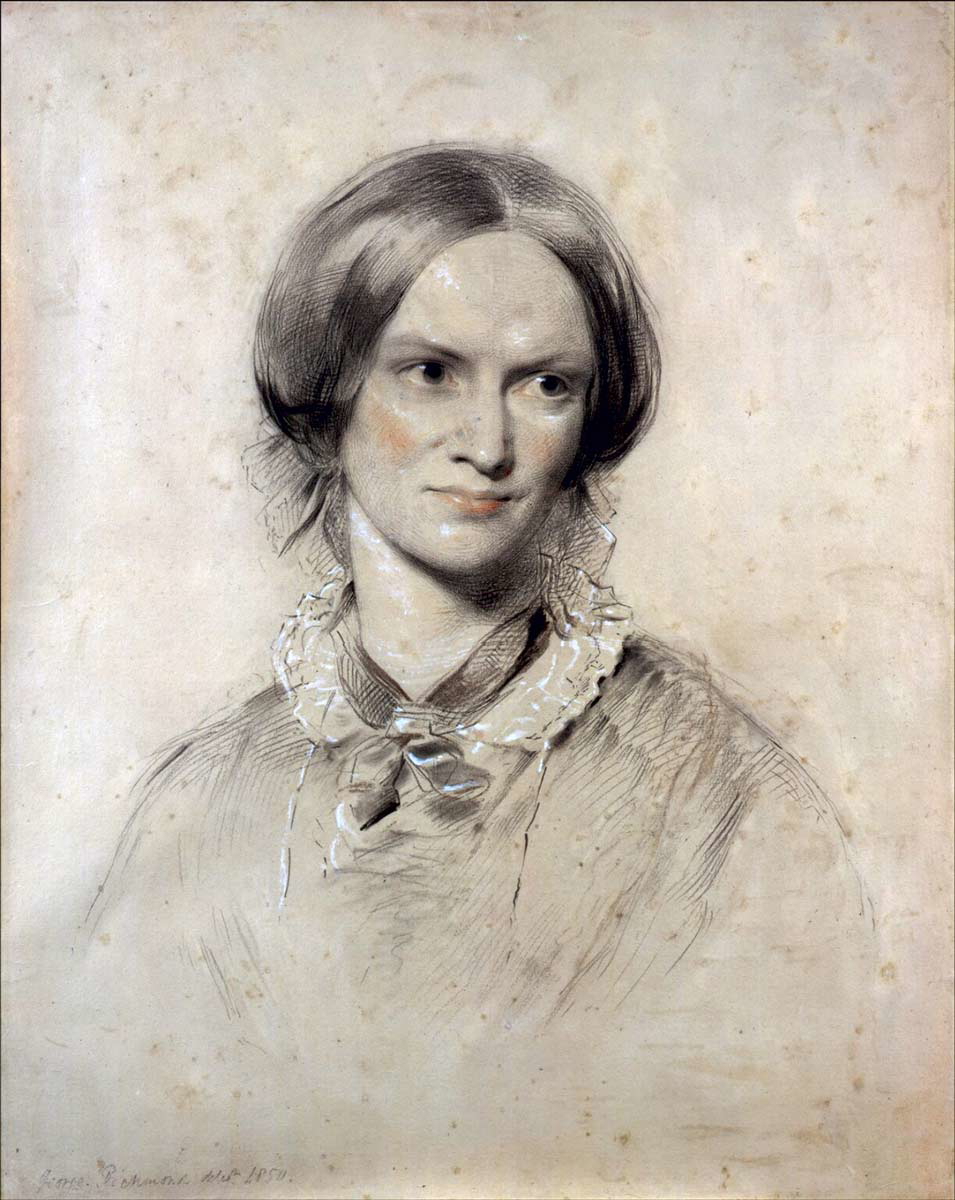
Yet, along with Brontë’s plea for egalitarian freedom and fairness, her novel is equally audacious in depicting an unconventional heroine who is not only poor but admittedly “plain” too, thus a cardinal sin vis-à-vis the middle-class English marriage lottery. Gaunt and diminutive like Jane, with no stirring features except her “great honest eyes,” Charlotte often described herself as “doomed to be an old maid.” But in Jane, the author is determined to prove that such superficialities are indeed only skin deep and mask a resilient, fiery intellect that the right man will find attractive, if not irresistible. Alternatively, an 18-year-old Jane is unsparing in her unspoken judgment of the classically beautiful Miss Ingram, a potential rival: “She was very showy, but she was not genuine … her mind was poor, her heart barren by nature—nothing bloomed spontaneously on that soil …”
Jane’s eight years at Lowood include one of the novel’s most poignant passages. She is befriended by Helen Burns, a kindly, bookish girl who is unjustly singled out for punishment by Mr. Brocklehurst, the school’s fire-and-brimstone-preaching clergyman. He also berates a teacher when he notices that one of the students is wearing her hair in long curls. “My mission is to mortify in these girls the lusts of the flesh!” he fumes.
Due to what Jane blames on the school’s abysmal conditions (and rancid food), a terrible outbreak of typhus begins stalking the young lives. When Jane learns Helen is among the afflicted, she races to her room, only to discover she is mortally ill. Yet even at death’s door, Helen is serene. “I believe; I have faith; I am going to God,” she tells Jane, who lovingly embraces her friend in her bed for the night. It’s only later that Jane is told that Helen died in her arms.
Jane Eyre poses profound and timeless questions, some unanswerable. When Helen talks of the certainty of God and heaven, Jane asks her, “Shall I see you again, Helen, when I die?” But she also ponders silently, “Where is that region? Does it exist?”
Meeting Master Rochester
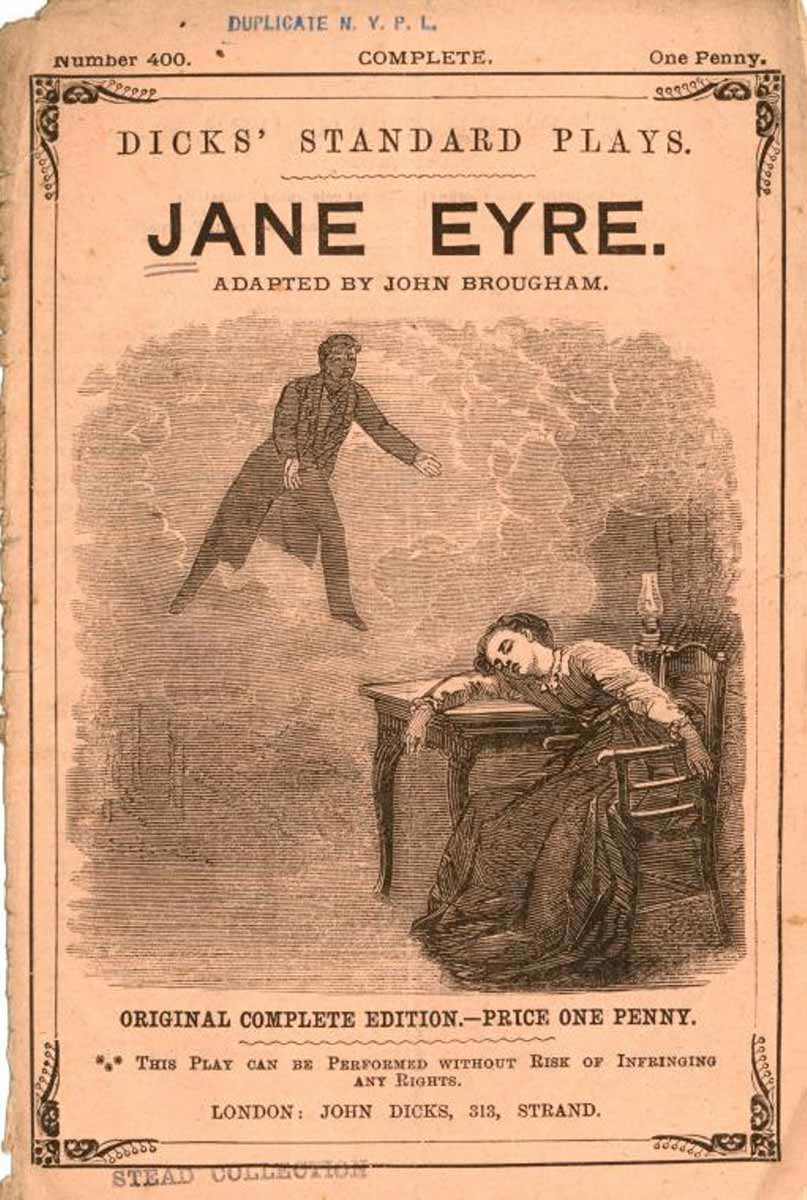
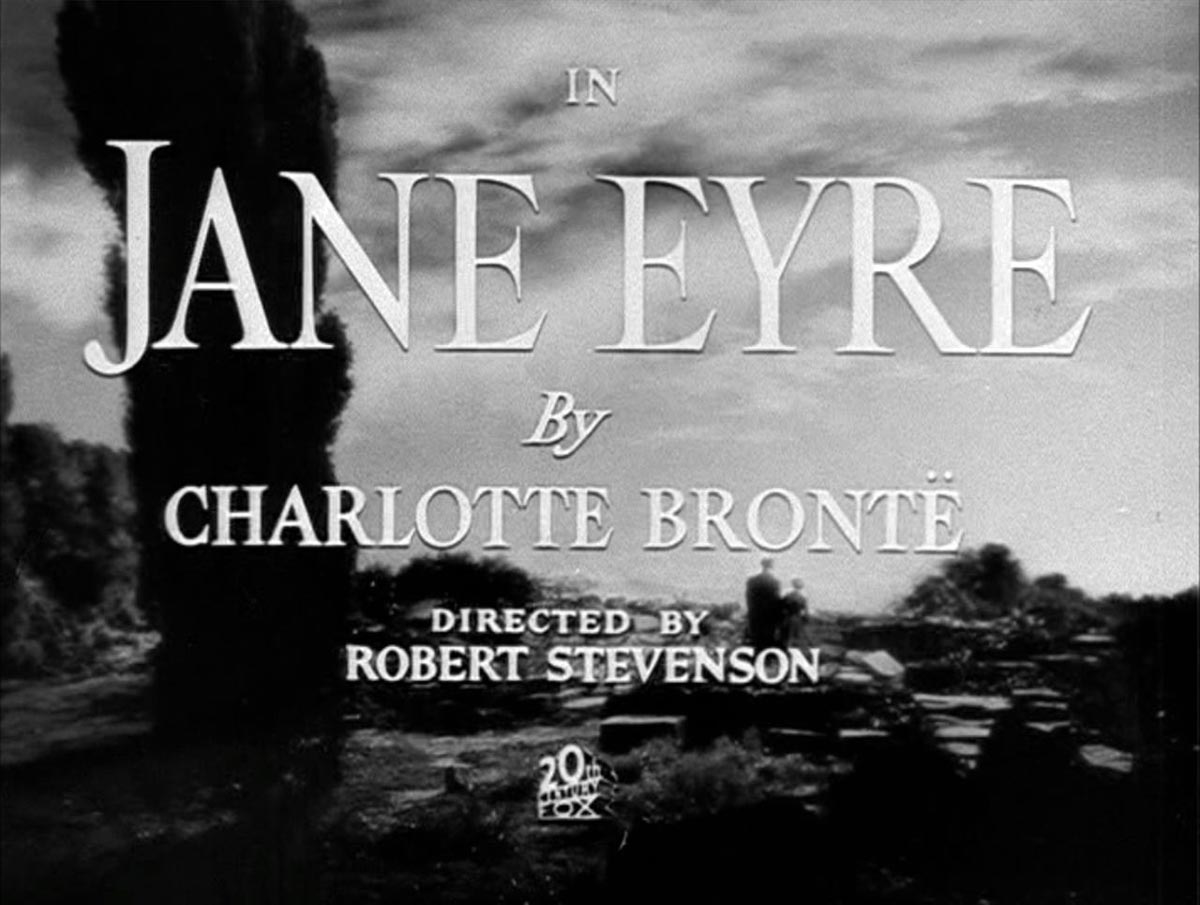
As for questions of Earthly concern, principally love and labor, Jane’s journey next takes her to the central part of the novel (and the one usually favored in the various film versions). Here is where Jane Eyre wades into distinctly 19th century Gothic and Romantic territory, of desolate moors, forbidden love, and ghostly visions—not so unlike sister Emily’s Wuthering Heights, which was also published in 1847, though to far less acclaim than garnered for Charlotte’s sensational breakthrough.
From Lowood, Jane is off to accept a post as governess at Thornfield Hall, the baronial if tattered manor of its absentee owner, Mr. Edward Rochester. Her charge is young Adele, a French-born girl who may or may not be Rochester’s illegitimate fille and whose mother has long since left her. Jane and Rochester’s first meeting is not only memorable but serves to obliquely foreshadow how the “master” will be humbled and brought low through the course of the story, with Jane as both witness and earthbound guardian angel. Preceded by his dog Pilot and astride his black steed Mesrour, Rochester races past Jane on a country road, only to tumble to the ground in a heap, his horse slipping on a sheet of ice. Escaping serious injury, Rochester picks himself up with a little help from the bystander, though not before she hears a variation or two on the master’s favorite (“What the deuce?”) swear words.
She is struck by the middle-aged (“he might be 35”) stranger with a dark face and stern features in a fur-collared riding coat, yet is not shy about speaking to him since he wasn’t a “handsome heroic-looking young gentleman.” While Jane doesn’t know it then, Edward similarly was struck by her, if not smitten, despite those stern features, heavy brow, and persistent scowl. In one of several allusions to Jane’s almost supernatural effect on Edward, he later jokingly accuses her of “bewitching” his horse just so he would fall, so conjuring up their fateful rendezvous.
Charlotte Brontë’s “Jane Eyre” and the Secret of Thornfield Hall
But any hint of romance in Jane Eyre is many chapters away, not the least because of the fair Blanche Ingram, whom Rochester appears to court at many of the soirees at Thornfield Hall. More insidiously, there’s the matter of the mysterious phenomena that begin occurring late at night, seeming to originate from the manor’s third floor, and—horrors!—directly above Jane’s bedroom. At first, Jane hears a kind of “curious … demonic laugh.” Another night, there is a strange knocking on her door. Everyone at the hall, including Mr. Rochester, tells Jane that the source of those unnerving sounds is surely Grace Poole, a rather eccentric maid assigned to the third floor. No worries, they say, she’s harmless.
Explanations aside, there’s nothing harmless in the fire that nearly consumes Mr. Rochester’s bed, with him asleep in it. Once again, Jane is there in the nick of time, lured by that demonic laugh to the master’s chambers, where she speedily douses the blaze with a basin of water. Once he realizes Jane has been the rescuer, not the assailant (“Have you plotted to drown me?” he jokes), he takes her hand in thanks—only for Jane to notice he continues to hold it until she finds an excuse to leave.
The faux “autobiography” of one Jane Eyre has too many twists, turns, and pressing moments to highlight in our summary, but, over its 38 imaginatively written and “intensely interesting” chapters, patient modern readers will find one of the greatest classic novels written by and about a woman, rich in human drama, reflection, social comment, conscience, and hope. As to any qualifying statements regarding how Charlotte Brontë’s gender affects her legacy, if at all, she merits the last words. In 1849, she responded to a critic thusly: “To you I am neither Man or Woman—I come before you as an Author only—it is the sole standard by which you have a right to judge me—the sole ground on which I accept your judgment.”