Chesty Puller served in the Marines between 1918 to 1955, starting out as a mere private and reaching the rank of lieutenant general. Over the course of his career, he earned five Navy Crosses and one Distinguished Service Cross, making him the most decorated officer in USMC history. His tenacity and drive became an inspiration for Marines who served under his command and he remains a legend to this day.
Early life
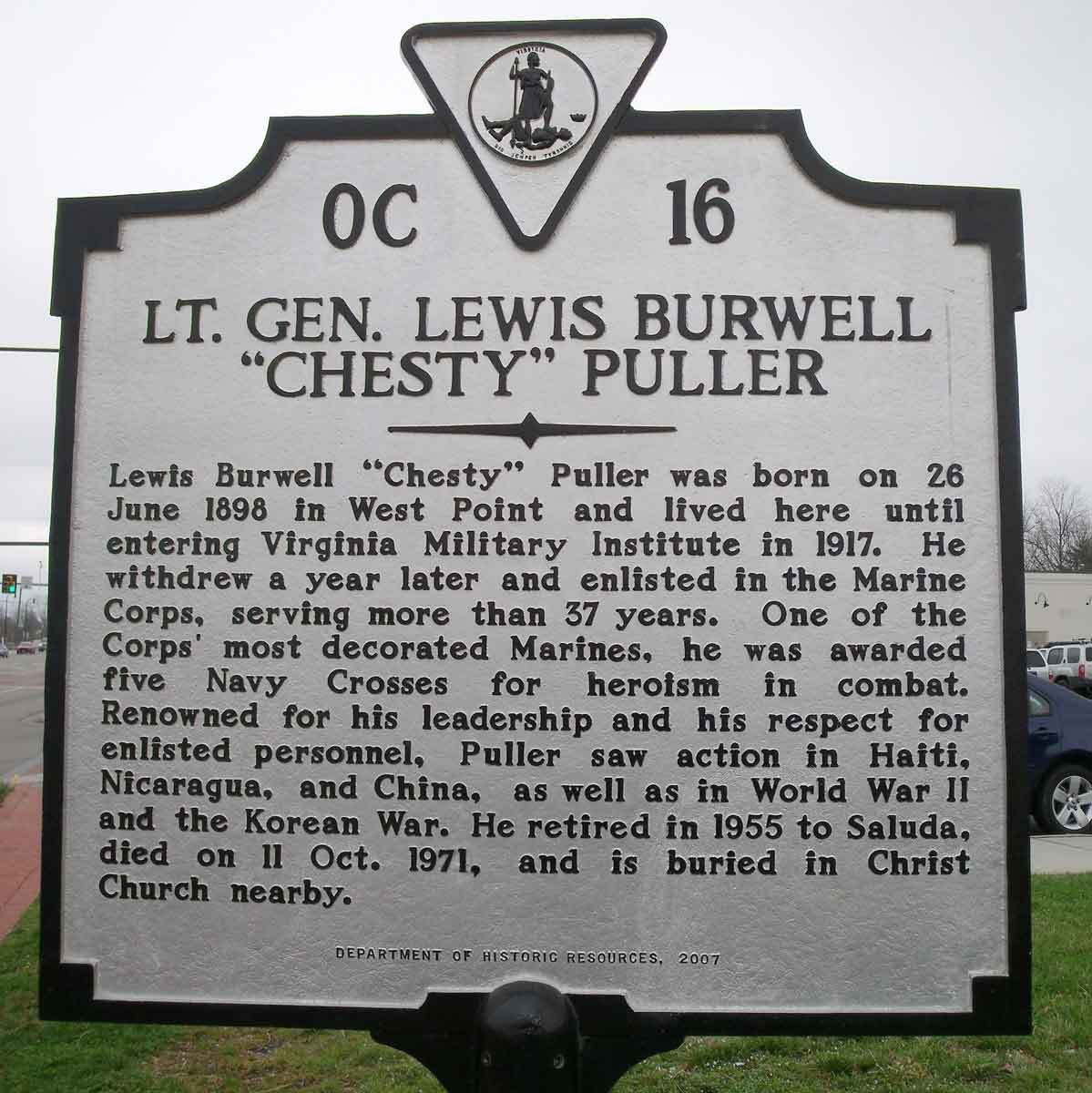
Lewis Puller was born in 1898 in the small Virginia town of West Point. He spent a lot of time in his formative years around Confederate veterans of the Civil War, who regaled him with tales of battle and glory. After some years of schooling, he tried to enlist in the US Army to fight against Mexican bandits on the southern border, but was stopped by his mother. When he came of age, he enrolled in the Virginia Military Institute, hoping to become an officer right out of school.
While he attended VMI, the United States edged closer to war in Europe. By August 1918, American forces were locked in battle with the Germans on the Western Front and Puller vowed to join them. He dropped out of VMI and enlisted in the Marine Corps as a private, training at Parris Island in South Carolina. At this point, the Marine Corps was still a small force, with several regiments and battalions deployed overseas and smaller detachments stationed on board oceangoing vessels.
Despite his eagerness to go to France, Puller never took part in WWI. His training finished as the armistice was being signed in November 1918. However, he did enter Officer Candidate School and graduated in 1919. As a result of the reduction in the size of the Corps after the end of WWI, he was briefly bumped down to corporal. Puller hoped to see some action in the next deployment of Marines overseas. He would get his chance when the Corps occupied Haiti and Nicaragua.
Haiti and Nicaragua
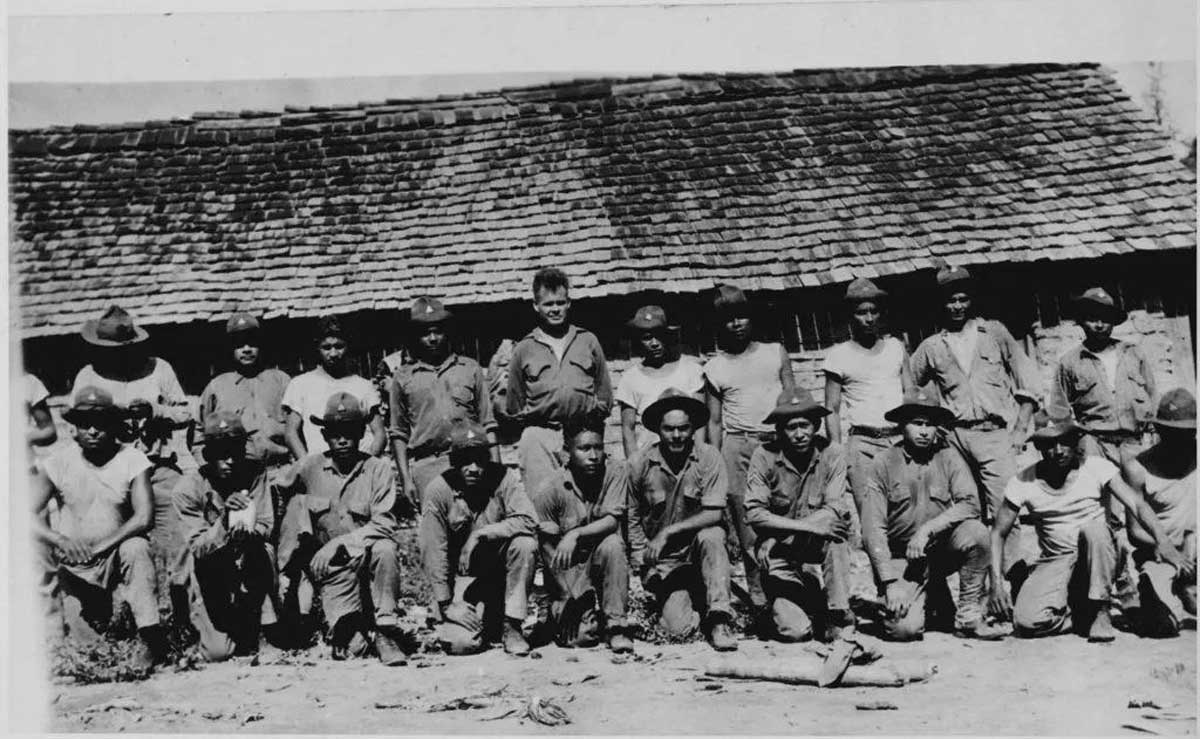
In the interwar period, American forces were repeatedly sent to Latin American countries to protect American business interests and prop up leaders supported by the United States. From 1915 to 1934, a brigade of US Marines were stationed in Haiti to support the Haitian Gendarmerie. US forces also entered Nicaragua in support of the US-backed government there in the 1930s.
In Haiti, Puller served as part of the American effort to suppress the Caco insurgency, a guerrilla movement resisting American occupation. Between 1919 and 1924, he participated in jungle patrols aimed at rooting out rebel fighters in remote mountain regions. The operations demanded small-unit leadership, jungle navigation, and swift, decisive engagements, skills Puller honed through experience. One of his most famous actions in Haiti was infiltrating and raiding a Cacos encampment before they could disperse.
Subsequently, Puller went to Nicaragua to work with the Nicaraguan National Guard. He led numerous combat patrols against the Sandinista rebels under Augusto César Sandino. Puller directed dozens of small-unit operations deep in hostile territory. He earned two Navy Crosses for valor: the first for a successful engagement near Agua Carta in 1930, and the second for a prolonged campaign in the vicinity of El Sauce in 1932.
In both cases, Puller’s leadership and aggression enabled his small force to overcome numerically superior enemies. His service in these campaigns solidified his reputation as a fearless, hands-on combat leader and helped shape the Marine Corps’ doctrine for irregular warfare in decades to come. It also taught him how to operate in a jungle setting, which was crucial for his next major operation.
Guadalcanal and New Britain
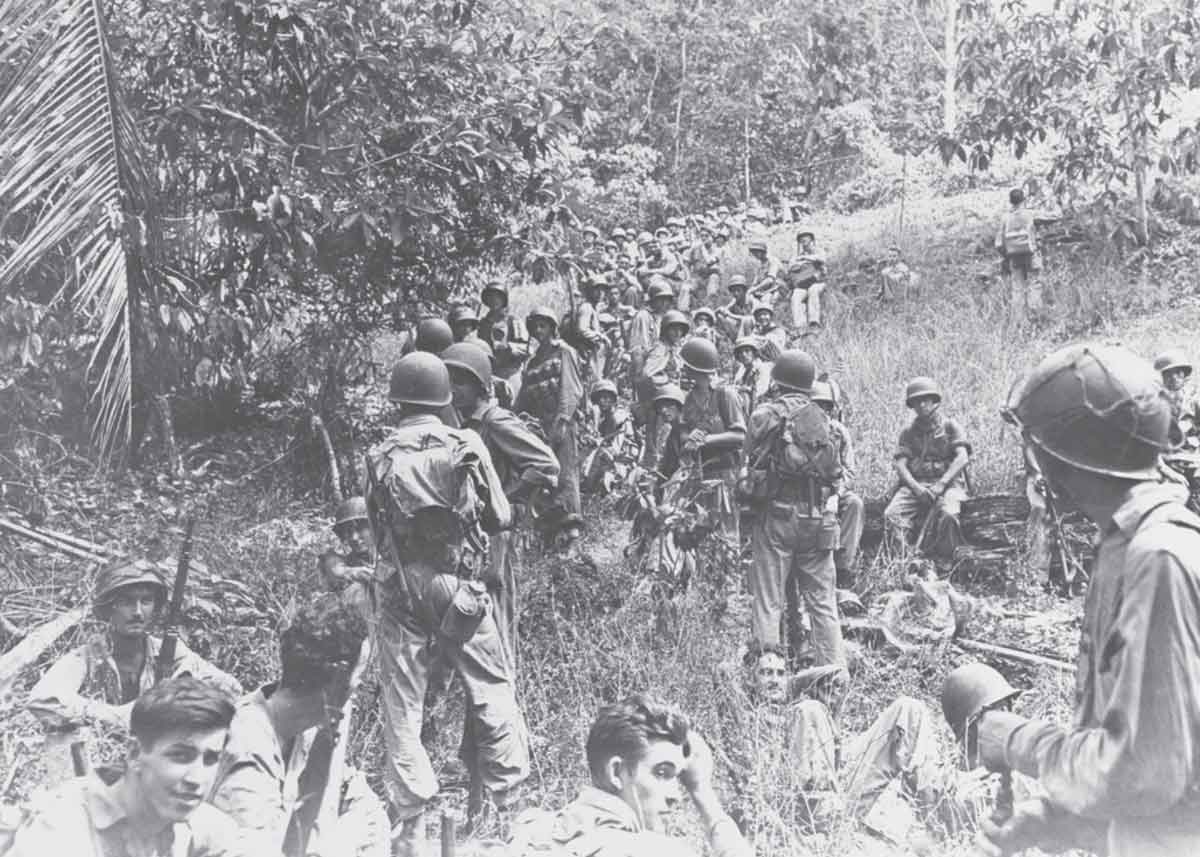
After a brief stint in China, Puller was given command of the 1st Battalion, 7th Marine Regiment, then stationed in North Carolina. In the aftermath of the Pearl Harbor attacks, the United States rushed military assets to the Pacific Theater to stave off Japanese advances. The 7th Marines went to American Samoa as part of the 3rd Marine Expeditionary Brigade. After a brief period training new recruits there, the 7th went to join the 1st Marine Division on Guadalcanal.
In 1942, American officials were concerned that Japan was planning to build a base on Guadalcanal in the Solomon Islands to cut off Allied supply lines to Australia. The 1st Marine Division deployed the bulk of its force to the island and engaged in heavy battles with Japanese forces. The 7th followed them ashore in September 1942. Puller immediately engaged in tough fighting with Japanese forces located near the Matanikau River. In late October, his battalion, along with an army battalion, held off a vastly superior Japanese force south of Henderson Field, the main American airbase on Guadalcanal. His success on Guadalcanal earned him multiple medals and promotion to executive officer of the 7th.
The 1st Marine Division later assaulted the Japanese garrison on New Britain. Both New Britain and Guadalcanal had dense jungles which made fighting difficult. Puller’s prior experience in similar terrain in Haiti and Nicaragua helped ensure he could maneuver his forces effectively. The 7th withstood heavy counterattacks and successfully destroyed Japanese troops in its sector. By mid-1944, the division was recuperating and preparing for an assault on Peleliu.
Peleliu
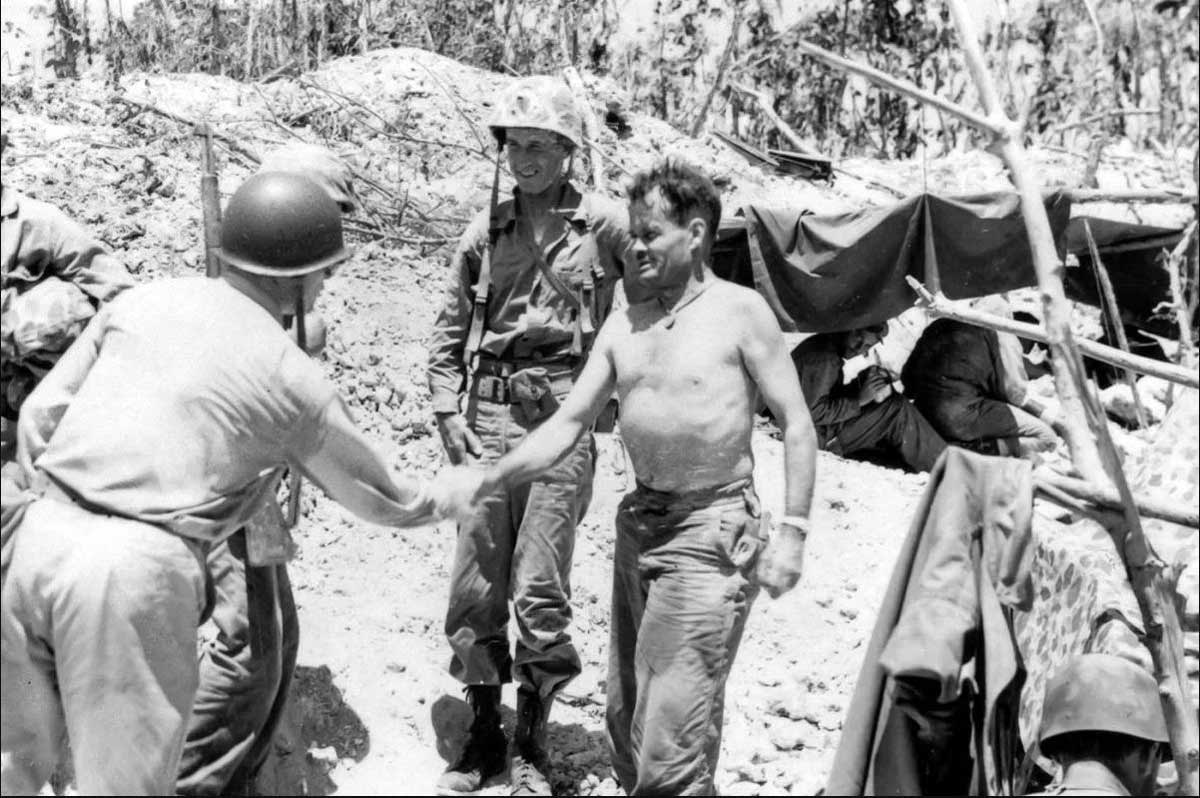
In September 1944, the 1st Marine Division launched an amphibious assault against the well-fortified island of Peleliu in Palau. At this point, Colonel Puller was in command of the 1st Marine Regiment of 3,000 men. Puller’s 1st landed on the northern edge of the landing beaches, facing a system of caves and pillboxes that threatened to derail the American assault. The regiment battled its way ashore and seized a chain of Japanese 40mm guns and pushed inland. Puller remained with his men, urging them forward in the face of heavy fire.
Within several days of heavy fighting, Puller’s battalions suffered heavy losses. The intensity of the fighting shocked Pacific war veterans, along with the Japanese decision to defend in depth and not counterattack. Puller lost over 1,700 men out of his regiment’s strength of 3,000. When he received orders to seize the Umurbrogol mountain range, he instructed his men to assault the Japanese positions head on, causing heavy casualties. His refusal of reinforcements from the army angered his men.
In October, the 1st Marines were withdrawn from the island, followed shortly afterwards by the other regiments in the division. Puller’s aggressiveness was valued by many of his counterparts, but also caused other officers to criticize him for his unwillingness to think outside the box. Puller’s actions on Peleliu led to him being reassigned stateside for the rest of the war as a training officer. However, his combat career was not over.
Korea
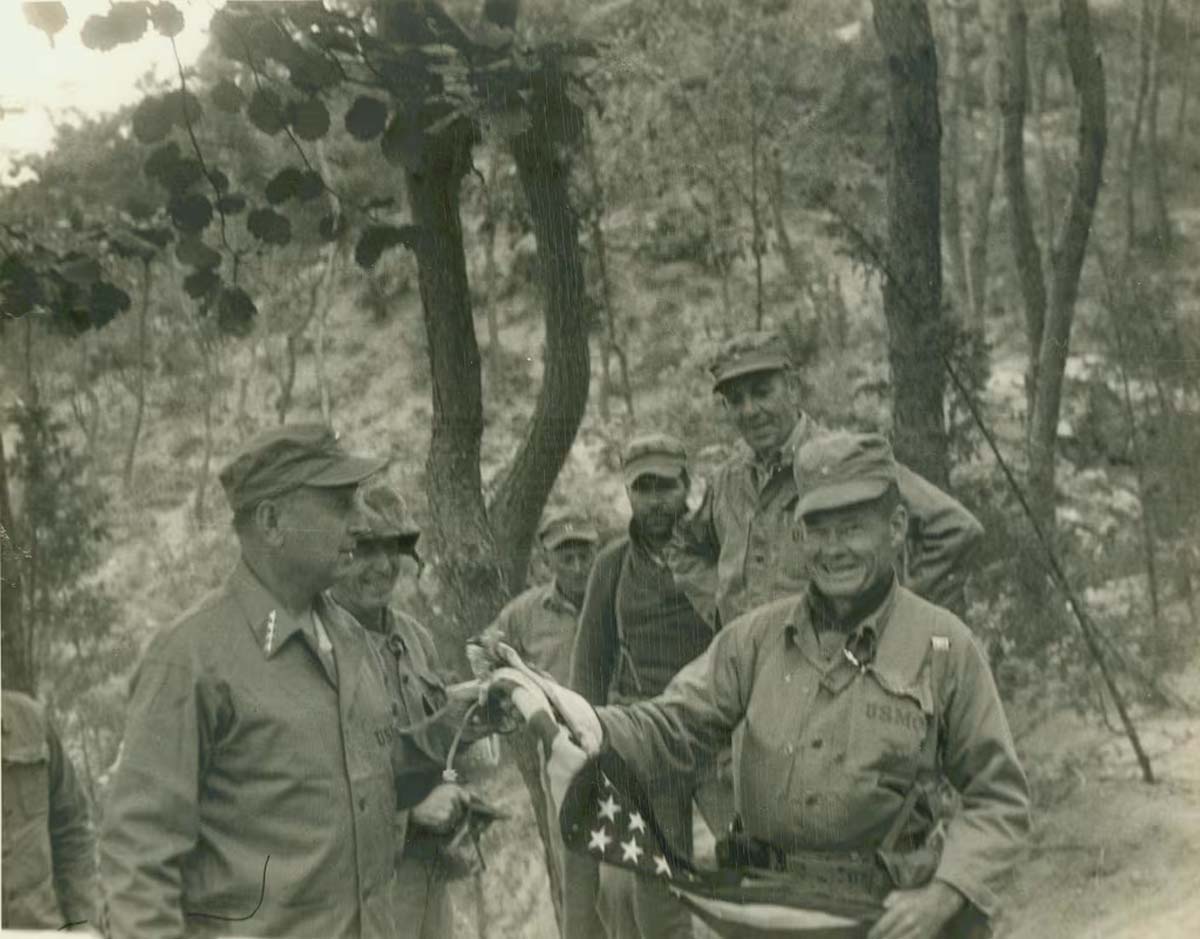
When President Truman decided to commit combat forces to South Korea after the North’s invasion in 1950, Colonel Puller was again given command of the 1st Marine Regiment. He earned a Silver Star for his actions during the Inchon landings, where Allied forces aimed to cut off the North Korean army and force them to retreat north from the outskirts of Pusan city. The 1st Marine Division engaged in heavy fighting in Seoul city, devastating it, before it was ordered to commence another amphibious assault in Wonsan, North Korea.
The decision by General Douglas MacArthur to advance north of the 38th Parallel was very controversial and ensured that the fighting would continue for several years. General Oliver Smith’s 1st Marine Division was detached from the main Allied force, along with several army and South Korean units.
Puller marched with his regiment northward to the Chosin Reservoir. When the People’s Republic of China intervened in the war and began attacking the Marines, Puller’s men found themselves isolated in several little pockets. Only massive air support and tenacious fighting ensured that the 1st survived without being utterly destroyed.
In January 1951, Puller was made assistant division commander, reaching general rank for the first time in his career. He assumed temporary command of the division when his superior officer was briefly made commander of the IX Corps. The 1st Division fought off repeated Chinese and North Korean assaults while pushing forward to the modern-day DMZ line. By May 1951, his tour of duty in Korea ended and he returned to the US to take temporary command of the 3rd Marine Division in Camp Pendleton, California.
Retirement and Legacy
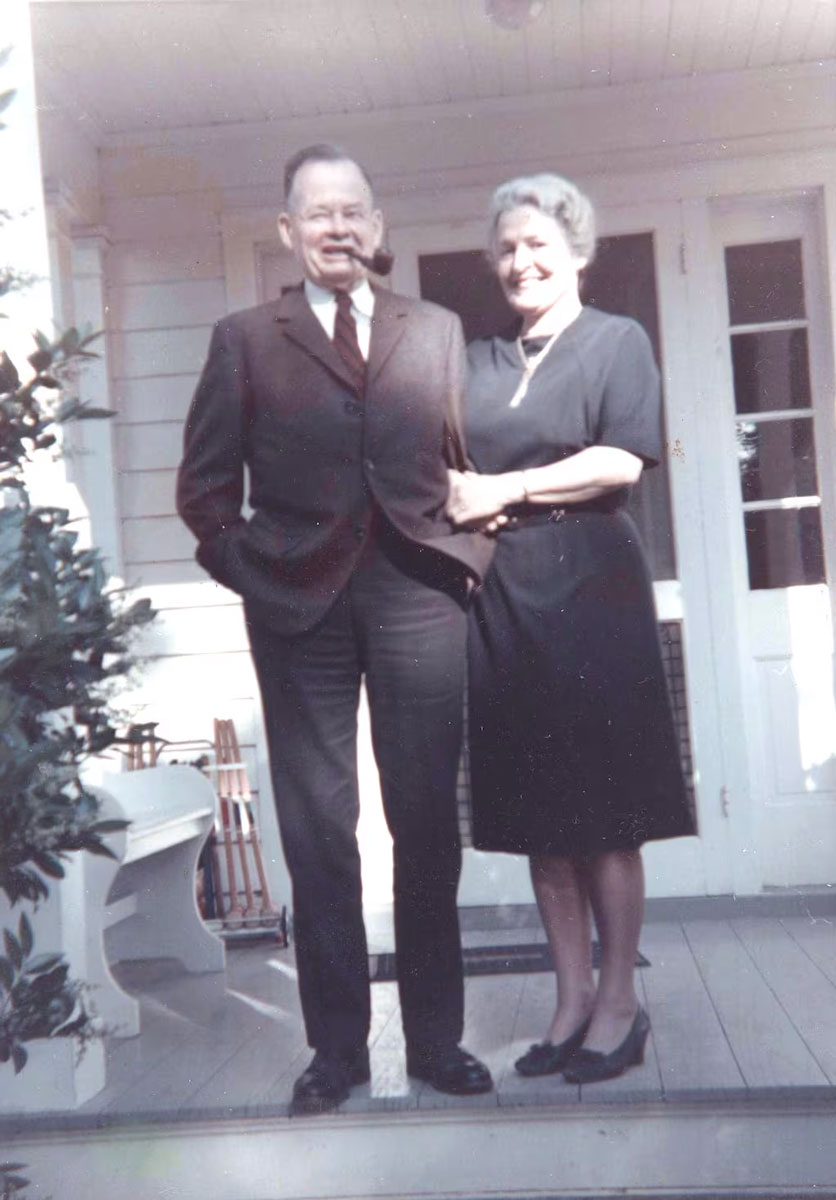
Puller was promoted to Major General in September 1953 and given full command of the 2nd Marine Division, then stationed at Camp Lejeune, North Carolina. This was his first permanent division command and he hoped to lead it into combat. However, he suffered a stroke in 1955 while on duty and, while he recovered, was forced into retirement by the Marine Corps in November of that year. As a consolation, he received promotion to Lieutenant General. For the rest of his life, he remained at home with his wife Virginia. On October 11, 1971, he passed away and was buried with full military honors.
Puller attained legendary status among the Marines for his feistiness, insistence on discipline, and aggression in combat. Some veterans of Peleliu resented his decision to keep attacking Japanese positions even when it became clear that his regiment had few fresh reserves. However, his steadfastness in battle gained him the respect of many others, especially during the fighting at the Chosin Reservoir. To this day, no other Marine has come close to him in the decorations he received: five Navy Crosses, a DSC, a Silver Star, two Legion of Merit medals, a Bronze Star, three Air Medals, and a Purple Heart.
To this day, Marines look to him as an example of leadership and vision. In Marine barracks today, it is common for recruits to sound off “Good night Chesty, wherever you are.” Many members of his family went on to join different branches of the military in later years. Despite the fact that he was forced to retire prematurely, he remains one of the most legendary Marine officers in American military history.