In this article, we will briefly review the origins and stories of eight literary characters associated with Christmas. Let us question when, why, and how these characters were created. Then, we will consider how effectively they have been brought to life by their authors, and how some made the leap from page to screen. Most importantly of all, we will examine what makes each character so special that they have endured so many past Christmases, and how it is that they continue to make appearances each December, even in the present day.
1. Ebeneezer Scrooge (From A Christmas Carol by Charles Dickens)
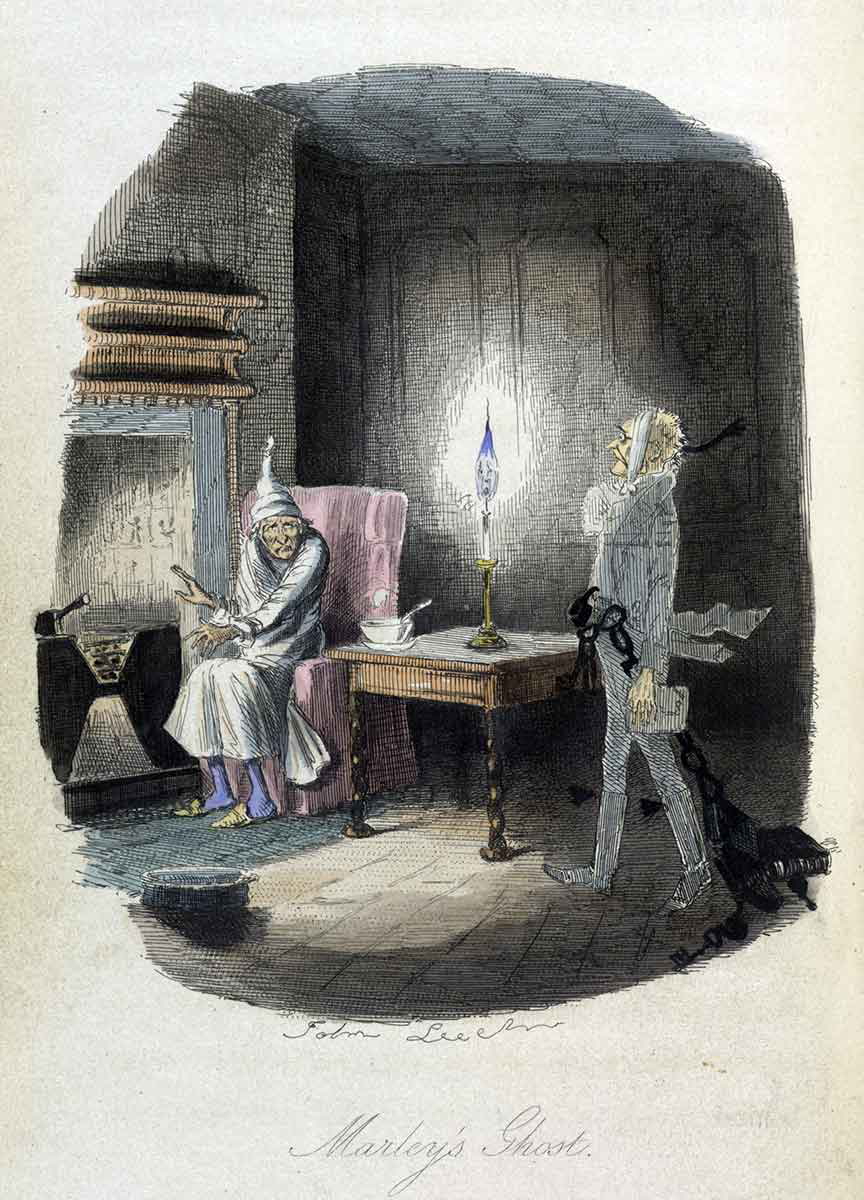
He was a “tight-fisted hand at the grindstone.” He was as “hard and sharp as a flint.” He was “secret and self-contained.” He was as “solitary as an oyster.” To sum up, he was a “squeezing, wrenching, grasping, scraping, covetous old sinner.”
Who could we be talking about other than Ebenezer Scrooge? This cold-hearted but iconic character was the product of the great mind of Charles Dickens. Scrooge, alongside an array of equally fascinating characters, originally appeared in the enduring yuletide classic, A Christmas Carol, in December 1843.
And who better to begin this list than a character whose tale is the very representation of the true meaning of Christmas? Ebenezer Scrooge and the tale of his uncertain fate have the power to inspire any man or woman to question their own values, behavior, and even the way in which they celebrate this festive time of the year.
Ebenezer Scrooge is initially portrayed as a character to be feared, but he experiences a profound and earth-shattering epiphany after the visitation of four spectres on Christmas Eve night. The first visit is from the ghost of his deceased business partner, Jacob Marley, who comes to forewarn him of the other three. Second is the ghost of Christmas past, who guides Scrooge through the most poignant scenes, whether joyful or sorrowful, of his life so far. Next is the ghost of Christmas present, whose main purpose is to reveal to Scrooge just how difficult life is for the Cratchit family, the father of whom Scrooge treats very badly and underpays. Then, last but not least, Scrooge is visited by the ominously named ghost of Christmas Yet To Come. This final visitation is the one that shakes Scrooge to his very core, for it suggests what could become of him if he fails to mend his ways.
When Ebenezer Scrooge wakes up the following morning, finding himself alive and unharmed in his own bed, he transforms into a completely different man. He springs into action, declaring himself to be “as light as a feather, as happy as an angel, as merry as a schoolboy, and “as giddy as a drunken man.” One of his first acts is to purchase the biggest turkey in the butcher’s shop and give it to Bob Cratchit and his family to enjoy for their Christmas dinner. Scrooge decides that he will no longer say “Bah Humbug” to Christmas, but will try to “honour it” in his heart, “and try to keep it all the year.” It is this change of heart that makes the character of Scrooge so memorable, so fascinating, and so likable to all manner of audiences.
It is thought that A Christmas Carol is the most adapted story of all time, as records show that it has been filmed well over 100 times. That means hundreds of actors have had the pleasure of bringing the character of Scrooge to life, either for radio, television, or cinema. Everyone has their own personal favourite, whether it be Albert Finney (Scrooge, 1970), Michael Caine (A Muppet Christmas Carol, 1992), Alastair Sim (A Christmas Carol, 1951), Guy Pierce (A Christmas Carol, 2019), or Christopher Plummer (The Man Who Invented Christmas, 2017).
To many people around the world, the rewatching of A Christmas Carol each December is an integral tradition. It just wouldn’t be Christmas without Ebenezer Scrooge and his life-changing tale of redemption.
2. The Grinch (From How The Grinch Stole Christmas by Dr. Seuss)
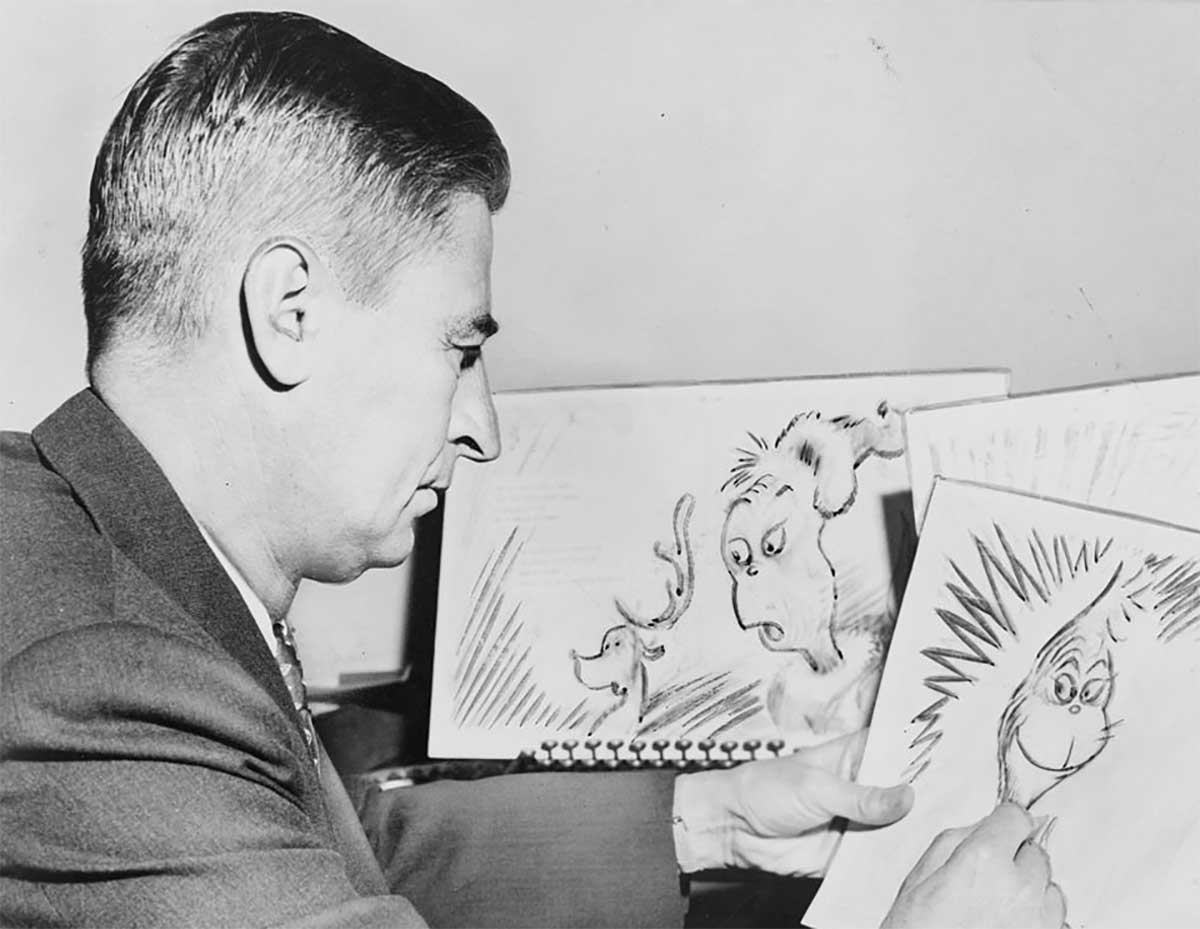
Despite his shortcomings, the Grinch now holds a special place in the hearts of Christmas lovers worldwide. Just like that of Ebeneezer Scrooge, the story of the Grinch begins with expressions of misery, selfishness, and a seemingly unshakeable dislike of anything at all to do with Christmas. Both characters are content to live a lonely, miserable life, until their unhappy peace is disturbed by another character, who ultimately leads them to experience a complete change of heart. Their stories end with seasonal enlightenment, newfound friendship, and inexpressible, unprecedented happiness.
This green, cantankerous character was originally created by Dr. Seuss, and featured as the protagonist in his rhyming storybook named How the Grinch Stole Christmas. At Christmas, during the present era, the Grinch appears to be everywhere you look. Over the last seven decades, the popularity of the tale has grown to no end.
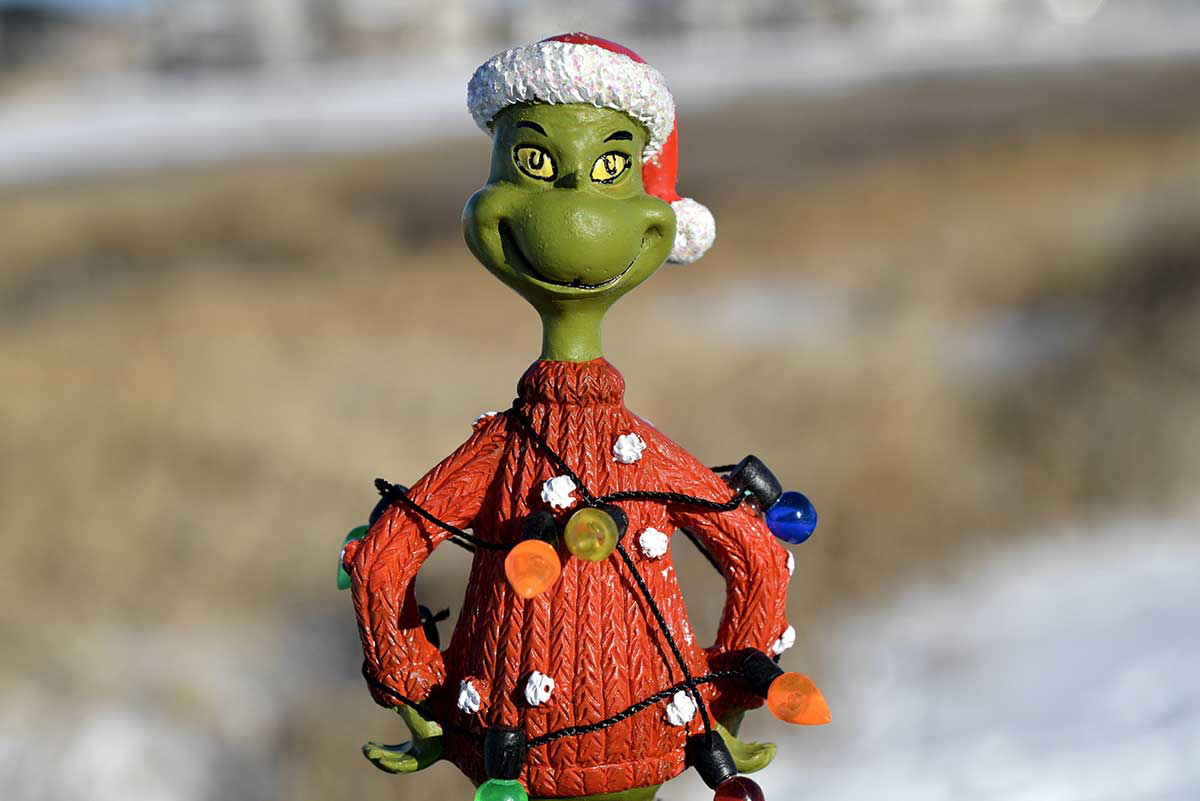
The story of the Grinch is simple but filled with seasonal spirit. At the beginning of the poem, the Grinch is introduced immediately as a character who despises Christmas. The first couplet says it all: “Every Who Down in Whoville Liked Christmas a lot… But the Grinch, Who lived just north of Whoville, Did NOT!” In fact, he hated Christmas to such an extent that he decided he would try to stop it from coming to Whoville at all, “I MUST stop this Christmas from coming! But HOW?” The Grinch decides that he will end Christmas once and for all by going out on the night of Christmas Eve and stealing the Christmas trees, presents, and feasts of every last Who in Whoville. The following morning, however, he finds that he cannot stop Christmas from coming after all. Although feeling somber, the Whos still celebrate Christmas, even after the loss of their materialistic things. “He HADN’T stopped Christmas from coming! IT CAME!”
Toward the end of the poem, the Grinch comes to appreciate the true meaning of Christmas. “Maybe Christmas, he thought, doesn’t come from a store, Maybe Christmas… perhaps… means a little bit more!” The poem ends as the Grinch accepts the offers of friendship from the Whos, and even embraces their old traditions, “And he, HE HIMSELF! The Grinch carved the roast beast!”
The stories of both the Grinch and Ebenezer Scrooge can act as a reminder that even the most cynical of Christmas-haters can have a true change of heart, if only they are helped along by the right person or experience.
3. Aladdin (From Arabian Nights by an Anonymous Author)

One of the most popular Christmas pastimes in Britain is attending a pantomime. In this context, the Merriam-Webster Dictionary defines the term pantomime as “a British theatrical entertainment of the Christmas season based on a nursery tale and featuring topical songs, tableaux and dances.”
Pantomimes may appear quite foreign to anyone who has not grown up with them. Many of the same jokes are told each year, and they are often unique to the particular theater or locality. Most surprisingly of all, a lot of audience participation is required at a pantomime, and it is not uncommon for an audience member to be picked on by members of the cast. Viewers may be encouraged to engage in repetitive conversation with the actors, with some of the most notable phrases including “oh no he isn’t,” and “he’s behind you!”
Although Aladdin was originally associated with One Thousand and One Nights (written between the 8th and 13th centuries and often known in English as Arabian Nights), he continues to make a Christmas appearance once per year, gracing the British stage with his presence.
When performed as a pantomime, Aladdin is accompanied by other iconic Christmas characters, such as the panto dame, his mother (Widow Tawnky), his foolish and bumbling brother (Wishy Washy), his royal love interest (Princess Jasmine), and finally the evil panto villain (Abanazar).
Although Aladdin is one of the most popular (perhaps thanks to the opportunity to perform a phenomenal but simulated magic-carpet ride), other common stories featured in pantomimes include the Ugly Duckling, Dick Whittington, Puss in Boots, Cinderella, Beauty and the Beast, Mother Goose, Jack and the Beanstalk, Rapunzel, and Peter Pan.
4. The Snowman (From The Snowman by Raymond Briggs)
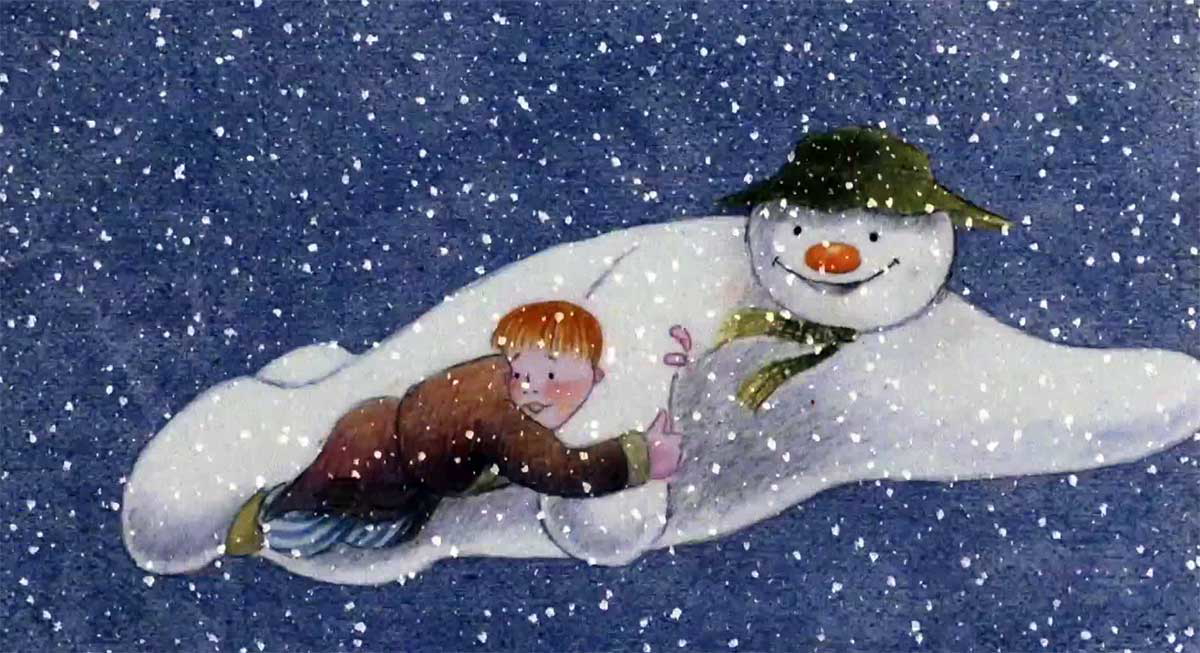
The Snowman, created in 1978 by Raymond Briggs, is different from any of the other characters who feature on this list. That is because the Snowman comes from a book without any words. His story, which is told in a children’s book that bears his name, is told through pictures alone.
The story is set in Brighton, England, on Christmas Eve. A young boy named James awakes from his sleep to see snow falling outside his bedroom window. At midnight, he puts on his dressing gown and rushes downstairs and outside. All alone, he proceeds to play in a fresh layer of snow and to build himself a snowman. His creation is no regular snowman, for after its completion, it magically comes to life and can fly through the air at will. At the touch of the Snowman’s hand, James finds that he can also fly, and the pair do so together. They see the sights of Brighton, of Norway, and even of the North Pole and the Aurora Borealis, before returning home.

The following morning, on Christmas Day, James wakes up to find that his snowman has melted. Only his hat, his scarf, his coal eyes, and his coat buttons are left in a pile on the lawn. It is implied that James had built the snowman the previous day, and that the snowman coming to life had been but a dream.
The meaning behind the Snowman’s story is more serious than expected. The melting of the title character was intended to introduce young children, in the gentlest possible way, to the idea of death and loss.
Despite its poignant message and emotional ending, The Snowman was made into an extremely popular short television film in 1982, and it is still shown on television every Christmas in the United Kingdom. Due to its beautiful animation and touching story, The Snowman has become a heartwarming festive favorite enjoyed annually by millions of families all around the country.
The film ranked at number 71 on the 100 Greatest British Television Programmes drawn up by the British Film Institute, and came third in Channel 4’s poll of 100 Greatest Christmas Moments. It notably features the song Walking in the Air, which was sung by Peter Auty, a choirboy of Saint Paul’s Cathedral.
5. Jo March (From Little Women by Louisa May Alcott)

Jo March comes from a book that was not necessarily intended as a Christmas story, but has become associated with the Christmas and winter seasons in general. Little Women, written by Louisa May Alcott in 1868, famously opens with the line, “Christmas won’t be Christmas without any presents.” The well-known and much-quoted sentiment is grumbled by none other than Jo, the eldest of the March sisters and debatably the most important character in the story.
Ultimately, the tales of the March sisters are full to the brim with moving quotes, poignant moments of sadness, and above all, beautiful expressions of family love. The story brings to life all manner of relationships, from heartwarming friendships to innocent romances. When combined, the attributes of the tale, whether read on a page or viewed on a screen, can bring tears and smiles to the best of us. This is, perhaps, the reason why Little Women, especially when paired together with its sequel, is so often enjoyed at Christmas.
Viewers surely cannot help but feel moved by one particular scene, in which Meg, Jo, Beth, and Amy willingly sacrifice their delightful Christmas morning breakfast, and deliver it instead to a local family living in poverty.
6. Clara (From The Nutcracker and the Mouse King by E.T.A. Hoffman)
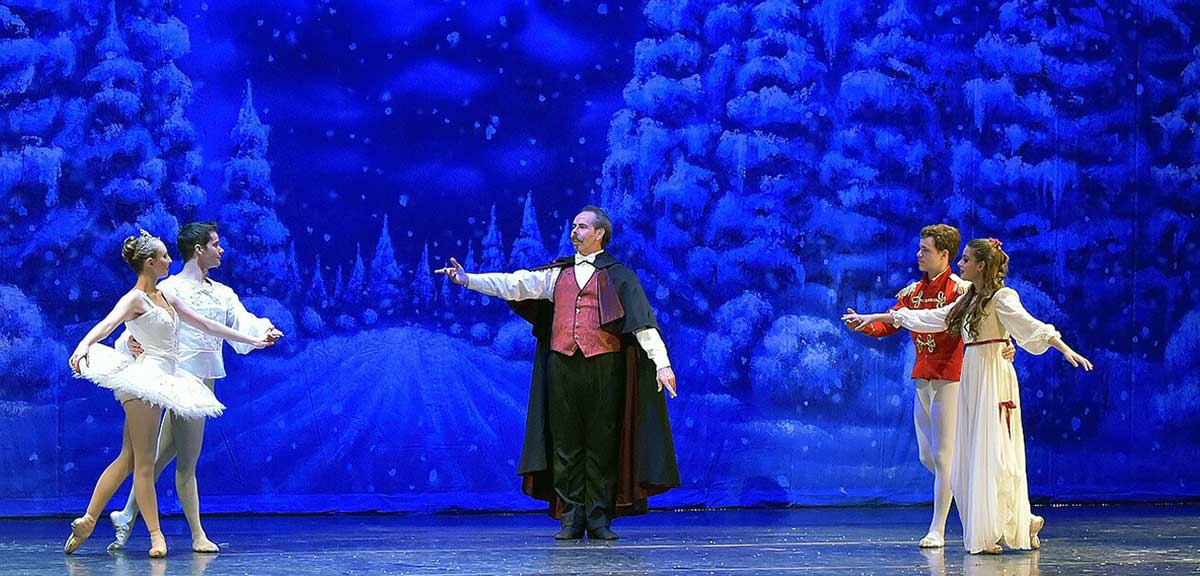
It is only in December that Clara, the young and innocent protagonist from The Nutcracker, comes leaping and pirouetting onto our stage and into our lives. Although she is now most famous for her yuletide appearances in Tchaikovsky’s ballet, Clara was originally created by an author named E.T.A. Hoffmann. His book was entitled The Nutcracker and the Mouse King. So, although Clara was originally a character to be read about on paper, she is now much better known as a character who should be seen dancing on a stage. Clara’s tale is the very epitome of the Christmas Eve excitement we all experienced in our childhood.
Of The Nutcracker as a ballet, the Encyclopaedia Britannica says the following: “The story of The Nutcracker is loosely based on the E.T.A. Hoffman fantasy story The Nutcracker and the Mouse King, about a girl who befriends a nutcracker that comes to life on Christmas Eve and wages a battle against the evil Mouse King.”
Some of the most famous pieces of music from The Nutcracker include the Dance of the Sugar Plum Fairy, the Waltz of the Flowers, and the Waltz of the Snowflakes.
In theaters all over the world each December, countless young girls will sit excitedly in the audience, dreaming of one day dancing the lead role of Clara in The Nutcracker.
7. Susan Walker (From Miracle On 34th Street by Valentine Davies)
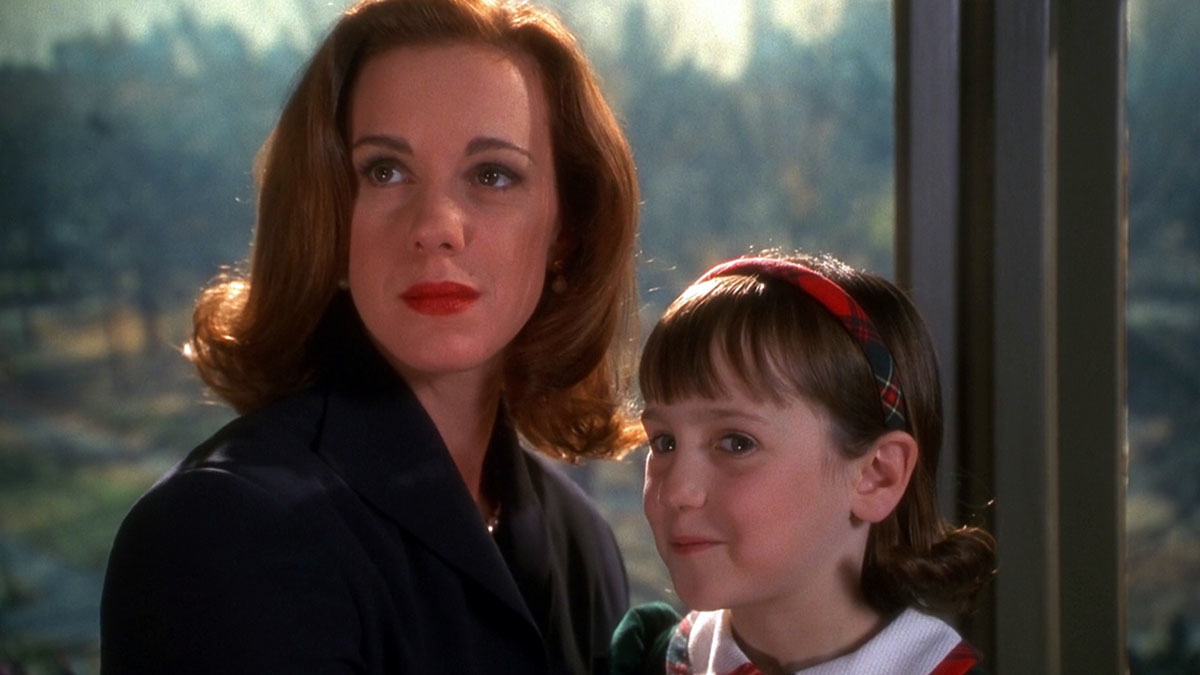
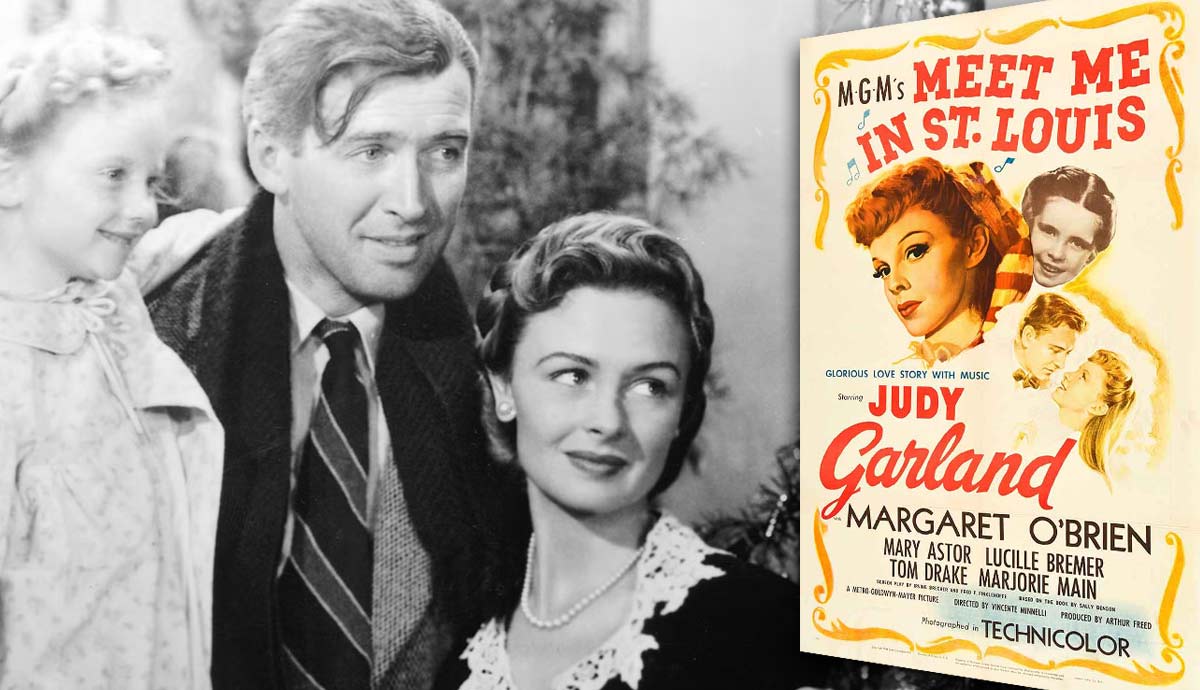
Did you know that the character Susan Walker not only appears in two extremely popular films, she also features as a protagonist in a book of the same name? It was the American film and television writer, Valentine Davies, who came up with the story for the original film and later penned a matching novella. So, first came the idea, then came the film in 1947, then came the book, then finally came the second film in 1994.
The two young actresses who brought Susan Walker to life were Natalie Wood and Mara Wilson. In both adaptations, Susan is depicted as a mature, reserved, and reasonable child who accepts the realities of life. One of these realities is that Santa Claus does not exist. However, her beliefs are shaken by the appearance of the magical and mysterious Kris Kringle, who begins to convince her that he is the real thing.
To many families, the story of Susan Walker and Kris Kringle, as told in Miracle on 34th Street, is a must-watch festive favorite. The only thing left to decide is which version of the film you prefer.
8. Aslan (From The Chronicles Of Narnia by C.S. Lewis)
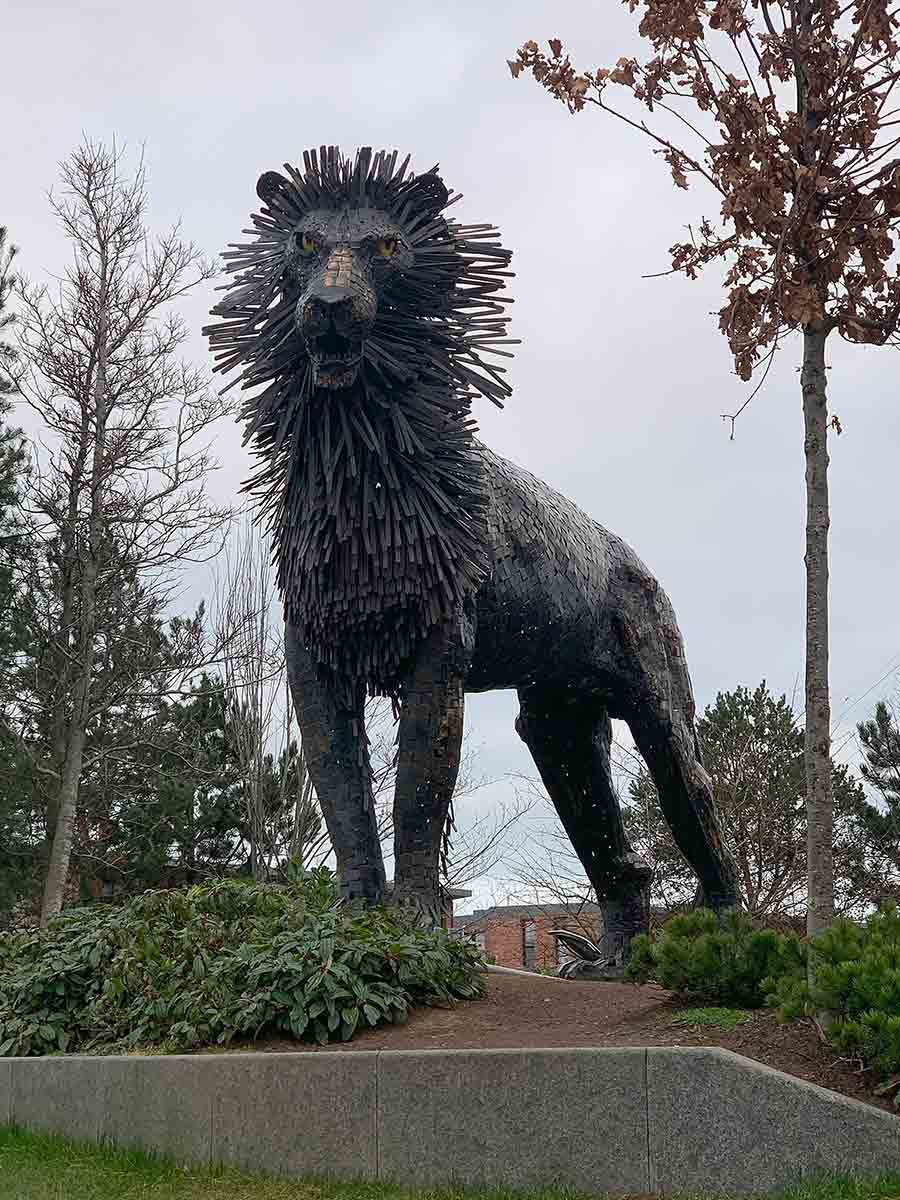
How could a fictional lion named Aslan have anything to do with Christmas? This majestic, leonine character is not only greatly associated with the most religious aspects of the festive season but he is also representative of the most important figure in Christianity, Jesus Christ himself.
Aslan was created by an English author and Anglican theologian named C.S. Lewis. He acted as one of the primary characters in The Chronicles of Narnia series, and is one of the two titular characters in the first instalment, The Lion, the Witch and the Wardrobe. Aslan is connected not only to Christmas but also to winter in general, for he lives in Narnia, a magical land where, in the third installment of the series, it is always winter but never Christmas.
C.S. Lewis describes Aslan as King of Beasts, and as the King above all High Kings in the land of Narnia. Since his creation, Aslan has been thought of as a force for good, and has often graced the pages of our books, the screens of our televisions, and the stages of our theaters.
In a letter written shortly before his death, Lewis explained why he had chosen to represent Jesus Christ through the character of Aslan: “I pictured Him (Jesus Christ) becoming a lion because the lion is supposed to be the King of beasts, Christ is called The Lion of Judah in the Bible, and I’d been having strange dreams about lions when I began writing.”