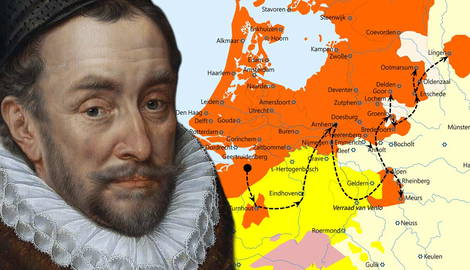

William the Silent launched one of the longest-running wars of independence in European history when he led the Dutch Revolt against Spanish Habsburg rule. Coinciding with the Thirty Years’ War, the Eighty Years’ War changed the balance of power in Northern Europe forever.
The Origins of the War (1550s–1568)
The lead-up to the Eighty Years’ War saw the United Provinces of the Netherlands gain economic power and influence throughout the Habsburg Empire. When the Burgundian state was incorporated into the Habsburg empire, the Netherlands became a semi-autonomous territory of Emperor Charles V. He was concerned about the rise of Protestantism in his realm and hoped to retain the support of Catholic nobles in the territory.
Charles’s successor, Philip II of Spain, gained a reputation as a reactionary who sought to limit Dutch autonomy. His ruthless anti-heresy measures even alienated some Dutch Catholics and strengthened the Protestant cause. Some nobles attempted to convince Philip to moderate his policies, arguing that he ran the risk of causing an open revolt. However, he doubled down, fearing that concessions would lead to the Protestants being emboldened to demand more from the Habsburg realm.
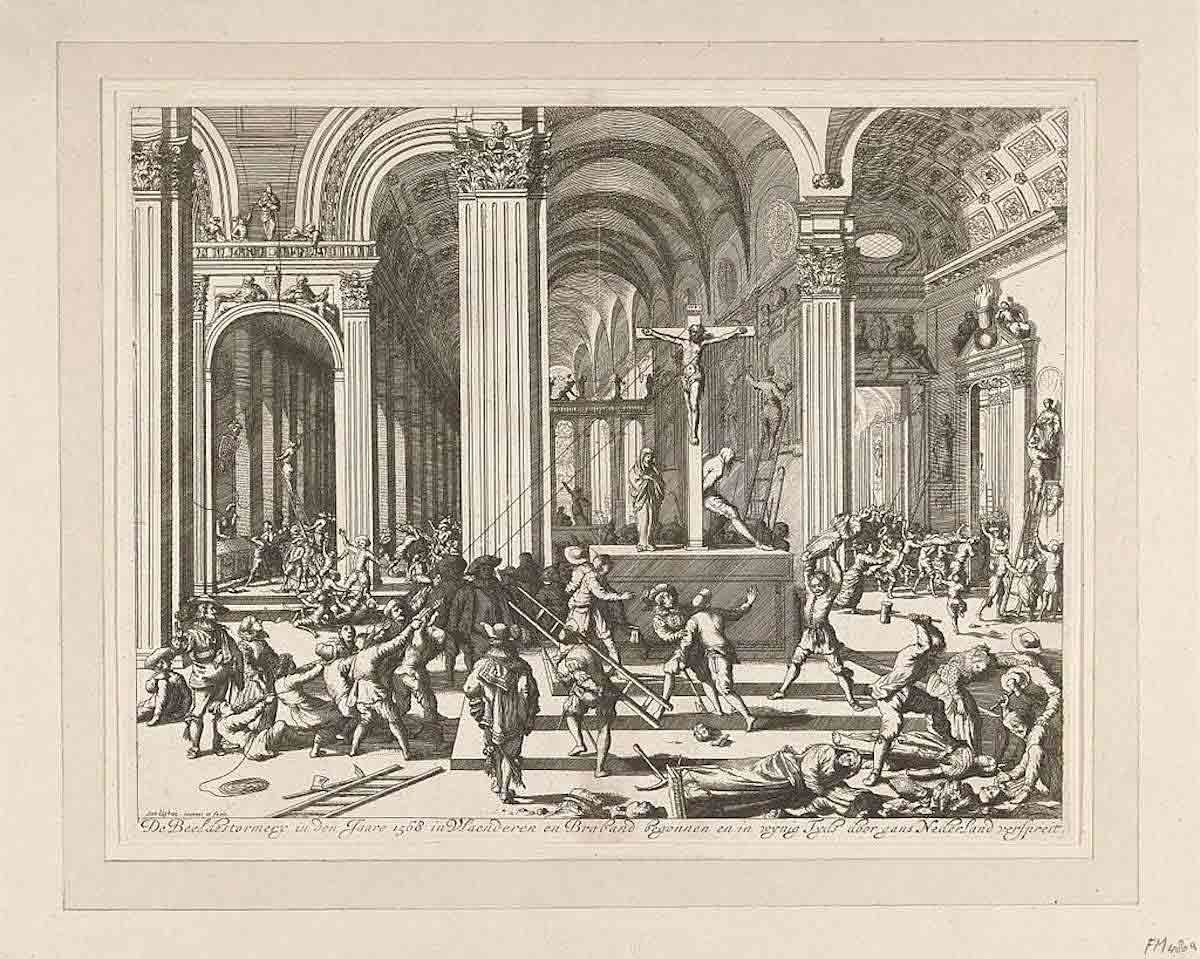
In 1566, mobs inspired by Calvinist preachers stormed through Flanders and Brabant, destroying Catholic churches in an event called the Iconoclastic Fury or Beeldenstorm. These riots led King Philip to order the Duke of Alba to crush the revolt. While Philip’s aunt Margaret of Parma attempted to make some concessions to the Protestants in her capacity as Governor of the Netherlands, Alba mercilessly cracked down on the rebels, establishing a Council that passed hundreds of death sentences on Protestants. He hoped to crush the revolt with the sword before it could spread and jeopardize Spain’s control over the provinces. However, his actions had the opposite effect.
Alba’s Terror and the Rise of William of Orange (1568–1579)
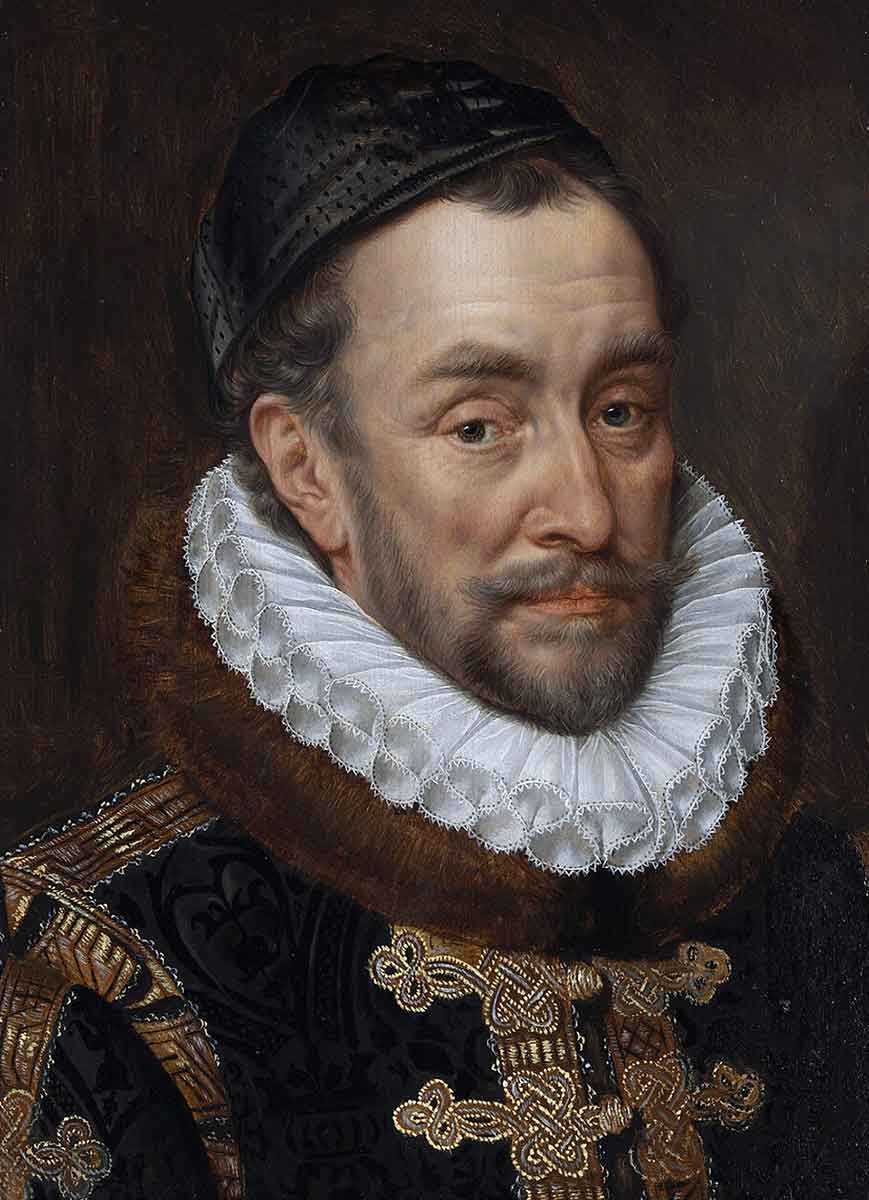
As a result of the Duke of Alba’s brutality, over 1,000 suspected rebels were executed by the Council of Troubles, including Counts Egmont and Hoorn, two well-respected Dutch aristocrats. Thousands more people went into exile and the Spanish seized businesses and property from people suspected of being involved in the Beeldenstorm. The crackdown inspired more Dutchmen to flock to the rebels, especially the Dutch nobleman William the Silent, the Prince of Orange.
Born in 1533 in the town of Dillenburg, William rose up the ranks of the Dutch nobility and became a favorite of Charles V. In 1559, he was made stadtholder (governor) of several provinces in the coastal Netherlands. However, he became embittered by the Spanish Crown’s increasing attacks on religious freedom in the Netherlands. While he was a Catholic, he was an opponent of Alba and began to distance himself from Spain. After the formation of the Council of Troubles, he led an army of Dutch Protestants in exile called the Geuzen to fight against the Spanish garrison. The initial attempts at revolt failed after the Battle of Jemmingen, but William remained patient and sought to consolidate the different rebel factions behind him.
In 1572, a flotilla of Dutch privateers seized the port city of Brielle, leading to the creation of a rebel government there. William hoped to gain support from French Protestants (Huguenots), but they had been crushed in the St. Bartholomew’s Day Massacre. The Spanish response, which involved torching the cities of Naarden, Zutphen, and Antwerp, led to a surge in support of the rebels. By 1576, northern and southern provinces, including areas with Catholic majorities, united to sign the Pacification of Ghent, demanding that the Spanish leave the Netherlands entirely.
The Birth of the Republic (1579–1588)
Despite the fact that the Pacification of Ghent was initially successful, the unity it created did not last long. The Catholic-dominated southern provinces feared that they would be forced to accept Calvinist rule permanently and decided to reconcile with Spain in 1579 as part of the Union of Arras. William was concerned and he reacted by overseeing the creation of a union of the northern provinces called the Union of Utrecht. This union became the political base for the establishment of the independent Netherlands.
In 1581, the States-General of the United Provinces passed the Act of Abjuration, which declared independence from Spain. Rather than establishing a purely Protestant state, the declaration asserted that Spain had lost its right to rule the Netherlands due to its repression. The document would serve as an inspiration for future Declarations of Independence.
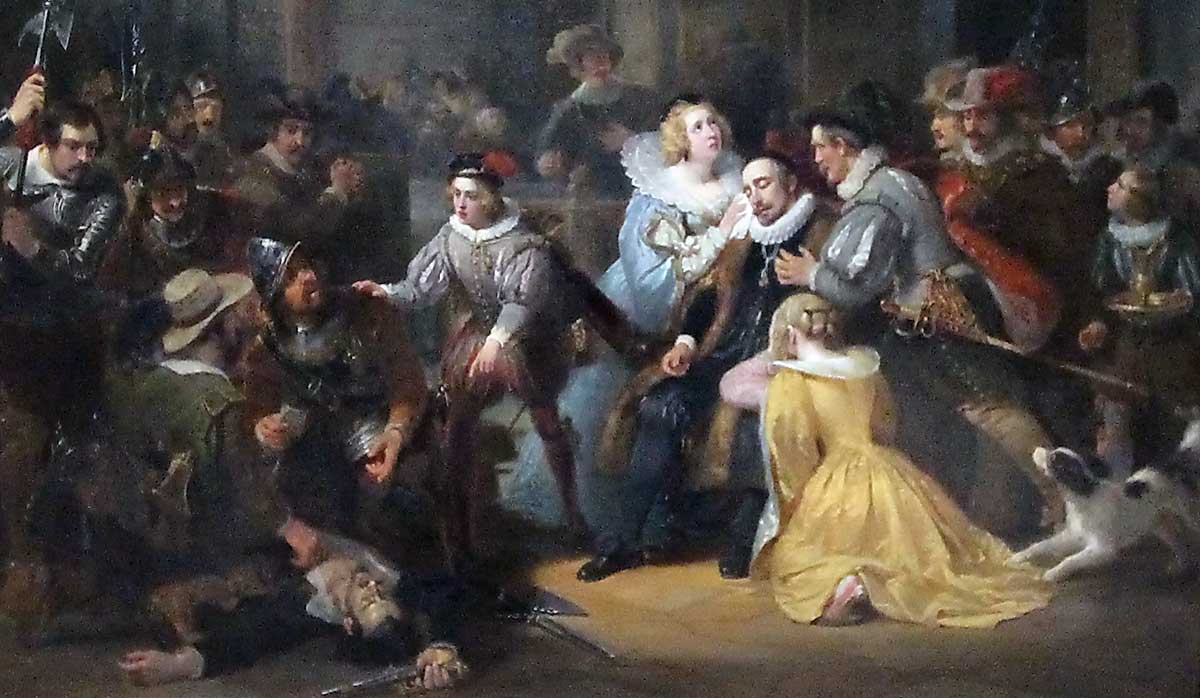
The following year, William the Silent was assassinated by the Burgundian Catholic Balthasar Gérard who was loyal to Philip II and was believed to have acted on Spanish orders. The Dutch were horrified but insisted on continuing to fight for their independence and looked for a new sovereign. Maurice of Nassau, his son, took up leadership of the army and continued to fight the Spanish.
Turning the Tide: Dutch Resilience and Spanish Overreach (1588–1609)
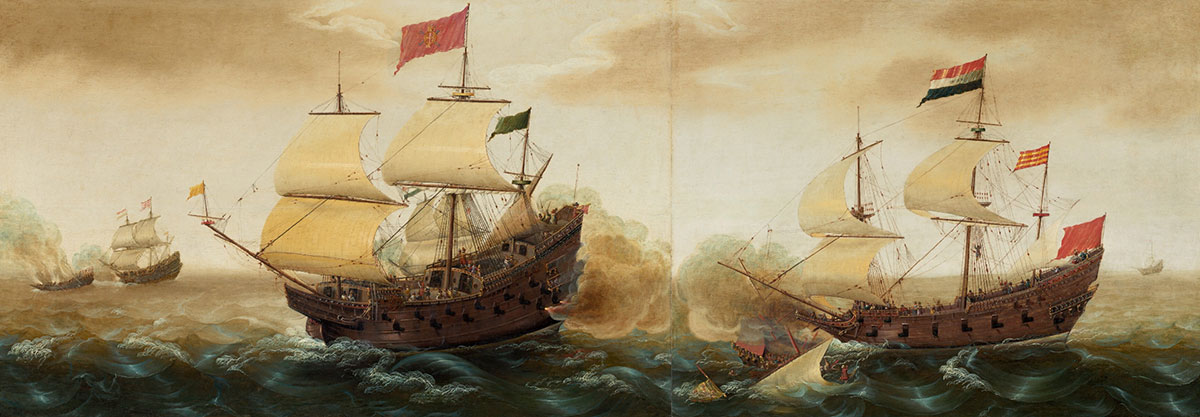
While Spain had major advantages on the ground because of the size of its army, it struggled to hold off Anglo-Dutch naval attacks. Sympathy for the Dutch rebels ran high in England, which aimed to reduce Catholic influence within its own borders. Philip II hoped to oust Elizabeth I from the English throne and restore the kingdom to Catholic rule. To this end, he assembled an armada of over 130 ships that would sail to the English coast and escort a Spanish army in the Low Countries across the waters to invade England.
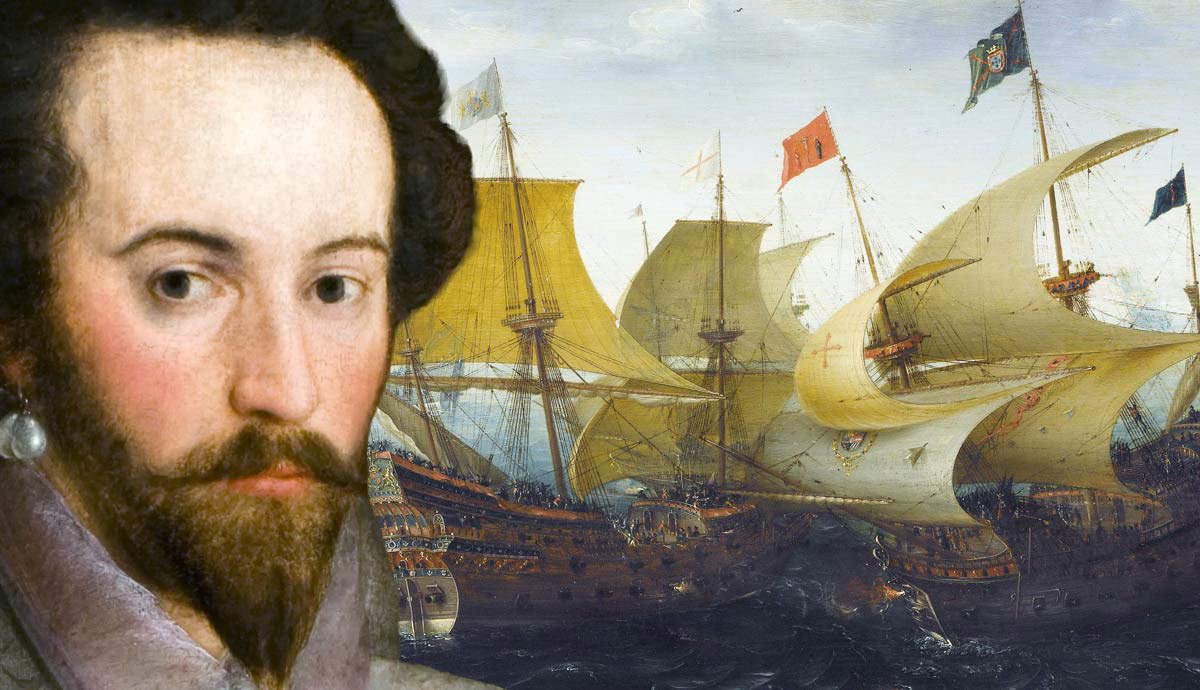
The Spanish Armada failed to accomplish its mission. Sir Francis Drake and Lord Howard of Effingham threw the Spanish fleet in disarray, and North Sea storms finished the armada off. The Dutch assisted, eager to work with the English to defeat Spain. On land, Maurice of Nassau and his brother, William Louis, transformed the Dutch army into a modernized, well-trained force. This new army captured key strongholds such as Breda, Zutphen, and Deventer, gradually reclaiming territory previously lost. At sea, the Dutch fleet continued to prey on Spanish galleons with the help of English privateers. Spain found itself under enormous pressure as the Dutch steadily gained the upper hand.
Philip II had died in 1598 and was succeeded by his son, Philip III. Spain’s overextension across Europe and the Americas eroded its ability to sustain the war. Mounting debts, revolts in Portugal, and endless commitments in France and Italy left Philip III’s court desperate for a break. By 1609, exhaustion on both sides led to the Twelve Years’ Truce, which effectively acknowledged the independence of the Dutch Republic. The truce was more than a pause in fighting. It was a recognition that Spain could not completely overwhelm the Dutch and would have to consider negotiating with the States General.
A War of Faith and Finance: The Final Phase (1621–1648)
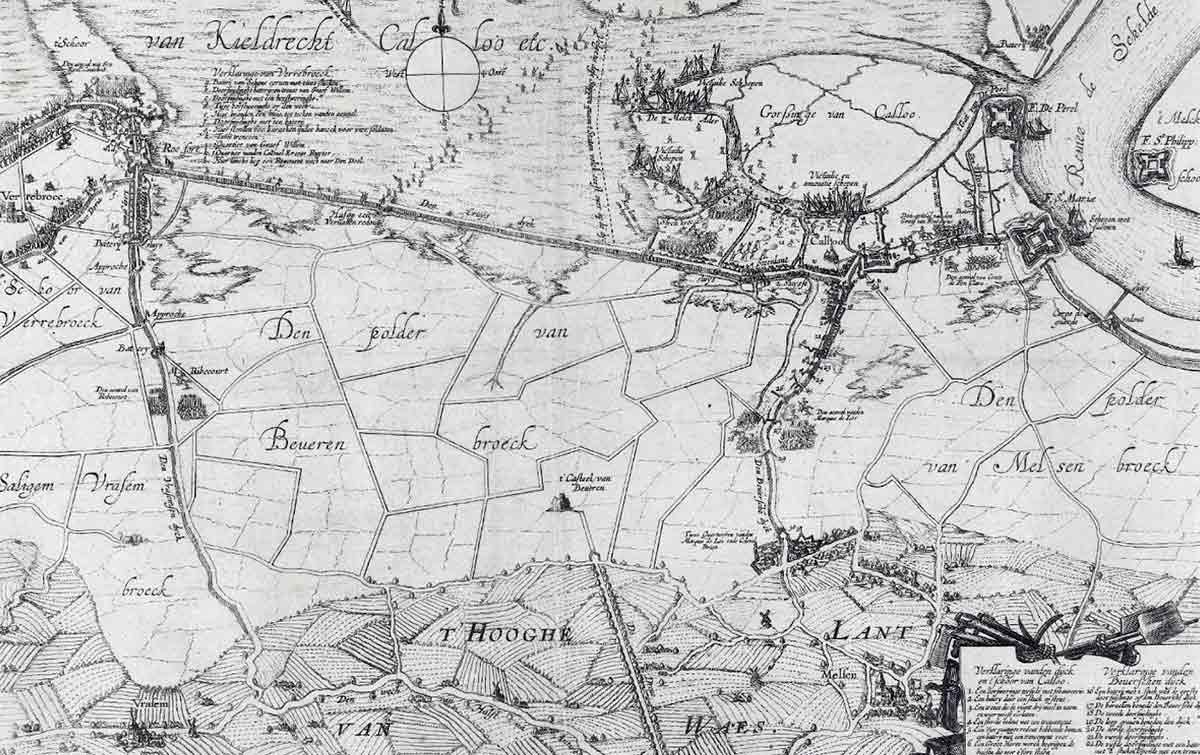
The Twelve Year Truce expired in 1621, leading to the second stage of the war which took place concurrent with the Thirty Years War that was devastating Central Europe at the time. Spain, now under Philip IV and guided by his chief minister Count-Duke Olivares, sought to restore imperial dominance and Catholic unity. On the other hand, the Dutch were confident that they could hold their own and had developed a formidable navy with global reach. When the fighting broke out again, Spanish convoys from the Americas proved particularly vulnerable.
On land, the fighting proved to be attritional. The Dutch army used siege tactics to eliminate any Spanish garrisons deemed a threat to the republic’s major population centers. Spain, in turn, sent reinforcements and aimed to wear down the smaller Dutch army. Sieges at strategic locations such as Maastricht and ’s-Hertogenbosch gave the Dutch the upper hand. However, the Dutch were unable to move southwards because Spanish control of the southern provinces was too strong. Additionally, a brief attempt at an alliance between the Dutch and the French failed to shift the battle lines in any meaningful way.
However, Madrid was facing serious trouble. A French-backed revolt in Catalonia distracted the Spanish and they faced additional threats of internal chaos if their war in the Netherlands continued. Overseas, the Spanish were losing more colonies to Dutch attacks. Both countries’ treasuries were running empty, meaning that peace talks became inevitable.
The Peace of Münster (1648)
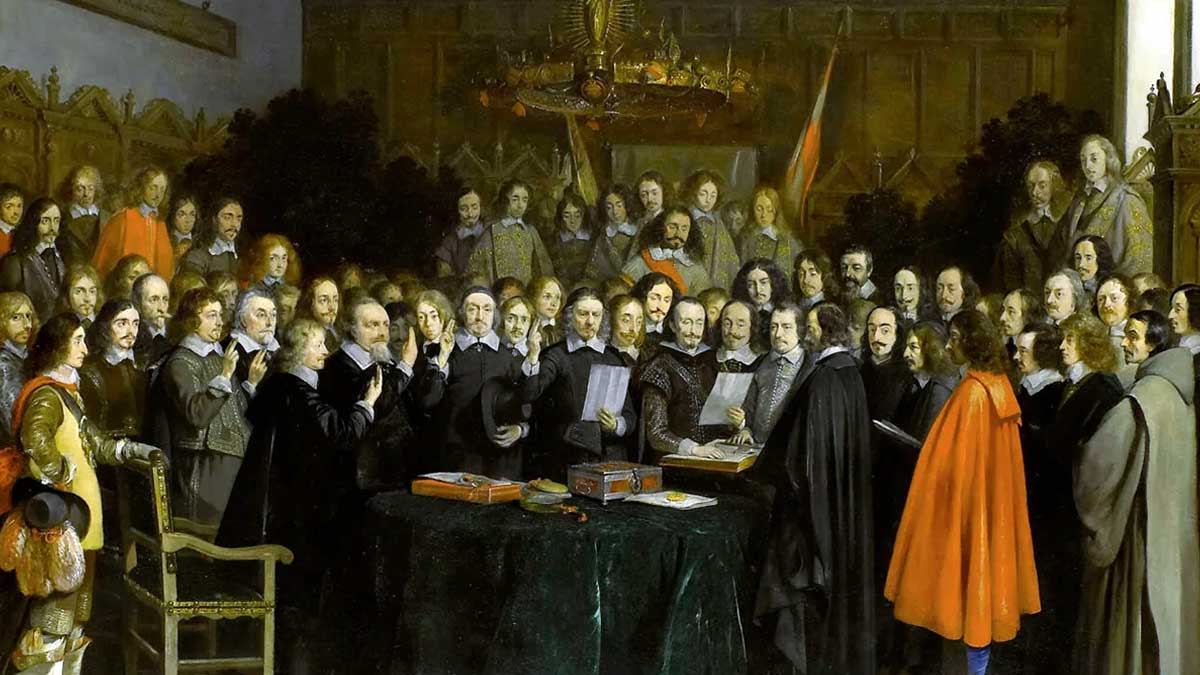
Negotiations between representatives of Spain and the Dutch Republic began in January 1648. The States General sent eight delegates from most of the provinces while the Spanish were represented by Gaspar de Bracamonte, 3rd Count of Peñaranda. These negotiations initially went smoothly because both sides were so exhausted with fighting. At the same time, delegates from several other European states were meeting to end the Thirty Years’ War with the Peace of Westphalia and the establishment of a new order in Europe.
Due to the French insisting on additional terms being put into the treaty, Spain and the Dutch Republic had to create a separate peace process. This angered the French, who argued that sidelining them would violate the terms of the Franco-Dutch alliance. While Spain concluded peace with the Dutch, the Franco-Spanish War would continue until 1659.
On January 30, 1648, the peace treaty terms were finally agreed to. Initially, several Dutch provinces, including Zeeland and Utrecht, refused to ratify the agreement on the basis that it was too favorable to Spain. Many hardliners insisted that military campaigns continue until the conquest of the southern Low Countries. However, their doubts were overcome and the treaty was formally signed at a conference on May 15, 1648.
The Netherlands had secured recognition of its independence and became part of the Westphalian system of nation states. Peace also gave the Republic an ability to expand its power, leading to the Dutch developing one of Europe’s strongest maritime empires.