Physicalism, the thesis that mental states are identical to physical states, was a first step towards taking empirical studies seriously when trying to unravel the secret of our inner world. By the 1980s, the advent of cognitive science raised the stakes for philosophers to accommodate their theories about the nature of mental states—or risk becoming obsolete. The time was ripe for Paul Churchland, an engineer turned philosopher, and Patricia Churchland, a philosopher turned neuroscientist, to remove the gloves and introduce eliminativism.
What Is Eliminativism?
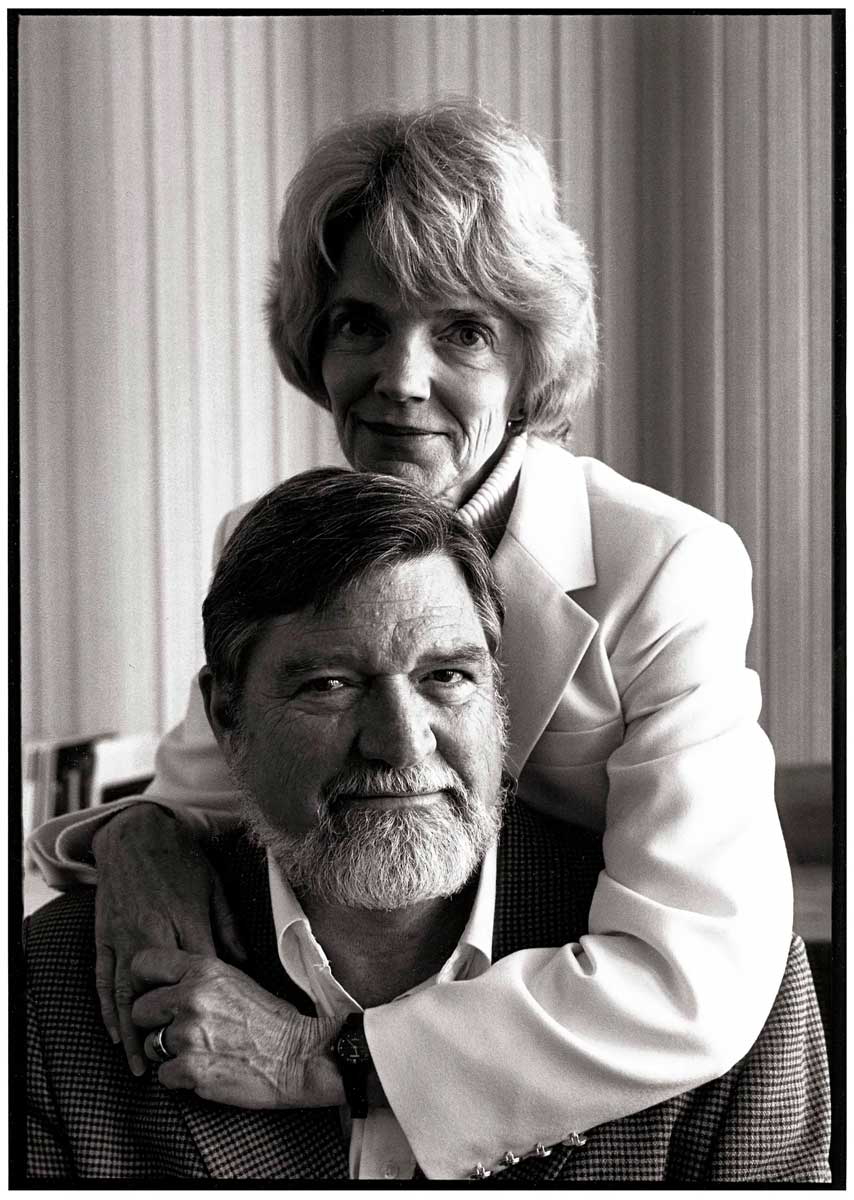
The term “eliminative materialism” was first introduced by James Cornman in a 1968 article entitled “On the Elimination of ‘Sensations’ and Sensations.” The idea behind the eliminativist position—that concepts referring to mental states may be abandoned due to the progress of science—was already presented in the works of the prominent analytic philosopher W. V. O. Quine. Nonetheless, the most famous proponent of this position is, undoubtedly, Paul Churchland. In his 1979 book Scientific Realism and the Plasticity of Mind, he flirted with the idea of eliminativism. Still, he explicitly formulated it and endorsed it in his 1981 article “Eliminative Materialism and the Propositional Attitudes.” In it, Churchland argues that propositional attitudes, which supposedly pick out mental states like beliefs and desires, are blunders to be eliminated by mature neuroscience.
In other words, beliefs and desires are like phlogiston, the substance assumed to be released during combustion. However, thanks to French chemist Lavoisier, who did many experiments in the 18th century, we now know that phlogiston doesn’t exist. Rather, his previous colleagues essentially described the oxidation process but lacked relevant conceptual and experimental resources to understand it correctly. When applied to the domain of philosophy of mind, Churchland claims that what we call “beliefs” and “desires” in our ordinary interaction are processes at the neuronal level that could be described in neuroscientific terms and, therefore, swapped for the experimentally validated neuronal correlates.
Neurophilosophy
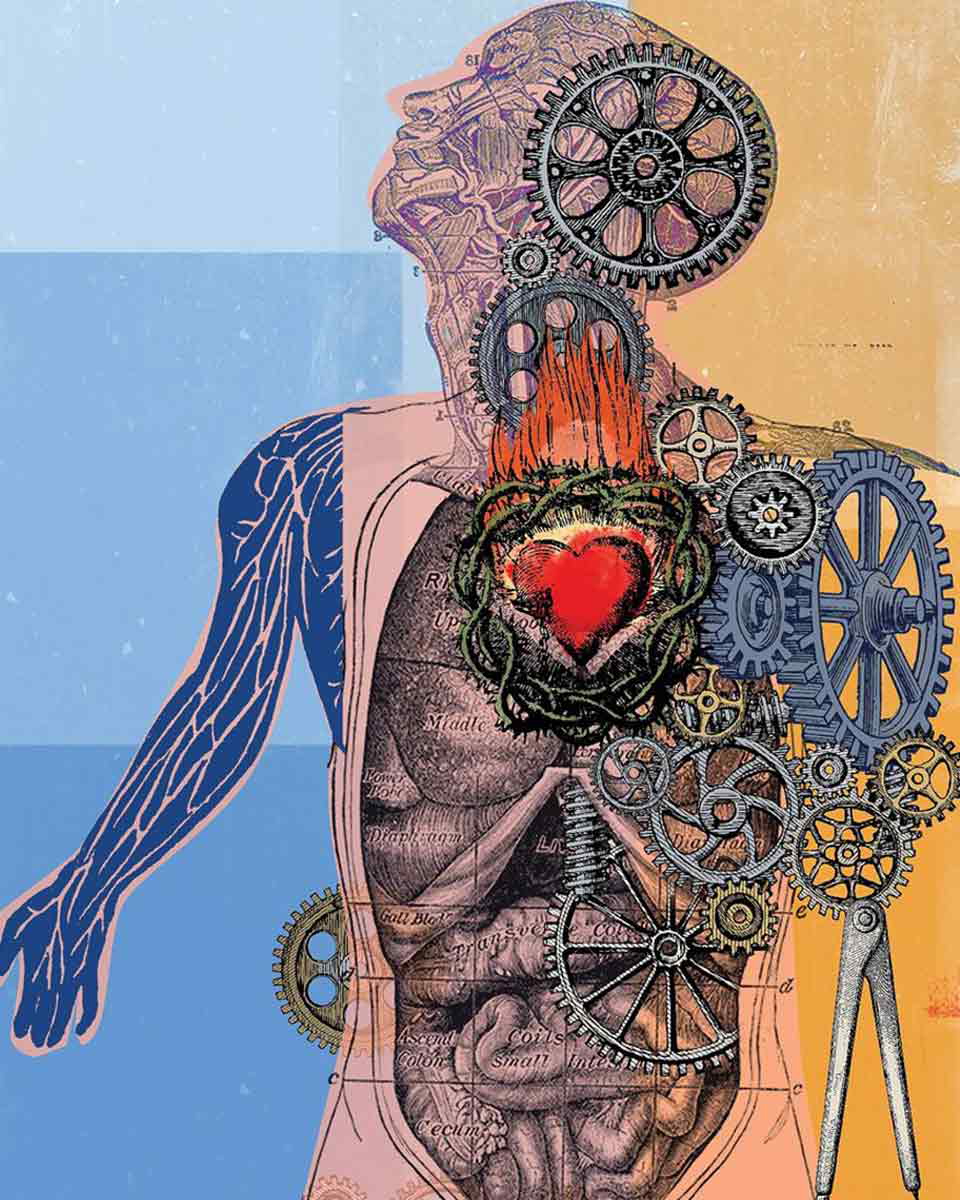
Paul Churchland’s spouse, Patricia Churchland, made out of eliminativism a whole philosophical project, namely neurophilosophy. Neurophilosophy bridges the gap between conceptual problems in philosophy and methodological issues in neuroscience by integrating the two fields. At the core of neurophilosophy is the idea first conveyed through eliminativism that philosophical concepts related to the mind will be swept off by an increasingly anatomically and physiologically accurate image of the human brain. If you think that this couple is just kidding and arguing for the sake of arguing, consider how they communicate in everyday situations, as recalled in their interview for The New Yorker:
One afternoon recently, Paul says, he was home making dinner when Pat burst in the door, having come straight from a frustrating faculty meeting. “She said, ‘Paul, don’t speak to me, my serotonin levels have hit bottom, my brain is awash in glucocorticoids, my blood vessels are full of adrenaline, and if it weren’t for my endogenous opiates, I’d have driven the car into a tree on the way home. My dopamine levels need lifting. Pour me a Chardonnay, and I’ll be down in a minute.’
What Does Eliminativism Say About the Mind-Body Problem?

While dualism traditionally holds that mind and body are different substances and physicalism holds that mind and body are essentially the same thing, eliminativism strives to expel mind-related concepts at the ontological level. These concepts form a part of folk psychology, an implicit theoretical framework that we employ to explain and predict the behavior of others.
Many philosophers worked under the assumption that folk psychology underlines our practice of attributing mental states to our peers by using mind-related concepts. For instance, Wilfrid Sellars was convinced that we don’t have direct access to our mental states but that we cleave closer to our mind through the proto-theory we inherited from the culture we belong to. Each culture has its peculiar rituals, rules, taboos, and similarities. This helps us not only navigate the environment but also understand the reactions of others—or their absence in some cases.
When I see you shivering while watching the basketball semi-finals at the Olympic Games, I explain that behavior in terms of hopes that your team will score a victory and predict that you will want to celebrate it once the victory has been secured. In the philosophy of language, the propositions that contain such hopes, desires, and beliefs are referred to as propositional attitudes.
Eliminativists think that folk psychology is a wrong and outdated framework that served its purpose before the scientific progress of the 20th century and the burgeoning of neuroscience. Therefore, folk psychology should be expelled to the junkyard of disproven scientific theories. Strictly speaking, propositional attitudes do not pick out anything—there are no such things as beliefs and desires. This makes eliminativism an ontologically radical position about the nature of mental states.
What Does Eliminativism Say About Consciousness?
The conundrum of consciousness is notorious in the philosophy of mind. The conundrum relates to the fact that even though our scientific tools improve over time and give us a more nuanced understanding of mental states, it still seems that the subjective or phenomenal aspect of consciousness is untouched by such tools. In other words, the immediate, first-person experience of a certain quality of ‘what it is like’ or ‘what it feels like’ is not liable to an objective explanation. It somehow remains out of the scope of any scientific theory. This is what philosopher David Chalmers calls the hard problem of consciousness as opposed to the easy problem of consciousness.
Eliminativists believe that the easy problem of consciousness is solvable by mature neuroscience. What about the hard problem, though? Eliminativism implies that our ordinary concept of subjective, phenomenal consciousness is also misguided like the rest of mind-related concepts. If we look deep enough, we may uncover that no particular process or phenomenon conveys the specific quality of what it is like to be us. Maybe we are simply struggling to accept that being a meat machine is all there is to us.
Criticism #1 of Eliminativism

As is usually the case in philosophy, each position, argument, or idea has its fierce naysayers. Eliminativists, being quite resolved to land a knockout punch to assumptions that lie at the core of the philosophy of mind, needed to endure many blows. We will cover some of the influential objections to Eminativism and try to briefly address and defend them.
The first objection that comes to mind is that eliminativism might be self-refuting. If there are no beliefs, how come the Churchlands believe their position is better than the others? Some philosophers would say that making any kind of assertion, including that there are no beliefs, requires the possession of beliefs.
This may look like a promising line of criticism. Nonetheless, these philosophers must presuppose that beliefs necessarily exist, which itself presupposes that eliminative materialism is necessarily false. This allows eliminativists to defend themselves by arguing that the self-refutation critics beg the question against eliminativism.
Criticism #2 of Eliminativism

The second criticism builds on the defense of folk psychology as a predictively successful theory. We frequently depend on folk psychology, and more often than not, it accurately guides us. This reliance proves to be effective in understanding and guessing the intentions and mental states of others and making plans involving them. Arguably, our day-to-day communication would not be as smooth as usual without folk psychology. We would be living in a strange and uncertain world. Philosophers argue against eliminativism by pointing out that folk psychology should be conceived as an inference to the best explanation when dealing with the inner workings of people’s minds. Maybe folk psychology makes us all look like fortune tellers, but we get something right.
Eliminativists, however, claim that the history of science is filled with examples of predictively successful theories that turned out to be false; for example, vitalism or vital force theory, which was popular in the 18th and 19th centuries.
According to this theory, the biological processes of living organisms could not be fully explained by the same physical and chemical principles that apply to inanimate objects; instead, they required a unique, non-physical force that governed life functions. Vitalism was refuted by obtaining empirical evidence. No biologist would want to be labeled as a vitalist, even though vitalism has been considered to be an instance of the inference to the best explanation for a while. Why should we have a soft spot for folk psychology, then?