
Following centuries of speculation, in 1960, the discovery of the archaeological site of L’Anse aux Meadows in Newfoundland, Canada, proved that the Vikings had visited the New World around 500 years before Columbus. Even before this discovery, many amateur archaeologists and Norse enthusiasts “discovered evidence” for a much broader Norse presence in America. Among the most prolific was Gloria Farley, a citizen scientist who spent 50 years documenting not only evidence for the Norse in America, but for a range of pre-Columbian visitors from ancient Egypt, the classical Mediterranean, and Celtic Iberia. What are Farley’s tantalizing claims, and why is significant pre-Columbian trans-Atlantic contact rejected by the mainstream academic community?
Norse Exploration: Discovering Vinland
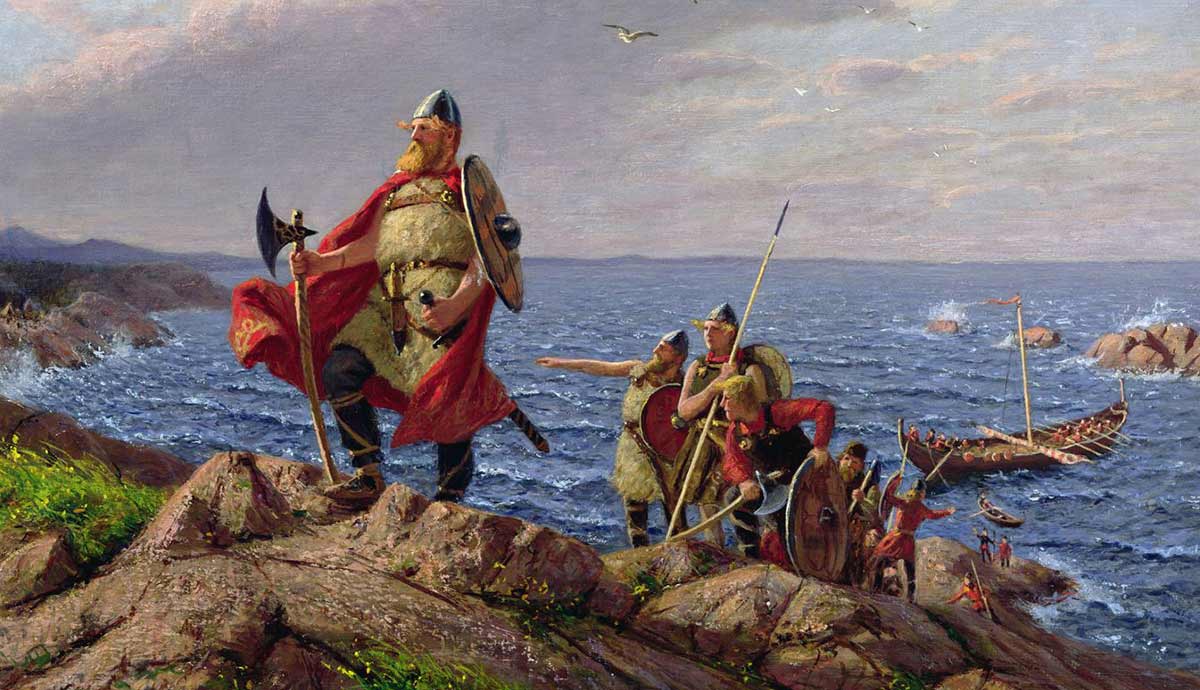
According to the Saga of the Greenlanders and the Saga of Erik the Red, both written in the 13th century, around the year AD 1000, Viking explorer Leif Erikson set sail for a rich new land to the west of Greenland. He had heard about it from a man called Bjarni Hergólfsson, who stumbled across it when he was blown off course. Erikson set off and encountered several inhospitable lands before finding the lush region described, rich in green pastures, dense forests, and large salmon. The explorer reportedly called the area Vinland due to the presence of wild grapes.
The Greenlanders and other Scandinavians reportedly made several expeditions to Vinland in the following years to obtain valuable goods to bring back to Europe. This seems verified by other references in the surviving sources. In 1073, Adam of Bremen wrote a history of the archbishops of Hamburg-Bremen. In it, he recorded that the Danish king had told him about an island in the ocean called Vinland, where grapes grow of their own accord.
Norumbega: The Lost Norse City
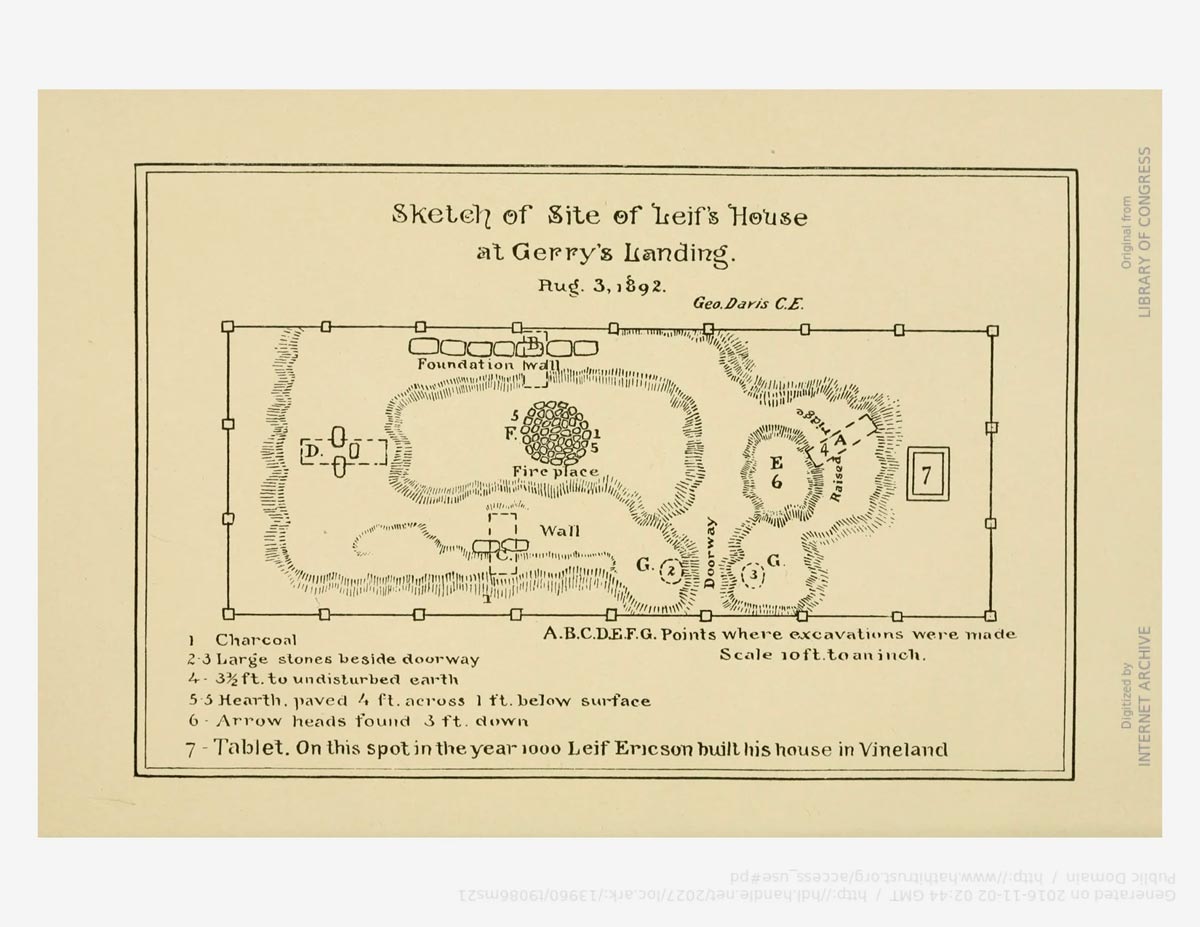
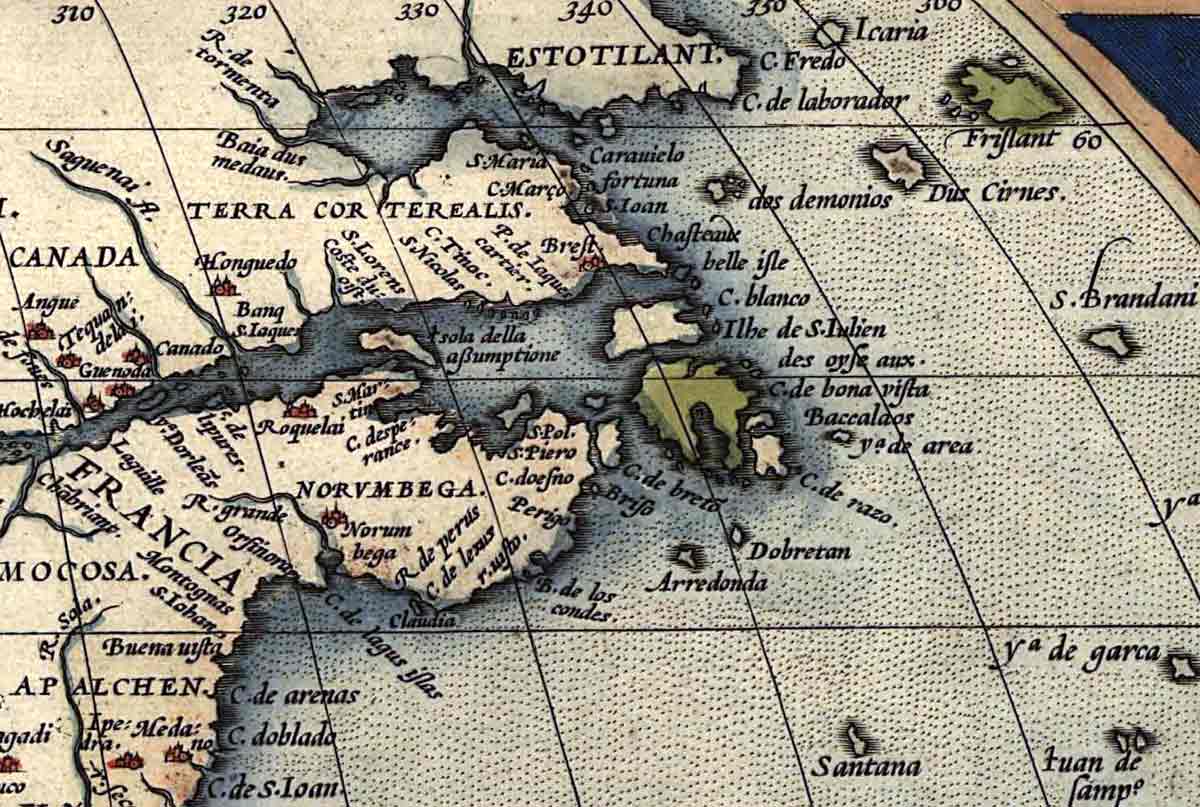
Once Columbus officially “discovered” the Americas at the end of the 15th century, many started to believe that Erikson’s Vinland must be North America. It was not long before myths of the Vikings in North America emerged. For example, in the 16th century, some claimed that a Norse settlement called Norumbega was established in the Boston region. It was imagined as a lone, prosperous outpost. Norumbega was included on maps in the 16th century.
Despite early exploration finding no evidence of the city, the belief that the Vikings had at least visited North America remained popular. In 1887, a statue of Leif Erikson was erected in Boston in the belief that New England was the legendary Vinland.
In 1890, Eben Horsford, a chemist and science professor at Harvard, famous for inventing baking soda, conveniently claimed to have found what he dubbed Leif Erikson’s house near his home in Cambridge, Massachusetts. He then claimed to have found Norumbega itself further west. Horsford published several works on the topic, including “The Discovery of the Ancient City of Norumbega.” While the discoveries were popular among locals, they have since been rejected by academics.
Exploring Upriver: The Kensington Runestone
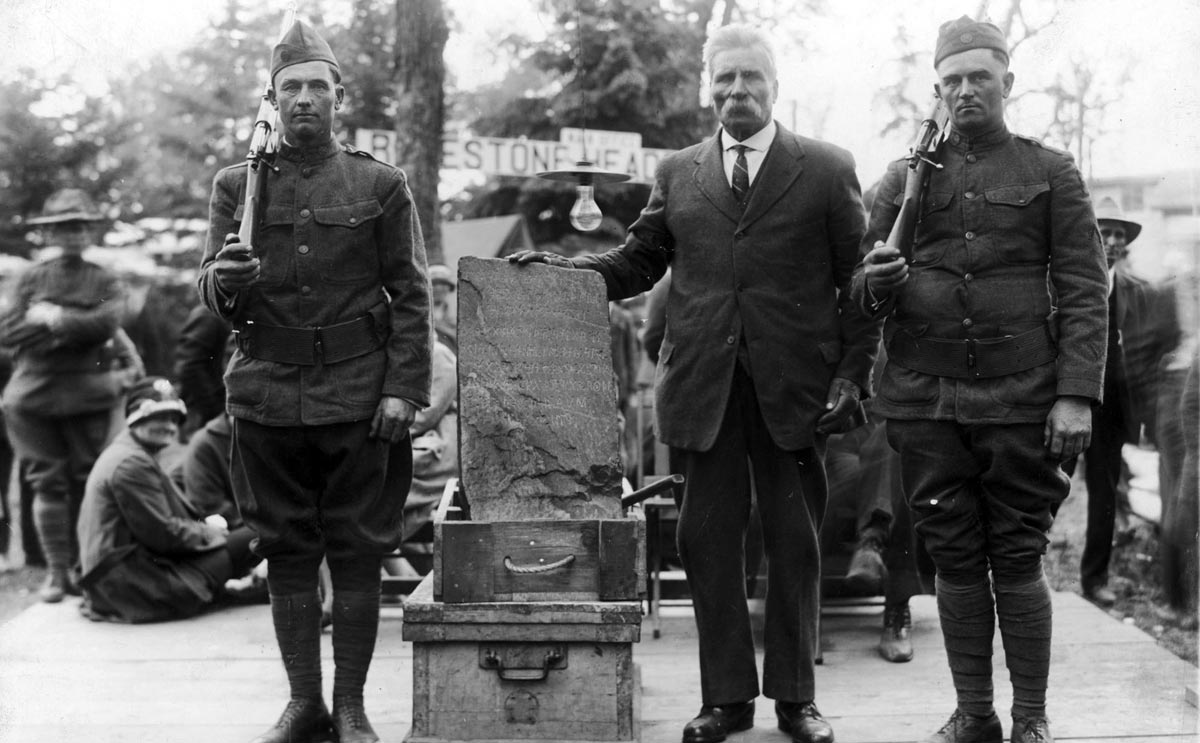
Significantly further inland in Minnesota, in 1898, a Swedish immigrant named Olof Ohman found a stone lying face down on his property with unusual markings. Originally assumed to be Native American, the markings were later recognized as Nordic runes. A translation of the runes records a dark tale of an expedition to the region.
Eight Gotlanders and 22 Northmen on (this) exploration journey from Vinland far to the west. We had a camp by two (shelters?) one day’s journey north from this stone. We were fishing one day. After we came home, found 10 men red from blood and dead. Ave Maria save from evil. There are 10 men by the inland sea to look after our ships fourteen days journey from this peninsula. Year 1362.
If the Kensington Runestone is a real artifact, it preserves a fascinating story of Norsemen visiting the New World regularly for centuries and traveling upriver into inland America. But the authenticity of the stone has been questioned for several reasons, such as the weathering of the inscription and some details of the language. The suggestion is that Ohman forged the stone, though he seems to have lacked the skill to do so. Plus, he did not ask for money or try to sell the runestone. While generally dismissed, the authenticity of the Kensington Runestone remains tantalizingly inconclusive.
American Vikings: The Heavener Runestone
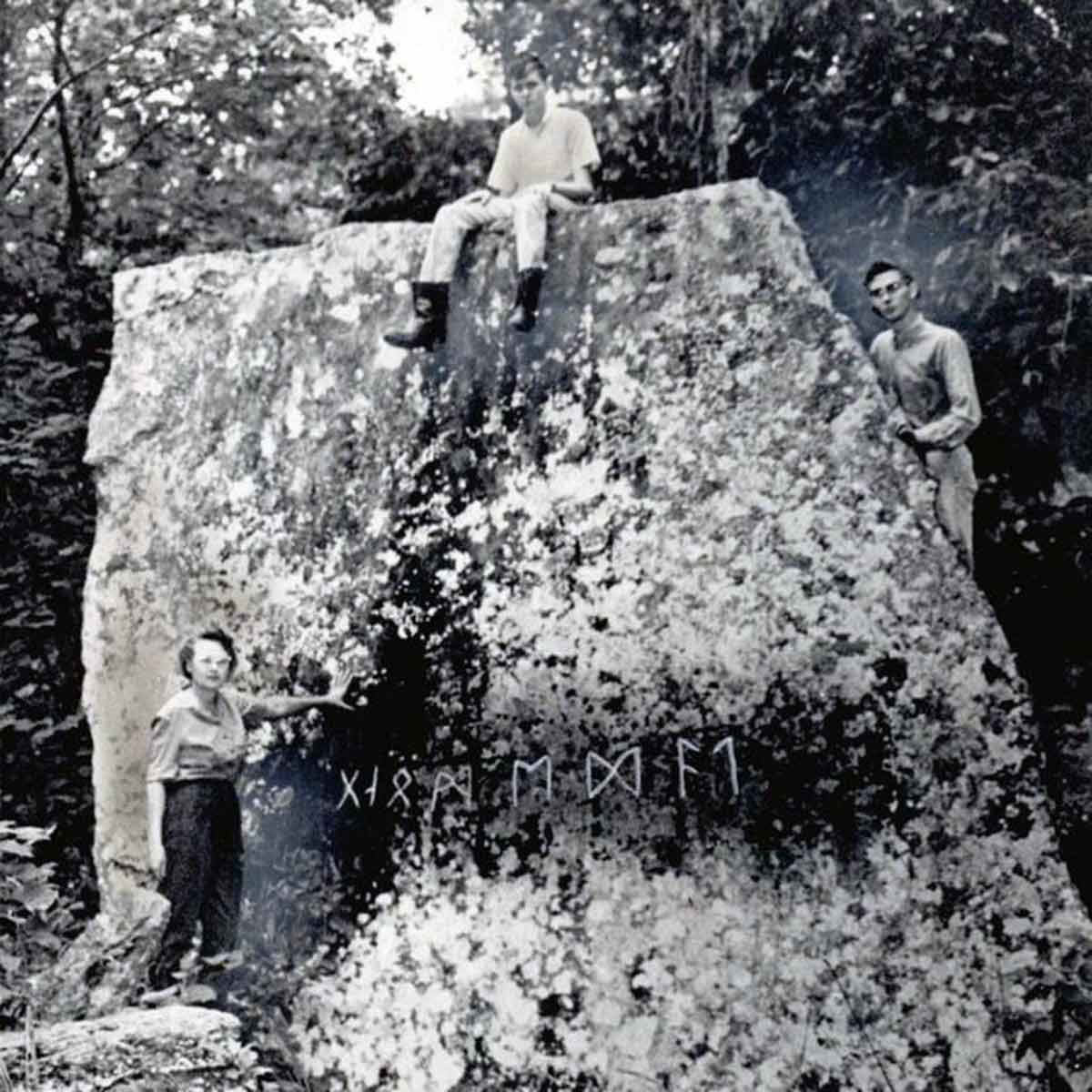
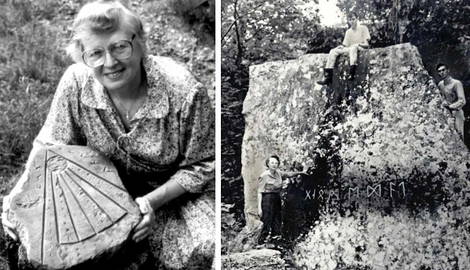
A similar runestone was discovered in the foothills of the Ouachita Mountains, just a few miles south of Heavener, Oklahoma. Reportedly known about since the 1830s and assumed to be a Native American artifact, in 1923, the Smithsonian documented the stone and identified the inscription as Norse runes. The inscription is in a mix of Elder Futhark runes, used between AD 300-800, and Younger Futhark runes, used during the Viking Age. The inscription was initially believed to read GNOMEDAL or GLOMEDAL and be a reference to the name of the valley.
Gloria Farley, a citizen enthusiast from the area, heard about the runestone in her youth. Visiting in 1951, she was determined to uncover its secrets. Farley believed that she made a breakthrough when she contacted a man named Alf Monge, who was familiar with runic inscriptions and Norse calendars. He proposed that the inscription was not a name, but a date, specifically November 11, 1012. For Monge, this explained the mix of Elder and Younger Futhark runes, as this was a date formula used in ancient Nordic cryptic texts. The fact that the inscription uses the Christian dating system would be possible, as the Greenlanders converted to Christianity around AD 1000.
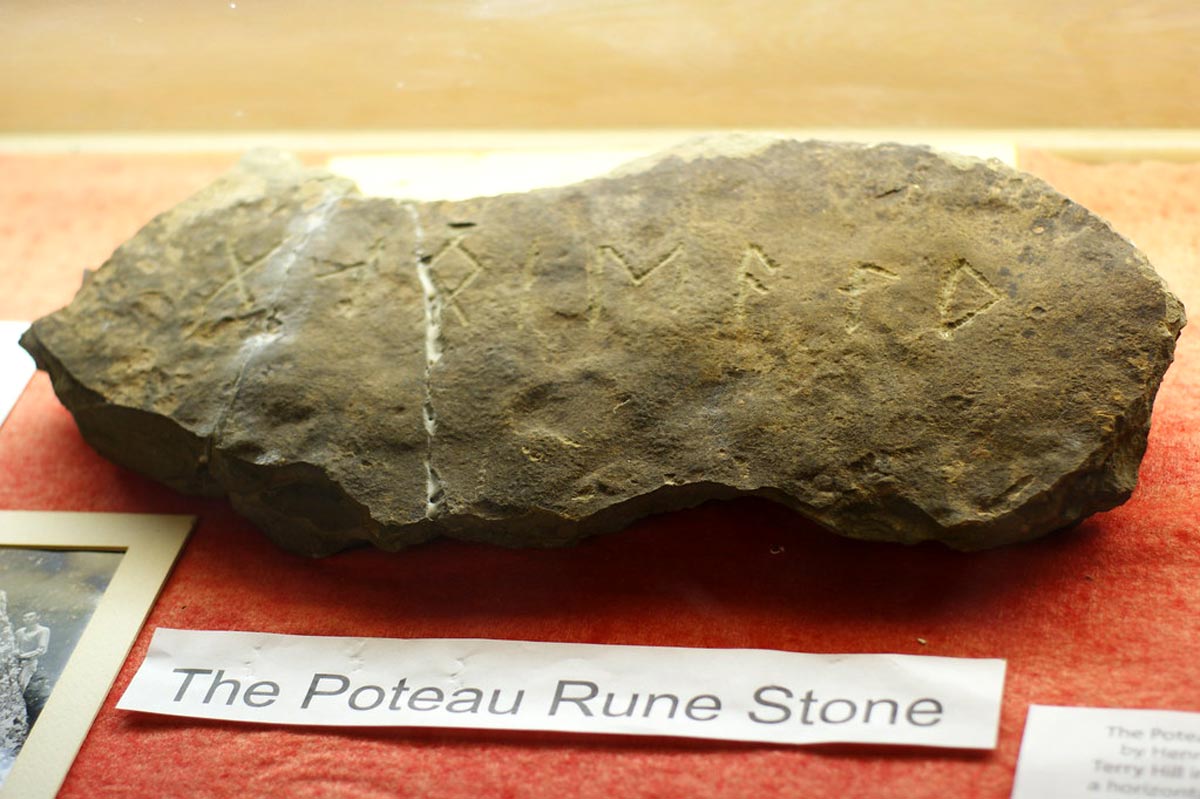
Working together, Farley and Monge argued that this theory was supported by the Poteau Runestone, found by schoolboys in 1967. It has a similar inscription transliterated as GLOIEA, using a similar mix of Elder and Younger Futhark runes. Monge suggested that it read November 11, 1017. This suggests that these inscriptions may have been markers used to claim land or track exploration.
This evidence points to something plausible. Discovered in the years following the excavation of the Norse settlement at L’Anse aux Meadows, it seems reasonable to suggest that the Vikings who made camp in Newfoundland sailed further down rivers and tributaries to see more of this great new land. While this exploration was probably limited in scope, they could have left behind epigraphic evidence of their journeys. Nevertheless, these runestones have mostly been dismissed as fakes. Why?
The Shawnee Runestone: The Journey of Prince Madoc
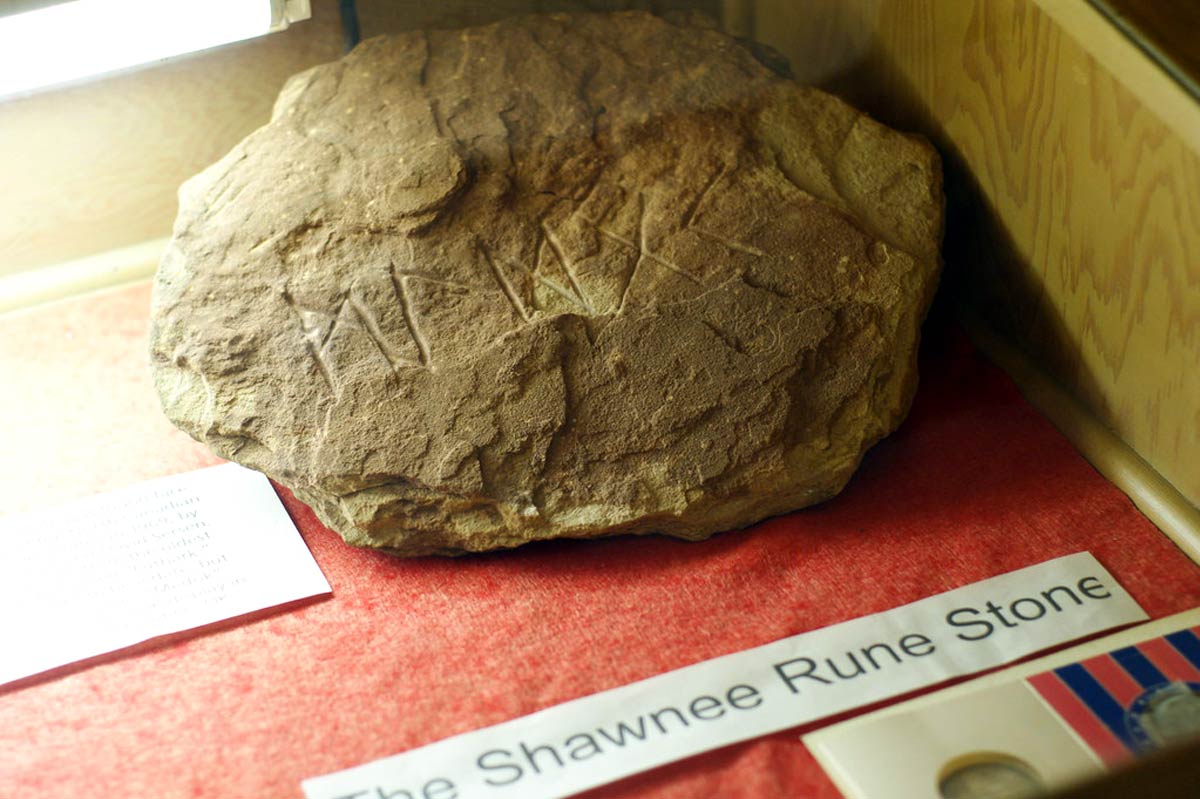
Just two years later, the Shawnee Runestone was also found in Oklahoma, this time with an Elder Futhark inscription reading MEDOK. Farley claimed this must be a reference to the legendary Prince Madoc of Wales, who, according to folklore from the Elizabethan era, sailed to the Americas in 1170.
But this interpretation of the find seems highly unlikely. The evidence suggests that the story of Madoc was embellished in the 16th century to bolster British claims to the New World by claiming they got there first. Plus, why was a Welsh prince writing his name in what was by then archaic Norse runes? Therefore, Farley’s analysis of the Shawnee Runestone undermines rather than supports the veracity of the other Oklahoma runestones.
Anubis Caves and Egyptian Gods
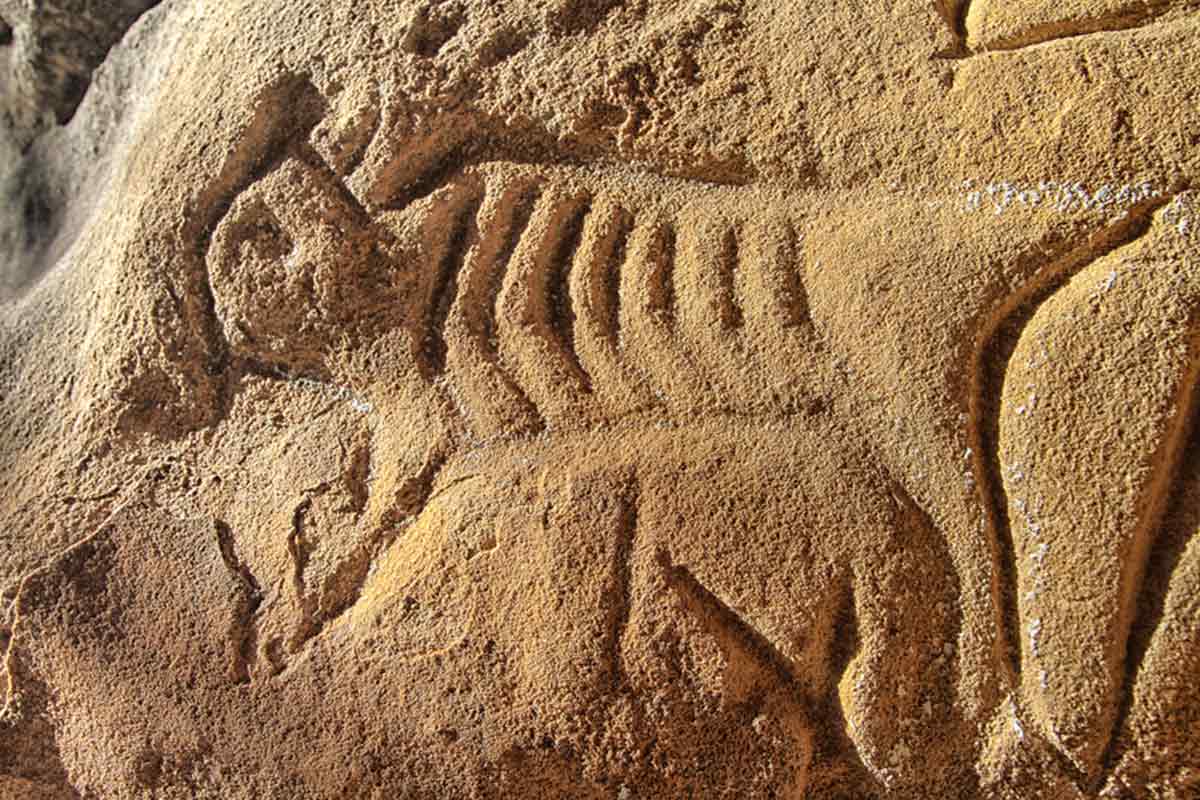
If the Vikings could have sailed to America before Columbus, could other Old-World people have visited the New World prior to the 15th century? Gloria Farley certainly thought so.
Farley’s work on the Heavener Runestone ignited a passion, and she spent the next 50 years looking for evidence of pre-Columbian trans-Atlantic travel to America. Her most famous find was what became known as the Anubis Caves in Oklahoma. She was shown the caves by a local farmer in 1978, but never publicly revealed their location to protect the property owner’s privacy. For this reason, it is challenging to find information on the caves outside of Farley’s own reports.
She reports exploring a series of five small caves, each filled with petroglyphs. The most elaborate was in what was called Cave 2. Farley claimed that upon entering the cave, she immediately recognized what was previously assumed to be a coyote to be an Egyptian figure because he was holding a typical Egyptian crown and flail. In her opinion, this made an identification as Anubis more likely.
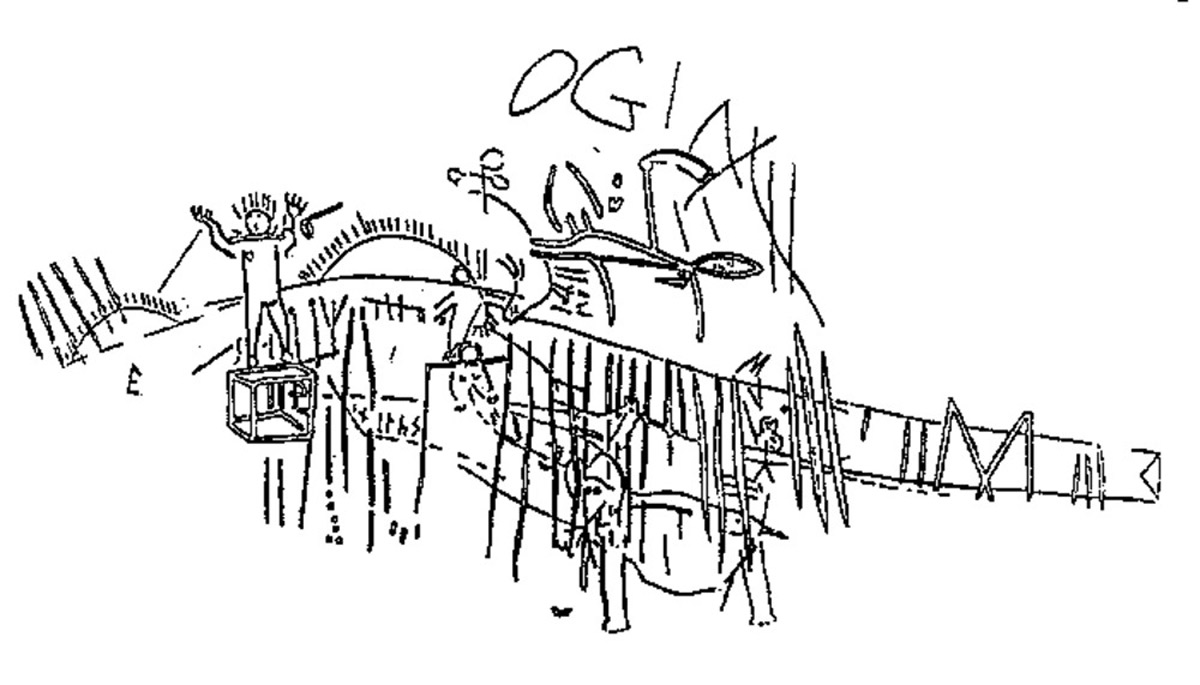
As part of the same petroglyph, she claimed to identify an anthropomorphic figure wearing a rayed crown standing on top of a cube. In Farley’s opinion, this was clearly a sun god, wearing the kind of radiate crown common in the classical world.
Farley returned to the caves on multiple occasions with others, including controversial scholar Barry Fell. He was a marine biologist at Harvard but became better known for his study and translation of American petroglyphs. In 1976, he published “America BC,” in which he claimed to identify Old-World languages on many rock faces across the Americas. His work has been widely criticized by the academic community.
Together, they identified both Numidian scripts and, more importantly, the Ogham script carved onto the walls of the caves. They claimed that this was a version of the Ogham script that was used by Iberian Celts before the peninsula was incorporated into the Roman Empire. But most researchers believe that Ogham evolved in the British Isles after the fall of Roman Britain.

Most significantly, they claimed to find a 3.5-foot-long Ogham inscription in Cave 3, now known as the Six-Months Inscription. Fell initially identified the text as “pseudo-Ogham,” possibly made by Native Americans copying other supposed Ogham inscriptions in the area. He later deciphered the text as six months in the Celtic calendar in the Gaelic language.
The Voyage of the Sun: A Petroglyphic Light Show
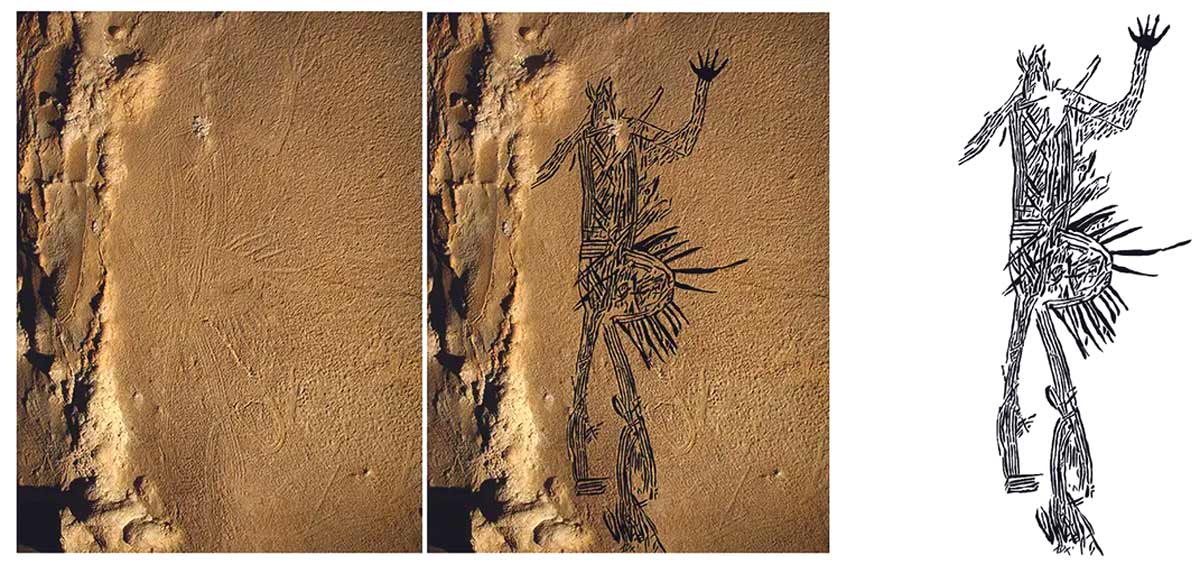
Early on, the explorers noted a stone window between Caves 2 and 3. Assuming a relationship with the sun from the sun god image and the calendar inscription, the movement of the sun’s light was observed on important dates. It was eventually documented, in September 1982, that during the two and a half hours before sunset on the fall equinox, a wedge-shaped opening near the cave’s entrance allows a moving shaft of light to be projected onto the Anubis Panel, starting at the sun god and moving towards the figure of Anubis.
This spectacular light show has been confirmed by the few other researchers who have visited the site. Farley rightly notes that the ancient artists who produced the display must have had a sophisticated knowledge of the movement of the sun. She also suggests that they understood the Egyptian concept of the solar barque passing across the sky during the day and through the underworld during the night, claiming that this is depicted by the light show.
This is where most scholars disagree with Farley. They suggest that the caves were made by Indigenous Americans, and have much in common with mud glyph caves in Alabama that have been authenticated as Native American from the Woodland period. Some reviewers suggest that Farley fell into the trap of assuming that the site was too sophisticated to have been made by Native Americans, but several other similar Indigenous sites disprove this assumption. For example, at Chaco Canyon in New Mexico, during the summer solstice, a “sun dagger” pierces the center of a spiral petroglyph.
Gloria Farley: In Plain Sight
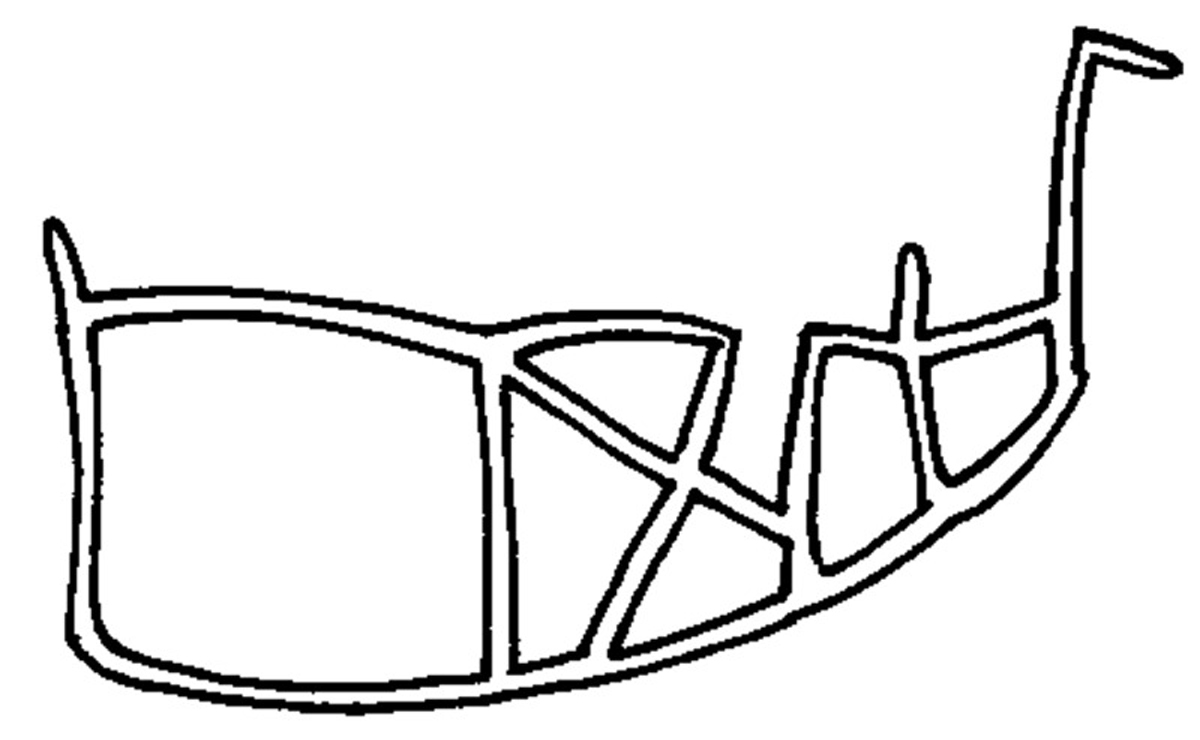
The Heavener Runestone and the Anubis Caves are Farley’s two most famous pieces of evidence for Old World visitors to America before Columbus. In her book, “In Plain Sight,” published in 1994, Farley collects and catalogs hundreds of examples of artifacts and inscriptions “out-of-place,” which she suggests are evidence of a pre-Columbian foreign presence in America. In addition to Norse runes and Egyptian gods, she claims to have found:
“… Mediterranean and Middle Eastern alphabets. These include South Arabian, scattered Egyptian hieroglyphs, and the Cypriot script. I have recorded many inscriptions written in Numidian letters, an alphabet used by the Libyans… also in North African Greek, Kufic, and the ancient Tifinag… From the Iberian Peninsula, there are Tartessian, Iberic, and Portuguese-style Ogham. Most of the messages I have recorded in America appear to be written in the Ogham alphabet used principally by the Celts of Iberia, Ireland, and Scotland…” (Gloria Farley, In Plain Sight, chapter 1).
For example, Farley claims to have recorded 48 ship petroglyphs associated with these distant sea travelers. These include a ship “rebus,” which is when letters are combined to make a pictograph, in Colorado, that is written in Numidian letters and reads “ship of Ra.” She also records ship petroglyphs in Minoan, Phoenician, Celt-Iberian, and Norse styles.
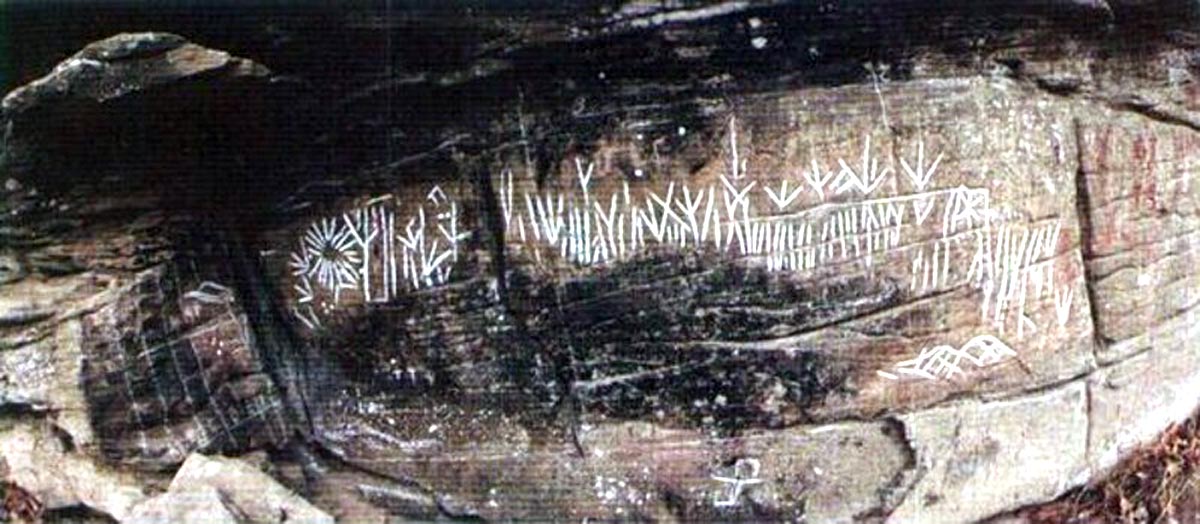
Close to one enigmatic ship petroglyph in Oklahoma, Farley and her associates found a series of graffiti-style inscriptions. These reportedly include a 2,000-year-old note from a man named Maba. As part of a group of inscriptions in Iberian Punic, Numidian, and Libyan, Farley, working with Fell, claimed to find an inscription in Tarshish, a Semitic tongue used in Spain that died out around 500 BC. According to Fell, who had, conveniently, recently deciphered the obscure script, the Tarshish inscription reads: “Maba stayed here, a hermit.”
In addition to similar epigraphic finds, Farley supported her case with some American coin discoveries. For example, in 1957, a Syracusan coin from 490 BC was discovered in Alabama; in 1976, a Syrian coin of Nero from AD 63 was discovered in Oklahoma; that same year, a pre-146 BC coin from Carthage was discovered in Arkansas. While Farley interpreted this as evidence of Old-World people visiting America and leaving behind these artifacts, they could have made their way to the New World significantly more recently.
A Believable Case?
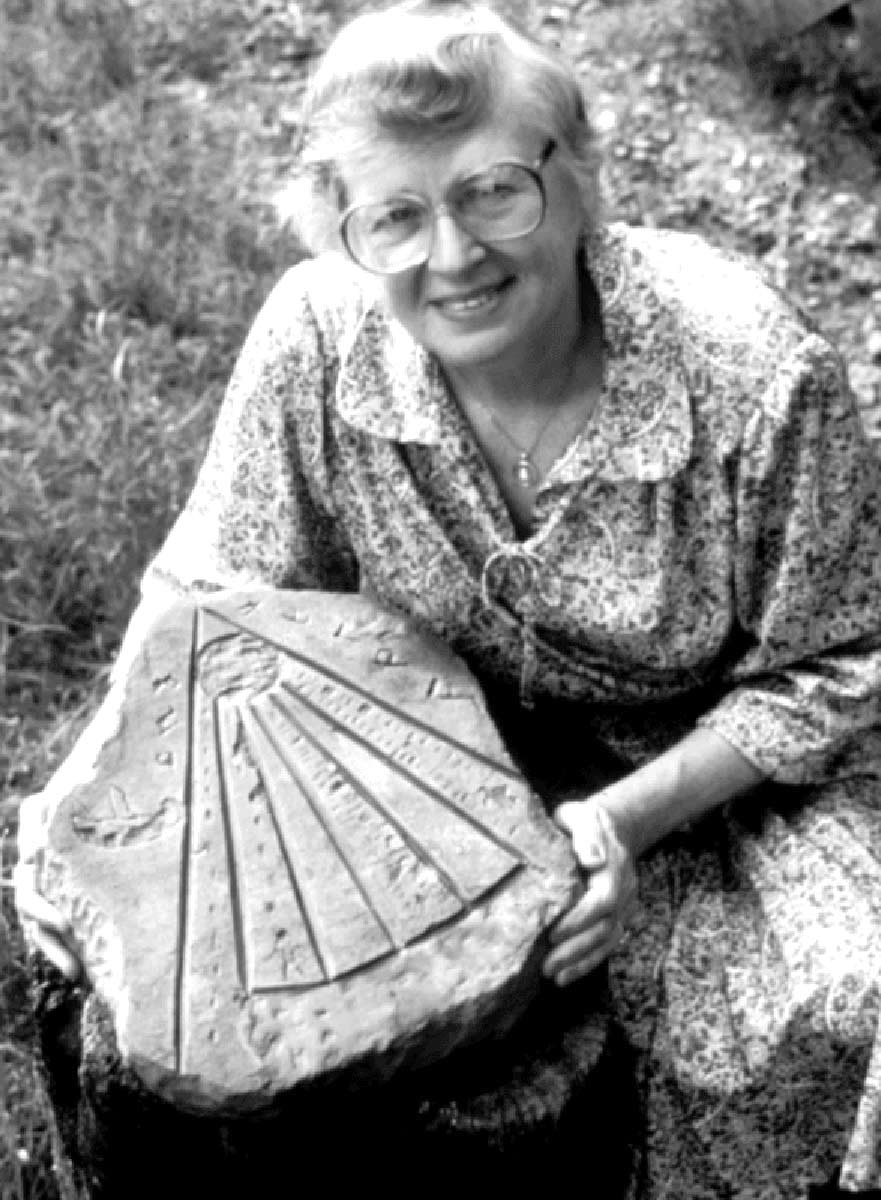
While Farley embraces thorough documentation and multiple sources as a scientific approach for her arguments, it is exactly the diversity of evidence that makes her claims so hard to believe. The diversity of languages implies that America must have served as a kind of sacred site for visitors, as many sites are “bilingual or even trilingual,” with the same message recorded in more than one script. If this were the case, it seems strange that it does not feature in the histories told on either side of the Atlantic.
It is also worth noting that most of Farley’s evidence comes from inland states, her native state of Oklahoma, plus the neighboring states of Arkansas, Missouri, Colorado, and New Mexico. While it makes sense that her research focused on her direct region, since she was an unfunded amateur researcher, it raises questions about why there is not an abundance of similar finds closer to the Atlantic Coast.
But most damning is the fact that there is no archaeological evidence to support what Farley infers from her epigraphic findings. There is no evidence for Old World settlements, graves, boats, and tools in the Midwest. Therefore, if these Old-World settlers took the time to create something as sophisticated as the Anubis Caves, they left behind no other evidence of their presence. This is why pre-Columbian contact theories are marginal in the academic community. Farley and Fell are generally considered to have misinterpreted their finds.
But this should not completely invalidate Farley’s decades of dedication to discovering, recording, and preserving epigraphic evidence across the Midwest. Her friendly nature and enthusiasm allowed her to gain access to important sites on private property and record them for posterity, whether they be Old World artifacts or Native American treasures. While we may not agree with her interpretation of her findings, we can be inspired by her curiosity.