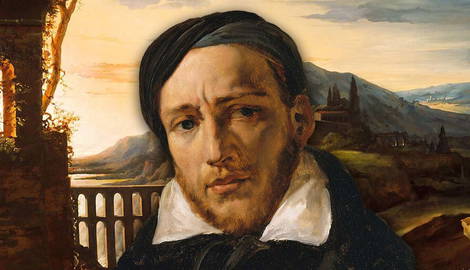
Theodore Gericault was an outstanding painter of the era on the verge of Romanticism and Realism. Gericault had a tragically short career, yet his rather small artistic oeuvre triggered a chain of developments in the history of art. Contrary to a dominant trend of painting historical scenes and mythology, he was not afraid of addressing contemporary events. His most famous works included the scene of the notorious catastrophe of the frigate Medusa and detailed portraits of mentally ill patients.
1. He Was One of the Most Influential Romantic Painters
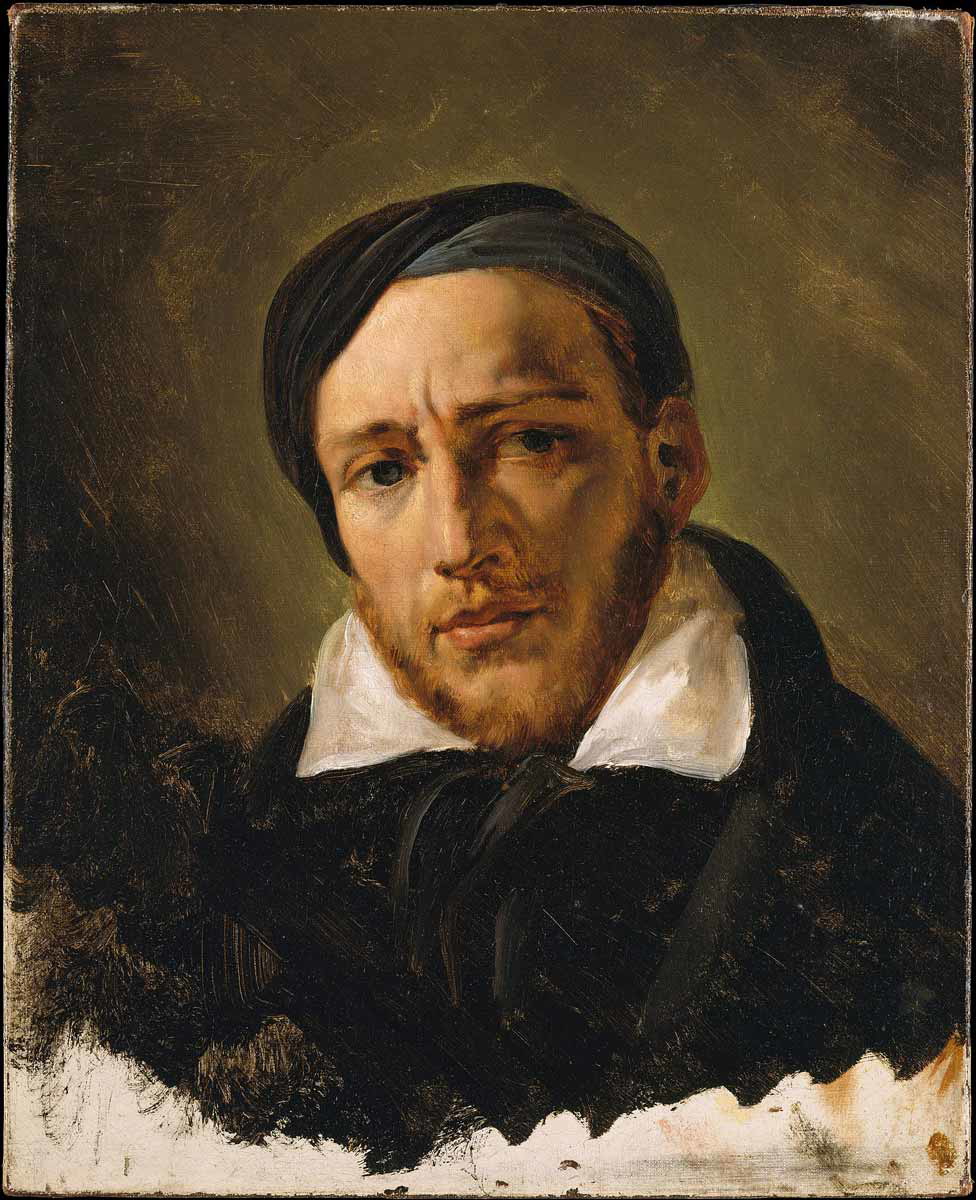
Theodore Gericault was born in 1791 into a privileged French family that allowed him to pursue art professionally. His father, a tobacco merchant and plantation owner, recognized the son’s inclinations rather early and sent him to study art at the age of 17. Gericault was a talented student, but he lacked patience and was prone to impulsive outbreaks, which annoyed his conservative teachers.
Gericault’s character seemed like a perfect match for the newly emerging artistic style that would soon take over the entire European scene. Romanticism was the movement that celebrated emotion and dramatized the inner struggle of its characters. It occurred as the counter-force to the rigid and sober Neo-Classical art, too focused on canons and rules to evoke any real feeling from its audiences. The Romantic hero, almost exclusively a young man with a privileged background, exists at odds with the world, misunderstood by it. The nature that surrounds him reflects his complex feelings, erupting in storms. If a Romanticist painting does not have a central hero, he is substituted by a crowd, necessarily suffering from a natural disaster, the gods’ wrath, or war. They are passive and desperate in the face of a force much bigger than all of them and accept their fate with cries and tears.
2. He Impressed Jacques-Louis David and Gustave Courbet

Major success came to Gericault in 1812 with the painting The Charging Chasseur. According to a legend, Jacques-Louis David, upon seeing the painting, immediately exclaimed that he did not recognize the artist who had painted such an impressive work. An established and respected painter, David was shocked he missed out on someone so talented.
Jacques-Louis David was one of the major influences on Gericault’s art. David, known for his fluctuating political loyalty, frequently painted contemporary events like the murder of Jean-Paul Marat and the coronation of Napoleon Bonaparte. However, all these subjects were of heroic or quasi-mythological character. Gericault instead frequently relied on ordinary characters rather than leaders or heroes, deeming them worthy of depiction. In that sense, he prepared the ground for the generation of Realists like Gustave Courbet, who would soon adopt the same approach, making it even more radical.
However, Gericault’s works had movement and dynamism that was previously unseen. Even Jacques-Louis David’s most dramatic works were static, with impressive yet heavyweight compositions. Gericault’s characters, on the contrary, keep moving and swirling, pulling the viewer into the vertigo of their experiences.
3. He Studied Painting in Italy
In Gericault’s time, the most prestigious award an artist could win was the Roman Prize or Prix de Rome. The artists competing for the prize were isolated in rooms with no reference materials and asked to create a painting on an assigned topic. Usually, this was a mythological or historical subject. The winner was awarded a scholarship that covered six years of living and studying art in Italy. The competition was intense, and many artists took it too personally. For instance, Jacques-Louis David, after losing the competition for the third time, went on a hunger strike, threatening the Royal Academy of Art with suicide.
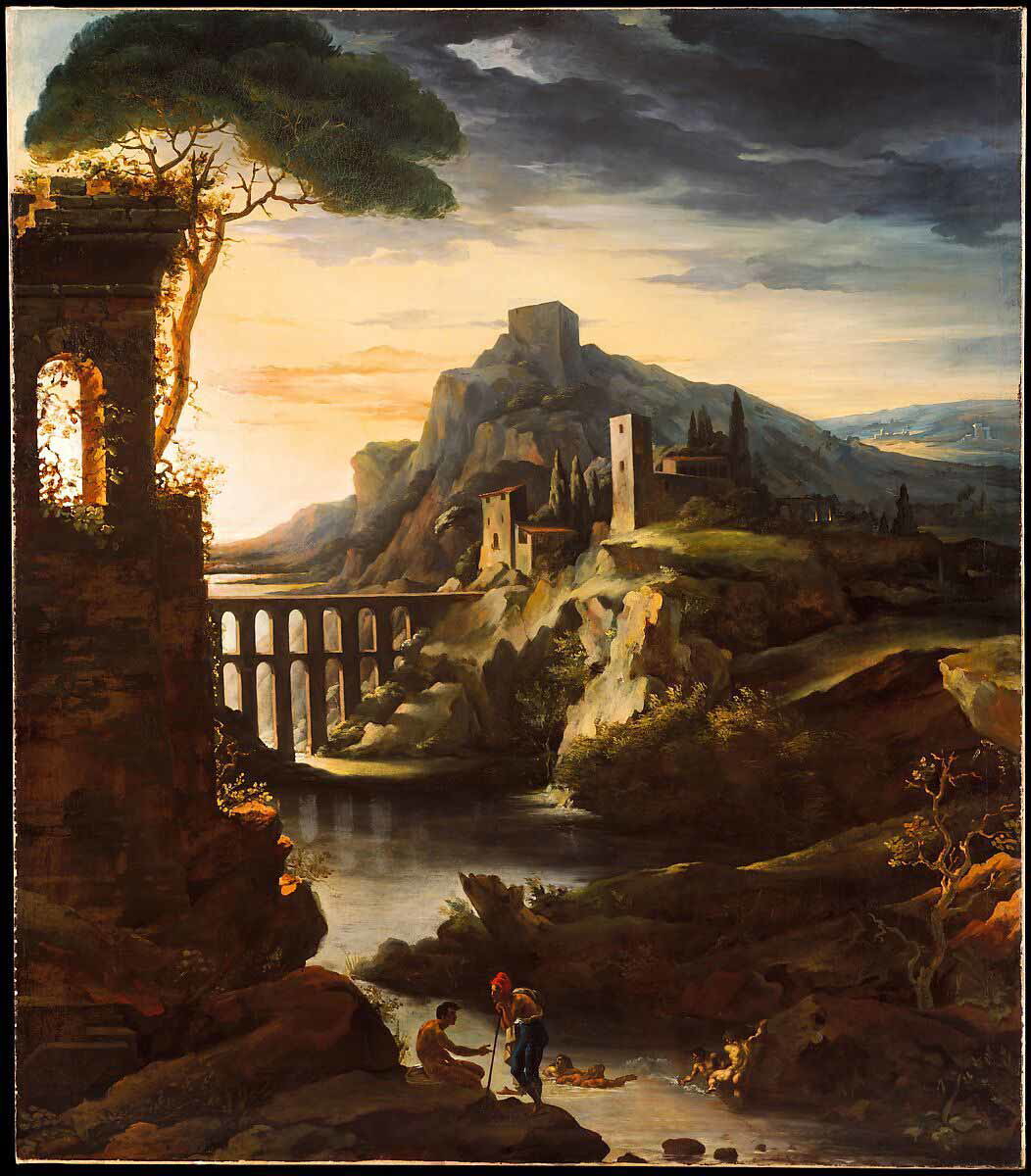
Gericault also lost the competition but managed to find a solution. After selling several of his paintings, he went to Italy on his own. This way, he was not required to spend six years there and fulfill a pre-determined program. He could take everything he needed from Italian art. He visited Rome, Naples, and Florence and studied the works of Caravaggio and Michelangelo. In 1818, he returned to France but later regretted it. This regret was expressed in a series of idealized landscapes that featured Italian nature and architecture.
4. He Created One of the Most Scandalous Paintings

The most famous painting that cemented Gericault’s reputation was presented to the public in 1819. For a long time, Gericault searched for a topic for his grand masterpiece. In 1816, the frigate Medusa ran into shallow waters on its way to Senegal. The ship did not have enough lifeboats, and 152 passengers and crew members had to fit on a makeshift raft that drifted in the waves for two weeks. Starving and exhausted, they attacked each other and resorted to cannibalism. By the time when the rescue team discovered the raft, only 15 passengers were alive.
The painting caused a sensation in the artistic scene. However, many criticized it for a low subject matter painted in such a grandiose manner. The swarm of bodies on the raft referenced another legendary artwork that Gericault witnessed in Rome—the famous fresco by Michelangelo, The Last Judgement, found on the altar wall of the Sistine Chapel.
5. He Visited Morgues to Practice

Gericault had a rather unconventional approach to painting realistically. While working on The Raft of the Medusa, he frequented hospitals and morgues, drawing and painting dying patients, severed limbs, and heads. He even convinced the nurses to give him some body parts of executed criminals so he could observe the process of decay in his studio. The large dark room where he painted smelled so horribly that the artist’s visitors became sick and refused to enter.
Thankfully, none of Gericault’s gruesome experiments made it into final versions of his paintings, remaining only on sketches. Still, his method of work remains a striking example of one’s dedication to art, which can sometimes get quite ugly and unsettling.
6. He Studied Mental Health Issues

In the 1800s, psychiatry was still in its infancy. During Gericault’s lifetime, one of the popular concepts of dissecting and studying mental illnesses was monomania—an intrusive thought or action that drives an otherwise stable patient into madness. Monomanias were believed to leave marks on the patient’s facial expressions and postures, expressing the main emotion or concern of their monomania. Allegedly, by discovering the key idea that tormented the monomaniac, the doctor could offer suitable help.
As photography was still not in use, medical illustrations were a popular method of teaching and diagnosing. In the 1820s, the French physician Étienne-Jean Georget commissioned ten paintings from Gericault that illustrated several monomanias. All models for these paintings were actual patients of Georget, whom he described as clinical cases. Only five works from the series have survived—A Woman Addicted to Gambling, A Child Snatcher, A Kleptomaniac, A Woman Suffering from Obsessive Envy, and A Man Suffering from Delusions of Military Command. Until recently, there was no information about the missing half of the series.
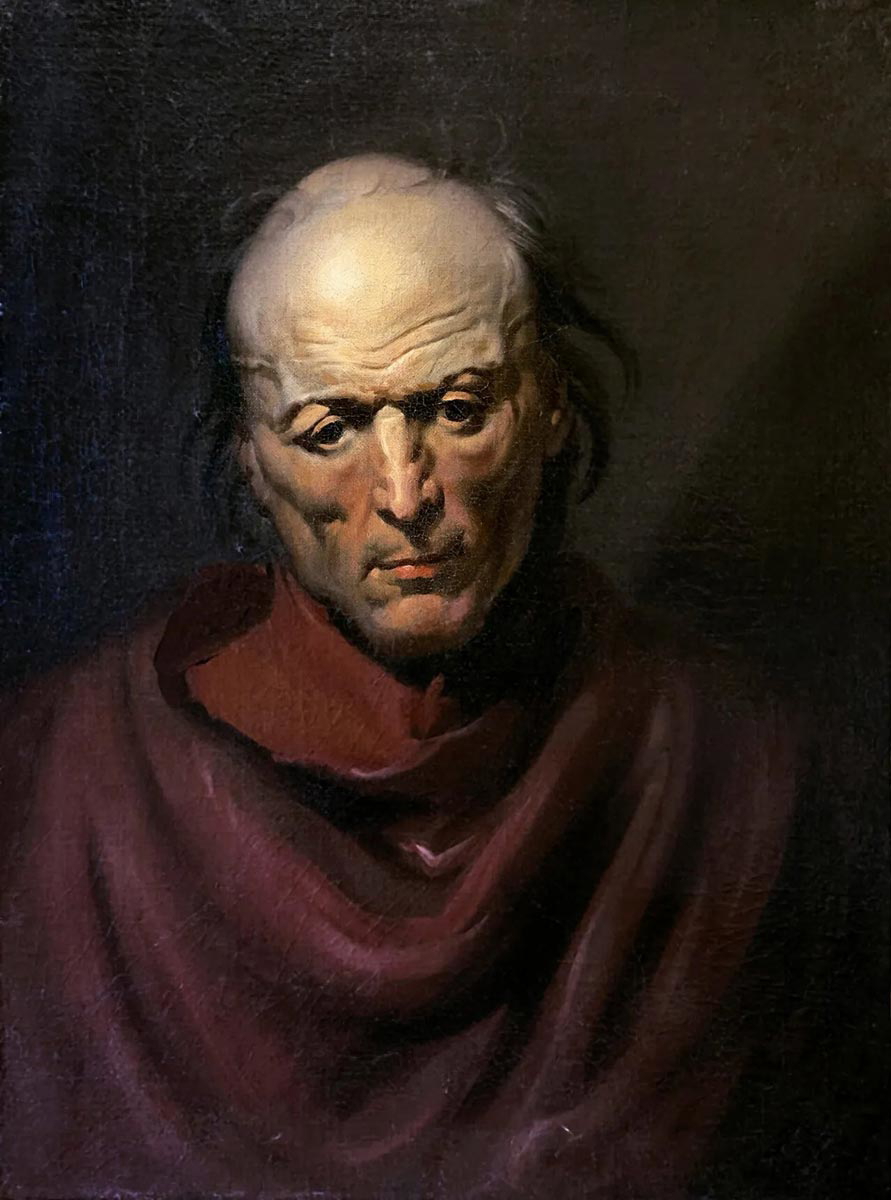
In 2023, the influential medical journal The Lancet published a surprising article in which a molecular biologist and art history enthusiast named Javier Burgos claimed to have discovered three more portraits from the nearly-lost series by Gericault. While visiting an exhibition of a private collection that included Gericault’s work, Burgos noticed how similar one of the portraits was to the existing Georget portraits. Portrait of a Man, Homo Melancholicus was executed in exactly the same proportions as the rest of the series, with identical style, detailing, and color palette. The dress of Homo Melancholicus was painted with the same tone of red used for the scarf of A Woman Suffering from Obsessive Envy.
Diving deeper into private collections and unattributed works in museums, Burgos made two new discoveries. One of the works featured a man matching a case of monomania of drunkenness described by Georget, and the other a man suffering from panic attacks triggered by witnessing the horrors of the Vendée War during the French Revolution. Professional art historians do not refute Burgos’ claims completely but insist that further research is required.
7. Theodore Gericault Died Young

Unfortunately, Gericault’s promising artistic career, marked by The Raft of the Medusa and his other works, was over prematurely. In 1824, at the age of only 32, Gericault died from complications from a surgery which were worsened by a chronic tuberculoid infection. After several horse-riding accidents, a tumor formed in Gericault’s lower spine. A few days before his death, he went through surgery, during which he refused to be sedated so he could observe the process using a mirror.
One of the survivors of the Medusa shipwreck, geographer Alexandre Correard, who befriended Gericault during his work on the legendary painting, created the last portrait of the artist. The chilling work, often mistakenly attributed to the dying Gericault himself, shows a young man in his early thirties turned into a skeleton with bloodshot, blurry eyes.