Mask of Tutankhamun - c. 1323 BC
Mask of Tutankhamun
Object record
Genre
Civilization
Ancient Egyptian
Culture
Ancient Egypt
Period
Dynasty XVIII of the New Kingdom
Date
c. 1323 BC
About
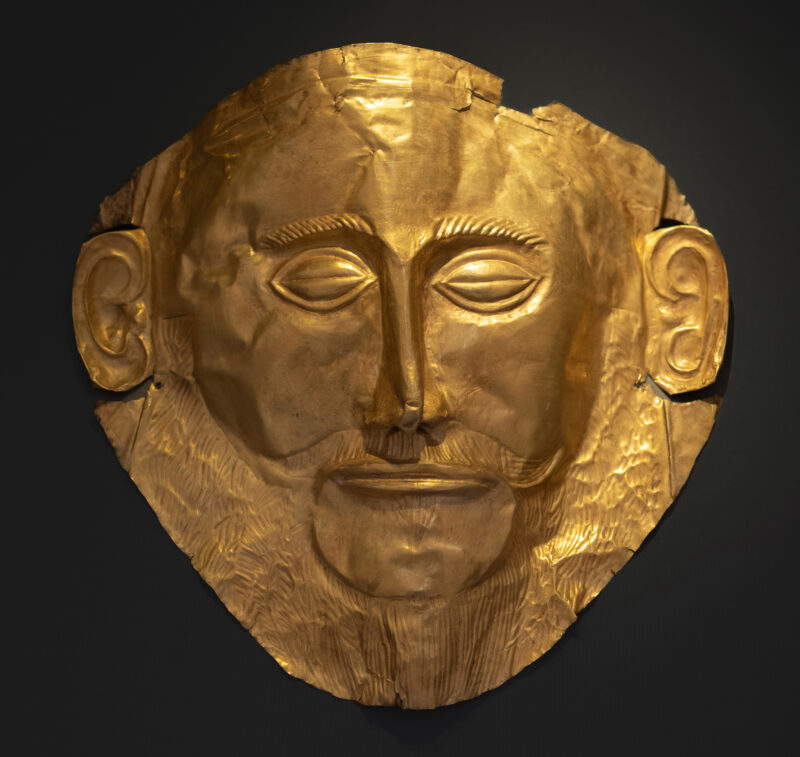
A gold funerary mask made for Tutankhamun, this iconic object presents the pharaoh in the form of Osiris. Inlaid with semi-precious stones and glass, it combines royal symbolism with funerary belief. Discovered in 1925 in the Valley of the Kings, it remains one of the best-known works of ancient Egyptian art.
Alternate title
Death mask of Tutankhamun
Inscription(s)
A protective spell in Egyptian hieroglyphs on the back and shoulders.
Type of work
Death mask, Funerary mask
Material
Gold, lapis lazuli, carnelian, obsidian, turquoise, and glass paste
Dimensions
H: 54 x W: 39.3 x D: 49 x Weight: 10.23 cm
Collection
Provenance
Discovered on 28 October 1925 in Tutankhamun's tomb at the Valley of the Kings by Howard Carter and Hussein Abdul Rasoul; removed from the tomb in December 1925 and transported to the Egyptian Museum in Cairo; now on public display at the Grand Egyptian Museum.
Institution
Location
Cairo, Egypt
Accession
Carter no. 256a; Journal d'Entrée no. 60672; Exhibition no. 220
Copyright status
Public Domain
Copyright
Photo by Roland Unger, via Wikimedia Commons / Public Domain.
References
Literature
- What to Look for in the King Tut Galleries at the GEM
- What Really Killed the Men Who Opened King Tut’s Tomb
- 20 Essential Pharaohs Who Shaped Ancient Egyptian History
- Why Ancient Egyptians Tried to Erase the Memory of Some Pharaohs from History
- What Is the Symbolism of Lapis Lazuli in Art and Culture?
Tags
Ancient Egyptfunerary maskgoldNew KingdomTutankhamunValley of the Kings