Rosetta Stone - 196 BC
Rosetta Stone
Object record
Genre
Ancient
Civilization
Egypt
Culture
Ptolemaic
Period
Hellenistic
Date
196 BC
About
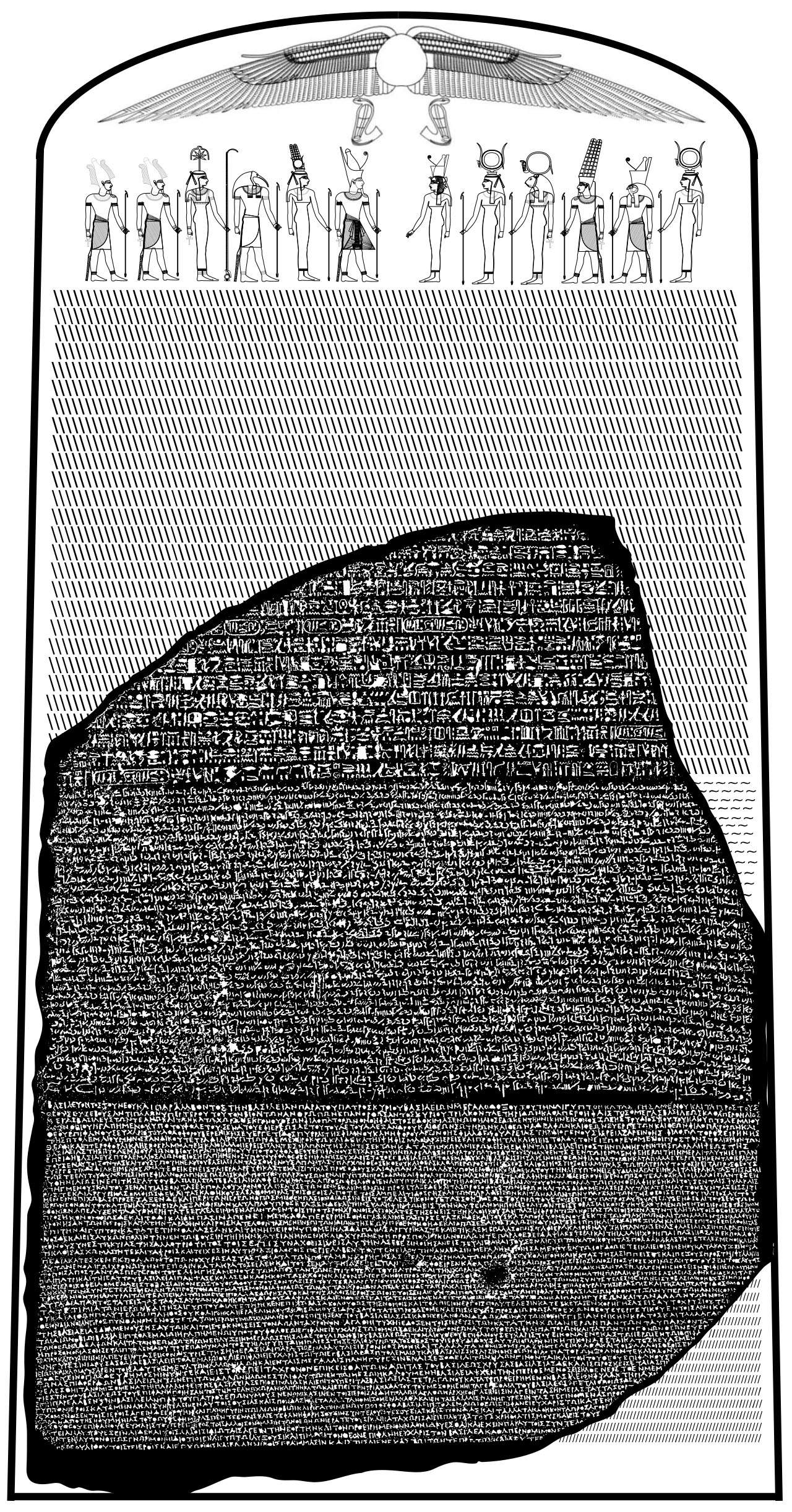
The Rosetta Stone is arguably the most famous piece of rock in history. A granodiorite fragment of a larger stele, it bears a priestly decree issued at Memphis in three scripts: Ancient Egyptian hieroglyphs, Demotic, and Ancient Greek. This linguistic trifecta provided the essential key for Jean-François Champollion and Thomas Young to crack the code of hieroglyphics, unlocking three millennia of Egyptian history that had been silenced for centuries. Its journey from a temple wall to a fortress foundation, and finally to the world's stage, makes it a true icon of human discovery.
Alternate title
The Memphis Decree
Inscription(s)
A decree issued by a council of priests confirming the royal cult of Ptolemy V Epiphanes on the first anniversary of his coronation.
Type of work
InscriptionStele
Material
Granodiorite
Dimensions
H: 112.3 x W: 75.7 x D: 28.4 x Weight: 760 cm
Collection
Provenance
Originally displayed in a temple (possibly at Sais); moved to Rosetta and used as building material in Fort Julien (Mamluk period); discovered by French officer Pierre-François Bouchard in 1799; surrendered to British forces under the Treaty of Alexandria in 1801; moved to the British Museum in 1802.
Institution
British Museum
Location
London, Greater London, United Kingdom
Accession
BM24
Copyright status
public_domain
Copyright
© The Trustees of the British Museum
References
Authority files
Wikidata: Q48584
VIAF: 184000414
Tags
Ancient EgyptHieroglyphicsPtolemaic PeriodRosetta Stone