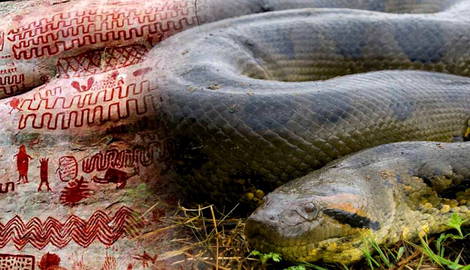

Water is the fundamental element that nourishes the Amazon rainforest. Its rivers are a source of both life and the sacred for the people who live there. The Amazon River and its tributaries are home to the green anaconda, the largest snake in the world. They can reach as long as 30 feet (9 meters) and weigh upwards of 550 pounds (250 kg). Many indigenous communities have incorporated it into their cosmological and mythical stories. Aside from the jaguar, the green anaconda is the animal with the greatest cultural significance among the communities that have historically inhabited the Amazon rainforest.
Making a Myth: Why the Green Anaconda?
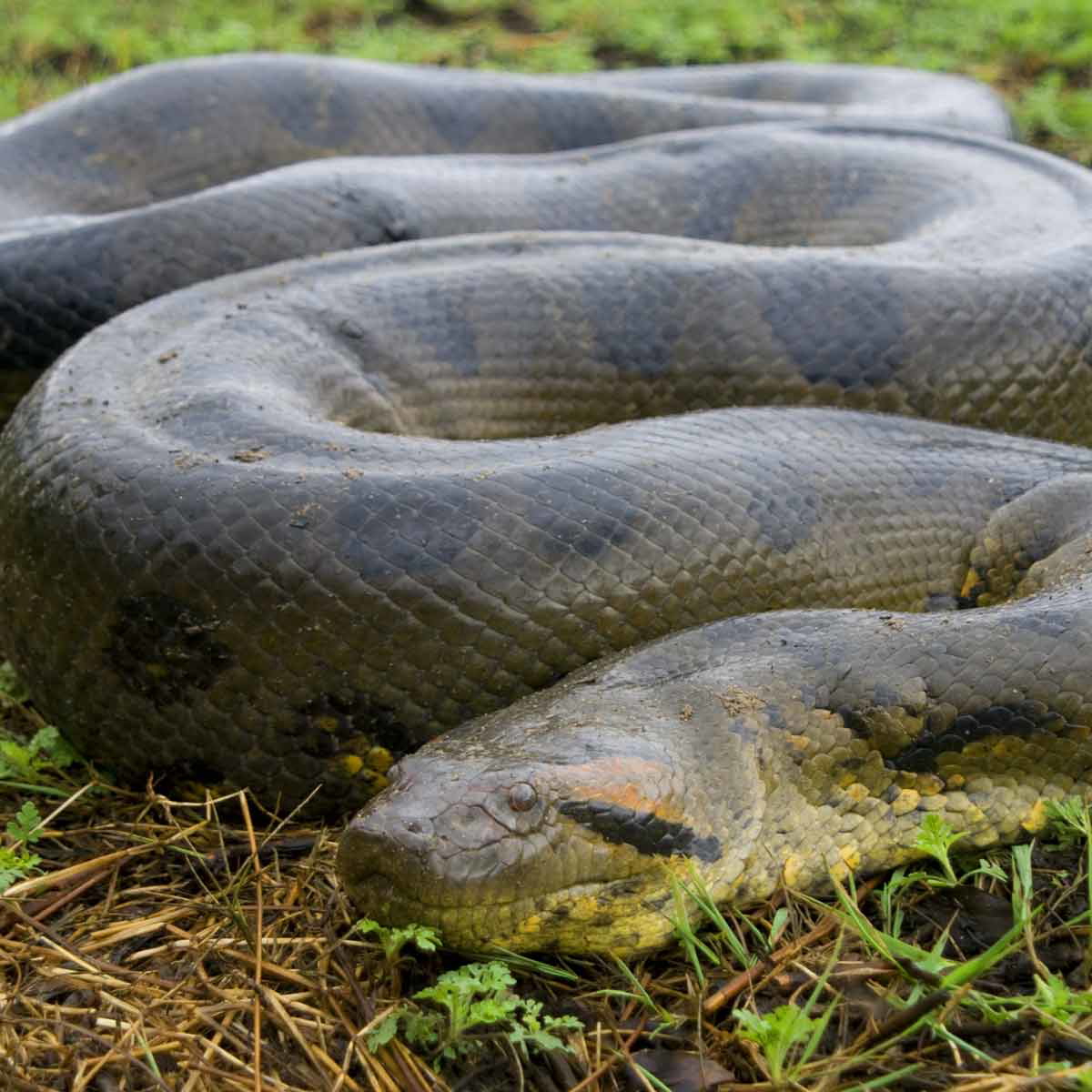
Different mythical stories about the green anaconda can be found in different locations in the Amazon rainforest. Indigenous communities have associated the curving and bending course of the Amazon River with the curling body of the anaconda. In mythical stories and cosmogonic structures, anacondas have been associated with creating the world and humankind, celestial phenomena, and cultural life surrounding water in the tropical rainforest.
In the northwest sector of the forest, specifically in the Colombian region of Vaupés, indigenous communities believe that an ancestral anaconda was the creator of life’s cultural and social order. The anaconda, journeying the Amazon River, gave birth to all the communities inhabiting the rivers and tributaries throughout the rainforest. The ancestral anaconda created space and time and distributed the communities along the river, teaching them distinctive cultural practices, languages, and beliefs.
The Ancestral Anaconda of the Amazon
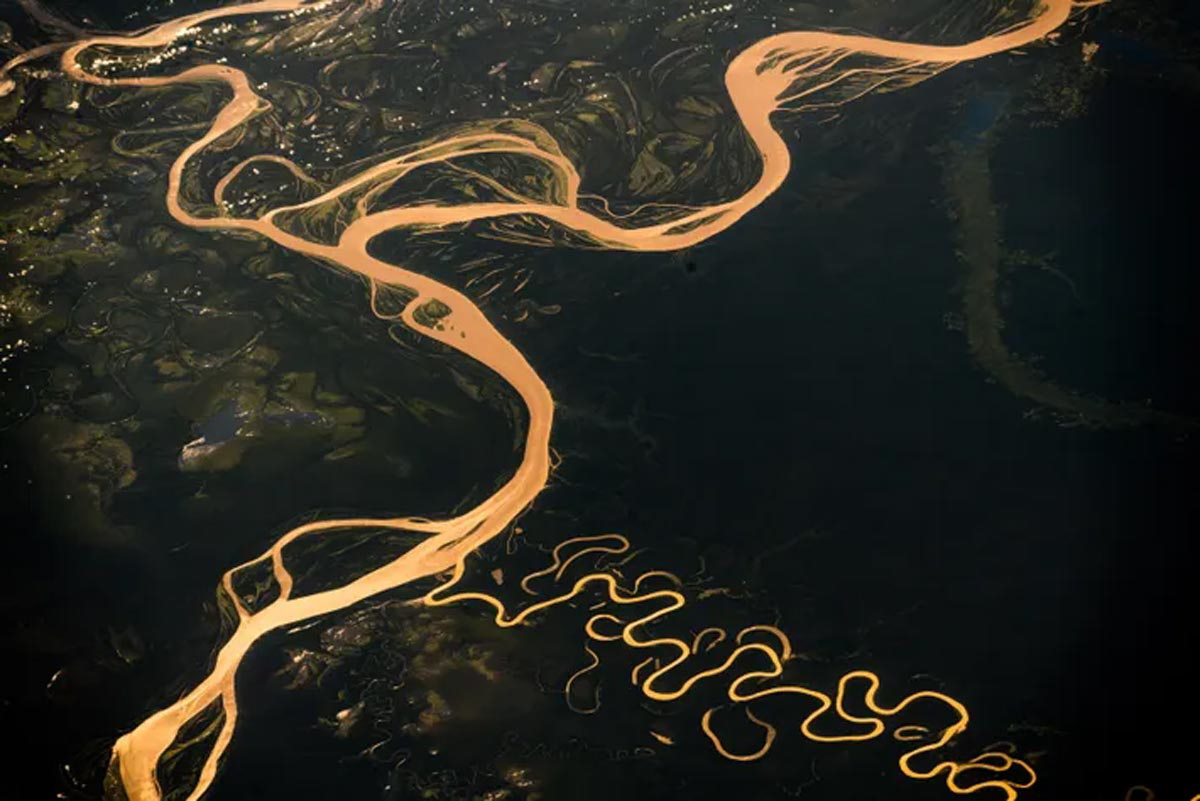
A broader anaconda myth explains how an ancestral anaconda was involved in the creation of the universe. The snake started a journey through the waters of the Amazon River. It began from the Water Doors in the east, called the Lake of Milk, and heading towards the Vaupés region in the west, “the center of the world.”
The great snake was believed to be at once an animal and a canoe, on which all the original human communities embarked. During the creation journey, the anaconda-canoe would emerge from the depths of the waters to the surface to leave ancestral human communities alongside the banks of the river. In some variations of the myth, these were distinct groups of people, including both indigenous peoples and Europeans, demonstrating their historical contact with these communities.
Ancient Pictographs
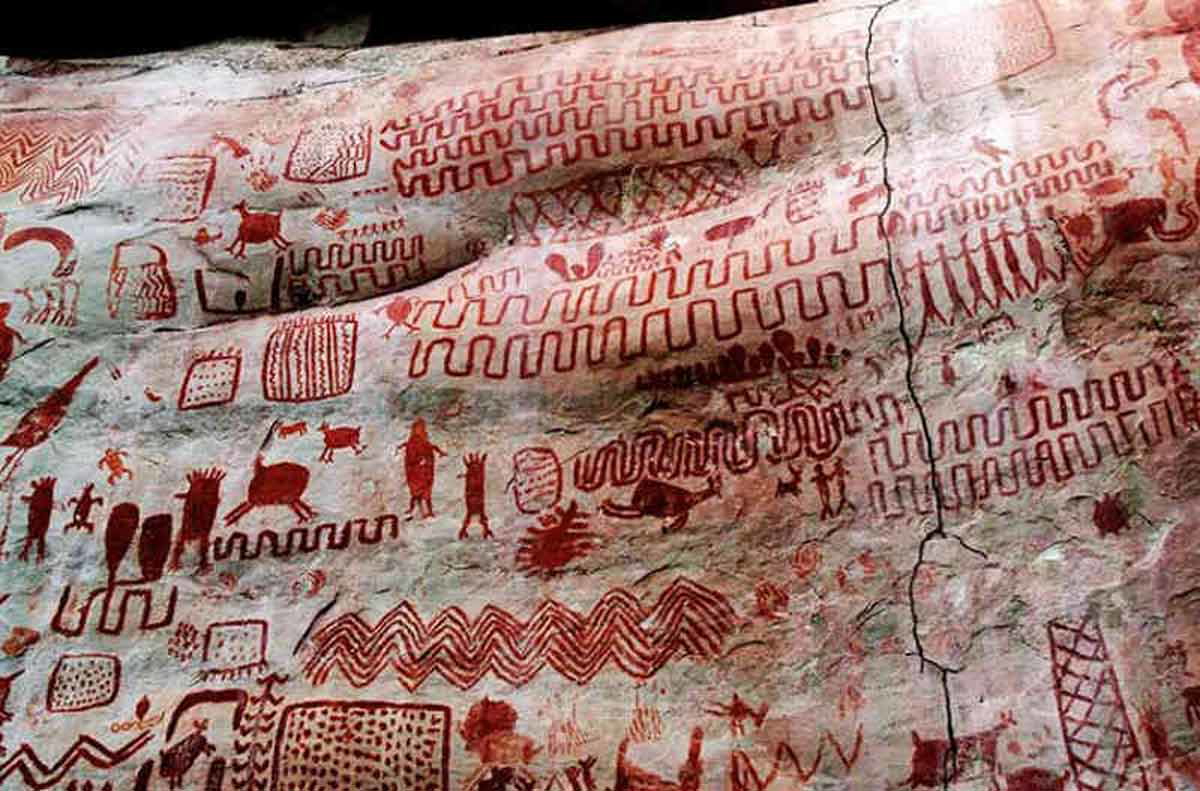
Ancient pictographs have been found in the Serranía del Chiribiquete, a mountainous region in the Colombian Amazon rainforest. The anthropologist Castaño-Uribe has described the pictographs as representing anaconda-canoes over which human beings stand and raise their hands to the sky. This suggests shamanistic practices and veneration of the anaconda.
The myth of the ancestral anaconda varies depending on each community’s linguistic or cultural distinctions. Anthropologist Stephen Hugh-Jones referenced this phenomenon of narrative heterogeneity, describing the myth of the anaconda as a tree with several branches due to the different versions that he found had been recorded.
Brazilian Traditions
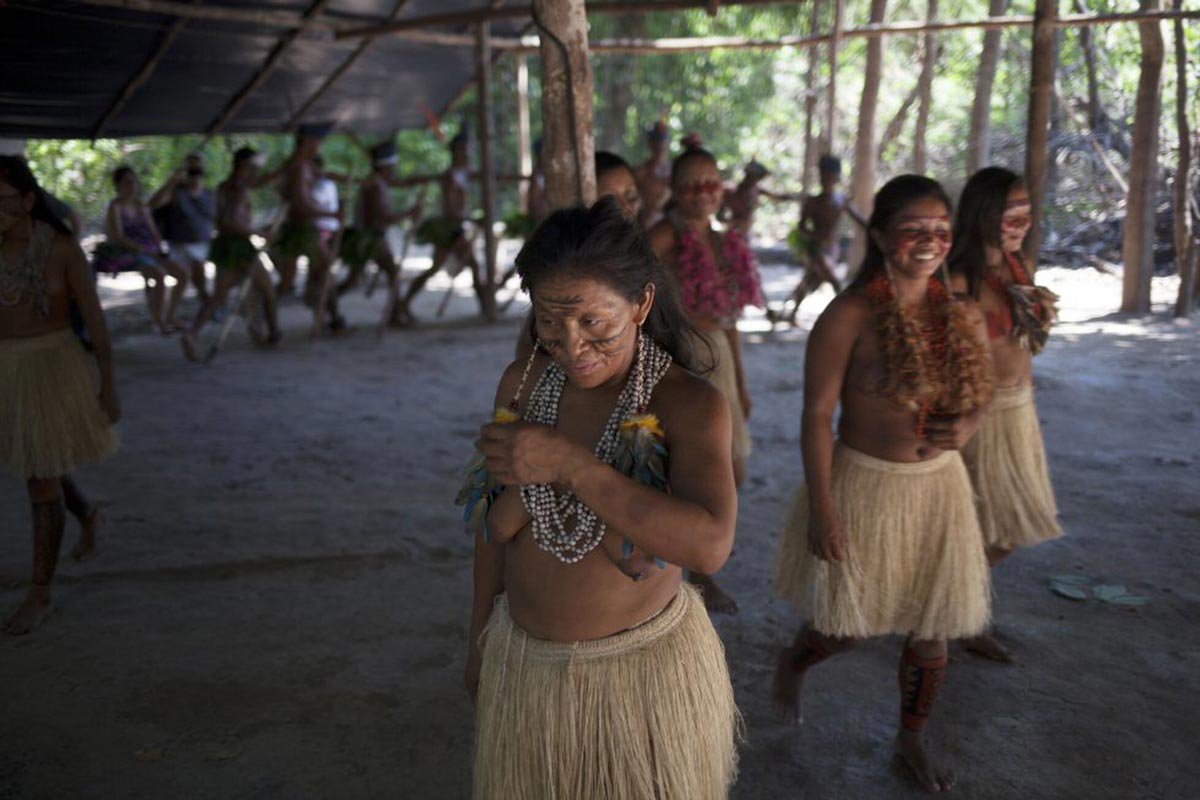
The Desana community in the eastern Amazon rainforest of Brazil describes a boat that was simultaneously a great cobra, or the “grandfather of the world.” Traveling upriver, it stopped at houses next to the waters, leaving entire communities free to enter the houses and perform the first ritualistic ceremonies necessary to settle down and start their social and cultural life.
In the same community, anthropologist Gerardo Reichel-Dolmatoff added that the anaconda-canoe was used by the creator god, the Sun, to send people to the Earth. This story demonstrates a sexual association with the anaconda, as it is also considered the uterus where humans were conceived.
Among the Tukano people, the ancestral anaconda has a double association. It has a terrestrial link to the Amazon River and a supernatural link associated with the Milky Way. The clear sediment left by the Amazon River during the rainy season and the white liquid that seeps from some hallucinogenic plants are associated with the primordial insemination liquids in the story of humankind’s creation.
Mythical stories from other communities associate the anaconda with musical instruments, ceramics, healing rituals, and prevalent and popular dualisms of female-male, day-night, or Sun-Moon.
Additional Anaconda Myths
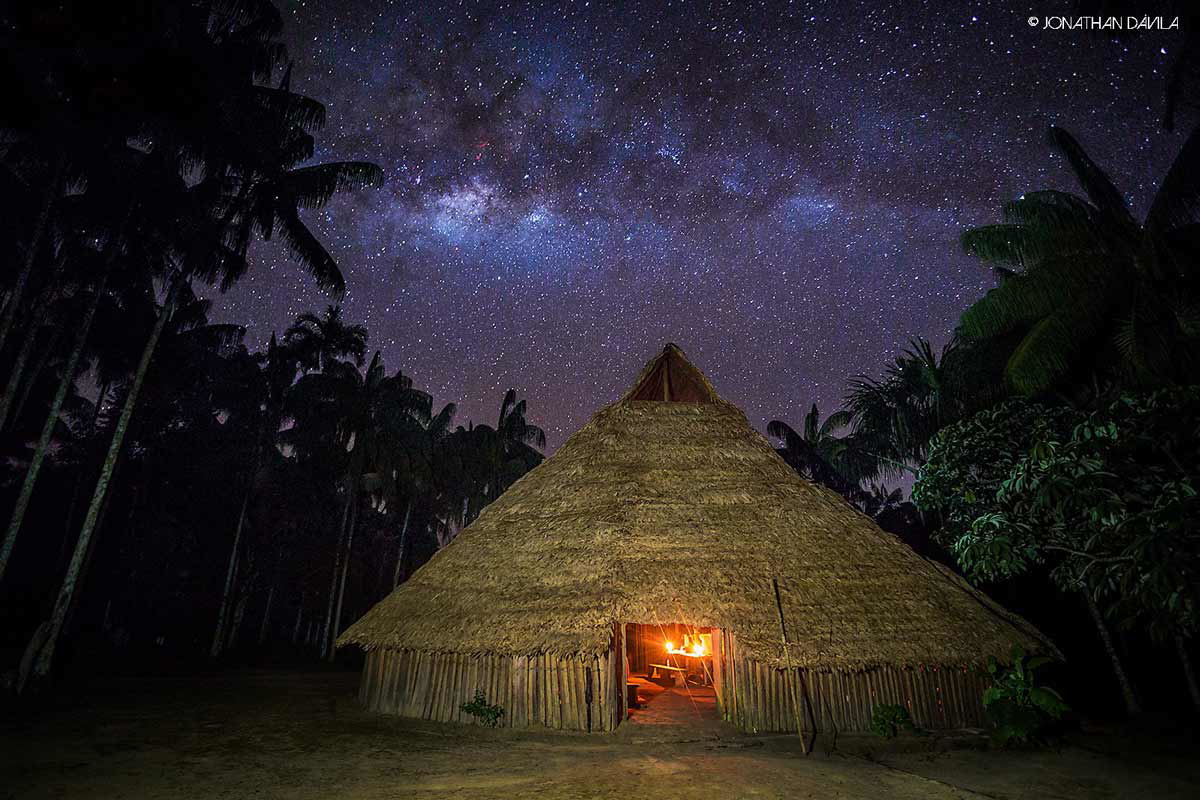
In addition to this story about the origins of the indigenous communities and the world’s creation, mythical associations with the anaconda are found in other regions, specifically in the Peruvian part of the Amazon. This region is home to the Shipibo-Conibo, Ashanika, and Aguaruna peoples. Here, a dangerous mythical anaconda, Yakumama, guards and protects the waters of the Amazon River.
The name Yakumama comes from the Quechua words yaku (agua) and mama (mother), meaning the Mother of Water. The mythical story claims that a giant anaconda used to live undisturbed by humankind. One day, in a time when the rainforest existed in complete harmony, the anaconda was disturbed by a fisherman. Due to the man’s unwelcome presence, Yakumama created a whirlpool from which it emerged, putting the boat and the fisherman in immense danger.
Desperate, the man prayed to Inti, the sun god, and asked for help. Eventually, the man managed to flee toward Lake Titicaca, where he could finally escape the dangers of the unexpected encounter.
Other communities tell a different story, narrating how a subtle whipping sound used to be heard coming from the deep waters. Once, a young warrior from the community, Yahu, went downriver to ask Yakumama the reason for its sorrow. The great snake responded that the lament was because future generations were not going to respect and protect the rainforest. Yahu then decides to join Yakumama and work together to protect the jungle, teaching communities to maintain the balance between all beings inhabiting the forest.
Water is Life: The Centrality of the Amazon River
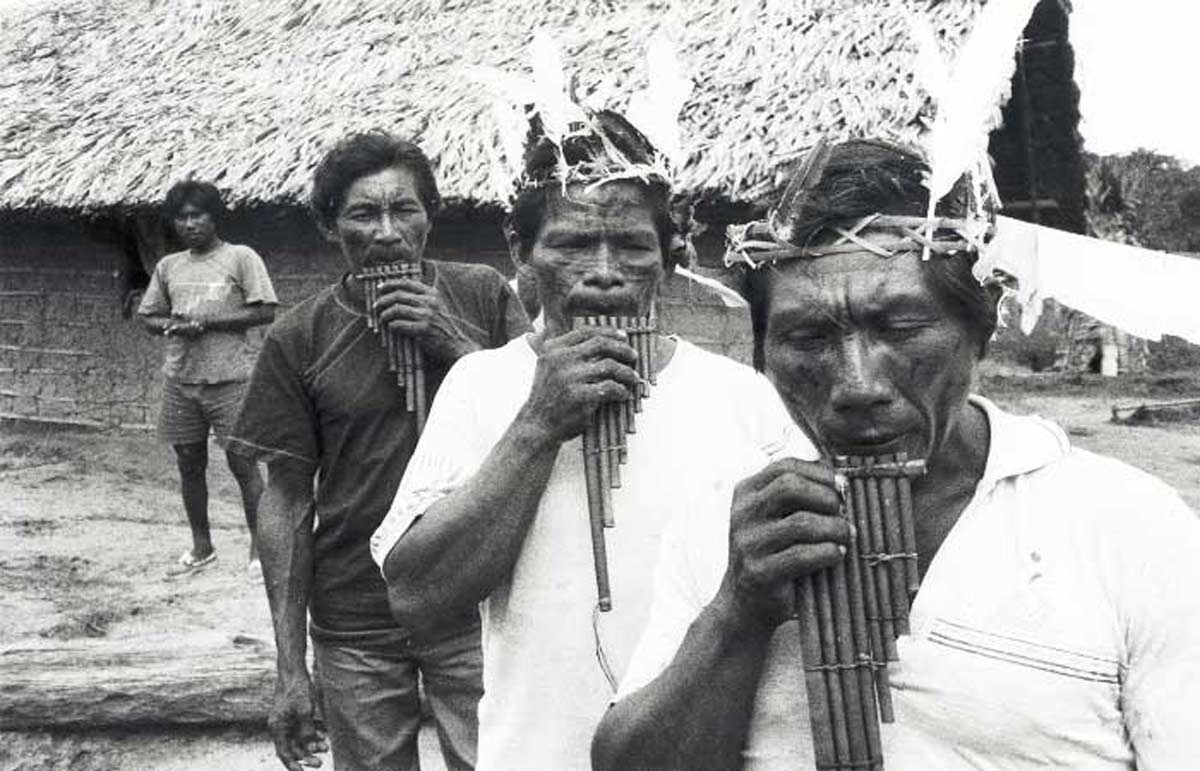
Amazonian myths and legends and firmly anchored in the veneration of nature and the protection of natural balance. The myth of Yacumama talks about the respect that must be paid to the forest and all living beings that are part of it. The anaconda is the silent power that protects the natural equilibrium of the forest and should not be disturbed.
Entities from nature also explain how the unique cultural identity of the region came into being. In the myth of the ancestral anaconda, the order in which the communities descended from the snake corresponds to the hierarchical distribution between different people that defines how communities see each other to this day. This ensures a correct system of social, economic, and even kinship exchange between different communities.
Although individual cultural and geographical aspects create variation between myths, they share a common root. They describe the geen anaconda’s power as one of the most prominent, feared, and respected animals in the rainforest.
Selected Sources:
- Guida Navarro, Alexandre. (2021). “La anaconda como serpiente-canoa: mito y chamanismo en la Amazonía Oriental, Brasil.” Boletín de Antropología Vol. 36 No. 61 January-June 2021.
- Cayón, L. (2013). Pienso, luego creo: La teoría makuna del mundo. ICANH. Bogotá.