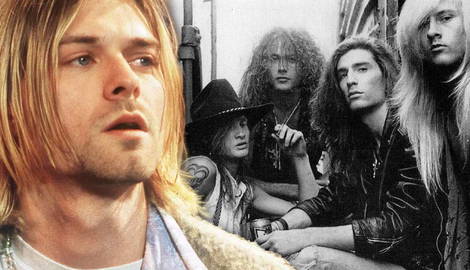
While Gen X practically raised themselves, they also inherited a broken world and system from the Boomer generation. They generally felt unhappy but also felt that they lacked direction because they did not want to follow in the previous generation’s footsteps. Their antidote was brooding in Seattle and surrounding areas. In Seattle’s alternative music scene, a new type of music was beckoning to be heard: grunge. With its distorted guitars, combined with a punk DIY ethic, sudden changes in tempo and velocity, a small underground movement would soon take the music world by storm.
Defining Grunge as a Genre
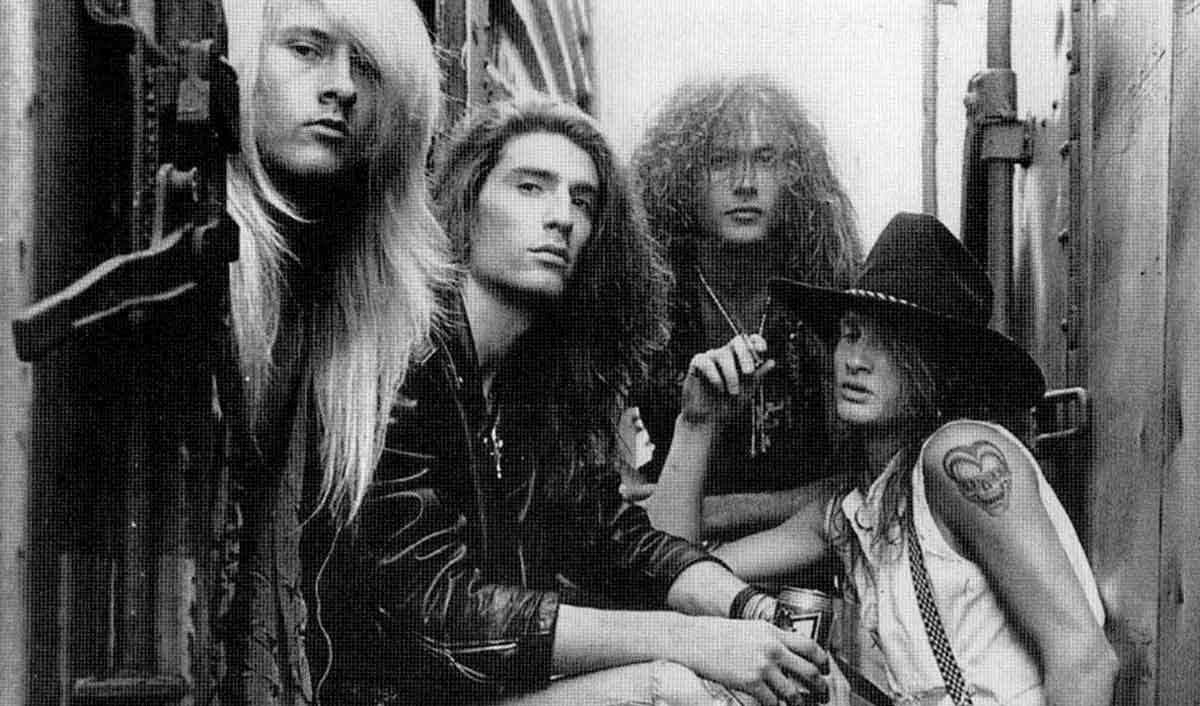
Grunge is a subgenre of alternative rock that flourished between the late 1980s and early 1990s. However, finding the true origin of how Grunge became known as Grunge is almost impossible. Grunge is sometimes also called the Seattle Sound—a marketing ploy by the commercial music industry—but we will stick to “grunge” throughout. Various sources mention various origins:
– Mark Arm, from the band Green River, is said to have used the term first. However, not in the same context as above and he is said to abhor the term.
– The independent label, Sub Pop, launched in 1988, used the term in their marketing material, referring to the energy and grittiness of the music.
- Linking with the above, Bruce Pravitt used the term in Sub Pop marketing material in a review/promotion of Green River’s song Dry As a Bone. He refers to the “gritty vocals, roaring Marshall amps, ultra-loose GRUNGE that destroyed the morals of a generation” (Everett True, 2011)
– Some journalists referred to the “dirty” sound as being “grunge,” where grunge is the opposite of polished and professional. More on this later.
Of course, there are many other stories of how the term came to define a generation and their music. Lester Bangs, an important critic of everything related to rock, pop, and punk is said to have used the word one time. On the other hand, various bands and musicians claim they used the term first. But whoever used the term first—whether in a derogatory way or in a way that pointed out this new sound from Seattle and its surroundings—the term came to define Gen X’s soundscape and fashion choices.
Gen X and Grunge
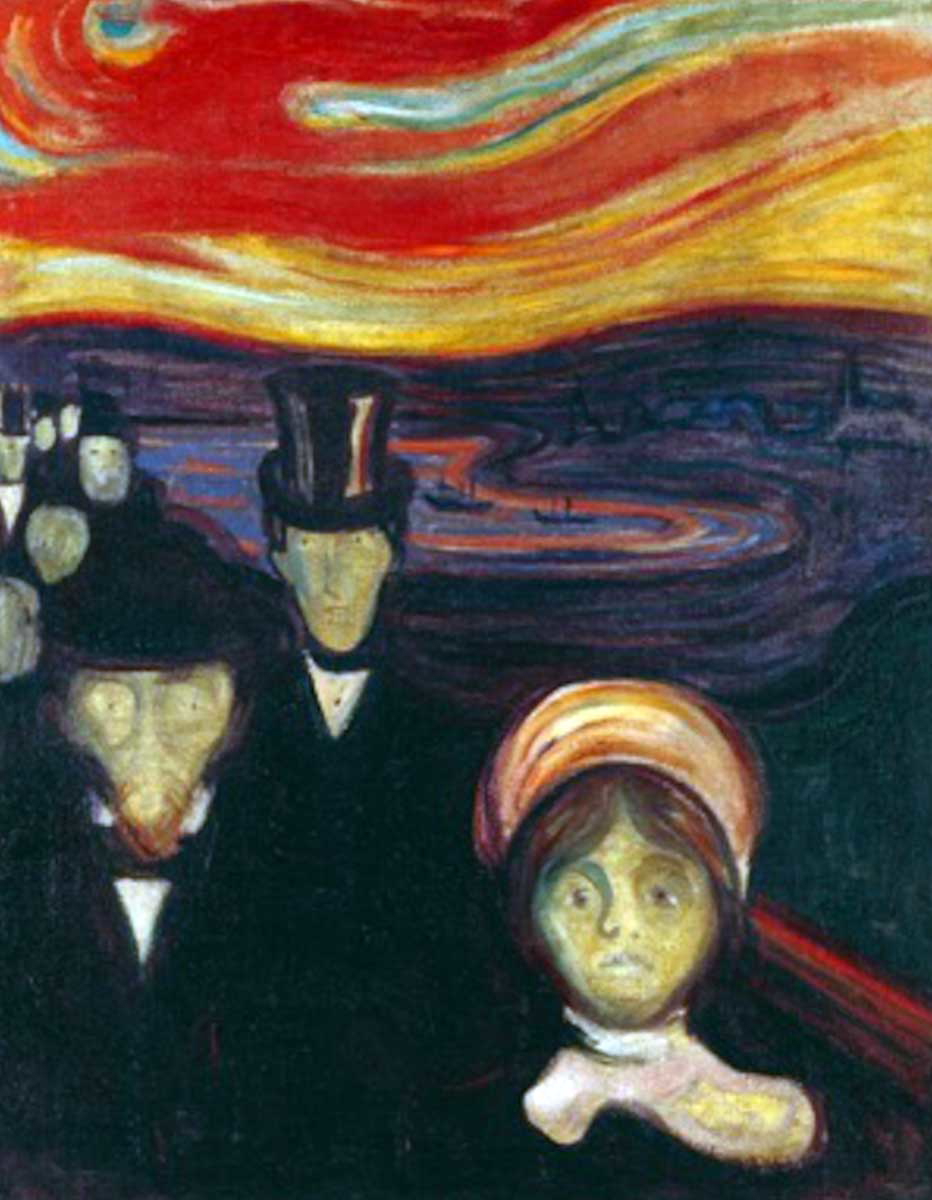
Why was Gen X (those born roughly between 1965 and 1980) so attracted to grunge? To answer that question and return to the music, we must quickly look at what defines the Gen X generation.
Baby Boomers (roughly born between 1946 and 1964) had placid childhoods. World War II was in the past, consumerism found a new foothold, and the generation had the power to influence politics, e.g., protesting the Vietnam War. However, as David M. Gross and Sophfronia Scott in Time magazine have pointed out, Gen X viewed the boomers as a self-centered, fickle, and impractical generation. The new Gen X generation,
“… grew up in a time of drugs, divorce, and economic strain. They virtually reared themselves. TV provided the surrogate parenting, and Ronald Reagan starred as the real-life Mister Rogers, dispensing reassurance during their troubled adolescence. Reagan’s message: problems can be shelved until later. A prime characteristic of today’s young adults [during the 1990s] is their desire to avoid risk, pain, and rapid change. They feel paralyzed by the social problems they see as their inheritance: racial strife, homelessness, AIDS, fractured families, and federal deficits” (Gross and Scott, 1990).
The time was ripe for this overlooked generation to find expression in music and grunge was the perfect conduit for this—from music to the fashion industry—grunge had a lasting impact on the world. It was the perfect musical vehicle to capture the angst of a generation who had to deal with the inherited legacy left behind by their predecessors.
What Is the Grunge Soundscape?
Each genre has defining features that set it apart from others. For example, in Baroque music, the focus is on contrast and drama, while in the Classical era, there is a return to order and balance.
The grunge soundscape comes from the stables of the punk era where a DIY attitude reigned, and musicians eschewed the mainstream labels and promises of fame and fortune. Because of the inherited DIY ethos in grunge music, it usually had an unpolished quality to it—bands could not afford expensive recording studios and opted for cheaper options like home recording.
Grunge inherited its dirty sound from punk and its thunderous guitar riffs from the heavy metal camp. To achieve the sludgy guitar sound, guitarists sometimes relied on guitar effects pedals and powerful amplifiers to deliver their signature sound.
Grunge bands shied away from the elaborate drum and percussion setups bands used during the 1980s. Though the drumkit setups were smaller, they still required drummers with skill and physical strength to drive the grunge beat forward. Drummers like Dave Grohl (from Nirvana, later a Foo Fighter) and Matt Cameron (Soundgarden) opted for four- and six-piece drum kits during the grunge years.
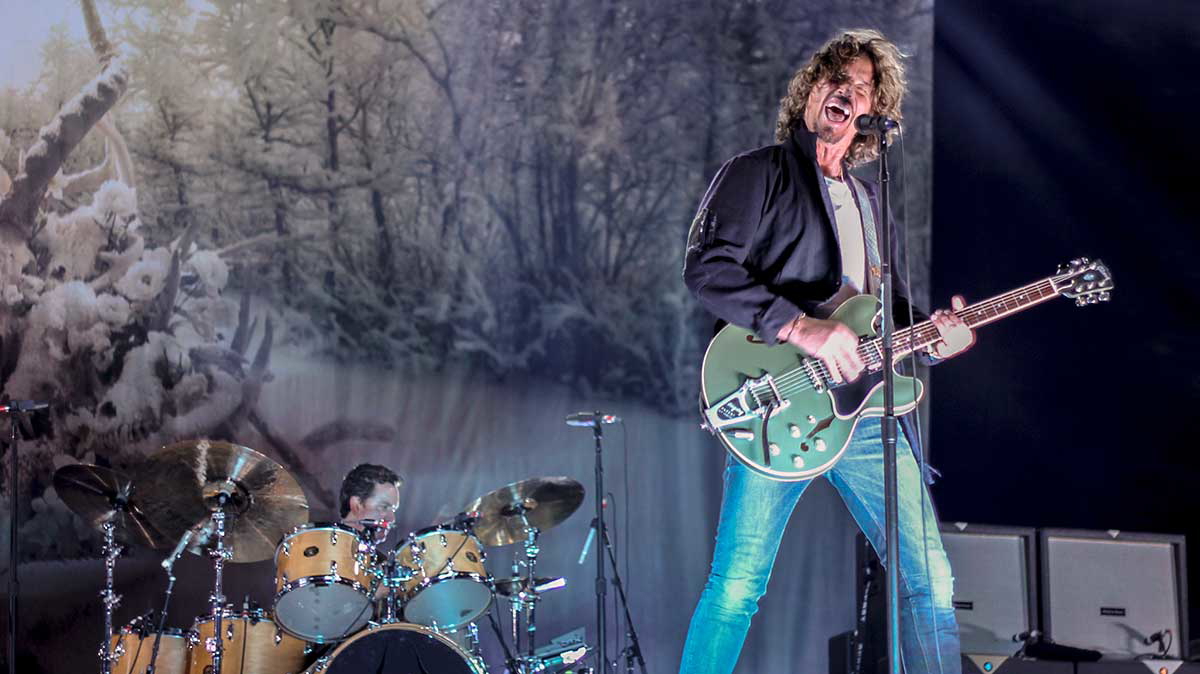
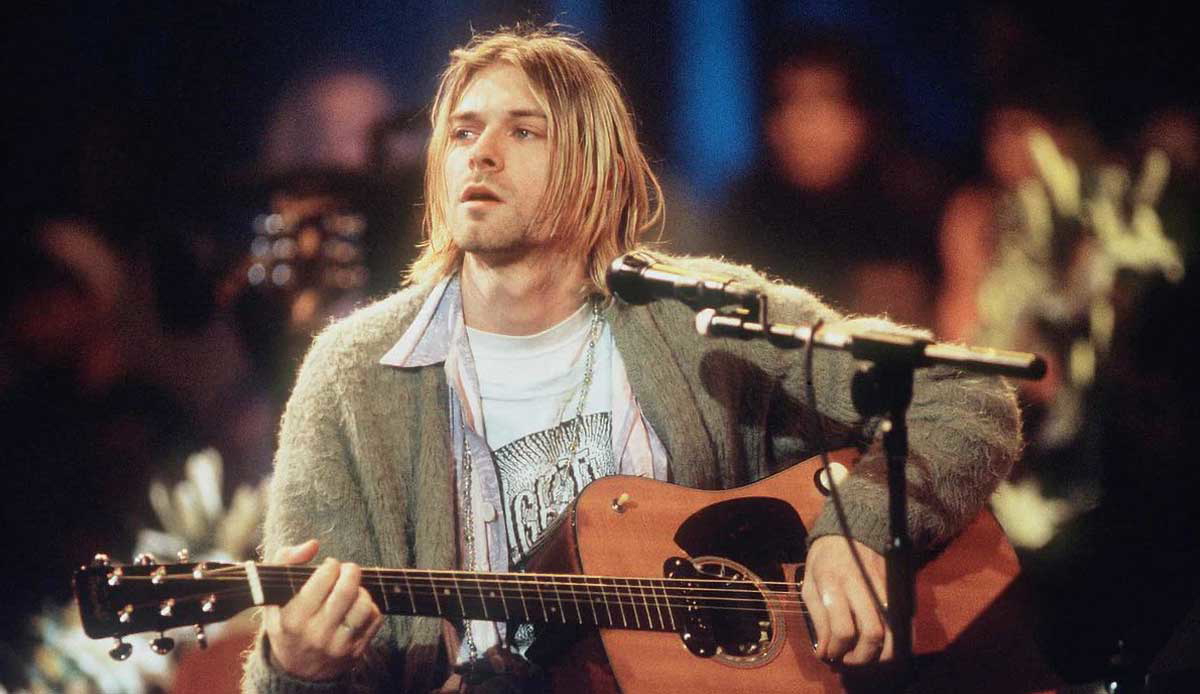
A standout feature of the grunge genre—largely defined by Kurt Cobain and echoed by numerous singers—is the combination of slow, slurred, and sometimes growling delivery. Cobain’s style of singing, which would range from a plodding style of singing to stunning bellowing, was emulated by numerous singers during the grunge era, including Layne Stanley from Alice in Chains and Courtney Love from the band Hole. Other bands’ lead singers like Eddie Vedder and Chris Cornell from Pearl Jam and Soundgarden, respectively, followed suit but added muscular vibrato to the mix.
Combining the grunge style of singing with frequently dark topics appealed to teenagers and twenty-somethings in the early 1990s. They were a generation disillusioned with the world they inherited from the Boomers, which tied into their feelings of alienation, despair, and hopelessness. Theirs was a broken world that needed change, yet they had “few heroes, no anthems, no style to call their own” (Gross and Scott, 1990). Grunge changed all of this and had a far-reaching influence on almost all spheres and industries, and even sparked a fashion revolution that continues to last.
The Grunge Pioneers
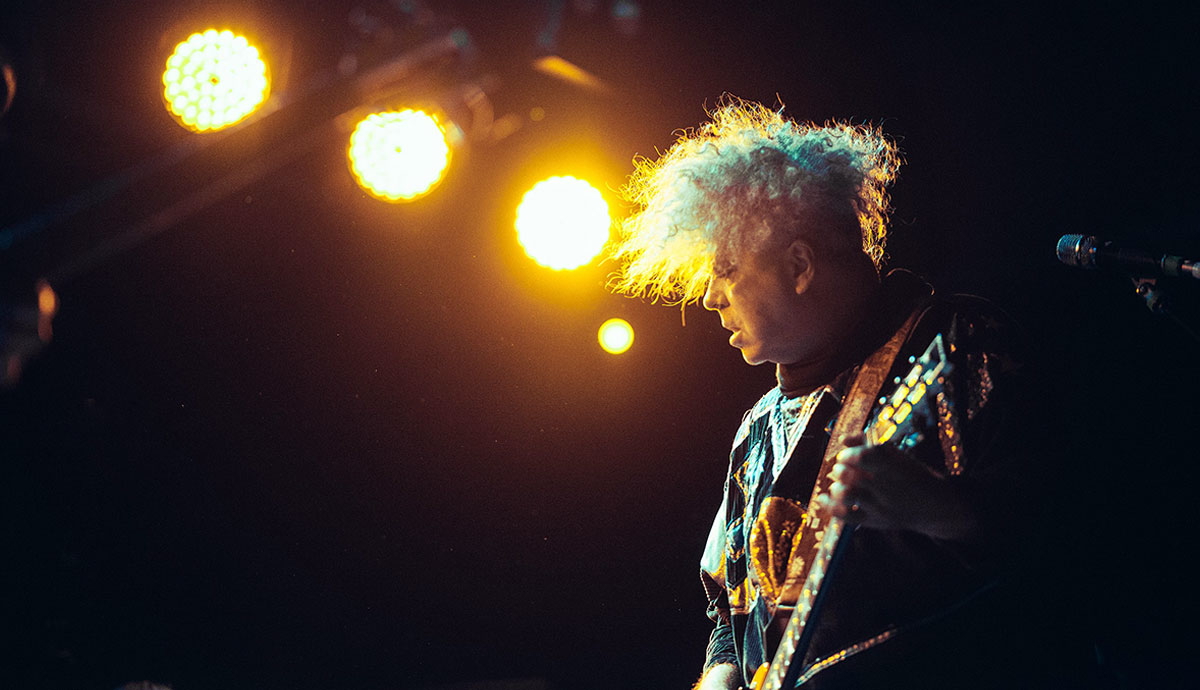
Every movement has its pioneers who set the scene for those who come after them. For example, Isadora Duncan is recognized as the pioneer of modern dance, while Le Corbusier is hailed as the pioneer of modern architecture.
Seattle’s damp, overcast, and isolated position created the perfect ecosystem where grunge could shoot its roots and thrive. The city’s relative isolation allowed bands to develop their sound organically without external influences from the mainstream musical system. One could say the movement was in part inspired by the bleak urban landscape, just like brutalist architecture also inspired these five songs, among others.
Below is a brief exploration of four grunge pioneers before Nirvana took the movement to mainstream heights.
Malfunkshun (Active: 1980-1987)
Imagine skipping Easter dinner at your grandmother’s house and staying in to record a demo. Well, that is how the band Malfunkshun started with brothers Andrew and Kevin Wood. Sometime later, David Hunt (1964-2009) joined them as drummer, and Dave Rees brought his bass guitar to the band to form a quartet. However, the foursome would become a trio after Hunt and Rees left the band after one show, Andrew took over on bass, and Regan Hagar was recruited to be the drummer. The rest is history when the trio became a powerhouse to be reckoned with.
But here is the clincher: the band was not from Seattle, but Bainbridge Island, Kitsap County, Washington. Alongside Green River (formed in 1983), Malfunkshun is one of the pioneering grunge bands. They combined elements from the glam rock stables with unprecedented distortion and loudness. Their stage alter egos, who wore makeup and glam-style outfits, were a nod to the band KISS.
The band’s combination of punk elements and anthem-like heavy metal had a lasting impact on the grunge bands that followed in these pioneers’ footsteps.
Green River (Active: 1983-1987)
Their name is inspired by the Green River Killer, a.k.a. Gary Ridgway, and not the CCR album as is commonly believed. They formed in Seattle, Washington, in 1984, and although they had minimal impact outside their native Seattle, their impact shines through in their contemporaries like the Melvins and Soundgarden. Reaching further, they inspired bands like Nirvana and Alice in Chains, and others like Mudhoney, Love Battery, Pearl Jam, and Mother Love Bone.
Their music is a combination of glam, metal, and punk which eventually became the genre known as grunge. But these pioneers were in turn inspired by a little-known band, Tales of Terror.
Bam Bam (Active: 1983-1992)
The Godmother of Grunge is none other than Tina Bell, frontwoman of Bam Bam. For far too long, “The legacy of Bell, a Black woman, has often been overlooked in a genre typically associated with long-haired white guys” (Jade Yamazaki Stewart, 2021). Unfortunately, she was also the victim of racial attacks at concerts when they traveled, but locally, she and Bam Bam were well-loved. Unfortunately, Tina and, in turn, Bam Bam, were suppressed due to the reigning culture of misogyny and racism—the world was not ready to listen to a Black frontwoman who was as good as her male contemporaries (Scotty Buttocks, cited by Larson, 2020).
Almost ten years before the Seattle sound conquered the mainstream music industry, Bam Bam played around with slow, sludgy rhythms and off-kilter timings. Although petite, Tina could growl and scream over the heavy guitars and drums just like her male contemporaries.
Bam Bam was the first Seattle band to record tracks at Reciprocal Recording—the same location that Nirvana used to record demo sessions for Bleach and Incesticide. It is a fair assumption that Tina and Bam Bam’s ideas were appropriated when other grunge bands were also recorded at the same studio.
Tina Bell passed away alone around October 10, 1992, due to cirrhosis of the liver after battling depression and alcoholism.
The Melvins (Active: 1983-Present)
Although the Melvins never reached cult status, they became a bridge between the metal and punk communities from the 1990s onwards. Curt Cobain frequently sang their praises and even mentioned them as one of the influences for starting Nirvana.
The band formed in Aberdeen, Washington—the same town that would give the grunge world Kurt Cobain and Krist Novoselic. The Melvins took Black Sabbath’s heaviness and slowed it down to a sludgy tempo. Younger bands in turn took the Melvins’ heaviness and added a pop song structure to their music—something the Melvins did not have in their songs. Although the Melvins never broke into the mainstream market and their cult following expanded slightly, they stayed mostly underground.
There are many other bands worth mentioning, but next, we will turn our attention to Grunge’s heyday.
The “Mighty Four” Grunge Bands
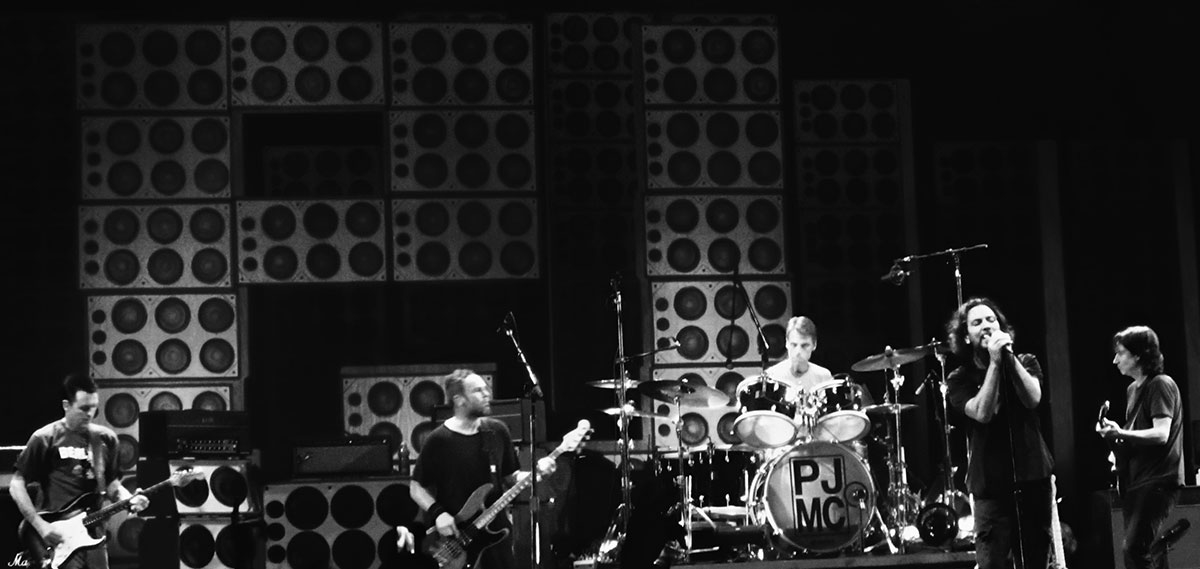
Like various movements throughout history, for example, the Frankfurt school (critical theory), Hudson River School (American painting), or the four schools of Buddhism (religion), four bands defined the grunge movement. The four most important grunge bands are Alice in Chains, Nirvana, Pearl Jam, and Soundgarden. We will take a brief look at how each incorporated elements taken from punk, hard rock, and heavy metal, and the impact it had on a whole generation.
Soundgarden (Active: 1984–1997 and 2010–2017)
Soundgarden are counted among the grunge pioneers. Their name, according to Kim Thayil, was supposed to reflect the various styles of music from which their own grew—punk, shoegaze, with a heavy dose of noise rock and heavy metal in their earlier works. Led Zeppelin and Black Sabbath also had a profound influence on their work.
What sets Soundgarden apart from other grunge bands is that they were the first grunge band to sign with a major label (A & M) back in 1989. However, they did not then achieve mainstream success like Nirvana did in 1991. Only through successive releases did Soundgarden see success and wider attention.
Placing Soundgarden’s musical output down to a single genre is nearly impossible, and they never liked being labeled as a grunge band:
“Grunge was a f**king word used in TV commercials about scum on your shower curtains you know. It’s called rock and roll, or it’s called punk rock or whatever all those genres that everyone’s just like—we never were Grunge, we were just a band from Seattle” (Ben Shepherd, 2013).
Nirvana (Active: 1987-1994)
Through changes in tempo and volume, Nirvana would express alienation and anger. For example, a quiet, tuneful verse would be interrupted by a ferocious, loud, and distorted chorus. This phenomenon is known as stop-start dynamics and can be heard in Smells Like Teen Spirit above (Weird Al Yankovic also produced a parody that illustrates the above).
Following the example set by 1970s punk bands, Kurt Cobain would often use allusive, sarcastic lyrics set against a background of powerful, sludgy music creating a contrast. The contrast between the lyrics and music created a space where themes such as hopelessness, male abjection (e.g. in On a Plain he sings “As a defense I’m neutered and spayed”), and surrender.
The punk ethic that if one succeeds, you are failing is held in high esteem by alternative rockers. When Nirvana’s album Nevermind reached commercial success, many fans called them sellouts, yet the band abhorred the media onslaught that followed their ascent. Cobain was the media’s poster child for the self-destructive rock star. He frequently courted controversy with his sequence of drug-related escapades, but also for his advocacy of gay rights and feminism.
Alice in Chains (Active: 1987-2002 and 2005-Present)
Alice in Chains have had many labels attached to their style of music, but two that seem to describe their music best are grunge and alternative rock. They were the first grunge band to sign with a major label and achieve mainstream success. Their song, Man in the Box (1991) spent 20 weeks on the Billboard mainstream rock chart. Further, their album Facelift achieved certified gold status after selling over half a million copies.
They consider themselves a metal band, although the mainstream media labelled them as a grunge band when they started performing. They have even been called “Seattle’s most malevolent-sounding grunge outfit,” so perhaps we should honor their wishes and refer to them as a metal band, or grunge-metal for lack of a better term.
Pearl Jam (Active: 1990-Present)
Through Nirvana, alternative rock has been gaining acceptance outside the close-knit grunge communities in the mainstream music industry. Although the band is associated with the grunge scene, they also incorporate elements of alternative and hard rock in their sound.
Keeping with the punk DIY ethos, the band became tangled in a dispute over ticket prices through the ticket sales giant, Ticketmaster, in 1994. While the band wanted to keep prices as low as possible, Ticketmaster’s excessive fees made this impossible. Pearl Jam started boycotting Ticketmaster venues and sought alternative ticket sale avenues. Although the boycott meant the band did not have much mainstream success, they still kept on recording and releasing albums, notably, they managed to finish and release Vitalogy.
Other notable releases include Binatural (2000), Riot Act (2002), Pearl Jam (2006), Backspacer (2009), and Lightning Bolt (2013). At the time of writing, their latest offering, Dark Matter, was released in 2024.
Grunge Extends to Fashion

The DIY school of thought grunge inherited from punk also spilled over into the fashion world and still resonates throughout the world today. Many grunge musicians had a somewhat I-don’t-care unkempt appearance, which resonated with the Gen X teens and twenty-somethings, and the fashion industry cashed in on this look. American department stores had sections dedicated to grunge fashion—knockoff flannel shirts, combat boots, stocking hats, and thermal underwear—favorite fashion items of the Seattle bands and their fans. The clothing reflected the lower to middle-class backgrounds of grunge musicians and their followers alike.
The “original” grunge fashion relied on thrift store finds. Flannel shirts and thermal underwear provided warmth in the colder Northwestern climate, while combat boots were warm and comfortable footwear. Stocking hats, known as beanies, colloquially meant that grunge fans could start the day without worrying about brushing their hair—the unkempt, I-don’t-care look. Female rockers like Courtney Love and Kat Bjelland put their spin on female fashions by mixing 1950s fashion trends like babydoll dresses with 1970s glam apparel such as overgarments and slips.
Overall, the grunge look used muted colors and was gender-neutral due to the shapelessness of the clothing, and it appealed to the masses. Also, the color schemes did not use stereotypical colorways associated with being either masculine or feminine.
Apart from the mainstream music industry commercializing grunge music, fashion designers cashed in on the grunge look. For example, in 1993, 29-year-old Marc Jacobs put models in Dr. Martens, flannel shirts, printed granny dresses, and beanies and sent them down the runway. Consequently, Jacobs was fired after the Perry Ellis 1993 spring collection runway show! Of course, when grunge fashion hit the runways and became commercialized, it faced critical derision from the grunge community. But grunge fashion and grunge music are here to stay, albeit in a different form today.