
The horrors of slavery in the 19th-century American South led to many attempts at freedom. Slaves made runs for the safety of the North on foot, on trains, and by boat. Some opted for more creative methods, including Henry Brown. Earning himself the nickname “Box”, Brown’s clever escape was only the beginning of his new life. He became an author, lecturer, and magician, taking his story and the cause of abolition to the international stage. Just who was this enigmatic man?
Early Life Enslaved
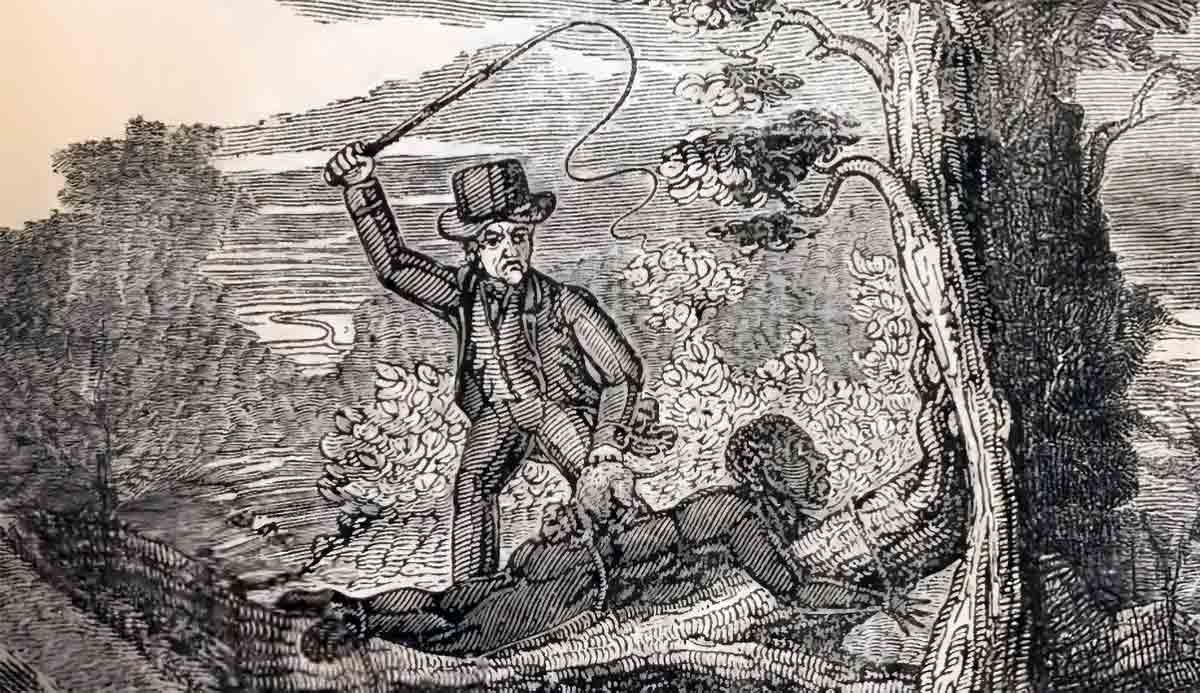
Like the majority of US-based African Americans of the era, Henry Brown was born into slavery. He was born in 1815, though his exact date of birth is lost to history. He lived in Louisa County, Virginia, on a plantation known as the Hermitage. He, his parents, and seven siblings were all enslaved by a man named John Barret. Brown was 15 when Barret died, and he was assigned to work in a tobacco factory in Richmond, Virginia, by Barret’s son.
Eventually, he married a woman named Nancy, who was enslaved by a different man in Richmond. Nancy and Brown had four children. Despite their circumstances, Brown was able to earn enough money through “overwork”, or side jobs he was permitted to take, to rent a home for his family to live in together. In 1848, Brown’s wife and children were sold to another plantation in North Carolina. He was not permitted to follow them or visit, and went into mourning. He decided to channel his heartbreak into resolve and began planning his escape from bondage.
A Daring Escape
Brown knew that if he was going to escape, he would need a unique plan to avoid slave catchers or anyone who might turn him in along the way. He contacted a member of his church, who was a free Black man, to enlist his advice. This man, James Anthony Caesar Smith, connected Brown with Samuel Smith, a shoemaker who agreed to help Brown with his escape attempt. Samuel Smith was a white man who owned slaves himself, but was motivated to help Brown if the price was right.
The three began tossing around ideas and rejected several. However, Brown suggested that perhaps the men attempt to send him in a freight box north. If he could stay undiscovered in a shipping box, he could arrive in a slave-free state as a liberated man. Samuel Smith reached out to one of the leaders of the Pennsylvania Anti-Slavery Society, who agreed to accept the package.
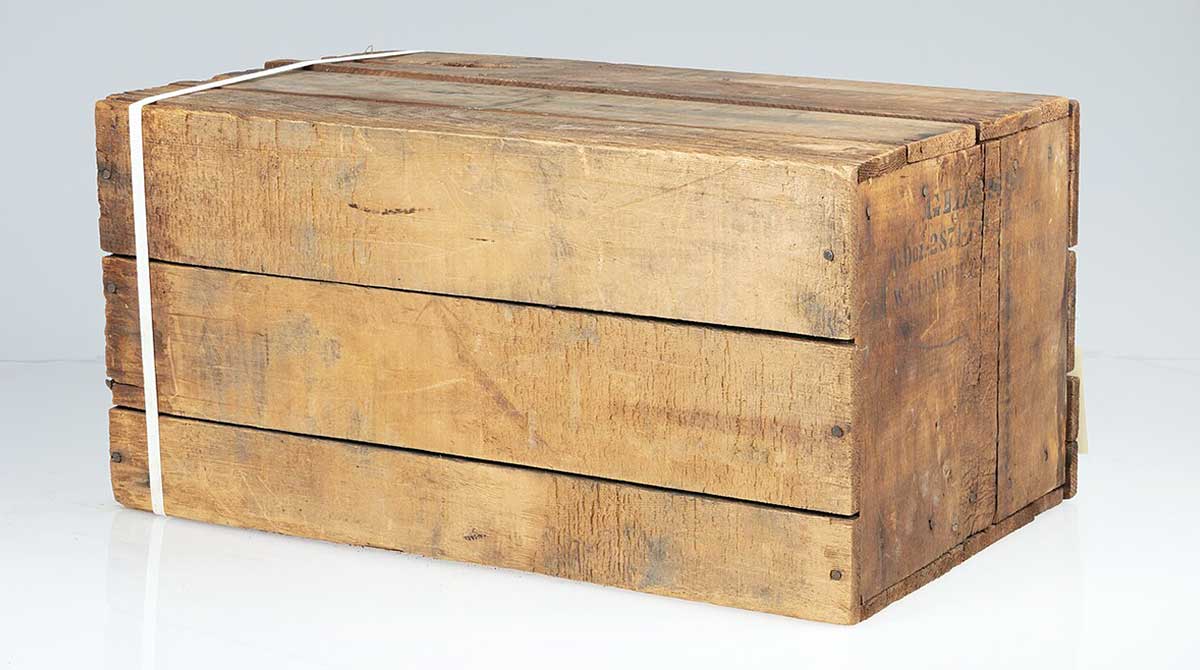
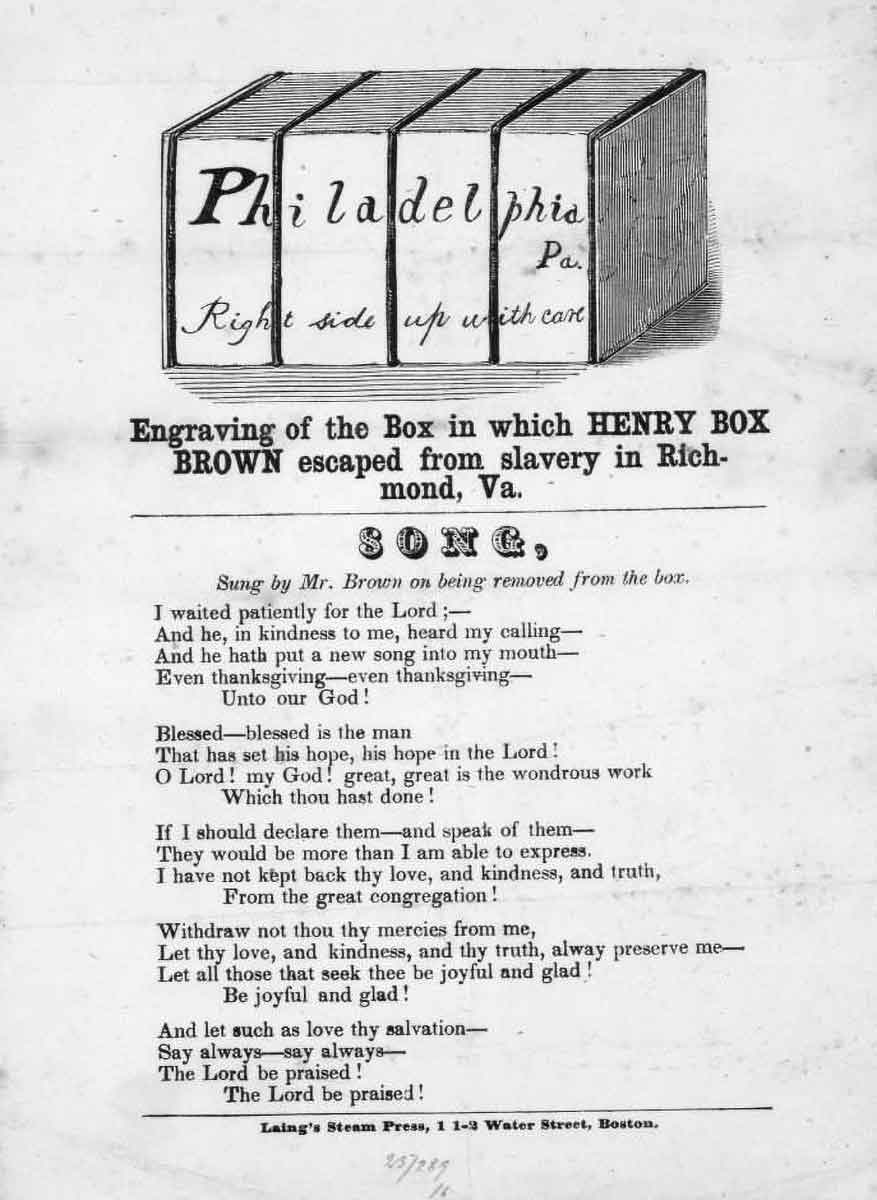
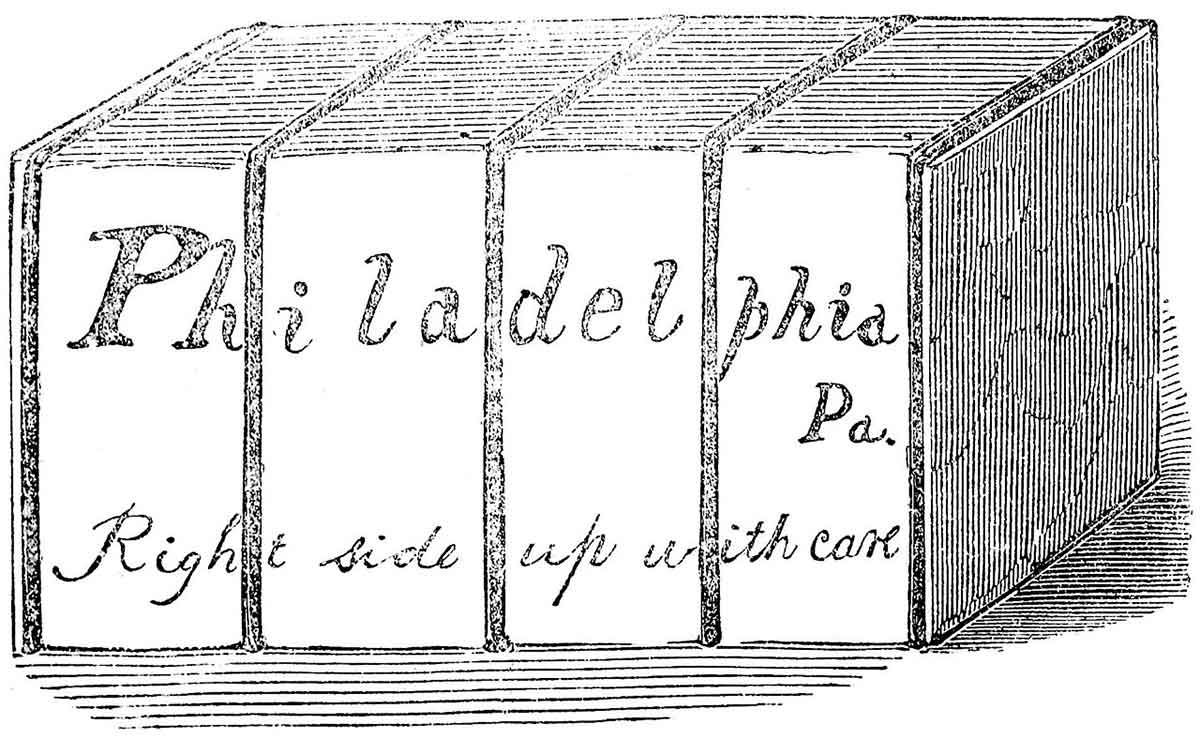
The group of three began to prepare for the shipment. A wooden shipping crate measuring 3 x 2.5 x 2 feet was lined with cloth, a single hole cut in the top to allow for air while still remaining inconspicuous. The box was marked as “dry goods” and would travel from Richmond to Philadelphia. On March 23, 1849, Brown was sealed inside the box, the top nailed on, and shipped.
The journey began on a steamboat and included time in a wagon as well. At one point in the trip, Brown was certain he would die. Unable to turn in the box, he was forced to remain in whatever position the crate lay in. The box was turned so that Brown’s head was facing downwards. He later reported that he “felt my eyes swelling as if they would burst from their sockets; and the veins on my temples were dreadfully distended with pressure of blood upon my head.” However, he was saved when he heard a man say to a companion that he had been standing too long. The man flipped Brown’s crate onto its side to take a seat, unknowingly saving the stowaway.
The crate was handled roughly on multiple occasions during the 27-hour journey, but Brown was determined to stay silent to protect his freedom. The box and its contents arrived at the headquarters of the Philadelphia Anti-Slavery Society on March 24th. It was opened with hesitation, but James McKim, the man Smith had contacted, was relieved to see Brown emerge alive, reciting a prayer.
A Symbol for the Cause
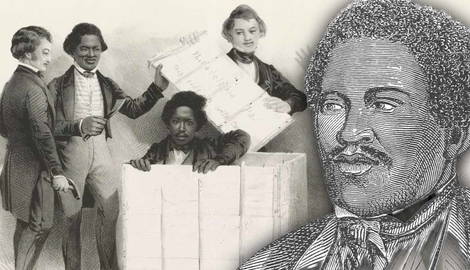
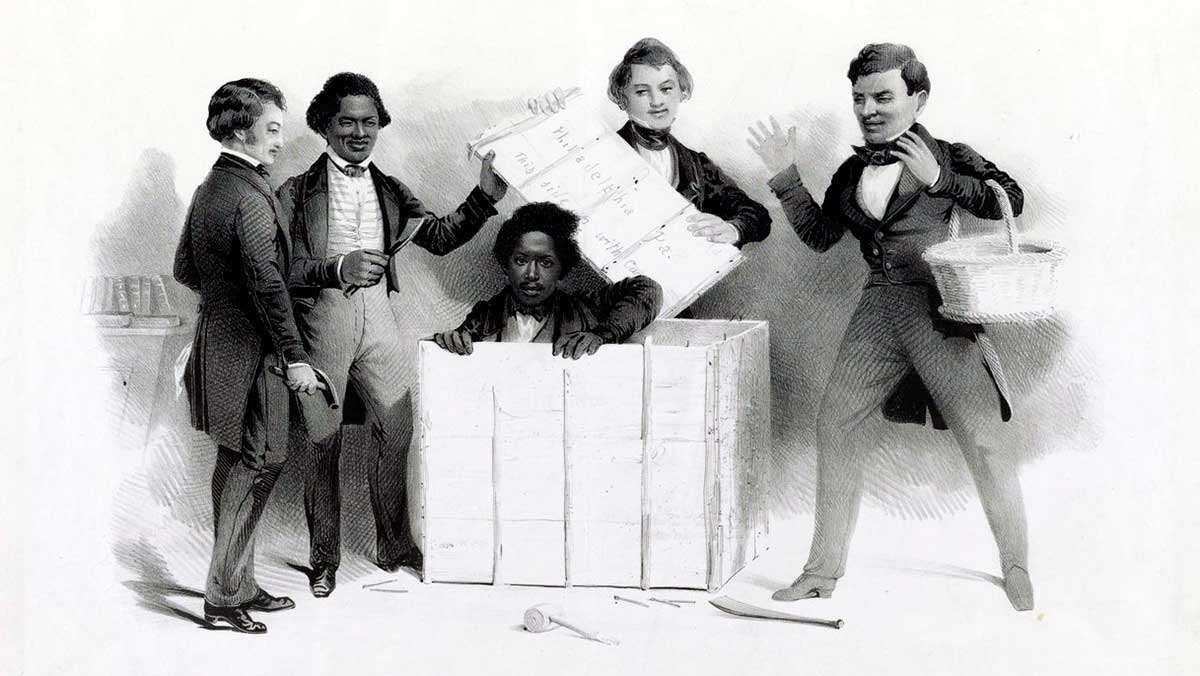
The moment that Henry Brown stepped out of the box, dazed but alive and free, was immortalized in a lithograph titled The Resurrection of Henry Box Brown by Samuel Worcester Rowse. This image is believed to be the only image of Brown that was drawn from life. The box in the drawing is suspected to be based on Brown’s actual crate as well. The image was published in 1850 to help raise money for Brown’s endeavors. In the meantime, Brown was already being put to work as an advocate for the abolitionist cause.
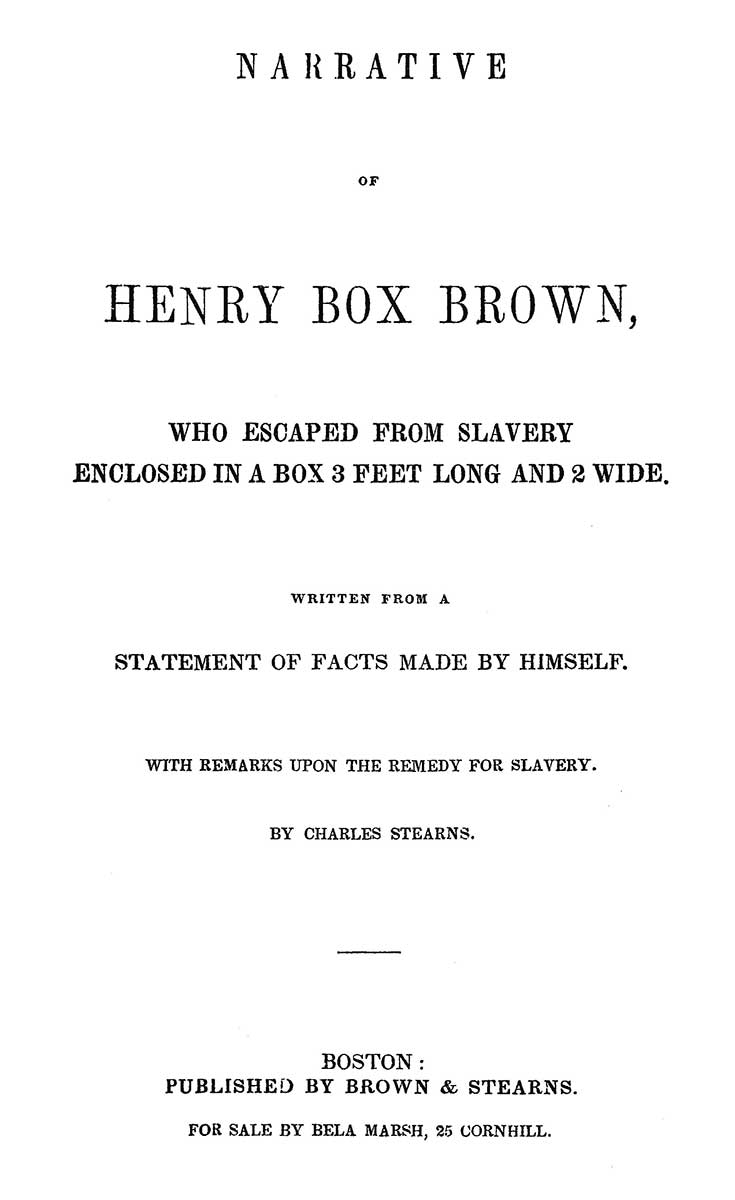
In May of 1849, he appeared at the New England Anti-Slavery Convention in Boston, Massachusetts, where he earned his nickname of Henry “Box.” He spoke to the gathered crowd and sang for them. Throughout the summer, he appeared at anti-slavery events, and in September, the Narrative of Henry Box Brown was published. The book was written by Charles Stearns with assistance from Brown. Stearns and Brown traveled the New England region to promote the book and speak about Brown’s experiences.
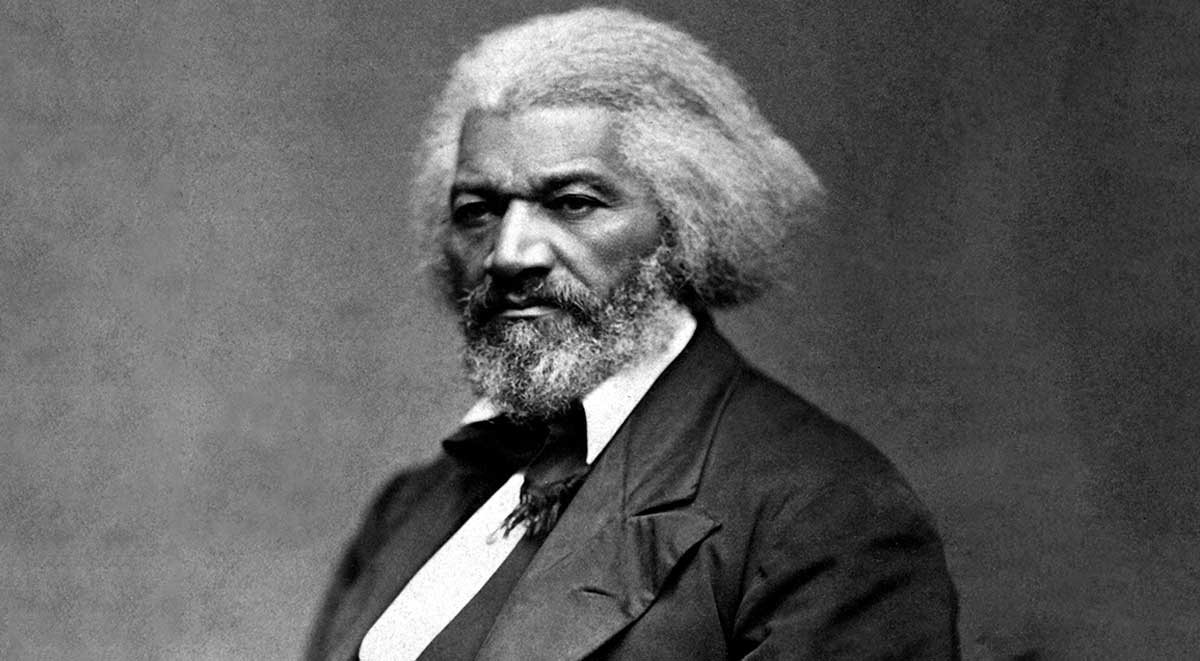
There were, however, some people who expressed trepidation about publicizing Brown’s escape. Frederick Douglass, for one, argued to keep the procedure confidential. In fact, Samuel Smith attempted to ship more enslaved people to Philadelphia just less than two months after Brown’s success, and was caught and arrested. He was sentenced to six and a half years in prison for his part in the escape.
Mirror of Slavery: The Show
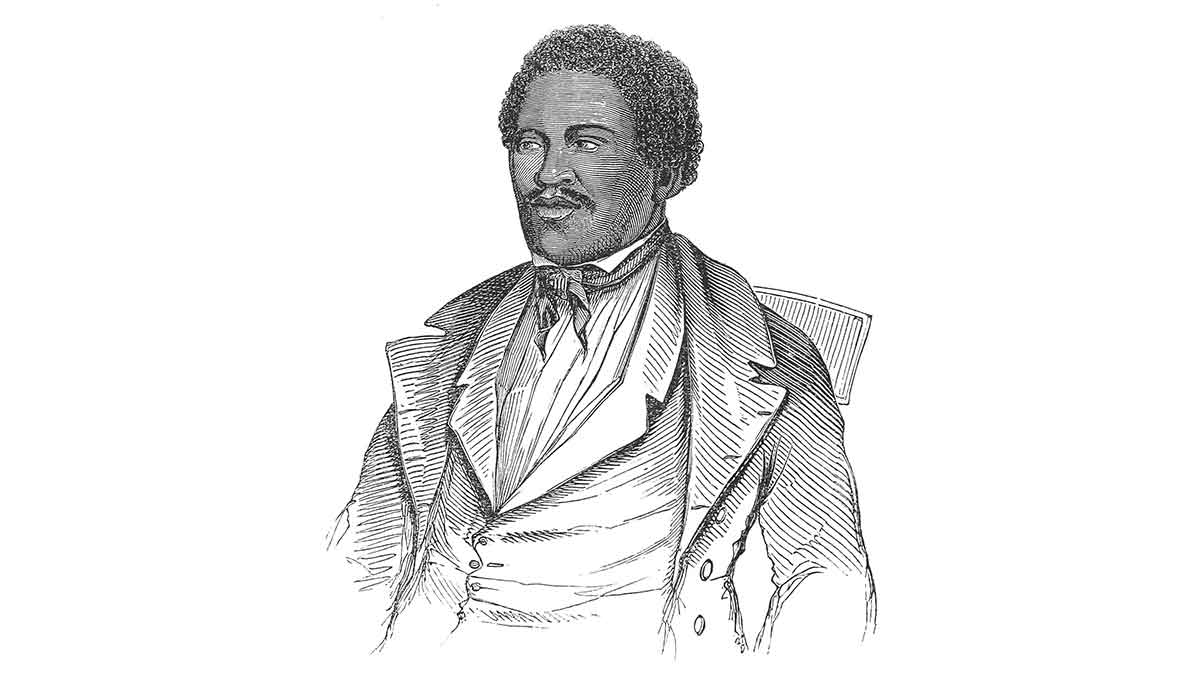
Henry Brown had ambitions to expand further on his public success, promoting himself along with the cause of abolition. A few months after his escape, he hired a Boston artist named Josiah Wolcott to help him build a moving panorama about slavery and his escape. Titled “Henry Box Brown’s Mirror of Slavery,” the display was completed in April 1850. It opened in Boston and was exhibited throughout New England that summer.
By this time, James Smith had joined his friend and went on tour with him. Despite the status of the North as slave-free, not everyone felt the same way about the institution. On August 30, 1850, Brown was assaulted in Providence, Rhode Island. The encounter shook him up, and coupled with the news of a new Fugitive Slave Act that was soon to be enacted, Brown was worried about the future of his freedom. He decided to leave for England that fall. James Smith accompanied him, and they continued displaying the panorama for audiences across the Atlantic, including in cities such as Liverpool and Manchester.
By the following June, the friendship between Brown and Smith was on the rocks after some disagreements about money. Smith publicly criticized Brown for making no attempt to free his still-enslaved wife and children despite having the cash to purchase their freedom. The pair ended their partnership, and Brown’s show took on a more entertainment-focused approach as opposed to an abolitionist-centered tone.
The panorama continued in England, where Brown stayed for about 25 years in all, throughout the 1850s. Despite the existence of his American family, Brown married for a second time in 1859 to a woman whose name is lost to history. A magic act, including hypnosis, was added to Brown’s show, and he billed himself as the “King of all the Mesmerisers.” In 1875, Brown returned to America with his wife and their daughter. He continued his magic show, performing in the US and Canada. Brown’s magic act included the original shipping box in which he made his escape. His last known performance took place on February 26, 1889, in Ontario, where he eventually lived for a time. Little is known about the end of his life, but Brown’s death was recorded on June 15, 1897, in Toronto.
Henry “Box” Brown was not a perfect symbol in the fight against slavery, but he became one nonetheless. His one-of-a-kind escape brought attention to the desperation that those in bondage were experiencing in 19th-century America. He smartly capitalized on his story, making a new life for himself despite criticism from some. An unforgettable figure in the story of American slavery, Henry Box Brown earned his place in history.