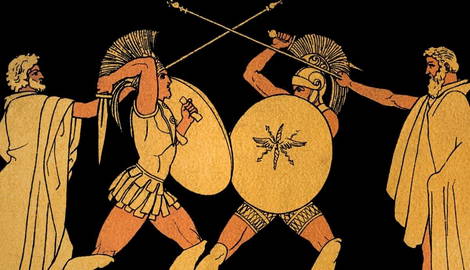
The Trojan War, perhaps the Bronze Age’s most famous conflict, pitted the Trojans (also called Dardanians) and their many allies (the Pelasgians, Thracians, Ciconians, Paeonians, Paphlagonians, Halizones, Mysians, Phrygians, Maeonians, Carians, Lycians, Amazons, and Ethiopians) against an army of invading Greeks. The accounts of this conflict focus on the many heroes and champions found on both sides. On the Greek side, we meet the famous Achilles, Agamemnon, and Odysseus, among others. Who are the most famous, skilful, and cunning among the defenders of Troy?
1. Hector: Greatest Trojan Hero of the Iliad
Firstborn son of King Priam of Troy and Queen Hecuba, and heir to the throne, the Trojan hero Hector was the greatest warrior of the Trojan army. Though he personally disapproved of the war, he loyally fought on behalf of his people and his kingdom. He was described as bold but thoughtful, and a good son and father. He was admired by both sides.
Hector led the Trojan and allied forces against the Greeks, whose champions only withstood his attacks with great difficulty, especially once Achilles removed himself from the fighting. When the Greeks first came to Troy, Hector slew the Greek hero Protesilaus, who was the first Greek ashore.
Later, he led a party that attempted to save his brother Troilus from Achilles and barely survived. In the tenth year of the war, Hector fought Ajax the Greater to a stalemate in a duel that lasted all day. He later pushed the Greeks back to their camp, which he broke into and began to burn the Greek ships. He was foiled by the appearance of Patroclus wearing the armor of Achilles.
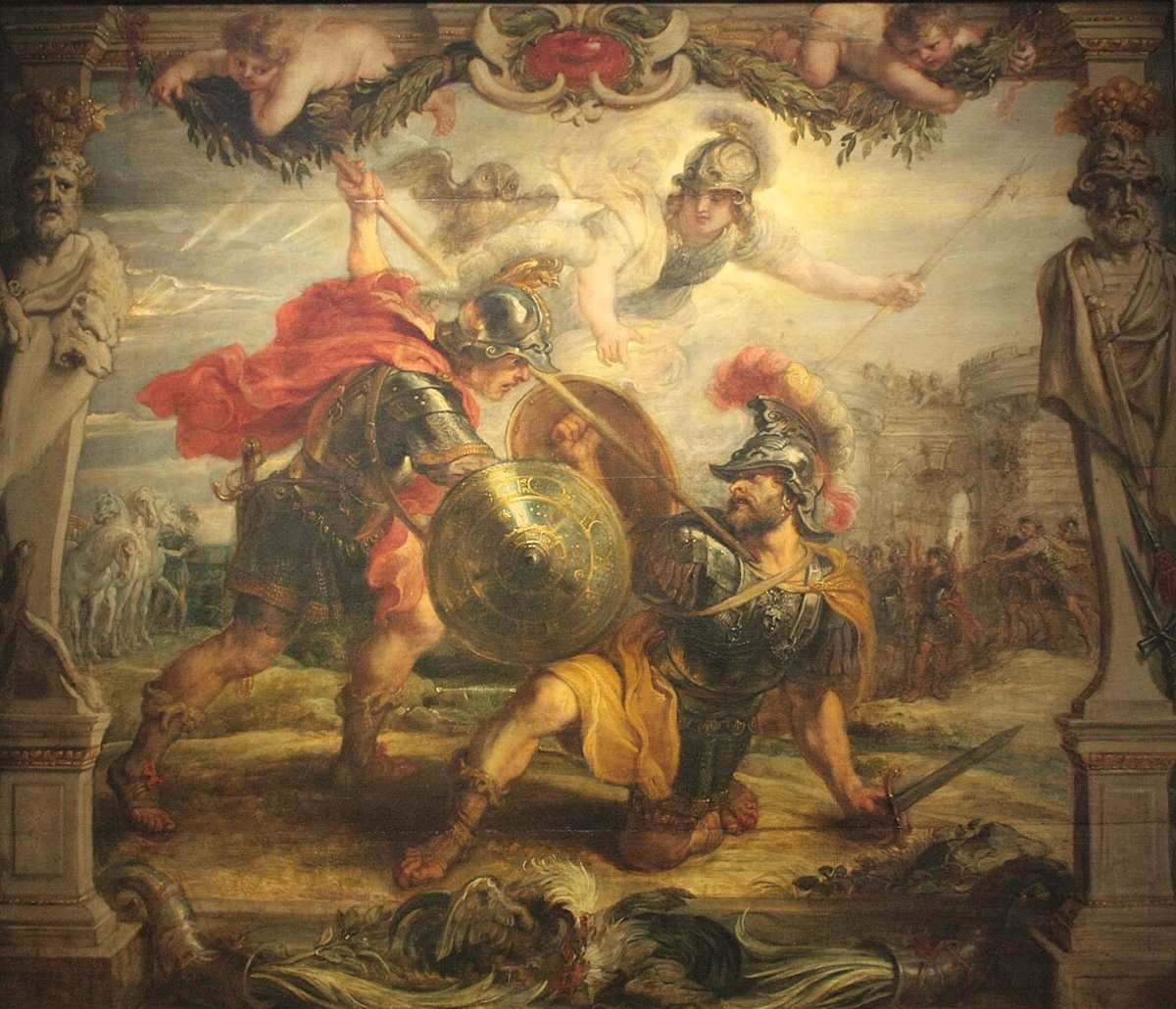
Though the Trojans were pushed back to the walls of Troy, Hector kills Patroclus. This causes Achilles to re-enter the conflict. As the rest of the Trojans flee into the city, Hector faces Achilles and is killed in an epic duel of heroes. Achilles then drags Hector’s body around behind his chariot for twelve days before being convinced to ransom it back to Priam.
2. Paris: Lover of Helen and Killer of Achilles
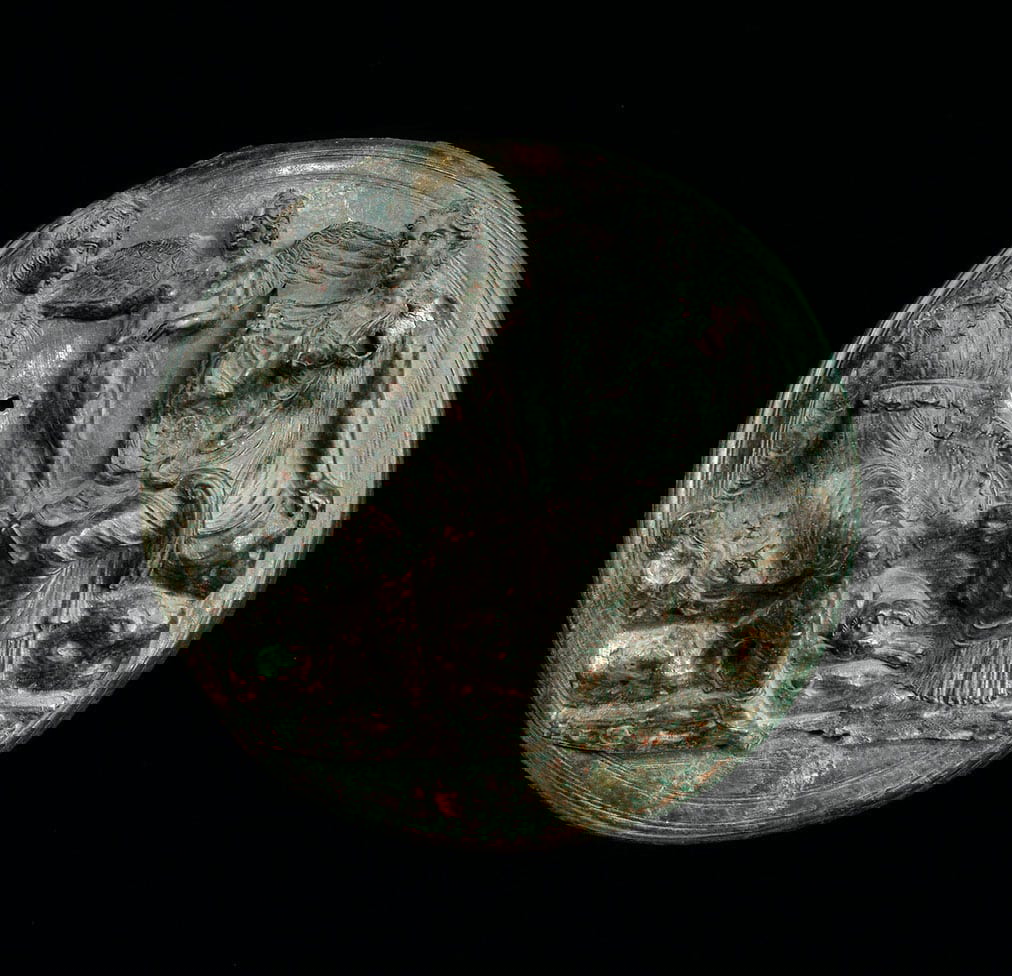
The son of Priam and Hecuba, it was foretold on the day of Paris’ birth that he would bring ruin to Troy and its people. Paris was left exposed on Mount Ida to die but was suckled by a she-bear, and later adopted by a herdsman. As a youth, Paris was called upon to judge between Hera, Athena, and Aphrodite and award a golden apple to whichever he deemed to be the most beautiful. The goddesses each offered him a bribe to strengthen their case. Paris selected Aphrodite, who offered the love of Helen, the most beautiful woman in the world.
To claim his prize, Paris returned to Troy, where he was accepted as a son of Priam. From there, he journeyed across the sea to Sparta. There he met Helen, the wife of King Menelaus, who either ran off with him willingly or was abducted. It was this act that ignited the Trojan War. Paris was not a great warrior like the other Trojan heroes. He was often depicted as unskilled and cowardly. He was nearly killed in a duel with Menelaus but is saved by Aphrodite.
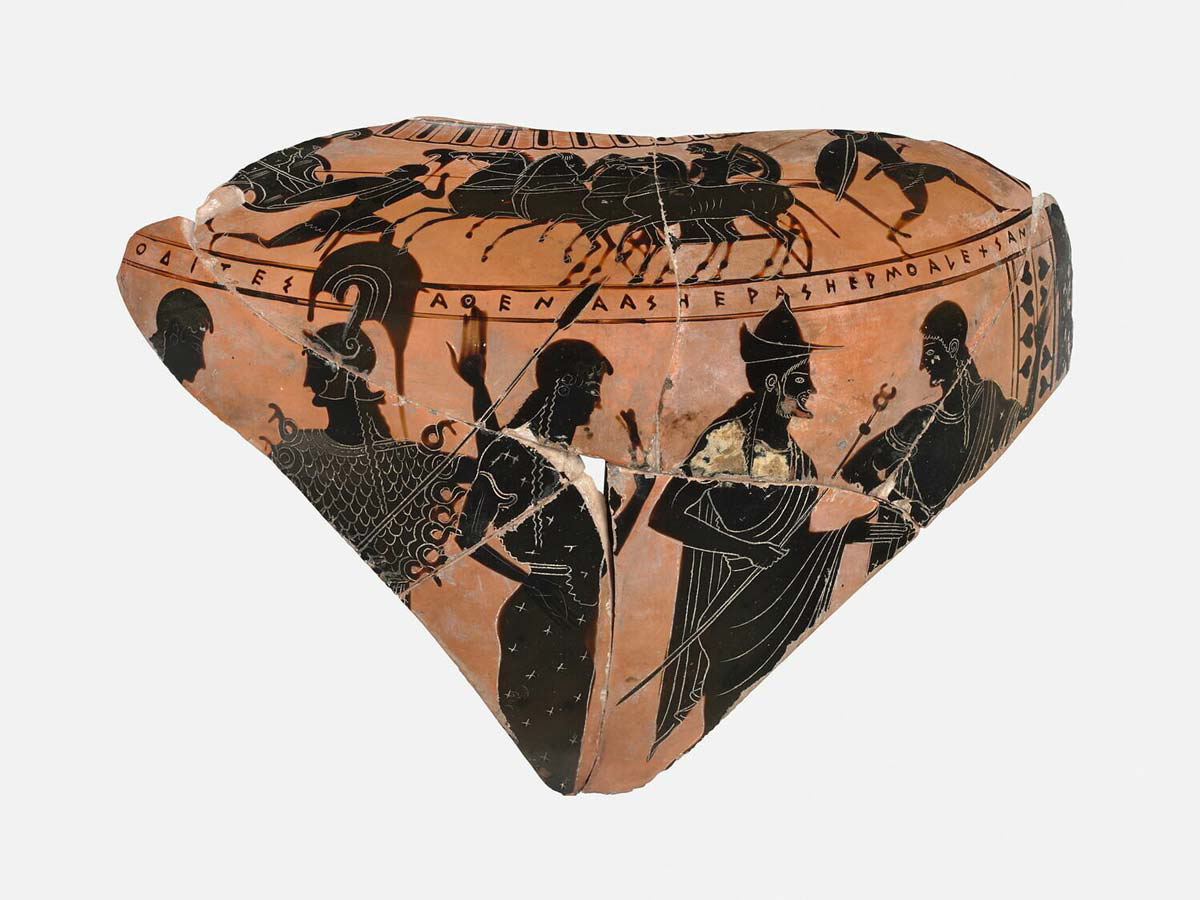
Paris’ preferred weapon is the bow, which is intended to demonstrate his lack of courage and honor. Paris is, however, quite skilled/lucky with the bow. He manages to wound Diomedes in the foot during a duel and kills the great Greek champion Achilles with the aid of Apollo. Paris eventually receives a mortal wound from the Greek archer Philoctetes, who wields the bow of Heracles.
3. Sarpedon: Staunch Ally of the Trojans
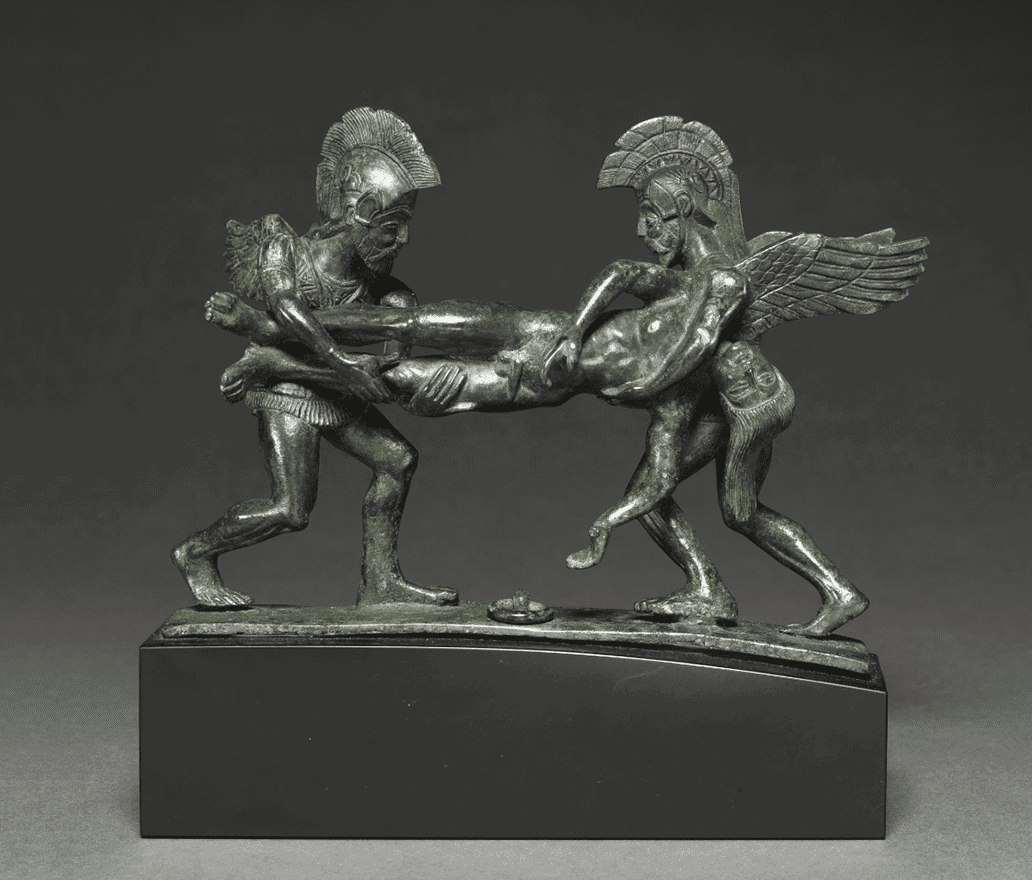
Sarpedon is one of Zeus’ most beloved mortal sons. His mother is either Laodamia, daughter of the hero Bellerophon, or Europa, mother of King Minos, abducted by Zeus in the form of a bull. Sarpedon led the Lycian contingent at Troy, alongside his cousin Glaucus. As the most important of all the Trojan allies, he takes Hector to task for pushing all of the hardest fighting onto the allied forces.
During the assault on the Greek camp, Sarpedon’s attack is so ferocious that it pulls Ajax the Greater and Teucer away from where they had been fighting to deal with it. This allows Hector’s attack to succeed, and Sarpedon is the first Trojan to set foot in the camp.
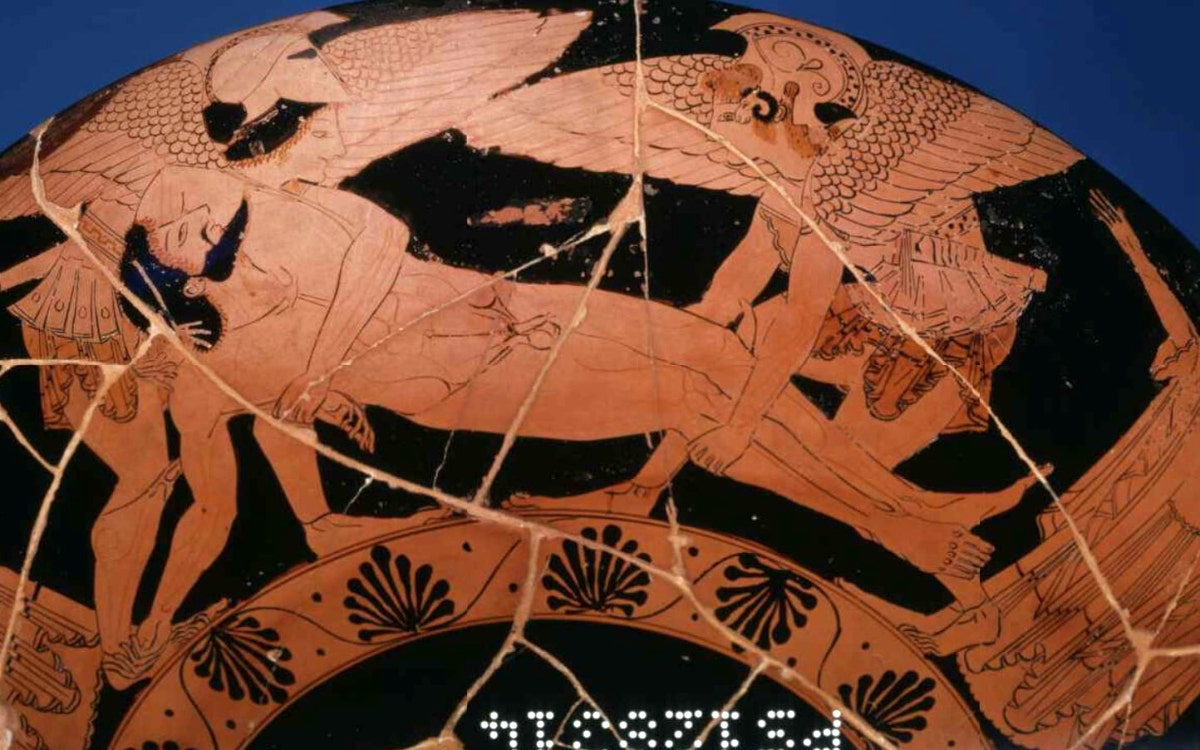
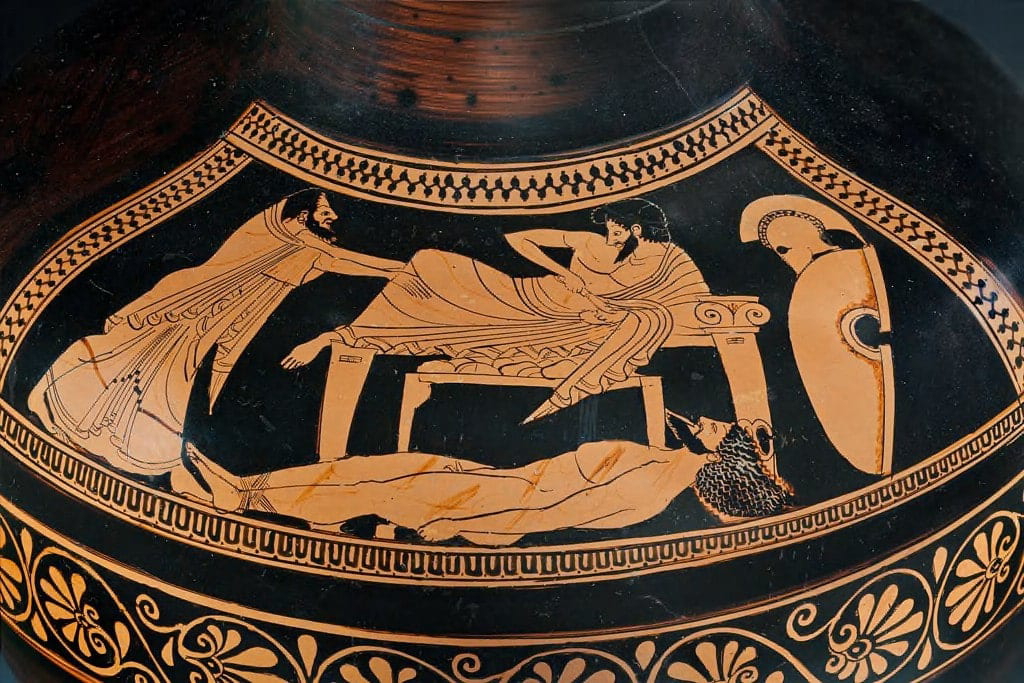
When Patroclus launches his counterattack in Achilles’ armor, Sarpedon steps forward to challenge him. Patroclus kills Sarpedon and takes his armor, but Zeus sends Apollo to rescue Sarpedon’s body, which is returned to Lycia by the gods Hypnos (sleep) and Thanatos (death). Hypnos and Thanatos carrying the body of Sarpedon was a popular theme in Greek and Roman art.
4. Glaucus: Valiant Ally and Trojan Hero
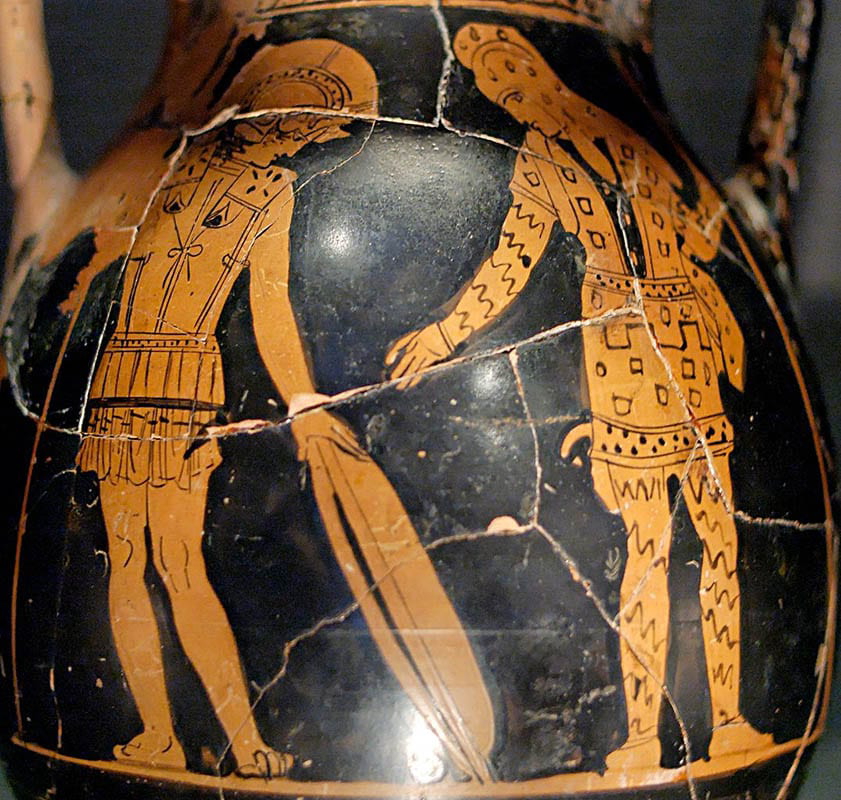
Grandson of the hero Bellerophon, who defeated the monstrous Chimera, and cousin of Sarpedon, Glaucus was a captain of the Lycian contingent at Troy. A valiant warrior, Glaucus was often at the forefront of the fighting.
At one point, Glaucus confronts and challenges the Greek hero Diomedes, one of the greatest Greek champions. Upon learning of each other’s ancestry, they cease fighting, as their grandfathers had been close friends, and decide to continue that friendship, despite being on opposing sides. As a sign of this friendship, they exchange armor.
Later, Glaucus participates in the attack on the Greek camp; his division’s furious attack allows Hector to break through. During the fighting, Glaucus is wounded by the Greek hero Teucer and must withdraw. When Sarpedon is killed by Patroclus, Glaucus rallies his men to defend his cousin’s body and has his wounds healed by the god Apollo. Glaucus successfully defends the body of Sarpedon until the gods carry it away.
Eventually, Glaucus is killed by the Greek hero Ajax the Greater as they fight to retrieve the body of Achilles. However, the Trojan hero Aeneas manages to rescue the body of Glaucus and sends it back to Lycia for burial.
5. Memnon: Glorious Son of the Dawn
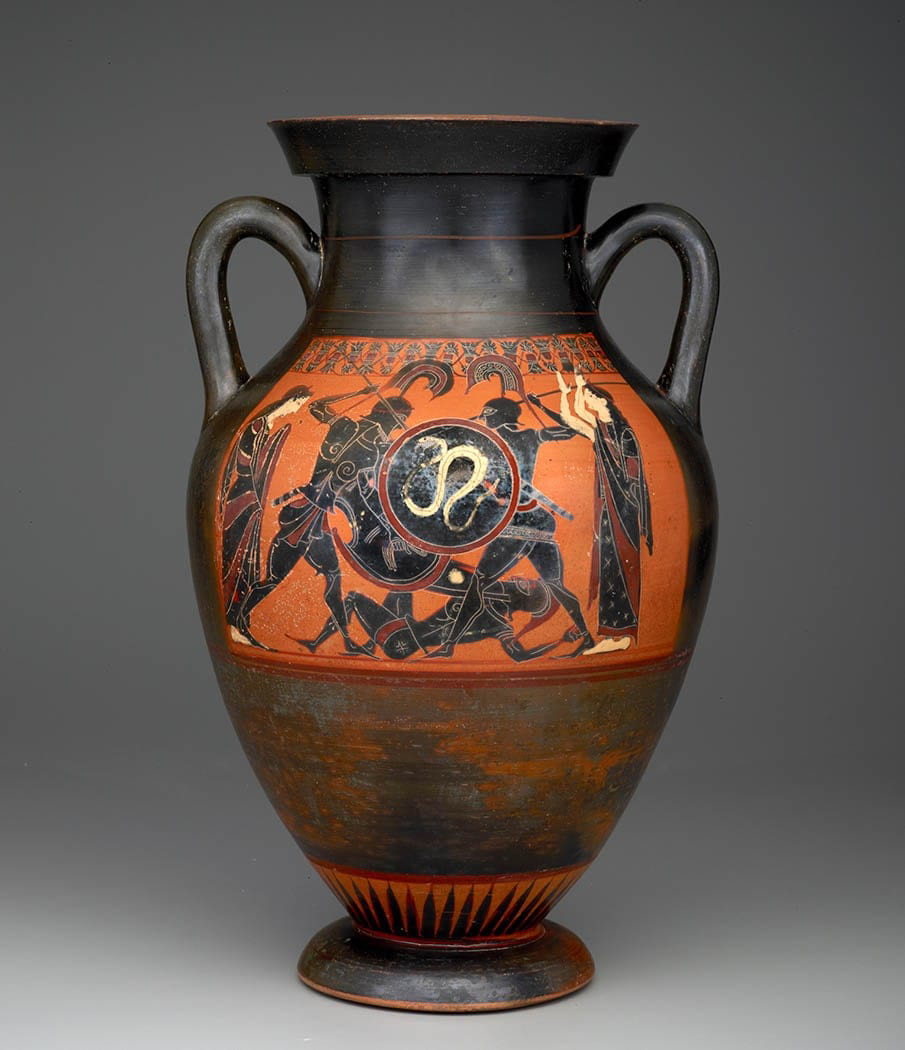
The son of Tithonus, prince of Troy, and Eos, the goddess of the dawn, Memnon was the most beautiful of men and a warrior almost equal to Achilles. In the final year of the Trojan War, Memnon brings a vast army of Aethiopians and Indians to the defense of the city. Though he is described as the king of Aethiopia, a region usually located south of Egypt, some traditions suggest locate his kingdom closer to India. Memnon is treated to a great banquet upon his arrival, during which glorious war stories are shared, and Memnon demonstrates his humility.
When Memnon leads his army to attack the Greek forces, all the gods promise not to interfere. The Greeks are driven back to their ships, and Memnon kills Antilochos, a son of the Greek hero Nestor, who killed Memnon’s close friend Aesop. Nestor challenges Memnon, who refuses to fight him out of respect for his age.
Antilochos was Achilles’ closest friend after the death of Patroclus, so when Achilles returns from purifying himself at the island of Lesbos, Nestor begs him to avenge his son. Achilles and Memnon clash in an epic duel, which ends in the death of Memnon. Except for a few loyal Aethiopians who stay to recover the body of their leader, Memnon’s vast army flees following his death.
6. Penthesilea: Queen of the Amazons and Killer of Greeks
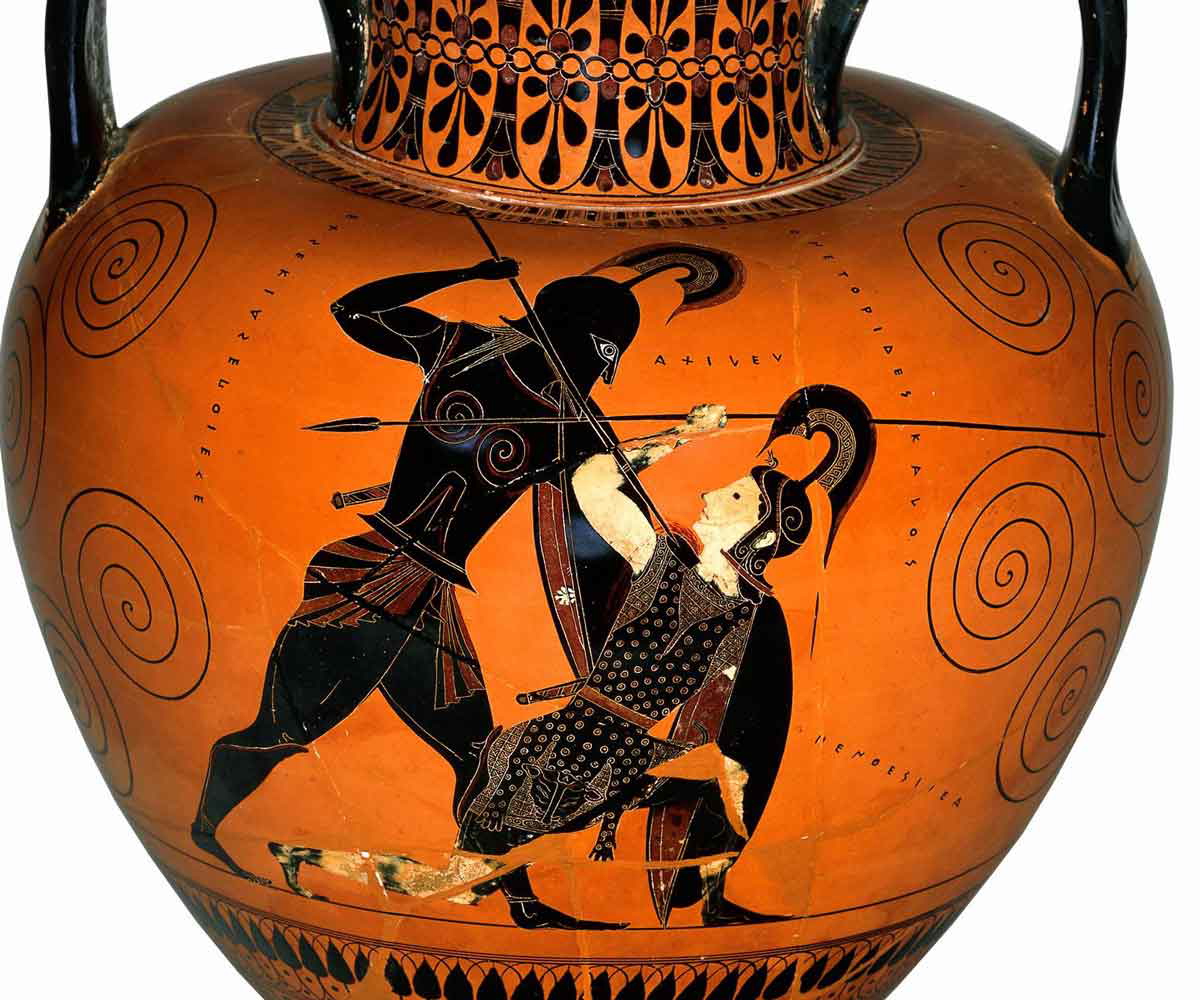
Queen of the Amazons, Penthesilea was the daughter of Ares and sister of Hippolyta, Antiope, and Melanippe.
In his youth, Priam, the king of Troy, had fought with the Amazons on the Sangarius River, 350 miles east of Troy in an area of Anatolia known as Phrygia. Penthesilea, along with her twelve companions, brings her army to Troy, possibly in accordance with an earlier treaty between Priam and the Amazons. However, it was written that, ever since Penthesilea accidentally killed her sister Hippolyta in a hunting accident, she had been looking for a place to die.
Penthesilea and her army catch the Greeks by surprise and slaughter the Greek forces, with Penthesilea herself killing eight named Greek warriors, but also losing many of their own. The next day, Penthesilea confronts Achilles in a duel on the battlefield and is slain. After removing her helmet, Achilles is struck by her beauty and falls in love. The weeping Achilles is mocked by Thersites, a common soldier and the ugliest of the Greeks. Thersites rips an eye from Penthesilea’s body, causing Achilles to fly into a rage and kill him. For this act Achilles must journey to the island of Lesbos to be purified.
7. Aeneas: Trojan Hero and Progenitor of the Romans
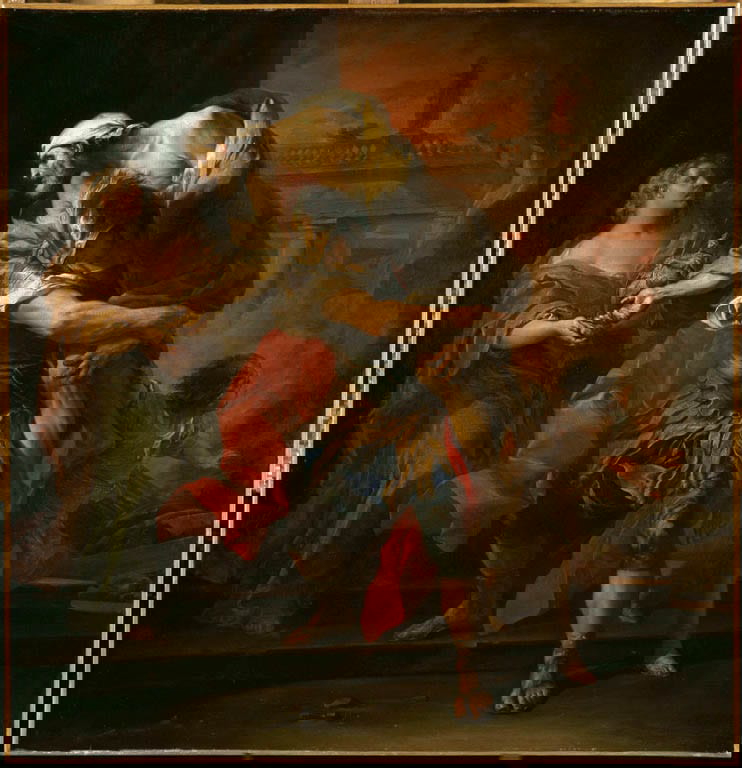
The son of Aphrodite, second cousin to the children of Priam, and one of Hector’s principal lieutenants, Aeneas led Troy’s Dardanian allies (the Trojans who did not reside in the city of Troy). Aeneas was recognized by those on both sides as a just, honorable, and pious man who is favored by the gods. He was at various times helped or saved by Aphrodite, Apollo, and Poseidon, who usually favors the Greeks.
In Homer’s Iliad, Aeneas plays a relatively minor role, though he still faces the Greek heroes Idomeneus, Diomedes, and Achilles. The Aeneas of the Iliad is described as the future king of the Trojan people and comes into his own after the Fall of Troy.
Aeneas escapes from the doomed city carrying his aged father on his back. He then becomes the leader of the surviving Trojans, who follow him to Italy. There, they establish a new settlement that will eventually lead to the rise of Rome.
8. Eurypylus: Final Hope of the Trojans
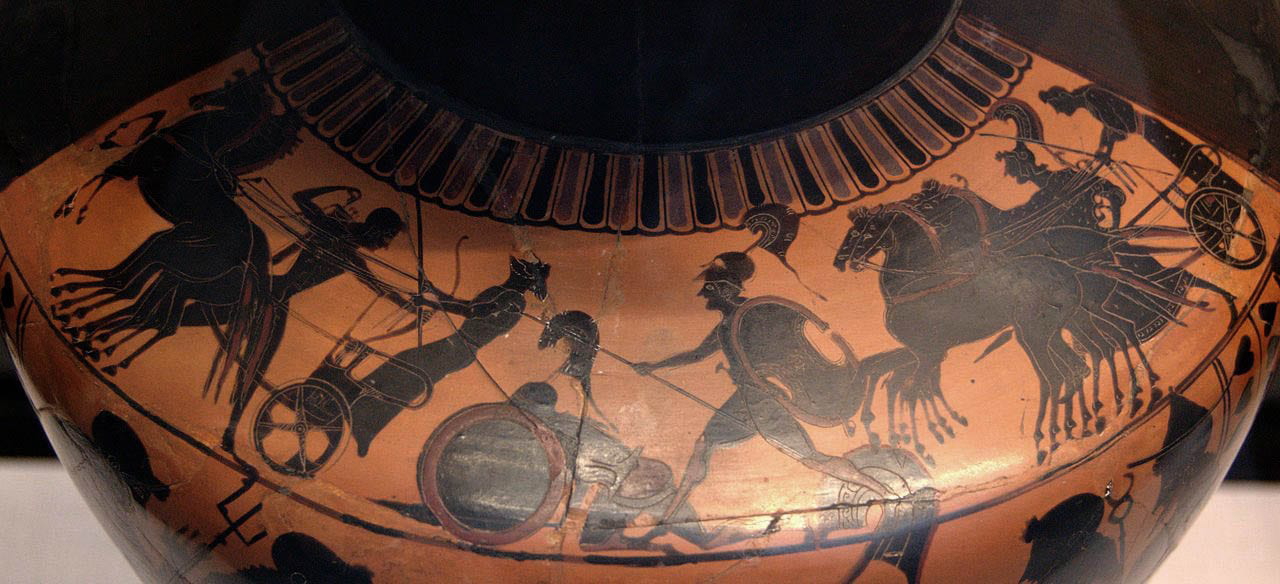
Leader of the Mysian contingent and son of the Mysian king Telephus, Eurypylus is described by Homer as next to Memnon, the most beautiful man in the world. Early in the Trojan War, the Greeks mistakenly attacked Mysia, thinking that they had arrived at Troy. Although the Greek attack is beaten back, Telephus, Eurypylus’ father, is wounded. In exchange for curing his wound, Telephus promises the Greeks that he will not send aid to Troy. This promise is kept until Priam sends gifts to Euryplyus’ mother and offers one of his daughters in marriage.
Eurypylus arrives at Troy in the final stages of the war and kills many Greeks, including the hero Machaon, who had earlier healed his father Telephus, and two other named Greek soldiers. Many other Greek soldiers were killed by Euryplyus until he was confronted by Neopotelmus, the son of the now-dead Achilles. In the ensuing fight, Neopotelmus kills Eurypylus with the same spear that Achilles once used to wound and later cure Telephus.
9. Troilus: Doomed Young Hero of Troy
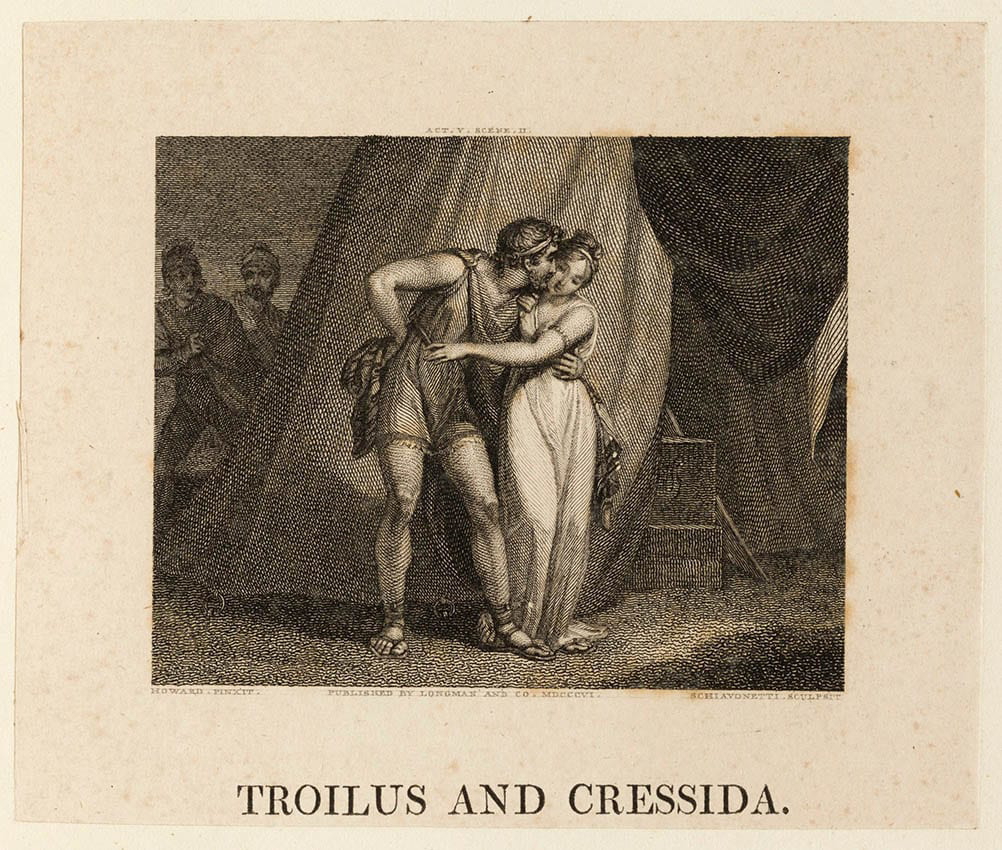
The youngest of Priam’s five legitimate sons by Hecuba, the Trojan hero Troilus was nonetheless an important Trojan leader. Despite his youth, he was proud, bellicose, and opposed to any truce or peace with the Greeks. It was said that Troilus was such a magnificent youth that Apollo may have been his actual father. Prophecy tied the fate of Troilus to that of Troy: if Troilus lived to reach adulthood, then Troy would never fall. This information is passed on to the Greeks by Athena.
In the early years of the war, Troilus makes a journey outside of the city of Troy to visit a well. Depending on the version of the story, he is either accompanying his sister Polyxena or meeting his lover Cressida. Regardless, they are ambushed at the well by Achilles and take flight in different directions. In the Polyxena version, his sister flees back to Troy and informs Hector, who takes off with a rescue party. In the Cressida version, she betrays him to the Greeks. Troilus is no match for Achilles and flees into the temple of Apollo, where he is killed and mutilated.
10. Deiphobus: Overshadowed Hero of Troy
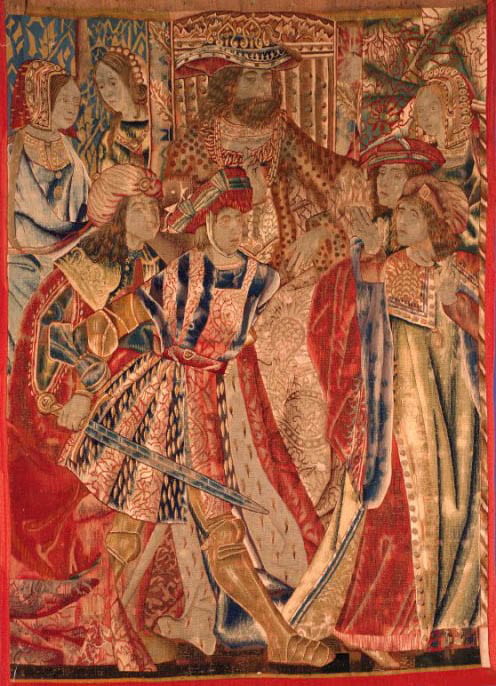
A prince of Troy and later husband of Helen, the Trojan hero Deiphobus was the greatest of Priam and Hecuba’s sons after Hector and Paris. During the Trojan War, he kills four named Greek soldiers and wounds the minor Greek hero Meriones.
Along with his brothers, Deiphobus led a contingent of Trojan warriors in the attack on the Greek camp and ships. When Hector turns to face Achilles in the duel that will lead to his death, the goddess Athena disguises herself as Deiphobus to deceive him. In some accounts, Deiphobus teams up with the Trojan hero Paris to ambush and kill Achilles, with their sister Polyxena acting as bait.
With the death of Paris, Deiphobus successfully vies with his brother Helenus for the hand of Helen in marriage. A disgusted Helenus leaves Troy and is captured by the Greeks. Deiphobus accompanied Helen as she walked around the Trojan Horse, calling out to the Greeks inside with the voices of their wives.
During the sack of Troy, Deiphobus is killed and mutilated by either Menelaus or Odysseus, though some accounts claim that Helen was responsible for his death.
11. Helenus: Trojan Hero and Prophet Turned Traitor
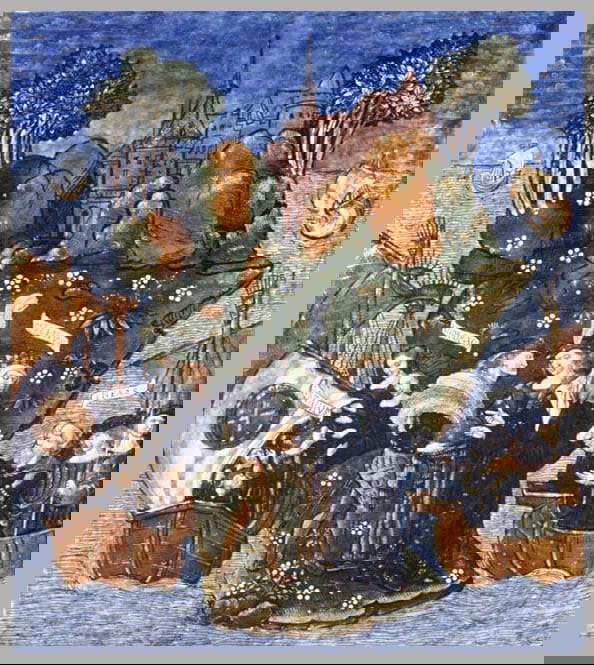
Helenus is the son of King Priam and Queen Hecuba, and twin brother of the Trojan princess and prophetess Cassandra. Helenus had been taught how to prophesize by his sister Cassandra, but unlike her, people listened to Helenus and believed him. During the conflict, Helenus fought bravely alongside his brother Hector and helped drive the Greeks back across the plains of Troy. He also participated in the Trojan attack on the Greek camp and ships, which led to the death of Patroclus and the return of Achilles.
After the death of Paris, Helenus competed with his brother, Deiphobus, for the hand of Helen, who was eventually given to Deiphobus. Bitterly disappointed, Helenus left Troy and was captured by the Greeks. Helenus used his gift of prophecy to inform the Greeks of what conditions they must fulfill before they could capture Troy.
After the war, Helenus accompanied Achilles’ son Neopotelmus, who had taken Hector’s wife Andromache as his prize, to Epirus in western Greece. After the death of Neopotelmus, Helenus married Andromache and became king.
12. Pandarus: Archer and Confidant of the Young Lovers
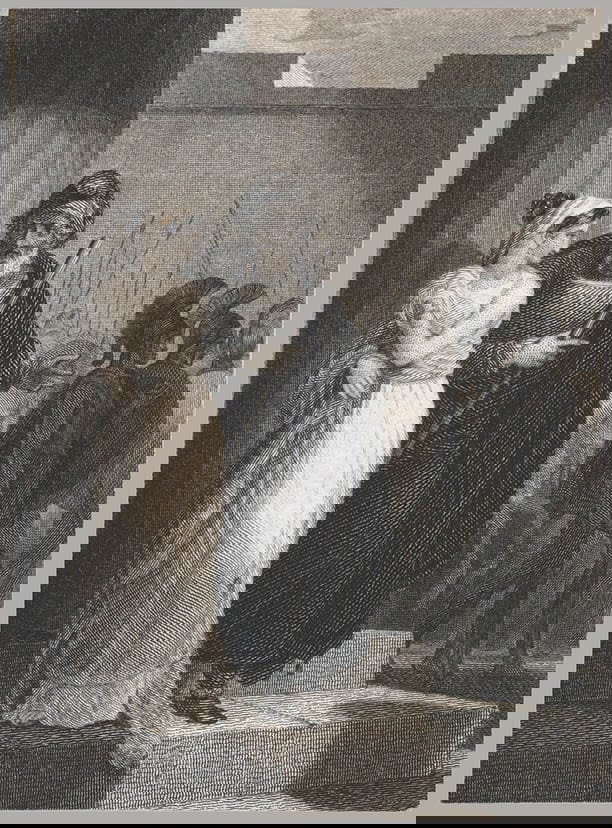
Leader of the contingent from the town of Zeleia in the Troad, this powerful archer is later transformed into a licentious figure and degenerate coward in Medieval and Shakespearean literature. It is this Pandarus who facilitates the affair between Troilus and Cressida. The Pandarus of Homer’s Iliad, however, is a brave, renowned fighter and energetic warrior.
Following the duel between Menelaus and Paris, Pandarus is tricked by Athena into breaking the truce by wounding Menelaus with an arrow. Athena wished for the destruction of Troy, which would not have occurred if Helen had been returned to Menelaus after the duel. With Menelaus badly wounded, the Greeks and Trojans resume their conflict.
Shortly thereafter, Pandarus teams up with Aeneas in an attempt to kill the Greek hero Diomedes, who has been inflicting heavy casualties on the Trojans and their allies. They fail, and Pandarus is killed, while Aeneas escapes thanks to the intervention of his mother Aphrodite. Pandarus’ father, Lycaon, and brother, Eurytion, later accompany Aeneas to Italy.