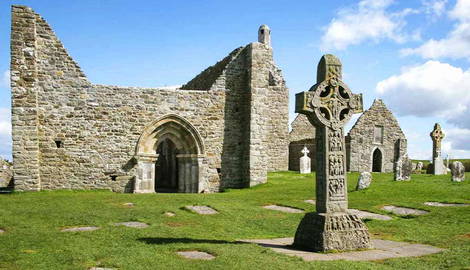
The high crosses of Ireland were a monumental art form that developed in the early medieval period (5th-12th centuries CE). They are the largest body of freestanding sculpture created in Europe between the fall of Rome and the rise of the Italian city-states of the Renaissance. Though they were mostly erected in Ireland, there are some surviving examples in Britain in areas like Cornwall, though the Irish crosses tend to be the most visually complex. The Irish crosses typically consist of a pyramidal base, a rectangular shaft, and a large circle connecting the arms of the cross; they are carved on all sides. Several hundred crosses or fragments of crosses have survived scattered across Ireland. This article will examine the high crosses of Ireland as an art form and a cultural tradition.
A Timeline of the High Crosses
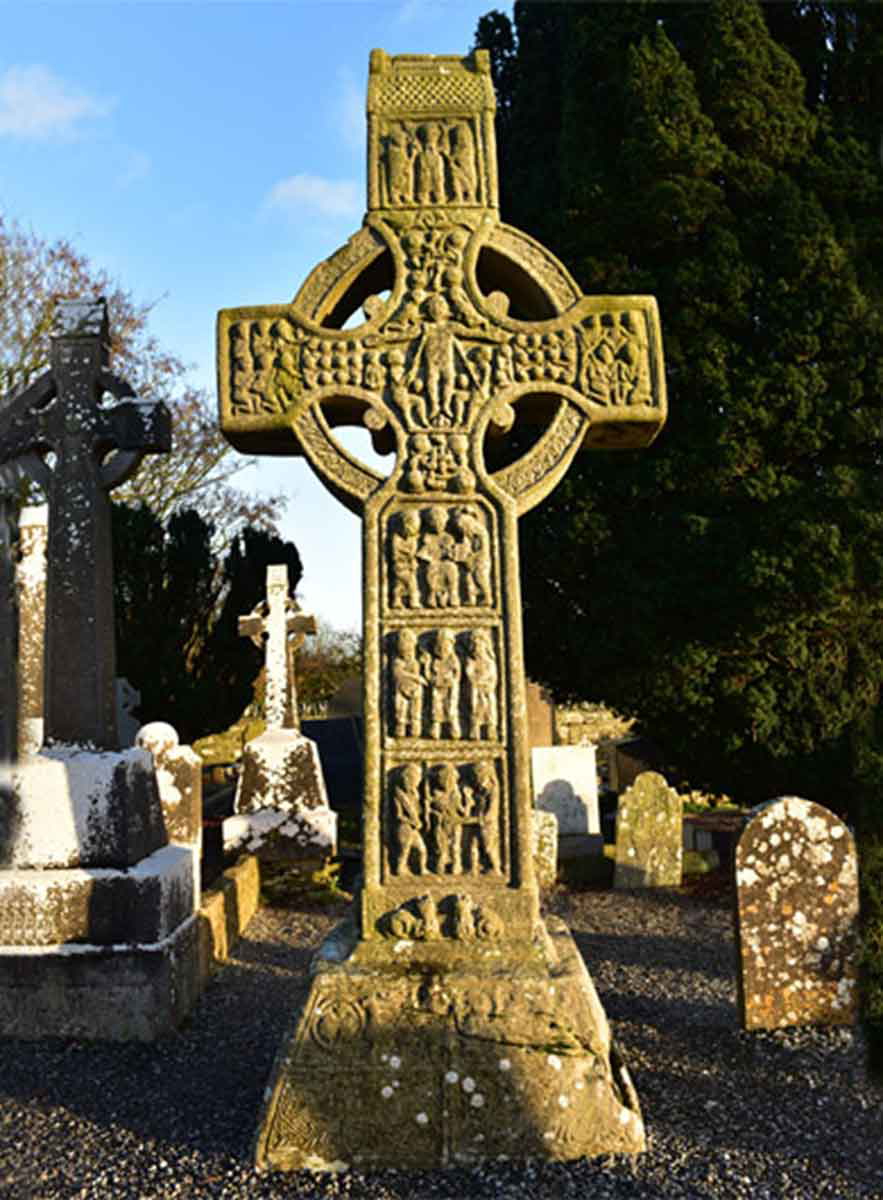
The Irish high crosses are generally dated based on their iconography, but they are otherwise difficult to date with certainty. There was a sudden blossoming of high crosses erected in monastic churchyards in either the late 8th or early 9th century, and their initial spread persisted through the start of the 10th century. They were typically erected at the most important monastic centers in the region.
Throughout the first phase of the development of monumental high crosses, they steadily increased in size and the detail of their decoration. Figures were initially confined mostly to the pyramidal bases on the earliest crosses, with the body of the cross being decorated with ornamental patterns. As the crosses developed throughout the 9th century, more of their carved panels came to represent biblical scenes. Ornamentation disappeared almost completely or was confined to the narrow spaces on the crosses’ sides and the undersides of their circles.
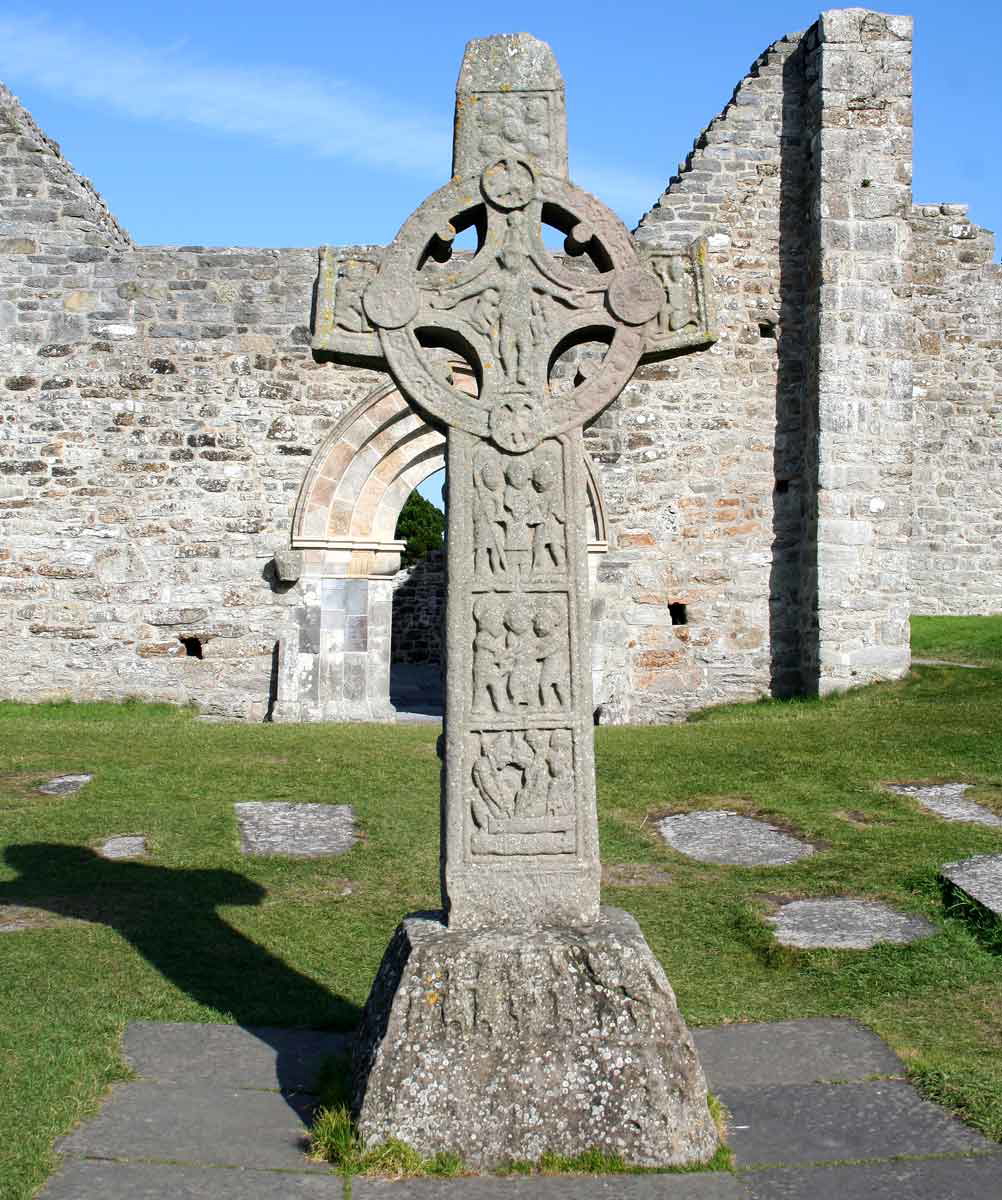
There was a break in the spread of high crosses through much of the 10th century with the renewed violence of Viking raids in Ireland. Though the crosses developed despite previous instances of raids, the 10th-century invasions were more intense. Nevertheless, the monumental crosses reappeared late in the 11th century with renewed vigor and slightly varied iconography. These later crosses occupied a smaller territorial range than the earlier ones, likely due to conditions under threat of invasion. After the 11th century, with the coming of the Anglo-Normans, the production of high crosses ceased.
Though all surviving examples of medieval Irish crosses are made from stone—and predominantly local stone—art historian and archaeologist Françoise Henry has proposed that there may have been wooden crosses of a similar size that have not survived; however, they may have served a different function from the stone ones (Henry 137). While not necessarily arguing the latter, art historians Henry Luttikhuizen and Dorothy Verkerk have also suggested that there could have been wooden monumental crosses, but instead that they would have served as precursors to the stone iterations (Luttikhuizen & Verkerk 148). Even if the existence of wooden crosses is likely, unfortunately, no such crosses survive to substantiate either argument for their use and function. The evidence simply does not survive to be examined.
Monumentality: Why So Large?
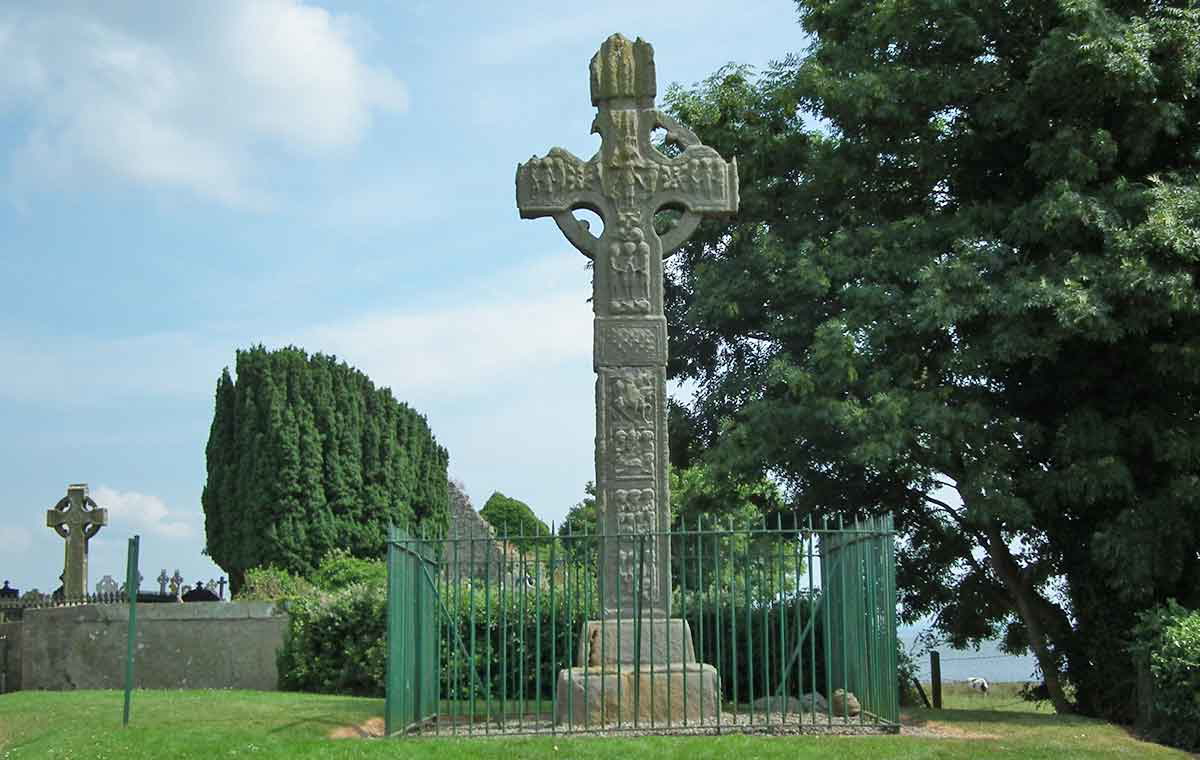
Key to interpreting the Irish high crosses is the question of why they were so large when other devotional works of art were much smaller. What was the purpose of enlarging the object, and was it tied to a need to place it outside? The answer is likely that, yes, the placement of the crosses outside the walls of the church was probably a factor in the need for them to be so tall.
The high crosses often marked the boundaries of monastic lands or important crossroads. They are treated as landmarks in primary sources like the Irish Annals. Therefore, they had a practical purpose outside of monastic liturgy. Nevertheless, their role as objects of devotion is not to be underestimated. Fully situated within their religious context, it could also be that these crosses were so tall to represent their holy significance.
The Narrative Function of High Crosses
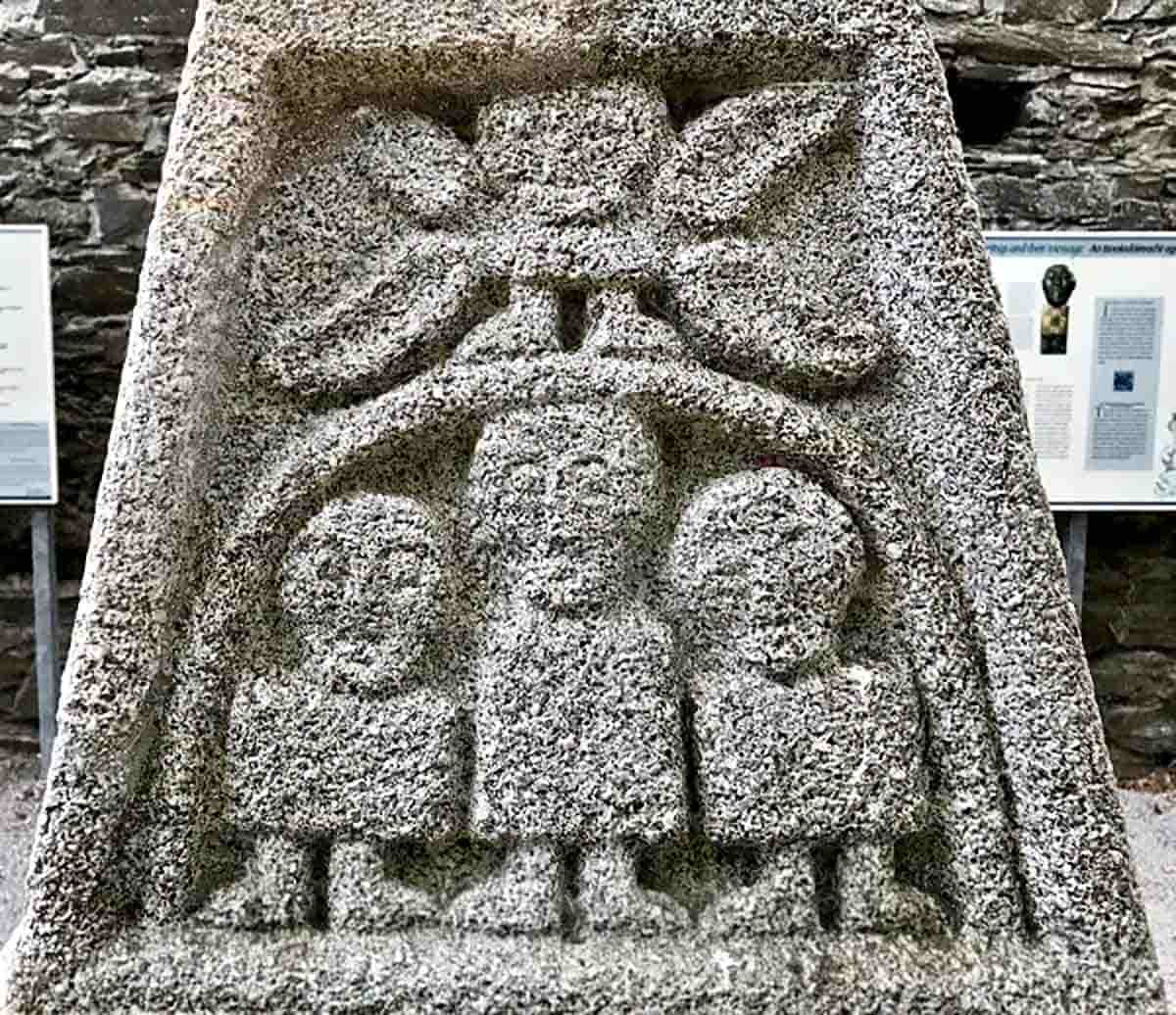
As mentioned above, the decoration of the crosses started representing increasingly complex figures and scenes over time. This likely represents an increasing narrative function. The high crosses have been referred to as “sermons in stone” by many scholars. Art historian Michelle P. Brown has argued that the Old and New Testament iconography used on the crosses was employed to proclaim the salvific power of the cross (Brown 171). In short, as much as the images on the high crosses were narrative, they were also didactic, or educational. They began to emerge as an art form during what has been referred to as “the heyday of monastic learning,” so it seems to be no coincidence that they would have been used as tools for the education of monks.
It has been proposed that, despite the crosses being viewable from all sides, there was some level of intentional sequencing to their carved panels (Henry 147). One can reasonably suggest that this became even more prominent as the image programs of the crosses became more complex. Scenes like the Temptation of St. Anthony, the Adoration of the Magi, the Baptism of Christ, the Fall, the Crucifixion, and Christ the Judge were all common, though not all the high crosses use the same set of scenes (Henry 152). Therefore, the crosses used biblical scenes as tools for communicating messages to their viewers. Throughout the corpus of surviving crosses, there is a fundamental theme of redemption (Henry 157). Such a theme makes sense, as these crosses were significant sites of prayer and contemplation for the monks, who interacted with the crosses in their daily lives.
How Were the High Crosses Used, and Who Used Them?
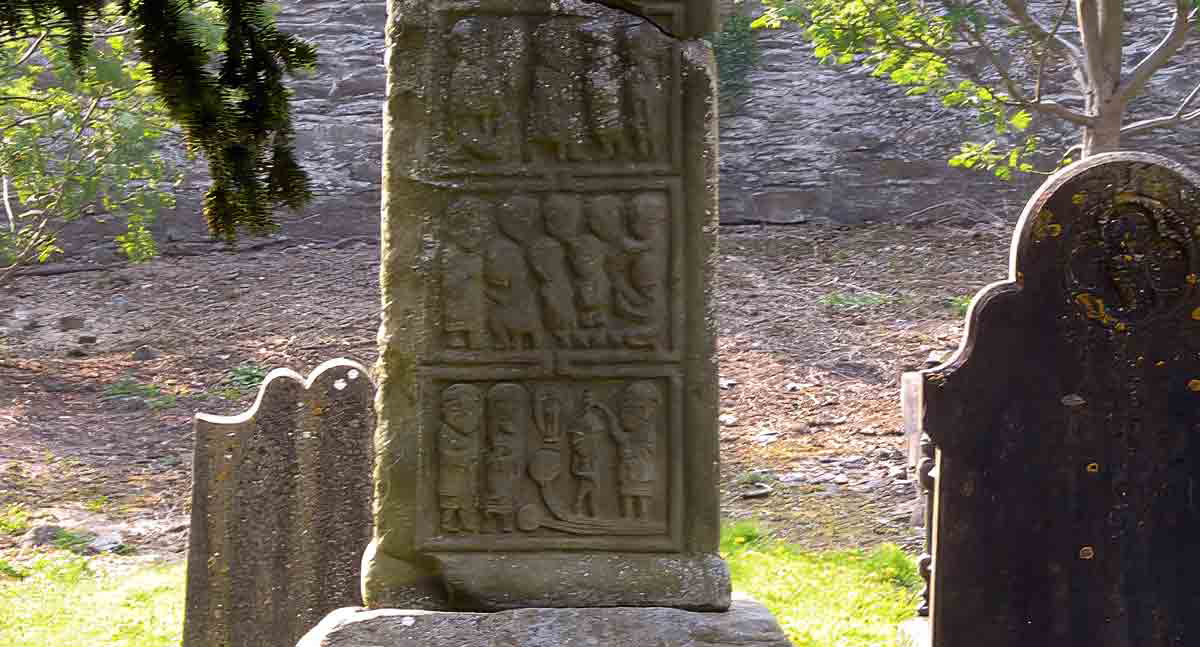
As already suggested, the primary function of these crosses was educational for both monks and lay people. Françoise Henry proposes that these crosses served the same purpose that carved portals and capitals played in Continental monasteries of the 11th and 12th centuries, being the ornamental and didactic art seen by visitors before they entered the church (Henry 188). This is not to say, however, that Irish church portals were not decorated, as there are many instances of such decoration.
Nevertheless, despite these parallel purposes, the high crosses are almost entirely unique to Irish churches, save for those few surviving examples in Britain. Monks used them as sites of prayer, and in many cases prayed before them all day. In other instances, the messaging of the cross served as a reminder for the holy person to contemplate as they passed it going in and out of the monastery. Summarized by several scholars for Heritage Ireland, the high crosses “demonstrate the importance placed on the illustration of church doctrine in conveying or instructing Christian ideas to the already educated monastic community and possibly, but to a lesser extent, to the largely illiterate laity.”
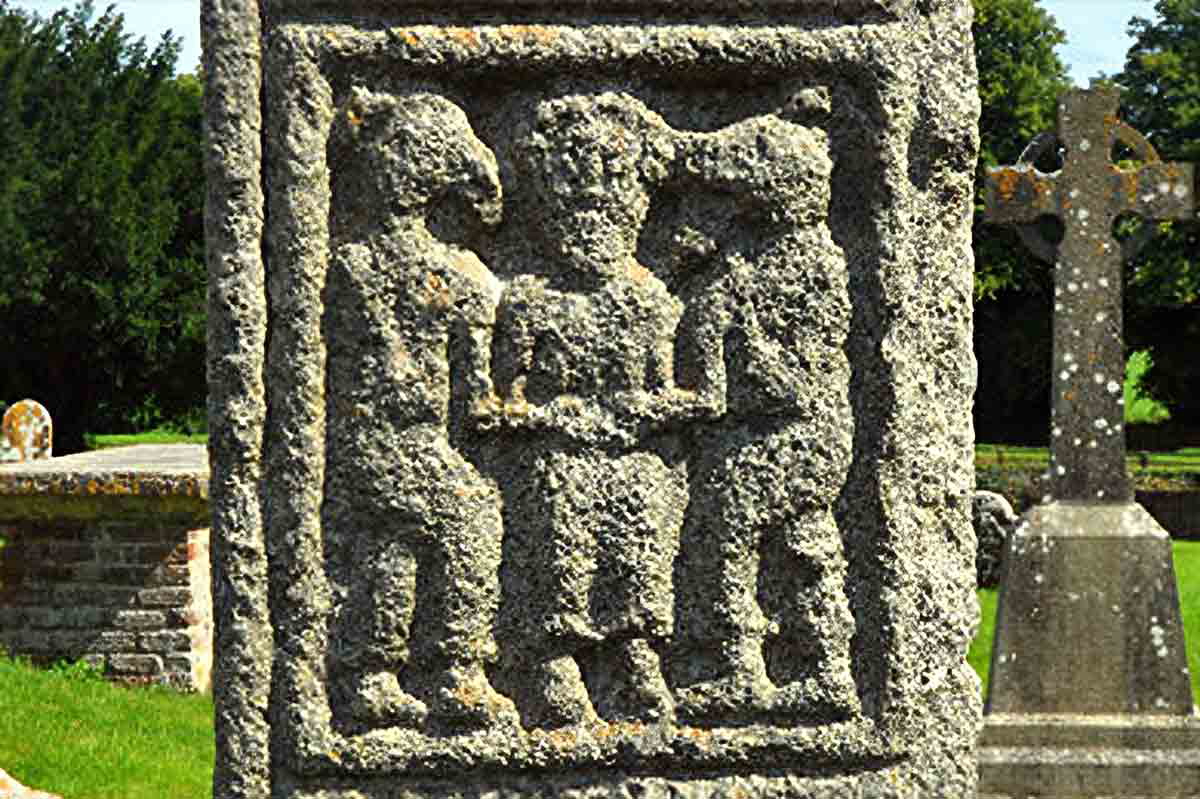
As stated, the high crosses were also often used as landmarks. In addition, some crosses commemorated a miraculous event, the dedication of a church, or a sacred spot associated with a saint (Luttikhuizen & Verkerk 149). They may have been thought of as protecting the monastery. They were likely used as gathering places for both monastic and communal prayer, since the crosses were accessible to the broader lay community. Several surviving inscriptions on some of the crosses ask that prayers be said for the patron, or the individual that commissioned and/or paid for the cross and churchyard (Luttikhuizen & Verkerk 149), who was usually a king or other member of the elite. In those instances, the crosses represent some level of self-interest, in that the patron could rely on the prayers for their salvation. They can therefore be considered as much symbols of political power as they were monuments of religious devotion.
The High Crosses Today
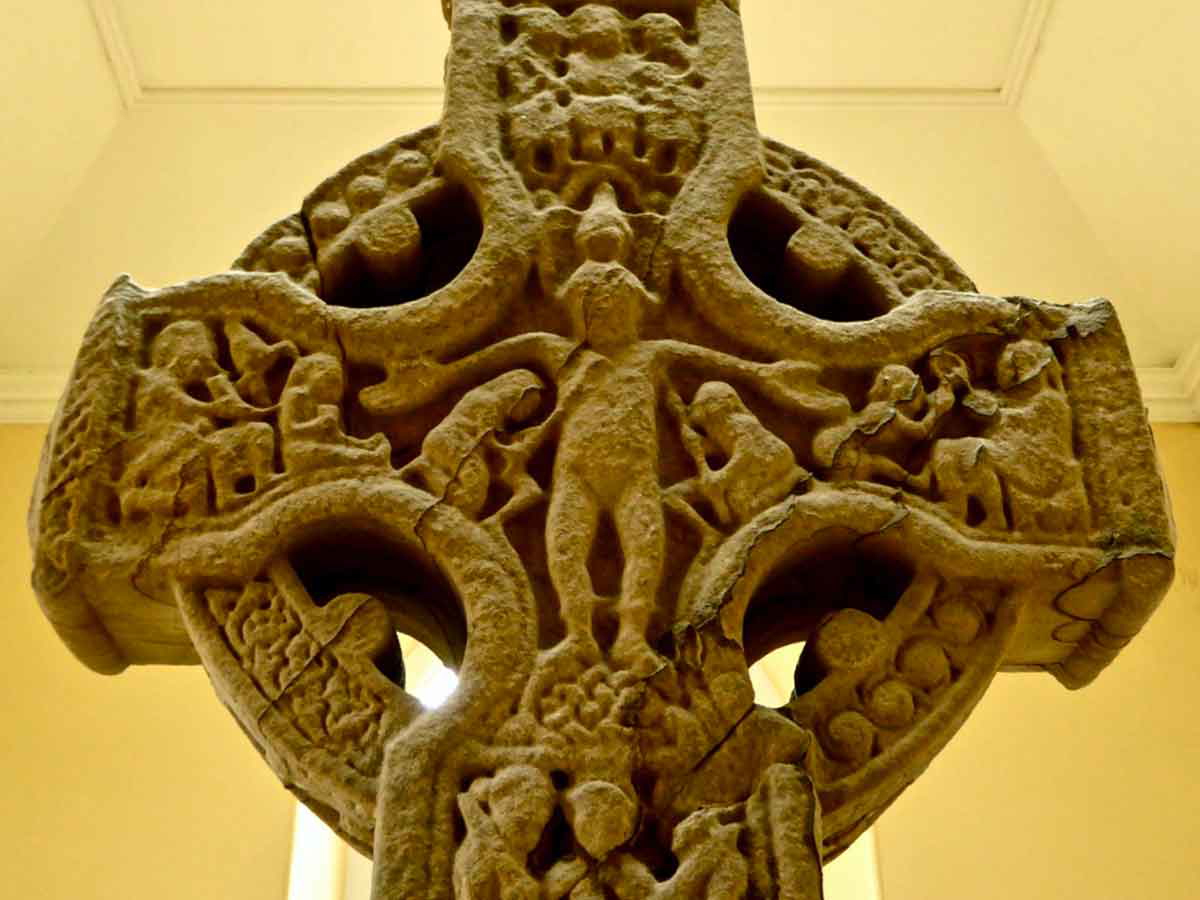
Not all the high crosses that survive remain completely intact. In fact, many of them are merely fragments of the original sculptures. Many of the crosses that remain outside the walls of the church in their “original” settings today are replica crosses, as the medieval crosses have been brought inside so that they do not continue to suffer from the effects of the elements. Centuries of rain, wind, and snow have eroded the surfaces of many of the crosses. It has been suggested that a large portion of them may have originally been painted, but no examples of painted crosses survive (Luttikhuizen & Verkerk 148).
That several of these crosses have now been moved inside raises critical questions regarding historic preservation. As this article has explored, the purpose of these crosses meant that it was important that they were viewable from outside, either during sustained prayer or as individuals passed them each day. As such, they were likely meant to be viewed in all seasons, in all kinds of weather. Their medieval creators and users could have had an entirely different interpretation of the impact that the seasons had on them as monumental structures.
Bibliography
Brown, M. (2016) Art of the Islands: Celtic, Pictish, Anglo-Saxon and Viking Visual Culture c. 450-1050. Bodleian Library.
Henry, F. (1967) Irish Art during the Viking Invasions (800-1020 AD). Methuen & Co. Ltd.
Henry, F. (1970) Irish Art in the Romanesque Period (1020-1170 AD). Methuen & Co. Ltd.
Luttikhuizen, H. and Verkerk, D. (eds.) (2006) Snyder’s Medieval Art, Second Edition. Prentice Hall.