It comes as no surprise that the earliest human civilizations made and enjoyed the first sports balls. Even today, when people walk down the street, they often casually kick a stone or pine cone and follow it up for a while. Chasing the ball seems to be an integral part of the human psyche. Through early artwork, archaeological finds, and ancient documents, researchers recognize the important roles that sports balls have played in history.
The Americas: Olmec People Become First to Design and Kick the Ball

Twelve rubber balls from 1600 BCE were found in a present-day Veracruz, Mexico bog, which was once a very early Olmec sacrificial area. It is possible that archaeologists will uncover even earlier sporting sites in the future.
The Olmec civilization, or “people from rubber trees,” is believed to be the first to develop rubber balls in the Southern Mexico area of Mesoamerica. This historic area includes the current countries of northern Costa Rica, Nicaragua, Honduras, El Salvador, Guatemala, Belize, and central to southern Mexico. The Olmec culture, which influenced later societies such as the Maya and Aztec, originated with the Pre-Olmec civilization of about 2500 BCE. These people are recognized for their monuments, including stone-head carvings of lauded human rulers made out of huge boulders, and other elaborate artwork in jade and ceramics.

To make their rubber sporting items, the Olmec people extracted a milky white natural substance called latex from the Castilla elastica tree. They dried and formed it into thin rectangular strips, which were wrapped over each other to increase the size of the ball. Finally, the ball was covered with a thin layer of latex to hold the strips together and enhance the bounce qualities.
The Olmec’s ball playing was used for both entertainment and religious purposes. The game, where the ball was contacted and transported by the sportsman’s hip, often characterized the fight of good versus evil. In a war ceremony game, for example, the event’s losers were sometimes sacrificed. Balls of all sizes were also made as offerings to the gods and sometimes buried in consecrated areas.
The Olmec’s sport was simply called “ball game,” although other cultures knew it by other names, such as “pitz” for Mayan players. This game was sometimes held to reduce local wars. Rather than fighting in battles, local kings confronted one another in a ball game. Noblemen also competed to resolve personal disagreements.
Olmec Ball Playing Influences Neighboring Cultures
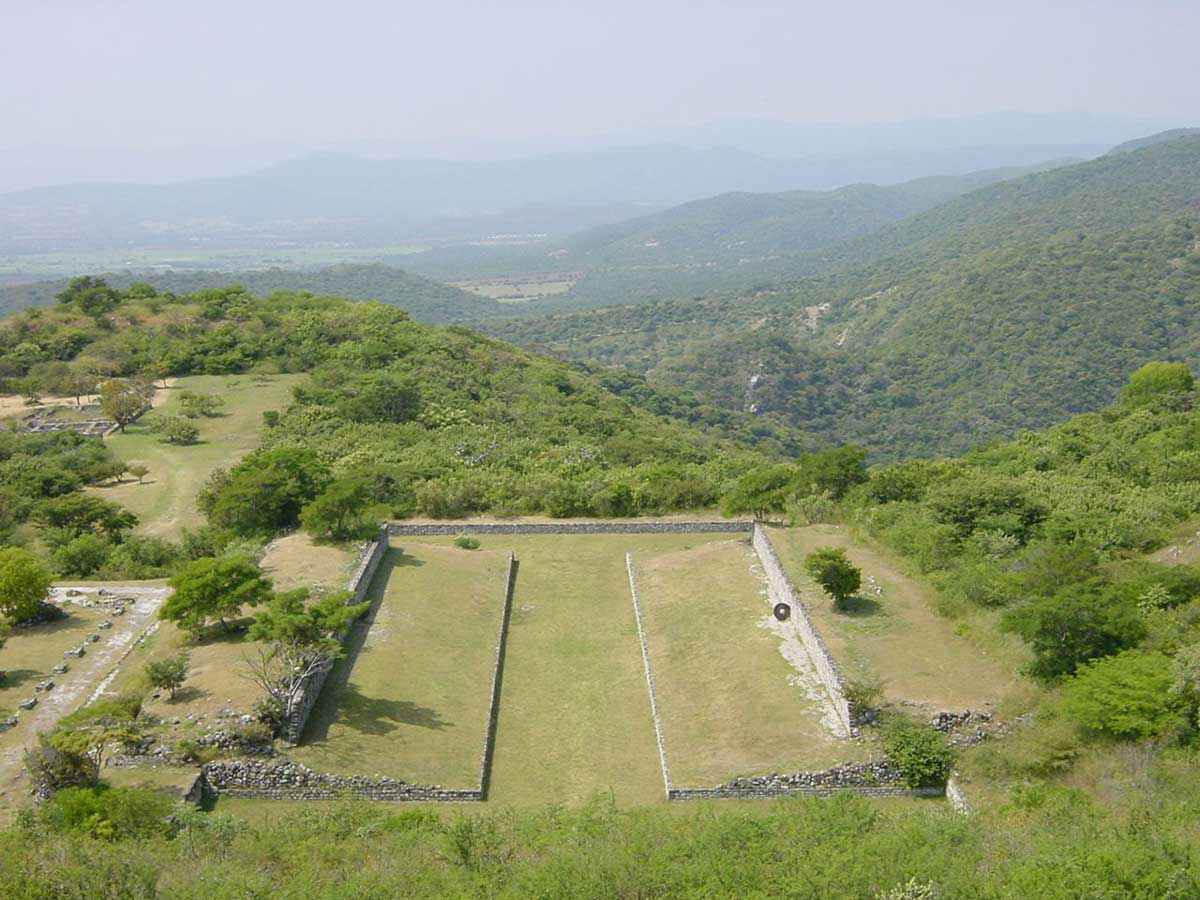
Over time, the Mesoamerica ball games spread throughout many neighboring regions, each with its own scoring and playing rules. Archaeologists have discovered more than 2,000 ball courts throughout Mexico as well as Guatemala, Belize, western Honduras, and El Salvador. These numerous sports arenas were simple rectangles set between two stone walls, but they served a number of different societal functions. In the game Ulama, a variation played by Aztecs, teams bounced the ball through stone hoops, which were long used as part of their culture. The circular hoop symbolized wholeness and health, as well as personal, communal, national, and universal peace.
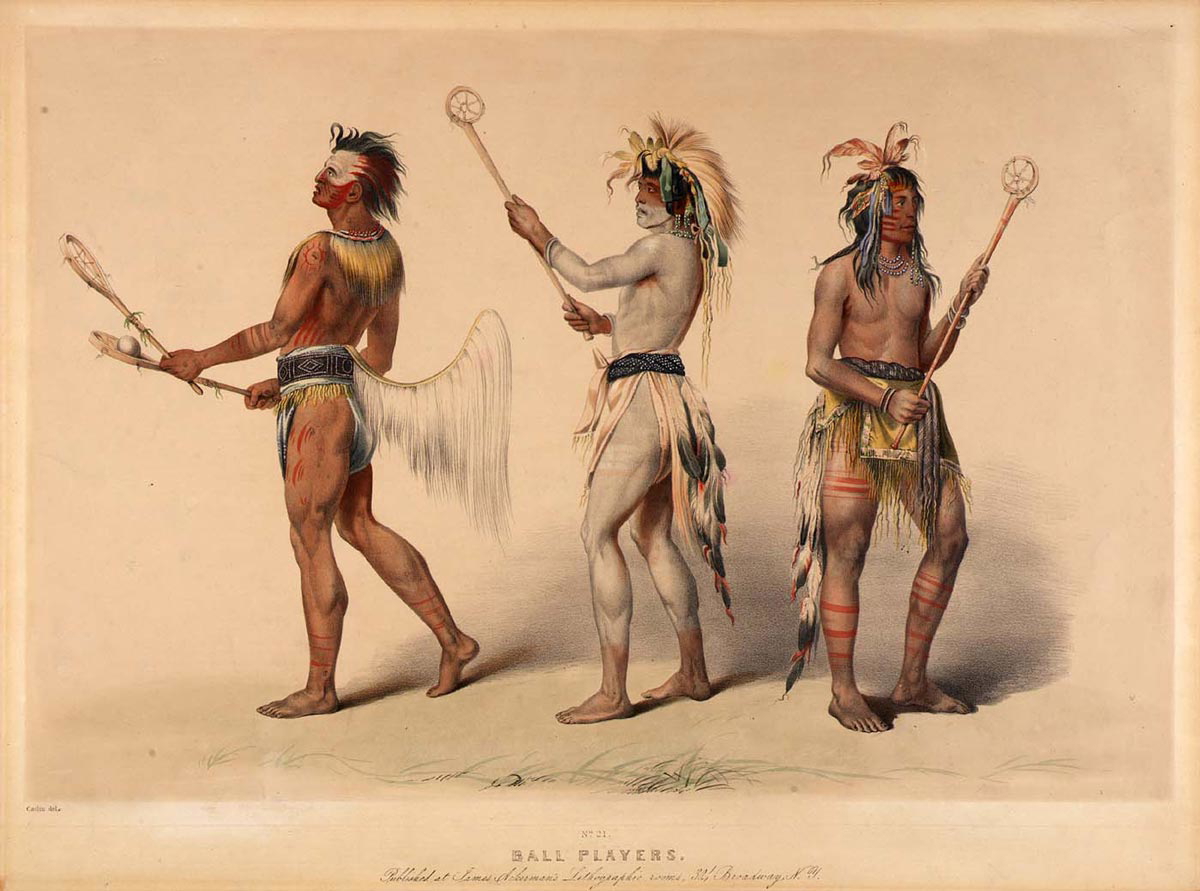
Another common game similar to lacrosse, which also originated in Mesoamerica, was played by several Native American tribes like the Cherokee. Two teams of players, each carrying two sticks, or kabocca, shot the woven leather ball, or towa, into the opposition’s goal to score. Hands could never be used, only the kabocca. These stickball games frequently lasted several days from sunup until sundown on the plains between villages, with as many as one thousand competitors. The goals, which could be huge boulders or trees, were located 500 yards to several miles from each other. The flexible rules were only announced the day before the event.
The Mediterranean: Greeks Designed a Very Early Game of Football

The early Greeks, in about 900 BCE, enjoyed several different ball games. Episkyros, for example, was played with two opposing teams, each with 12 to 14 players. The ball, rounder and smaller than the one used today in soccer, was made from pieces of leather sewn together with animal entrails. The outside was brightly painted.
Episkyros is often called the “first game of football” because of its many similarities to the one played today in the US. It was also very similar to rugby. The field was marked with lines to determine the correct positioning of play. Full contact with hands was allowed. The aim was to continually toss the ball over the heads of the opposition and move forward. A team scored when it forced its opponents behind their end line.
Episkyros was entertaining but also very dangerous, especially in Sparta. Because of full bodily contact and use of great strength and skill, players frequently struggled off the court with broken bones.
The Greek Game Is Picked up by Rome

The game harpastum (another name for “handball”) was the Roman variation of episkyros. It was enjoyed for approximately 750 years during the Roman Empire in the 5th Century BCE and often called “the small ball game.” Once again, the teams numbered between 12 and 14. Instead of kicking and throwing a ball the size of one used in soccer, the harpastum players tossed several different balls about the size and strength of a present-day softball. These consisted of attached leather strips filled with a variety of materials. The smallest ball was stuffed with feathers. The largest one contained an air-filled bladder.
It is believed that harpastum was even more brutal than its Greek equivalent because the match included wrestling, where players deliberately held on to one another to deter scoring. Historians believe that Rome brought their sports ball games with them when expanding into the British Isles. Thus, once again, the sporting arenas expanded.
East Asia: Chinese Cuju Gets the Ball Rolling
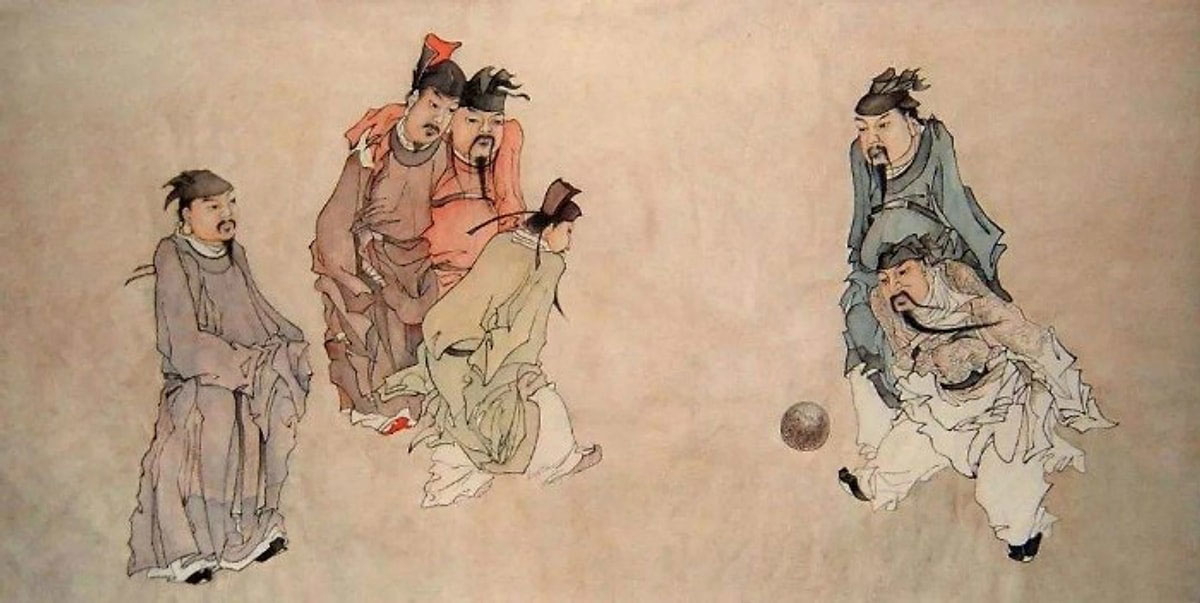
China’s earliest ball game, cuju, dates back to the 3rd century BCE. Cuju or tsu-chu, with the literal meaning of “kick ball,” was played commonly during the late Han Dynasty (202 BCE to 220 CE). It became an interesting mix of what was to become American football, basketball, and volleyball. Similar to other types of early sporting activity, cuju was not originally played for competition and entertainment. The athletic event actually began as a military drill for fitness training. Confucian scholars stressed that sport was important to strengthen the soldiers’ fighting power.
During the Tang Dynasty (618 to 907 CE), cuju was transformed into a professional sport to enhance economic development. It became popular with all classes from nobility to labor. In the game, two teams of six competed against each other and attempted to kick a ball through a circular goal at the center of the field. Rules did not allow players to use their hands to propel the ball, which had to remain in the air at all times. Although cuju was a very popular game for several hundred years, the Ming Dynasty (1368-1644 CE) emperor eventually banned the game because of its growing corruption.
Cuju Gaming Spreads Outward to Japan
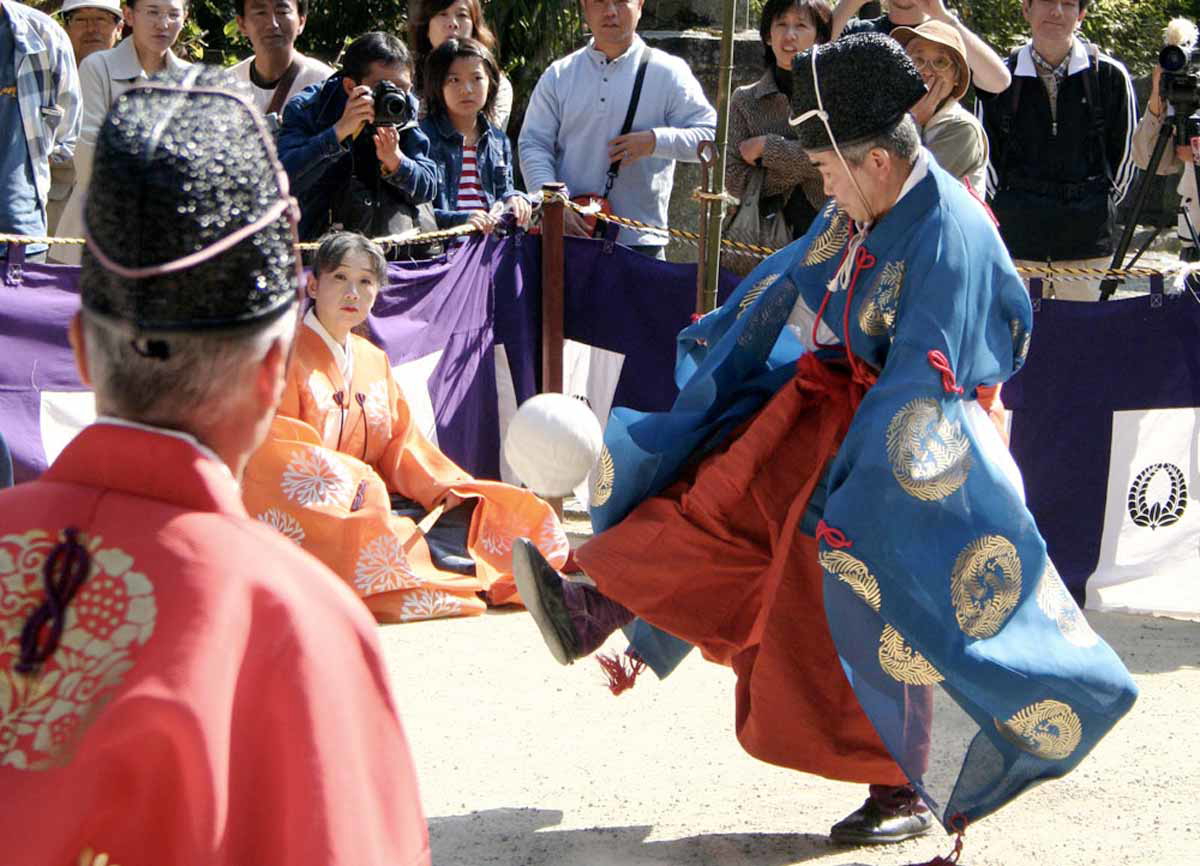
Cuju’s popularity expanded to other East Asian countries, such as Korea and Japan. Researchers believe that kemari, the Japanese ball sport from 600 CE, was an offshoot of this Chinese ball game. Kemari was played with an eight-inch round deerskin-covered ball stuffed with sawdust or barley grains. Over the years, it was followed first by the nobles and samurai and then the general public.
Unlike cuju, kemari was never used for military purposes. With no winners or losers, it was instead played to reinforce camaraderie and cooperation among the players and provide entertainment for viewers of all backgrounds. The object was to continually pass the ball as long as possible to fellow players without having it touch the ground.
A formal game of kemari consisted of six to eight players, typically four primary players and four “assistants.” At the beginning, the first player kicked the ball to the second and so forth down the line. Only a foot could propel the ball, although a player’s body was able to stop its movement or direct it toward someone else. How long could the players keep the ball aloft? That was the only question of importance.
One story relates how an emperor and his kemari team kept the ball in the air for over one thousand kicks. Poets watching the event claimed the ball “seemed suspended, hanging in the sky.” Interest in this enjoyable game declined as sumo wrestling grew in popularity. However, every spring and summer, the Tanzan Shrine in Sakurai stages the game as it was played over a thousand years ago to celebrate and commemorate this early history. Numerous local community members and tourists attend the yearly events to recall this rich history.

Because of the importance of ball play and events over the past thousands of years worldwide, it appears that such competition and entertainment will continue to play an essential role in future societies. Today, millions and millions of sports enthusiasts and players continue to love the way these balls keep on rolling.