
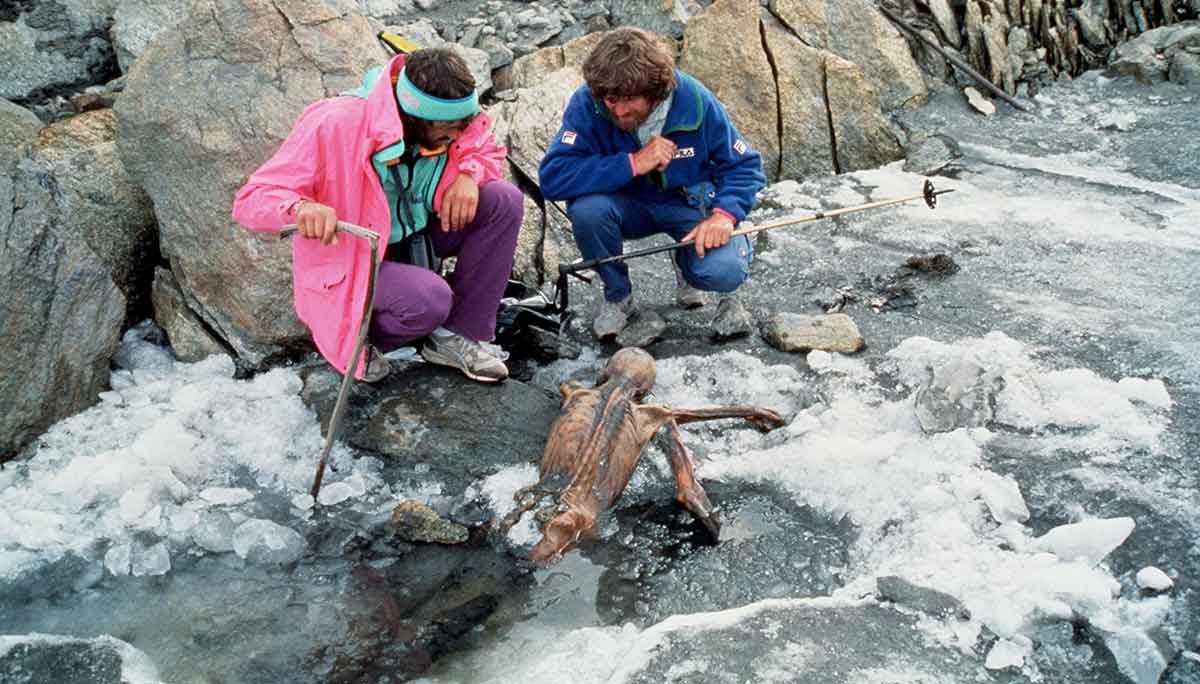
In 1991, Alpine hikers came across what they thought was a recently deceased mountaineer on the Austria-Italy border. Following painstaking excavation, the naturally mummified body of a man who lived between 3350 and 3105 BC was recovered. He seems to have been a Neolithic hunter-gatherer living in the Copper Age, and to have died a violent death due to the presence of an arrowhead in his shoulder. Known as Ötzi the Iceman, because he was found in the Ötzal Alps, he offers a fascinating glimpse into life in Europe more than 5,000 years ago.
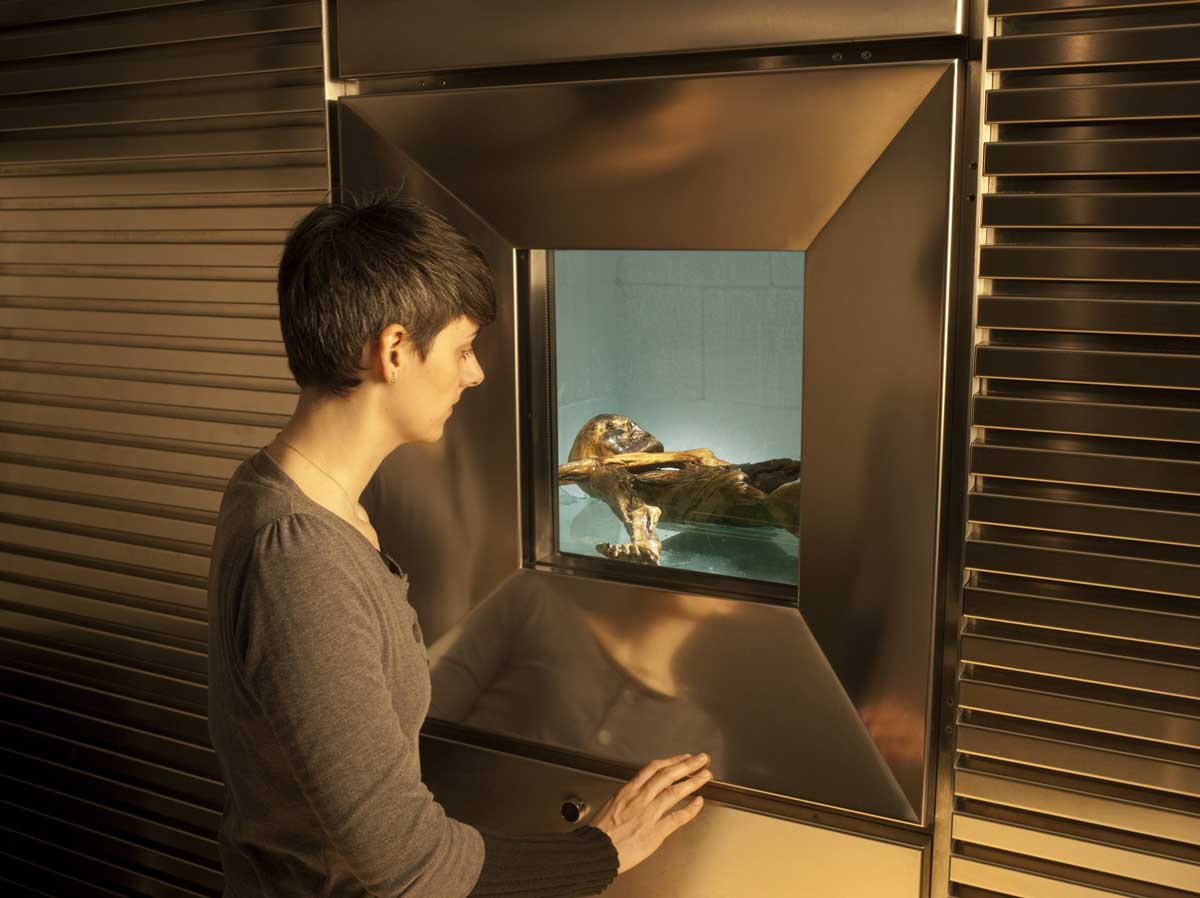
Richard Marranca recently sat down with the team at the South Tyrol Archaeological Museum, where the Iceman is researched and displayed, to learn more about Ötzi’s life and death, and what life was like in Europe in the 4th millennium BC. Different members of the museum team answered questions based on their own areas of expertise.
Opening a Cold Case
RM: So, Ötzi the Iceman is really a “Cold Case” from over 5,000 years ago. Was Ötzi killed? And what’s the proof?
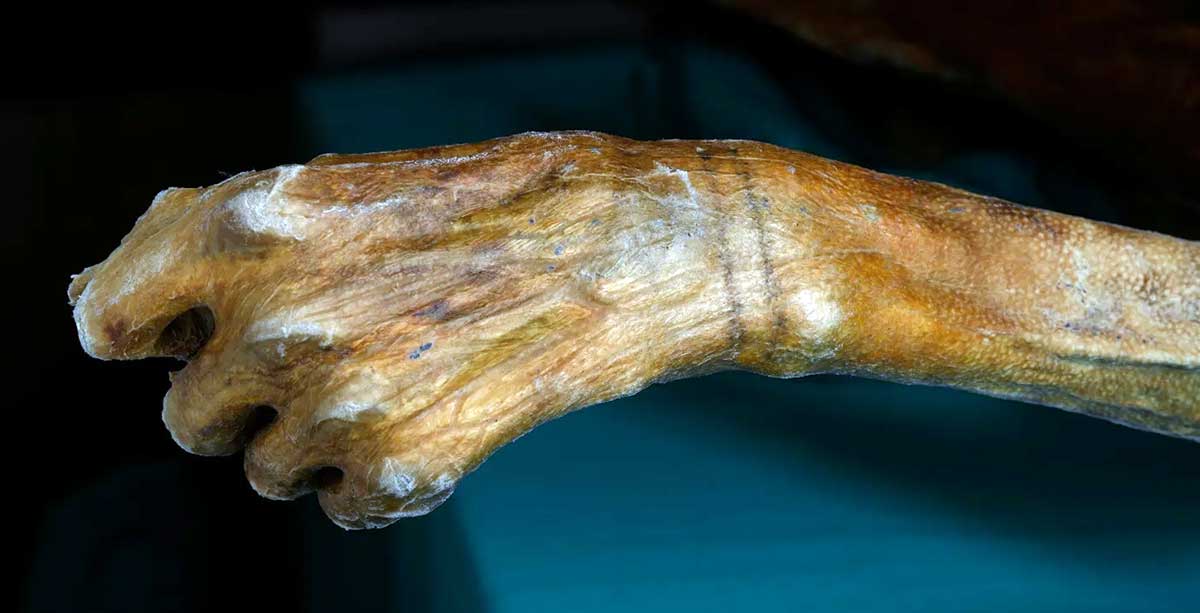
Yes. CTs and X-rays revealed an arrowhead lodged in his left shoulder, severing the subclavian artery; a rapidly fatal wound. He also shows a deep, recent hand cut, consistent with violence shortly before death.
RM: Is it a mystery that his copper ax, an object of great wealth and prestige, was left by his side?
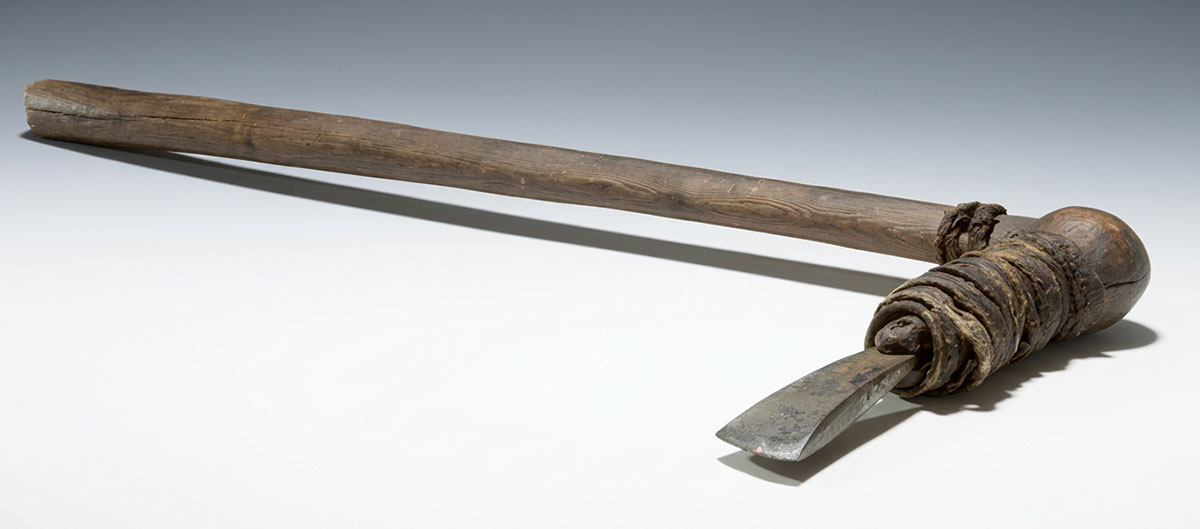
The Iceman’s copper axe was both rare and valuable and a high-status object c. 3300 BC, yet the assailant did not take it. This remains a puzzle even to archaeologists. It might have exposed the killer as a murderer. Other scholars suggest the attack was hurried, the body hard to recover in worsening weather, or the killer feared being found with such a distinctive weapon.
Natural Mummification and Unnatural Body Art
RM: How did he get naturally mummified, and is he a glacial mummy?
Yes, the Iceman is a glacier (wet) mummy. The various phases of the mummification process have not yet been fully clarified. A kind of freeze-drying occurred, which suggests that Ötzi’s body, after death, desiccated. Later, he became covered by snow in a protected gully under snow and ice. Later, re-freezing cycles preserved tissues exceptionally well. The museum keeps him at –6 °C and approximately 99% RH to simulate glacier conditions.
RM: Tattoos! Ötzi would be very competitive in a contemporary tattoo contest. Can you tell us about the tattoos?
Ötzi has 61 tattoos, mostly carbon-black line groups and crosses placed near joints and the lower back. Many align with areas of wear-and-tear or pain, suggesting a theory of therapeutic or analgesic purposes rather than decoration. Soot was rubbed into the skin, which had been cut either by incisions or treated with sharp tools, as described in a recent publication (Deter-Wolf 2024).
Discovery and Climate Change
RM: Does the fact that Alpine hikers found Ötzi tell us something about global climate change?
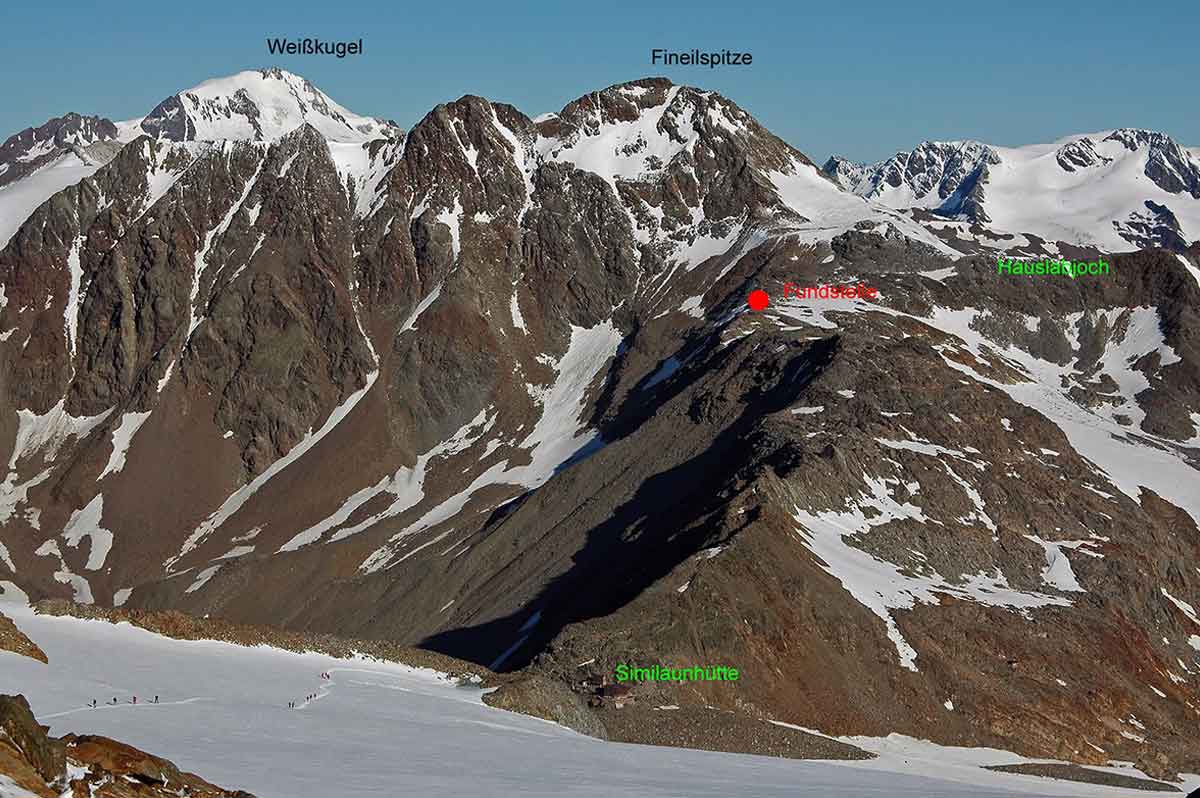
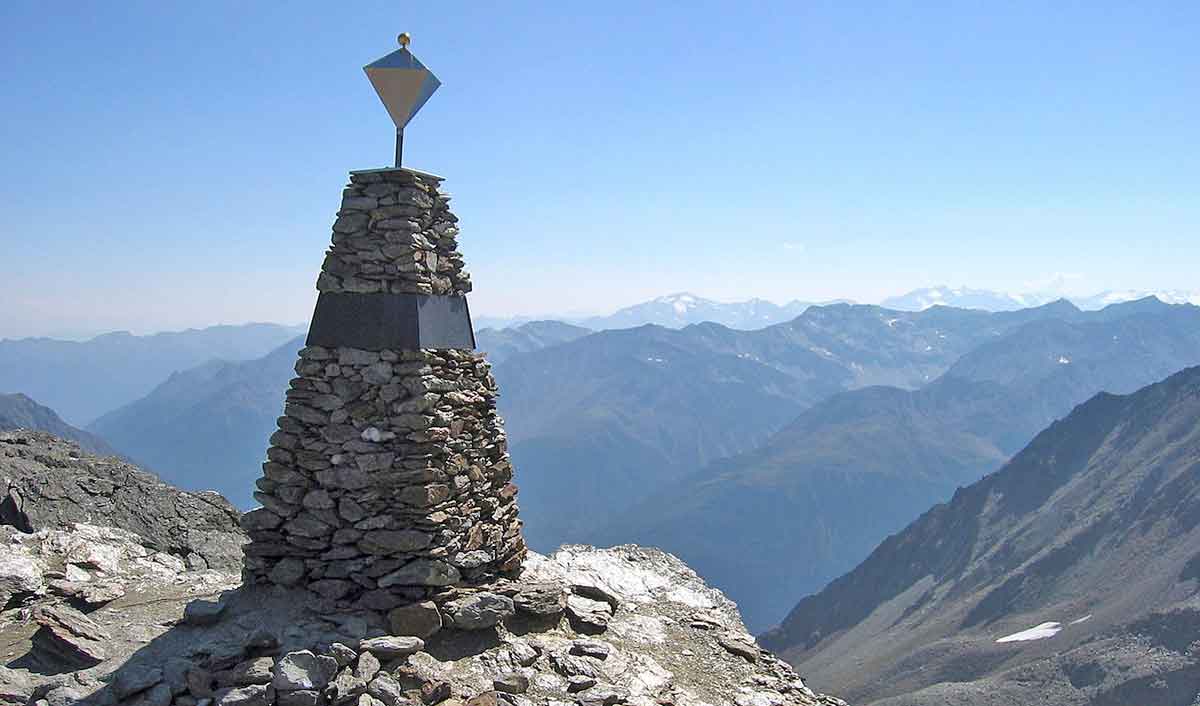
His 1991 exposure followed a very warm summer that melted back ice at Tisenjoch yoke. Since then, glacier archaeology has expanded precisely because warming reveals organic finds that were long frozen. While you can’t quantify climate trends based on one find, Ötzi’s appearance is consistent with the ongoing retreat of Alpine ice.
RM: Where was his village? And why was he so far from home and so high up in the mountains?
Isotopes tell a two-part story. Tooth enamel (formed in childhood) points to the southern side of the Alpine divide, most likely the Eisack/Isarco or Puster valleys near today’s Brixen/Velturno. Bone study (remodeled in adulthood) indicates he later lived for years in a different zone, very likely the Venosta (Vinschgau) area, west of Bolzano. Importantly, we do not know his exact last settlement.
His presence above the treeline fits the economic and travel patterns of the time. The Schnals/Tisen high valleys were used seasonally for hunting and inter-valley transit, and reconstructions of his final day show him moving across multiple Alpine habitats. This is exactly what we’d expect of someone operating between valley communities and their upland routes. Alternatively, he was on the run and used Alpine crossings that he knew from his hunting activities
Life in the Copper Age
RM: What’s the proof that Ötzi was a Neolithic hunter-gatherer? And what’s the proof that he is from the Copper Age?
Ötzi is precisely liminal: a skilled Alpine hunter moving through a society already shaped by herding, farming, and copperworking.
Neolithic, hunter-gatherer traits include:
- Active hunting (bow, quiver with finished and unfinished arrows; recent meat from wild animals in his stomach)
- Extensive backcountry travel and kit optimized for the high Alps (clothing, insulated shoes, fire-starting set, backpack frame, grass mat)
His Copper Age traits include:
- Copper axe (status, metallurgy, long-distance copper source).
- Patchwork leather wardrobe made from multiple domestic species (goat, sheep, cattle), showing investment in herding products and hide-working.
- Grains of cultivated emmer in his clothing.
Genetic Studies
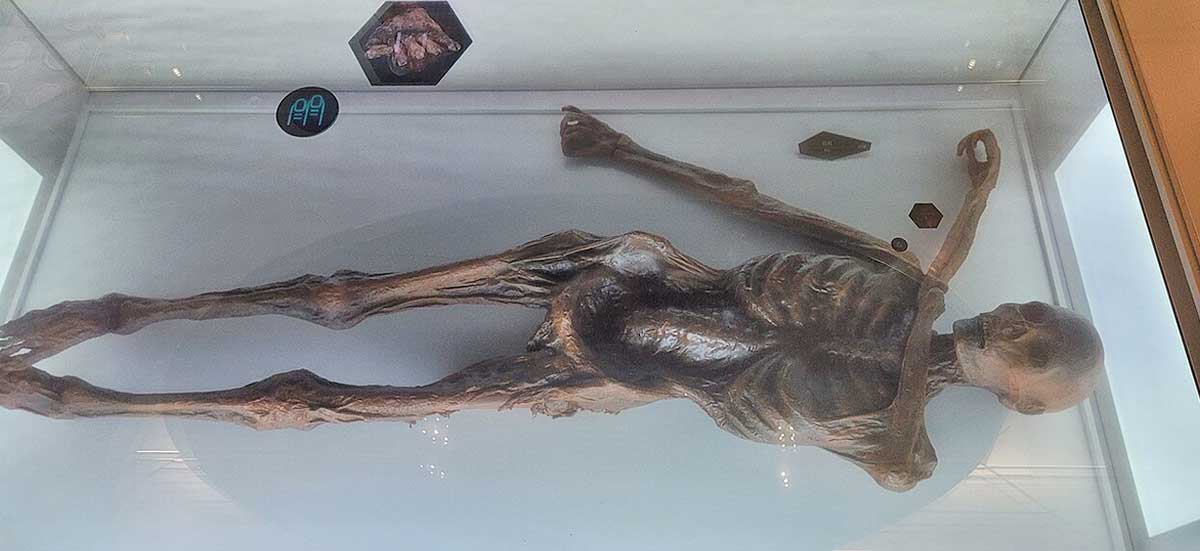
RM: What does his genome tell us?
The 2012 genome analysis (Keller et al) and a 2023 high-coverage reanalysis (Wang et al) showed Ötzi had dark skin, dark eyes, and a balding head. He was lactose intolerant and carried an unusually high proportion of Anatolian early-farmer ancestry input. It also identified genetic risks for predisposition to cardiovascular disease, obesity, and type-2 diabetes (unlikely expressed, given his lifestyle).
RM: Can you tell us about biology and looks?
His stature and weight in life were about 1.60 meters tall and 50 kilograms. He had a 38 (EU) shoe size, which is about 6 US (men). He had dark hair, which was likely receding, and brown eyes. The 2023 genome suggests his dark skin and balding. His skeletal musculature corresponds to that of a person who spent a great deal of time on foot.
RM: What diseases did he have?
Studies suggest that he had arthritic degenerative joint disease consistent with heavy alpine travel. He also had whipworm parasites and a genetic disposition to obesity, diabetes, and atherosclerosis. These risks align with vessel calcifications reported in earlier imaging. No evidence of cancer has been reported.
RM: Was he carrying any traditional medicine?
He carried birch polypore fungus (Piptoporus betulinus), likely for its anthelmintic/antibacterial properties.
RM: Is it true that agriculture generally brings about tooth decay in humans, that prior to that, people probably had better teeth? Is that due to carb-rich food and tiny stones?
In many regions, the shift to agriculture increased caries due to more fermentable carbohydrates (cereals/processed grains). Grit from stone-ground flour and other abrasives accelerated wear and gum disease, precisely what we see in Ötzi.
Dressed for Success
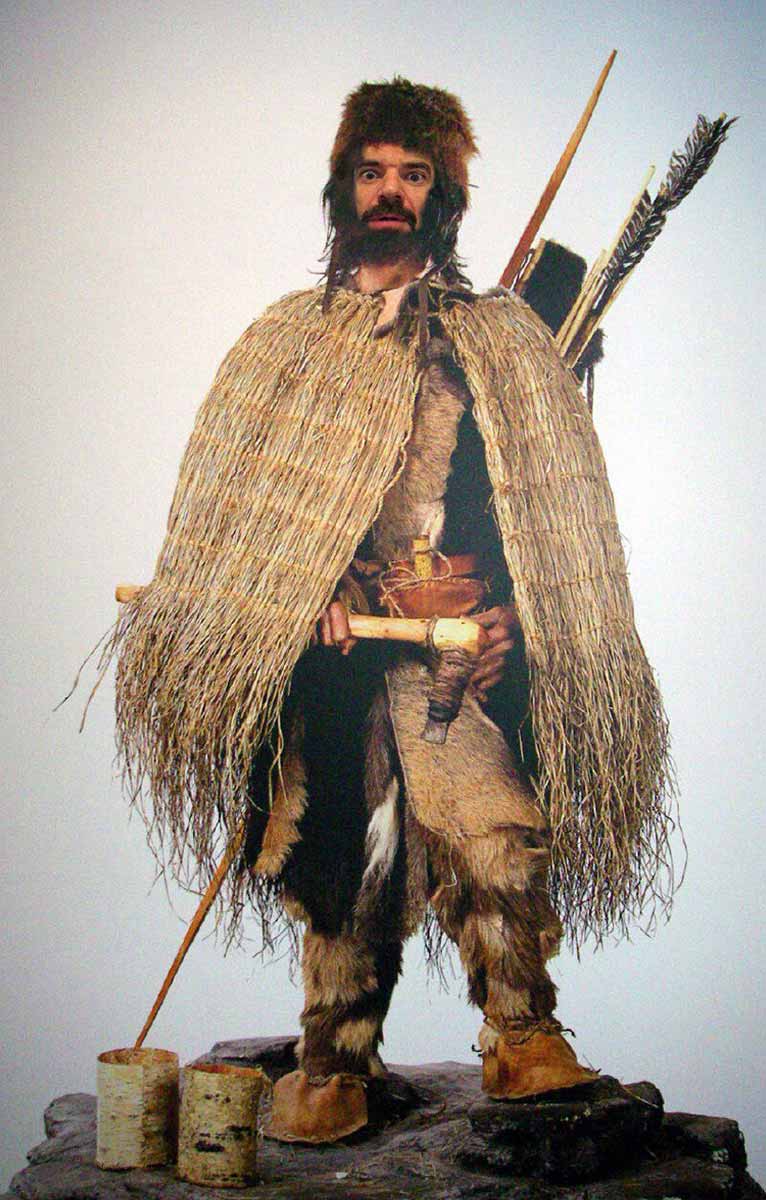
RM: Ötzi’s clothing used many different materials and had different functions, including waterproof boots. Can you tell us what he was wearing and why?
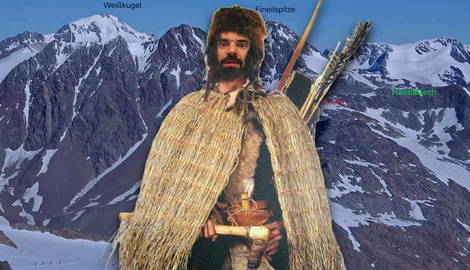
His outfit was purpose-built for cold, wet alpine travel:
- Shoes: bearskin soles, skin uppers, shoelaces: cattle, bast-fiber netting, and hay stuffing (insulation).
- Coat: goatskin strips (light/dark patchwork).
- Leggings: goat.
- Loincloth: sheep.
- Hat: brown bear.
- Cloak/mat: braided/woven grass, a natural rain-shedding layer.
Contemporary reconstructions and wear tests have shown that his clothing provided warmth and grip ideal for the high Alps.
RM: During my Fulbright year teaching at LMU Munich, I took a beautiful train trip from Munich to Salzburg, Innsbruck, and Bolzano. I made it a high priority to visit your incredible museum and lovely city. Can you tell us some of the ways to reach Bolzano?
Bolzano/Bozen is easy to reach by train (e.g., from Verona, Innsbruck/Munich, Venice) with frequent regional and long-distance services. The South Tyrol Museum of Archaeology sits centrally at Via Museo 43. The museum’s website lists hours, tickets, and directions.