Summary
- The Mongol Empire’s trade routes, not biological warfare, were the main superhighways for the spread of the Black Death.
- The plague likely began on the Tibetan Plateau and was unintentionally carried by the Mongols to China and then westward.
- Pax Mongolica and systems like yams (way stations) created the vast network needed for the pandemic to travel across continents.
- It wasn’t just rats; the plague also spread through infected trade goods such as fur and grain carried along Mongol trade routes.
The Black Death, or Black Plague, was one of the deadliest pandemics in human history. By the 14th century, it permeated the narrow alleyways of Europe to the walled cities of China. This catastrophic pandemic was not the result of an isolated event, but the transformative impact of the Mongol conquests of Asia and Europe. The Mongols connected these continents in unprecedented ways, creating new opportunities for trade, cultural exchange, and the spread of disease. How did the Mongol invasions spread the plague across Asia and Europe?
Who Were the Mongols?

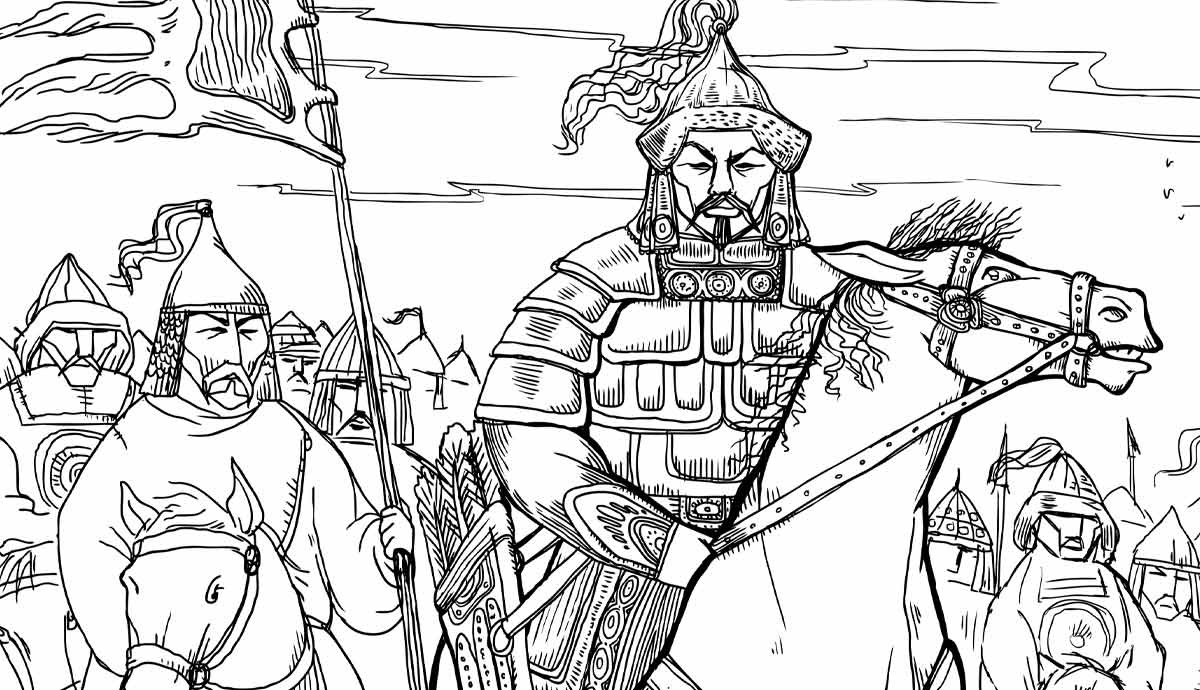
The 12th and 13th century world of the Mongols was one shaped by harsh environments and tribal conflict. However, by 1205, the disparate tribes of present-day Mongolia became unified under a young leader named Temujin. Under his leadership, the Mongols became one of the most effective armies in history. Temujin is better known to history as Genghis Khan, or Chinggis Khan, meaning ‘universal leader’. Chinggis was determined to unify not just the Mongols, but the entire world under single leadership. After uniting the fragmented Mongol tribes, Chinggis could now focus on outward expansion.
The Arrival of the Black Death in Europe
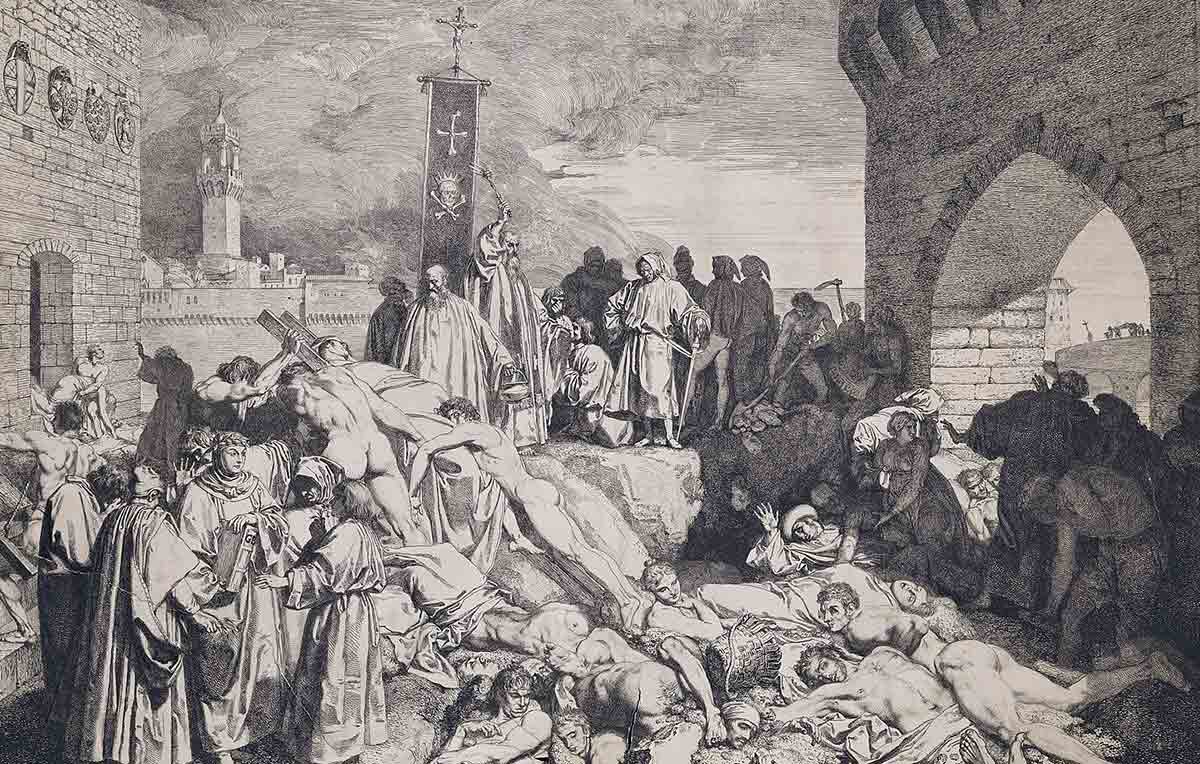
Twelve Genoese merchant ships sailing from Crimea docked at the southeastern harbor of Messina in early October 1347. Their arrival would mark the entry of the Black Death into Sicily. The inhabitants of Messina were immediately infected, and banished the Genoese ships from the port. These ships, marked as harbingers of death, would then sail north to Genoa, bringing the plague to mainland Europe.
The remaining survivors in Messina fled to the countryside. However, through their will to survive, they unknowingly brought the plague with them. They arrived in Catania, whose residents initially welcomed those fleeing Messina with open arms. However, after many of their own were infected, they recognized the severity of the disease and refused to help the Messinians any further (Ziegler, p. 40). However, by that time it was already too late. The plague had taken root and would spread throughout the region like wildfire.
Yersinia Pestis
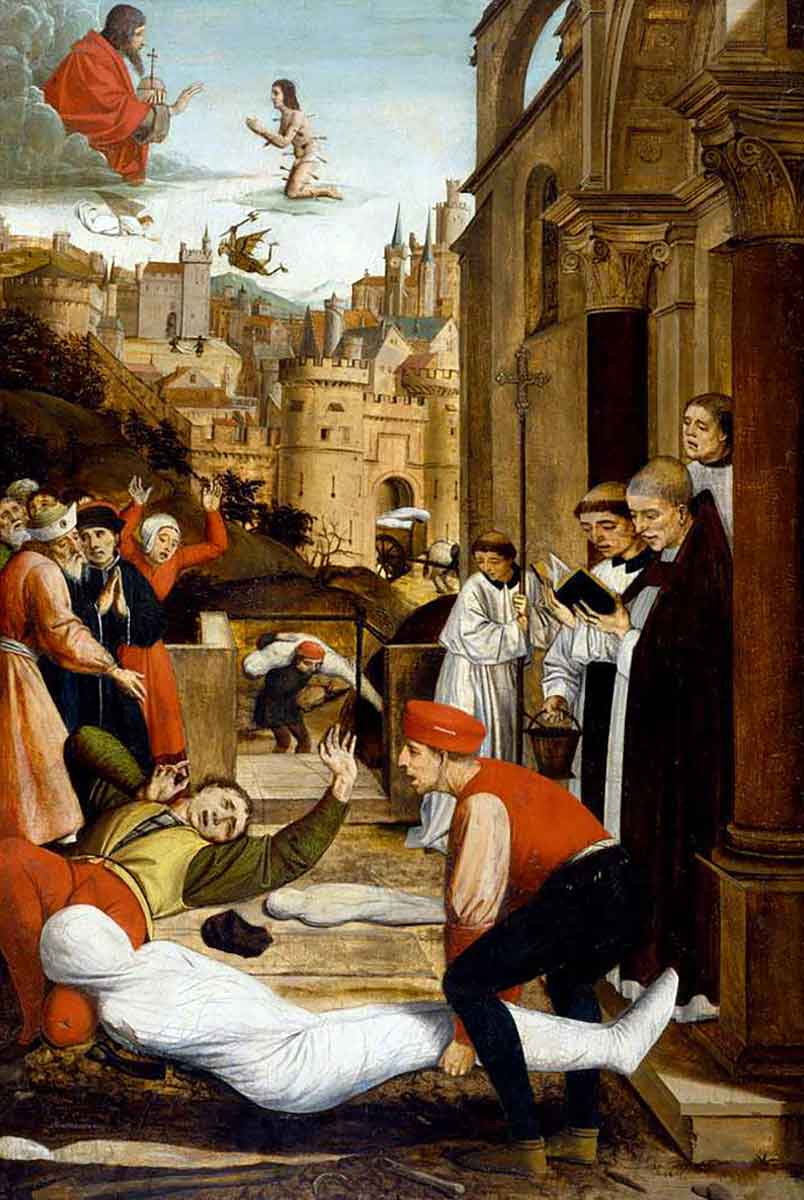
For a long time, scientists and scholars have been unable to agree on exactly what caused the Black Death. However, several studies on bones from 14th century plague graves in France and England in recent decades have confirmed the plague was caused by the bacteria yersinia pestis. The nature of yersinia pestis is a zoonosis, or disease caused by bacteria that can be spread from animals to humans. This bacteria can live with or without oxygen, making it extremely resilient and adaptable to different environmental conditions. Further, yersinia pestis need not always be attached to a host in order to survive; in one case, scientists found a strain that lived several months without a host (Ziegler, p. 27).
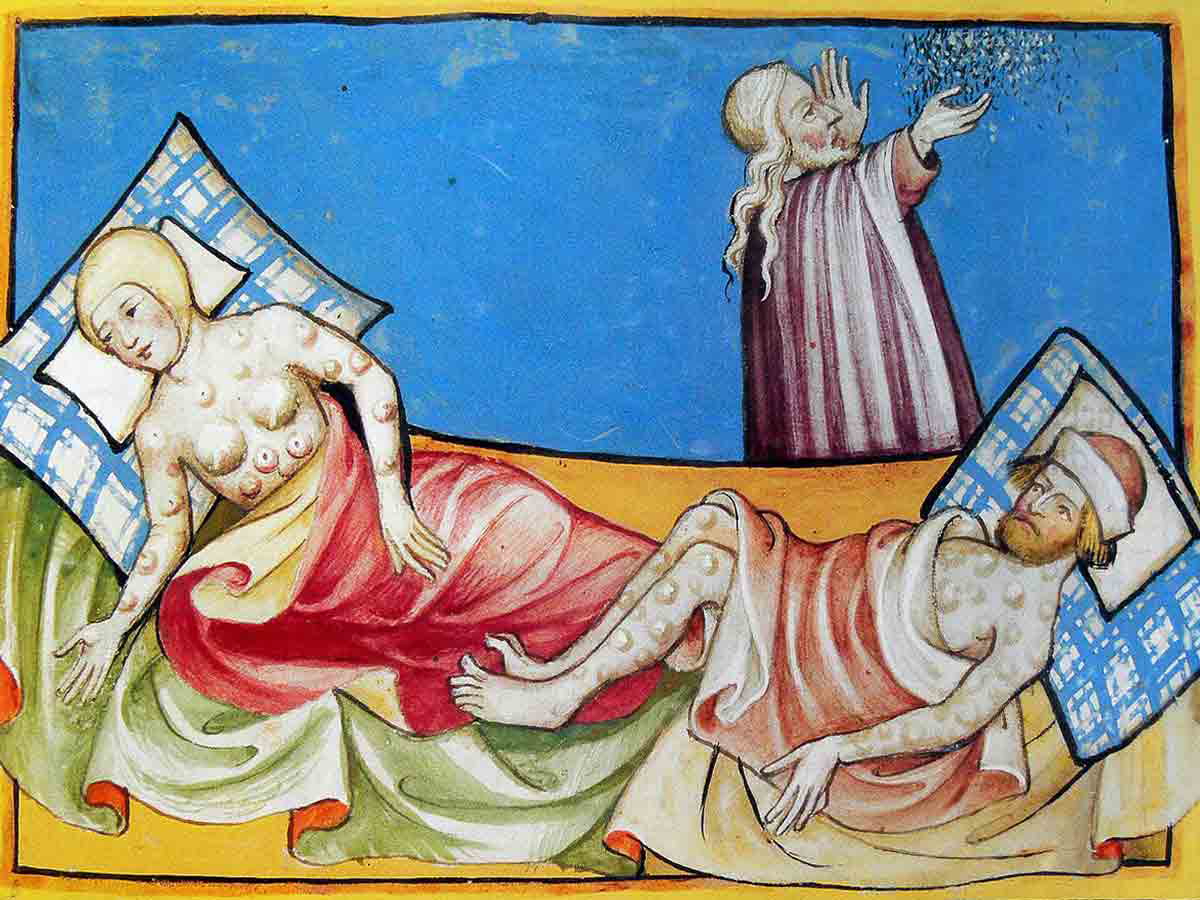
Yersinia pestis can cause a range of symptoms depending on how the bacteria is contracted, which makes it difficult to understand. Out of the four types (bubonic, pneumatic, septicemic, and abortive), the most common were abortive and bubonic (Wiechmann, p. 65). Within two to seven days, an infected victim would begin having headaches, dizziness, and joint pain. Shortly after, lymph nodes and vessels would swell into sores that changed color with the progression of the infection. The sores, which could swell up to 10 centimeters in diameter, became indigo and then black as a result of internal bleeding of lymph nodes, hence the name Black Death.
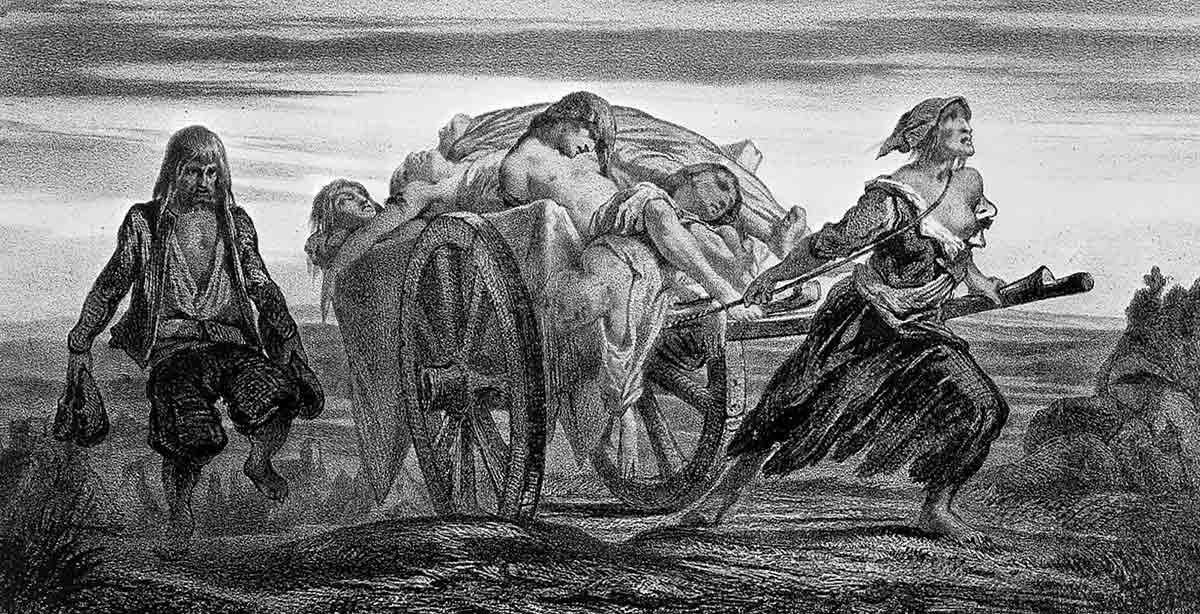
Yersinia pestis could be spread by droplet infection. If an infected person coughed, sneezed, or spoke in the direction of someone, the bacteria could take root in the lungs, becoming pneumatic. In the Decameron, a collection of stories set during the Black Plague, Renaissance author Giovanni Boccaccio illustrates the ferocity with which the plague spread: “it spread daily, like fire when it comes in contact with large masses of combustibles. Nor was it caught only by conversing with, or coming near the sick, but even by touching their clothes, or anything that they had before touched” (Boccaccio, p. 2).
This disease, “sent from God as a just punishment for our sins,” often appeared instantly (Boccaccio, p. 1). Sometimes, within a few hours, victims were infected and endured a grisly death. Boccaccio’s accounts in the Decameron also reflect Medieval knowledge about this disease at the time. He writes that it appeared first in the Levant before spreading west into Europe. How did Boccaccio know this, and how was the deadly disease transmitted across the Mediterranean?
Mongols and the Spread of Black Death
The Mongols have been variously attributed for the spread of the Black Plague, most famously resorting to biological warfare by using catapults to fling the cadavers of plague victims over city walls during the Siege of Caffa (present-day Feodosia) in 1346. This statement is based on the account of the siege by Gabriele de Mussi, who was not present. The historian Robert Hymes suggests it is highly unlikely that healthy contracted soldiers would be ordered to retrieve and carry infected cadavers and strap them into catapults.
Secondly, the cadavers, whose deaths were caused by infection, were likely no longer contagious. Once the body temperature of a victim begins to decrease, yersinia pestis often moves on in search of a new host. With biological warfare ruled out, there were still other ways the Mongols facilitated the spread of the Black Death across Eurasia, which will be explored below. Another myth about the spread of Black Death was that it originated in China. After the Mongols invaded China in the early 13th century and expanded westward, they carried the plague with them. However, it is more likely the plague was brought to China by the Mongols.
The Tibetan Plateau, China, and Rhubarb

Yersinia pestis has been around for at least 4,000 years (some scholars even go as far as 60,000 years), but the specific strain associated with the Black Death may have originated around 1142 and 1339, coinciding with the expansion of the Mongol empire (Hymes, p. 285). Hymes theorizes the strain, more specifically the “genetic divergence” of yersinia pestis that would become the Black Death, took place due to the Mongol invasion of the Western Xia state of the Tangut people in the 1200s (Hymes, p. 285).
The Tibetan Plateau, or Qingzang Plateau, is perceived as the possible origin of yersinia pestis. The Western Xia state bordered this plateau, and it is likely the Mongol invasion of this region beginning in 1205 brought yersinia pestis to present-day China, not the other way around. This parasite was already present in the area, attaching itself to fleas which were present in rodents, who would have hitched a ride with the Mongols by burrowing in their saddle bags and other ‘provisions’ (Hymes, 287).

Chinese records also reveal an unprecedented amount of deaths from disease beginning in the 13th century. Notably, health edicts from this time cite rhubarb as a cure. This is because health officials needed to sift through past historical records for cures due to the unprecedented nature of symptoms in China at the time. Rhubarb was previously used to treat a disease that produced ‘boils’, the same symptom of the plague experienced by victims in Europe. With the Mongols, the disease was brought east to China then west across Asia. By 1346, Europeans became aware of a disease that was wreaking havoc in the east.
Rattus: Harbinger of Black Death…or not?

The spread of the Black Death is often attributed to rats in the public consciousness. Rats have been blamed for the spread of the plague due to infected fleas attached to their bodies, who would hide in the saddle bags of Mongols who traversed Eurasia. However, rats were not the only means of plague transmission. In fact, many plague accounts do not mention rats at all.
Yersinia pestis could live up to a month without a host. Thus, the disease would infect all merchandise: objects, fur, even grain. Yersinia pestis could thus easily attach itself to cargo carried by merchants aboard ships or on land. Once merchants or travellers arrived at their final destination, the disease would spread outward. Since there were many ways the disease could be carried, the role of rats may have been exaggerated. Even the above account of the Genoese ship arriving in Messina is likely not the first, nor only, way the plague was introduced into Europe.
Pax Mongolica, Yams, and Redistribution
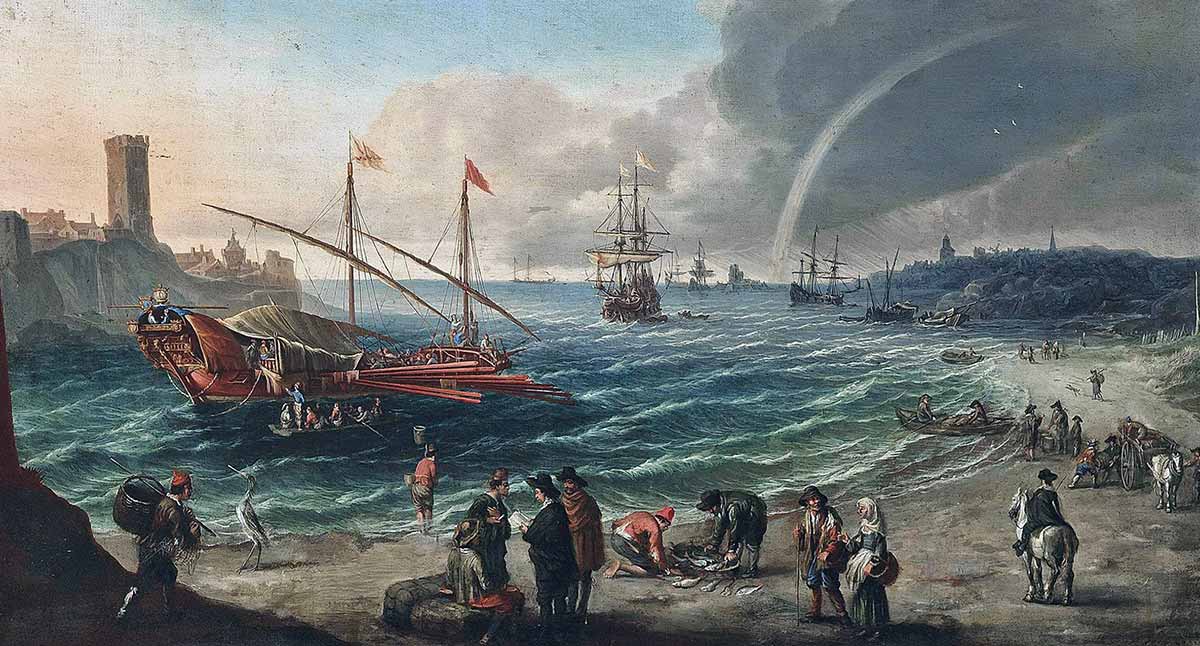
The speed with which the Black Death permeated Asia and Europe can be attributed to several factors initiated and intensified by the Mongols. By 1260, the Mongols Empire stretched as far west as the Crimean Peninsula on the Black Sea. The Mongols created yams, the equivalent of modern way stations, to facilitate communication and trade across Eurasia. Routinely stocked with food supplies, water, and horses, these stations shortened the travel time between present-day Russia and the Mongol capital in Karakorum from 80 days to just several weeks (Favereau, p. 60).
Interwoven into the network of communication facilitated by the yams was the increased circulation of traded goods. Venetians, Genoese, and Sicilians were a fixture of the Mediterranean trade beginning around the 11th century. This trade expanded in the 13th century not in spite of, but due to the Mongols. The Mongols instituted a system of ortaqs, or merchants, who were given licenses and privileges for running businesses on behalf of the Mongol administration (Favereau, p. 52). Increasing numbers of European merchants appeared in areas like Crimea, especially the southeastern port of Caffa.
The incentivization of trade was embedded into the philosophies of power and spirituality of the Mongols. The Mongols believed in the redistribution and circulation of goods for all echelons of society. Their goal: not to hoard wealth, but to spread it (Favereau, p. 55). The redistribution of material goods, taxes, and other forms of wealth were absolutely essential in maintaining social and political order, as well as widespread happiness for the Mongols (Favereau, p. 57).
A Fatal Trade
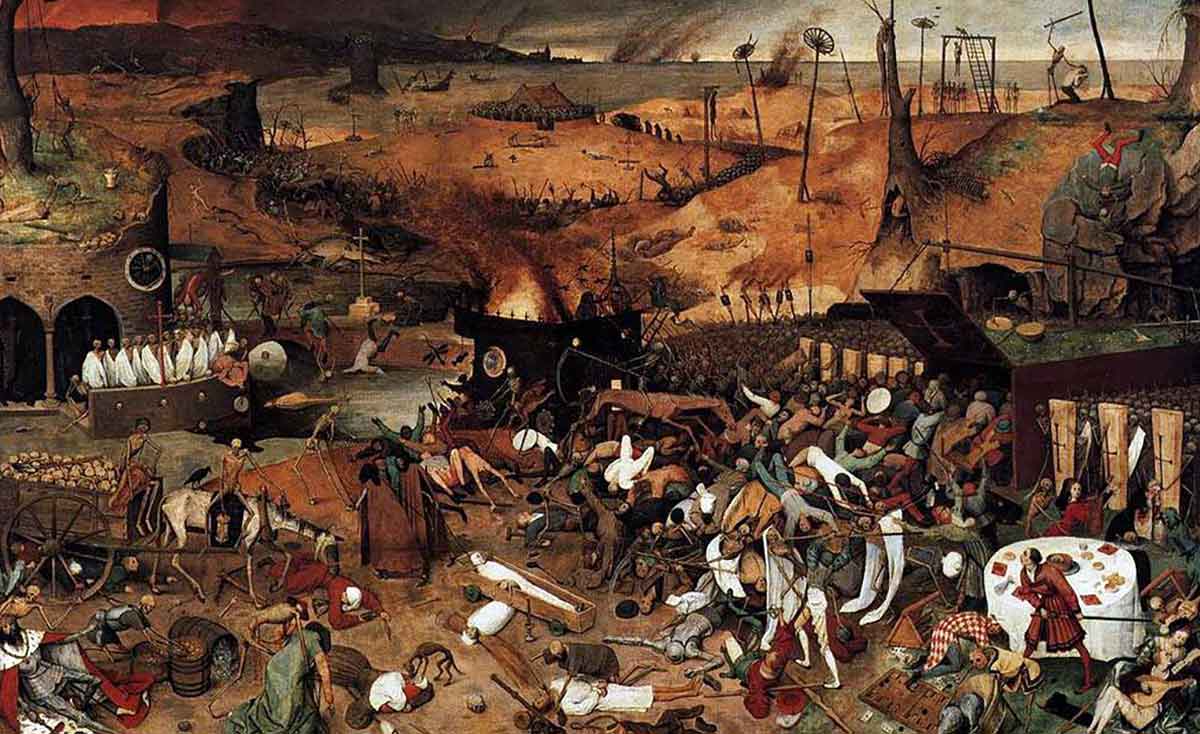
Through yams and the ortaq system, objects, food, and provisions circulated throughout Eurasia in unprecedented ways. These commodities were highly sought after by Mongols and Europeans alike. Unfortunately for the Mongols and Europeans, they were also objects that allowed the spread of yersinia pestis. Additionally, the Mongol ortaq system facilitated large numbers of European merchants, especially Italians, who had a strong presence in places like Crimea.
Furthermore, Mongol territorial expansion beginning in the Tibetan Plateau, where yersinia pestis was already present, carried the disease all over Asia. It was brought first to China, then spread west alongside the Mongol conquest. Lastly, the Mongol philosophy of redistribution unwittingly led to the widespread distribution of contaminated objects, and was likely a contributing factor to the intensity of Black Death’s spread. That the plague spread across Eurasia with such ferocity was not due to a single factor, but the combination of processes encouraged by the Pax Mongolica.
Sources:
- Boccaccio, Giovanni. The Decameron. Translated by John Smith, Bloomsbury, 2015.
- Bloomsbury Media, https://media.bloomsbury.com/decameron‑translation.
- Favereau, Marie. The Mongol Peace and Global Medieval Eurasia. (this isn’t a full citation, idk why it’s like this)
- Hymes, Robert. “Epilogue: A Hypothesis on the East Asian Beginnings of the Yersinia pestis Polytomy.” The Medieval Globe, vol. 1 no. 1, 2015, p. 285-308. Project MUSE, https://dx.doi.org/10.17302/tmg.1-1.11.
- Wiechmann, Ingrid, et al. “History of the Plague.” RCC Perspectives, no. 3, 2012, pp. 63–74. JSTOR, http://www.jstor.org/stable/26242596.
- Ziegler, P. The Black Death. 1969. Harper Tourchbooks, New York.