In 1982, American philosopher Susan Wolf published an article in The Journal of Philosophy titled ‘Moral Saints’ where she makes the case against what she calls ‘moral saints’—those who strive to be morally perfect at all times. Most of us would presume that we ought to try to do this, even if we fall short. However, Wolf argues that not only would most of us not want this for ourselves, but we would not want it for our loved ones either. So, what is wrong with moral saints?
What Are Moral Saints?
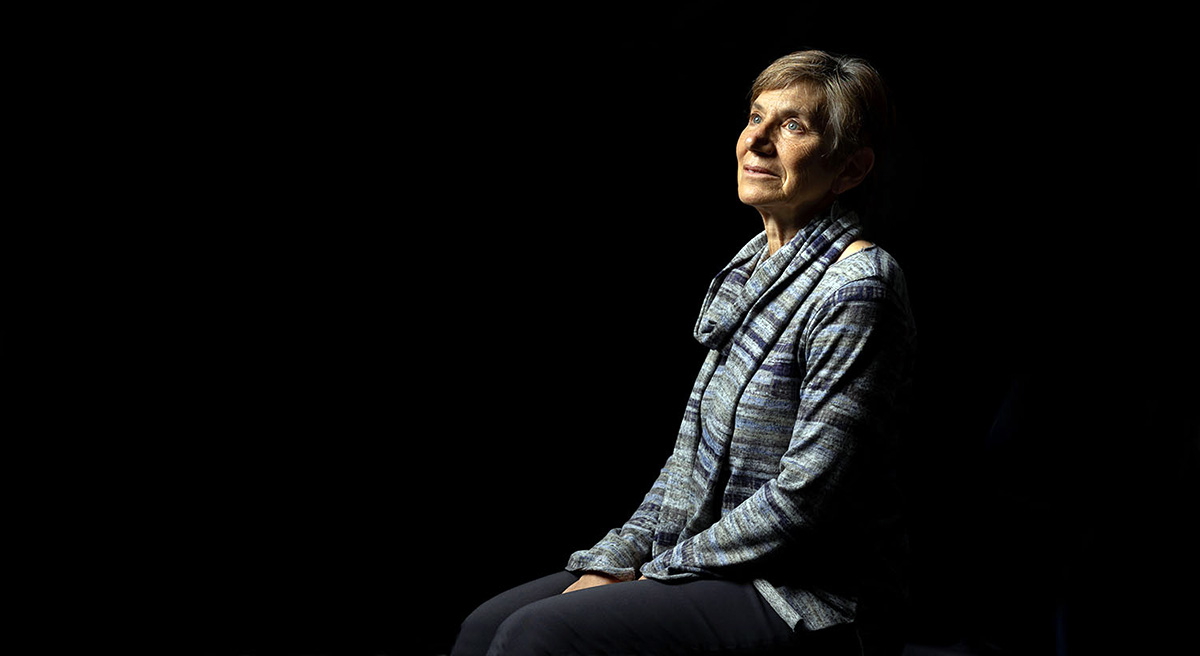
Susan Wolf begins her essay by admitting that she is unsure if there are any moral saints. But, she says, if there are any, she is glad that neither she nor anyone she cares about is one. On the face of it, this is a truly astonishing admission. Surely, one would think, being a moral saint would be an ideal that most of us strive for.
Of course, if mortal sainthood is perfection, then it is understandable that neither Wolf nor her close associates reach this level—who of us is perfect? But how should we understand her claim that she would not want herself or anyone she cared about to reach this level of moral perfection even if it were possible?
Perhaps Wolf’s conception of a ‘moral saint’ is different from what we might expect? If she means something other than acting, and possibly also thinking, the most morally good things possible at all times, then we might readily agree with her.
To see if this is the case, let us look at the definition of ‘moral saint’ she gives in her essay: “By moral saint I mean a person whose every action is as morally good as possible, a person, that is, who is as morally worthy as can be.” This is confusing. Why would Susan Wolf, a moral philosopher, not want to be a person who is as morally good as possible? And why on earth would she not want this for her loved ones?
This is probably the most intriguing opening to an essay on ethics that anyone is likely to find in modern philosophy. As we explore Susan Wolf’s arguments, we will quickly see why her essay is considered essential reading in philosophical ethics.
Seeking Moral Perfection

Wolf begins her argument with the claim that moral perfection ought not be held up as the model of personal well-being. She acknowledges that, outside of philosophy, this idea would probably be considered self-evident. After all, it is not difficult to understand that perfection is not usually considered to be the general goal of human beings in any endeavor.
However, when we stop to consider ethics and morality in particular, it seems strange to advocate for anything less than striving to be the most morally worthy person one can be. That is, even if we fail—even if moral perfection is not possible—should we not at least try to be morally perfect? Because even if we fail, as undoubtedly we will, attempting to get as close as possible should be the goal for all of us, right? Wolf says it should not be.
A moral saint, according to Wolf, is a person who attempts to be as morally good as possible in all circumstances. Being human, they may not reach perfection, but they attempt to get as close as possible. And for Wolf, such a person is unattractive, undesirable, and raises important questions for moral philosophy.
In her essay, Wolf first looks at what a moral saint might look like before offering her critique of this type of person. She then tests this model of moral sainthood against consequentialist and Kantian moral theories. Once this task is achieved, she then looks at what she has to say about moral saints and the implications for modern moral theories.
Loving Saints and Rational Saints

A moral saint, for Wolf, would be someone whose life is “dominated by a commitment to improving the welfare of others or of society as a whole.” She offers two contrasting accounts of what this might look like in a real person.
For the first kind of person, putting others first is the source of their happiness. In other words, this is their highest pleasure. They are happy to put their own needs aside for the opportunity to help others secure what they need. These people are clearly very different from the majority of us in disposition.
The second type of person, according to Wolf, is much more like us in that they have needs and desires of their own but put them aside for the sake of others. This person is willing to make sacrifices in their life, and they feel these are sacrifices.
Wolf distinguishes between the two kinds of moral saints outlined above by referring to the first kind as a ‘Loving Saint’ and the second as a ‘Rational Saint.’ Loving Saints are motivated by love, whereas Rational Saints are motivated by a sense of duty.
While these two different kinds of moral saints are motivated differently and experience their saintliness in different ways, Loving Saints feel happiness and give of themselves with joy; Rational Saints feel a sense of sacrifice and give until it hurts—outwardly, they would be indistinguishable. That is, from the perspective of everyone else, Loving Saints and Rational Saints cannot be told apart. This is because, Wolf says, both kinds of saints exhibit the same saintly behaviour. In thought and deed, Loving Saints appear just as patient, considerate, and charitable, etc., as Rational Saints.
From what has been said so far, we might wonder where the problem is.
Too Good For Their Own Good

The worry here is that moral saints might be too good for their own well-being. Having all the moral virtues crowds out non-moral virtues. These are not vices, but things like reading novels, playing instruments, and participating in sports. Wolf acknowledges that none of these activities can be considered essential but argues that having none of these kinds of things in one’s life would leave a person ‘strangely barren.’
Bear in mind that for moral saints, all their time must be spent doing the most morally worthy activities. If they are learning the clarinet or reading a volume of Proust, then they are not raising money for good causes or tending to the sick and infirm.
Remember that Wolf said, right at the beginning, that we would not want those around us to be moral saints. This concern is that moral saints are too good for our own well-being. As well as there being no room in the moral saint’s life for non-virtuous activities, there would be no room for non-virtuous personal characteristics. For example, the need to be kind, patient, and understanding at all times would leave no opportunity for a sarcastic wit or dry sense of humor—mannerisms we often admire in others.
In addition, due to the lack of non-moral activities and hobbies, moral saints can never develop interests and expertise that we typically find attractive in others. Were we to go to a moral saint’s home for dinner, we could not expect an expertly prepared fine dining experience. The moral saint could never justify the time spent learning to cook, nor the extravagance of the food put on the table.
Moral Saints: Dull-Witted, Humorless, and Bland
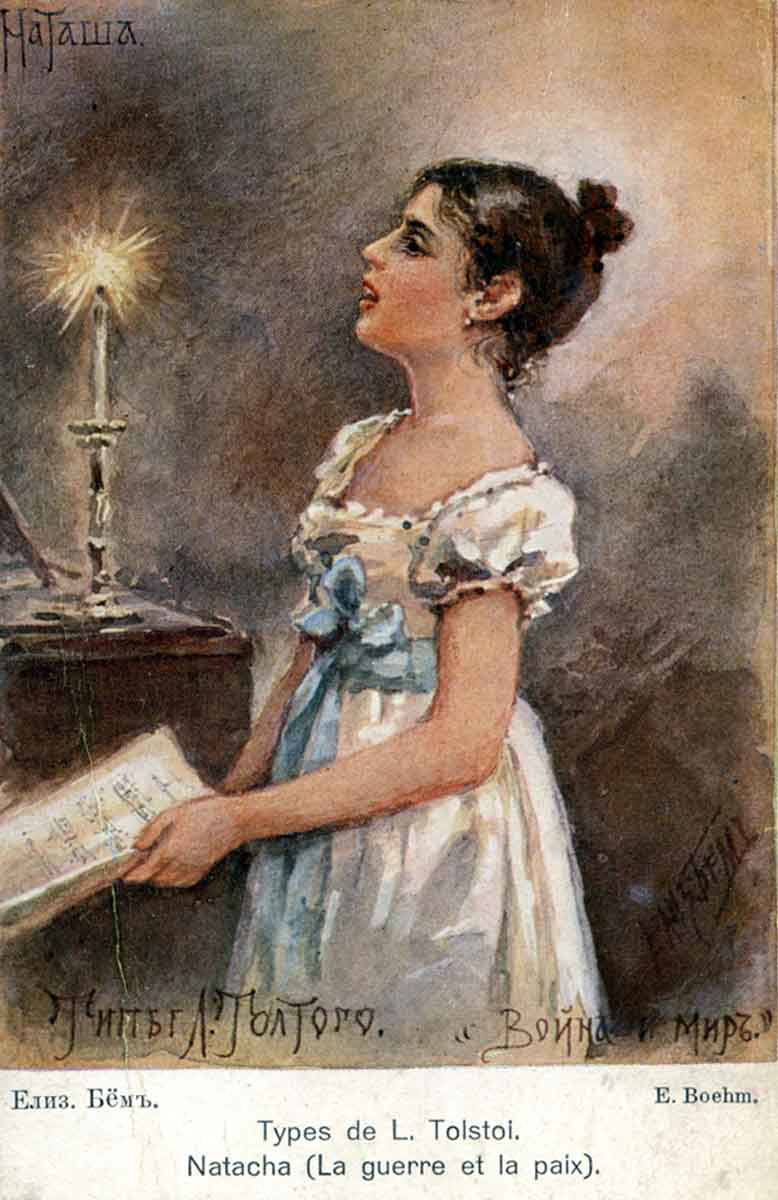
For most of us, Wolf’s opening claim that we would not want to be a moral saint and would not want any of our loved ones to be moral saints either may have seemed strange. Shouldn’t we attempt to be as morally perfect as possible? Now it seems that such a person would, in Wolf’s words, be “dulled-witted, humorless and bland.”
Wolf lists a number of different people, taken from real life and fiction, that she says are the kinds of people we tend to admire, to have around us, and perhaps aspire to be like ourselves. Who would not want Katharine Hepburn’s grace or Paul Newman’s cool?
We tend to like people with complex personalities rather than bland, one-note characters. Think of the fictional characters we are attracted to. In her essay, Wolf gives as examples Tolstoy’s Natasha Rostov and Henry James’ Lambert Strether. Would we not prefer, she says, Dickens’ Betsy Trotwood over Agnes Copperfield? Most of us, if we are honest, would prefer to spend time in the company of Chesterton’s Father Brown over, say, St. Francis of Assisi.
None of this is to say that most people do not like others who are very morally virtuous. Wolf’s claim is that while we admire such people and would like to have more of them in our lives, we also want them to have moral virtues in conjunction with some other non-moral virtues. The problem only arises when all a person has in their lives is their moral sainthood. As Wolf puts it, “there seems to be a limit to how much morality we can stand.”
A possible objection to Wolf’s argument, at this point, might be that the high moral virtue is not the problem, but that too much of anything is a bad thing.
Too Much of a Good Thing?

The possible objection to Wolf, just mentioned, is that she is not isolating and targeting moral perfection, but rather pointing out a problem with a too narrow focus on a single thing. For example, someone obsessed with perfecting a musical instrument or learning as many foreign languages as possible would have no time for other activities. Would they not be just as humorless and bland as any moral saint?
Imagine spending time with someone who only wants to talk about the piano, or worse still, only wants to play the piano. Their love of the instrument would preclude the development of character and social skills. While this is true to an extent, Wolf argues that there is a crucial difference between the moral saint and someone obsessed with perfecting a skill or acquiring knowledge.
The desire to, say, perfect the piano is a desire that, in the obsessive crowds out other competing desires. They do not dampen the desire for other activities; they simply prefer playing the piano over anything else. But the moral saint does not have any particular activity they desire to do over all others. Their lives are spent suppressing or ignoring desires that threaten to divert time away from their morally virtuous activities.
When we look at the life of the Loving Saint, who feels no sacrifice in eschewing non-moral activities, we feel that there is something not altogether right with their response to such things. That is, Wolf’s claim is that the Loving Saint experiences a failure to appreciate non-moral things that the rest of us value. The Rational Saint, on the other hand, does see the value in these things but forces themselves to forgo these pleasures. Here, Wolf says, there seems to be something pathological about their rejection of non-moral pursuits.
How Moral is Too Moral?

Wolf is not attempting to condemn moral saints or to criticize those who might aspire to moral sainthood. Rather, she wants to demonstrate that there is something strange in our intuitions concerning morality.
Pretheoretically, most of us would simply assume that it is always better to be morally better. However, from what we have seen, attempts to achieve moral perfection do not result in what we consider to be good people. That is, the kind of people moral saints become are the kind of people we would not want to be ourselves, nor would we want our loved ones to be either.
It seems that moral saints are a kind of fanatic, but unlike fanatical sports enthusiasts or musicians, they also seem to be lacking something ‘human’ about them. The Loving Saint seems to have been born without the capacity to find happiness and joy in the activities and pursuits that most humans do. And the Rational Saint seems to have such an aversion to acting in any way short of moral perfection that they appear to have a psychological problem. It is hardly surprising that we would not want our children, for example, to take either path in their lives.
But this raises a fascinating question for moral philosophy. We normally hold moral virtues in the highest regard and seek to encourage others to act as virtuously as possible. If the answer to the question “how moral ought a person be?” is not “as much as possible,” then what is the answer?