The idea of a muse stems from Greek mythology. The nine daughters of Zeus and Mnemosyne are the personification of inspiration for art and science. While these muses were actively guiding the creator, today’s interpretation of the term suggests a muse is more of a passive object; a beautiful woman behind the artistic, male genius. Throughout history, many women have been given this title. In art in particular, male artists are often credited with having a muse. While in reality, these women were anything but passive objects in the background.
Camille Claudel: Muse and Artist in the Shadow of Rodin?
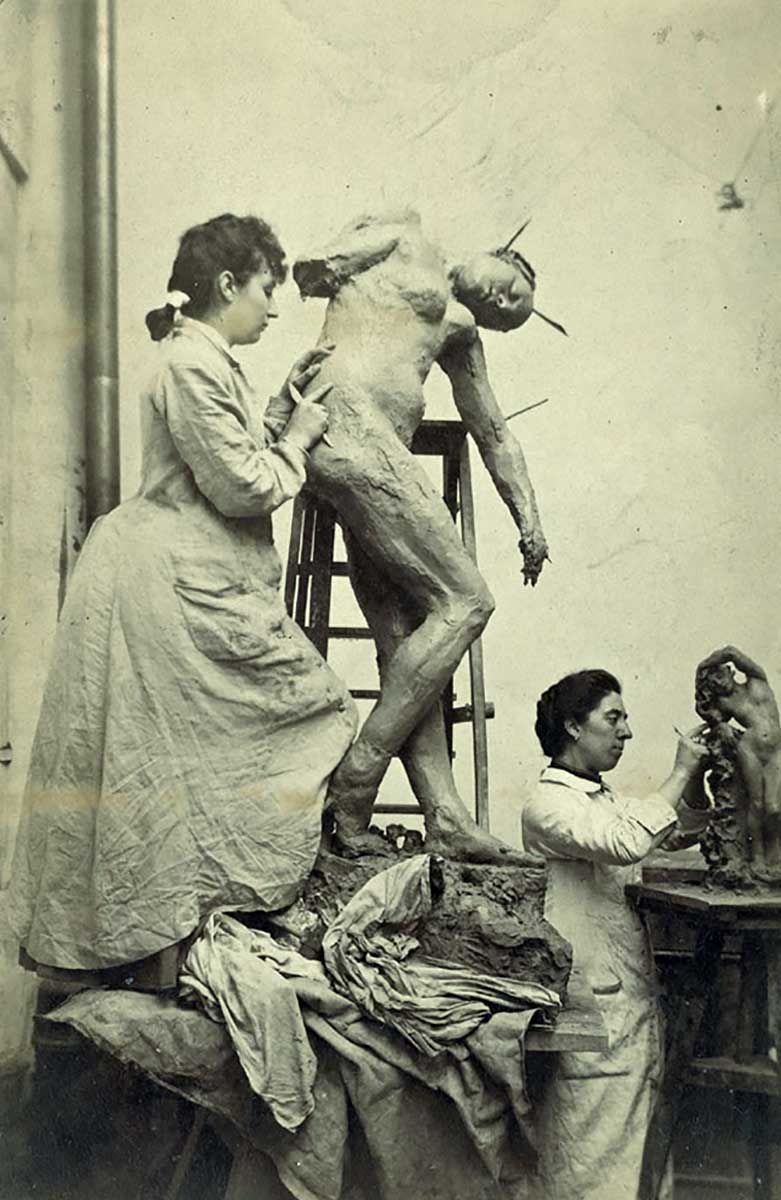
Camille Claudel, born in 1864, was the eldest daughter of three children of a provincial middle-class family. A strict but devoted father and a mother mainly occupied with her duties as a housewife shaped her early childhood years. When the family moved to Paris, Camille began to take sculpting classes at the Académie Colarossi.
A year later, in 1882, Auguste Rodin and Camille Claudel met when the French sculptor took over the class Claudel was attending from his predecessor and friend Alfred Boucher. At the time, Rodin was already in a lifelong partnership with Rose Beuret, with whom he had a son in 1866, only two years younger than Camille.
However, the large age difference did not prevent the two from starting an affair. Intrigued by the fierce 19-year-old student, Rodin appointed Camille as an assistant in his studio. From then on, their connection intensified quickly. She became his muse, colleague, mistress, collaborator, and assistant.
He was simultaneously her lover and her master, which made her subordinate to him. Not necessarily because Rodin wanted her to be; on the contrary, he had a firm belief in her ability as an artist, but because of the nature of their relationship.
During the first years of their romantic relationship, the artworks of both sculptors seemed to reflect their closeness and initial attraction to each other. Rodin’s influence on Claudel is clearly visible in pieces like The Torso of a Crouching Woman and The Torso of a Standing Woman. Regardless of the fact that Rodin was a much more experienced artist, he was influenced by Claudel’s talent. For example, his Galatea shows a strong resemblance to Claudel’s Young Girl with a Sheaf.
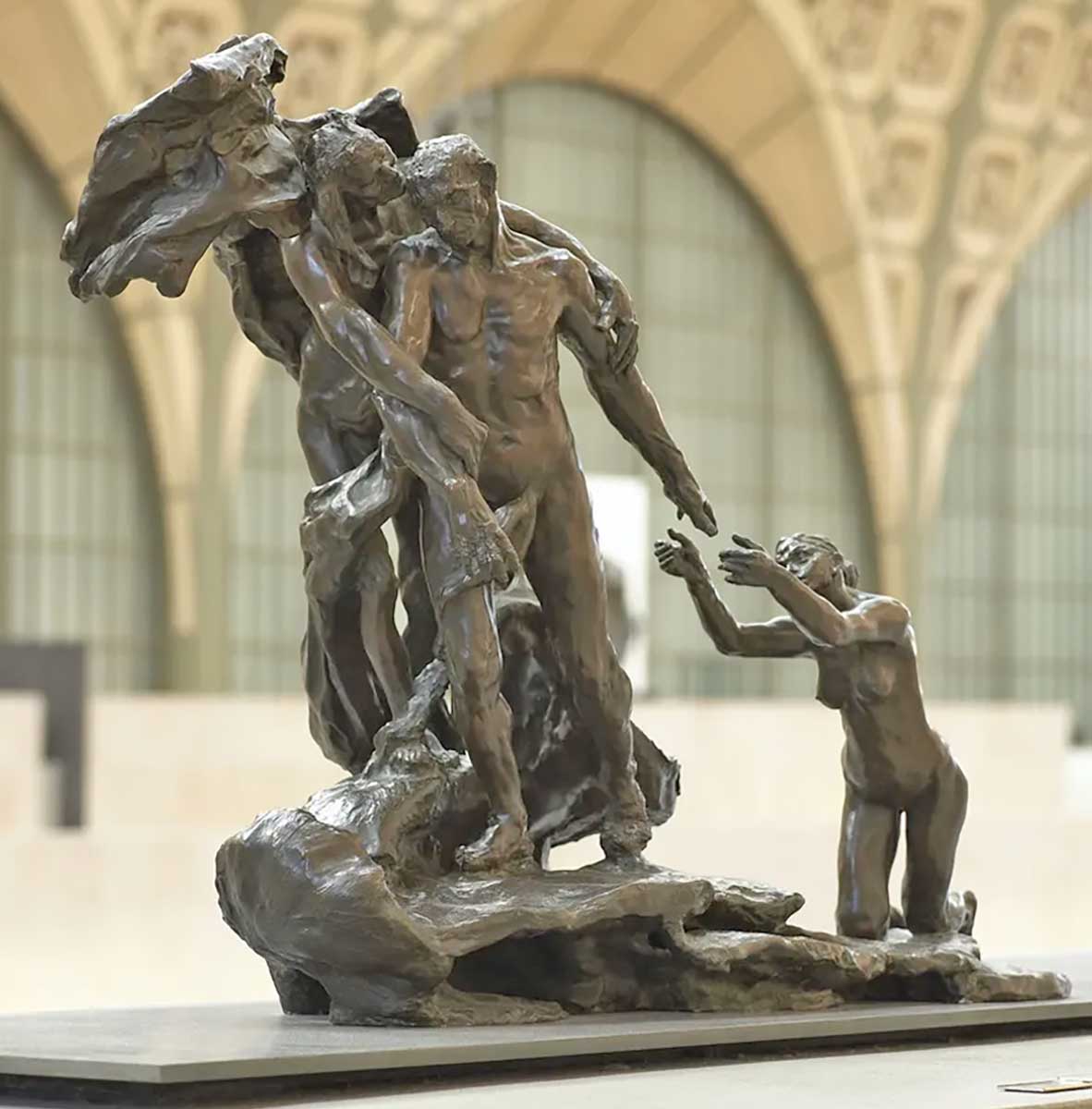
At the beginning of the 1890s, Claudel began to distance herself more and more from Rodin. “I have lots of new ideas that would please you enormously… I’m greatly enjoying working… As you can see, it’s no longer anything like Rodin,” she wrote to her brother Paul. Claudel kept working independently, and her works were shown in several exhibitions. However, securing and keeping public commissions proved incredibly difficult. While she did receive prestigious commissions, such as the state-sponsored plaster model of The Age of Maturity, they were often caught in bureaucratic and personal crossfire, leading to cancellations or rejections. The male-dominated art world struggled with her way of depicting female sensuality and nudity.
Claudel also believed Rodin to be responsible for the loss of her commission for The Age of Maturity, although his involvement was never proven. A male figure torn between an older woman and a younger one: A piece that seems to show the troublesome relationship between Rodin, his wife, and Claudel.
Reality began to blend with her emerging paranoia, convinced that her former lover and master would use her ideas as his own. Today, about 90 of her works still exist. Claudel’s deteriorating mental health led to periods of destroying her own art. Ultimately, she was committed to a mental asylum in 1913. The sculptor remained institutionalized until her death in 1943. Unlike Rodin, she would never live to witness the success of her own work. Her genius and talent only gained recognition in the 1980s. Since then, countless exhibitions, books, and even films have honored her oeuvre. Still, her relationship to Rodin remained connected to her name.
Victorine Meurent: From Model to Muse to Artist
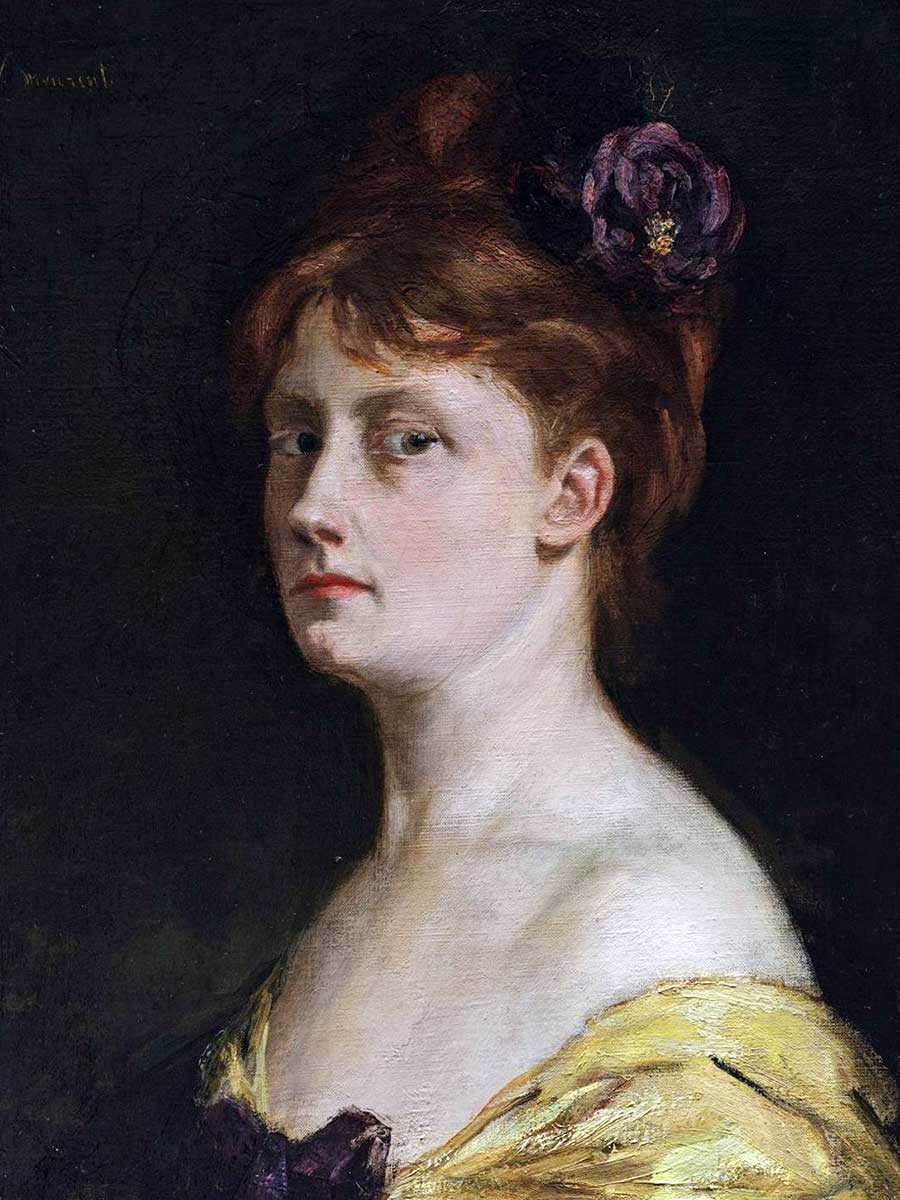
Victorine Meurent was not even 20 when she met 30-year-old Édouard Manet in Paris in 1862. Where exactly the two met can not be known with certainty. While some theories assume that he discovered her on the streets of Paris, possibly while she was working as a musician, it is more likely that their first encounter happened through their mutual connection with Thomas Couture. Manet had completed his academic training in his atelier, and Meurent was said to have posed as a model for him.
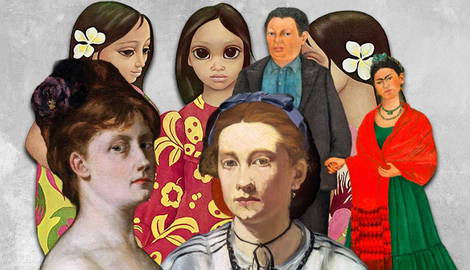
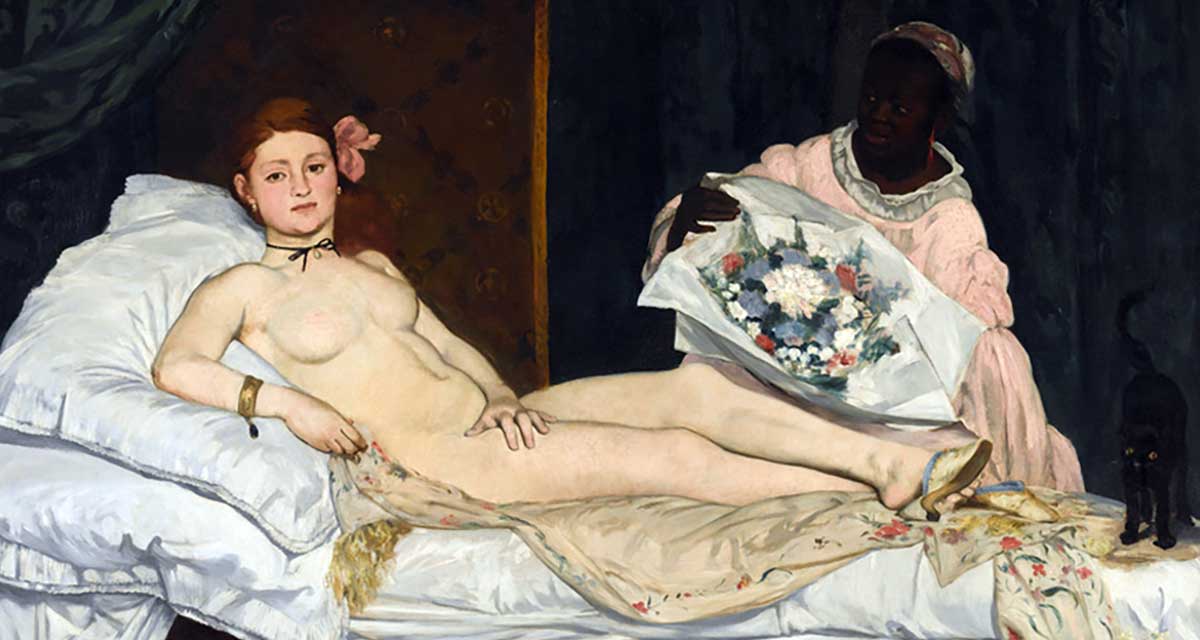
Her name and existence were long unknown in the art world. What made her famous was not her own art but the art that would depict her. Manet chose her for a variety of paintings between 1862 and 1873, the two most prominent being Le Déjeuner sur l’Herbe and Olympia.
Le Déjeuner Sur L’Herbe or Luncheon on the Grass was painted in 1863. In the same year, it was shown at the first Salon des Refusés, the exhibition of the works rejected by the official Paris Salon. While the Salon of the Refused was meant to showcase more progressive and less conservative artworks, Manet’s picnic scene still received backlash. The naked woman next to fully clothed men during a luncheon in the park raised a controversy about how female nudity was to be portrayed in art. The nude was real, too real for the taste of the time.
Manet’s Olympia was created in the same year. In 1865, it was accepted for the Paris Salon. The erotic element of the nude is undeniable here. It shows a demimonde, a courtesan to a wealthy lover, lying naked on a bed, attended by her maid. Instead of an idealized goddess or a passive nude, Olympia contains a certain directness and a confrontation with sex, erotica, and female confidence. The public discourse simply called her a prostitute. This narrative was mirrored in the speculations about the model behind these two controversial paintings, claiming she was a prostitute and an alcoholic who died young.
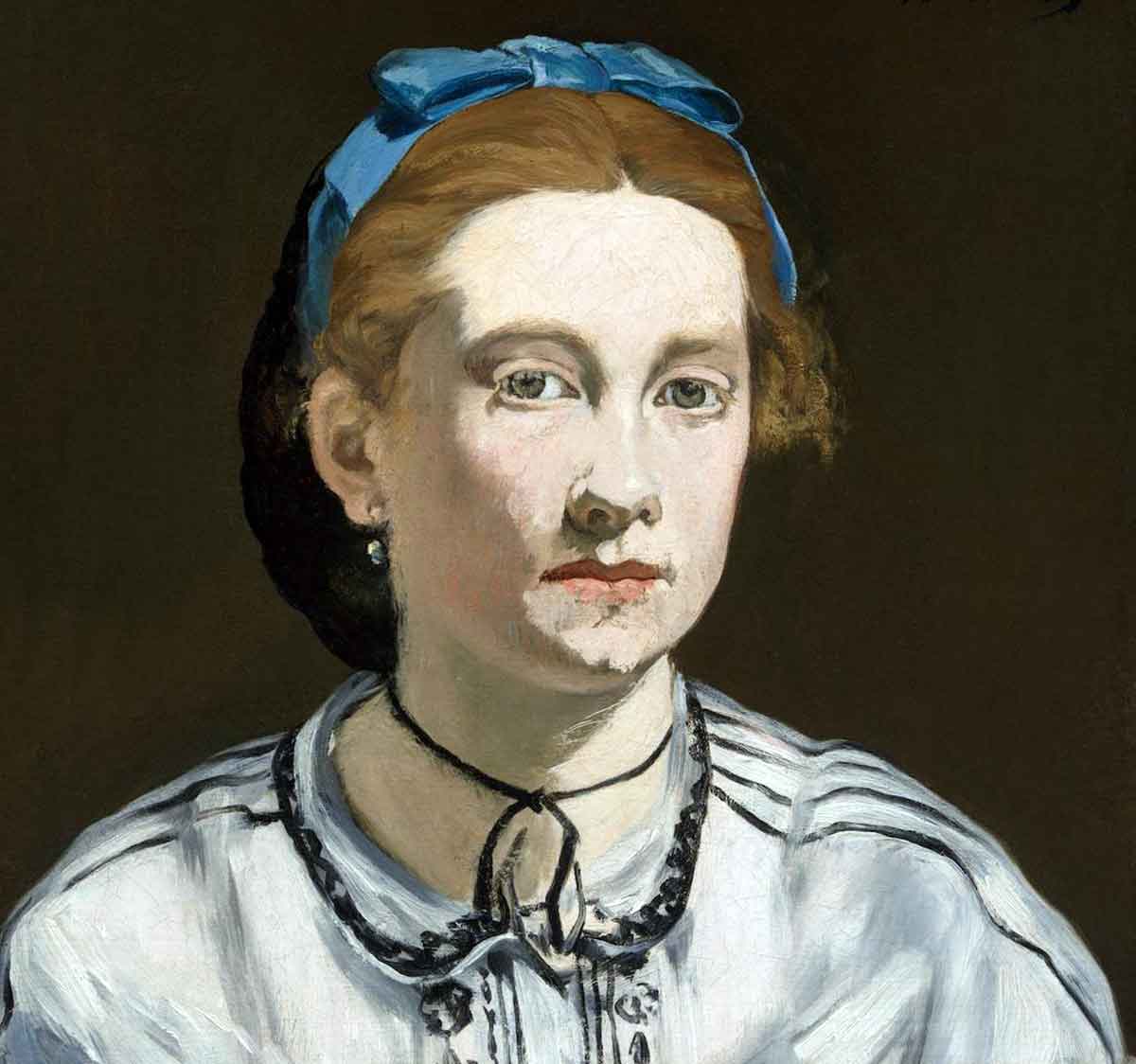
In reality, the opposite was the case. Victorine Meurent was an artist herself. She even managed to be in the Salon exhibition of 1876, the same year when Manet’s works were rejected. She was accepted to the Salon four times in total, and from 1903 onward, she was an elected member of the Société des Artistes Français. Despite numerous rumors surrounding her persona, she never had any kind of romantic relationship with Manet. Once Meurent decided to pursue her artistic career, she stopped working as a model for him. However, her success and name almost vanished from the history of art. Nearly all of her paintings are lost, and only a few were recovered in this century. Her Self Portrait from 1876 is exhibited at the Boston Museum of Fine Arts, as the first one shown in a museum outside of France.
Frida Kahlo: The Muse That Became an Icon
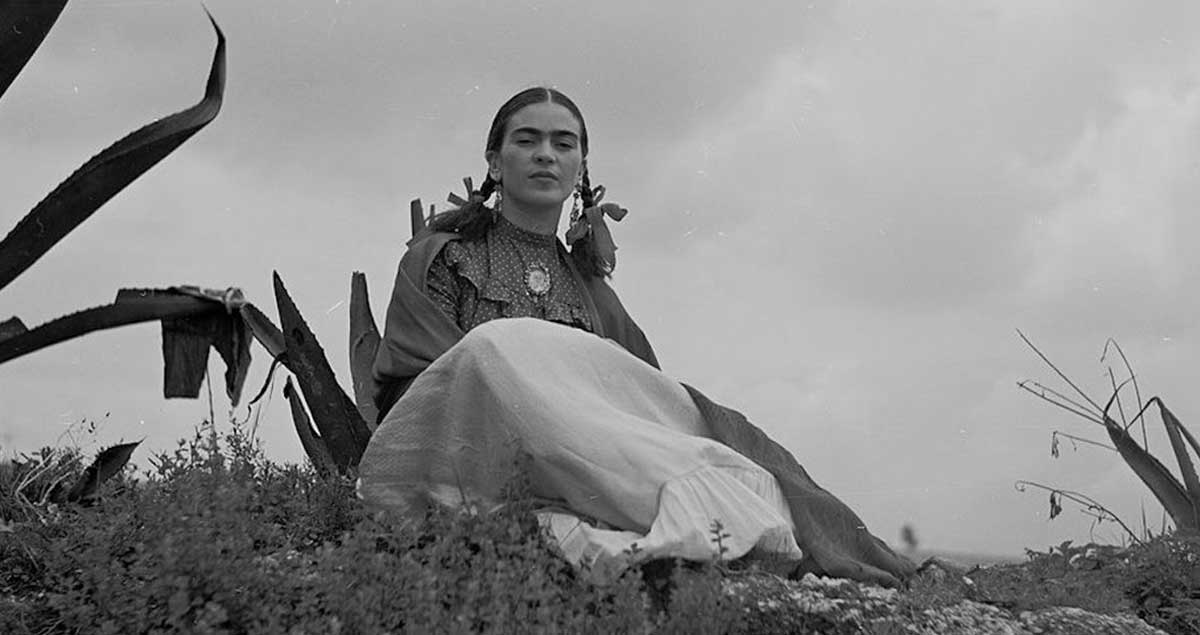
The relationship between Diego Rivera and Frida Kahlo was complex and powerful. The two artists had a great influence on each other, resulting in outstanding artworks. Today, Kahlo’s name is known worldwide, but at the beginning of their relationship, Rivera had a much stronger reputation.
In 1922, Kahlo was 15 years old and a student at the Escuela Nacional Preparatoria in Mexico City. Rivera was 20 years older and working on his mural Creation. By that time, he was already an established artist, known for his political works and his approach to cultural identity in post-revolutionary Mexico. The young student, fascinated by his work, observed him for hours.
Several years later, they met again when Kahlo asked Rivera for his opinion about her art. The young woman’s life was severely impacted by a bus accident in which she suffered serious injuries to her spine, pelvis, and abdomen. During her monthlong recovery on bed rest, Kahlo started to paint. Rivera wrote about his first impression of her work: “They had a fundamental plastic honesty, and an artistic personality of their own. They communicated a vital sensuality, complemented by a merciless yet sensitive power of observation. It was obvious to me that this girl was an authentic artist.” His encouragement influenced Kahlo to continue pursuing a serious artistic career.
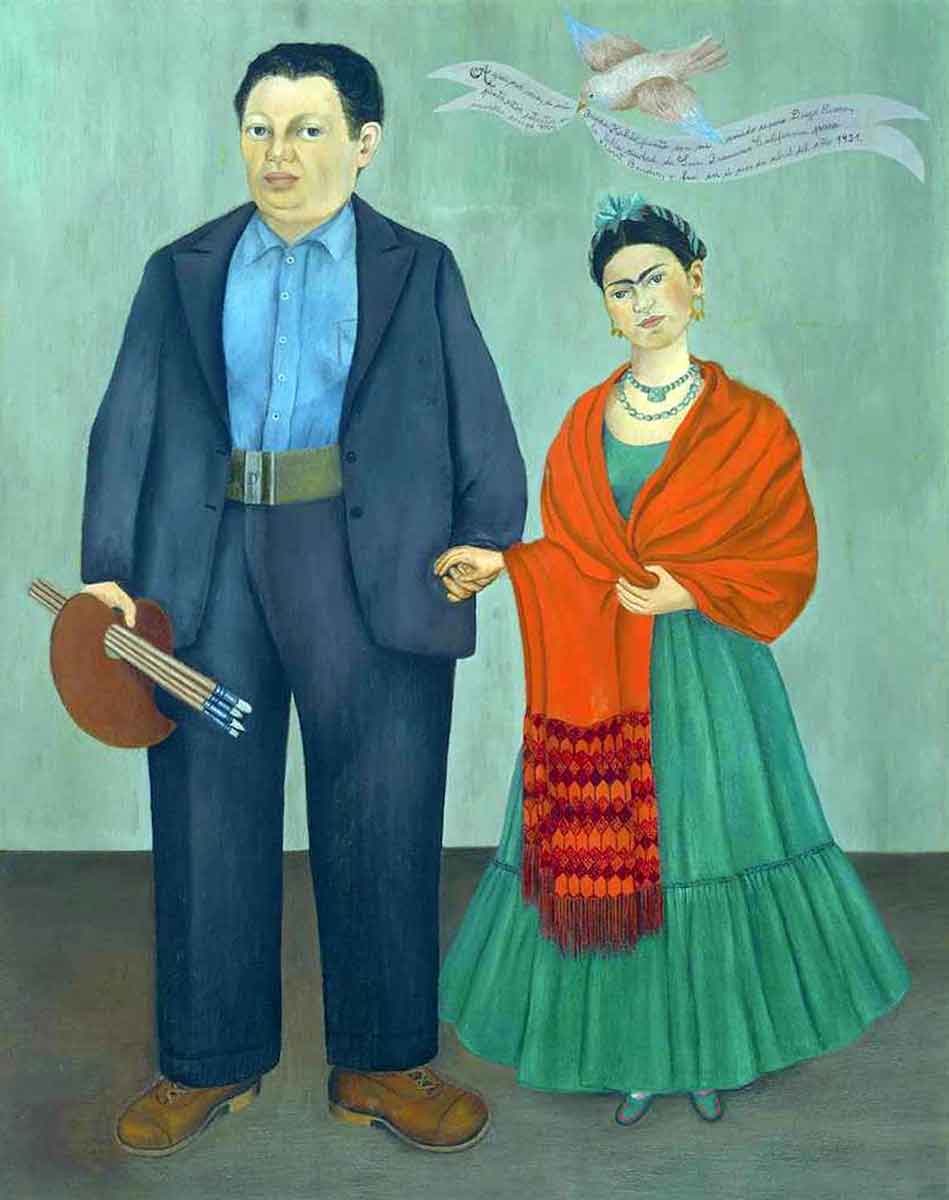
The pair married in 1929, when Kahlo was 22 years old. She was Rivera’s third wife. Their marriage was passionate and unconventional. Both had multiple affairs, one of them leading to a divorce in 1939 and a remarriage in 1940.
Kahlo processed the ups and downs of her marriage with Diego in her art. Their wedding portrait from 1931 depicts the two standing next to each other. Rivera in a gray suit, tall and large, with brushes and a palette in one hand. He is slightly averted from Kahlo, who is dressed in a long green dress and a vibrant red scarf. The portrait indicates the nature of the beginning years of their marriage: He is the colossal maestro, she the delicate depiction of femininity. Their hands touch ever so slightly, as if Kahlo knew that their bond wasn’t based on traditional monogamy. She writes: “Being the wife of Diego is the most marvelous thing in the world … I let him play matrimony with other women. Diego is not anybody’s husband and never will be, but he is a great comrade.”
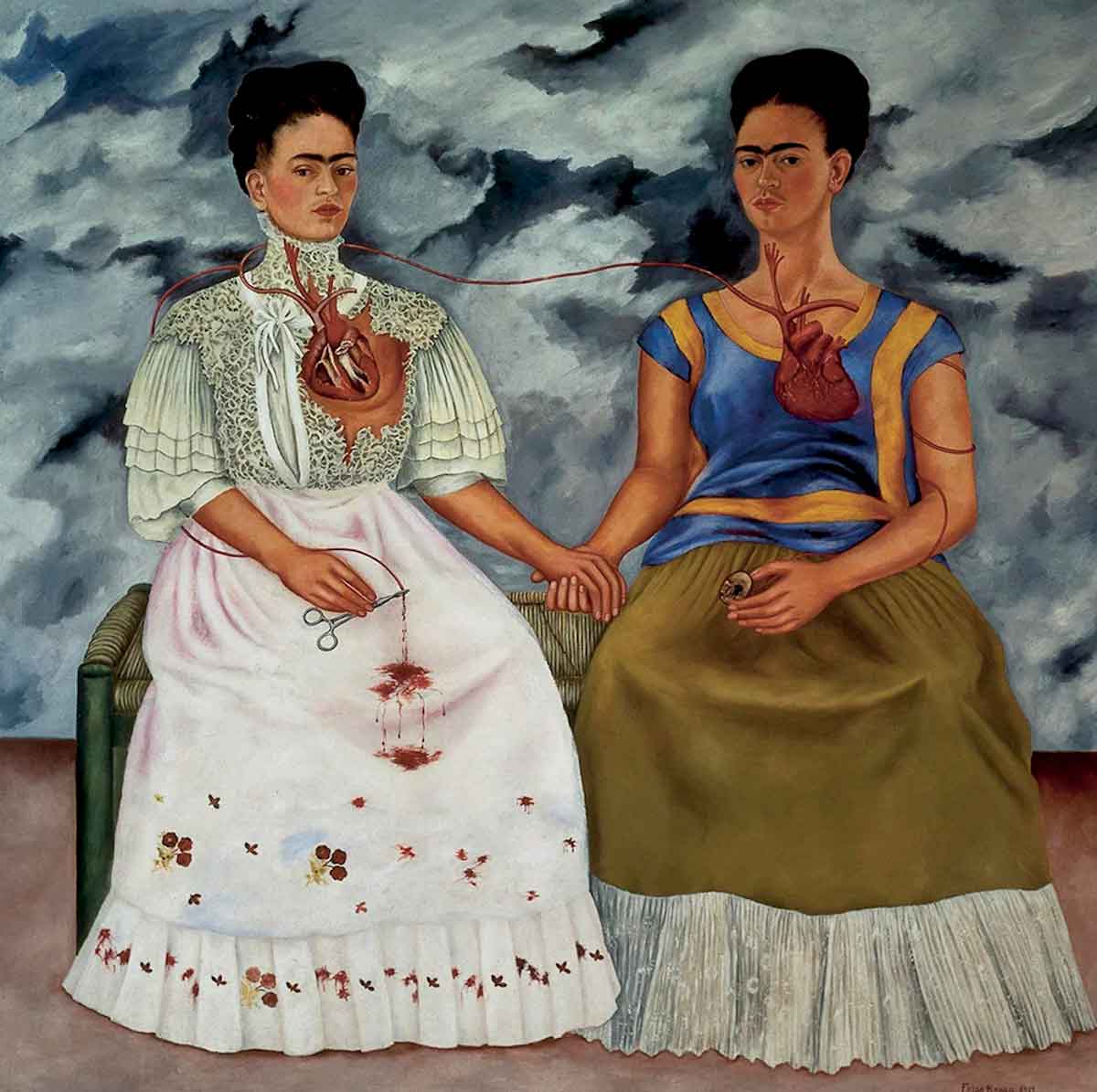
While Diego Rivera’s art can be seen as political, historical, and ideological, Kahlo seems to focus more on her individual emotions and trauma processing. An inward-looking art, rather than art that portrays the concerns of a whole society.
In 1939, the year of their divorce, Kahlo painted Las dos Fridas, a self-portrait that addresses topics like national identity, cultural traditions, and her relationship with Rivera. In contrast to the wedding portrait, the two Fridas firmly hold hands. A gesture that can be described as a form of self-healing and a strong connection. Although Rivera’s influence on her life is well-documented and clearly visible in her artworks, Kahlo was never really her husband’s muse, but that of her own.
Margaret Keane: The Muse With the Big Eyes
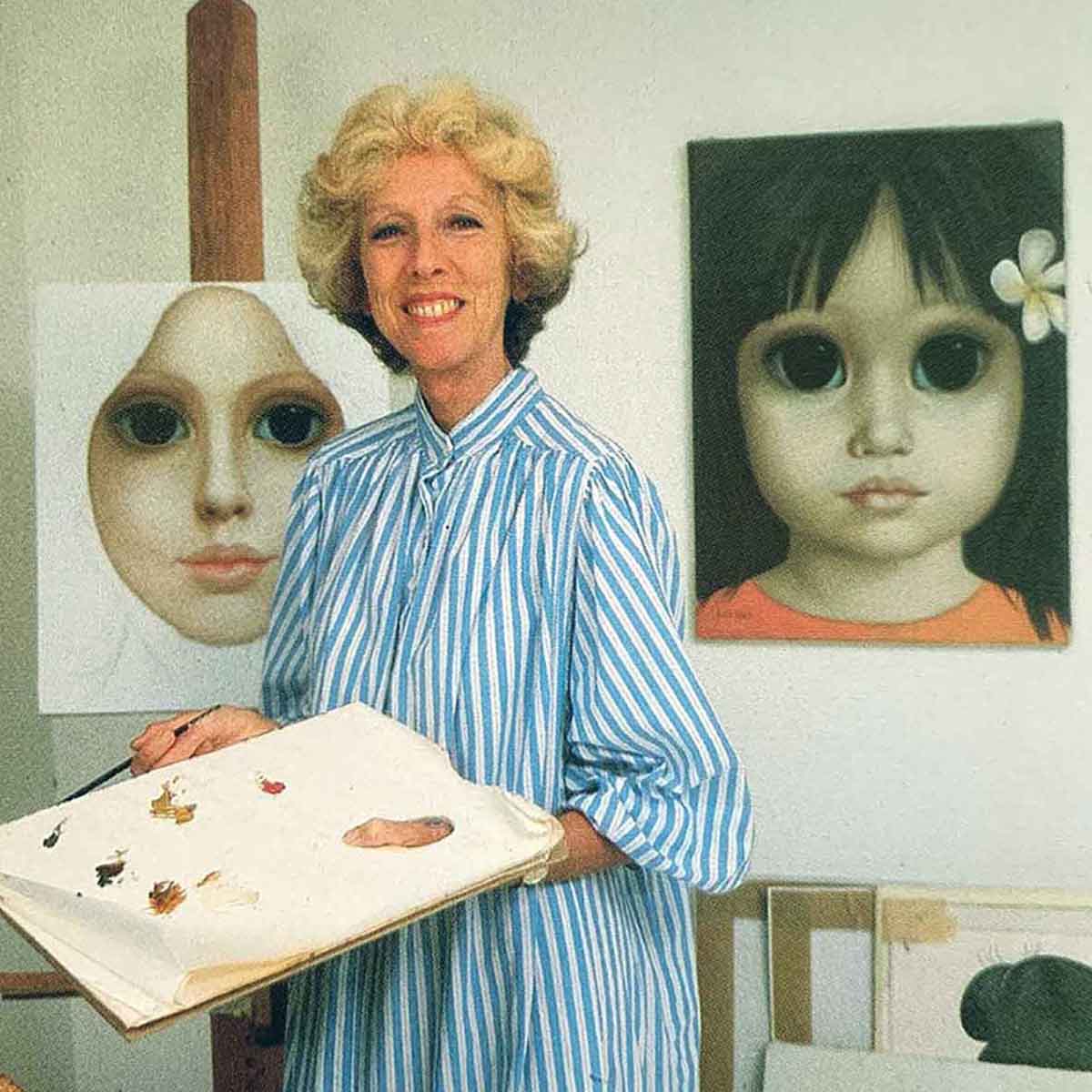
Margaret Keane could be named the muse that never was one. Although her second husband, Walter Keane, was an artist, it was not his art that made him famous. It was hers.
Born in 1927 in Tennessee as Peggy Doris Hawkins, she developed an interest in art early on. As a result of a mastoid operation, she lost her hearing in one ear and started to rely on her eyes more. This was reflected in her works. When her first and only daughter was born, Keane portrayed her with big eyes. Something that would become her trademark.
After her first marriage ended, Margaret and her daughter moved to San Francisco, where she met Walter Keane at an art exhibition in Berkeley in 1955. The pair got married, and soon after, Walter began to sell Margaret’s paintings. First under her name and then depicted as a group effort. After he realized how well the artworks were received, he sold them as his own. The transition was smooth and quick, and eventually Margaret struggled to find a way out of the scheme.
They both shared a passion for becoming artists, but unlike Margaret, Walter never had any formal education in art. Instead, he had a talent for sales. And in that, he succeeded tremendously.
In the 1950s and 1960s, consumerism was in full bloom. Families moved to the suburbs, bought cars, and household appliances. Affordable art was a market niche that Walter Keane successfully tapped into. Margaret’s works appealed to the taste of the general public. They were figurative and emotional. While art critics and curators often referred to the style as kitsch, the sales figures spoke for themselves.
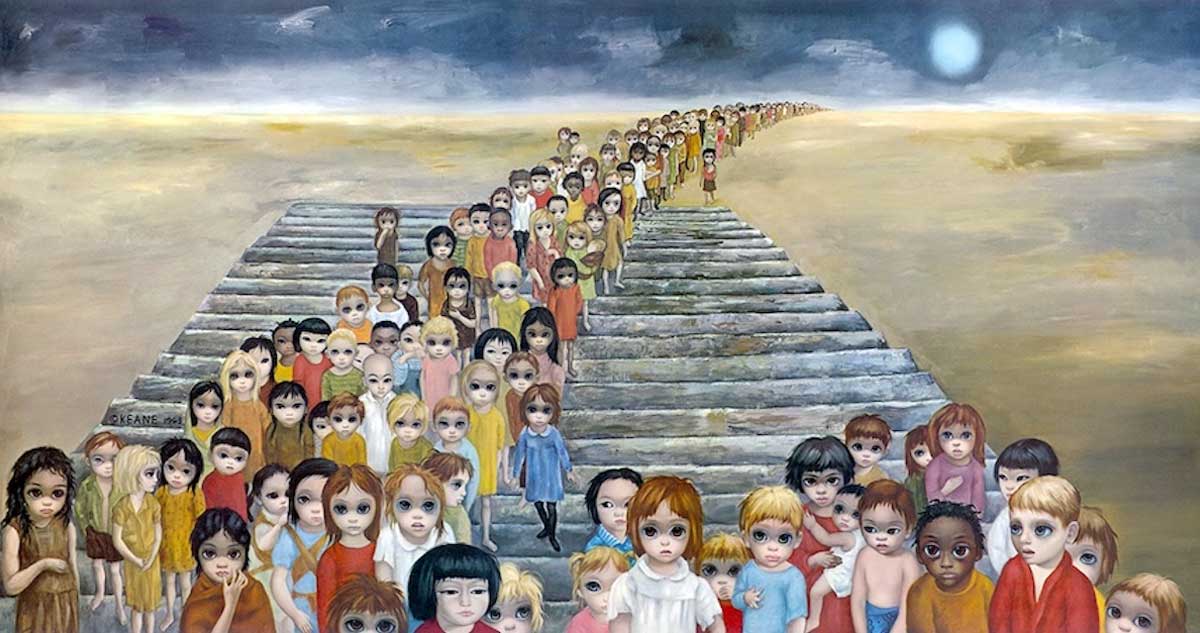
For over a decade, Margaret produced painting after painting, generating millions. At the height of Walter’s fake artistic career, he got commissioned for the 1964-65 New York World’s Fair. Tomorrow Forever was displayed in the Hall of Education, showing 100 sad-looking, big-eyed children. Here, however, the style was met with strong disapproval. An article in the New York Times by John Canaday stated: “This tasteless hack work contains about 100 children and hence it is about 100 times as bad as the average Keane.” As a result, the commission was withdrawn.
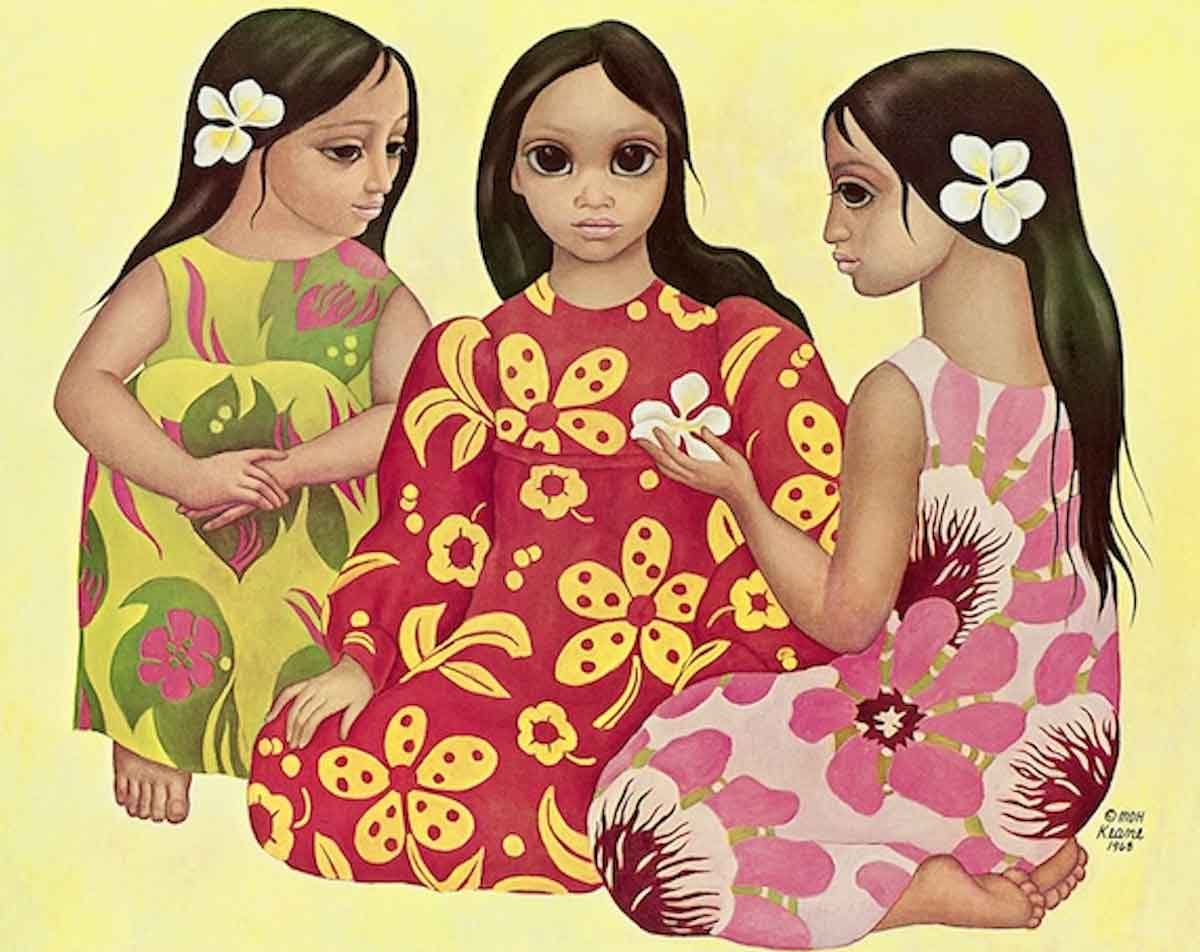
A year later, the couple divorced, Margaret moved with her daughter to Hawaii and remarried. She continued painting children with big eyes for Walter, afraid of his anger and revenge. The portrayed kids became gradually less sad, surrounded by blue water and vibrant flowers.
Finally, in 1970, Margaret confessed in a radio interview that she was the actual artist behind the paintings. Walter denied the claims for years and even accused his ex-wife of stealing from him. Over a decade later, Margaret filed a lawsuit against Walter, which led to a court-ordered paint-off in front of a judge. She painted one of her classic big-eyed children in under an hour, while Walter claimed to be unable to work due to a shoulder injury. The court awarded Margaret the authorship of her art. Walter was originally ordered to pay 4 million dollars in damages, which was later overruled.
While one could argue that Margaret profited from Walter’s talent for salesmanship, it still took almost 30 years for her to claim ownership of her art back. These years were filled with artistic submission, abuse, and financial control. In the end, it turned out that Margaret was the muse of a salesman. But Walter was never the artist.