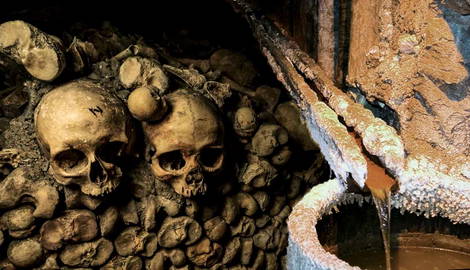

The history of museums tells us that the world’s foremost institutions have always adapted to their environments. But rarely have they done so quite so literally. With no windows and street noise to distract you, the cooler air and eeriness of underground museums make you feel human cleverness the way a textbook hardly ever could. Whether you’re drawn by history, geology, wartime drama, or the unique pleasure of riding a Ferris wheel in a Romanian salt mine, these eight underground museums are definitely worth the trip down.
1. Wieliczka Salt Mine, Poland
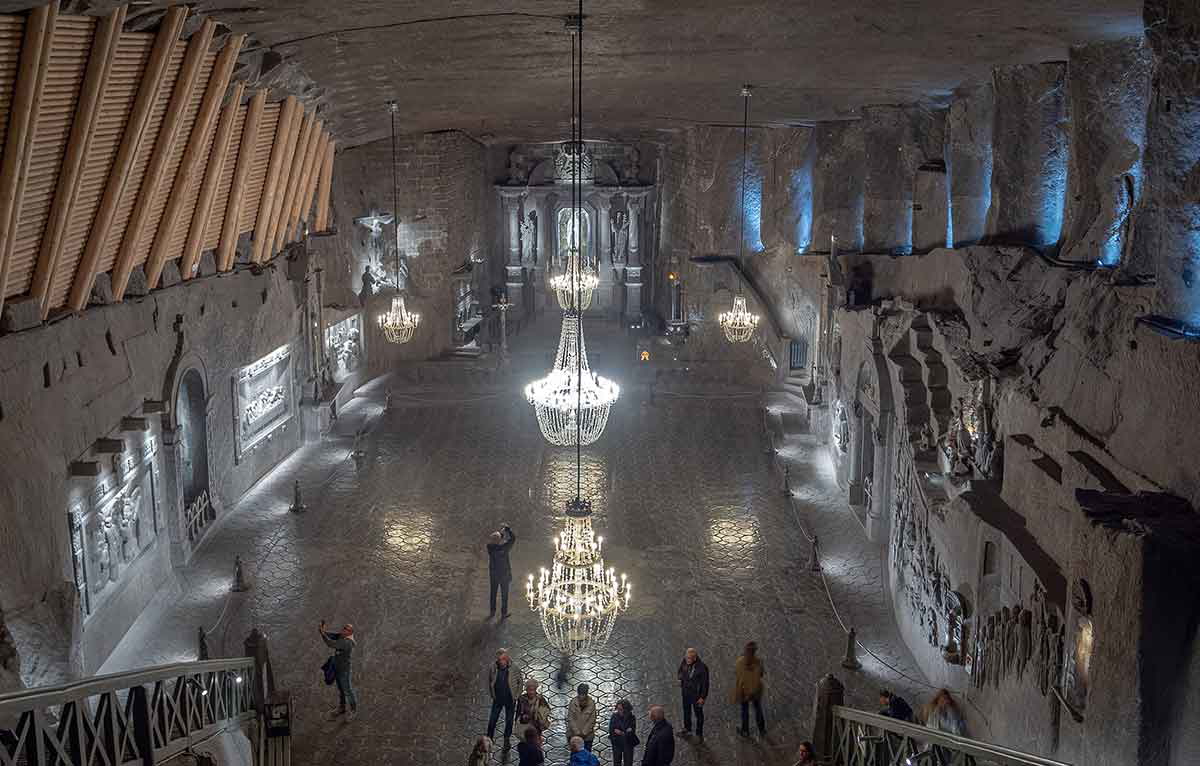
Few places on Earth pack so much into this kind of impressive vertical drop. Wieliczka Salt Mine stretches across nine levels reaching 1,073 feet deep, with 186 miles of tunnels connecting some 2,000-odd chambers. It has been a UNESCO World Heritage Site since 1978, and as you stand in this underground cathedral carved entirely from salt and notice the elaborate bas-relief biblical scenes and salt-crystal chandeliers, the designation feels well-earned.
Salt extraction here began in the 13th century and continued until 1996, meaning the mine has roughly 700 years of history carved directly into its walls. The Kraków Saltworks Museum, housed within the complex at 443 feet below ground, covers all of it with displays of tools, documents, and reconstructed mining equipment. There is also an underground restaurant 410 feet down, which is either the most atmospheric dining experience in Europe or the most claustrophobic, depending on your personal disposition.
Insider tip: a weekday visit in shoulder season keeps crowds manageable and lets the chapel acoustics do what they were designed to do.
2. Churchill War Rooms, London
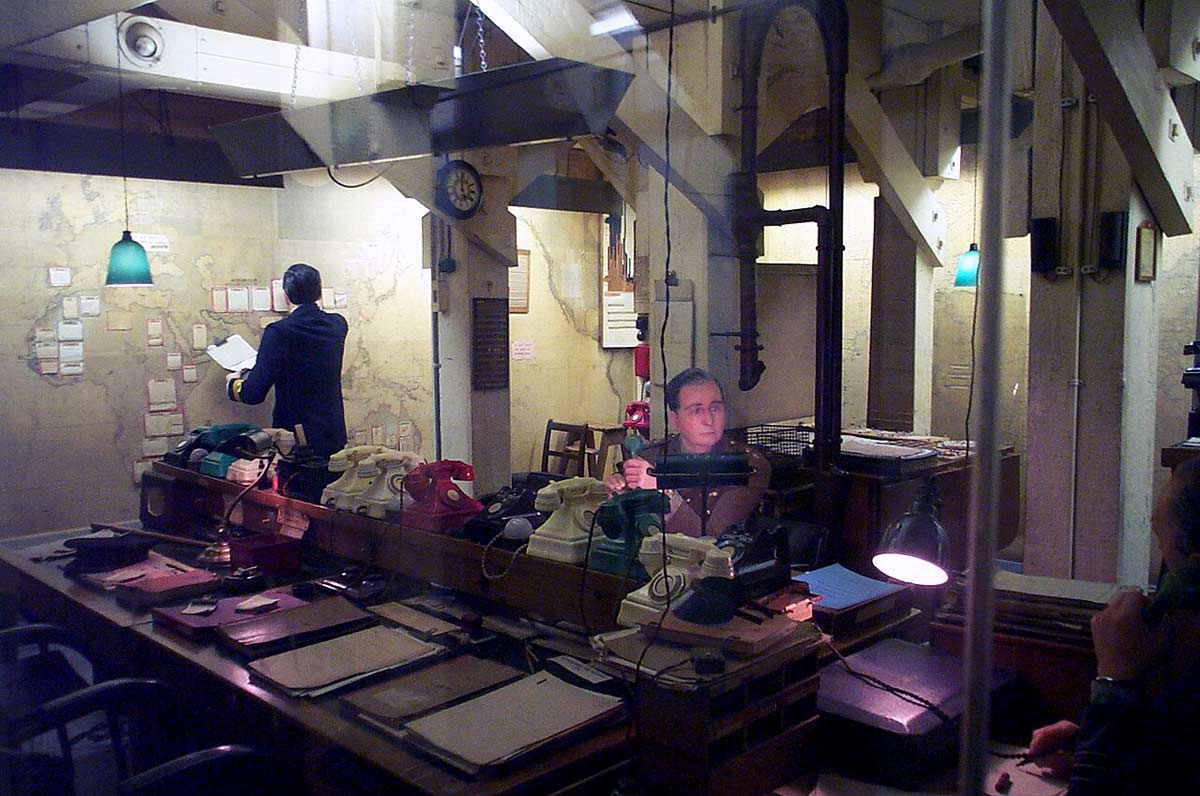
Rooms frozen in time have a particular power that’s difficult to replicate. The Churchill War Rooms, beneath Westminster’s Clive Steps, are the underground bunkers from which Britain’s war cabinet directed its response against Hitler. The lights went off in August 1945 when the last staff left, and the complex sat largely untouched until it opened to the public in 1984. The Map Room still has its original charts on the walls and original telephones on the desks, just as staff left them.
The complex includes both the Cabinet War Rooms and the Churchill Museum, which traces the Prime Minister’s 90-year life through personal items and interactive displays. An outstanding detail is the Transatlantic Telephone Room, which was disguised as a lavatory so that most staff would assume it was Churchill‘s private bathroom, rather than his secure line to President Roosevelt.
3. Paris Catacombs, France
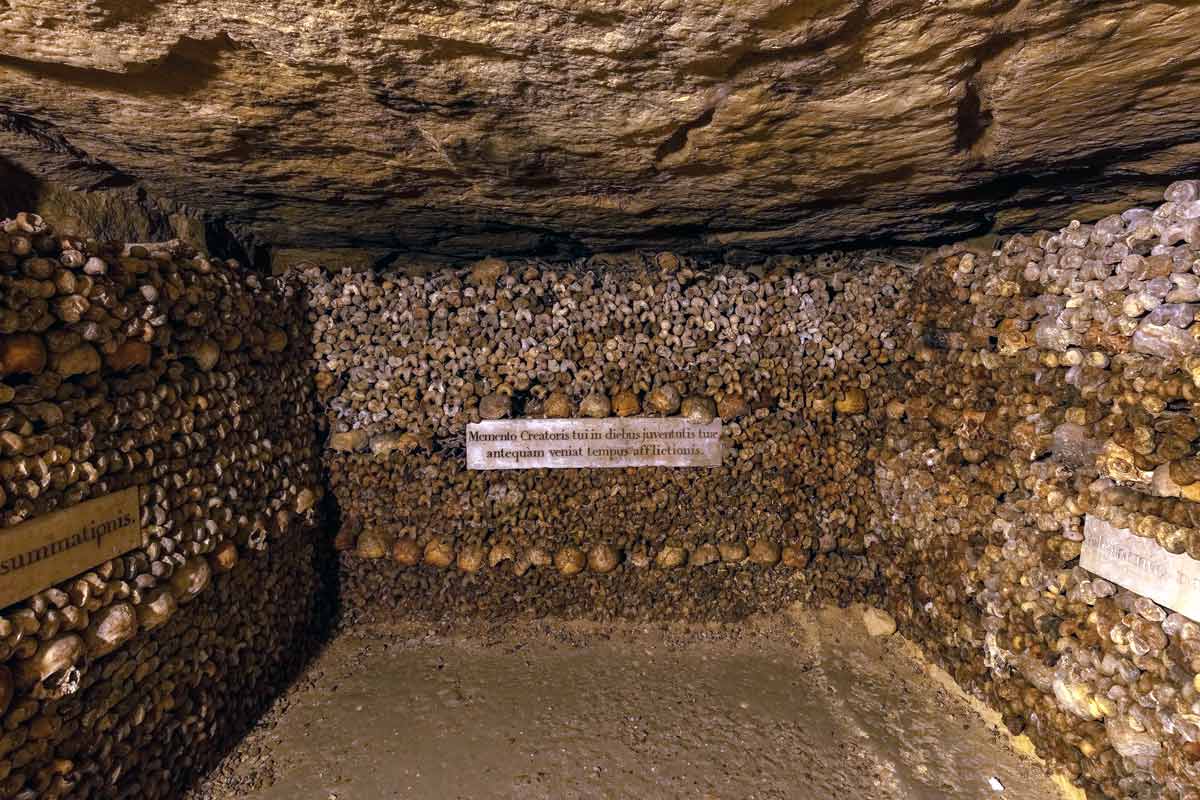
The Paris Catacombs hold the remains of more than six million people in approximately 0.9 miles of tunnels, 66 feet below the 14th arrondissement. The ossuary dates to 1786, when Paris‘s overcrowded cemeteries were emptied into former limestone quarries. These were the same quarries that supplied stone to build medieval Paris.
Mining engineer Héricart de Thury turned the bone deposit into a curated mausoleum by 1809, stacking remains into decorative patterns and adding philosophical inscriptions. The result is not at all what you might expect (i.e. horrifying), but it is surprisingly meditative, with a dry Parisian wit running through the stonework that suits the setting well. Visitor numbers are capped at 200 at a time, so you’ve got to get those bookings in early.
4. TIRPITZ Museum, Blåvand, Denmark
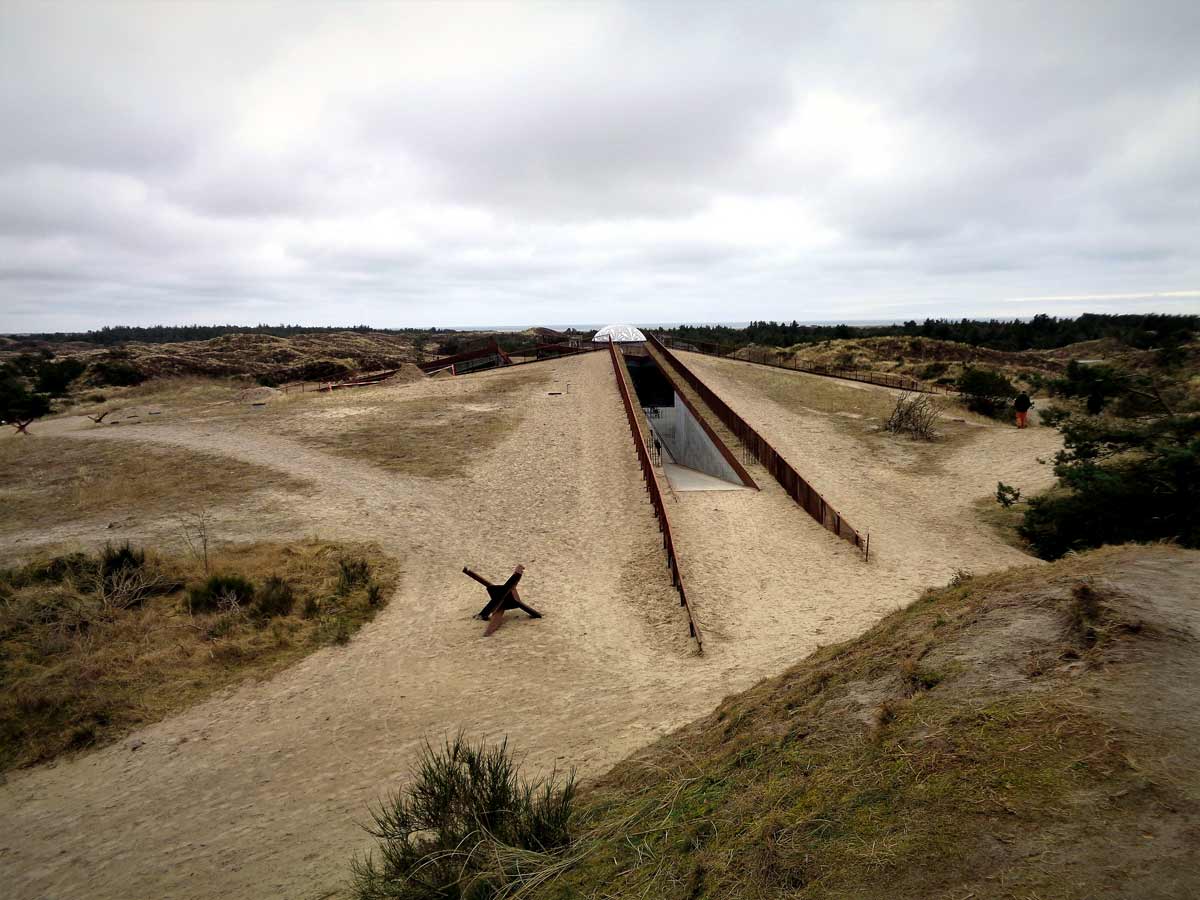
TIRPITZ is the kind of museum where the architecture is half the exhibit. Bjarke Ingels Group built four underground gallery spaces around a concrete Nazi bunker left over from Hitler’s unfinished Atlantic Wall, abandoned in 1945 before its guns were even installed. Pathways cut into the surrounding dunes lead you into a central courtyard and down into the galleries, which are flooded with light through 19-foot glass panels. The bunker itself, with walls up to 11.5 feet thick, connects to the modern spaces via an underground tunnel.
The exhibitions cover 20,000 years of Denmark’s west coast history, the country’s largest amber collection, and the postwar task of clearing millions of landmines from the coastline. The contrast between the bunker’s blunt concrete mass and the bright galleries around it is striking, and it manages to engage difficult history without wallowing in it. For more on how modern architecture has dealt with structures built for brutality, TIRPITZ is one of the better contemporary answers.
5. M/S Maritime Museum of Denmark, Helsingør
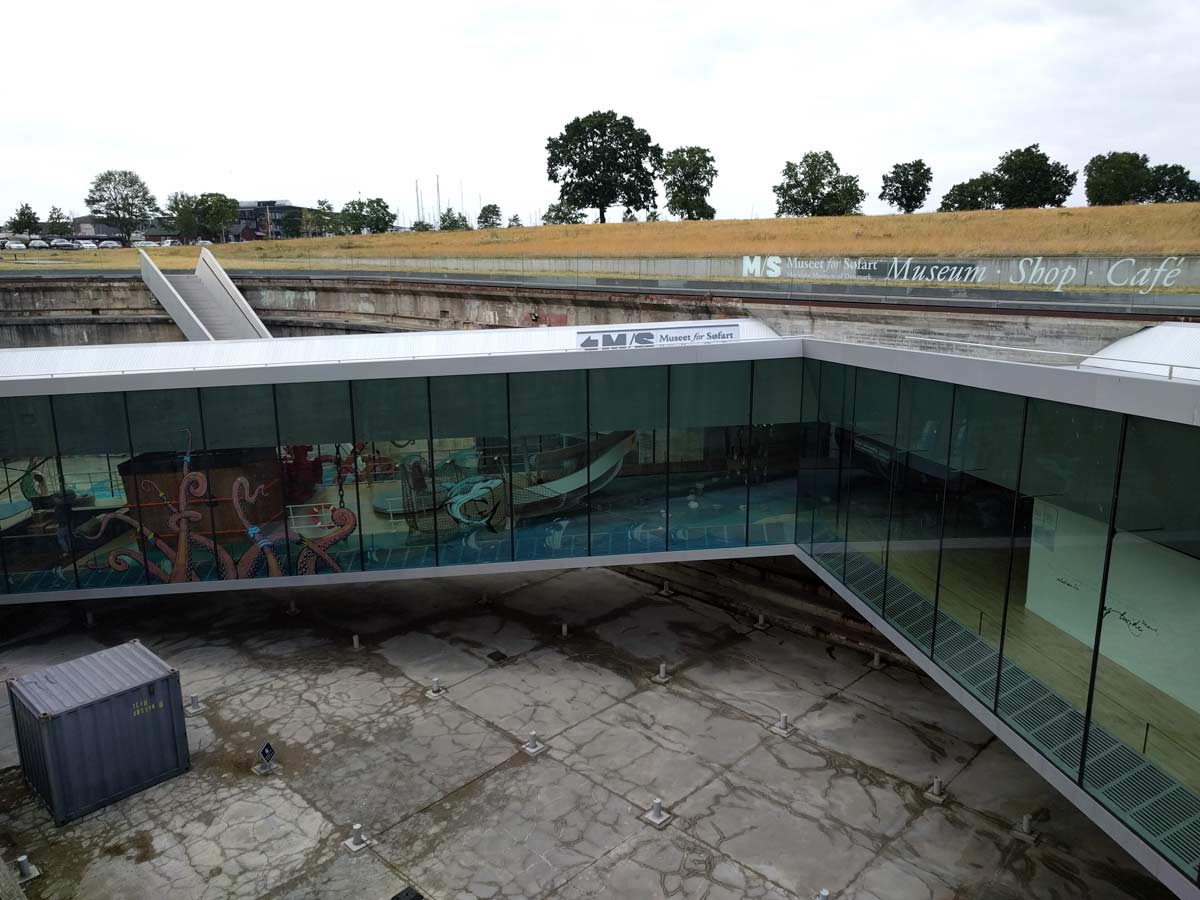
Bjarke Ingels clearly has a preference for going underground. The M/S Maritime Museum of Denmark in Helsingør is built around and below a decommissioned dry dock beside UNESCO-listed Kronborg Castle, the castle that gave Shakespeare his setting for Hamlet.
Height restrictions meant nothing could rise above ground level, so underground galleries were wrapped around the dock’s perimeter, and the dock itself was left as an open void, crossed by three double-level bridges. From above, the museum is essentially invisible.
From inside, descending the ramps 26 feet below ground level, it feels like the architecture of the sea itself, with sloping floors, angled glass, and raw concrete walls. This superb underground museum covers 600 years of Danish maritime history, and the auditorium is built inside one of the bridges, which is an architectural detail that deserves more recognition than it gets.
6. Salina Turda, Romania
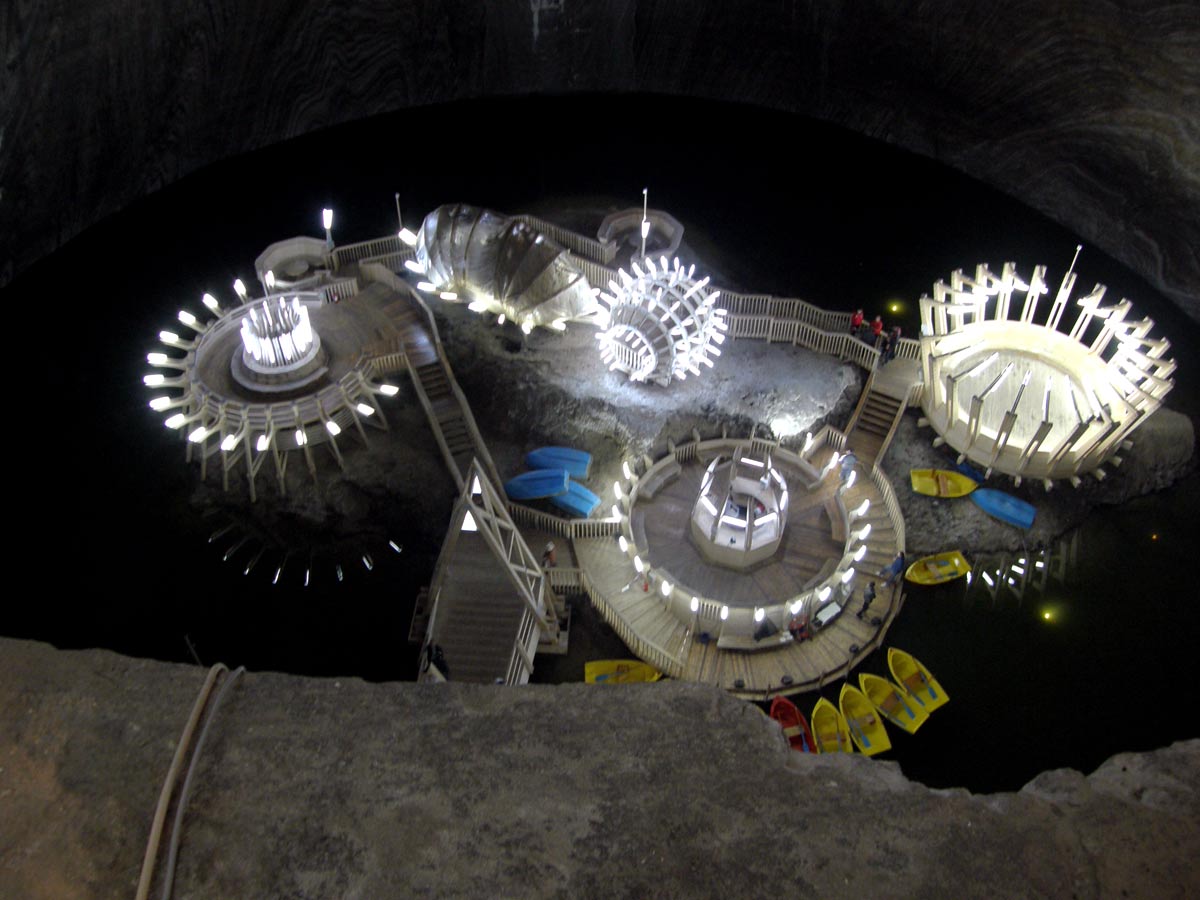
Salt mines can be extraordinary, as Wieliczka clearly shows. But Salina Turda in Transylvania operates on a different frequency altogether. This former Roman-era salt mine was used until 1932, served as a bomb shelter during World War II, and was used as a cheese warehouse after that, which is perhaps the oddest trajectory of any museum, above or below ground. It reopened as a tourist attraction in 2010 and now, at 394 feet below ground, contains a Ferris wheel, a boating lake, a bowling alley, mini-golf, an amphitheater, and a spa. Because, why not?
The chambers are lit with neon uplighting that makes the whole thing look faintly like a science fiction set. The salt-saturated air at a constant 50-54°F has recognized therapeutic value for respiratory conditions, which was just the incentive needed to operate wellness zones alongside recreational ones. Don’t forget to dress in layers here.
7. Amos Rex, Helsinki
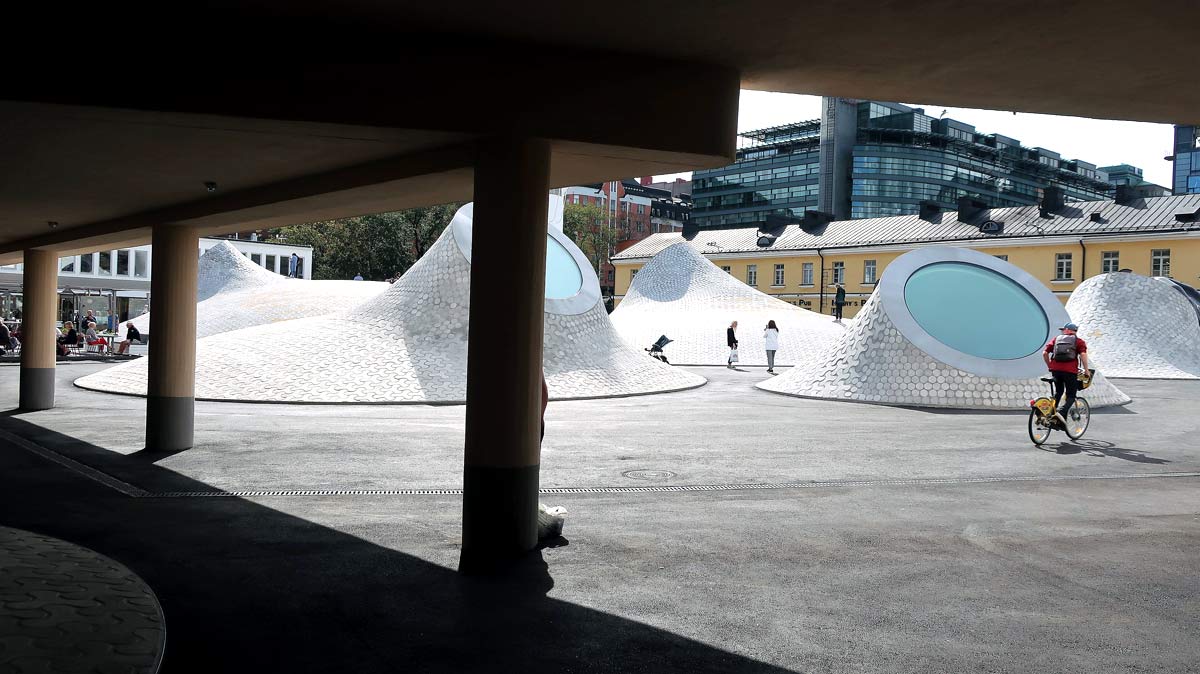
From above, Amos Rex looks like a public square that has suffered some kind of cataclysmic geological event. Five concrete domes push up through Lasipalatsi Square in central Helsinki, their glass skylights giving pedestrians a glimpse of vast gallery spaces below. The museum is almost entirely underground: two floors of column-free exhibition space made possible by the dome structure, which also functions as a public play area above, which is why you’ll see children happily rolling over the curved rooftops.
Amos Rex hosts three to four major exhibitions a year, typically large-scale immersive or media art installations that make full use of those column-free floors and generous ceiling heights.
8. Underground Adventure & Field Museum, Chicago
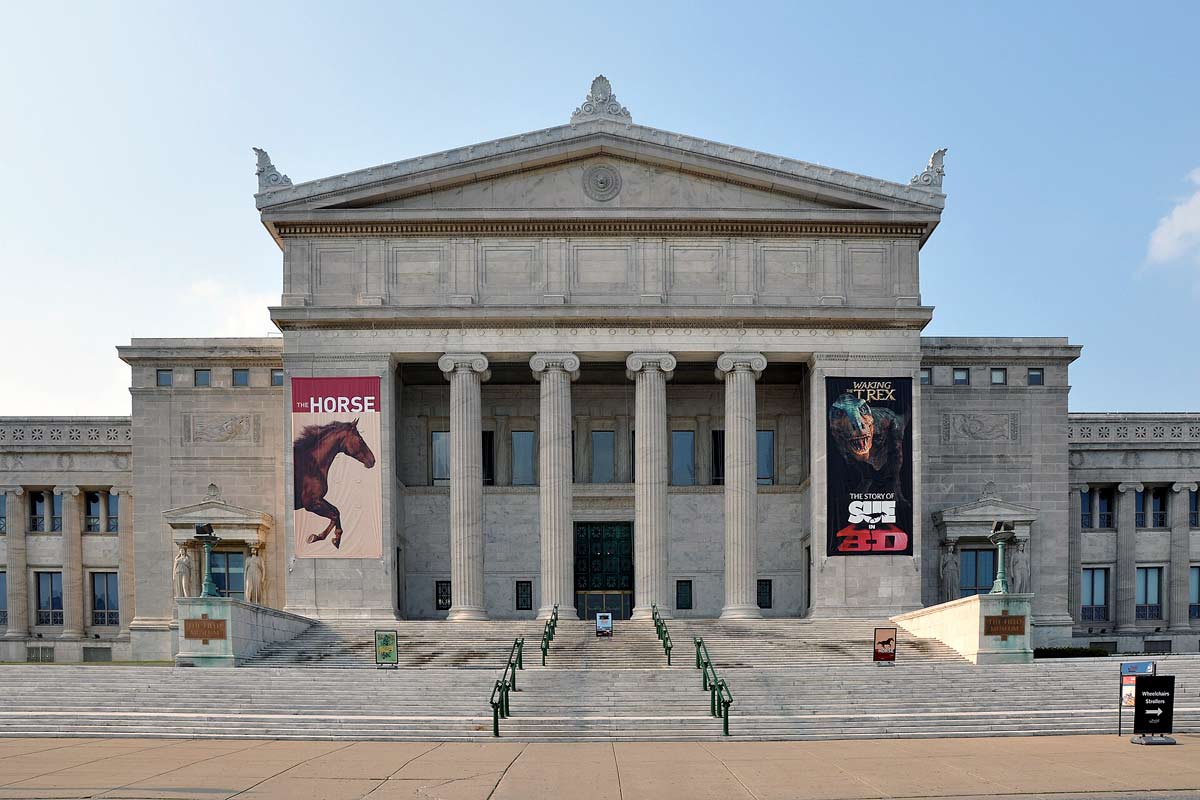
Not every underground museum on this list requires you to descend into geological history. The Field Museum’s Underground Adventure exhibit shrinks visitors to 1/100th of their size to explore the ecosystem beneath a square yard of forest floor. Wolf spiders the size of armchairs, earthworms like structural columns, and fungal webs covering entire walls; for anyone who had not previously given much thought to what is going on under their feet, it is a near mind-bending experience.
Underground Adventure is a permanent feature of Chicago’s Field Museum, the world-renowned natural history institution that houses SUE, the famous T. rex. For more of the city’s cultural riches, the best museums in Chicago cover plenty of ground, most of which is (unfortunately) above sea level.